
STEADI: intervene
How to Handle Heat Exhaustion and Heat Stroke in Seniors
Confusion can be the first sign that an older adult is dangerously overheating — long before thirst or sweating appear. Use the warning-sign list and 30-minute cooling rule to decide whether to call 911 or cool down at home.
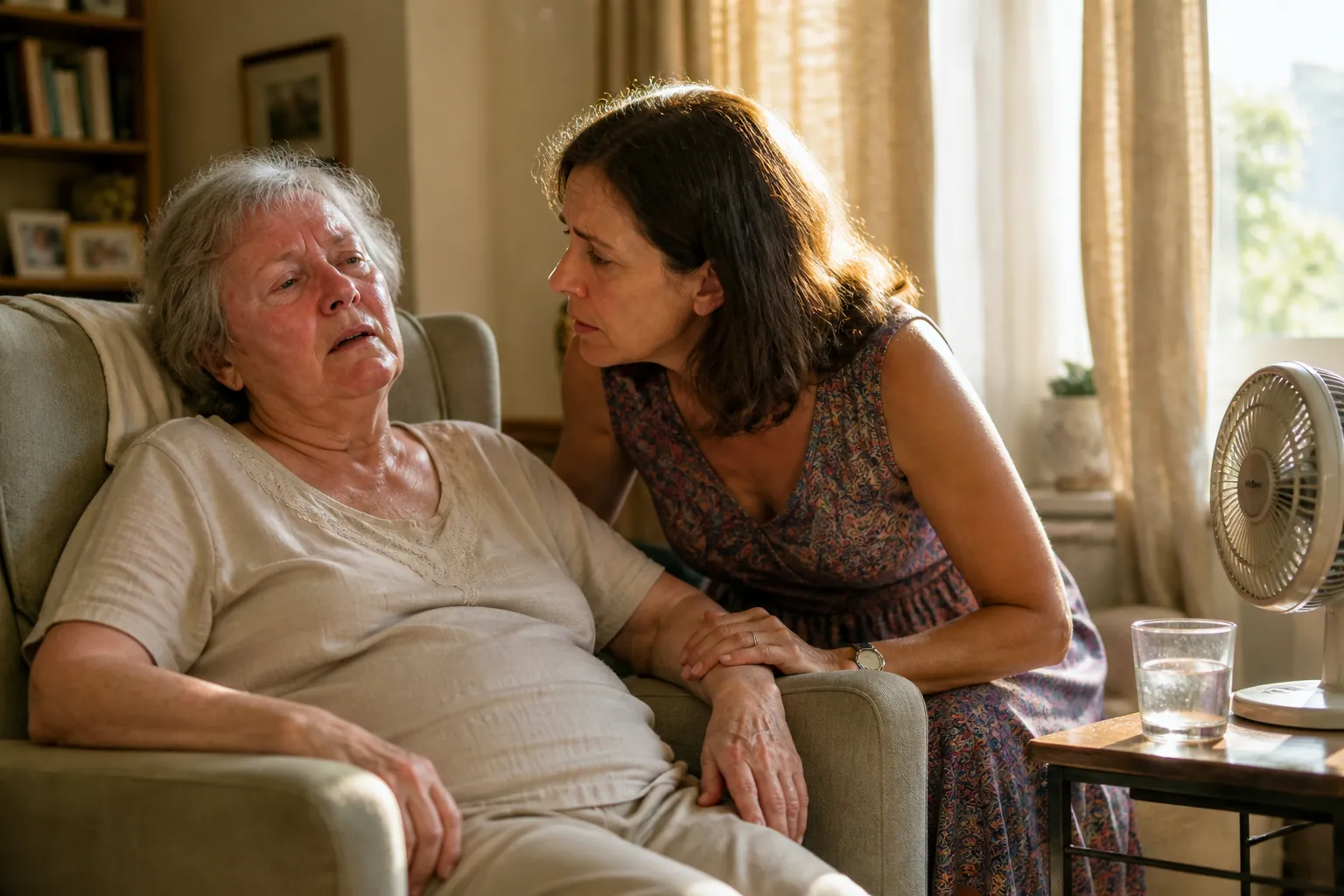
When a parent seems suddenly off in the heat
If an older parent suddenly seems confused, unusually weak, hard to wake, or simply “not themselves” during hot weather, do not wait for thirst or sweating to prove anything. In older adults, thirst can be delayed, sweating may be reduced, and heat perception can be blunted, so behavior changes can show up before the person complains of being overheated.[3]
Heat stroke is a medical emergency. A core body temperature of 104°F (40°C) or higher fits that diagnosis, and suspected heat stroke means 911, not a longer home experiment.[1][2]
This guide is for emergency recognition and first steps, not for diagnosing heat illness at home. If you suspect heat stroke, call 911.
| What you see | What it means | What to do |
|---|---|---|
| Confusion, severe drowsiness, collapse, or a parent who is getting less responsive in the heat [3][1][2] | Suspected heat stroke | Call 911 now and keep cooling only as you wait |
| Still awake, alert, and able to answer, but weak, dizzy, or nauseated after heat exposure [5][6] | Possible heat exhaustion | Move to a cooler place, start cooling, offer fluids only if safe, and reassess in about 30 minutes [1][5][6] |
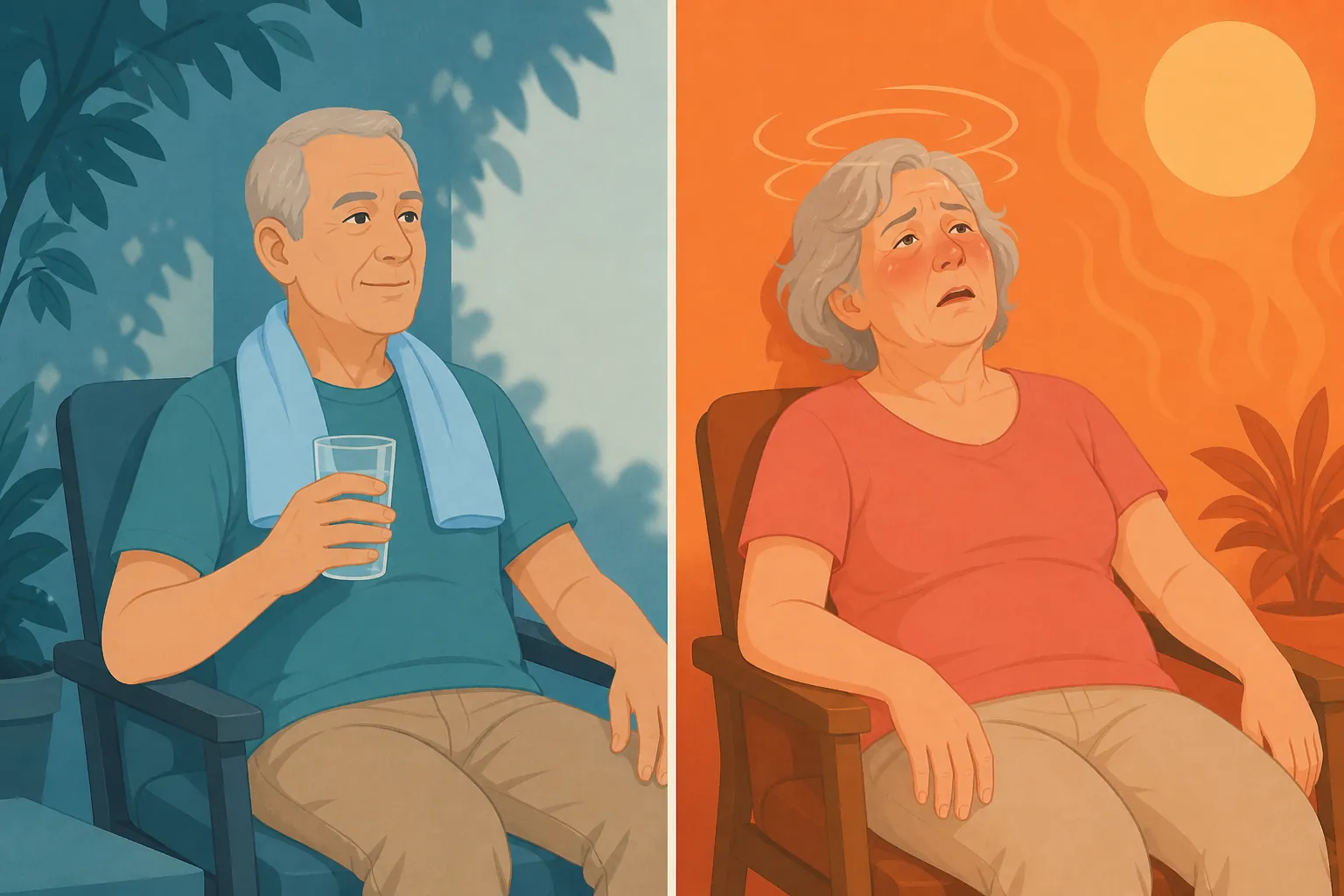
The signs that should matter most in older adults
Speed is part of the risk. Heat stroke can set in within 10 to 15 minutes, or it can build over days of exposure, which is why a slow change in mood or thinking matters as much as a dramatic collapse.[4][2]
- Confusion, trouble answering simple questions, or behavior that is plainly off [3]
- Severe drowsiness, collapse, or loss of consciousness [1][2]
- Weakness, dizziness, or nausea while the person is still responsive [5][6]
- A report of “I’m fine” that does not match what you are seeing when the person seems confused or not quite there [3]
The first 30 minutes after you start cooling
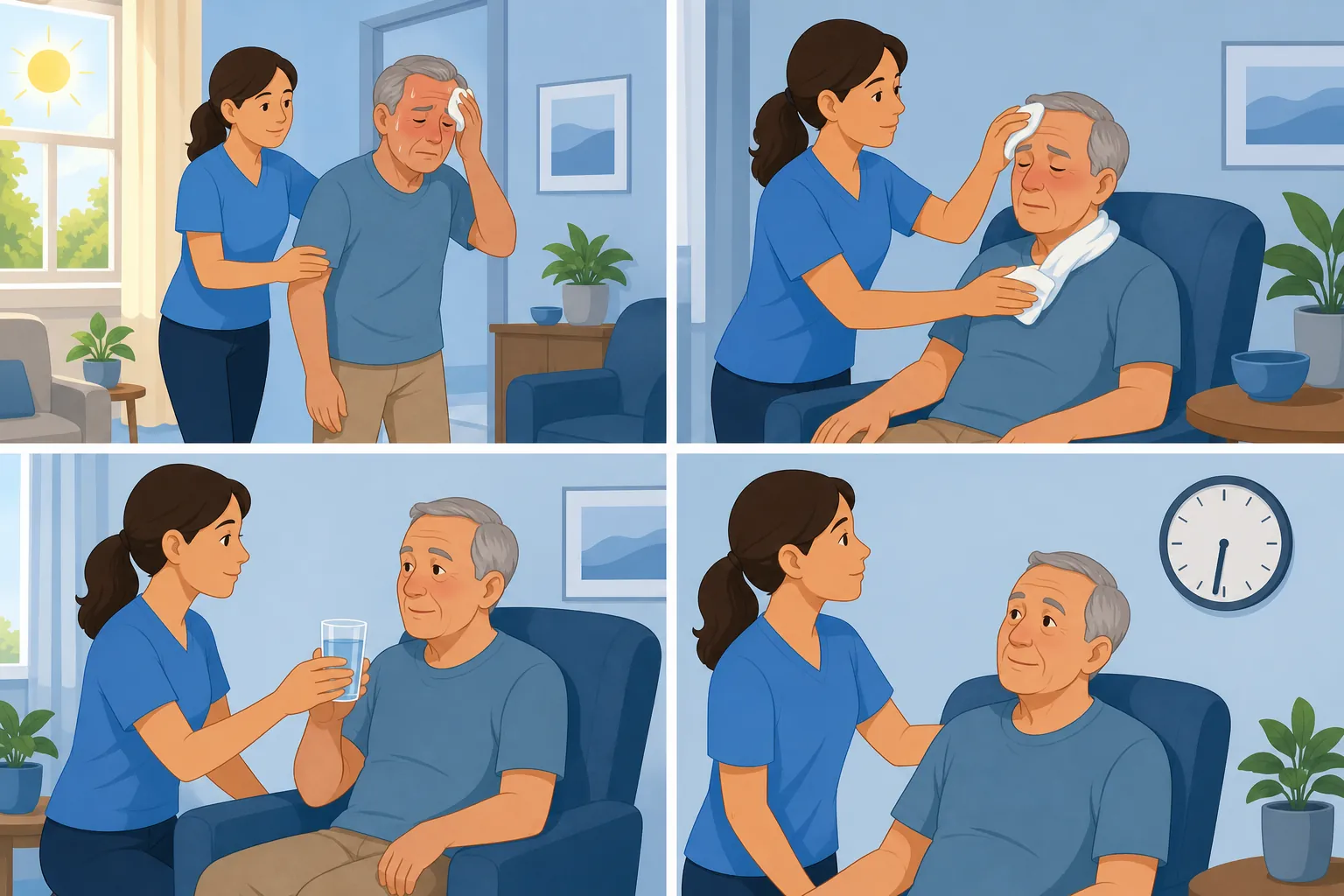
If the person is awake and responsive enough to swallow safely, the next half hour is not about waiting to see what happens. It is about cooling, watching the mind as much as the body, and deciding whether the person is clearly improving.[1][5][6]
- Move the person to the coolest place available right away.
- Start cooling the body immediately.
- Offer fluids only if the person is awake, alert enough to cooperate, and able to swallow safely; do not force drinks.
- Keep checking whether the person is thinking more clearly, staying awake, and answering normally.
- Reassess at about 30 minutes. If there is no clear improvement, or if confusion shows up at any point, call 911.[1][5][6]
A fan can move air, but it should not be the only plan when the air itself is very hot. CDC guidance warns against relying on a fan alone in high-90s temperatures, and fluids should never be forced into someone who is drowsy or unconscious because of choking risk.[7][1][2] If cooling is clearly helping and the person stays alert, keep monitoring; if symptoms persist, worsen, or include confusion, severe drowsiness, collapse, or loss of consciousness, call 911.
References
- Extreme Heat Safety — American Red Cross
- Tip Sheet: Hot Weather Safety Tips for Older Adults — HealthInAging (American Geriatrics Society)
- The Effects of Heat on Older Adults — Harvard Medicine Magazine
- Seniors and Heat-Related Illness — California Department of Public Health
- Heat exhaustion and heatstroke — NHS
- How to keep cool in hot weather — Age UK
- Protect Yourself from the Dangers of Extreme Heat — CDC
Related reading
Noticed something outdated or inaccurate on this page? Flag a correction. We review every report against CDC, NIA, and AARP HomeFit guidance before updating a page.
Part of the Fall Prevention section.