
STEADI: Intervene
Know the Heat Index Thresholds for Senior Heat Safety
This guide maps the four NOAA heat index danger levels — from Caution to Extreme Danger — to specific actions for older adults, including when fans become unsafe, which medications raise risk, and the exact symptoms that signal a life-threatening emergency.
If the heat index is 97°F today, treat it as a restricted day
A 97°F heat index falls in the National Weather Service’s “Extreme Caution” range, which runs from 90°F to 103°F. For a healthy younger adult, that may mean slowing down. For a 78-year-old parent, it should mean a clearer plan: stay out of midday heat, use air-conditioning or a reliably cooler place, postpone errands and yard work, check indoor temperature, and arrange a real check-in rather than relying on “I’m fine.” The NWS categories are useful starting points, but they were built for the general public; older adults should act at the lower end of each range, especially with chronic illness, limited air-conditioning, or heat-sensitive medications.[1][2]
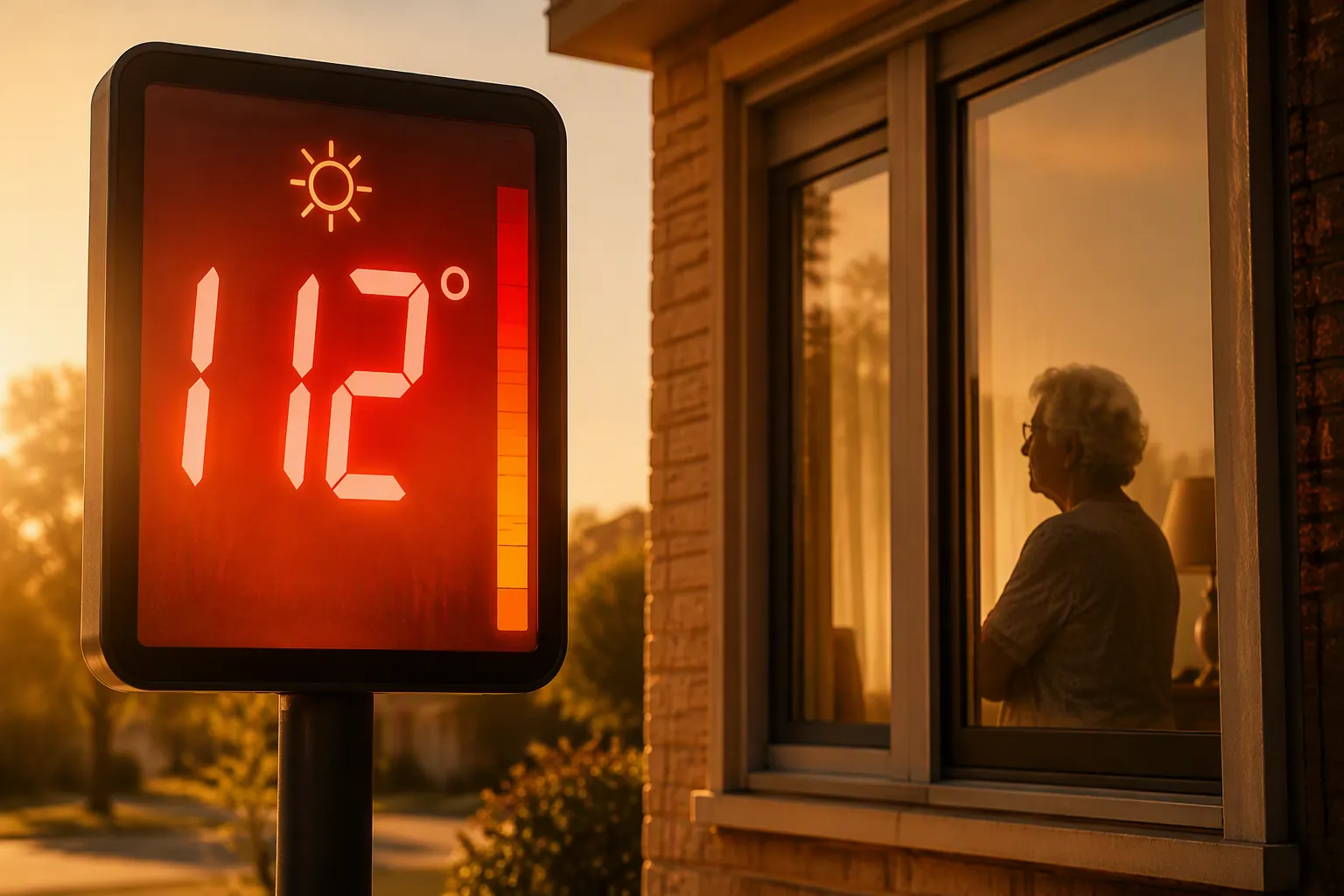
The heat index matters more than the air temperature because humidity makes sweating less effective. An older body also has less margin: age, chronic disease, and some medications can make it harder to cool down or recognize heat stress early enough. Heat is not just uncomfortable background weather; CDC materials note roughly 702 heat-related deaths each year in the United States, with older adults among the groups at higher risk.[2]
| Forecast heat index | NOAA/NWS category | Senior-specific action |
|---|---|---|
| 80°F to 90°F | Caution | Start heat precautions early: avoid peak sun, encourage fluids unless medically restricted, check whether the home is actually cooling, and plan around medications or illness. |
| 90°F to 103°F | Extreme Caution | Restrict outdoor activity. A 97°F day belongs here: keep errands short or postpone them, use air-conditioning, check the indoor thermometer, and arrange a call or visit. |
| 103°F to 124°F | Danger | Do not leave the older adult to “push through.” Move them to air-conditioning or another cooler setting, increase monitoring, and treat symptoms quickly. |
| 125°F and above | Extreme Danger | Avoid heat exposure entirely. If cooling cannot be maintained or symptoms appear, treat the situation as urgent and be ready to call 911. |
One more adjustment belongs on the table: direct sun can add up to 15°F to the heat index. A forecast of 97°F can behave more like a far more dangerous exposure for someone sitting on a sunny porch, waiting at an unsheltered bus stop, watering plants in the yard, or spending the afternoon in a sun-baked room.[1]
Move the threshold earlier for medication risk
Medication risk does not mean stopping a prescription when the forecast rises. It means the cooling plan starts sooner and the check-ins become less casual. CDC clinical guidance flags medication classes that can interfere with hydration, sweating, blood pressure, kidney function, alertness, or temperature regulation; AARP’s July 2026 heat-intolerance guidance also highlights common categories older adults may be taking.[3][4]
- Diuretics, which can increase fluid loss.
- Beta blockers, which may limit the heart-rate response the body uses during heat stress.
- ACE inhibitors and ARBs, which can complicate fluid balance and kidney stress in heat.
- Anticholinergics, which can reduce sweating and worsen confusion.
- Antihistamines, which may have anticholinergic effects and add sedation.
- Antipsychotics, which can affect heat regulation and alertness.
- SSRIs, which are among the drugs clinicians may review when heat sensitivity is a concern.
The safe household rule is simple: if an older adult takes one of these medications, has heart disease, kidney disease, diabetes, dementia, limited mobility, or has recently been sick, treat the lower end of each heat-index category as if it were already the next level up. A 90°F heat index is not a “wait and see” day for that person. A 97°F day needs a real cooling plan. Any medication change, dose change, or skipped dose belongs with the prescribing clinician or pharmacist, not with a family member improvising during a heat wave.
The house can defeat the forecast
The weather app gives the outdoor risk. It does not tell you whether the west-facing bedroom has become an oven, whether the thermostat is wrong, whether the air conditioner is cycling but not cooling, or whether the person inside has closed curtains on one side of the house and left direct sun pouring into another. For an older adult, the useful number is often the indoor temperature in the room where they are actually sitting, sleeping, and walking to the bathroom.
The 90°F indoor fan rule
If the indoor temperature is above 90°F, a fan is not an adequate cooling plan. CDC guidance is clear that electric fans may provide comfort but will not prevent heat-related illness once temperatures are above 90°F; blowing hot air across the body can actually increase body temperature.[5]
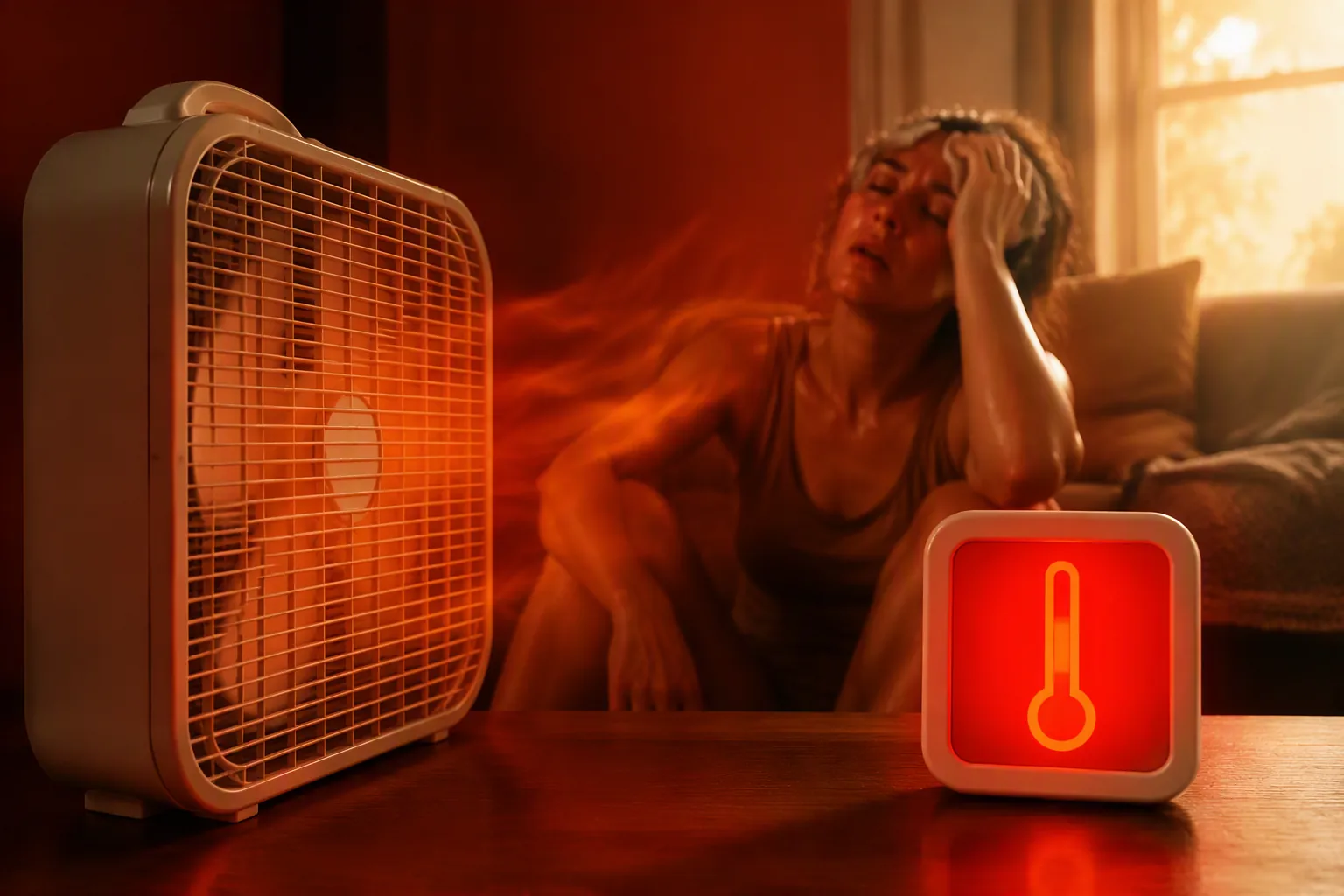
That rule is where many family plans fail. A parent may say the fan is on, the windows are open, and the house is fine. If the indoor thermometer says 91°F, 94°F, or higher, the next step is not a bigger fan. It is air-conditioning, a cooler room, a cooling center, a shaded air-conditioned public place, a cool shower or bath if safe, cool cloths, or relocation to someone else’s home until the room is no longer above that danger point.[5]
A hot night removes the recovery period
Daytime heat is not the whole problem. Experts from Duke’s Heat Policy Innovation Hub, quoted by PBS NewsHour in June 2026, warned that when nighttime temperatures stay above 75°F, the body has less chance to recover and mortality risk rises sharply.[6]
For caregiving, that changes the schedule. A home that feels tolerable at 8 p.m. may still be unsafe for sleeping if the bedroom stays warm all night. On those nights, check the room where the older adult sleeps, not just the living room. If only one room can be cooled, make that the sleeping area or create a safer “cool corner” with air-conditioning, shade, a chair, water within reach, and a clear path to the bathroom.
What to do inside each heat-index band
80°F to 90°F: Caution
This is the range where it is easiest to sound overprotective and where prevention is cheapest. For a healthy, independent older adult with working air-conditioning, the plan may be modest: avoid heavy outdoor chores, do errands early, keep water nearby unless a clinician has set fluid limits, and check that the house cools below the heat-index risk.
For a person taking diuretics, living alone, recovering from illness, or spending time in direct sun, treat Caution as the start of active management. That may mean putting a digital thermometer in the main room, confirming the air conditioner works before the afternoon, and agreeing on a check-in before the heat index climbs further. The goal is not to win an argument about comfort. It is to catch the day before weakness, dizziness, or confusion turns into a fall.
90°F to 103°F: Extreme Caution
This is the 97°F forecast problem. For an older adult, the day should be planned around staying cool, not around finishing the normal list. Outdoor chores wait. Walks move to early morning only if conditions are still safe. Medical appointments, pharmacy pickups, and grocery trips should be moved, shortened, or handed off when possible.
The check-in should produce facts. Ask for the thermostat reading or the indoor thermometer reading. Ask which room they are sitting in. Ask whether the air conditioner is on and whether cool air is actually coming out. Ask about dizziness when standing, unusual tiredness, nausea, headache, muscle cramps, or confusion. If the answer is “I’m fine” but the room is above 90°F and there is no air-conditioning, treat the room reading as more reliable than the reassurance.
Extreme Caution is also where the fall-prevention issue becomes practical. Heat-related dehydration, weakness, lightheadedness, and slower thinking can make the bathroom walk or front-step trip more dangerous. Keep pathways clear, move water and a phone within reach, discourage unnecessary stairs, and do not send an overheated older adult into a shower without thinking through slip risk and supervision.
103°F to 124°F: Danger
At Danger level, the plan changes from “reduce exposure” to “control the environment.” If the home is air-conditioned and staying cool, keep the person there and limit movement in and out. If the home is not staying cool, arrange another cooled place. A neighbor’s cooled living room, a family member’s home, a senior center, a library, a mall, or a cooling center is safer than waiting in a hot house because the person does not want to be a bother.
This is also the point where an older spouse may not be enough of a safety net. The spouse may be heat-vulnerable too, may miss confusion because it develops gradually, or may not be physically able to help someone who becomes weak. If the person at risk lives with another older adult, the check-in plan still needs someone outside the home who can visit, drive, or call for help.
If there are mild symptoms, cool the person immediately and call a clinician or nurse line for guidance, especially with heart disease, kidney disease, diabetes, dementia, or heat-sensitive medications. If symptoms suggest heat stroke, skip the nurse line and call 911.
125°F and above: Extreme Danger
Extreme Danger is not a day to test independence. The older adult should not be outdoors except for essential, protected movement to a cooler place. If the home cannot be kept cool, relocation should happen before symptoms start. At this level, the safest family plan is boring and early: confirm transportation, confirm the destination is cool, confirm the phone is charged, and confirm someone knows whether the person arrived.
If an older adult is confused, fainting, unable to stay awake, or deteriorating in this heat, do not spend time negotiating about whether they feel sick. Call 911 and begin cooling while help is on the way.
Symptoms override the heat-index category
Forecast thresholds help decide how cautious to be before anything goes wrong. Symptoms decide what happens after the body is already struggling. Heat cramps can show up as painful muscle spasms. Heat exhaustion can include cool, pale, or clammy skin, heavy sweating, weakness, dizziness, headache, nausea, vomiting, fainting, or a fast pulse.[7]
Heat exhaustion needs immediate cooling: stop activity, move to a cooler place, loosen clothing, use cool cloths or a cool shower if safe, and sip water if the person is fully alert and not under fluid restriction. If symptoms worsen, do not improve with cooling, or include fainting, get medical help promptly.[7][10]
Heat stroke is the emergency line. Call 911 immediately for confusion, slurred speech, strange behavior, loss of consciousness, inability to stay awake, very high body temperature, or hot red skin; Mayo Clinic describes heat stroke as a core body temperature of 104°F or higher, while NOAA heat-illness materials describe severe heat stroke temperatures reaching 106°F or higher.[7][8]
Do not wait for the classic textbook picture. Cleveland Clinic notes that older adults may present differently, with confusion, agitation, slurred speech, dizziness, weakness, or fainting rather than the obvious hot, dry skin people expect.[9]
- Call 911 now: confusion, slurred speech, fainting, loss of consciousness, very high temperature, severe weakness, or rapid worsening.
- Cool while waiting: move to shade or air-conditioning, remove excess clothing, use cool cloths, misting, fanning with cool air, or a cool bath or shower if it can be done safely.
- Do not force fluids: if the person is confused, vomiting, very drowsy, or unconscious, focus on emergency care and cooling.
Make the check-in concrete
The person doing the checking needs a script that does not depend on the older adult volunteering symptoms. “Are you hot?” is too easy to dismiss. “What does the indoor thermometer say?” is harder to wave away.
- Ask for the indoor temperature in the room being used most.
- Ask whether the air conditioner is on and whether the room feels cooler than earlier.
- Ask whether they have been outside, in direct sun, or in a parked car.
- Ask about dizziness when standing, weakness, nausea, cramps, headache, unusual sleepiness, or confusion.
- Ask what they will do if the house rises above 90°F indoors.
- Confirm who can visit if the answers do not make sense or the call sounds different than usual.
For a parent who dislikes being managed, the most useful agreement may be narrow: on Extreme Caution or worse days, they read the indoor thermometer out loud, keep the phone nearby, stay out of direct sun, and agree to move to cooling if the house goes over 90°F. That is not a loss of independence. It is a way to prevent the fall, fainting spell, or delayed emergency call that takes independence away.
The safety endpoints
- Stay in: when the heat index is 90°F or higher, the home is staying cool, symptoms are absent, and outdoor errands can wait.
- Seek cooling elsewhere: when the indoor temperature is above 90°F, the air conditioner cannot keep up, the sleeping area stays hot overnight, or the person is high-risk and alone.
- Call a clinician or pharmacist: before or during heat waves if medications, fluid limits, kidney disease, heart disease, diabetes, dementia, or repeated heat symptoms complicate the plan.
- Call 911 immediately: for confusion, slurred speech, fainting, loss of consciousness, very high body temperature, severe weakness, or rapid worsening despite cooling.
References
- Heat Index — National Weather Service
- Heat and Older Adults (Aged 65+) — CDC
- Heat and Medications – Guidance for Clinicians — CDC
- Medications and Heat Intolerance — AARP, July 2026
- About Heat and Your Health — CDC
- How to stay cool and safe in a heat wave — PBS NewsHour, June 2026
- Heat exhaustion or heat stroke? — NOAA
- Heatstroke — Mayo Clinic
- Heatstroke — Cleveland Clinic
- Extreme Heat Safety — American Red Cross
Related reading
Noticed something outdated or inaccurate on this page? Flag a correction. We review every report against CDC, NIA, and AARP HomeFit guidance before updating a page.
Part of the Fall Prevention section.