
STEADI: intervene
Extreme Heat Safety Tips for Seniors During a Heatwave
Extreme heat is an overlooked fall trigger for older adults. This guide explains the heat-dehydration-fall cascade and provides a combined crisis and planning checklist for caregivers.
Extreme heat safety for older adults during a heatwave needs to start before anyone is actually on the floor. Hot weather can make an older adult more fall-prone by drying them out, lowering blood pressure when they stand, intensifying medication side effects, and wearing down the leg strength and attention they need for a safe walk to the bathroom.
That is why “drink water and stay cool” is too thin as a plan for an 82-year-old who already gets lightheaded standing up from a chair. The safer question is more specific: what can be done today so heat does not turn dizziness into a fall, and a fall into a head injury?
The CDC lists adults 65 and older as a higher-risk group during extreme heat and notes that older adults may be less likely to sense and respond to temperature changes, especially when they have chronic conditions or take certain medications. [1] A large Mayo Clinic Proceedings study gives the fall-prevention side of that warning some needed weight: among adults 65 and older, 37.9% were dehydrated on admission, and dehydration was associated with higher odds of falls, with an odds ratio of 1.13. [2]
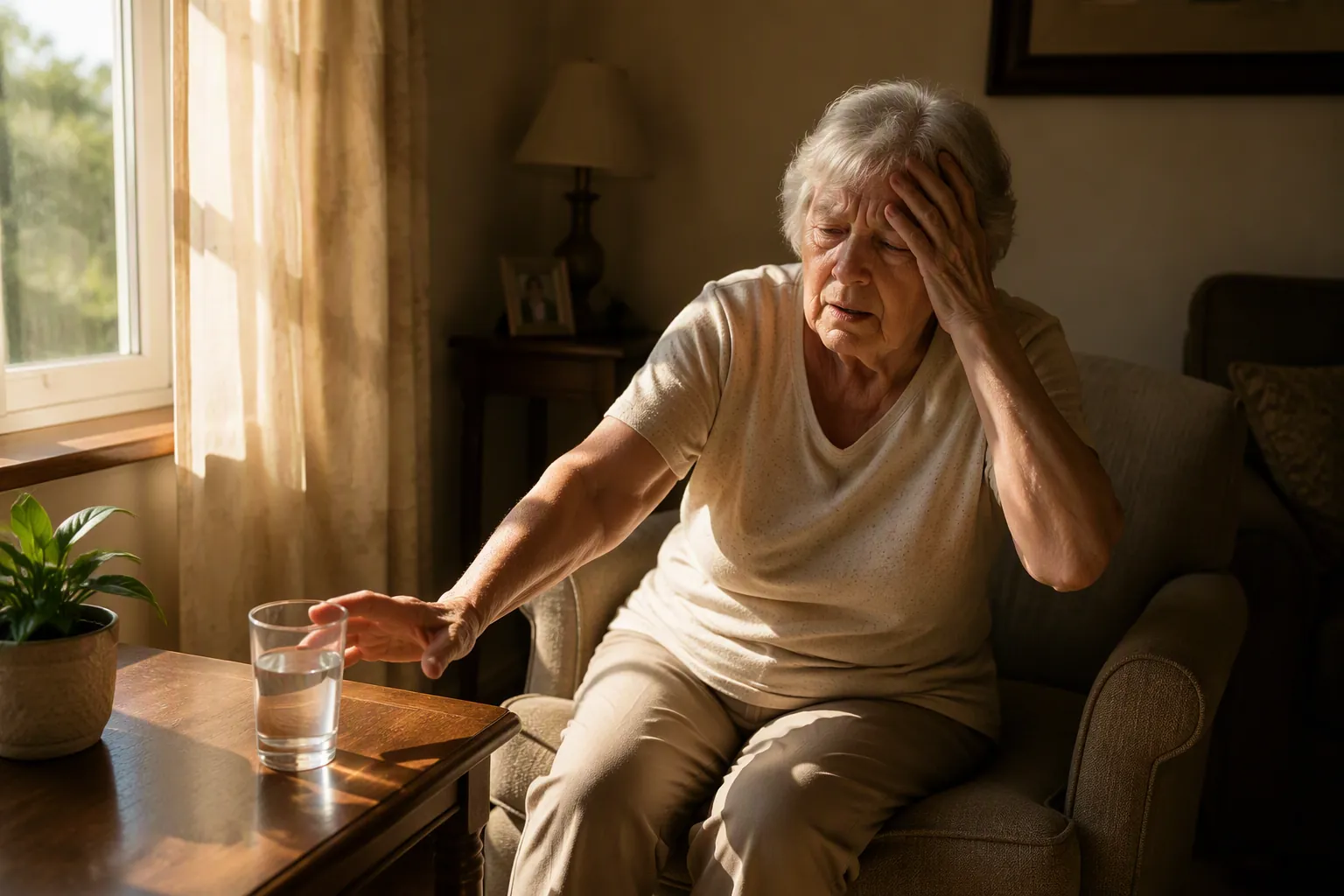
Why Heat Makes a Steady Person Unsteady
Dehydration is not just “not enough water.” For an older adult trying to stand, turn, and walk across a room, it can mean lower circulating fluid volume, more dizziness, slower correction when blood pressure drops, and less margin for one bad step. The person may not feel thirsty enough to match what the heat is taking away. The CDC notes that older adults’ ability to adjust to temperature can be reduced, and Institute of Medicine intake targets are about 2.7 liters per day for older women and 3.7 liters per day for older men from all sources, not just plain water. [1]
The pill bottle matters here. In the same Mayo Clinic Proceedings analysis, antidepressants had the strongest independent association among the medication classes highlighted in the study, with an odds ratio of 1.58 for falls or death; hypnotics had an odds ratio of 1.31; loop diuretics had an odds ratio of 1.26. [2] The CDC’s clinician guidance on heat and medications describes how some medicines can affect sweating, fluid balance, blood pressure, sedation, kidney function, and the body’s ability to regulate temperature. [3]
This does not mean a family should stop a diuretic, antidepressant, sleep medication, blood pressure medication, antihistamine, or pain medication on its own. It means heat advisories should trigger a medication-awareness check: which medicines could make dehydration, dizziness, sleepiness, or low blood pressure more dangerous this week, and who is the prescriber to call if symptoms change?
A heatwave also changes the home itself. A fan that felt helpful in June may not be enough in a late-July room with trapped afternoon heat. A short walk to the bathroom becomes harder after poor sleep. A hallway that is usually safe becomes risky when the person is rushing because they drank more fluids, woke up at night, or felt suddenly nauseated. Heat does not have to create a brand-new fall risk. It can stack several familiar ones at the same time.
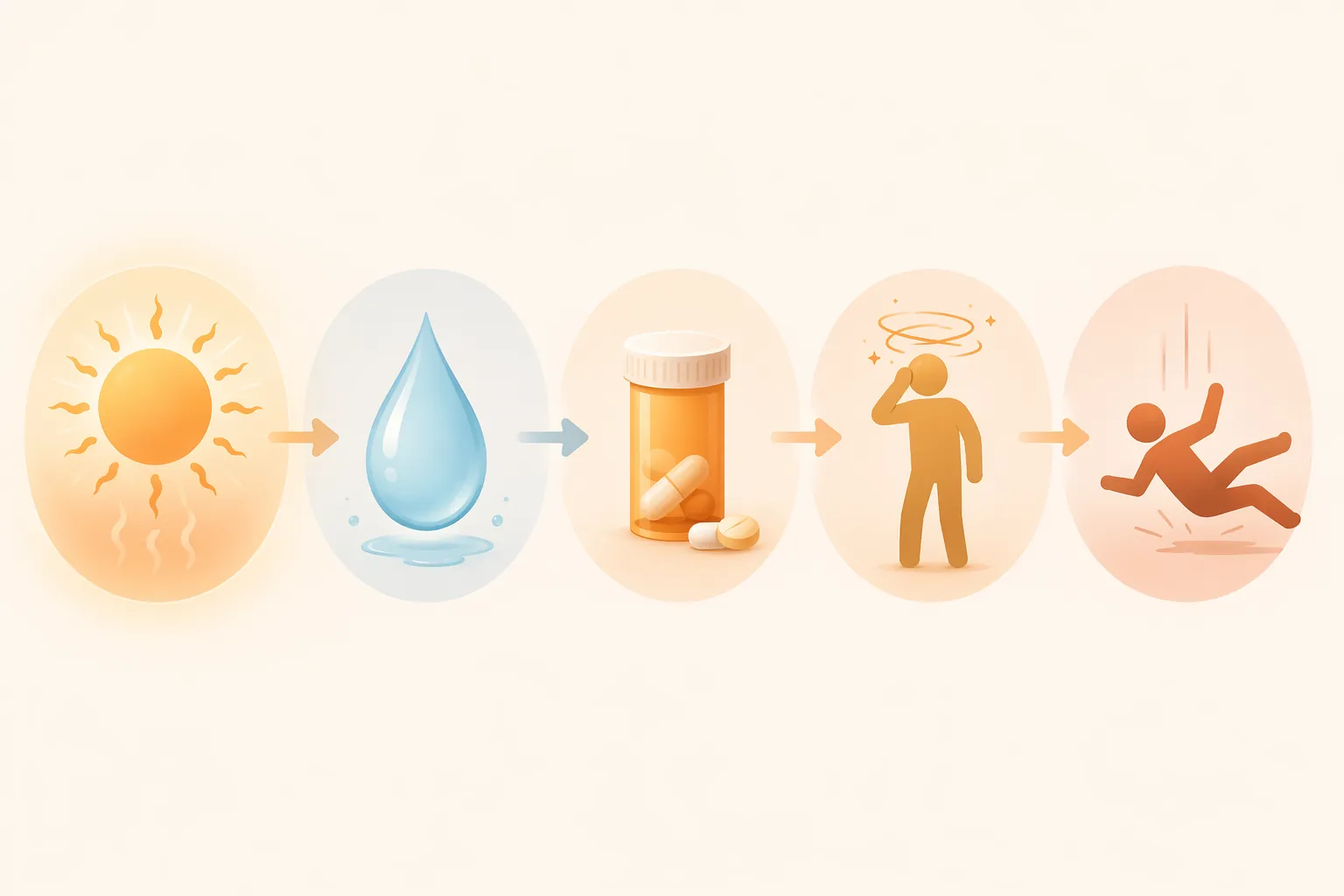
The Heat-to-Fall Cascade to Watch For
The pattern often looks ordinary until it is not. The room is warm. Lunch was light. The water glass is still full. A diuretic was taken that morning. The older adult stands up, pauses, says they are “just a little dizzy,” and starts walking anyway.
| What heat changes | What you may notice | Why it matters for falls |
|---|---|---|
| Fluid balance | Dry mouth, less urination, darker urine, weakness, new dizziness | Less fluid can make standing and walking less stable. |
| Blood pressure response | Lightheadedness after standing, needing to hold furniture, near-fainting | A brief pressure drop can be enough to cause a stumble or collapse. |
| Medication effects | More sleepiness, slower reactions, more dizziness, unusual confusion | Side effects that were manageable in mild weather may be less manageable in heat. |
| Fatigue and sleep | Napping more, walking slower, nighttime bathroom trips | Tired legs and poor attention make familiar routes more hazardous. |
| The walking path | Clutter moved toward the coolest room, wet entryways, dim hallways | Heat changes where people spend time and which route they use most. |
The danger is not only falling. Heat-related fainting, or syncope, can lead directly to fall injuries, including head injury. [6][7] That combination deserves a different level of attention than a mild complaint of being warm.
What to Check During an Active Heatwave
In an active heat advisory, the goal is not to inspect everything. It is to find the few things that could turn the next standing transfer into a fall. Start with the person, then the room, then the route they are about to walk.
Body and Behavior
- Ask about dizziness before standing, not after they have started walking.
- Look for new weakness, unusual sleepiness, headache, nausea, heavy sweating, stopped sweating, or behavior that seems off.
- Notice whether they are using furniture, walls, or door frames more than usual.
- Check whether they have urinated less than usual or whether urine is darker than usual.
- Do not rely on thirst as the main signal. In older adults, waiting until they feel thirsty can mean the plan has already fallen behind.
Room Temperature and Cooling Access
If the home is hot and the person is dizzy, weak, confused, or newly unsteady, moving to a cooler location is fall prevention. The Red Cross advises spending at least a few hours in an air-conditioned place when home cooling is not adequate, and fans alone are insufficient when indoor heat is in roughly the 95–99°F range. [5]
That cooler location might be a bedroom with a window unit, a neighbor’s apartment, a library, a senior center, a mall, or a cooling center. The important part is the logistics: a chair ready, a safe route to the car or elevator, water within reach, medications not left behind, and no rushed walking while lightheaded. If air conditioning is limited, this guide to cooling seniors without AC can extend the cooling part of the plan.
Fluid Access
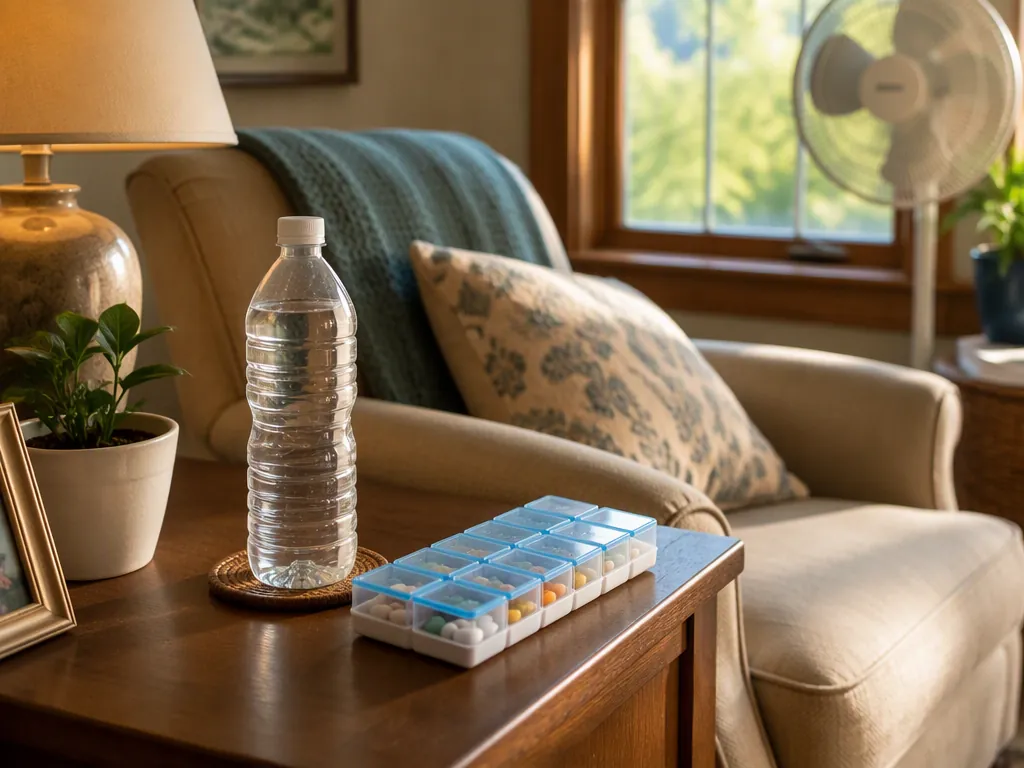
A filled bottle beside the usual chair is more useful than a general reminder from another room. Put fluids where the person already sits, eats, takes pills, and watches television. If swallowing limits, fluid restrictions, kidney disease, heart failure, or other medical instructions apply, the hydration plan should follow the clinician’s limits rather than a generic target.
Medication Clues
During a heatwave, write down recent medication timing before calling a clinician: diuretics, antidepressants, sleep aids, blood pressure medicines, antihistamines, and pain medicines are all worth naming. The CDC notes that some medications may increase heat sensitivity or complicate the body’s response to heat. [3] For a broader fall-risk medication conversation, use a medication review for fall risk as a starting point, and review senior-specific over-the-counter choices such as pain medication safety before hot weather makes side effects harder to sort out.
Do not skip, halve, or stop a medication because it appears on a heat-risk list. The safer action is to call the prescriber or pharmacist and describe the symptoms, the heat exposure, the fluid intake pattern, and the fall concern.
The Next Walking Route
Before the person stands, look at the next ten steps. Is the path from chair to bathroom clear? Is a walker or cane within reach, not across the room? Is the floor dry near the entryway, kitchen, or bathroom? Is the coolest room creating a new clutter pile because fans, cords, laundry baskets, or extra chairs were moved there?
If dizziness is present, slow the transfer down. Sit upright first. Pause. Stand with support. Pause again. Walking while trying to “shake it off” is exactly the moment a heat-related fall can happen.
When Heat Plus a Fall Becomes an Emergency
Call 911 for signs of heat stroke, including confusion, loss of consciousness, seizure, very high body temperature, or hot, red skin. Jefferson Health describes a body temperature of 103°F or higher as a heatstroke warning sign in older adults. [8] The CDC’s medication guidance also matters here because beta blockers and some other medications can make the expected fast pulse less reliable as a warning sign. [3]
Call 911 after fainting in the heat, especially if the person fell, hit their head, cannot get up, has new confusion, has chest pain, has trouble breathing, has new weakness on one side, or is taking a blood thinner. A fall after syncope is not just a heat episode and not just a fall episode. It can be both.
While waiting for help, move the person to a cooler place if it can be done safely, loosen excess clothing, apply cool cloths, and do not give fluids to someone who is unconscious, severely confused, vomiting repeatedly, or unable to swallow safely. If there is possible head, neck, hip, or spine injury, avoid dragging or lifting them unless there is an immediate environmental danger.
The Plan to Make Before the Next Heat Advisory
Heat planning works best when it is not framed as taking over. The point is to make ordinary movement steadier: getting out of bed, reaching the bathroom, answering the door, taking medication, preparing food, and moving to the coolest room without rushing or improvising.
Set a Hydration Schedule That Does Not Depend on Thirst
Choose times, containers, and locations. For example, a caregiver and parent might agree on a small glass with morning medications, a filled bottle by the chair before noon, fluids with lunch, another refill in the afternoon, and a smaller evening amount if nighttime bathroom trips are already a fall risk. That example is only a pattern, not a medical prescription.
- Use visible containers so someone can tell whether the plan is happening.
- Include water-rich foods if appetite is better than thirst.
- Ask the clinician what daily fluid range is safe if heart failure, kidney disease, low sodium, or fluid restriction is part of the medical history.
- Pair hydration with safe standing habits: sit, pause, stand, pause, then walk.
If dehydration comes from illness rather than heat alone, the fall risk can rise quickly. This related guide on dehydration as a fall emergency may help families recognize when diarrhea, vomiting, or poor intake changes the urgency.
Decide Where Cooling Actually Happens
A cooling plan should name the room, the backup location, and the transportation method. “Use the air conditioner” is not enough if the unit is in a bedroom upstairs and the older adult spends the afternoon in a downstairs chair. “Go to a cooling center” is not enough if no one knows the hours, the route, or whether the person can safely wait outside for a ride.
- Identify the coolest room and clear the path to it before the heat arrives.
- Keep a stable chair, water, phone, charger, medication list, and mobility aid in or near that room.
- List two air-conditioned backup places: one nearby and one reachable if the neighborhood loses power.
- Avoid making the bathroom the only cool destination; heat-related bathroom rushing is a familiar setup for falls.
Build a Power-Outage Backup
Extreme heat becomes more dangerous when the power fails. The plan should answer: who checks in, how the older adult charges a phone, where medications that need temperature control go, which neighbor has a key, and where the person can cool off if elevators, lights, or air conditioning stop working. For broader emergency planning, use this power-outage planning guide and adapt it for heat rather than storms.
Do a Summer Fall Audit, Not Just a General Fall Audit
The Red Cross emphasizes preparing the home before extreme heat, including checking cooling systems and planning where to go if the home becomes too hot. [5] For fall prevention, the summer version of that preparation should focus on the routes heat changes.
| Area | Summer fall-risk check |
|---|---|
| Entryways | Add non-slip mats where water is tracked in from gardening, sprinklers, pools, or sudden storms. |
| Path to the coolest room | Remove cords, fans, baskets, and extra chairs from the walking line. |
| Bathroom | Check grab bars, bath mats, and the route used during more frequent hydration-related trips. |
| Bedroom to bathroom | Add nightlights for heat-related insomnia or nighttime urination. |
| Kitchen | Keep fluids and easy food reachable so the person does not climb, bend, or carry too much while tired. |
| Porch or garden path | Watch for hoses, wet steps, sandals without traction, and standing too quickly after bending. |
Schedule the Medication Review Before the Forecast Turns Red
A heatwave is a poor time to discover that three different prescriptions can contribute to dizziness, sedation, or fluid loss. Ask the primary care clinician or pharmacist to review fall risk and heat risk together, especially if there has already been a stumble, fainting episode, near-fall, or new confusion in hot weather.
Bring the actual medication list, including over-the-counter sleep aids, allergy pills, pain relievers, supplements, and “as needed” medicines. Ask what symptoms should trigger a call, what fluid range is safe, whether any timing adjustments should be clinician-directed during heat, and which medication side effects could look like ordinary tiredness.
If the older adult has had a recent fall or keeps reporting dizziness, a professional fall-risk assessment is appropriate. Medicare-related fall prevention services and Annual Wellness Visit conversations can help organize that next step; this Medicare fall prevention overview explains where that discussion may fit.
Why the Urgency Is Real, Even If the Fixes Are Ordinary
Heat is already a serious health threat. The WHO reports that heat-related mortality among adults older than 65 increased by about 85% between 2000–2004 and 2017–2021. [4] Health in Aging has also described more than 600 heat-related deaths in the United States each year, with most occurring in people older than 50, a conservative pre-2020 baseline rather than a ceiling. [6]
Those numbers matter, but they are not the daily work of caregiving. The daily work is noticing that a parent is more unsteady in the heat, filling the bottle before thirst shows up, moving the favorite chair into the cooler room, clearing the route to the bathroom, and calling a prescriber instead of guessing about medications.
Heat safety and fall prevention are not separate chores during a heatwave. Scheduled hydration, reliable cooling, medication review, and safer walking routes belong in the same plan because the body experiences them at the same time.
References
- Heat and Older Adults Aged 65+. CDC.
- Association Between Dehydration and Falls. Mayo Clinic Proceedings. 2020.
- Heat and Medications – Guidance for Clinicians. CDC.
- Climate Change and Health. WHO.
- Extreme Heat Safety. American Red Cross.
- Hot Weather Safety Tips for Older Adults. Health in Aging / AGS. July 2019.
- How Seniors Can Stay Safe This Summer. Brown Health.
- How to Recognize the Signs of Heatstroke in Older Adults. Jefferson Health.
Related reading
Noticed something outdated or inaccurate on this page? Flag a correction. We review every report against CDC, NIA, and AARP HomeFit guidance before updating a page.
Part of the Fall Prevention section.