
STEADI: intervene
How the Sunshine Protection Act Changes Senior Morning Safety
If the Sunshine Protection Act makes daylight saving time permanent, winter mornings will be dark until 8 a.m. or later across most of the U.S. This guide provides a room-by-room modification checklist to prevent the spike in fall injuries during those dark, icy mornings.
As of Q3 2026, the Sunshine Protection Act is still conditional, not settled law: the House passed H.R. 139 on July 14, 2026, by a 308-117 vote, and the Senate has not yet voted on it.[1] But the practical question is already worth answering because the Sunshine Protection Act’s impact on an older adult’s daily routine would show up in ordinary places: the bathroom doorway, the kitchen floor, the porch step, the driveway, and the sidewalk before a morning appointment.
If daylight saving time became permanent, many winter sunrises would move well past 8 a.m. Modeled examples include New York at 8:20 a.m., Atlanta at 8:42 a.m., Minneapolis at 8:51 a.m., and Seattle at 8:57 a.m.[2] Those times are not just clock trivia. They mean trash day, early bloodwork, a church ride, a dog that needs to go out, or a parent making coffee could all happen before natural light reaches the steps.
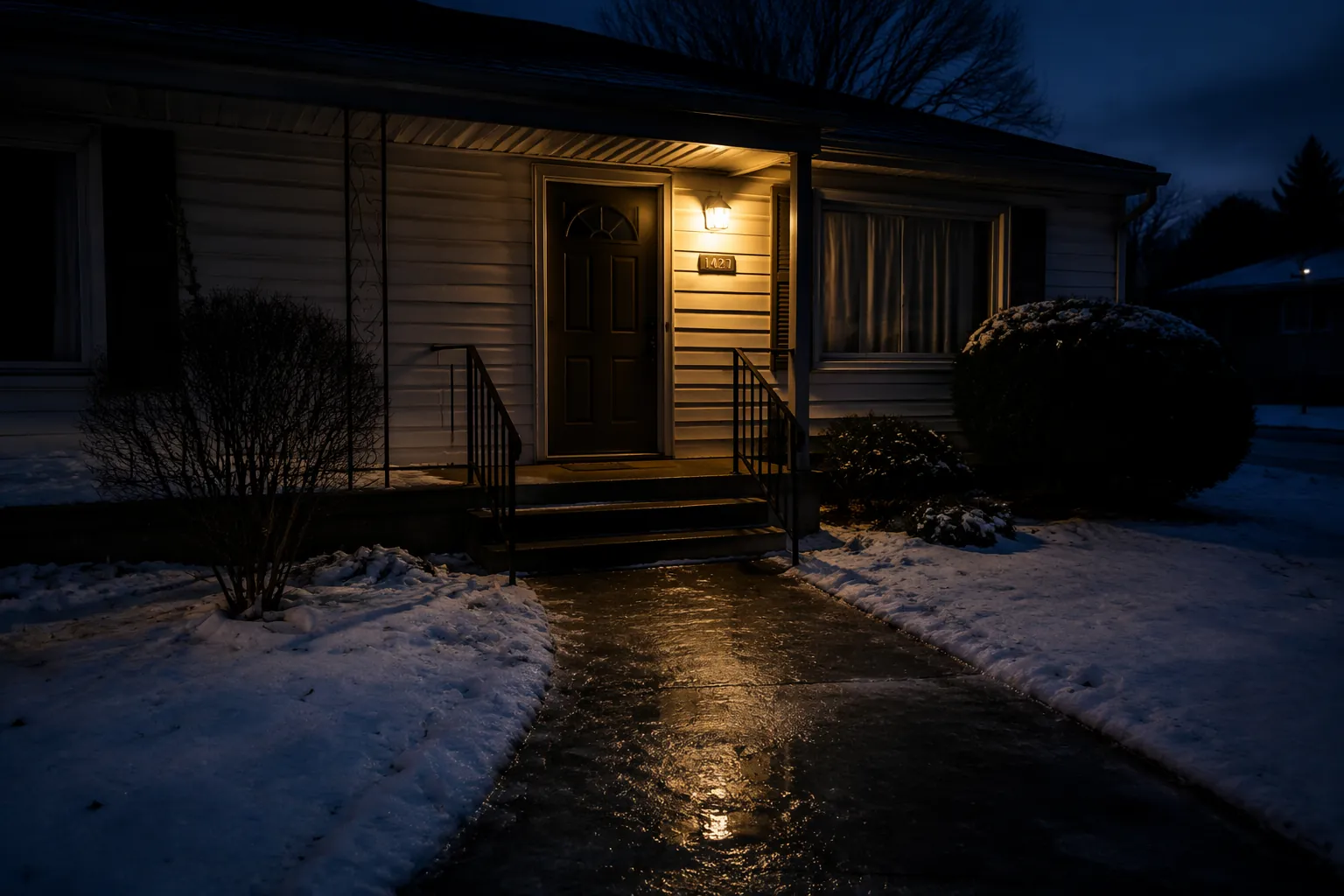
This is not a reason to panic, and it is not proof that permanent daylight saving time has already caused a specific new fall rate among older adults. The long-term older-adult evidence around permanent DST is still limited. What we can say more responsibly is narrower and more useful: falls are already a serious risk for older adults, and darker winter mornings would place that risk inside routines families can predict and inspect.
The CDC says more than 1 in 4 older adults falls each year, and falls are the leading cause of injury death for people 65 and older.[3] That is enough reason to treat an 8:40 a.m. winter sunrise as a home-safety problem, not only a political argument.
Start with the morning route, not the clock
A standard winter checklist still matters. Ice, wet shoes, bulky coats, weak outdoor bulbs, and loose mats are not new hazards. If you have not done the basic seasonal sweep yet, use Winter-Proof Your Parent's Home to Prevent Cold-Weather Falls as the baseline. The extra layer here is different: inspect the home as if sunrise is unavailable during the active morning.
Do the walk-through at the same hour the older adult actually moves around. If Mom gets up at 6:30, do not inspect at noon. If Dad leaves for dialysis pickup before 8, open the same door he uses, with the same cane, shoes, keys, and coat. A porch bulb that looks adequate from the driveway may still leave the lock, the bottom step, or the cane tip in shadow.
| Morning segment | What to test in darkness | Likely fix |
|---|---|---|
| Bed to bathroom | Can the person stand, find glasses or cane, and reach the toilet without crossing a dark gap? | Motion-activated nightlights, clear floor path, grab bars where needed |
| Bathroom to kitchen | Is the route lit before the overhead lights are reached? | Baseboard nightlights, reachable switches, no loose rugs |
| Hallway and stairs | Are step edges, handrails, and landings visible from both directions? | Stairway lighting, contrast strips, secure rails |
| Kitchen to entry | Can medication, breakfast, shoes, coat, phone, and keys be handled without clutter underfoot? | Task lighting, storage at waist height, a stable chair or bench |
| Entry to outside surface | Are the lock, landing, step edges, railing, walkway, and ice patches visible before sunrise? | Stronger entrance lighting, pathway lighting, traction treatment, snow and ice plan |
Bed to bathroom: remove the first dark gap
The first trip of the morning is often not a planned outing. It is the bathroom. That makes it easy for family members to underestimate, because nobody is putting on boots or announcing they are leaving the house. The safety question is simpler: from the side of the bed, can the older adult see where to place both feet, locate glasses, reach the cane or walker, and get to the bathroom without stepping into darkness?
Place light where the movement begins, not only where it ends. A nightlight inside the bathroom helps after the person has already crossed the bedroom threshold. Under permanent DST, the darker morning may make the bedroom-to-hallway transition the weak point. Motion-activated nightlights along the baseboard can give enough orientation without requiring someone to find a switch while half awake. NCOA includes motion-sensored fall alarm systems and grab bars among winter fall-prevention interventions for older adults.[4]
A useful test is to stand at the bed and look toward the bathroom with the normal morning lights off. If the cane is leaning by the closet instead of the bed, move it. If slippers are under a chair, move them. If a rug edge lifts when a foot brushes it, remove or secure it before winter. These are small corrections, but they happen at the hour when balance, urgency, and low light can meet.
Bedroom to kitchen: light the route before the coffee starts
Medication, breakfast, pet food, and the first cup of coffee pull people toward the kitchen before the house is fully awake. The danger is not only a dark kitchen. It is the dim stretch between the bedroom, hallway, bathroom, and kitchen, especially where carpet changes to tile or wood.
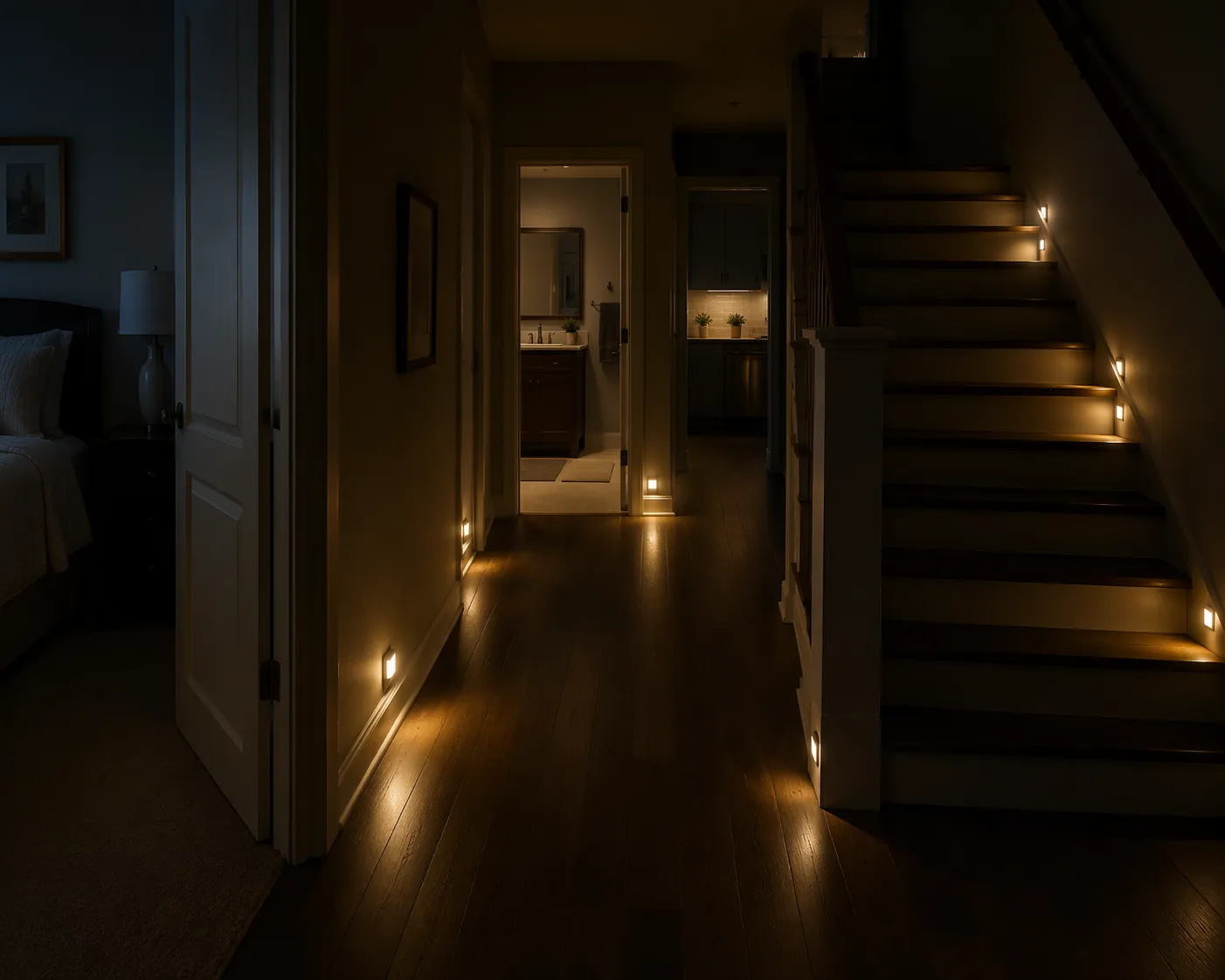
Treat motion lights as a connected route. One bright plug-in light in the hallway can still leave the corner by the kitchen table dark. Lights should reveal thresholds, furniture legs, rug edges, and the place where the older adult turns. If a parent uses a walker, check the full turning radius. If the walker catches on a basket, dog bowl, or side table in daylight, it will not behave better in a dark January morning.
- Put the morning medication, water, and glasses in a consistently lit place.
- Keep pet bowls, cords, and laundry baskets out of the bedroom-to-kitchen path.
- Use warm, low-glare lights rather than a single harsh bulb that creates deep shadows behind furniture.
- Make sure switches can be reached before the person steps into the room, not after crossing it.
Hallways and stairs need continuous lighting, not scattered gadgets
Stairs are where a house can look safe in pieces and still fail as a route. A nightlight at the top does not show the bottom landing. A ceiling fixture may light the wall but not the step edges. A handrail may be sturdy but disappear into shadow at the turn.
Walk the stairs in both directions before sunrise. Look for three things: whether each step edge is visible, whether the handrail is visible and reachable before the first step, and whether the landing is lit enough for a pause. NCOA specifically identifies stairway lighting as a winter fall-prevention measure.[4] In a permanent-DST winter, that lighting is not only for late-night use. It may be part of the regular morning routine.
If the older adult rarely uses the basement or second floor in the morning, do not ignore it entirely. Laundry, a freezer, holiday bins, or a breaker box can create exceptions. Falls often live in the exceptions families explain away: “She almost never goes down there,” until the morning she does.
The entryway is the inspection point most families miss
The entryway deserves more attention than a normal winter checklist usually gives it, because it combines several tasks at once. The older adult may be locking the door, managing a cane or walker, holding keys, picking up a package, stepping around a doormat, checking for ice, and turning toward a railing. In daylight, those actions are merely annoying. Before sunrise, each one competes for vision and balance.
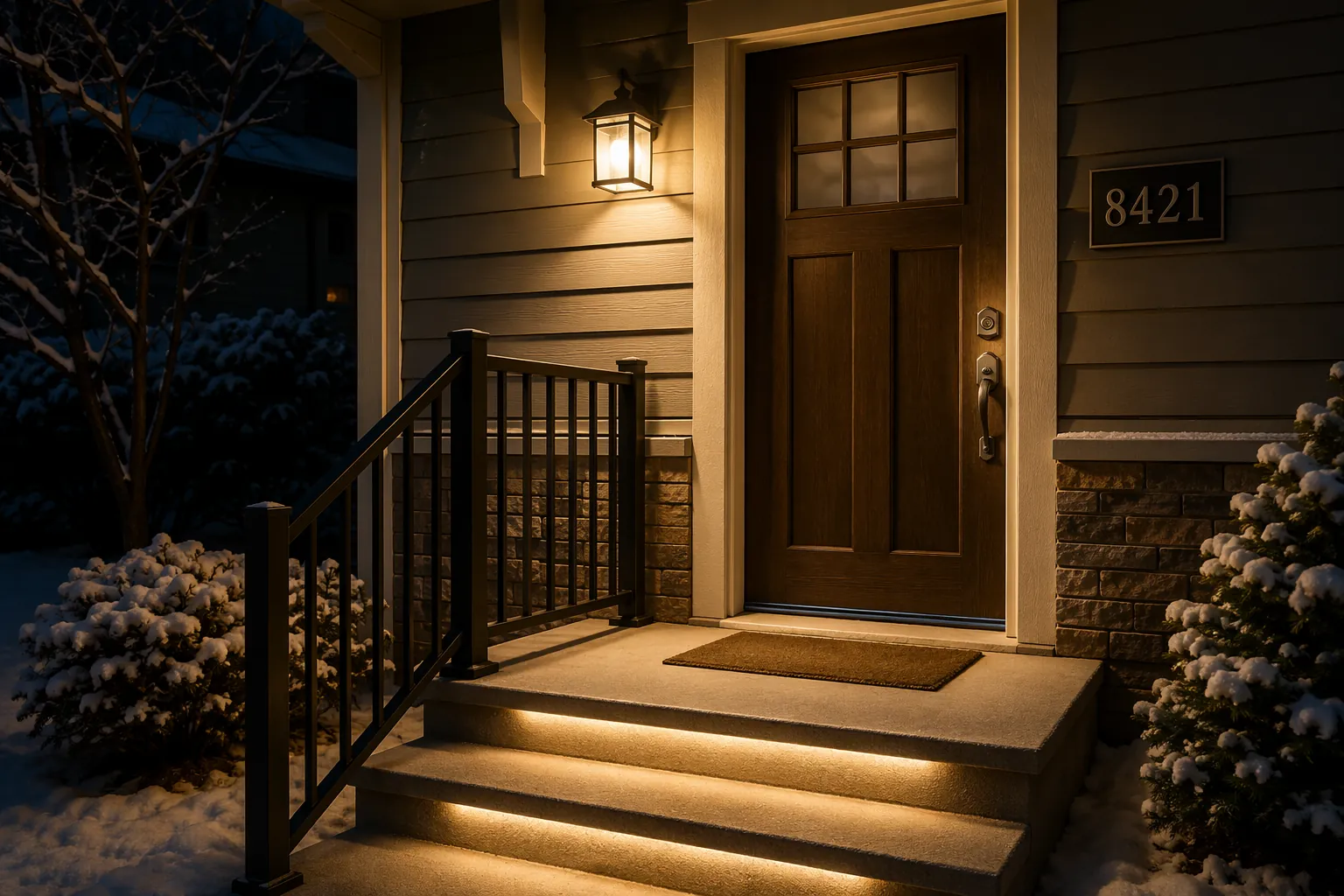
Do not ask whether the porch light works. Ask what it reaches. Stand inside the doorway, open the door as the older adult would, and check whether light falls on the lock, keyhole, handle, threshold, landing, step edges, railing, and the first few feet of walkway. Then stand outside and check the return trip: can the person find the lock and handle while holding a cane, mail, or a grocery bag?
A weak porch bulb can create a false sense of safety. It may make the door look lit from the street while leaving the bottom step invisible from the person’s actual angle. If the fixture points outward but not down, consider adding a second light, changing the fixture direction, or adding pathway lighting that overlaps with the porch light. The goal is not a brighter-looking house. The goal is to remove the shadow exactly where a foot, cane tip, walker wheel, or hand must land.
- Lock and key area: visible without the person leaning forward into the threshold.
- Threshold: no dark lip, curled mat, or loose weather stripping where the foot crosses.
- Landing: large enough and bright enough for a full pause before stepping down.
- Step edges: visible from the doorway and from the walkway.
- Railing: lit at the grasp point, not only at the post.
- Cane or walker parking spot: placed by the door actually used in the morning.
- Package and mail area: away from the swing of the door and off the walking line.
If the home has more than one door, inspect the door the older adult really uses, not the one the family wishes they used. Many people keep using the garage door because the car is there, the side door because the dog goes out there, or the back door because that is where the trash bins sit. Safety work belongs on the real route.
Outdoor traction changes when ice is encountered before sunrise
Winter ice is already a hazard. Permanent DST would not invent it. The difference is timing: more older adults may meet that ice in darkness during normal morning activities. That matters because the person may not see the glossy patch at the bottom step, the refrozen strip near the mailbox, or the uneven edge where the driveway meets the walk.
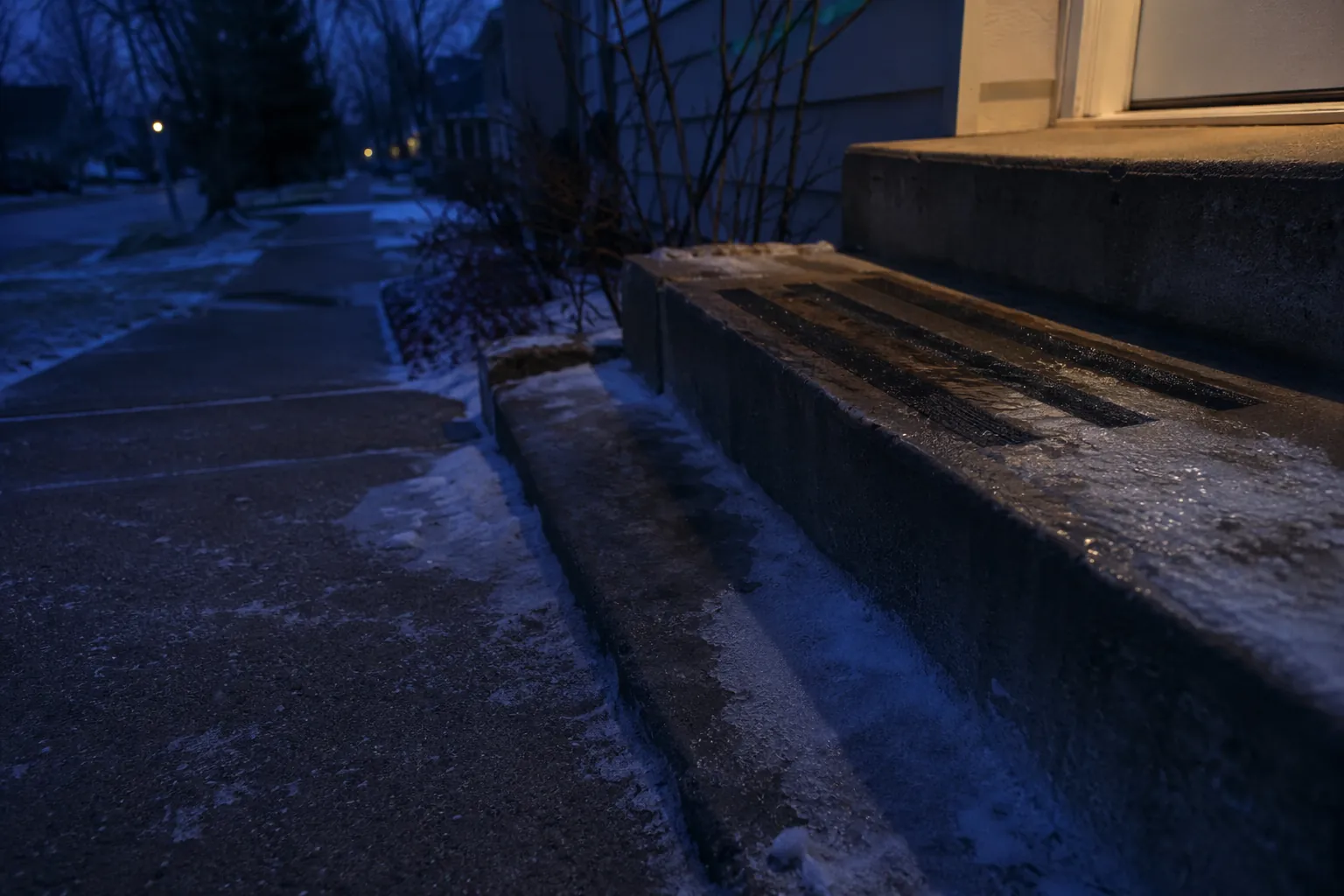
NCPSSM’s discussion of permanent daylight saving time includes a warning from Dr. Benjamin Liptzin of Baystate Medical Center that dark winter mornings could leave older adults heading out on icy sidewalks, with concern about hip-fracture risk.[5] That concern fits what a household inspection can actually change: lighting, traction, timing, and who clears the route before the first person steps outside.
Inspect the outside route from the threshold outward. The first danger is often not the sidewalk at the street. It is the step just below the door, where warm indoor air, snow tracked in by boots, or a dripping roof edge can create a slick patch. If the porch light does not reach that spot, the older adult may discover ice by stepping onto it.
- Add traction strips or other stable, weather-appropriate tread treatment to exterior steps.
- Keep de-icer or sand where it can be reached without crossing the icy area first.
- Check where roof runoff, clogged gutters, or shoveled snow piles refreeze across the walking line.
- Make the railing usable with gloves on, and keep it clear of snow.
- Use ice-gripper cane tips when appropriate; NCOA includes them among practical winter fall-prevention tools for older adults.[4]
- Arrange snow and ice clearing around the first morning departure, not only around the convenience of the person doing the shoveling.
The driveway deserves its own look if the older adult gets rides. A senior may be safest on the shoveled front walk but still need to cross a dark, sloped driveway to reach a waiting car. Ask where the car actually stops. Then light and clear that path, including the place where the door opens and the person turns to sit.
Morning departures need a slower setup
Darkness changes the order of work before an appointment. In daylight, someone may put on a coat, grab keys, and notice the wet step on the way out. Before sunrise, the route should be ready before the older adult is standing at the door with a ride waiting.
For recurring early trips, build a small departure station near the safest exit: shoes with reliable tread, cane or walker, gloves, phone, keys, glasses, and any appointment paperwork. Keep the station out of the walking path. If the person uses a medical transport ride, church ride, or family pickup, agree on the pickup door in advance so the lit and cleared route matches reality.
For weather-sensitive outings, a trip can be moved, delayed, or rerouted when conditions are poor. The site’s guide to how seniors use travel weather maps to avoid falls is a better place for that planning layer. Here, the home question is whether the older adult can safely reach the car, sidewalk, mailbox, trash bin, or dog-walking path before the sun is up.
Check your own sunrise, then inspect at that hour
The city examples make the issue visible, but they are not a substitute for checking your own location. Sunrise varies by exact city, position within a time zone, and time-zone boundaries. Save Standard Time provides a sunrise chart that readers can use to compare projected local winter sunrise times under different clock arrangements.[6]
Once you know the likely sunrise window, choose one ordinary morning routine and rehearse it in comparable darkness. Do not stage a perfect version. Use the normal slippers, the normal door, the normal leash, the normal trash bin, the normal porch light, and the normal pace. The inspection should reveal the small places where the house is asking an older body to guess.
When the fixes cost money
Some changes are inexpensive: moving a cane, replacing a bulb, removing a rug, adding plug-in nightlights, or keeping de-icer by the correct door. Others require more planning, such as hardwired exterior lighting, railings, improved stair lighting, bathroom grab bars, or professional snow-clearing service.
If the list is growing beyond a weekend project, use Home Modification Costs for Aging in Place for budget context. Some households may also want to review property tax relief for seniors and home safety when looking for ways to fund safety improvements. The safety order still stays the same: fix the route used first and most often in the dark.
The readiness test before winter
Before winter, the home should pass one plain test: the older adult can move from bed to bathroom, bathroom to kitchen, kitchen to entry, and entry to the outside walking surface without relying on sunrise.
That means the path is visible before the first switch, the handrail can be found before the first step, the cane or walker is by the door actually used, the lock and landing are lit, and the first icy surface is either treated, avoided, or visible. If permanent daylight saving time becomes law, the safest response is not a generic reminder to be careful in winter. It is a morning-lighting and traction plan built before the first dark, icy routine begins.
References
- House passes Sunshine Protection Act, experts warn of health impacts — WIFR
- Permanent daylight saving time would have major flaw: Dark mornings — Fox Weather
- Facts About Falls | Older Adult Fall Prevention — CDC
- Winter Fall Prevention Tips for Older Adults — NCOA
- Is Permanent Daylight Saving Time Healthy for Seniors? — NCPSSM
- Sunrise Chart — Save Standard Time
Related reading
Noticed something outdated or inaccurate on this page? Flag a correction. We review every report against CDC, NIA, and AARP HomeFit guidance before updating a page.
Part of the Fall Prevention section.