
STEADI: intervene
Prevent Heat-Related Deaths in Seniors: A Room-by-Room Checklist
A room-by-room checklist that translates heat safety guidelines into specific, measurable actions — from AC temperature settings to hydration volumes and fan usage thresholds — to help caregivers and older adults prevent heat-related illness and death at home.
Preventing heat-related deaths among seniors starts with a less comforting truth: many heat emergencies are not mysterious weather tragedies. They happen inside ordinary homes where something concrete could have been checked earlier — the thermostat number, whether the air conditioner was actually cooling, whether the fan was being used past a safe point, whether drinks were within reach, whether anyone knew to call before symptoms became an emergency.
In the United States, Duke University and Climate Central estimate about 12,000 heat-related deaths each year, and more than 80% are among people older than 60.[1] A Harvard Medicine article discussing Maricopa County data reported an even more practical warning sign: among indoor heat deaths in that county, 91% involved an air-conditioning unit that was turned off, inadequate, or broken.[2] That is county-specific evidence from a very hot place, not a national average. Still, it draws the line clearly: owning cooling equipment is not the same as being protected by it.
Heat also overlaps with falls. Dizziness, weakness, dehydration, medication effects, and rushing to a bathroom or kitchen can turn a hot afternoon into an injury. If you want the physiology behind that connection, this related guide explains why heat advisories raise fall risk in older adults. Here, the job is narrower: walk through the home and leave behind visible proof that the person is cooler, hydrated, reachable, and not depending on unsafe assumptions.
Before You Begin: Three Safety Rules
Do this walkthrough before the hottest part of the day if possible. If the home already feels hot, the older adult looks unwell, or the air conditioner is not working, do not spend an hour perfecting the checklist while symptoms worsen.
- Know the emergency signs. The CDC lists warning signs of heat stroke such as high body temperature, confusion, loss of consciousness, hot skin, and other severe symptoms; heat stroke is a medical emergency.[3]
- Do not change medications on your own. Some medications can affect heat tolerance, fluid balance, sweating, blood pressure, or kidney function, but medication changes during heat should be handled with a clinician.[4]
- Treat the plan as home safety, not medical care. A cooler room, a full water bottle, and a phone list reduce risk; they do not replace medical advice for heart disease, kidney disease, diabetes, dementia, mobility limitations, or recent illness.
A respectful way to start with a parent or older neighbor is: “I’m not here to take over. I want to make the house easier to check when it gets dangerously hot.” That keeps the focus on the setup, not on whether someone is being “good” about heat.
The Main Room: Make Cooling Verifiable
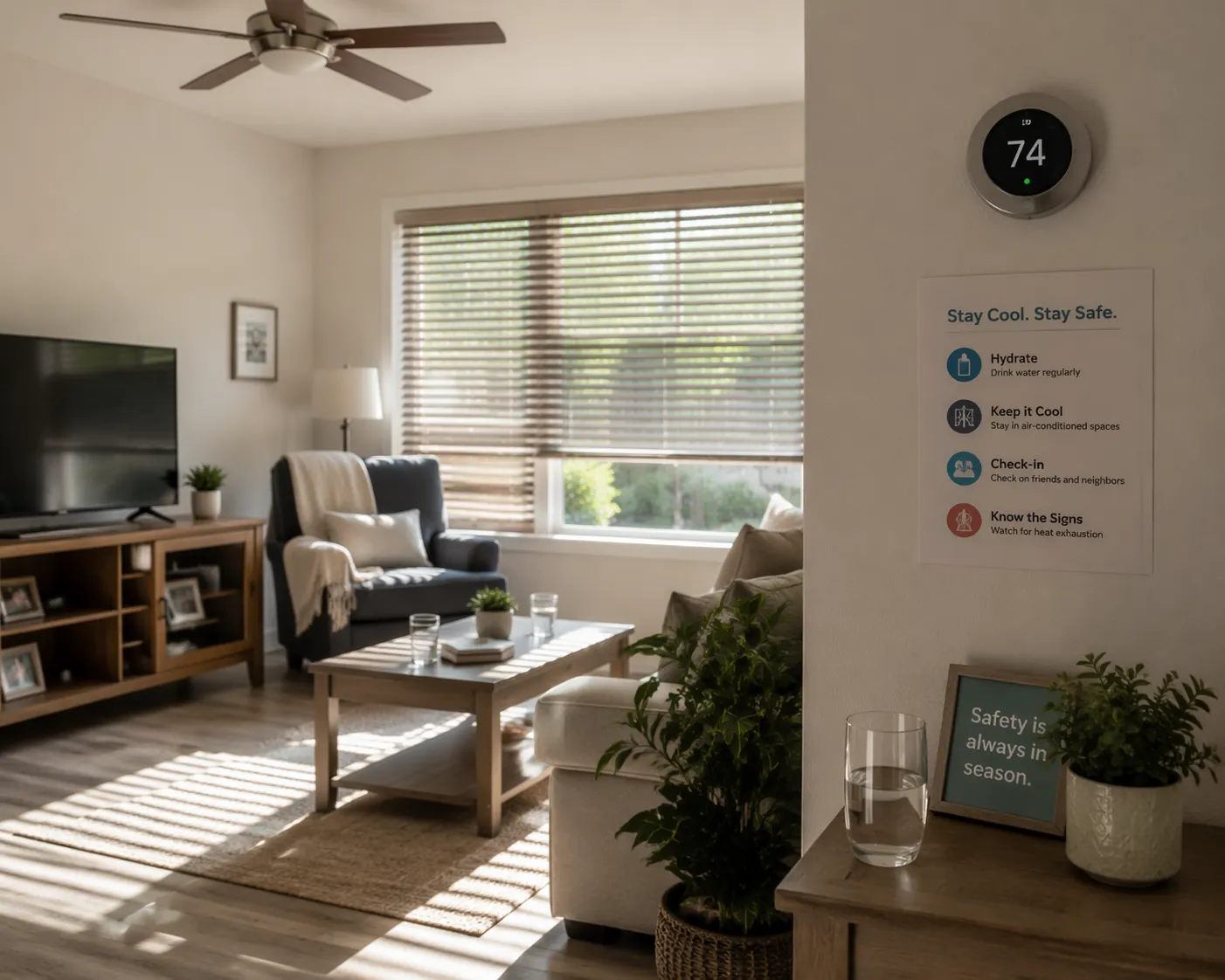
Start where the older adult spends the most waking hours: usually the living room, den, or main sitting area. This room needs a number, not a feeling. “The AC is on” can mean the unit is humming but not cooling, set too high for the person’s health, blocked by furniture, or shut off overnight because the bill is frightening.
| What to Check | Target or Action | Why It Matters |
|---|---|---|
| Thermostat | Set cooling to about 78°F/26°C if affordable and medically appropriate; confirm the room is actually cooling. | A visible number gives caregivers something to verify from the doorway or by video call. |
| Airflow | Move furniture, curtains, papers, and storage away from vents and window units. | A working unit cannot protect someone well if cool air is blocked. |
| Fan use | Use fans only as support when indoor temperature is below 90°F/32°C; do not rely on fans above that threshold. | The CDC warns that fans do not prevent heat-related illness when temperatures are above 90°F/32°C.[3] |
| Blinds and curtains | Close blinds or curtains during peak sun; open only when it helps cooling and does not let in direct heat. | Shade is a low-cost cooling tool, especially when AC use is limited. |
| Room choice | Choose one coolest room as the heat-safety room and keep needed items there. | It is easier to protect one room reliably than to cool an entire home poorly. |
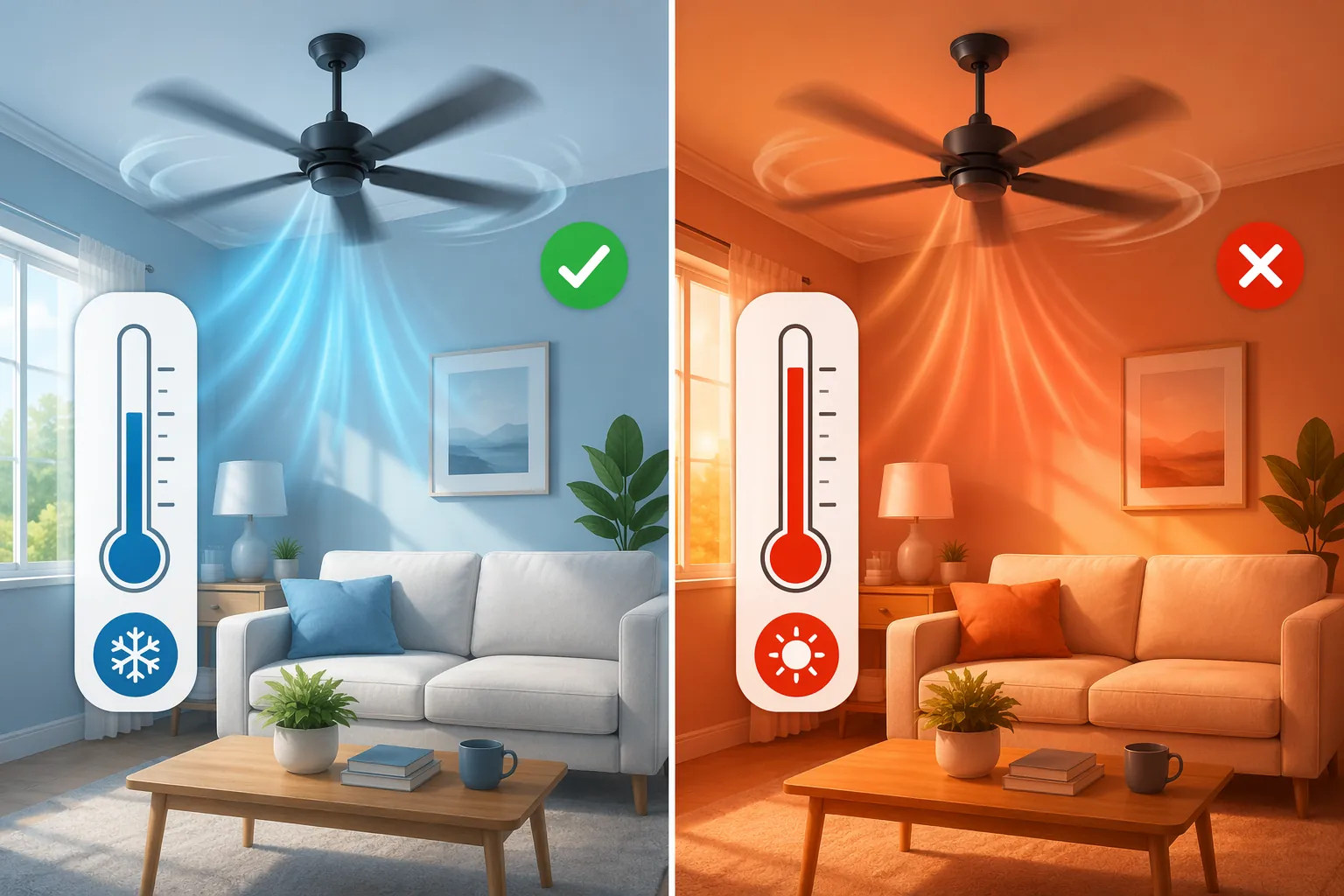
The fan rule deserves more than a checklist line because it is a common place where good intentions go wrong. A fan can help sweat evaporate and can make a cooled room feel more comfortable. But when the room is already too hot, moving hot air across the body is not enough protection. The CDC’s operational rule is the one to post: do not rely on a fan as the main cooling method above 90°F/32°C.[3] The WHO gives a more extreme warning that fans above 40°C/104°F can heat the body, which supports the same basic habit: check the temperature before treating a fan like a safety device.[5]
Cost has to be handled honestly. Nearly one in three older adults — 14.8 million people — were energy insecure in 2023, according to the Center for American Progress.[6] If someone turns the AC off because the electric bill is already unmanageable, repeating “stay cool” is not a plan. It is a demand without a route.
One practical compromise comes from the WHO: setting air conditioning to 27°C/81°F and using a fan can make the room feel about 4°C cooler while saving up to 70% on electricity.[5] That is not permission to use a fan alone during dangerous indoor heat. It is a way to make mechanical cooling more affordable while still keeping an actual cooling source on.
- Tape a small note near the thermostat: “Heat plan: AC on; fan only if room is under 90°F.”
- Put a simple room thermometer where it can be read without bending or searching.
- If the older adult uses a walker, cane, or wheelchair, make sure the coolest chair is reachable without crossing cords or clutter.
- If buying equipment, compare noise, controls, cord placement, auto shutoff, and maintenance needs rather than choosing only by price; this guide to evaluating home safety products for seniors can help sort useful features from gimmicks.
The Kitchen: Turn Hydration Into a Visible Routine
The kitchen is where “drink more water” either becomes real or stays decorative. Many older adults do not want to drink a lot because it means more bathroom trips, more urgency, or more help transferring. Others have heart, kidney, or medication restrictions that make generic fluid advice unsafe. So the first kitchen task is not forcing a number. It is making the daily fluid plan visible and appropriate.
- Ask the clinician whether the older adult has a fluid restriction or special instructions during hot weather, especially with heart failure, kidney disease, diuretics, or blood-pressure medications.
- Use one marked bottle or pitcher so intake can be seen at a glance instead of guessed.
- Place drinks at the usual chair, bedside, and kitchen table; do not make the person stand up every time they need a sip.
- Offer water-rich foods if appropriate, such as chilled fruit or soup served cold, but do not count that as a substitute for a clinician-directed fluid plan.
- Limit alcohol during heat and ask a clinician about caffeine if there are heart rhythm, sleep, or hydration concerns.
A useful home method is to mark a bottle by time of day: morning, lunch, midafternoon, evening. The exact amount should come from the older adult’s medical situation, not from a blog number. The point is that by 3 p.m., someone can see whether the bottle is still full. If it is, the plan has already failed for the day and needs a smaller, easier action: a preferred drink, a straw cup, ice, a cup placed at hand height, or a check-in call that says, “Can you take a few sips while we’re on the phone?”
Heat-producing cooking belongs on the kitchen checklist too. On advisory days, shift meals toward options that do not require long oven use. Microwave meals, cold plates, prepared foods, and earlier cooking times may not sound elegant, but they keep the room from becoming another heat source. If the older adult insists on cooking, agree on a time window before the hottest part of the day and turn the kitchen exhaust on only if it does not pull cooled air out faster than the home can replace it.
| Kitchen Setup | Check From the Doorway |
|---|---|
| Marked bottle or pitcher | Is the morning or afternoon mark actually reached? |
| Drink at main chair | Is it within arm’s reach, opened, and easy to lift? |
| Low-heat meals | Is there food available that does not require the oven? |
| Salt and fluid instructions | Are clinician instructions posted if the person has heart, kidney, or blood-pressure issues? |
| Clear walking path | Can the person reach drinks without stepping around cords, pets, stools, or bags? |
Medication-sensitive heat risk should be treated as a kitchen and phone-area issue because that is where pill organizers and instructions often live. The CDC notes that medications can contribute to heat risk through effects on hydration, electrolytes, sweating, kidney function, and body temperature regulation.[4] For a deeper medication review to discuss with a clinician, see heat wave safety tips for seniors taking these medications or this overview of medication classes that raise heat risk in older adults.
The Bedroom: Check the Overnight Plan, Not Just the Daytime Plan
A home can look safe at 2 p.m. and become risky at 2 a.m. if the AC is shut off, the bedroom traps heat, or the older adult wakes dizzy and walks to the bathroom without turning on a light. The bedroom check is about overnight cooling and the first signs of morning trouble.
- Confirm whether the AC stays on overnight during heat advisories. If it is turned off to save money, write down the safer compromise instead of leaving the decision vague.
- Place a thermometer in the bedroom, not only in the hallway or living room.
- Use lightweight, breathable sleep clothing and bedding; avoid heavy robes, thick blankets, and layered bedding during extreme heat.
- Keep water within reach, but make sure the path to the bathroom is lit and uncluttered.
- Ask about morning symptoms: headache, unusual weakness, dizziness on standing, confusion, nausea, or feeling “not right.”
Do not argue about fashion or bedding as if the older adult is a child. Try: “Let’s put the lighter pajamas and sheets on top so they’re easier to choose when it’s hot.” If summer clothing is part of the problem, this guide to timeless summer outfits for older women may help with breathable options that still feel dignified.
If the bedroom is consistently warmer than the main room, do not pretend the bedroom is safe because the thermostat downstairs looks acceptable. During a heat advisory, sleeping in the coolest safe room may be the better plan. That may mean a recliner, a temporary bed, or a family member staying over; the choice depends on mobility, fall risk, and whether the person can transfer safely.
The Bathroom: Cooling Helps Only If It Does Not Create a Fall
Cool showers, cool cloths, and bathing can lower heat stress, but the bathroom is also where dehydration, low blood pressure, wet floors, and urgency collide. The safest cooling routine is the one the person can do without rushing, locking the door, or standing unsupported.
- Use cool or lukewarm water, not an icy shock that could make the person gasp, tense, or lose balance.
- Put a stable chair, grab bars, nonslip mat, or shower chair in place if standing showers are tiring.
- Keep towels, clothing, and a phone or alert device reachable before bathing starts.
- Do not let the bathroom become hotter than the rest of the home after showers; use ventilation carefully if it does not worsen indoor heat.
- If the person feels dizzy, weak, confused, or faint, stop the bathing plan and move to cooling, fluids if allowed, and medical guidance.
A caregiver check-in can be simple: “Are you steady enough to shower today, or would a cool washcloth at the chair be safer?” That gives the older adult a choice without pretending every cooling method is equal. For more fall-specific heat precautions, see extreme heat safety tips to prevent senior falls.
Windows, Shade, and the Outside Edge of the Home
Shade is not a decoration during heat. It is part of the cooling system, especially for people who cannot afford to run AC hard all day. In a 2026 Harvard Chan School report on heat waves and older adults, ZIP codes with the highest levels of green space had 13.51 fewer deaths per 10,000 people per heat wave compared with ZIP codes with the lowest levels of green space.[7] That does not mean one houseplant prevents a heat emergency. It does support taking shade, window exposure, and outdoor heat around the home seriously.
- Close blinds, curtains, or shades before direct sun hits the room.
- Prioritize west- and south-facing windows in the afternoon.
- Move the main chair away from sun patches, hot windows, and exterior doors that leak heat.
- If using reflective coverings or blackout curtains, make sure they do not block AC airflow or create a tripping hazard.
- Do outdoor tasks early or postpone them; the yard can wait longer than a person’s body can.
The same Harvard Chan summary estimated about 17,600 excess deaths among older adults from heat waves across the United States from 2000 to 2018, with 9 additional deaths per heat wave per 10,000 people.[7] Those are population numbers, but they point back to household decisions: reduce heat entering the rooms where the person actually sits, sleeps, cooks, and walks.
The Entryway or Phone Area: Make Help Easy to Reach
The phone area is where a heat plan becomes usable under stress. If the older adult has to search through drawers, remember a website, or explain the AC problem from memory, the plan is too fragile.
| Post or Store | What It Should Include |
|---|---|
| Emergency contacts | 911, primary caregiver, backup caregiver, neighbor, building manager, doctor’s office, pharmacy |
| Cooling plan | Closest cooling center, library, senior center, or family home; address; transportation option |
| Utility help | Utility company number, account holder name if available, LIHEAP hotline |
| Medical notes | Major conditions, mobility limits, medication list location, fluid restriction if any |
| Daily check-in schedule | Who calls, what time, what they ask, and what triggers an in-person visit |
Cooling centers and public buildings matter when the home cannot be made safe. The American Red Cross advises people to spend time in air-conditioned places during extreme heat and to check on older adults and others at higher risk.[8] The CDC also recommends staying in air-conditioned buildings as a key heat-safety step.[3] The useful question is not “Would you ever go to a cooling center?” It is “If the AC fails Tuesday, who is driving, where are you going, and what do you need to bring?”
For cooling-cost help, the national LIHEAP hotline is 1-866-674-6327. The Center for American Progress reported that cooling assistance through LIHEAP existed in 26 states, the District of Columbia, and 3 territories, so availability depends on location and current program rules.[6] Call early if bills are already forcing unsafe choices. Waiting until the AC is off during an advisory leaves fewer options.
A Daily Heat Check That Takes Five Minutes
On very hot days, one short check is better than a long lecture. The person calling does not need to sound like an inspector. The goal is to verify the few items that predict whether the home is working.
- Read the room temperature out loud: “What does the thermometer say right now?”
- Confirm AC status: “Is the AC cooling the room, and is anything blocking the vent or unit?”
- Check fan safety: “Is the room under 90°F if the fan is on?”
- Check fluids: “Can you tell me where the water bottle level is now?”
- Ask symptoms plainly: “Any dizziness, confusion, nausea, headache, weakness, cramps, or trouble walking?”
- Confirm reachability: “Is your phone charged and near you?”
If the older adult dislikes being checked on, ask permission for the routine before the next advisory: “When it gets dangerously hot, can we do one quick temperature-and-water call each afternoon? I won’t nag; I just need the numbers.” That kind of agreement is easier to keep than a vague promise to “be careful.”
When the Room-by-Room Plan Is Not Enough
Some situations should move the family out of checklist mode and into backup-plan mode. Do not wait for the home to become obviously unbearable.
- The AC is broken, blowing warm air, leaking, short-cycling, or unable to cool the main room.
- Indoor temperature remains unsafe, especially if the fan is being used above 90°F/32°C.
- The older adult has confusion, fainting, severe weakness, high body temperature, worsening dizziness, vomiting, or other urgent symptoms.
- The person is skipping AC because of cost or fear of the bill.
- The older adult lives alone during an extreme heat advisory and cannot reliably answer calls, read the thermostat, or reach fluids.
- Medication, dementia, mobility limits, recent illness, or poor appetite make the usual routine unreliable.
In those cases, use the posted phone list. Call for medical help when symptoms suggest heat illness. Move the person to an air-conditioned location if the home cannot be cooled. Increase check-ins from “daily” to “during the hottest hours,” and make at least one check visual or in person if the person cannot report conditions accurately.
Prevention is not proved by knowing heat is dangerous. It is proved by a home that produces evidence: a readable thermostat, AC that is actually cooling, a fan used only inside its safe role, shade closed before the room heats up, fluids within reach, medications reviewed with a clinician, and phone numbers posted where a tired person can find them.
References
- Seniors at Risk: Heat and Climate Change | Climate Central
- The Effects of Heat on Older Adults | Harvard Medicine Magazine
- About Heat and Your Health | CDC
- Heat and Medications – Guidance for Clinicians | CDC
- Heat and health | WHO
- Protecting Older Adults From the Growing Threats of Extreme Heat | Center for American Progress
- Heat waves and annual death rates in older adults in the United States | Harvard Chan School
- Extreme Heat Safety | American Red Cross
Related reading
Noticed something outdated or inaccurate on this page? Flag a correction. We review every report against CDC, NIA, and AARP HomeFit guidance before updating a page.
Part of the Fall Prevention section.