
STEADI: Intervene
Protect Your Parent from Heat Stroke and Falls During a Heatwave
Extreme heat doesn't just cause heat stroke — it creates a direct pathway to falls through dehydration, medication effects, and fatigue in older adults. This guide explains the heat-fall connection and provides specific actions to prevent both crises during a heatwave.
During a heatwave, the danger for an older parent living alone is not only heat stroke. It is the sequence that happens before anyone uses that word: less thirst, less sweating, less blood flow to the skin, a hotter room, skipped lunch, a medication that lowers fluid or blood pressure, then dizziness when standing up. The CDC says about 80% of heat-related deaths occur among people age 60 and older, which is reason enough to take a hot apartment or house seriously before there is an emergency [1].
The less obvious risk is falling. Injury Matters frames hot weather as a fall-risk period because heat can contribute to dehydration, dizziness, orthostatic hypotension, tiredness, and weakness, all of which make balance less reliable [2]. In the U.S., this is better understood as a connection built from established mechanisms than as a single named syndrome: heat stresses the body, the body compensates less effectively with age, and ordinary standing or walking becomes harder.
If your parent is confused, loses consciousness, has a very high body temperature, or has hot, dry skin, call 911. Cleveland Clinic lists confusion, loss of consciousness, hot dry or damp skin, and body temperature above 104°F as heat stroke warning signs [3]. That is not the moment to troubleshoot hydration or debate whether someone “just overdid it.”
Why Heat Makes a Fall More Likely
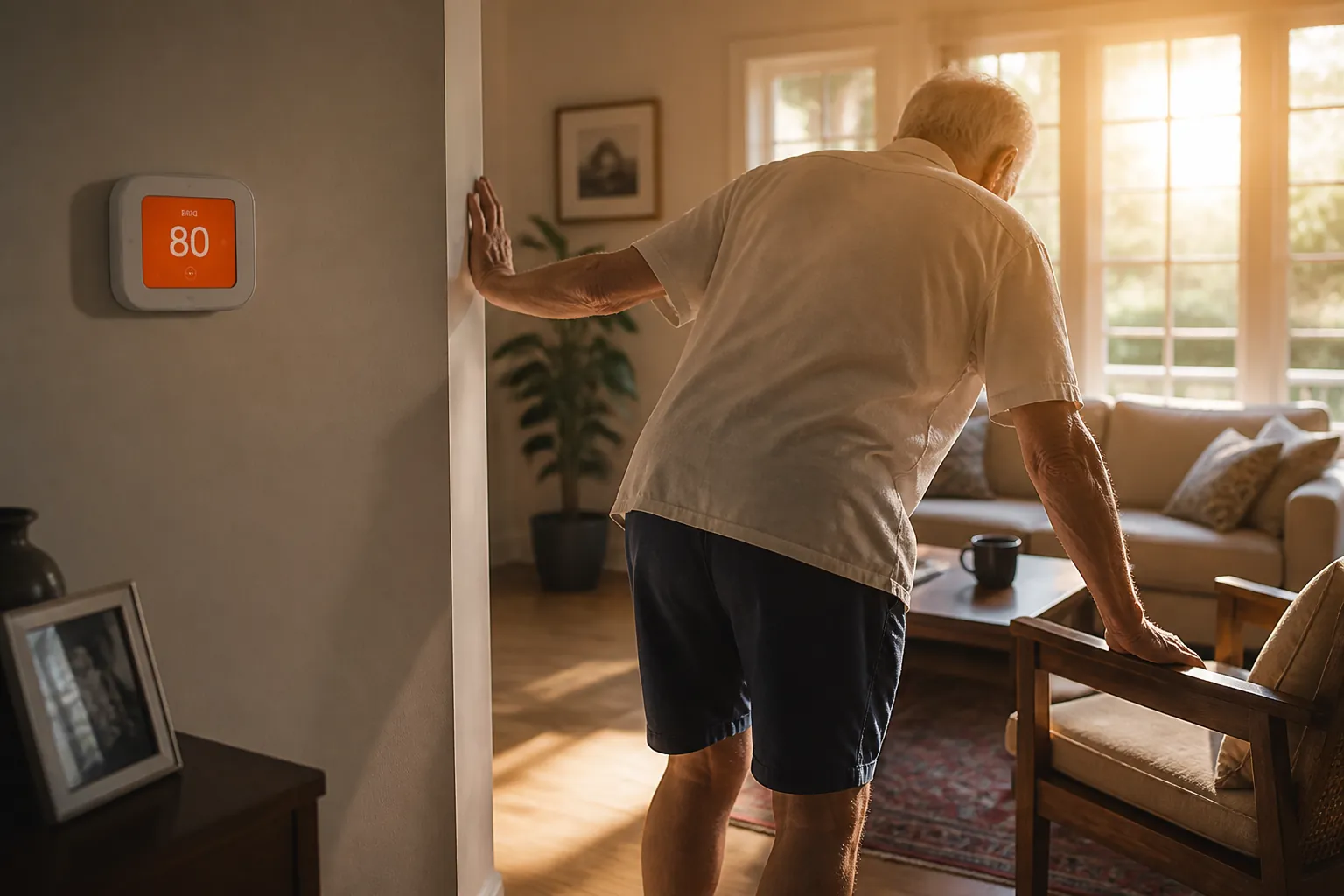
A younger body often signals heat stress early and loudly. An older body may not. Harvard Medicine Magazine describes several age-related changes that make heat harder to manage: older adults may have reduced sweat gland output, a diminished thirst response, and lower blood flow to the skin, which makes it harder to move heat out of the body [4]. None of that looks dramatic from across the kitchen. It can look like a parent saying they are “fine” while the room keeps getting warmer.
Reduced thirst is one of the quiet problems. If your parent does not feel thirsty, they may not drink enough. If they are eating less because heat takes away appetite, they may also be getting less fluid and salt through meals. Dehydration can lower blood volume, and that can make blood pressure drop when someone stands. Injury Matters specifically points to orthostatic hypotension, dizziness, tiredness, and weakness as heat-related contributors to falls [2].
That standing-up moment matters. A parent gets up from a recliner to answer the phone, walks to the bathroom, or leans over to pick up mail at the door. If blood pressure does not adjust quickly enough, the first few steps can be the dangerous ones. The person does not have to feel “sick” to be at risk; they may only feel lightheaded, slow, or unsteady for a few seconds.
Heat fatigue adds another layer. When the body is working to cool itself, muscles can feel weaker, attention can narrow, and reaction time can slow. A rug edge, a cluttered hallway, or one dark step into the garage is more dangerous when someone is dehydrated and tired than it was on a normal morning.
Medication Is the Double-Risk Hinge
Medication is where heat stroke prevention and fall prevention most often overlap. The goal is not to scare anyone into stopping a prescription. It is to know which medications deserve a same-day call to a pharmacist, prescriber, or nurse line during a heatwave.
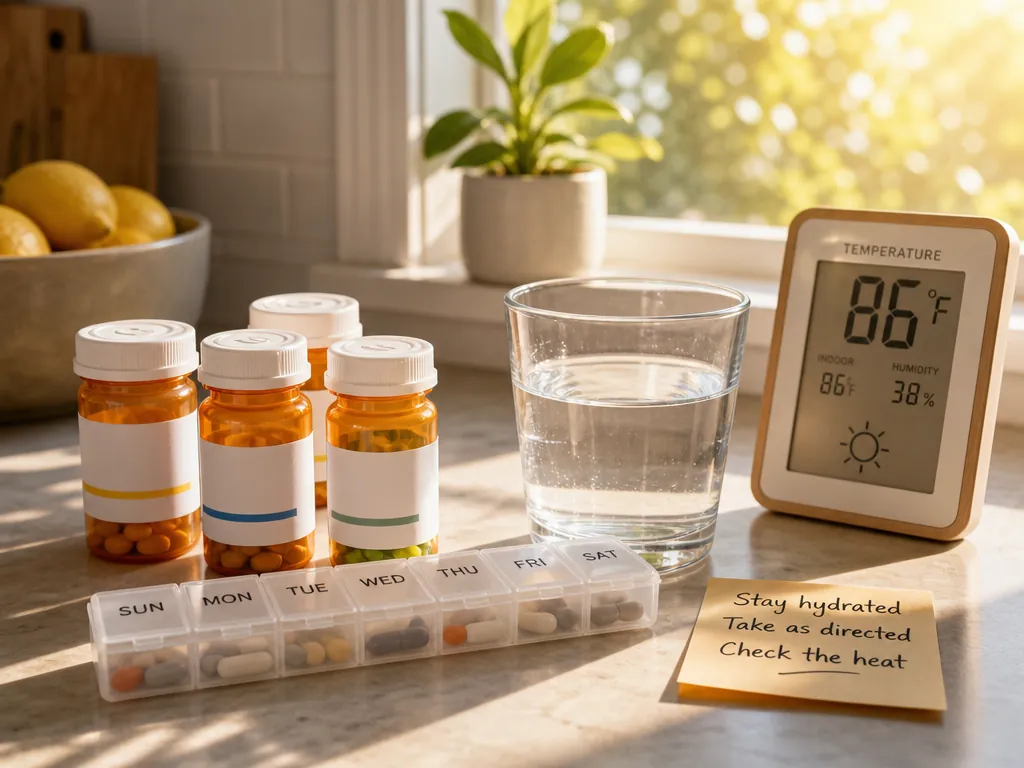
AARP’s July 2026 medication update identifies several drug classes that can make heat harder to handle, including diuretics, beta-blockers, anticholinergics, antipsychotics, SSRIs, and antihistamines [5]. Cleveland Clinic also lists medications such as diuretics, beta-blockers, anticholinergics, antipsychotics, and antihistamines among factors that can raise heat stroke risk [3].
| Medication class | Heat concern | Fall concern |
|---|---|---|
| Diuretics | Can increase fluid loss | Can contribute to dehydration, dizziness, or low blood pressure |
| Beta-blockers | Can affect the body’s heat response | Can contribute to lightheadedness in some people |
| SSRIs | Can affect heat tolerance | May contribute to dizziness or unsteadiness in some people |
| Anticholinergics | Can interfere with sweating and cooling | May contribute to confusion, blurred vision, or balance problems |
| Antipsychotics | Can impair thermoregulation | May contribute to sedation, dizziness, or slower reactions |
| Antihistamines | Can reduce sweating or cause sedation, depending on the drug | May increase drowsiness or unsteadiness |
The practical move is simple: do not stop the medication on your own, and do not wait until after a fall to ask. Call the pharmacist or clinician and say, “There is a heatwave, my parent lives alone, and I want to know whether any of these medications change hydration, blood pressure, sweating, alertness, or fall risk.” That question is specific enough to get a useful answer.
The Right-Now Heatwave Plan
Useful heat stroke prevention during a heatwave is not a loose list of summer reminders. It is a sequence. Start with the room, then fluids and food, then medication, then movement, then check-ins. If your parent values independence, frame this as a temporary heat plan, not a takeover.
1. Confirm the indoor temperature, not just the outdoor forecast
Ask for the thermostat reading or have a simple indoor thermometer placed where your parent actually spends time. A living room with afternoon sun can be hotter than the hallway thermostat suggests. If air conditioning is available, confirm that it is on, working, and set to a safe temperature your parent will actually tolerate.
Do not treat a fan as a complete cooling plan. CDC heat guidance warns that when indoor temperatures are in the high heat range, fans may not prevent heat-related illness and can become counterproductive because they move hot air across the body rather than cooling it [1]. If the room is dangerously hot, the answer is a cooler location: air conditioning, a cooling center, a public library, a senior center, or a relative’s home.
2. Check fluids and food without turning it into a lecture
“Did you drink water?” is easy to brush off. Better: “What have you had to drink since breakfast?” and “Did you eat lunch?” If the answer is vague, make the next step small: a glass of water now, a snack or meal with fluid in it, and another drink placed near the chair. For some people with heart failure, kidney disease, or fluid restrictions, the right amount of fluid is a medical question, so use the clinician’s instructions rather than generic advice.
Alcohol deserves a direct mention because it can worsen dehydration and judgment. Very sugary drinks may not be the best main source of hydration. The everyday target is steady intake, not a large amount all at once after dizziness has already started.
3. Move errands and chores out of the hottest hours
This is where familiar advice becomes fall prevention. During peak heat, reduce standing and walking demands: postpone laundry, carry groceries in smaller loads, skip outdoor watering, and avoid unnecessary trips to the mailbox or trash bins. If something has to be done, do it earlier, later, or with help.
Light clothing and shade help, but they do not compensate for an overheated home or dehydration. Keep those measures, just do not let them replace cooling access.
4. Clear the walking path before fatigue shows up
Heat makes ordinary trip hazards meaner. Clear the route from bed to bathroom, chair to kitchen, and door to phone or charger. Move loose cords, shoes, stacked newspapers, pet bowls, and curled rug edges. Put a sturdy chair near the place where your parent usually sorts mail or puts on shoes. If they use a cane or walker, make sure it is within reach before they stand.
Nighttime matters too. Heat can disrupt sleep, and a tired person walking to the bathroom in the dark is not steady. Add a nightlight or leave a safe light on during heat alerts.
5. Set check-ins that preserve dignity
A useful check-in has a purpose. Agree on two or three short contacts during the hottest days: morning, late afternoon, and evening. Ask for observable facts, not a performance of being okay: indoor temperature, what they drank, what they ate, whether they felt dizzy when standing, and whether the air conditioning is working.
If your parent dislikes being monitored, make it reciprocal or time-limited: “Let’s do this until the heat alert ends.” The point is not to catch them failing. It is to shorten the time between a problem starting and someone noticing.
6. Identify the cooler place before the house is unsafe
Write down the backup cooling location while everyone is calm. That may be a family member’s home, a public cooling center, a library, or a senior center. Council on Aging resources point older adults and caregivers toward cooling centers and energy-assistance support such as HEAP-style programs, which can matter when someone avoids air conditioning because of cost [6].
Also decide who drives, who has a key, where medications go, and what happens if the power fails. A plan that depends on an older adult packing quickly in a hot room is not much of a plan.
When Heat Exhaustion Becomes an Emergency
Heat exhaustion can include heavy sweating, weakness, dizziness, headache, nausea, and fainting, while heat stroke is the life-threatening escalation involving central nervous system symptoms such as confusion, loss of consciousness, or seizures, according to CDC NIOSH heat-illness guidance [7]. Cleveland Clinic’s heat stroke warning signs include confusion, loss of consciousness, very high body temperature, and hot dry or damp skin [3].
For a caregiver, the decision rule should be blunt: confusion, fainting that does not resolve quickly, loss of consciousness, or signs of heat stroke mean 911. Move the person to a cooler place if you can do so safely, start cooling with cool cloths or available air conditioning, and do not give fluids to someone who is unconscious or not alert enough to swallow safely.
A Heat Alert Is Also a Fall Alert
The safest heatwave plan treats the body and the home as one system. Confirm cooling. Keep fluids and food steady. Review medications with a professional instead of guessing. Reduce standing and walking during peak heat. Clear the path before weakness starts. Arrange check-ins that your parent can accept.
That is the caregiver standard: when the heat alert starts, fall risk starts too. The same changes that can lead to heat stroke can also make the next trip to the bathroom, kitchen, or front door the dangerous one.
References
- Heat and Older Adults Aged 65+ — CDC
- Beat the Heat This Summer — Injury Matters
- Heat Stroke — Cleveland Clinic
- The Effects of Heat on Older Adults — Harvard Medicine Magazine
- 8 Medications That Make It Harder to Handle Heat — AARP, July 2026
- Cooling Centers and HEAP Resources — Council on Aging
- Heat-Related Illnesses — CDC NIOSH
Related reading
Noticed something outdated or inaccurate on this page? Flag a correction. We review every report against CDC, NIA, and AARP HomeFit guidance before updating a page.
Part of the Fall Prevention section.