
STEADI: assess
How to spot heat stroke in seniors — and when to call 911
Heat illness can build quietly in older adults, who may not feel or report warning signs until they're serious. This guide compares heat cramps, heat exhaustion, and heat stroke in seniors and explains when to call 911 versus seek same-day medical care.
The most useful heat safety tips for seniors during a heat advisory start with a decision, not a pep talk: if an older adult is confused, passes out, has hot, red skin that is dry or damp, has a fast strong pulse, or may have a dangerously high body temperature, call 911 now. The Red Cross lists heat stroke signs as body temperature of 104°F or higher, hot/red/dry or damp skin, fast strong pulse, headache, dizziness, nausea, confusion, and passing out, and says to call 911 right away and not give the person anything to drink [1]. For older adults, that emergency may not arrive as one dramatic collapse; heat stroke may happen gradually over days of heat exposure [2].
This guide is educational, not a diagnosis. Confusion, fainting, weakness, or collapse in hot weather can also resemble stroke, heart problems, infection, medication trouble, or another emergency. If you are deciding between “watch and wait” and “call,” choose the safer level of help.
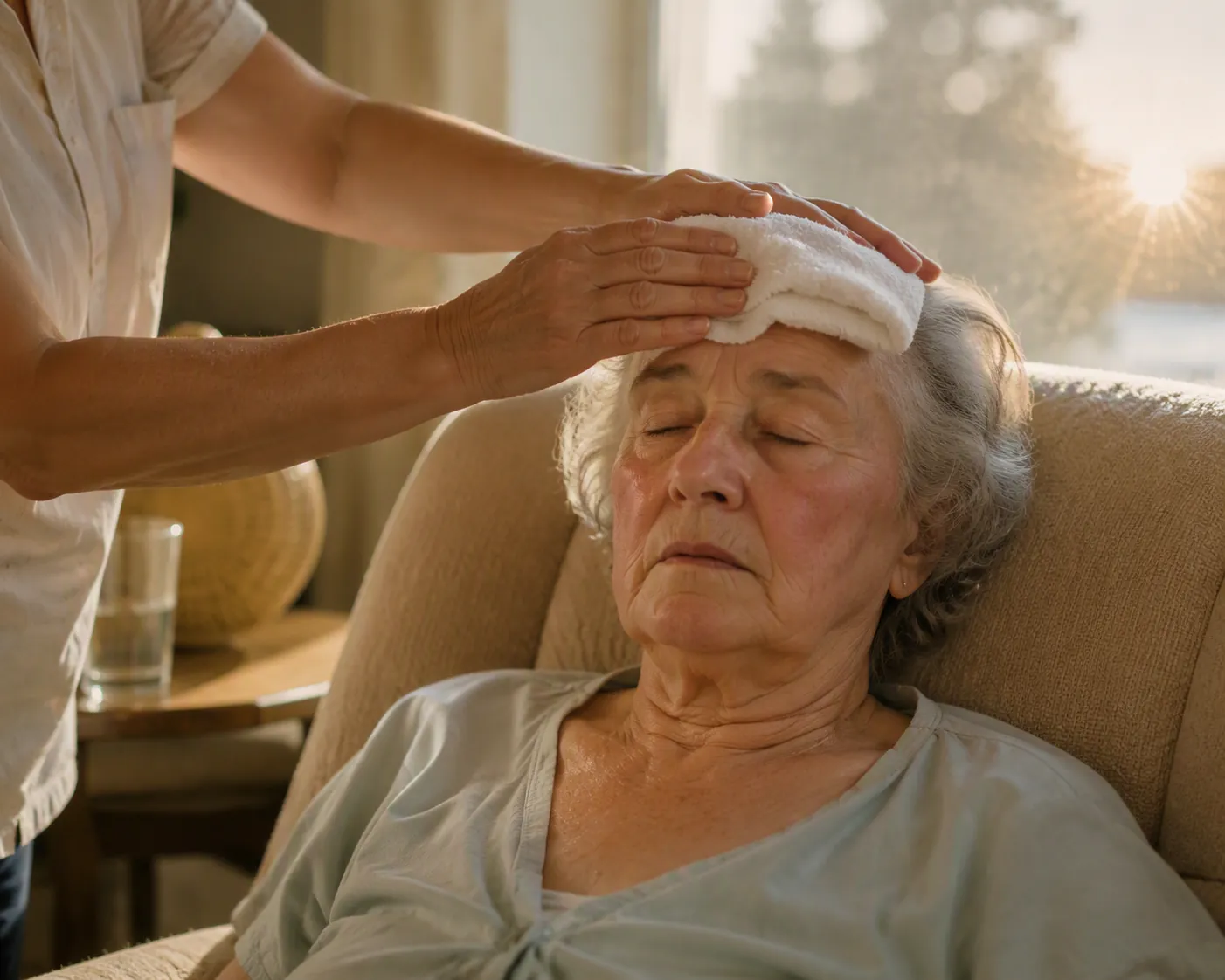
The fast decision rule during a heat advisory
If you are checking on a parent, spouse, neighbor, or client and something feels off, do not rely only on “Do you feel overheated?” Harvard Medicine Magazine reports that studies show even healthy older adults can have trouble recognizing when they are too hot or dehydrated, and cognitive decline can make that worse [3]. The CDC also notes that people 65 and older do not adjust as well to sudden temperature changes, are more likely to have chronic medical conditions, and may take medicines that affect temperature control or sweating [4].
| What you see | What to do |
|---|---|
| Confusion, passing out, hot, red skin that is dry or damp, fast strong pulse, suspected very high body temperature, or the person cannot safely stay awake and respond | Call 911 now. Begin cooling the person in the safest available way while you follow emergency instructions. Do not give drinks to a drowsy person or anyone who cannot swallow safely. |
| Heavy sweating with cold, pale, clammy skin; fast weak pulse; dizziness; nausea; fainting; headache; vomiting; symptoms worsening or lasting more than an hour | Get medical help right away or arrange same-day urgent medical care. If confusion develops, treat it as an emergency. |
| Heavy sweating with muscle pain or spasms, and the person is alert, improving, and able to swallow safely | Move to a cooler place, stop exertion, cool the body, and monitor closely. Get medical help if cramps last more than an hour or the person has heart problems. |
That table is deliberately conservative. A caregiver usually does not have a perfect temperature reading, a complete medication list, or a calm patient who explains symptoms clearly. A standard 104°F heat-stroke threshold is useful if you have a reliable reading, but it is not the only reason to call 911.
Cramps, exhaustion, and heat stroke are not the same call
Heat illness is easiest to misjudge when the signs are treated as one vague category. Cramps can often be monitored while cooling begins. Heat exhaustion needs faster medical attention when it does not improve or when vomiting appears. Heat stroke is a 911 emergency.
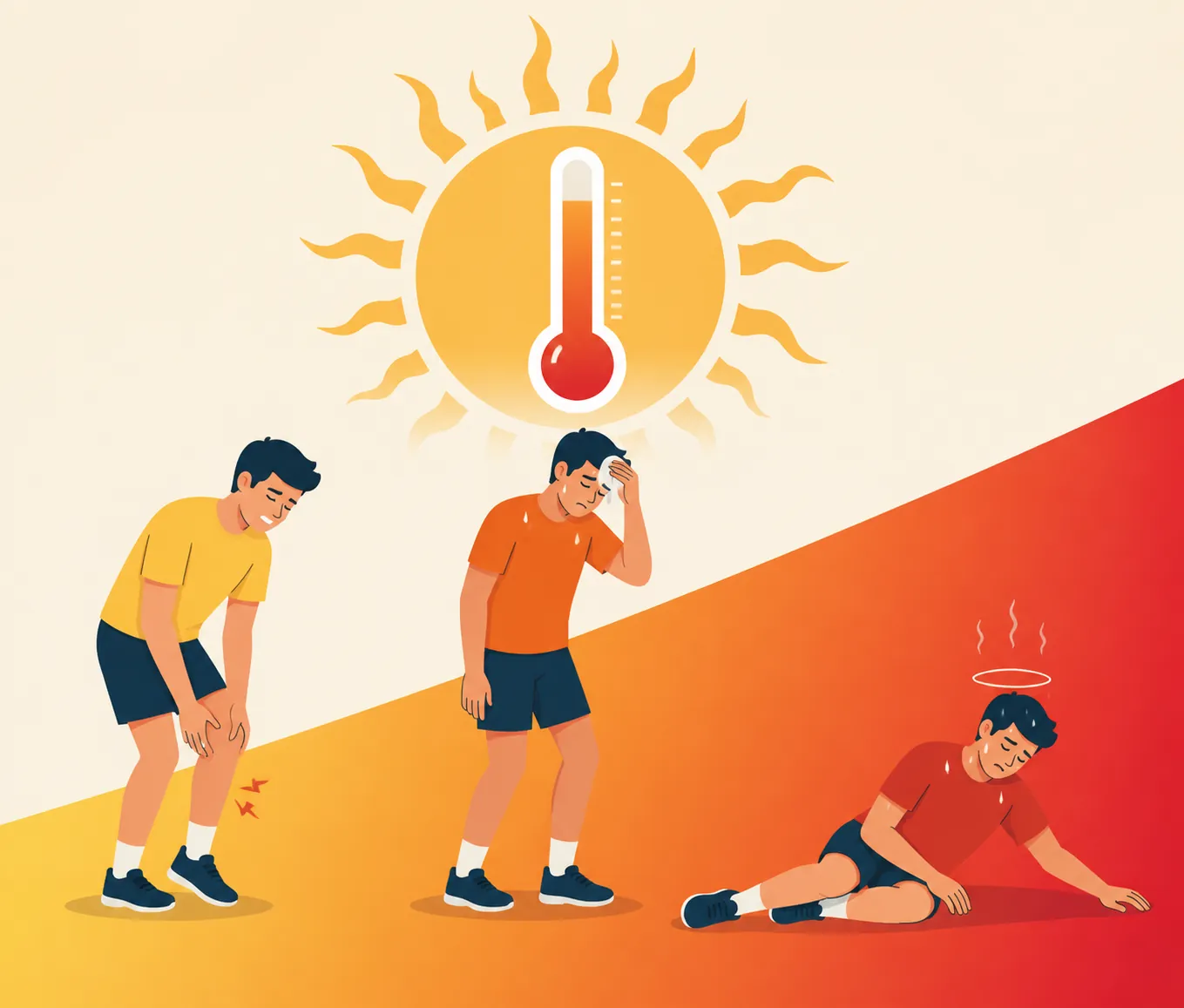
Heat cramps: painful muscles, but the person is still alert
The Red Cross describes heat cramps as heavy sweating with muscle pain or spasms. The usual first response is to stop activity, move to a cooler place, and cool down. Medical help is needed if the cramps last more than one hour or if the person has heart problems [1].
For an older adult, the important question is not only “Are the cramps severe?” It is also “Is this person otherwise acting normal?” Cramps plus new confusion, fainting, vomiting, or a change in alertness no longer belongs in the simple-cramps bucket.
Heat exhaustion: clammy skin, weak pulse, nausea, dizziness, or fainting
Heat exhaustion is more concerning. Red Cross signs include heavy sweating, cold/pale/clammy skin, a fast weak pulse, nausea, dizziness, and fainting. It advises medical help right away if vomiting occurs, symptoms last more than one hour or get worse, or confusion develops [1].
Vomiting deserves special attention because it makes “just drink more” unsafe and unrealistic. The same is true if the person is drowsy, drifting off, coughing with sips, or cannot follow directions. HealthInAging says fluids should be given only if the person is awake and can swallow, and never to a drowsy person [2].
Heat stroke: confusion or collapse makes it an emergency
Heat stroke is the category where waiting for reassurance is dangerous. The person may be confused, faint, nauseated, dizzy, or unconscious. Their skin may be hot and red, but it can be dry or damp. Their pulse may feel fast and strong. If you have a reliable temperature and it is 104°F or higher, that is a standard heat-stroke warning sign, but a caregiver should not wait for a thermometer to prove the emergency [1].
If the person is confused, slumped, unable to answer normally, or has collapsed outside, do not spend precious time deciding whether it is heat stroke, stroke, or a fall. Call 911 and follow dispatcher instructions. For a related crisis path when collapse could be stroke or a fall, use CareWise’s outdoor emergency guide.
Why “I’m fine” is not enough in an older adult
A younger, healthy person may notice the heat, feel thirsty, stop, and ask for help. With an older adult, that chain can break. Harvard’s report that even healthy older adults may struggle to sense overheating or dehydration changes the whole check-in: the caregiver has to look at behavior, skin, pulse, nausea, balance, alertness, and whether symptoms are improving [3].
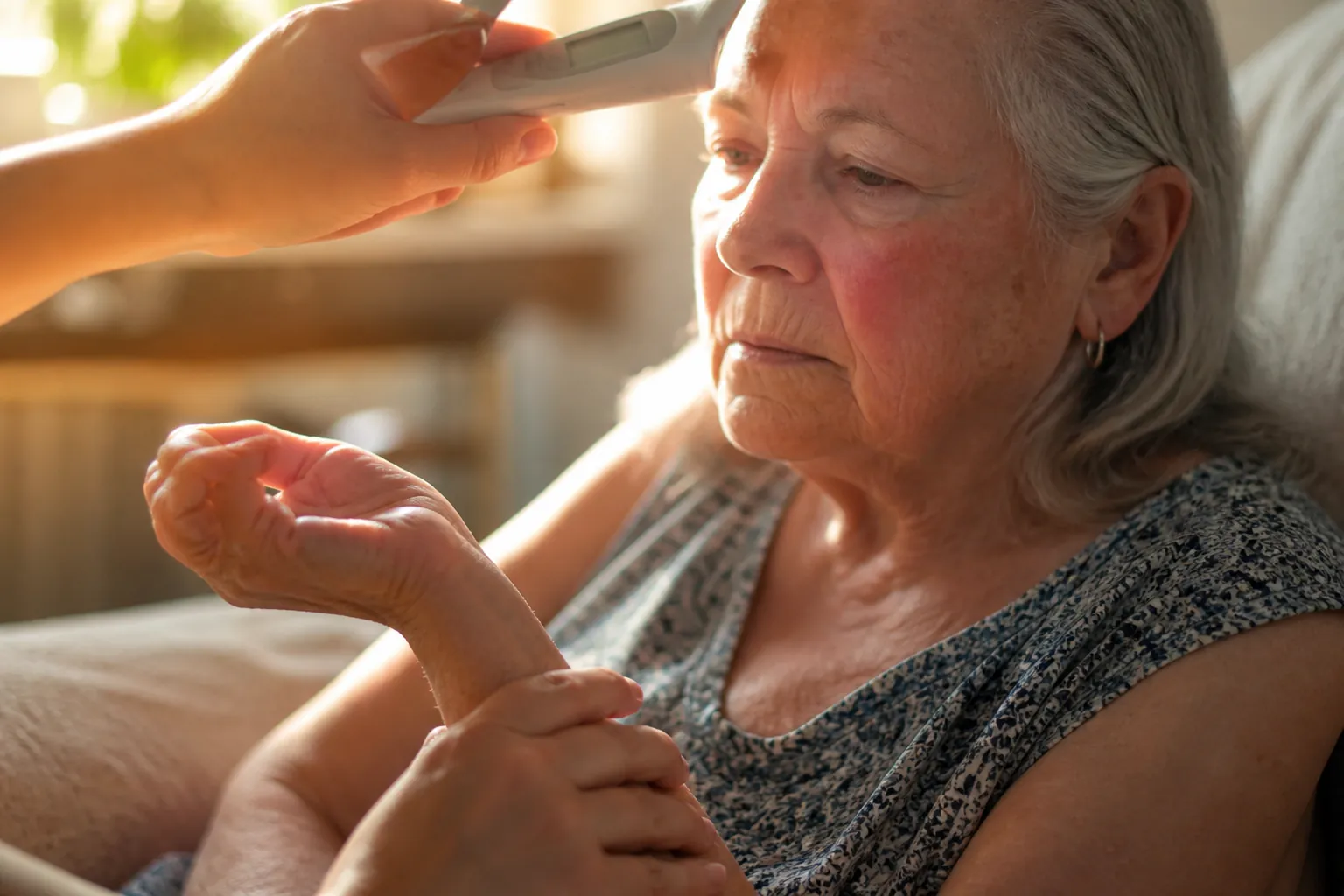
Medications and chronic conditions also complicate the picture. The CDC’s older-adult heat guidance says people 65 and older are more likely to have chronic medical conditions and take medicines that affect temperature control or sweating [4]. That does not mean every warm, tired person is having heat stroke. It means the margin for casual guessing is smaller during a heat advisory.
Sweating is a good example. Heavy sweating can show up with cramps or heat exhaustion. Heat stroke can involve skin that is dry or damp, so the absence of bone-dry skin does not make the situation safe [1]. If the person is confused or passes out, the emergency sign outweighs the skin detail.
The gradual pattern matters too. HealthInAging warns that heat stroke in older adults may happen gradually over days of heat exposure [2]. A parent who sounded “a little tired” on Monday, skipped meals on Tuesday, and is now nauseated or mixed up on Wednesday may not look like the dramatic heat-emergency scene people imagine. That is still exactly the kind of pattern that should move a caregiver from casual check-in to hands-on assessment or urgent help.
What to do while help is coming or while you arrange same-day care
First, get the person out of the heat if you can do so safely. Move them to air-conditioning, shade, or the coolest available room. Start cooling the body. If 911 has been called, follow the dispatcher’s instructions rather than improvising around them.
Second, be strict about swallowing safety. Do not give anything to drink to someone who is drowsy, confused, vomiting repeatedly, unable to sit up safely, coughing with sips, or not following directions. The Red Cross specifically says not to give drinks to someone with heat stroke signs, and HealthInAging cautions never to give fluids to a drowsy person [1][2].
Third, do not let a temporary improvement erase the reason you were worried. If symptoms lasted more than an hour, got worse, included vomiting, or included confusion, the Red Cross threshold for medical help has already been crossed [1]. CDC public guidance also says to seek medical care immediately for muscle cramps, headache, nausea, or vomiting during extreme heat [5].
A repeatable 911-versus-today rule
- Call 911 now if the older adult is confused, passes out, cannot stay awake, has hot, red skin that is dry or damp, has a fast strong pulse, may have a very high body temperature, or cannot swallow safely.
- Get medical help right away or same-day urgent care if heat-exhaustion symptoms worsen, last more than one hour, include vomiting, include fainting, or shift into confusion.
- Cool and monitor closely for cramps only when the person is alert, improving, and otherwise acting normally; get help if cramps last more than one hour or the person has heart problems.
- When the symptoms do not fit neatly, treat the situation as more serious, not less.
For prevention before the next advisory check-in, use the CareWise heat-wave home checklist, the broader extreme-heat safety guide, the heat-advisory medication guide, and the no-AC cooling plan. In the moment, though, the rule is simpler: danger signs mean emergency services; persistent or worsening symptoms mean medical care today.
References
- Extreme Heat Safety — American Red Cross
- Tip Sheet: Hot Weather Safety Tips for Older Adults — HealthInAging.org, July 2019
- The Effects of Heat on Older Adults — Harvard Medicine Magazine
- Heat and Older Adults (Aged 65+) — Centers for Disease Control and Prevention
- Protect Yourself From the Dangers of Extreme Heat — Centers for Disease Control and Prevention
Related reading
Noticed something outdated or inaccurate on this page? Flag a correction. We review every report against CDC, NIA, and AARP HomeFit guidance before updating a page.
Part of the Fall Prevention section.