
STEADI: Intervene
How heat waves increase fall risk when you live alone
Heat waves create a dangerous but often overlooked fall risk for seniors living alone by triggering dehydration-related dizziness. Learn why the thirst mechanism fails with age and how to anchor hydration habits to prevent falls when no one is around to help.
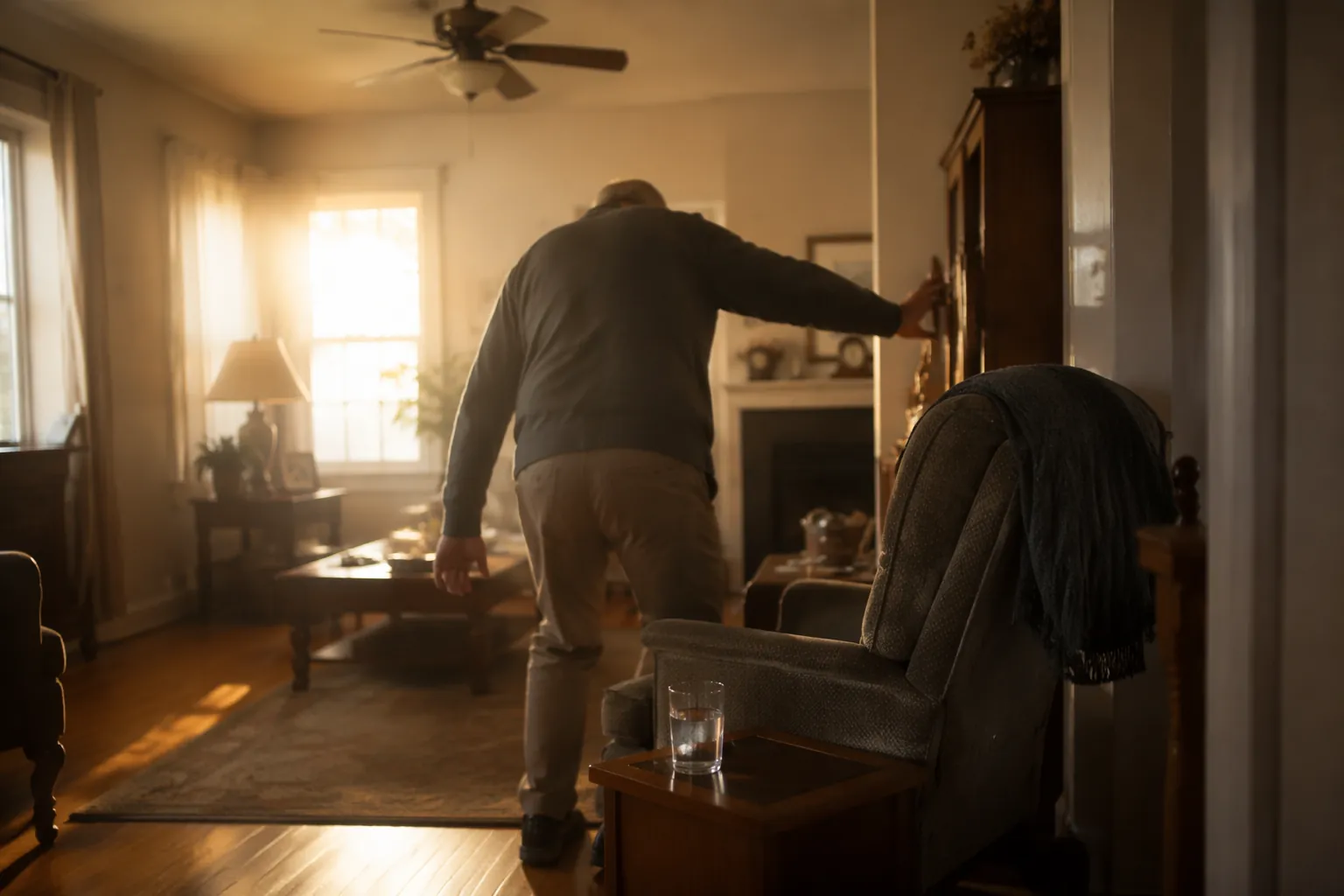
The fall often starts before anyone would call it an emergency. An older adult stands up from a recliner in a hot room, feels a quick gray wave behind the eyes, reaches for the wall, and decides to keep walking anyway because the bathroom is only down the hall. For someone living alone, that small wobble is the part no one sees.
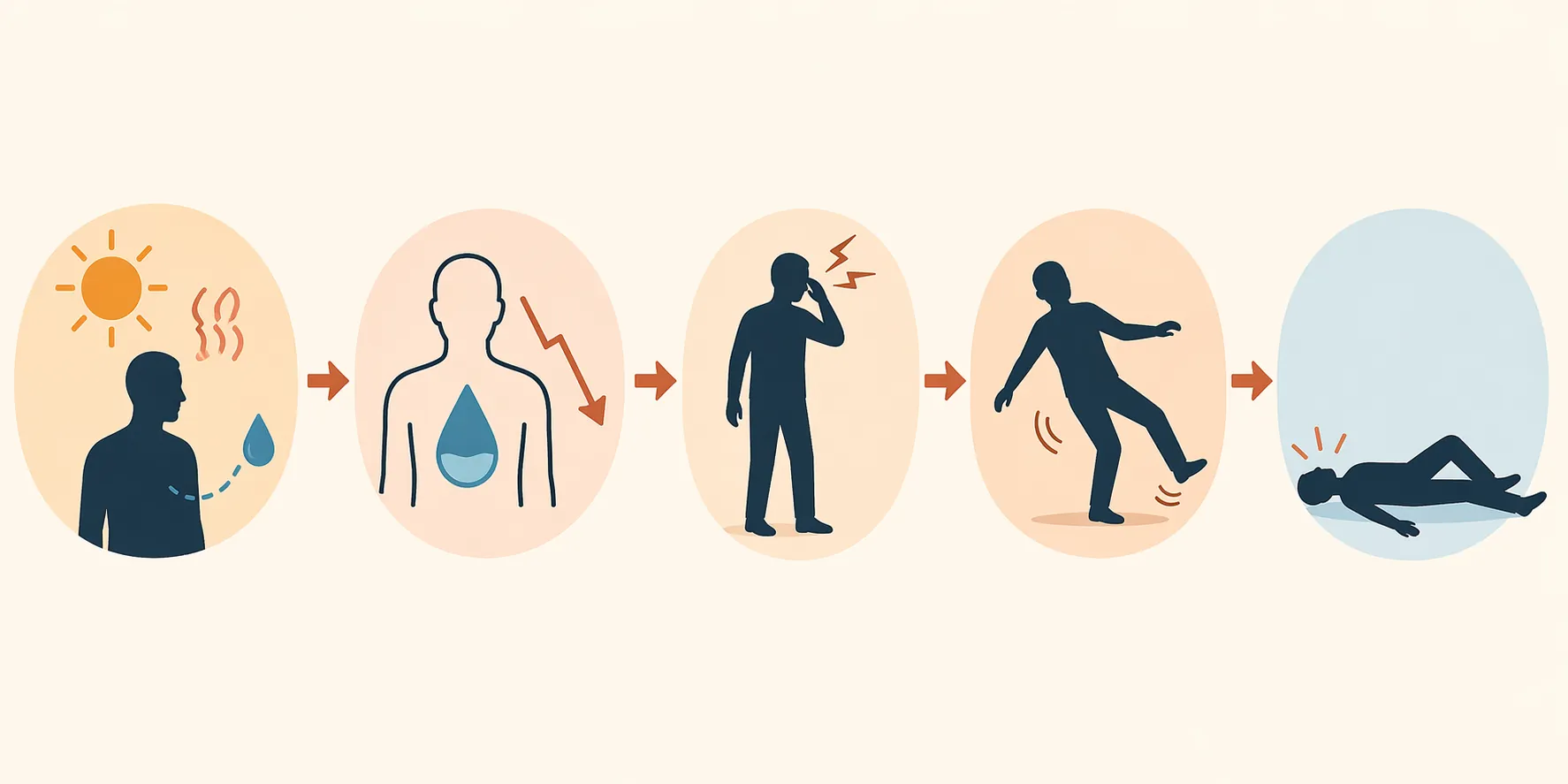
That is where useful heat wave safety tips for seniors living alone should begin: not with a sunny-day reminder to “stay hydrated,” but with the chain that turns heat into a fall risk. Heat increases fluid loss. Fluid loss lowers the amount of circulating blood. Less blood volume can make blood pressure drop when a person stands. The result can be lightheadedness, unsteady walking, and a fall before help is close.
The dehydration–fall pipeline is measurable
A large study of 30,634 older adults found that 37.9% were dehydrated at baseline, and dehydration was associated with 13% increased odds of falling. The study used serum lab markers from a Midwestern health system and data from 2011 through 2015, so it is not a perfect national picture. Still, it is strong enough to take seriously because it connects dehydration to the exact injury families worry about: a fall at home, often during ordinary movement rather than a dramatic event. [1]
The numbers matter because they change what counts as prevention. A person does not have to faint for heat to be dangerous. A brief blood-pressure dip after standing can be enough to make a hand miss the counter, a foot catch the rug, or a turn toward the hallway become a loss of balance.
Older adults are also physiologically closer to the edge in hot weather. Compared with younger adults, they have about 10% to 15% less total body water volume, leaving less margin when the room is hot, sweating increases, or appetite drops. Harvard Medicine also describes age-related changes in the hypothalamic thirst center that can blunt the thirst signal itself. [2]
That is why “I wasn’t thirsty” should not end the conversation. It may be true. It may also mean the alarm is late.
Living alone removes the early warning witness
The CDC warns that people age 65 and older are more prone to heat-related health problems because they do not adjust as well to sudden temperature changes, are more likely to have chronic medical conditions, and are more likely to take medicines that affect temperature regulation. [3]
Those facts sound broad until they land in a quiet apartment. No one notices that the water glass has not been touched. No one hears the person pause halfway to the kitchen. No one sees confusion settle in as “just tired.” A caregiver may hear about the fall later, after the bruising, the ambulance, or the embarrassed insistence that it was nothing.
Heat is already a serious mortality risk for older adults. More than 80% of heat-related deaths in the United States occur in people over 60, according to Harvard Medicine, and a 2026 Harvard Chan study estimated that heat waves cause about 9 extra deaths per 10,000 older adults each year. [2][4]
But inside the home, the more immediate question is smaller: can the person stand, walk, think clearly, and get help if something goes wrong?
Build hydration into the day before thirst gets a vote
A safer hot-day plan does not depend on remembering to drink when thirsty. It puts fluid where the person already is and ties drinking to things that already happen.
- Put a filled glass or bottle beside the chair, by the bed, and near the usual meal spot. The goal is not decoration; it is reducing the number of steps between noticing and drinking.
- Pair drinking with routines: after waking, with morning medicines if allowed, at each meal, after using the bathroom, during a favorite TV program, and before settling into the chair for the afternoon.
- Use visible cues. A pitcher in the refrigerator helps only if the person goes to the refrigerator. A glass beside the remote or phone may work better.
- Add fluid-rich foods when appetite is low, such as fruit, soup, yogurt, or other foods the person already likes and can safely eat.
- Avoid making the bathroom trip the only hydration plan. Fear of needing to urinate can lead some older adults to drink less, which can make the walk to the bathroom more dangerous later.
During extreme heat, the New York State Office for the Aging advises older adults to drink 2 to 4 glasses of water per hour. That is a serious heat-specific benchmark, not a casual wellness tip. It is also not safe for everyone. People with heart failure, kidney disease, or clinician-directed fluid restrictions should ask their doctor what hot-weather fluid target is safe for them before following general hydration advice. [5]
Make check-ins about walking, thinking, and drinking
A check-in that sounds like fussing may get brushed off. “Are you drinking enough water?” is easy to answer with “yes.” Better questions make the invisible parts of heat risk harder to hide.
- “When you stood up today, did you feel lightheaded at all?”
- “How many times have you refilled the glass by your chair?”
- “Are you holding the counter when you walk through the kitchen?”
- “Did you eat anything with fluid in it today?”
- “Can you keep your phone on you when you walk to the bathroom?”
For the person living alone, the phone matters as much as the water glass. It should not be charging across the room while the person walks to the bathroom. A phone, medical alert device, or agreed check-in time is part of the fall plan, especially during the hottest part of the day.
Medication can make heat harder to tolerate
Medications are not villains, and they should not be stopped because the forecast is ugly. But they do deserve attention before heat season and during a heat wave.
CDC clinical guidance names several medication groups that can increase heat-related illness risk, including diuretics, anticholinergic agents, and psychotropic medications. The mechanisms include volume depletion, reduced thirst, impaired sweating, and sedation—all of which can make dizziness and falls more likely. [6]
AARP’s July 2026 medication heat-sensitivity guidance also identifies multiple medication categories that may impair thermoregulation, including beta blockers. [7]
The practical move is simple: ask the clinician or pharmacist, “Do any of my medicines make dehydration, overheating, dizziness, or falls more likely during a heat wave?” The answer may change how closely someone monitors fluids, standing dizziness, blood pressure, or check-ins. It should not lead to self-directed stopping, skipping, or doubling of medication.
When dizziness starts, do not try to walk it off
The dangerous instinct is to push through: get to the bathroom, get to the kitchen, get to the bedroom. In heat, that instinct can turn a warning sign into a fall.
- Sit down immediately if lightheadedness starts after standing. If sitting is not enough, lie down if it can be done safely.
- Do not rush to the bathroom or kitchen. A few minutes seated is safer than a fast walk while dizzy.
- Sip fluid if it is safe for you and you are alert enough to swallow normally.
- Use the phone before walking if symptoms do not quickly pass. Call a family member, neighbor, building staff, or emergency services depending on severity.
- Watch for confusion, unsteady gait, slurred speech, fainting, chest pain, severe weakness, or inability to get up. Those are not “just the heat.”
Caregivers should take “I got dizzy but I’m fine now” seriously during a heat wave. Ask what the person was doing when it happened. Standing from a chair, getting out of bed, or walking after sitting for a long time points back to the same risk chain: fluid loss, blood-pressure drop, balance loss.
Heat exhaustion and heat stroke do not look the same
Johns Hopkins Medicine distinguishes heat exhaustion from heat stroke in ways that matter at home. Heat exhaustion may involve heavy sweating and cool, pale, clammy skin. Heat stroke is more dangerous and may involve hot, dry skin, confusion, and a body temperature of 104°F or higher. [8]
Confusion is the sign families should not negotiate with. If an older adult is confused, has slurred speech, cannot walk steadily, has collapsed, or may have heat stroke, call emergency services. Do not wait for thirst. Do not wait for the person to “sound more like themselves.”
If a fall happens on a hot day
A post-fall plan during a heat wave has to address both injuries and heat illness. A person who falls alone may stay on the floor in a hot room, unable to reach water, cooling, or a phone. That can worsen dehydration and confusion while help is delayed.
- Do not rush to stand. First check for severe pain, head injury, bleeding, new weakness, confusion, or trouble breathing.
- Call for help if there is any doubt. If alone, use a phone or alert device before attempting to get up.
- If getting up is safe, move slowly to a seated position and pause. Standing too fast can trigger another dizzy spell.
- Move to a cooler place if possible, but do not walk across the home while lightheaded.
- Sip fluid only if awake, alert, and able to swallow safely, and only within any medical fluid limits.
- Tell a clinician or caregiver about the fall, even if nothing seems broken. A heat-related fall is a warning that the current plan is not enough.
For a caregiver checking in after a fall, ask about the room temperature, fluid intake, dizziness before the fall, medication timing, and whether the person was trying to get to the bathroom. Those details are not small. They show where the next fall may begin.
During a heat wave, hydration is not wellness advice for seniors living alone. It is fall prevention.
References
- Association of Dehydration and Falls, Mayo Clinic Proceedings, 2020
- The Effects of Heat on Older Adults, Harvard Medicine Magazine
- Heat and Older Adults (Aged 65+), CDC
- Heat waves and annual death rates in older adults in the United States, Harvard T.H. Chan School of Public Health
- Extreme Heat Resources, New York State Office for the Aging
- Heat and Medications – Guidance for Clinicians, CDC
- 8 Types of Medications That Can Make You More Sensitive to Heat, AARP, updated July 2026
- Dehydration and Heat Stroke, Johns Hopkins Medicine
Related reading
Noticed something outdated or inaccurate on this page? Flag a correction. We review every report against CDC, NIA, and AARP HomeFit guidance before updating a page.
Part of the Fall Prevention section.