
STEADI: Intervene
When Will the SoCal Heat Wave End? 7-Day Fall Prevention for Seniors
Wondering when the Southern California heat wave will break? This article provides the forecast timeline through early August and a day-by-day fall-prevention plan for older adults, turning confusing daily risk into clear actions.
As of July 31, 2026, the safest answer to "when will the Southern California heat wave end?" is: not soon enough to relax fall precautions this weekend. The current event is being described as a double-peaked pattern, with the second peak building July 30-31 and extending into early August rather than ending cleanly after the first burst of heat [1].
For an older adult at home, that distinction matters more than the headline high temperature. NBC Los Angeles and ABC7 both describe the July 31-to-early-August stretch as a continued heat-risk window with inland heat, humidity, and warm nights still in play [2][3]. The Los Angeles Times also reported dangerous overnight minimums above 70°F in some coastal areas, which means even homes that feel less brutal than the valleys may not give an older body a real recovery period overnight [4].
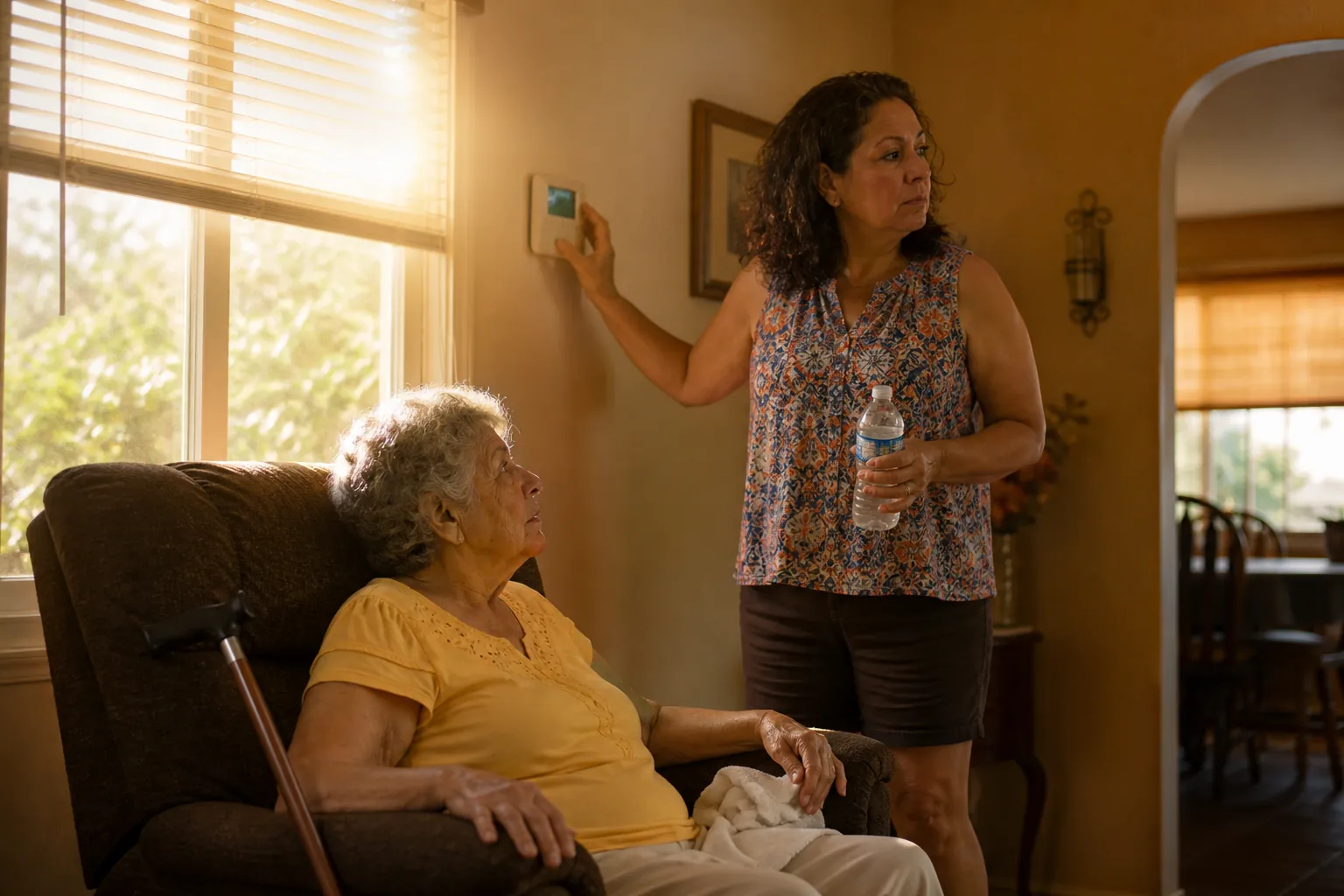
So the caregiver question is not just whether Sunday or Monday looks a few degrees better. It is whether your parent has gone several days with too little fluid, poor sleep, a warmer hallway, more bathroom trips, and less steady blood pressure when standing. That is the setup for a fall.
The forecast frame: through early August, not a clean break today
The first practical decision is to stop treating July 31 as the last dangerous day. Weather West's July 29 discussion put the region in a double-peaked setup, with the second phase arriving around July 30-31 and continuing into early August [1]. Forecasts can shift, especially when ridge behavior and Hurricane Genevieve's influence are part of the pattern, so a precise "over by Tuesday" promise would be more reassuring than useful.
For fall prevention, use a shorter decision window: today, tonight, tomorrow, and then re-check daily. Inland Los Angeles County, the Inland Empire, inland Orange County, and inland San Diego County need extra afternoon planning because hotter daytime conditions can push dehydration faster. Coastal and basin homes still need overnight planning because humid, warm nights can keep the body from unloading heat before the next day starts [2][3][4].
If you are comparing this with a shorter heat event, the site's 72-hour heat dome checklist is the faster version. This article treats the current Southern California pattern as a longer, cumulative safety problem.
Why heat turns into a fall risk before anyone says they feel sick
Older adults often do not feel thirst early enough to match what their bodies are losing. Cleveland Clinic's Dr. Ronan Factora has emphasized that dehydration prevention in older adults cannot depend only on waiting until someone says they are thirsty, and Brown University Health also notes that aging can blunt thirst and reduce sweating capacity [5][6]. That is the part of heat safety that is easy to miss in a parent who insists, sincerely, that they are fine.
The fall pathway is plain: heat and sweating increase fluid loss; lower fluid levels reduce blood volume; lower blood volume makes blood pressure more likely to drop when someone stands; that drop can cause lightheadedness, blurred vision, weakness, or a quick reach for the nearest chair. If the nearest chair is not where their hand expects it to be, or if the hallway is dark because the lights were kept off to reduce heat, the heat wave has become a fall event.
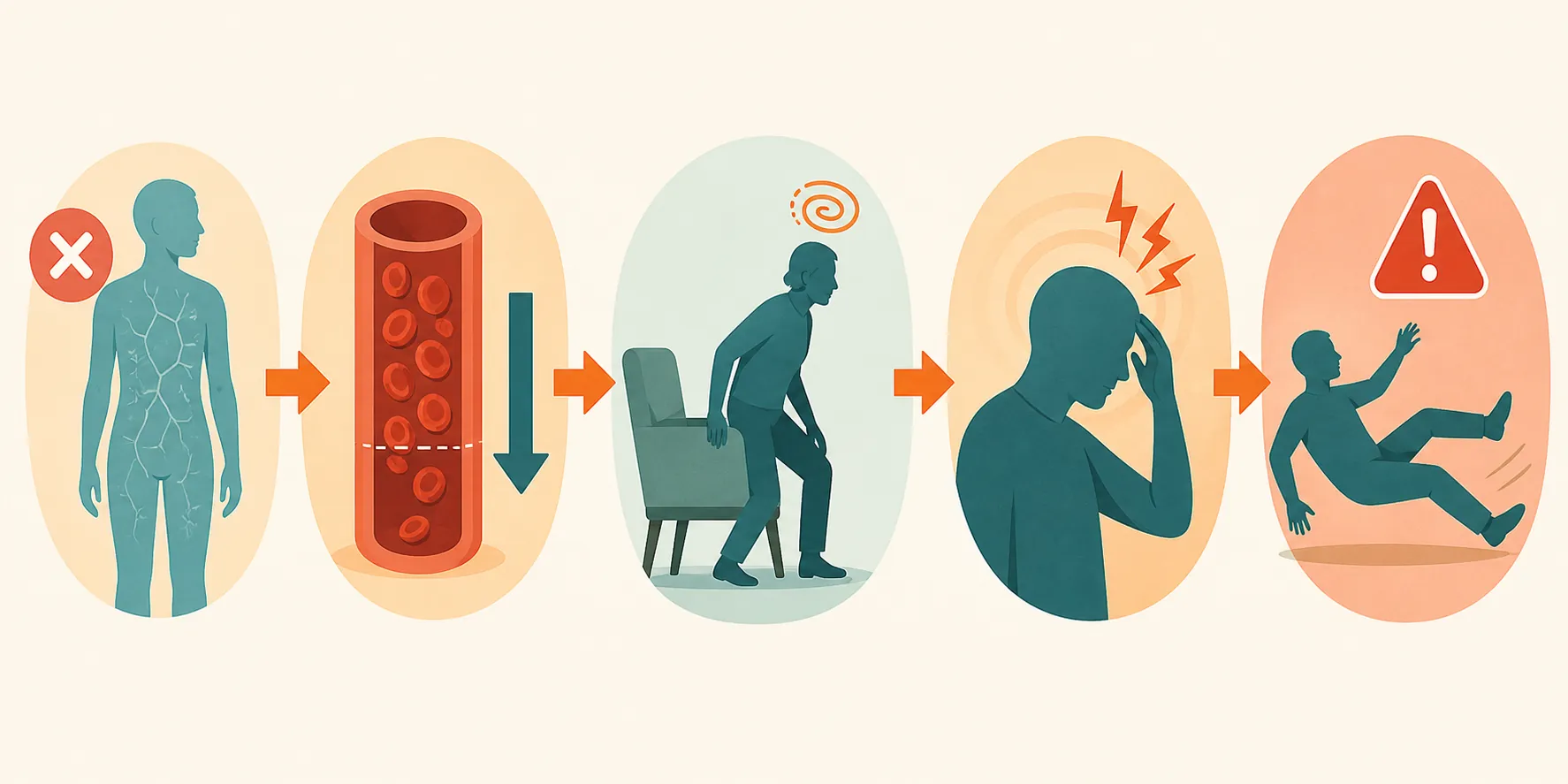
Warm nights make the pathway more dangerous because the body starts the next morning without a clean reset. A parent who slept poorly, used the bathroom twice, and drank little overnight may be at the highest fall risk during an ordinary-looking moment: standing from the recliner, walking to the kitchen, or getting up at 2 a.m.
For a fuller explanation of the heat-to-fall cascade, see Protect Your Parent from Heat Stroke and Falls During a Heatwave. Here, the job is to turn that mechanism into the next seven days of decisions.
Seven-day fall-prevention map for July 31 through August 6
Use this as a living plan, not a one-time checklist. Re-check the daily forecast, the CDC HeatRisk tool, and local alerts each morning because the exact easing can move [8].
| Date | Heat pattern to plan around | Fall-prevention action that changes today |
|---|---|---|
| Friday, July 31 | Second, more humid peak is in progress. | Move water to every standing-up location: recliner, bed, bathroom route, kitchen table. Do not rely on one bottle in the kitchen. |
| Friday night | Warm overnight lows may limit recovery, especially in coastal and basin areas. | Turn on hallway and bathroom night lights before bedtime. Keep a clear path from bed to toilet. |
| Saturday, August 1 | Heat strain carries over; inland afternoons remain the hardest planning window. | Schedule check-ins before the hottest part of the day and again after dinner, not only at lunch. |
| Sunday, August 2 | Some areas may look less extreme, but cumulative dehydration can lag behind the forecast. | Use a slow-stand routine every time: sit upright, feet flat, stand, pause, then walk. |
| Monday, August 3 | Early-August persistence remains possible; exact break timing is uncertain. | Decide early whether the home is cool enough. If not, check cooling-center options before the afternoon heat. |
| Tuesday, August 4 | Do not assume the danger is gone if nights are still warm or humid. | Review medication heat risks with the prescribing clinician or pharmacist if dizziness, weakness, or poor intake appears. |
| Wednesday, August 5 | Risk should be rechecked rather than guessed from regional headlines. | Look for accumulated clutter from heat routines: fans, cords, towels, extra bottles, and moved chairs. |
| Thursday, August 6 | Continue precautions until local heat risk and overnight recovery improve. | Keep the night-light, hydration, and slow-standing routine in place for at least one cooler night after the advisory-level concern drops. |
July 31: treat the second peak as a standing-risk day
On July 31, the mistake is waiting to see whether your parent sounds uncomfortable. The second heat peak is already the issue [1]. Before dinner, place fluids where your parent actually sits and rises: next to the recliner, at the bedside, near the usual pill location, and along the route to the bathroom if that is where bottles get noticed.
Then watch one transition, not just one temperature reading. Ask your parent to sit upright first, put both feet on the floor, stand, pause with a stable handhold, and only then walk. If they wave you away, keep the routine short enough that it does not feel like a lecture. The pause is the point.
Friday night: make the bathroom route boringly safe
Warm overnight lows above 70°F in coastal areas are not just a sleep problem; they remove the cool-down period many older bodies count on [4]. That makes the late-night bathroom trip more important than the afternoon headline. Turn on the hallway light, bathroom light, or plug-in night lights before bedtime, even if your parent likes to keep the house dark to "save the AC." A dark hallway is not an energy plan if it creates a fall.
Clear the route with the lights on. Look for shoes, oxygen tubing, fan cords, pet bowls, laundry baskets, and throw rugs that shifted during the day. Put the cane or walker on the side where your parent gets out of bed, not across the room where it looks tidy.
August 1: move check-ins away from convenience
Saturday is when the household can start acting tired of the heat. That is exactly when check-ins need to become less casual. If you live close enough to stop after work but not close enough to pop in every hour, use two deliberate contact points: one before the hottest part of the day and one after dinner, when the house may still be holding heat.
Ask questions that produce observable answers: "What color is the water bottle by your chair?" works better than "Are you drinking?" "Can you turn on the hall light while we are on the phone?" works better than "Be careful tonight." If your parent lives alone, the risk is amplified because no one sees the unsteady stand or the untouched glass. The living-alone version is covered in more depth in How heat waves increase fall risk when you live alone.
August 2: do not let a slightly better forecast erase accumulated risk
A day that looks less extreme can still be a bad fall day if the previous nights were warm and the previous afternoons reduced intake. Keep the slow-stand routine in place. Have your parent sit at the edge of the bed before walking. Have them stand from the recliner with a pause before turning. Turning too quickly right after standing is one of those tiny movements that matters more during dehydration.
This is also a good day to check whether the home has quietly rearranged itself around the heat: a fan pulled into the hallway, a chair moved to catch cooler air, a towel under a window, an extension cord crossing the walking path. The room-by-room version of that scan is in Prevent Heat-Related Deaths in Seniors: A Room-by-Room Checklist.
August 3: decide on cooling before the house fails the test
By Monday, the question is not whether your parent can tough it out. It is whether the home is staying cool enough for safe walking, sleeping, and bathroom use. If the thermostat is creeping up, the bedroom is hotter than the living room, or your parent is avoiding lights and movement to keep the AC from "working too hard," make the cooling plan early in the day.
LA County posts extreme heat information and cooling-center guidance, and the California Department of Aging maintains heat-wave resources for older adults [9][10]. Check the current location, hours, transportation availability, and accessibility before sending anyone out; do not assume a ride option or cooling-center schedule from last year is still operating.
If the AC fails or a power outage hits, treat that as a fall-prevention emergency as well as a heat emergency. The practical backup planning is covered in How Older Adults Can Avoid Falls During a Power Outage.
August 4: bring medication risk into the heat conversation
Some prescribed medications can make heat harder on older adults. Hackensack Meridian Health physicians have highlighted concerns with medicines such as diuretics, beta-blockers, antidepressants, and other drugs that can affect hydration, sweating, thirst, or temperature regulation during extreme heat [7].
Do not stop, skip, or change prescribed medication because of a heat wave unless the prescribing physician tells you to. The safer action is to call the doctor's office or pharmacist and say exactly what is happening: the current heat wave is continuing, the home temperature is high or the overnight lows are warm, and your parent has dizziness, weakness, poor intake, confusion, or new unsteadiness.
For deeper drug-specific questions, use Heat Wave Safety Tips for Seniors Taking These Medications as a companion, but keep the physician-consultation rule at the center.
August 5 and 6: wait for recovery, not just a nicer headline
Late in the seven-day window, the temptation is to put the house back to normal. Do it slowly. Keep water visible. Keep the bathroom route lit. Keep the cane or walker in its useful place. Keep asking for the stand-and-pause routine until your local forecast and overnight conditions show that the body is getting a real break.
The CDC HeatRisk tool is useful here because it lets you check daily risk by location rather than relying on a regional headline that may not match your parent's ZIP code [8]. Inland and coastal households can be living through different versions of the same heat wave.
Warning signs that should change the plan immediately
A seven-day plan is only useful until the situation gets more serious. Escalate sooner if your parent is dizzy when standing, newly confused, unusually weak, not urinating normally, unable to keep fluids down, too hot despite cooling efforts, or living alone without reliable check-ins.
- Call 911 for severe confusion, fainting, collapse, signs of heat stroke, or symptoms that feel urgent.
- Call the prescribing clinician or pharmacist for dizziness, weakness, poor intake, or heat concerns involving medications.
- Use a cooling center, a cooler family home, or another verified cooled location if the home cannot stay safe.
- Increase check-ins for anyone living alone, especially overnight and after the hottest part of the day.
- Treat an AC failure, power outage, or blocked bathroom route as a fall-risk escalation, not a minor inconvenience.
If you are unsure whether dizziness or confusion has crossed into emergency territory, review Recognize Heat Stroke Symptoms in Elderly Before a Fall and choose the safer response when symptoms are progressing.
What to re-check each morning until the heat risk drops
Each morning, check three things before the day gets away from you: the local forecast, the overnight low, and your parent's actual home conditions. A forecast that says "cooler" does not help if the bedroom stayed warm all night, the water bottle is still full, and the hallway light is off.
- Forecast: check whether heat risk remains elevated in your parent's ZIP code, not just across Southern California.
- Overnight recovery: ask whether the bedroom cooled down and whether sleep was interrupted by heat or bathroom trips.
- Hydration placement: confirm fluids are within reach where your parent sits, sleeps, and takes medications.
- Standing routine: watch or rehearse the sit, stand, pause, walk sequence at least once.
- Walking path: check lights, cords, rugs, fans, pet items, and anything moved to manage heat.
Broader pre-wave preparation belongs in Keep Elderly Safe During a Dangerous Heat Wave and Heat Wave Preparedness for Seniors Also Prevents Falls. For this current July 31-to-early-August Southern California event, the daily rule is simpler: do not retire the fall precautions until your parent's home has had at least one genuinely cooler, safer night and the local heat risk has eased.
References
- Weather West, Weather West / Daniel Swain, July 29, 2026.
- LA heat forecast hot weather, NBC Los Angeles, July 23, 2026.
- Los Angeles weather: temperatures Southern California, ABC7, July 30, 2026.
- Southern California heat wave forecast, Los Angeles Times, July 24, 2026.
- Preventing Dehydration in Older Adults This Summer, Cleveland Clinic, July 13, 2026.
- How Seniors Can Stay Safe This Summer, Brown University Health.
- How Older Adults Can Stay Safe in Extreme Heat, Hackensack Meridian Health, July 23, 2026.
- CDC HeatRisk, CDC.
- Residents Advised of Extreme Heat Risks, LA County, July 14, 2026.
- Heatwave Resources, California Department of Aging.
Related reading
Noticed something outdated or inaccurate on this page? Flag a correction. We review every report against CDC, NIA, and AARP HomeFit guidance before updating a page.
Part of the Fall Prevention section.