
STEADI: Intervene
Keeping Older Adults Safe in a Heat Wave With No Power
A power outage during a heat wave removes air conditioning, fans, and refrigeration at once, making it the highest-risk summer scenario for an older adult. Caregivers get the concrete rules and timelines that matter: when indoor heat means relocating, safe generator use, how long refrigerated food and medications last, and how to build a realistic check-in plan.
When a heat wave and storm outage hit at the same time, the question is not simply how to keep an elderly parent comfortable. The usual protections can fail together: no air conditioning, no powered fan, no cold refrigerator, no charged phone, and possibly no safe place for temperature-sensitive medication. That is why the safest plan runs on preset rules and clocks, not on “we’ll see how they feel later.”
The first working rule is blunt: if the home is getting hotter and the power is still out, treat this as a relocation problem early. PowerOutage.us advises moving an older adult to an air-conditioned public space, such as a library, community center, or cooling shelter, if indoor temperatures rise above 90°F during a heat-related outage.[1] That threshold is not a federal standard, but it is a useful line because it removes the worst family habit in emergencies: waiting for someone exhausted and overheated to make a good decision.
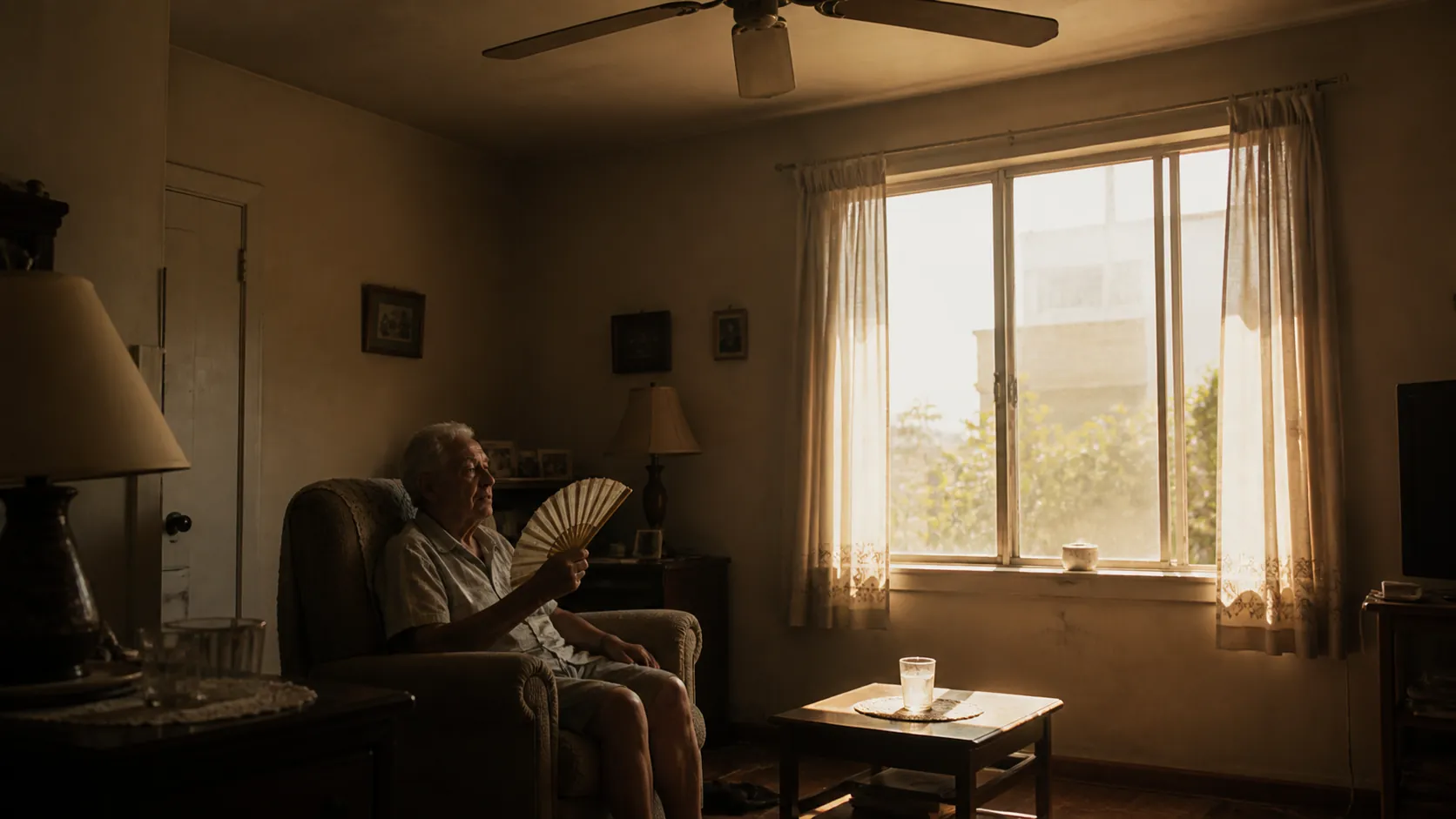
What changes the minute the power fails
In an ordinary heat wave, you can often lower risk by keeping the home closed up, running air conditioning, using fans appropriately, chilling drinks, and keeping medication refrigerated. In a power outage, several of those safeguards are gone or on a timer.
- Cooling becomes temporary: shade, closed blinds, cool cloths, sponge baths, and air-conditioned destinations matter more than “resting in the living room.”
- Fans may stop working, and even when battery-powered fans are available, they are not a substitute for air conditioning in very high heat. The Red Cross says electric fans may provide comfort but will not prevent heat-related illness when temperatures are very high; it points people toward air-conditioned places, cool showers or baths, and wet cloths instead.[2]
- Food safety starts a clock as soon as the refrigerator loses power.
- Refrigerated medication may stop being reliable if the outage lasts long enough.
- Generators can solve one problem while creating a deadly carbon monoxide problem if anyone runs them too close to the home.
The no-power playbook is narrower than a full storm plan. The job here is to decide whether the home is still safe, keep the older adult reachable, avoid carbon monoxide mistakes, and know when food and medications have crossed the line.
Start with reachability, not the refrigerator
The first call is not a casual check-in. It is a safety confirmation. If you are the primary caregiver, find out whether the older adult is awake, oriented, physically safe, and able to follow the next instruction. A parent who says “I’m fine” while sitting in a hot room tells you very little unless you ask concrete questions.
- Are you inside or outside right now?
- Is the power out in the whole house, or just one room?
- Can you read the thermostat or an indoor thermometer?
- Do you feel dizzy, weak, nauseated, confused, short of breath, or unable to stand safely?
- Is your phone charged, and do you have a backup battery?
- Do you have refrigerated medication, insulin, oxygen equipment, or other power-dependent medical equipment in use?
If the older adult sounds confused, cannot answer basic questions, has fallen, cannot stand safely, or may be showing serious heat-illness symptoms, stop treating this as a home-management problem and seek urgent help. Do not spend the next hour debating the freezer.
Cool the person first, then decide how long the house can be used
While someone is checking the outage status, the older adult should move to the coolest usable part of the home. Usually that means a lower floor, an interior room, or a shaded room away from direct sun. Close blinds or curtains on sunny windows. Loosen heavy clothing. Use cool wet cloths on the neck, wrists, and underarms. If the person can bathe safely, a cool shower or sponge bath can help; if transfers are unsafe, do not turn the bathroom into the fall scene no one needed.
The California Department of Public Health advises older adults during extreme heat to stay in air-conditioned areas when possible, drink water, take cool showers or baths, wear lightweight clothing, and check in with others.[3] In a no-power home, the air-conditioned area may no longer be the home. That is the point many families accept too late.
Use fans carefully. A small battery fan may make a person feel better for a while, especially with a cool damp cloth, but it should not become the excuse for staying in a room that is climbing toward dangerous heat. Once the home is very hot, blowing hot air across an older adult is not a safety plan.
Measure the room, not the mood
A cheap indoor thermometer belongs in the plan because it ends arguments. If there is no thermometer, use the thermostat if it still displays room temperature on battery backup. If neither is available, assume risk rises quickly when the home is closed, sunny, humid, and without air movement.
| Condition in the home | Caregiver action |
|---|---|
| Power is out, indoor temperature is below 90°F, the older adult is alert and steady, and a responsible person can keep checking | Begin cooling measures, conserve phone battery, check outage updates, and prepare for relocation if temperature rises or symptoms appear. |
| Indoor temperature is above 90°F during a heat-related outage | Use the PowerOutage.us threshold as the relocation trigger: move the older adult to an air-conditioned public space or another safe cooled location.[1] |
| The older adult is confused, very weak, dizzy, vomiting, has chest pain, has fallen, cannot transfer safely, or cannot be reached | Escalate immediately. Call emergency services or send the designated nearby helper for an in-person welfare check. |
| The home depends on powered medical equipment and backup power is not available or not working | Contact the medical equipment provider, utility emergency line, local emergency management, or emergency services as appropriate. Do not wait for the house to heat further. |
Relocation does not have to mean a hospital if the person is medically stable. It may mean a relative’s home with power, a cooling center, a library, a community center, a senior center, or another public air-conditioned site. The hard part is not naming the destination. The hard part is deciding before the outage which person is allowed to say, “We are leaving now,” and which car, wheelchair, walker, medication bag, house key, and pet plan make that possible.
The generator rule is not negotiable
A portable generator can keep a refrigerator, medical device, or small cooling setup running. It can also kill people quietly if it is used wrong. The CDC says generators should never be used inside a home, basement, or garage, and should be kept at least 20 feet from any window, door, or vent. The CDC also recommends using a battery-powered carbon monoxide detector during outages.[4]
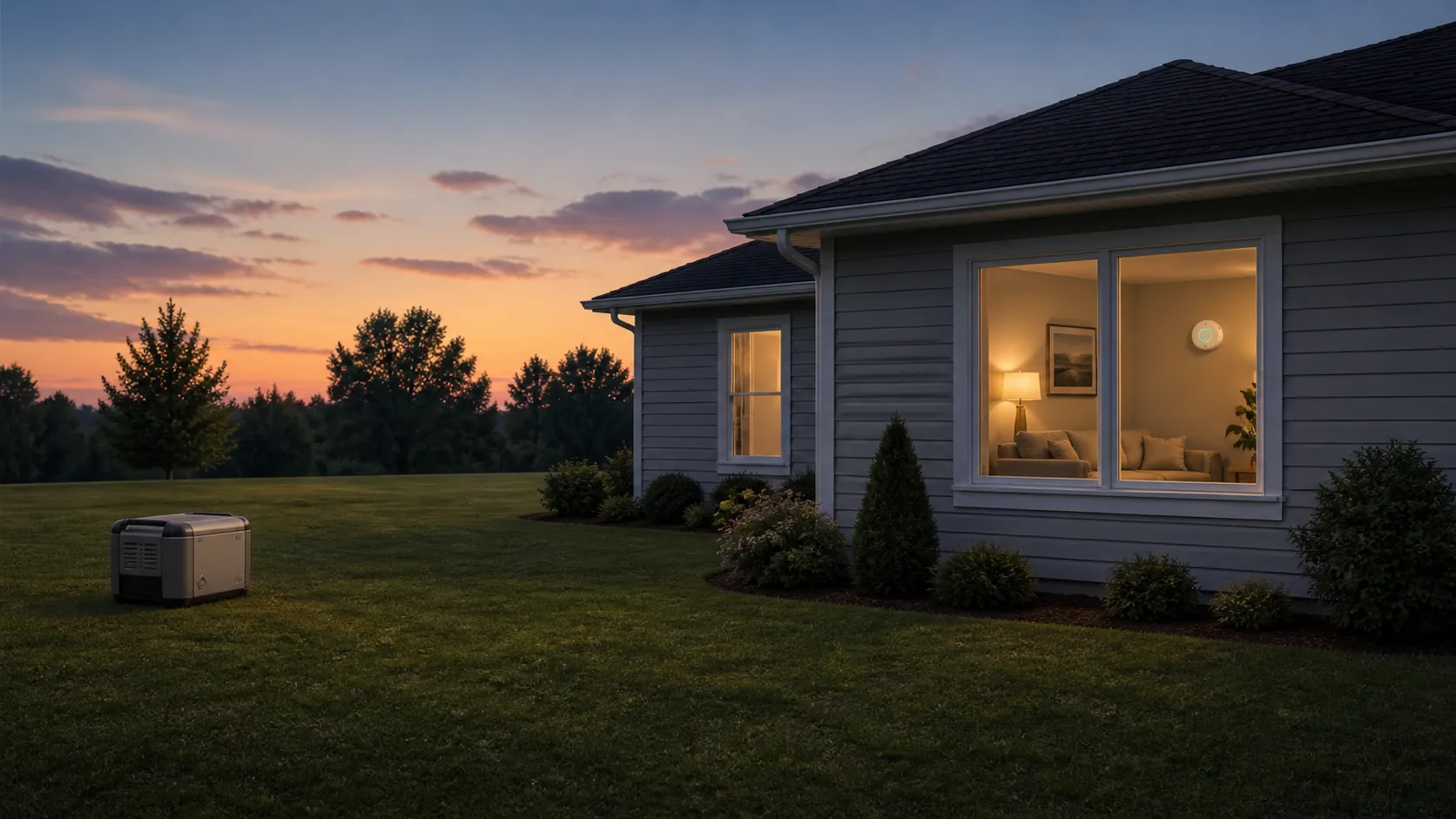
Do not put the generator in the garage with the door open. Do not put it on a porch. Do not tuck it under an overhang because it is raining. Do not aim the exhaust away and call it handled. The 20-foot distance from openings is the minimum rule to build around, and the carbon monoxide detector should be battery-powered because the house power is already gone.[4]
Carbon monoxide poisoning can look like ordinary heat or storm fatigue until it is not ordinary at all. The CDC lists symptoms including headache, dizziness, weakness, nausea, vomiting, chest pain, and confusion; it also gives the Poison Help line as 1-800-222-1222.[4] If symptoms appear and a generator, grill, camp stove, or vehicle may be involved, get people into fresh air and seek emergency help.
Start the food and medication clocks as soon as the power goes out
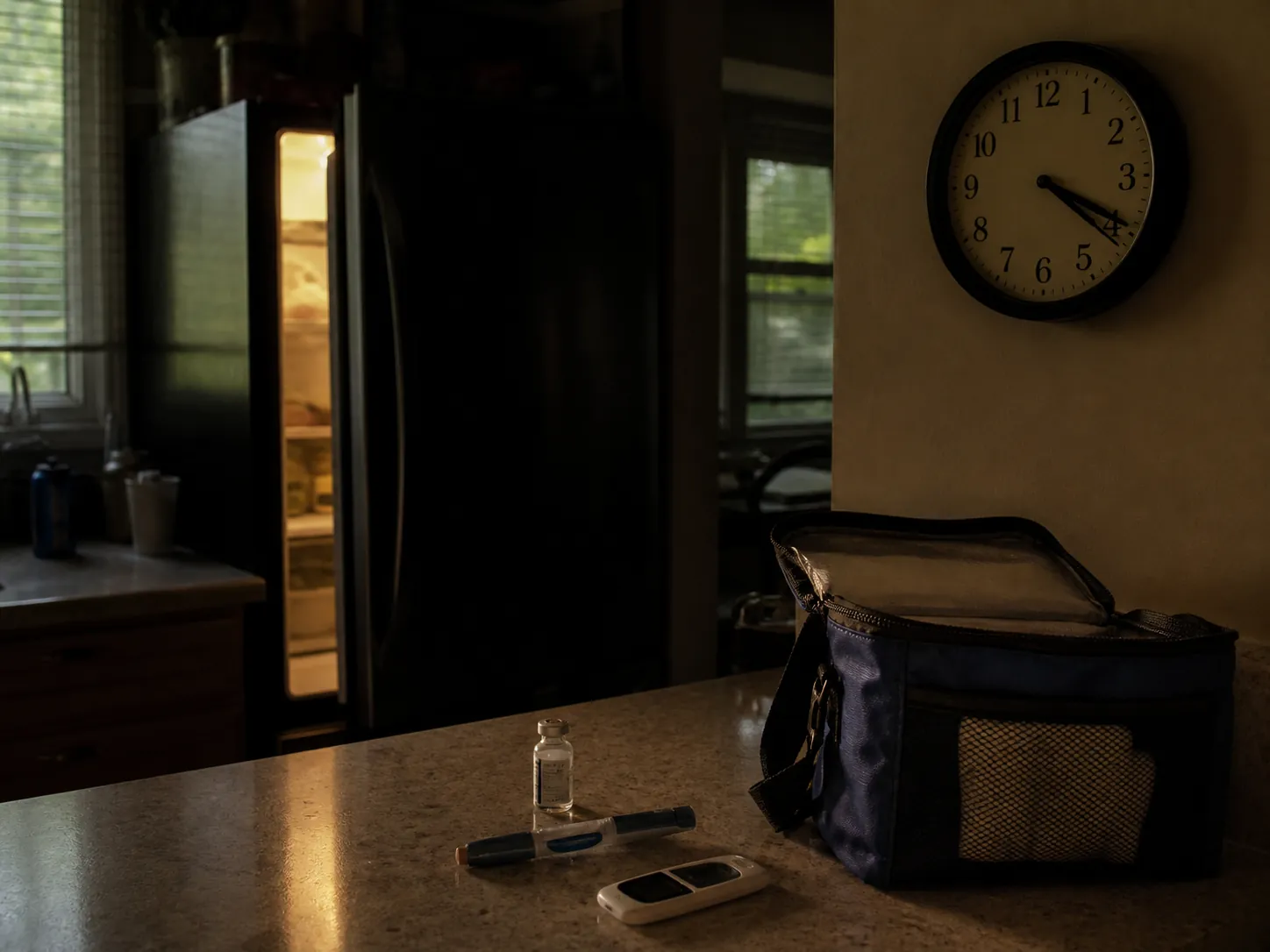
Food and medication safety should not be handled by sniffing, guessing, or arguing about how cold the refrigerator “probably still is.” Write down the outage start time. If no one knows exactly, use the earliest likely time. Then keep the refrigerator and freezer doors closed unless you are moving essentials to a cooler.
| Item | Clock to use | What to do |
|---|---|---|
| Refrigerated food | Up to 4 hours without power if the refrigerator door stays closed | After that window, follow CDC food-safety guidance rather than tasting or smelling food to decide.[4] |
| Full freezer | About 48 hours if the door stays closed | Keep it closed. A packed freezer buys more time than a half-empty one.[4] |
| Half-full freezer | About 24 hours if the door stays closed | Use the shorter clock. Do not keep opening it to inspect the contents.[4] |
| Refrigerated medications | Power out for a day or more | CDC says refrigerated medications should be discarded if power is out for a day or more unless the drug’s label says otherwise.[4] |
| Insulin | Temperature-sensitive; PowerOutage.us notes insulin begins to degrade above 77°F | Use a portable cooler with ice packs, protect from direct contact with freezing ice, and confirm storage instructions with the label, pharmacist, or prescriber.[1] |
This is where an outage becomes more than a heat problem. If an older adult depends on insulin or another refrigerated medication, the plan cannot wait until the refrigerator has been warm all day. The medication bag, cooler, thermometer if available, current medication list, and pharmacy phone number should move with the person if they relocate.
Do not stretch medication-storage rules because replacing medication is inconvenient. The consequence of spoiled food is bad enough; the consequence of unreliable medication may be worse. If storage has been outside the labeled range or the outage has lasted into the CDC’s discard window, call the pharmacist, prescriber, or emergency line for case-specific instructions.
Build the check-in chain before anyone is hot, tired, and unreachable
A twice-daily heat check-in is a good starting point when utilities are working. During a heat-related outage, it needs tighter rules because the situation can change by the hour. The plan should name people, not intentions.
| Role | Named person | Backup | Trigger for escalation |
|---|---|---|---|
| Primary caller | Adult child, neighbor, sibling, or care manager | Second caller with the same phone numbers | No answer after the agreed number of attempts, confusion, symptoms, or indoor heat approaching the relocation trigger |
| In-person checker | Neighbor, building staff, nearby relative, faith-community contact, or paid caregiver | Second nearby person who has access instructions | Phone contact fails, the older adult sounds unsafe, or the caregiver cannot verify room temperature and condition |
| Transportation lead | Person authorized to take the older adult to a cooling location | Backup driver or accessible transportation option | Indoor temperature above 90°F, prolonged outage, medication risk, unsafe transfers, or caregiver judgment that the home is no longer safe |
| Medication handler | Person who knows where medications, insulin, cooler, and medication list are kept | Pharmacy contact or second family member | Refrigerator has been off long enough to threaten medication storage or relocation is happening |
The older adult should know this plan ahead of time. Not in a dramatic family meeting, necessarily, but plainly: “If the house gets over 90°F during an outage, we are going to a cooled place. If I cannot reach you, I will send Maria. If Maria cannot reach you, we call for a welfare check.” That may feel bossy in calm weather. It feels merciful when the phone battery is dying.
For an older adult who resists leaving, avoid making the argument about independence. Make it about the rule everyone agreed to before the storm: the house is familiar, but without cooling and refrigeration it is no longer doing its job. Bring the walker, medications, charger, glasses, hearing aids, water, light clothing, and any essential documents or medical-device supplies. If a pet is the reason the person refuses to leave, the pet plan was not a side issue; it was the plan.
Plan for days, not just the first evening
Many families prepare as if the lights will come back after dinner. Sometimes they do. Sometimes they do not. PowerOutage.us reported that Hurricane Helene caused 4.79 million customer outages across the Southeast, with restoration taking 14 or more days in some rural areas.[1] That example should not make every storm feel catastrophic, but it should end the fantasy that every outage is a short inconvenience.
Before storm season, write down the local cooling-center source your family will actually use. Depending on the community, that may be the city or county emergency-management site, 211, local news, the FEMA app, a senior center, or a utility alert system. A NOAA Weather Radio can help when internet and cell service are unreliable. If the older adult uses electrically powered medical equipment, ask the utility about medical needs registries or priority-notification programs before the emergency; those programs do not guarantee uninterrupted service, but they may improve communication and planning.
If costs are part of the risk — and they often are — look before the heat emergency for cooling assistance, utility-assistance programs, transportation options, and backup locations. The outage plan should not depend on buying supplies, filling a tank, arranging paratransit, and negotiating with a reluctant parent after the indoor temperature has already crossed the line.
A usable no-power heat plan
For a caregiver, the finished plan should fit on one page. It needs the outage start time, the indoor-temperature trigger, the generator rule, the food and medication clocks, and the check-in chain. Anything more complicated is likely to fail when people are hot and reception is spotty.
- Relocation trigger: if indoor temperature rises above 90°F during a heat-related outage, move the older adult to an air-conditioned location, using the PowerOutage.us threshold as the family rule.[1]
- Cooling actions while waiting: shade the room, close sunny blinds, loosen clothing, use cool wet cloths, use cool showers or sponge baths only if transfers are safe, and do not rely on fans in very high heat.[2][3]
- Generator rule: never indoors, never in a basement or garage, at least 20 feet from windows, doors, and vents, with a battery-powered carbon monoxide detector.[4]
- Food clock: refrigerator up to 4 hours, full freezer 48 hours, half-full freezer 24 hours, with doors kept closed.[4]
- Medication clock: refrigerated medications should be discarded if power is out for a day or more unless the label says otherwise; insulin and other temperature-sensitive medications need label- or pharmacist-guided handling.[4]
- Check-in chain: one caller, one backup caller, one in-person checker, one backup checker, and one person authorized to move the older adult to a cooled location.
This article is for education and planning, not personal medical advice. Heat illness, medication storage, oxygen or medical-device backup, and emergency relocation decisions should be reviewed with the older adult’s clinician, pharmacist, local emergency resources, or emergency services as appropriate. A household protocol based on this guidance should also be checked by a geriatric RN, occupational therapist, CAPS professional, or similarly qualified reviewer when possible.
References
- Power Outage Preparedness for Seniors & Elderly. PowerOutage.us.
- Extreme Heat Safety. American Red Cross.
- Seniors and Heat-Related Illness. California Department of Public Health.
- What to Do to Protect Yourself During a Power Outage. Centers for Disease Control and Prevention.
Related reading
Noticed something outdated or inaccurate on this page? Flag a correction. We review every report against CDC, NIA, and AARP HomeFit guidance before updating a page.
Part of the Fall Prevention section.