
STEADI: Intervene
Spider Bite Symptoms to Watch For in Older Adults
Know which spider bite symptoms in an older adult are true red flags and when to call 911, poison control, or a primary care doctor. This plain-language watch-list covers black widow and brown recluse symptom timelines plus the systemic warning signs caregivers often dismiss in older adults.
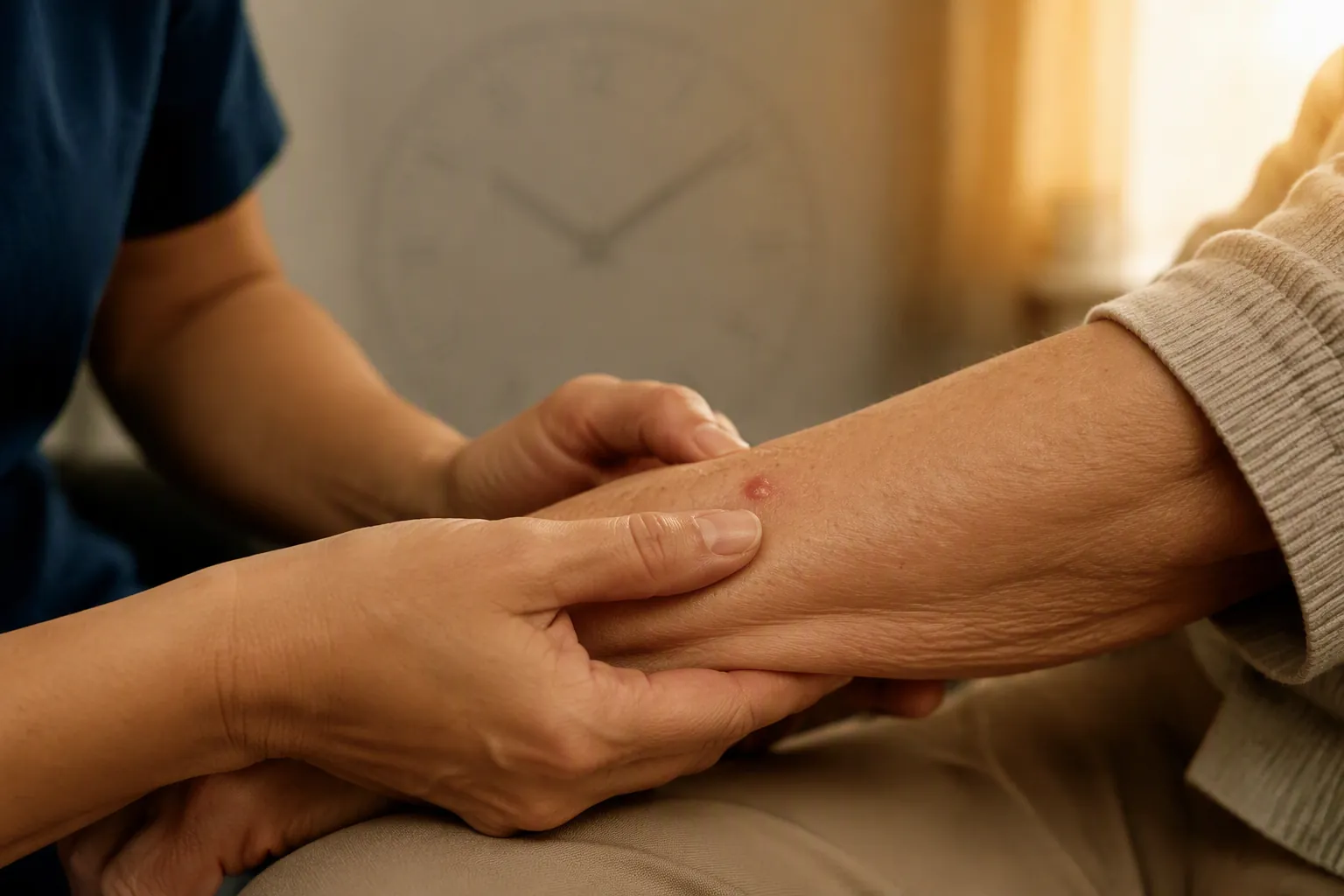
If you are watching a suspicious red mark on an older adult, the first job is not to identify the spider. It is to decide what to watch for, when to stop waiting, and who to call. Most spider bites in the United States are harmless, and deaths are very rare — fewer than about 3 per year, with most occurring in children — but older adults deserve closer monitoring because complications can be harder to separate from dehydration, medication effects, infection, or an ordinary “off” day. The spider bite symptoms to watch for in elderly parents or older adults living alone are usually changes in the whole person, not just changes in the skin. [1]
This guide is educational triage, not a diagnosis. If the person looks seriously ill, is getting worse quickly, or you cannot safely monitor them, get medical help rather than trying to prove it was a spider bite.
Start with the call decision
Use this before studying the bite mark. A small red bump can stay small; a mild-looking bite can also be the first visible clue before cramps, dizziness, fever, or spreading skin changes appear.
| What you see | Who to call |
|---|---|
| Trouble breathing, facial swelling, chest pain, severe abdominal pain, racing heartbeat, severe weakness, severe headache, or a rapidly worsening whole-body reaction | Call 911 now. Do not wait to see whether the bite mark changes. |
| Concerning symptoms that are not clearly 911-level, or you are unsure whether the pattern fits black widow or brown recluse | Call Poison Control at 1-800-222-1222 for free 24/7 bite-specific triage in the U.S. [2] |
| Spreading redness, fluid or pus, fever, chills, body aches, a bullseye-like area, an open sore, or pain still worsening after 24 hours | Call the primary care doctor or clinician within 24 hours. [3] |
For an older adult who lives alone, the threshold for getting human triage should be lower. A symptom that would be merely unpleasant in a steady, well-hydrated person can become unsafe if it makes someone weak, dizzy, or unsteady on the way to the bathroom.
Why the next few hours matter more than the bite photo
In the U.S., the two spiders that matter most clinically are the black widow and the brown recluse. That does not mean every serious-looking red mark came from one of them, or that every bite from one will become dangerous. It means their symptom patterns are worth knowing because they can move beyond a local skin reaction.
Clinical guidance, not a strong elderly-only outcomes study, is the basis for the extra caution with age. Cleveland Clinic notes that people older than 60 may need hospitalization for black widow bites, and that children, older adults, and people with preexisting conditions are most likely to have a severe reaction to a brown recluse bite. [1]
That is why photo comparison is a poor main strategy. Bathroom lighting, fragile skin, bruising, scratching, diabetes-related skin problems, medication-related bleeding, and ordinary bacterial infections can all confuse the picture. The safer question is: what has changed since the bite was noticed?
Black widow symptoms: a fast systemic pattern
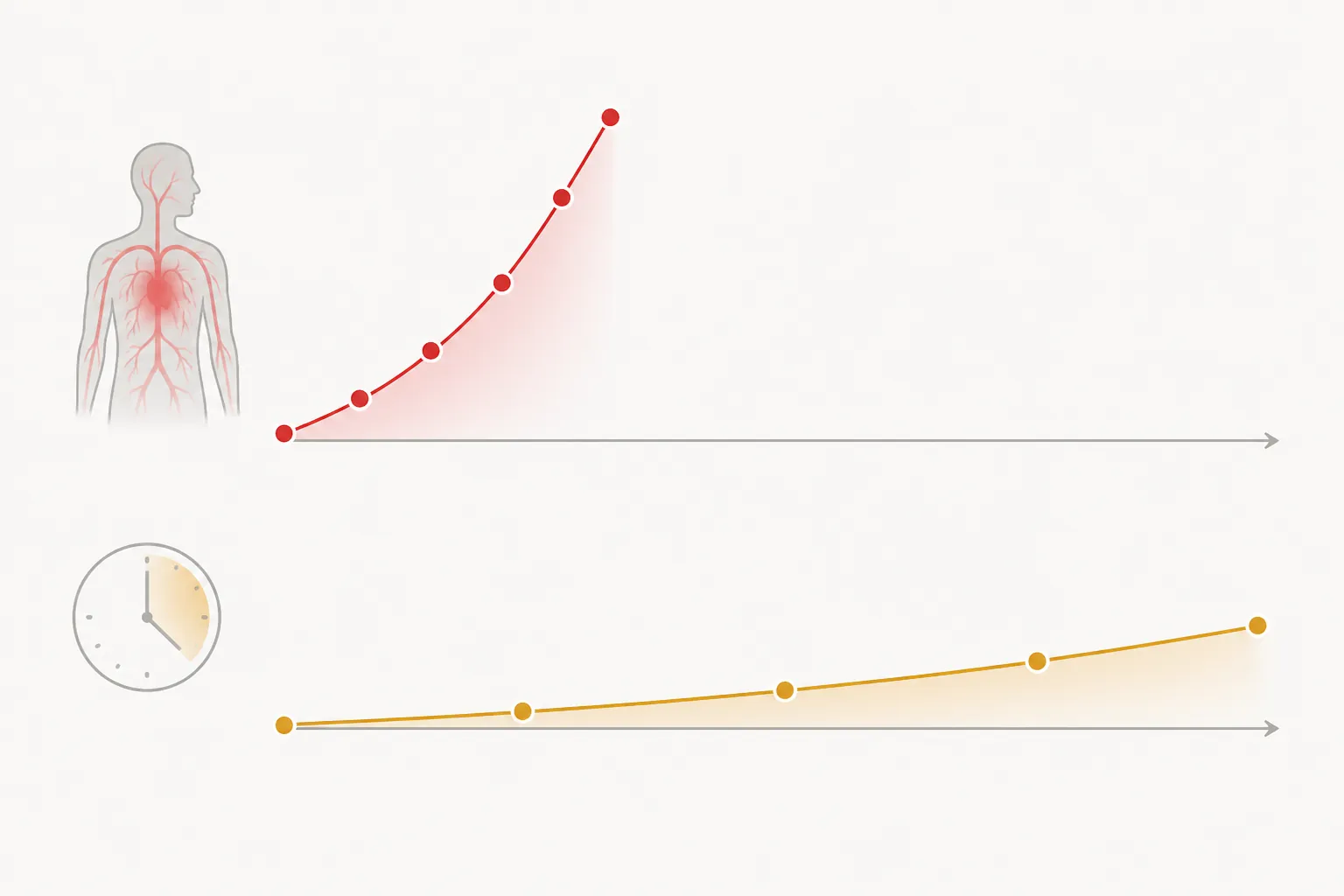
A black widow bite may begin with sharp, pinprick-like pain at the bite site. The skin mark itself may not look dramatic. The more important clue is what follows: muscle pain and cramping can spread to the chest, abdomen, or back within roughly 30 minutes to a couple of hours. [4][5]
That spreading pain is the part caregivers can easily misread. Severe abdominal cramping may look like a stomach emergency. Chest discomfort, sweating, or a racing heart may raise concern for a heart problem. In an older adult, those possibilities still need to be taken seriously; do not assume “it is only the bite” when the symptoms involve the chest, abdomen, heart rate, breathing, or severe weakness. Black widow symptoms can be severe enough to be mistaken for appendicitis or a heart attack. [4][5]
Watch especially for muscle cramps that are increasing, pain that is moving away from the bite, new weakness, nausea or vomiting, headache, sweating, high blood pressure if it is being checked, or a heartbeat that feels unusually fast. If breathing trouble, severe chest pain, severe abdominal pain, facial swelling, or marked weakness appears, treat that as a 911 situation rather than a wait-and-see symptom. [1]
Brown recluse symptoms: a quieter timeline that can change the skin later
A brown recluse bite may not be felt when it happens. Redness, pain, or a burning feeling can appear later, often around 3 to 8 hours after the bite. That delay is one reason the bite mark alone can mislead you early in the day. [6][7]
Over time, the area may blister, open into a sore, or develop dark tissue. Those skin changes deserve medical attention, but the goal at home is not to decide whether the spot is “necrotic enough.” If there is an open sore, a darkening blister, drainage, or spreading redness, call the clinician within 24 hours, sooner if the person is worsening or has systemic symptoms. [3][6]
The whole-body symptoms matter just as much: fever, chills, nausea, rash, restlessness, dizziness, and weakness are described with brown recluse reactions. [6][7] In an older adult, those can be easy to explain away as a poor night’s sleep, anxiety, not eating enough, or “just being older.” If they are new after a suspected bite, write down when they started and call for advice.
Red flags to watch for in an older adult
These are not meant to help you name the spider. They are meant to help you choose the next action.
- Trouble breathing, facial swelling, or a rapidly worsening whole-body reaction: call 911. These symptoms can signal a serious allergic or systemic reaction and should not be monitored at home. [1]
- Chest pain, severe abdominal pain, or a racing heartbeat: call 911, especially if the person is over 60 or has heart disease. Black widow symptoms can involve severe chest, back, or abdominal muscle pain, and those symptoms can resemble other emergencies. [4][5]
- New muscle cramps, spreading pain, or marked weakness: call Poison Control or urgent medical care depending on severity. If weakness is severe, sudden, or paired with breathing, chest, or abdominal symptoms, use 911. [1][5]
- Dizziness, lightheadedness, or new unsteadiness: do not dismiss it. Call Poison Control or the clinician for triage if it follows a suspected bite, and make the person sit or lie down while you decide. Dizziness is also an independent fall-risk signal in older adults; that does not prove spider bites directly cause falls, but it does mean the home-safety problem has changed. [7][8]
- Fever, chills, body aches, nausea, vomiting, rash, or unusual restlessness: call the clinician or Poison Control the same day. These can be systemic symptoms rather than a simple itchy bump, and restlessness in an older adult may show up as pacing, agitation, or being unable to settle. [6][7]
- Spreading redness, warmth, pus, fluid leaking from the bite, a bullseye-like area, an open sore, or a darkening blister: call the primary care doctor within 24 hours. These findings can point toward infection or a concerning bite reaction that needs a clinician’s eyes. [3]
- Pain that is still getting worse after 24 hours: call the doctor. A bite that is improving can often be watched; pain that continues to escalate belongs in the “get advice” category. [3]
If dizziness or weakness appears, treat the room as part of the problem
A caregiver may be focused on the bite while the bigger immediate danger is the walk across the room. If the older adult feels weak, dizzy, nauseated, shaky, or newly unsteady, have them sit or lie down. Bring water if they can drink safely. Keep the phone nearby. Turn on lights. Do not send them to the bathroom, shower, or kitchen alone while symptoms are active.
This is the same practical logic used in other illness-and-fall situations: symptoms that affect balance can turn a medical concern into a fall-prevention concern. If you are already managing fall risk at home, the same crisis-path thinking used for what to do when an elderly parent falls after a stroke applies here: stabilize the person first, then decide who to call.

Basic first aid while you monitor
If there are no emergency symptoms, simple first aid is reasonable while you watch the timeline:
- Wash the area with soap and water.
- Apply a cold pack or ice wrapped in cloth for short intervals.
- Elevate the area when practical, especially if there is swelling.
- Ask a pharmacist or clinician before using an antihistamine if the older adult takes sedating medications, has glaucoma, urinary retention, confusion, or a high fall risk.
- Check tetanus booster timing. CDC/NIOSH guidance says to call a physician if the person’s last tetanus booster was more than 5 years ago after a bite. [9]
Do not cut the bite, try to squeeze out venom, apply a tourniquet, or spend the monitoring window scrolling through bite photos. None of that helps you decide whether cramps are spreading, dizziness is new, or redness is moving.
What to write down before you call
If you call Poison Control, the doctor, or 911, you do not need a perfect story. A few plain observations are more useful than a guess about the spider:
- When the bite or mark was first noticed.
- Whether the person felt a sharp bite, felt nothing, or is unsure.
- Whether pain is staying local or spreading to the chest, abdomen, back, or another area.
- Whether dizziness, weakness, nausea, fever, chills, restlessness, or unsteadiness is new.
- Whether redness is spreading, drainage is present, or the skin is blistering, opening, or darkening.
- The older adult’s major medical conditions and blood-thinner, heart, diabetes, immune-suppressing, or sedating medications.
If you safely captured the spider, you can mention that. Do not risk another bite trying to catch it, and do not delay care to prove what it was.
A practical monitoring window
For the first few hours, watch for the fast black widow pattern: sharp bite pain followed by increasing cramps or pain spreading into the chest, abdomen, or back. From several hours onward, watch for the quieter brown recluse pattern: delayed burning or redness, then blistering, an open sore, darkening tissue, or systemic symptoms such as fever, chills, nausea, rash, dizziness, restlessness, or weakness. [4][6][7]
With an older adult, do not let “we’ll just keep an eye on it” mean one person quietly worrying alone. Use symptoms and timing, not a photo, to choose: 911 for breathing trouble, severe chest or abdominal symptoms, facial swelling, severe weakness, or a rapidly worsening whole-body reaction; Poison Control at 1-800-222-1222 when the symptoms are concerning but not clearly an emergency; and the primary care doctor within 24 hours for spreading redness, drainage, fever, chills, body aches, an open sore, a bullseye-like area, or pain still worsening after a day. [1][2][3]
References
- Spider Bites: Symptoms & Treatment, Cleveland Clinic
- Insect and Spider Bites, Poison Control
- What should I do if I get a spider bite?, FamilyDoctor.org/AAFP
- Common Spider Bites, American Family Physician/AAFP, March 15, 2007
- Black Widow Spiders, Poison Control
- Brown Recluse Spider Bite, Cleveland Clinic
- Brown Recluse Spider Bites, Poison Control
- Risk factors for falls in older adults: an umbrella review of meta-analyses of prospective studies, Age and Ageing, 2024
- Venomous Spiders, CDC NIOSH
Related reading
Noticed something outdated or inaccurate on this page? Flag a correction. We review every report against CDC, NIA, and AARP HomeFit guidance before updating a page.
Part of the Fall Prevention section.