
STEADI: intervene
Heat Wave Safety Checklist for Seniors at Home
Understand why hot weather makes seniors more likely to fall — from dehydration and medication effects to the body's diminished thirst response — and use this home checklist to reduce risk during a heat wave.
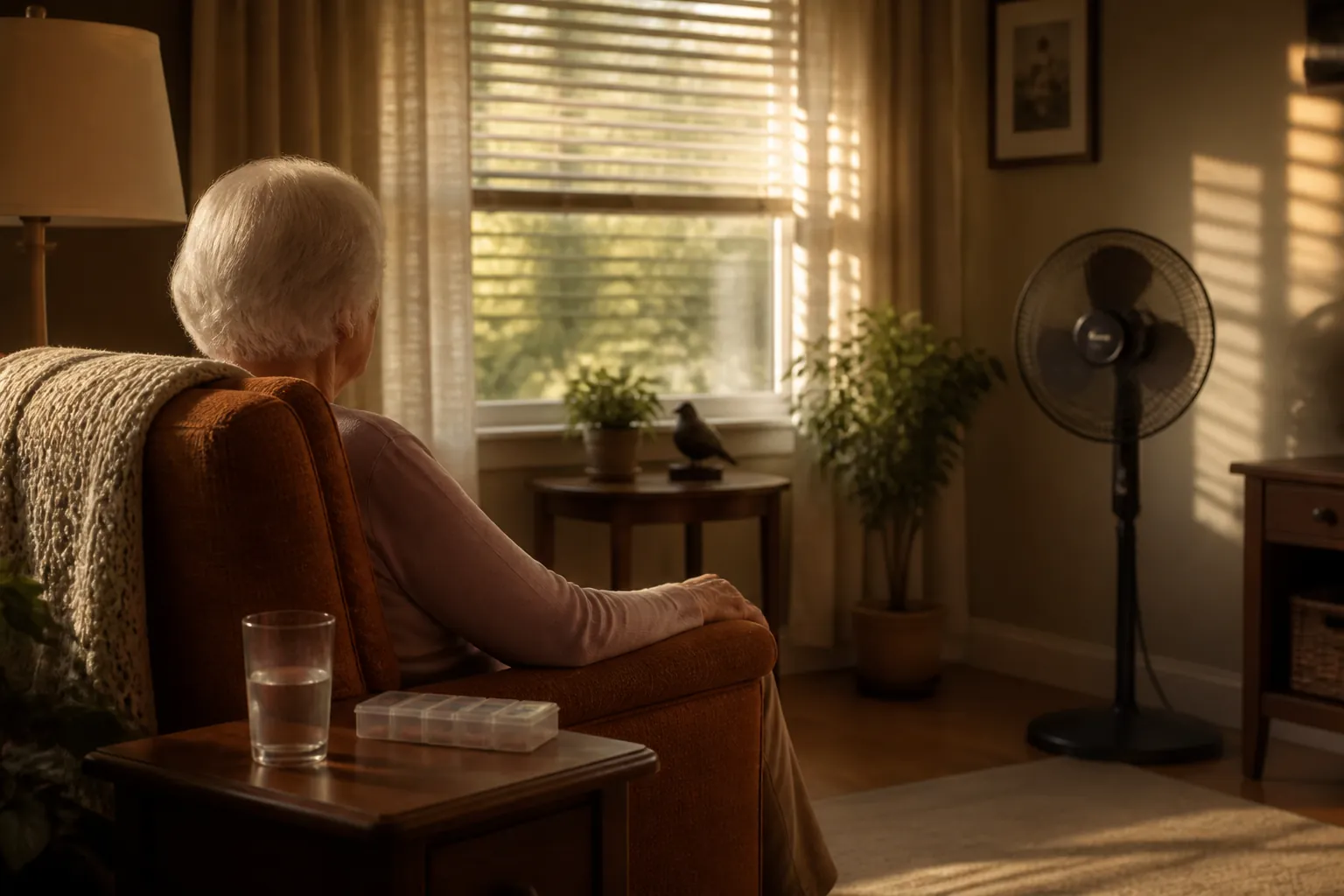
The dangerous moment in a heat wave often looks ordinary: an older adult gets up from a recliner in the late afternoon, reaches for the walker or the edge of the table, and says they are fine. The room is warm. The water glass is still half full. The blinds were closed too late. No one has called it heat illness yet, but the fall risk may already be rising.
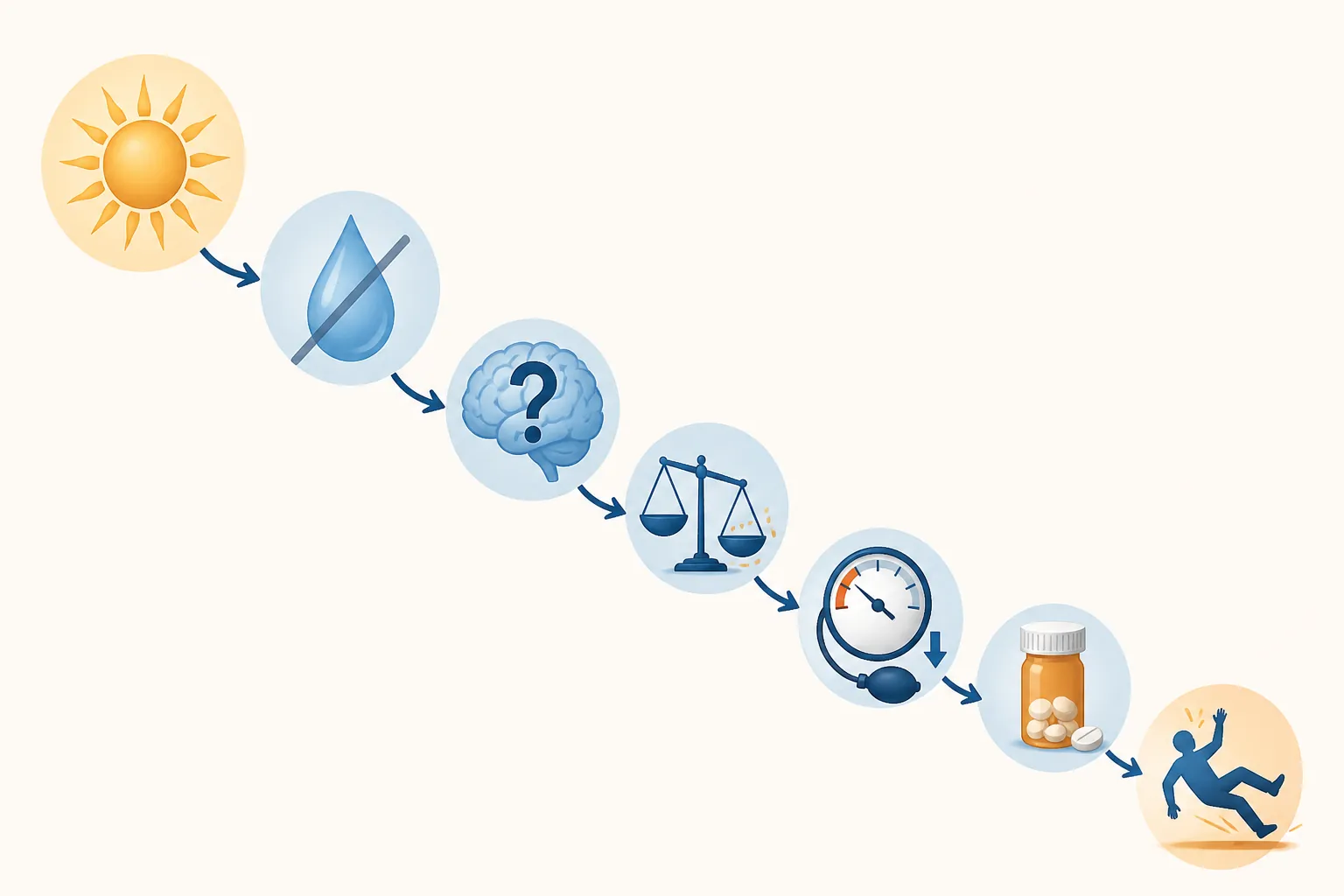
That is why heat wave safety tips for seniors at home need to start with the heat-to-fall chain, not just with general reminders to stay cool. Dehydration can dull thinking and balance. Heat can widen blood vessels and lower blood pressure when someone stands. Common medications can make both heat tolerance and fall risk worse. And many older adults cannot depend on thirst to warn them early enough because age-related changes can blunt the thirst response.[1]
The dehydration part is not a small side issue. In a study of 30,634 older adults, 37.9% were dehydrated. The dehydrated group had a 13.3% fall rate, compared with 10.2% among hydrated older adults; after adjustment, dehydration was still associated with higher odds of falling.[1] That does not mean every fall in heat is caused by dehydration. It does mean a half-finished glass, a skipped lunch, or a “not thirsty” answer deserves attention before someone stands up too fast.
The Same-Day Heat and Fall Safety Walkthrough
If you are visiting during a heat wave, do the walkthrough while the room is still in its usual condition. Do not wait until the house has been tidied, the air conditioner has been turned up for company, or the older adult has already sat back down. The useful clues are in the routine.
| Area to check | What to look for | What to do today |
|---|---|---|
| Hydration | Half-full glasses, dark urine, dry mouth, dizziness when standing, little interest in drinking | Set a drinking schedule and place fluids where the person already sits and walks |
| Medication awareness | Diuretics, beta-blockers, antidepressants, antipsychotics, recent dose changes, dizziness | Prepare questions for the doctor or pharmacist; do not change doses on your own |
| Indoor temperature | Rooms at or above 88°F, closed-off hot spaces, late-afternoon sun | Cool the room, relocate to a cooler area, or use a cooling backup plan |
| Fan use | Fan running in a room above 90°F | Stop relying on the fan alone and move to cooler air |
| Escalation signs | Confusion, fainting, worsening dizziness, inability to cool down, very hot room | Call for medical help or move to a safer cooling location |
Make Hydration Scheduled, Not Thirst-Based
During a heat wave, “drink when you are thirsty” is too weak a plan for many older adults. Thirst may come late. A person may also avoid drinking because getting to the bathroom is tiring, painful, or embarrassing. That tradeoff can quietly increase fall risk twice: first through dehydration, then through a rushed trip to the bathroom after finally drinking a lot at once.
A better home plan is visible and timed. Put water or another clinician-approved fluid at the chair, bedside, and kitchen table. Pair drinks with existing routines: morning pills, breakfast, a favorite show, lunch, afternoon phone call, dinner, and evening medication. If the person has a fluid restriction, heart failure, kidney disease, or another condition that limits fluid intake, the schedule needs clinician guidance rather than guesswork.
The goal is not to push large amounts at once. It is to prevent the long dry stretches that happen when an older adult sits in a warm room, does not feel thirsty, and then stands with lower reserve. Smaller, repeated drinks are easier to accept and easier to notice. A caregiver can mark a bottle with simple time cues or leave two filled cups in the places where the person actually spends the afternoon.
- Check whether the older adult can open the bottle, lift the pitcher, and reach the glass without standing.
- Ask what they drank since breakfast instead of asking only whether they are thirsty.
- Watch the first stand after a long sit: swaying, grabbing furniture, or pausing with eyes closed matters.
- Keep the path to the bathroom clear, lit, and free of loose rugs before increasing fluids.
- Use foods with fluid, such as fruit or soup, when appropriate and consistent with the person’s diet.
Treat Dizziness on Standing as a Heat Warning
Heat can widen blood vessels, which can drop blood pressure and trigger dizziness when a person stands.[2] In a cooler room, a brief pause at the edge of the chair might look like habit. In a hot room, it should be treated as useful information: the body may be struggling to keep blood pressure steady.
Build a stand-up routine into the day. Sit upright first. Put both feet flat. Stand slowly. Hold the walker, chair arms, or a stable surface. Wait before walking. If dizziness appears, sit back down and cool the room or move to a cooler place before trying again. The risk is not only the first step; it is the turn toward the kitchen, the bathroom, or the front door while balance is still catching up.
Check Medications Without Changing Them Yourself
Medication review is part of heat wave safety, but it is not a do-it-yourself dose adjustment. The practical move is to identify risk and contact the prescribing clinician or pharmacist.
The medication classes that deserve special attention include diuretics, beta-blockers, antidepressants, and antipsychotics. CDC clinical guidance notes that some medications can interfere with heat tolerance, fluid balance, sweating, blood pressure, or alertness.[3] In the same older-adult dehydration and falls study, loop diuretics were associated with 26% higher odds of fall-or-death, and antidepressants with 61% higher odds.[1] Those figures do not mean the medications are wrong; they mean heat should prompt a careful question.
- “Does this medication increase heat sensitivity, dehydration risk, dizziness, or fall risk?”
- “Should we monitor blood pressure, weight, fluid intake, or symptoms differently during a heat wave?”
- “What symptoms mean we should call you the same day?”
- “Are any over-the-counter sleep aids, allergy medicines, or supplements adding to dizziness or confusion?”
Keep the medication list current and visible. If a caregiver is calling from outside the home, a photo of the pill bottles and organizer is often more useful than a vague memory of “a water pill” or “something for mood.” If the older adult has new dizziness, confusion, faintness, or a recent fall, mention the heat and the room temperature when contacting the clinician.
Use Indoor Temperature Thresholds, Not Guesswork
A warm room can feel merely uncomfortable to one person and risky to another. Put a thermometer where the older adult spends the afternoon, not only near the thermostat. Bedrooms, sunrooms, upstairs rooms, and apartments with late-day sun can be hotter than the hallway reading suggests.
Indoor temperatures at or above 88°F are associated with significantly increased heat-illness risk for older adults.[4] That threshold should change the plan. At that point, the question is no longer whether the person feels warm. The question is how to lower the room temperature, move the person to a cooler room, or use a backup cooling location.
| Indoor reading | What it means | Action |
|---|---|---|
| Below 88°F | Still monitor symptoms, hydration, and standing dizziness | Keep blinds closed during sun hours, encourage scheduled fluids, and use cooler rooms |
| 88°F or higher | Heat-illness risk is significantly higher for older adults | Actively cool the room, move to a cooler area, or arrange a cooling backup |
| Above 90°F | A fan alone may make things worse by blowing hot air across the skin | Do not rely on the fan alone; seek cooler air, air conditioning, or another cooling site |
Fans need the most careful caveat. When indoor temperature is above 90°F, a fan can increase body temperature by moving hot air over the skin rather than cooling the person.[5] WHO also advises that fans should only be used below 40°C, or 104°F.[6] For an older adult sitting alone in a hot room, a running fan can create a false sense that something protective is happening.
Cooling the House Before the Hottest Hour
Passive cooling works best before the room has already stored the day’s heat. Open windows at night when outdoor air is cooler than indoor air. Close windows and cover blinds during the day. Turn off unnecessary electrical devices that add heat.[6] These steps sound small, but they matter most in the rooms where the person sits, sleeps, takes medication, and walks to the bathroom.
- Close blinds or curtains before direct sun hits the room, not after the room is already hot.
- Move the favorite chair away from sun-exposed windows if the person sits there for long stretches.
- Create one cooler “safe room” with the best shade, airflow, and access to water, phone, bathroom, and medications.
- Avoid closing the older adult into a room where they cannot hear the phone, reach help, or exit safely.
- Check whether cords from fans or portable cooling devices cross walking paths.
Know When the Plan Has to Escalate
A checklist is useful until the signs say the situation has moved beyond home management. Confusion, fainting, worsening dizziness, inability to keep fluids down, chest pain, severe weakness, or a room that cannot be cooled should not be handled with another glass of water and reassurance. If the person seems unlike themselves, cannot stand safely, or is in a dangerously hot indoor environment, call for medical help.
Falls themselves also change the situation. If an older adult falls during a heat wave, do not treat the fall as separate from the heat. Tell the clinician or emergency responder about the indoor temperature, fluid intake, medications, dizziness, confusion, and how long the person may have been in the warm room.
Make a Cooling Backup Before the House Crosses the Line
Some homes cannot be cooled enough with blinds, windows, fans, and timing. The backup plan should be decided before the hottest part of the day, especially for someone who lives alone or does not drive.
Programs may be available to help with cooling costs or equipment. NCOA identifies LIHEAP cooling assistance, the Weatherization Assistance Program, state-level free fan programs, and cooling centers as possible resources for older adults.[7] Availability depends on location, eligibility, and timing, so these are not same-hour fixes in every case. They are still worth putting into the heat plan before the next extreme day.
- Write down the nearest cooling center, library, senior center, or air-conditioned public place.
- Identify who can drive or arrange transportation if the home reaches an unsafe temperature.
- Keep a small go-bag ready with medications, medication list, water, phone charger, glasses, hearing aids, and emergency contacts.
- Ask the local utility, aging services office, or community agency about cooling assistance before bills or equipment fail.
A Caregiver Check-In Script That Finds the Real Risk
“Are you okay?” is too easy to answer with “I’m fine.” A better heat-wave check-in asks for observable facts. It should take only a few minutes, but it should make the person look at the room, the glass, the thermometer, and their own steadiness.
- “What does the indoor thermometer say where you are sitting?”
- “What have you had to drink since breakfast?”
- “When you stand up, do you feel dizzy, weak, or unsteady?”
- “Are the blinds closed on the sunny side of the house?”
- “Is the fan running in a room that is hotter than 90°F?”
- “Have you taken your usual medications, and has anything changed recently?”
- “If the room gets hotter or you feel worse, where will you go and who will take you?”
If you are there in person, watch one transfer from chair to standing if it is safe to do so. Look for the pause, the reach for furniture, the delayed answer, the untouched drink, the pill organizer that does not match the day. Heat-wave safety for seniors at home is fall-prevention work: a cooler room, a drinking schedule, a medication question ready for the clinician, a backup cooling plan, and a check-in that can be repeated the next hot afternoon.
References
- Dehydration and Falls in the Older Adult: A Retrospective Cohort Study, Mayo Clinic Proceedings: Innovations, Quality & Outcomes, 2020, https://pmc.ncbi.nlm.nih.gov/articles/PMC7283563/
- Beat the Heat This Summer, Injury Matters, 2025, https://www.injurymatters.org.au/stay-on-your-feet/beat-the-heat-this-summer/
- Heat and Medications – Guidance for Clinicians, CDC, https://www.cdc.gov/heat-health/hcp/clinical-guidance/heat-and-medications-guidance-for-clinicians.html
- What Temperature Is Dangerous for Elderly People Indoors?, EverTrue, https://www.evertrueliving.org/article/dangerous-temperatures-elderly/
- About Heat and Your Health, CDC, updated July 2026, https://www.cdc.gov/heat-health/about/index.html
- Heat and Health, World Health Organization, July 2026, https://www.who.int/news-room/fact-sheets/detail/climate-change-heat-and-health
- Programs to Help Pay for Air Conditioners and More: A Guide for Older Adults, NCOA, 2026, https://www.ncoa.org/article/programs-to-help-pay-for-air-conditioners-and-more-a-guide-for-older-adults/
Related reading
Noticed something outdated or inaccurate on this page? Flag a correction. We review every report against CDC, NIA, and AARP HomeFit guidance before updating a page.
Part of the Fall Prevention section.