
STEADI: Intervene
Heatstroke Prevention for Seniors After a Disaster
Learn how to protect older adults from heatstroke in the critical 72-hour window after a disaster when AC, water, and power may be unavailable, with a concrete plan for cooling, hydration, medication safety, and recognizing heatstroke symptoms.
The house can look calm after the storm passes. The windows are shut against damp air, the refrigerator is quiet, the traffic lights outside may be dark, and an older adult is sitting in the same recliner where they waited out the worst of it. That is exactly when heatstroke prevention for seniors after disaster has to become active, not theoretical.
Surviving the hurricane, wildfire evacuation, flood, or long power outage is not the end of the risk period. For many older adults, the dangerous window opens in the next 24 to 72 hours, when air conditioning is gone, tap water may be unsafe or unavailable, medication routines are disrupted, and the person most likely to notice a change may be across town with weak cell service.
Older adults are more vulnerable to heat because aging can reduce the body’s ability to regulate temperature, and chronic medical conditions or certain medicines can narrow that margin further. CDC notes that heat kills more than 700 people in the United States each year, and adults 65 and older are at higher risk for heat-related illness.[1]
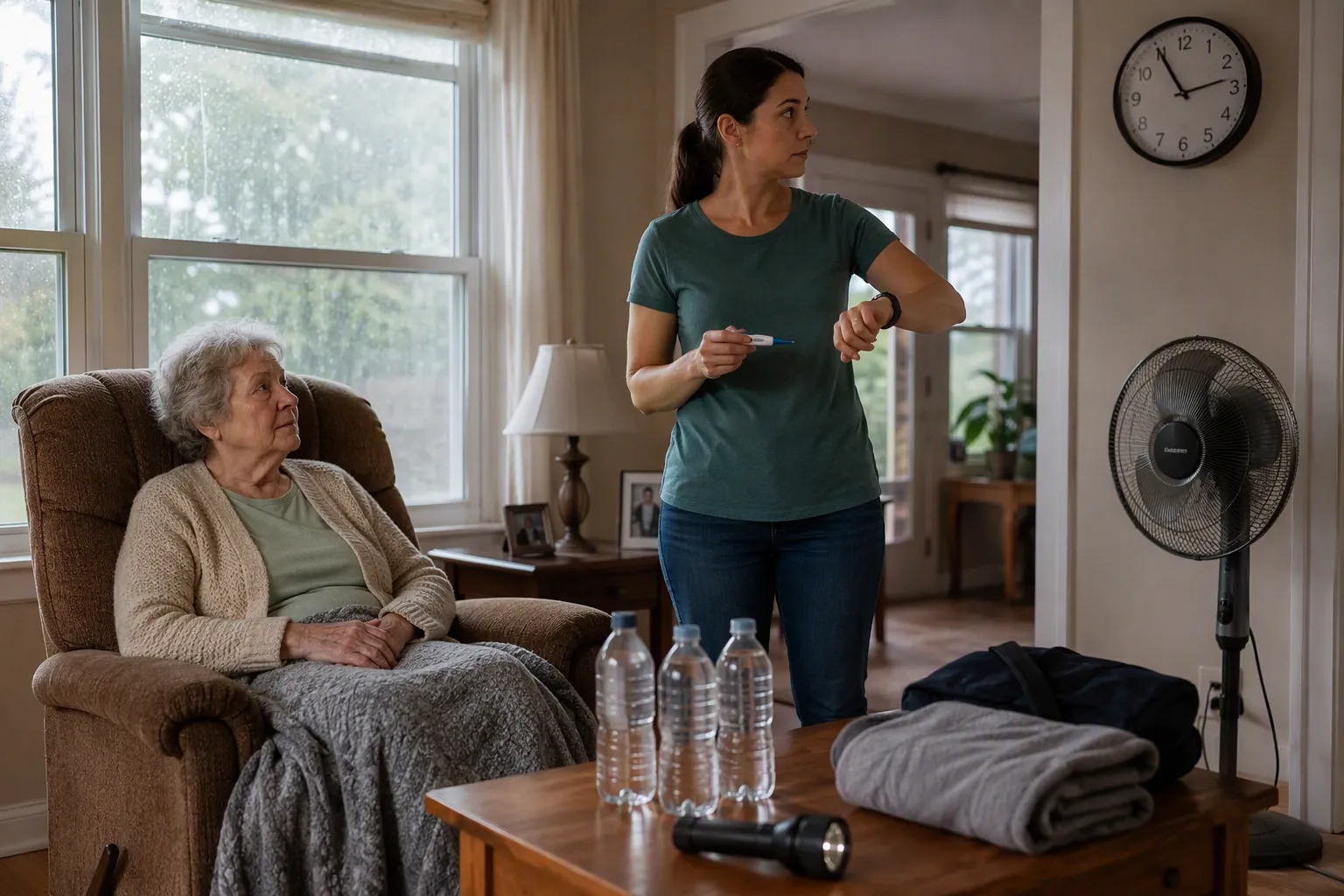
The first useful question is not “Does the house feel uncomfortable?” It is: what is the indoor temperature, what water is usable, what medications are heat-sensitive, and who will check again before symptoms become obvious? CDC and PowerOutage.us both point to 90°F indoors as a serious warning point for seniors; if the home reaches or is expected to reach that temperature, relocation to a cooler place should move from “maybe later” to an urgent decision.[1][2]
The first 72 hours: run the house like a care station
After a disaster, a senior’s home may need to be managed less like a household and more like a small care station: temperature checks, water accounting, medication review, scheduled observation, and a relocation trigger that nobody debates once the room crosses it.
| What to check | Caregiver action | Trigger that changes the plan |
|---|---|---|
| Indoor temperature | Place a thermometer where the senior spends the most time, not only near a thermostat. | At or near 90°F indoors, plan relocation to a cooler location if it can be done safely.[1][2] |
| Cooling options | Use shade, timed ventilation, damp cloths, cool baths or misting when water allows, and rest in the coolest room. | Do not rely on a fan alone when temperatures are in the 90s.[3][4] |
| Water | Count stored water against drinking, medication, hygiene, and cooling needs. | Use at least 1 gallon per person per day as the baseline emergency supply.[3] |
| Medication | Identify medicines affected by heat or dehydration and protect temperature-sensitive supplies. | Insulin can degrade above 77°F; use a cooler strategy to buy time when refrigeration is lost.[5][2] |
| Symptoms | Check for confusion, rapid pulse, hot skin, faintness, and worsening weakness. | Heat stroke is a medical emergency; call 911.[3] |
This plan does not require a perfect emergency kit. It requires a few numbers written down where a tired caregiver can find them: 90°F indoors, 1 gallon of water per person per day, 104°F body temperature as an emergency sign, and the phone numbers for neighbors, family, building staff, pharmacy, doctor, local emergency management, and non-emergency transport.
A handwritten call tree still matters. When cell service is weak, the first person who gets through should not have to improvise. One person checks temperature. One checks water. One checks medications. One confirms whether the senior can be moved and where. If the older adult lives alone, this belongs inside the cabinet door, on the refrigerator, or with the pill organizer—not buried in a phone.
Cooling without air conditioning
The room where an older adult sleeps or rests is the room that matters. A hallway thermostat, a phone weather app, or a neighbor saying “it’s not too bad yet” can all miss the condition of the recliner corner, upstairs bedroom, or closed room where heat is building. Put the thermometer beside the person, wait long enough for it to settle, and write the reading down with the time.
If the indoor temperature is climbing toward 90°F, start the relocation conversation early. The harder part is not deciding that a cooling center, relative’s home, hotel lobby, library, shelter, or generator-powered community site would be safer. The harder part is getting an 82-year-old there when elevators may be out, streets may be blocked, traffic signals may not work, portable oxygen or walkers have to come too, and the caregiver is not already in the driveway.
That is why relocation needs a threshold, not a mood. If the home reaches 90°F, or if the senior is already weak, confused, dizzy, nauseated, or unable to drink normally, the plan should shift from “keep trying at home” to “find a cooler place or emergency help.” CDC’s power outage guidance also emphasizes moving to a cool place and using cooling measures when air conditioning is unavailable.[6]
Fans deserve special caution. Air movement can feel reassuring, and a battery fan is useful in some conditions, especially with damp skin or cooler air moving through the room. But the Red Cross and Ready.gov warn that fans alone do not cool the body when temperatures are in the 90s; blowing hot air over a frail person can create a false sense of safety.[3][4]
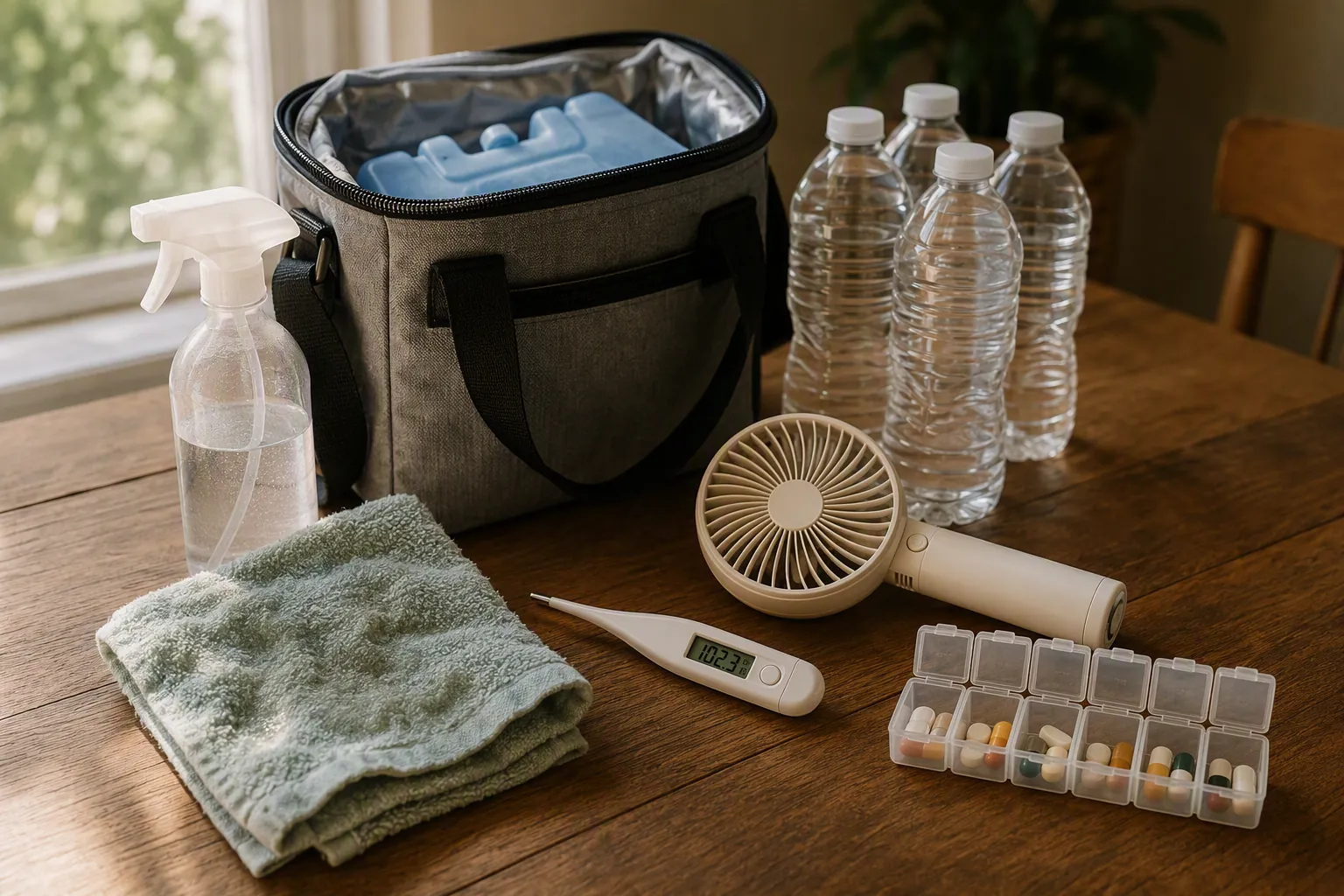
When air conditioning is out and staying home is still temporarily necessary, work from the least wasteful cooling measures toward the ones that use stored water:
- Move the senior to the lowest, shadiest, coolest room, away from sun-exposed windows and heat-trapping upstairs spaces.
- Block direct sun with curtains, blinds, cardboard, or sheets, especially in rooms used for resting.
- Ventilate only when outdoor air is cooler than indoor air; opening windows during hotter hours can make the room worse.
- Loosen clothing, remove unnecessary layers, and keep the person resting rather than walking around to “help.”
- Use damp cloths on the neck, wrists, armpits, and groin, or mist the skin and use a fan nearby if there is enough safe water.
- Use a cool bath or shower only if water is available, the bathroom is safe, and the senior can transfer without a fall.
Cooling a person is not the same as cooling a house. In the first hours, it may be more realistic to cool skin, reduce exertion, and keep the person out of the hottest rooms while someone arranges transportation. If there is only a small amount of stored water, do not casually spend it all on comfort measures before drinking, medication, and essential hygiene needs are covered.
Heat illness also belongs in a fall-prevention plan. Dizziness, fainting, confusion, rushing to a bathroom, stepping over cords, or trying to move through a dark, damaged home can turn heat stress into a hip fracture. If the disaster was a hurricane, use a practical follow-up such as Post-Hurricane Fall Prevention for Seniors and Caregivers alongside the heat plan, because the same hour can bring both problems.
Water is for drinking, medicine, and cooling
The Red Cross recommends storing at least 1 gallon of water per person per day, with a 3-day supply for evacuation and a 2-week supply for home when possible.[3] For an older adult after a disaster, that gallon is not just “drinking water.” It may also be the water needed to swallow pills, prepare safe foods, rinse a heat rash, dampen cloths, or cool the skin when running water is off.
Caregivers should count water before thirst becomes the guide. Thirst is a poor enough manager on a normal day; after a disaster, it competes with stress, nausea, confusion, bathroom worries, and the older adult’s understandable desire not to be a burden.
- Set out the day’s drinking water in visible containers so intake can be checked without guessing.
- Offer small amounts regularly instead of waiting for the senior to ask.
- Keep water near the chair, bed, walker route, and medication area so drinking does not require extra trips through a damaged home.
- Reserve some safe water for medication and cooling before using it for nonessential cleanup.
- Watch for new dizziness, weakness, confusion, very dark urine, inability to urinate, or inability to keep fluids down.
Some older adults have fluid restrictions because of heart failure, kidney disease, or other medical conditions. That does not make heat planning optional; it means the care plan needs a clinician’s instructions before storm season when possible. During the emergency, if the senior cannot drink enough, becomes confused, faints, or appears overheated, waiting for perfect guidance can be dangerous.
The water plan should sit next to the fall plan. A person who is dehydrated and lightheaded may stand too fast, reach for furniture instead of a walker, or hurry to the bathroom in poor lighting. For the overlapping hazards of dark rooms, cords, spoiled food cleanup, and medical-device power loss, keep a separate Senior Fall Prevention Checklist for Power Outages with the emergency supplies.
Medication safety cannot wait for the pharmacy to reopen
Heatstroke prevention is partly a medication workflow. CDC warns that some medicines can increase heat risk by affecting hydration, sweating, kidney function, blood pressure, alertness, or the body’s ability to regulate temperature.[5] The point is not for a caregiver to diagnose pharmacology in a blackout. The point is to know which medicines deserve extra attention before the power fails.
Before disaster season, ask the pharmacist or clinician three plain questions: which medicines raise heat risk, which should not be stopped suddenly, and which require temperature control? Keep the answers with the medication list. After the disaster, do not skip or double doses casually because meals are irregular, the pillbox was moved, or the refrigerator is warm.
Insulin needs special handling. CDC and PowerOutage.us note that insulin can degrade above 77°F, and PowerOutage.us recommends using a cooler with ice packs as a temporary strategy when refrigeration is unavailable.[5][2] That cooler buys time; it is not a permanent fix, and insulin should not be frozen.
- Move temperature-sensitive medication out of hot rooms early, before the indoor temperature peaks.
- Use a soft-sided cooler and cold packs when refrigeration is out, keeping medication protected from direct contact with ice if freezing is a risk.
- Write down the time the power failed and when medication was moved to a cooler.
- Call the pharmacy, clinician, insurer nurse line, emergency shelter medical desk, or local emergency management when medication storage is uncertain.
- Do not throw away critical medication without replacement guidance unless a clinician or pharmacist instructs it.
Medication storage, hydration, and cooling are one job during the first 72 hours. A diuretic, poor fluid intake, a hot bedroom, and a missed meal can collide quickly. So can insulin storage problems, spoiled food, and a caregiver who cannot reach the house until morning. The safest paperwork is simple: current medication list, dose schedule, pharmacy phone number, prescriber phone number, allergies, diagnoses, and the name of the person authorized to speak for the senior if they become confused.
Know the heatstroke line and cross it fast
Heat exhaustion can become heatstroke, and an older adult may not describe what is happening clearly. Do not wait for dramatic collapse. A new change in thinking after heat exposure is enough to take seriously.
The Red Cross defines heat stroke as a life-threatening condition in which body systems are overwhelmed by heat. Signs include a body temperature of 104°F or higher, confusion, hot dry or damp skin, and a rapid pulse. It is a medical emergency; call 911.[3]
- Call 911 for suspected heatstroke, especially with confusion, fainting, seizure, loss of consciousness, or a temperature of 104°F or higher.
- Move the person to the coolest available place while waiting for help.
- Remove extra clothing and start active cooling with cool cloths, misting, fanning over damp skin, or a cool bath if it is safe.
- Do not give fluids to a person who is unconscious, vomiting repeatedly, or too confused to swallow safely.
- Send the medication list and recent temperature readings with the person if they are transported.
Confusion deserves more respect than it usually gets after a disaster. People excuse it as poor sleep, stress, stubbornness, or “just being upset.” In a hot house, new confusion is a safety alarm. It changes whether the person can drink reliably, take medication correctly, use a walker, answer the phone, or decide when to leave.
Transportation is part of heat care
Advice to “go to a cooling center” is only half a plan. The other half is the route, the helper, the mobility equipment, the medication bag, the oxygen or charging needs, and the decision about whether the senior can transfer safely. FEMA’s SummerReady guidance emphasizes planning for extreme heat, staying cool, and checking on people at higher risk, including older adults.[7]
The relocation plan should be written before the room reaches the danger point:
- Name the first cooler destination, the backup destination, and the place that accepts pets if pets are the reason the senior refuses to leave.
- List who can drive, who has a key, who can lift or assist, and who can stay with the senior once moved.
- Keep a go-bag for medications, water, glasses, hearing aids, chargers, mobility aids, continence supplies, and a written medical summary.
- Check whether local emergency management, paratransit, senior services, faith groups, or neighborhood teams offer post-disaster transportation.
- Decide in advance who can override “I’m fine” when the temperature, symptoms, or medication situation says home is no longer safe.
Precooling the home before a predictable outage, charging medical devices, freezing water bottles, and staging cooler supplies can help when there is warning. For the preparation side of heat planning, Peak Energy Strategies That Keep Seniors Safe and Save Money is a useful companion because the same steps that reduce peak heat strain can buy safety time when power fails.
A simple 72-hour operating plan
For the first three days after a disaster, repeat the same cycle often enough that nobody has to rely on memory. Morning, midafternoon, evening, and overnight checks are not excessive when the house is hot and the senior is frail. The midafternoon check usually matters most because indoor heat may continue building even after people feel relieved that the storm has passed.
- Check the indoor temperature where the senior is resting. Write it down with the time.
- Check the person, not just the room: alertness, skin, pulse if you know how, dizziness, weakness, nausea, and ability to drink.
- Offer fluids on schedule unless a clinician has given a different fluid plan, and track what was actually taken.
- Use cooling measures that fit the water supply and fall risk: shade, cooler room, damp cloths, misting, fan over damp skin, or cool bath only if safe.
- Review medications due in the next several hours, including heat-sensitive supplies and medicines that should not be missed.
- Reassess transportation before the home reaches 90°F, not after everyone is exhausted.
If the senior lives alone, the operating plan needs assigned callers. A “check on Mom” text is too vague. A useful check sounds more like: What does the thermometer beside your chair say? How much water have you had since breakfast? Are you dizzy when you stand? Did you take the noon medicine? Is the insulin in the cooler? Is someone coming before the afternoon heat?
A recent PLOS Climate rapid review describes extreme heat as a significant risk for older adults and notes that vulnerability is shaped by health status, housing, social isolation, and access to cooling.[8] That is exactly why a senior with good judgment on an ordinary day may still need a firmer plan after a disaster. The house, the water supply, the medication storage, the phone network, and the caregiver schedule have all changed at once.
The standard is plain: keep the senior cool enough, hydrated enough, medication-safe enough, and monitored closely enough to know when home care is no longer safe. If the indoor temperature reaches the danger zone, symptoms appear, water runs short, medication safety is uncertain, or transportation cannot be arranged in time, the next step is not another fan in a hot room. It is emergency help or relocation.
References
- Heat and Older Adults Aged 65+, CDC, https://www.cdc.gov/heat-health/risk-factors/heat-and-older-adults-aged-65.html
- Power Outage Preparedness for Seniors & Elderly, PowerOutage.us, https://poweroutage.us/storm-prep/power-outage-preparedness-seniors-elderly
- Extreme Heat Safety, American Red Cross, https://www.redcross.org/get-help/how-to-prepare-for-emergencies/types-of-emergencies/extreme-heat-safety.html
- Extreme Heat, Ready.gov, https://www.ready.gov/heat
- Heat and Medications – Guidance for Clinicians, CDC, https://www.cdc.gov/heat-health/hcp/clinical-guidance/heat-and-medications-guidance-for-clinicians.html
- Prevent Heat-Related Illnesses During a Power Outage, CDC, https://www.cdc.gov/natural-disasters/psa-toolkit/prevent-heat-related-illnesses-during-a-power-outage.html
- Be SummerReady: Your Guide to Staying Safe and Cool During Extreme Heat, FEMA, https://www.fema.gov/blog/be-summerready-your-guide-staying-safe-and-cool-during-extreme-heat
- Extreme heat and older adults: A rapid review, PLOS Climate, https://journals.plos.org/climate/article?id=10.1371/journal.pclm.0000689
Related reading
Noticed something outdated or inaccurate on this page? Flag a correction. We review every report against CDC, NIA, and AARP HomeFit guidance before updating a page.
Part of the Fall Prevention section.