
STEADI: intervene
How Seniors Can Sleep in a Heat Wave Without Air Conditioning
Heat waves make it harder for seniors to sleep and also increase fall risk through dehydration, fatigue, medication interactions, and blood pressure drops. This guide explains how to stay cool without AC and which cooling strategies double as fall-prevention measures.
The better question is not simply how to sleep in a heat wave for seniors without air conditioning. It is how to get through the night cool enough to sleep without setting up a fall at 2 a.m.
That distinction matters once the bedroom stays hot after sunset. PBS, quoting Ashley Ward of Duke University’s Heat Policy Innovation Hub, reports that when overnight temperatures remain above 75°F, the body may not get the cooling period it needs to reset core temperature, and heat-illness mortality rises sharply. HealthPartners also notes that sleep is disrupted above 75°F, while its commonly cited 68–72°F sleep range is general guidance rather than a rule every older adult can safely or affordably meet.[1][2]
For an older adult, a hot room is not just a comfort problem. Harvard Medicine notes that older bodies hold more heat, sweat less effectively, and have reduced circulation; it also reports that people over 60 account for more than 80% of roughly 12,000 annual heat deaths in the United States.[3] Most families already understand that outdoor heat is dangerous. The easier mistake is assuming an older parent is safe because she stayed inside all day.
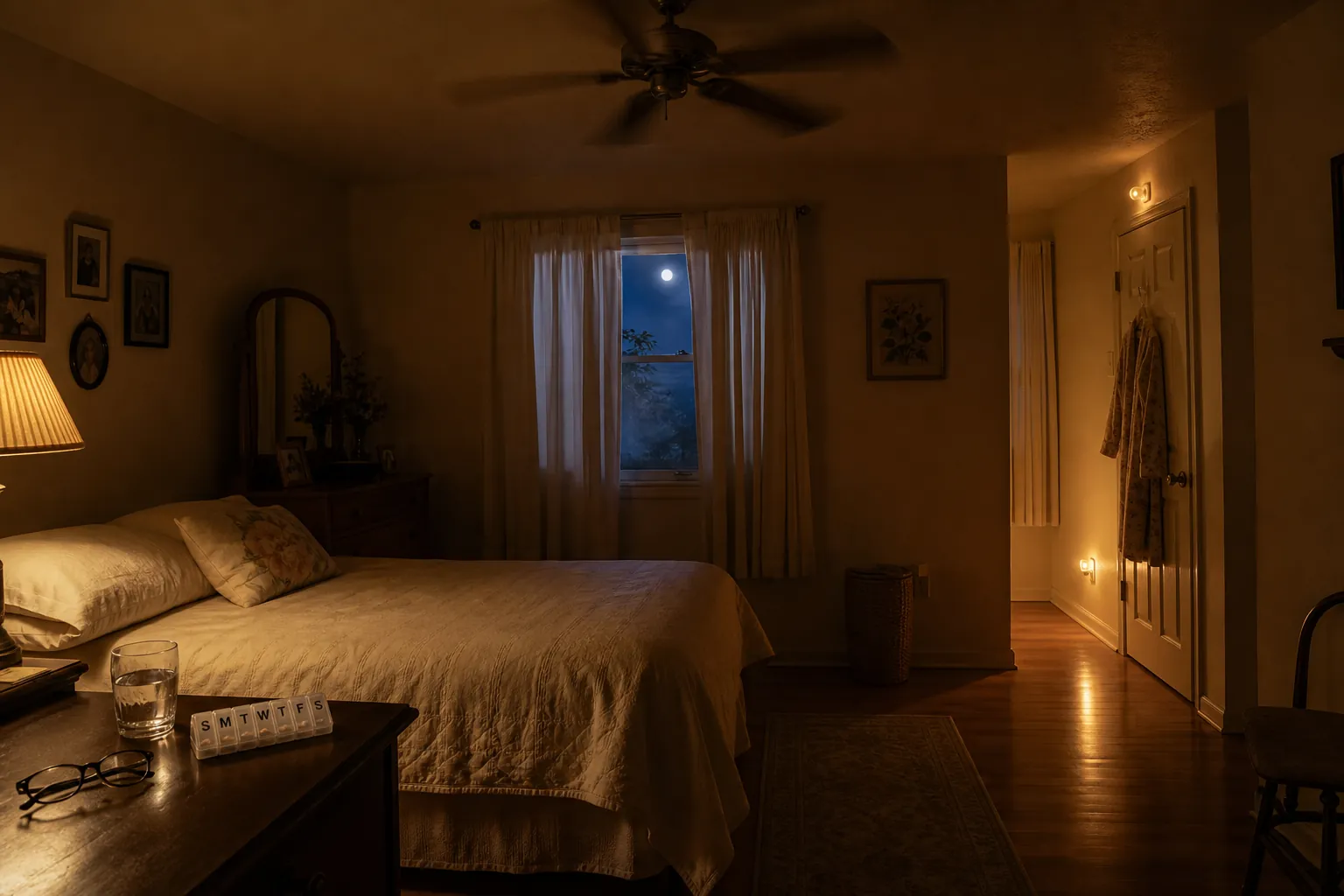
Heat Turns an Ordinary Nighttime Walk Into a Fall Risk
The path from bed to bathroom is where heat starts to matter. A person sleeps poorly, sweats, drinks less than needed, stands up in the dark, and feels lightheaded before the walker or wall is within reach. The fall may be blamed on the rug, the dog, or “getting older,” while the hot upstairs bedroom never makes it onto the checklist.
One Mayo Clinic retrospective cohort study gives this connection some weight, though it should not be stretched into more than it proves. Among 30,634 older adults, 37.9% were dehydrated; falls occurred in 13.3% of dehydrated patients compared with 10.2% of non-dehydrated patients, with an odds ratio of 1.13 and P=.002. The cohort was 94.6% white non-Hispanic and Midwestern, so the finding is not a universal law, but it is a serious enough signal for caregivers to treat dehydration as part of fall prevention.[4]
Injury Matters, an Australian falls-prevention organization, describes the heat-to-fall problem through four practical pathways: poor hydration can cause cognitive fog and missteps; low energy can impair balance; vasodilation can lower blood pressure and cause dizziness; and some medications can worsen heat vulnerability or orthostatic symptoms.[5] That framework is a synthesis, not a single U.S. clinical protocol, but it matches what families need to notice in the home.
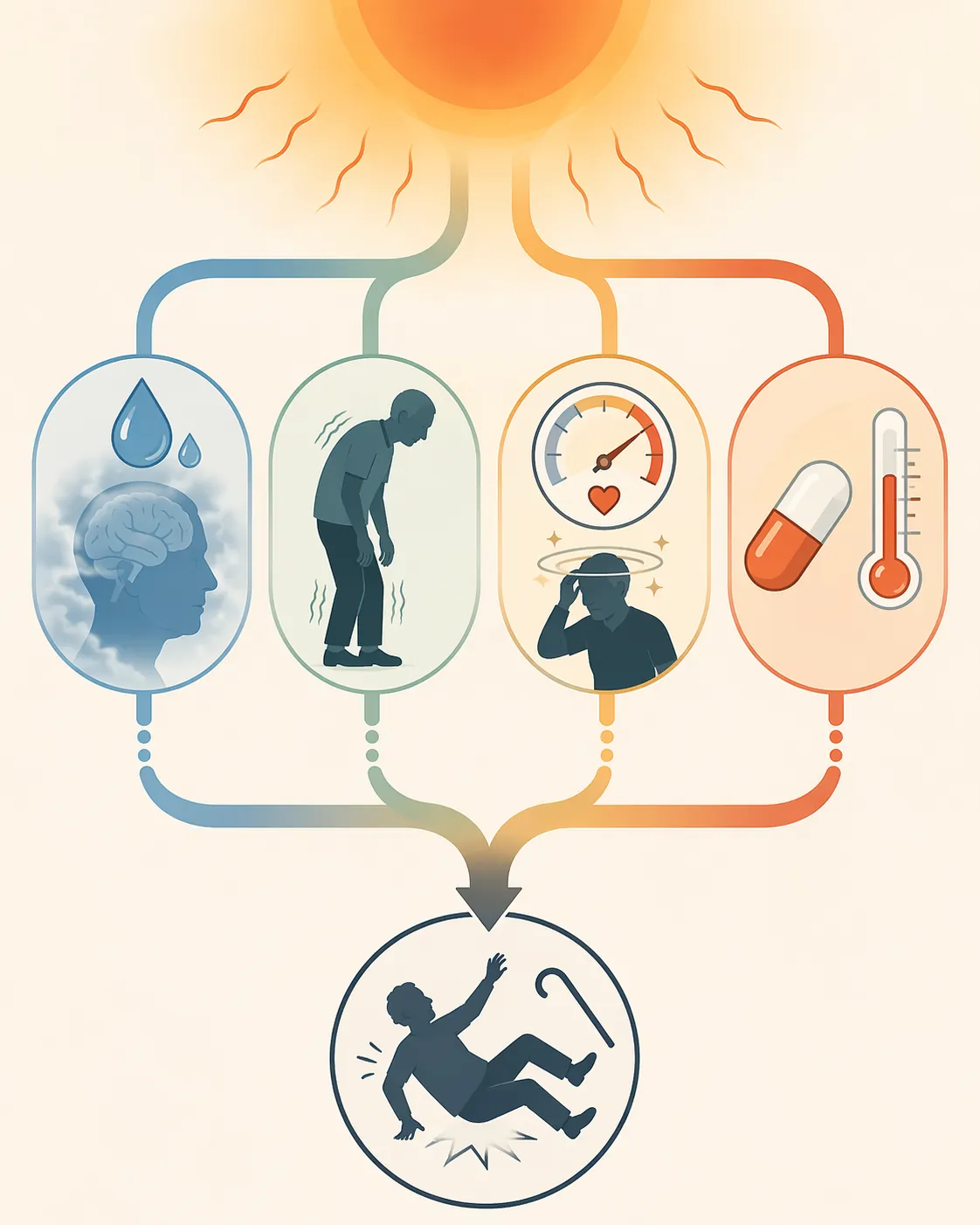
What Heat Does to an Older Body Overnight
Older adults often have less reserve before heat becomes a problem. The Mayo Clinic study discusses age-related loss of thirst sensation and cites prior work describing total body water falling from about 70% at birth to about 40–45% in older age.[4] The CDC also identifies adults 65 and older as more vulnerable to heat because of age-related physiology, chronic conditions, and medication use.[6]
That is why a water glass sitting untouched on the nightstand matters. Thirst may not arrive early enough. A senior may avoid drinking because the bathroom is far away, because getting up hurts, or because incontinence is embarrassing. In a heat wave, that tradeoff can backfire: less fluid may mean fewer bathroom trips, but it can also mean more dizziness when standing.
| Heat-related change | What it can look like at night | Why it matters for falls |
|---|---|---|
| Dehydration | Dry mouth, darker urine, weakness, confusion, or “not quite herself” behavior | Dizziness and foggier judgment can make a short walk unsafe |
| Poor sleep and fatigue | Restless sleep, repeated waking, slower reactions in the morning | Balance and attention are worse when the body has not recovered |
| Vasodilation | Lightheadedness after sitting up or standing | Blood pressure can drop at exactly the moment the person starts walking |
| Medication-heat interaction | More dizziness, reduced sweating, less thirst, or worse heat intolerance | The usual prescription routine may become riskier during extreme heat |
The table is not a diagnostic tool. It is a way to stop treating “too hot to sleep” as separate from “too unsteady to walk.” In a heat wave, those problems often arrive together.
Start With the Coolest Safe Sleeping Location
If the usual bedroom is upstairs, start there. Heat rises, and an upstairs room can hold the day’s heat long after the outdoor temperature drops. Moving sleep to a lower floor for a few nights may do more for safety than changing sheets or buying another pillow.
The safer sleep spot is not automatically the coolest corner of the house. It also needs a clear walking route, a stable surface for getting in and out of bed, a reachable light, and a bathroom plan. A living room couch may be cooler but risky if it is too low, too soft, or surrounded by coffee-table corners. A recliner may help some people rest, but it can also create a difficult standing position if the person is weak or dizzy.
- Choose the lowest, coolest room that still allows safe transfers in and out of bed.
- Keep the path to the bathroom short, lit, and free of throw rugs, cords, laundry baskets, and pet bowls.
- Put water, glasses, phone, medications, and a flashlight within easy reach so the person does not have to wander while sleepy.
- Use a nightlight near the bed and another near the bathroom door; heat-related dizziness and darkness are a poor combination.
This is also the moment to respect independence. The goal is not to turn the house into a ward. It is to make the temporary heat-wave setup easy enough that an older adult will actually use it.
Cool the Body Before Bed, Not Just the Room
Without air conditioning, the body itself needs help shedding heat before lying down. PBS and The Conversation both emphasize practical no-AC cooling measures such as cool showers, damp cloths, and reducing heat buildup in the home.[1][9] For seniors, the fall-prevention detail is timing and setup.
A cool shower before bed can lower discomfort, but a wet bathroom is a fall hazard. Use a non-slip mat, keep a towel within reach, turn on the light, and avoid rushing. If a shower is too tiring, a seated sponge bath, cool foot soak, or cool damp cloth on the neck, wrists, and chest may be safer. The point is to lower heat strain without making the bathroom the most dangerous room of the night.
Loose, light sleepwear and breathable bedding can help, but they are secondary. A cotton sheet matters less than whether the person is going to stand up dizzy in a dark hallway. Keep comfort measures, but put the higher-risk steps first: cooler location, body cooling, hydration, lighting, and a safe route.
Hydrate Earlier So the Night Is Safer
“Drink more water” is easy advice to give and hard advice to live with when the bathroom is down the hall. For many seniors, the safer plan is not to chug water at bedtime. It is to spread fluids through the afternoon and early evening, then keep small sips available overnight.
During a heat wave, caregivers can make hydration less dependent on thirst. Refill the glass before dinner. Offer water-rich foods if they fit the person’s diet. Set out a small, stable cup by the bed rather than a heavy pitcher that can spill. If the person has heart failure, kidney disease, fluid restrictions, or complex medication instructions, ask the clinician what safe hydration looks like during extreme heat rather than guessing.
The bathroom plan belongs in the hydration plan. A bedside commode may be safer for some people during a heat wave than repeated trips down a hallway. For others, a clear path, grab bars, and motion lights are enough. What is not safe is pretending the choice is between dehydration and endless nighttime rushing.
Use Fans Carefully When the Room Is Extremely Hot
Fans can make a warm room feel more tolerable, especially when they move cooler evening air through the home or work with a damp cloth on the skin. But they are not a guarantee of safety. The CDC advises not relying on fans as the main cooling strategy when temperatures exceed 90°F because fans can increase body temperature in extreme heat.[6]
That warning is often the missing line in casual heat-wave advice. If the indoor room is brutally hot, a fan may just push hot air across an older body that is already struggling to cool itself. In that situation, add body cooling, move to a cooler room, seek an air-conditioned public space, or call local services for cooling-center information.
- Use fans to pull in cooler air only when the air is actually cooler than the room.
- Do not aim cords across walking paths or near the bed where feet can catch them.
- Avoid placing a fan where the person must stand on a chair, bend awkwardly, or reach behind furniture to adjust it.
- If the home remains above 90°F and no cooler space is available, treat that as a safety problem, not a sleep-preference problem.
Medication Review Is a Heat-Wave Task, Not a Bedtime Guess
No caregiver should stop or adjust prescriptions on a hot night because an article listed a drug category. The safer move is to know which medications deserve a pharmacist or clinician review when heat waves arrive.
CDC clinical guidance identifies several medication classes that can affect heat vulnerability through mechanisms such as reduced thirst, impaired sweating, electrolyte imbalance, kidney effects, or orthostatic hypotension. These include diuretics, ACE inhibitors, ARBs, beta blockers, antipsychotics, SSRIs, and anticholinergics.[7] AARP’s July 2026 discussion of medications that can worsen heat intolerance also flags categories such as anticholinergics for overactive bladder, antihistamines, and muscle relaxants.[8]
The useful action is modest and specific: during a heat wave, ask the pharmacist or prescribing clinician whether any current medications increase dehydration, dizziness, reduced sweating, or low blood pressure on standing. Bring the pill organizer or a current medication list. Ask what symptoms should trigger a call, and whether timing, monitoring, or fluid guidance should change. Do not make those changes alone.
A Tonight-Only Cooling Plan
For tonight, do the steps that reduce heat strain and reduce the chance of a dark, dizzy walk. This is not a permanent home renovation plan. It is the practical version of fall prevention when the bedroom will not cool down.
- Move sleep to the coolest safe lower-floor room if the upstairs bedroom is holding heat.
- Clear and light the route from bed to bathroom before the person gets sleepy.
- Cool the body before bed with a safe shower, seated wash, foot soak, or damp cloth.
- Hydrate steadily earlier in the evening, then keep small sips at bedside instead of forcing a large drink at bedtime.
- Use fans only within safe limits, and do not rely on them as the main cooling method when temperatures exceed 90°F.
- Set out the phone, glasses, walker or cane, medications, and water so nothing requires searching in the dark.
- Write down dizziness, confusion, weakness, unusual sleepiness, or near-falls to discuss with a clinician or pharmacist.
If the home is still dangerously hot, sleeping there may not be the safest choice. In the U.S., 2-1-1 can often direct families to local cooling centers and heat-emergency resources. A local Area Agency on Aging may also know transportation, wellness-check, or temporary cooling options. For signs of heat stroke, severe confusion, fainting, chest pain, or a medical emergency, call emergency services.
Heat-wave sleep planning for seniors is fall-prevention planning. The same choices that cool the body can also reduce the chance of a dehydrated, lightheaded walk in the dark. This article is educational and cannot replace medical advice, especially for older adults with chronic conditions, fluid restrictions, medication concerns, or recent falls.
References
- How to stay cool and safe in a heat wave, even without air conditioning, PBS NewsHour
- Tips for sleeping without air conditioning, HealthPartners
- The Effects of Heat on Older Adults, Harvard Medicine
- Association Between Dehydration and Falls, PMC
- Beat the Heat this Summer, Injury Matters
- Heat and Older Adults (Aged 65+), Centers for Disease Control and Prevention
- Heat and Medications – Guidance for Clinicians, Centers for Disease Control and Prevention, September 2025
- 8 Medications That Worsen Heat Intolerance, AARP, July 2026
- Eight ways to sleep well in hot weather, The Conversation
Related reading
Noticed something outdated or inaccurate on this page? Flag a correction. We review every report against CDC, NIA, and AARP HomeFit guidance before updating a page.
Part of the Fall Prevention section.