
STEADI: Intervene
What Seniors Should Do Before, During, and After a Hurricane
Most hurricane-related deaths among older adults happen after the storm, driven by power loss, heat, and disrupted medication rather than the storm itself. This phased checklist guide covers what seniors and their caregivers should do before, during, and after — medication supply, medical-device backup power, evacuation, and safe recovery.
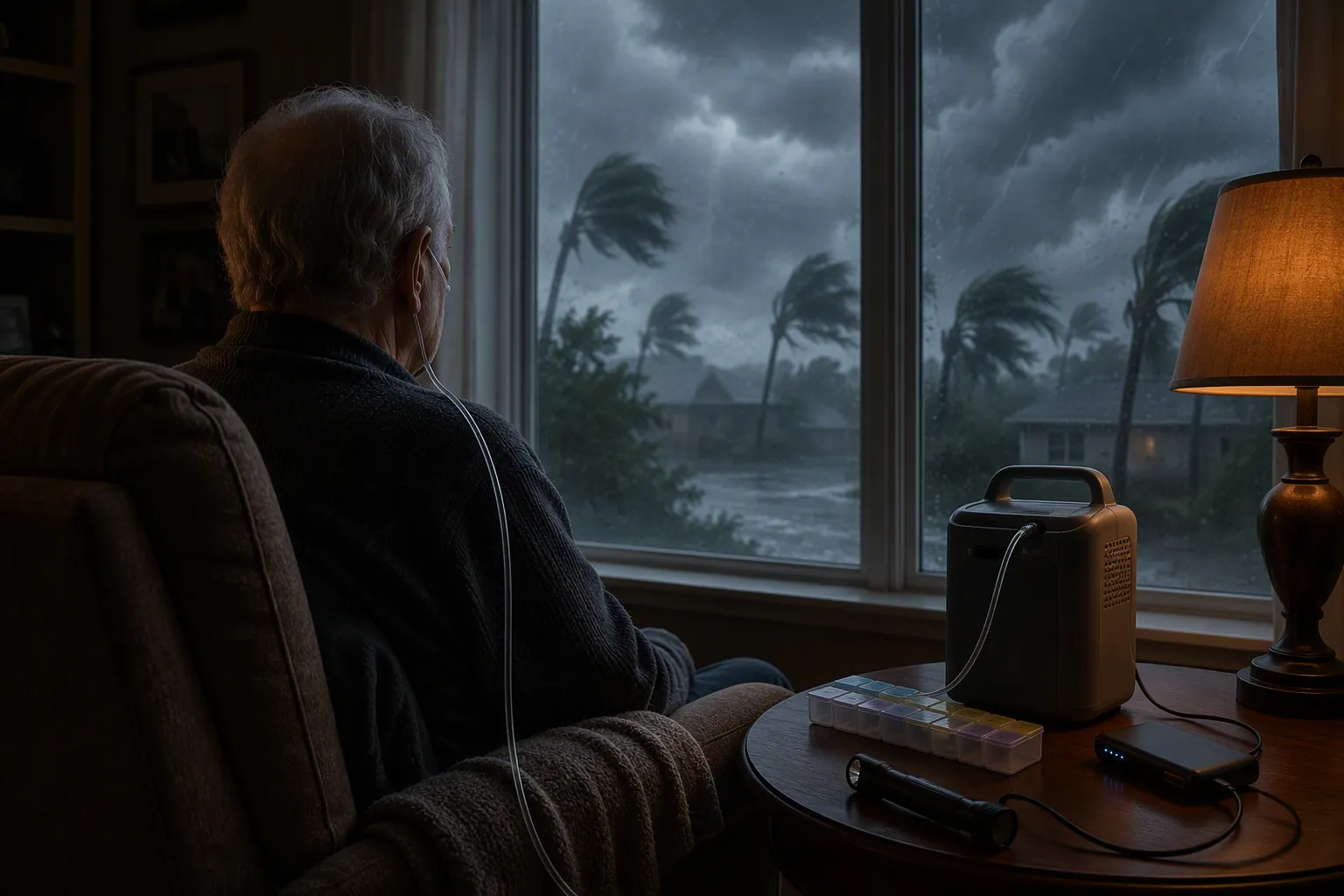
For many older adults, the most dangerous part of a hurricane is not the hour when the wind is loudest. It is the stretch afterward, when the power is still out, the apartment is getting hotter, the phone battery is low, the pharmacy is closed, the elevator is dead, and no one has been assigned to come by in person.
That is why hurricane planning for seniors has to look different from a generic household checklist. A go-bag matters, but it will not solve a dead oxygen concentrator, a missed insulin dose, a blocked wheelchair ramp, or a caregiver who cannot get through by phone. The plan has to be built around the failures that predictably happen after the storm.
The numbers from Hurricane Katrina make the point hard to ignore: people age 75 and older were about 6% of New Orleans’ population in 2005, but they accounted for about half of Katrina deaths, according to AARP’s Disaster Resilience Tool Kit.[1] That does not mean every older adult is helpless. It means independence needs a backup structure before the emergency strips away power, transportation, medication access, and routine care.
| Phase | Main job | Senior-specific focus |
|---|---|---|
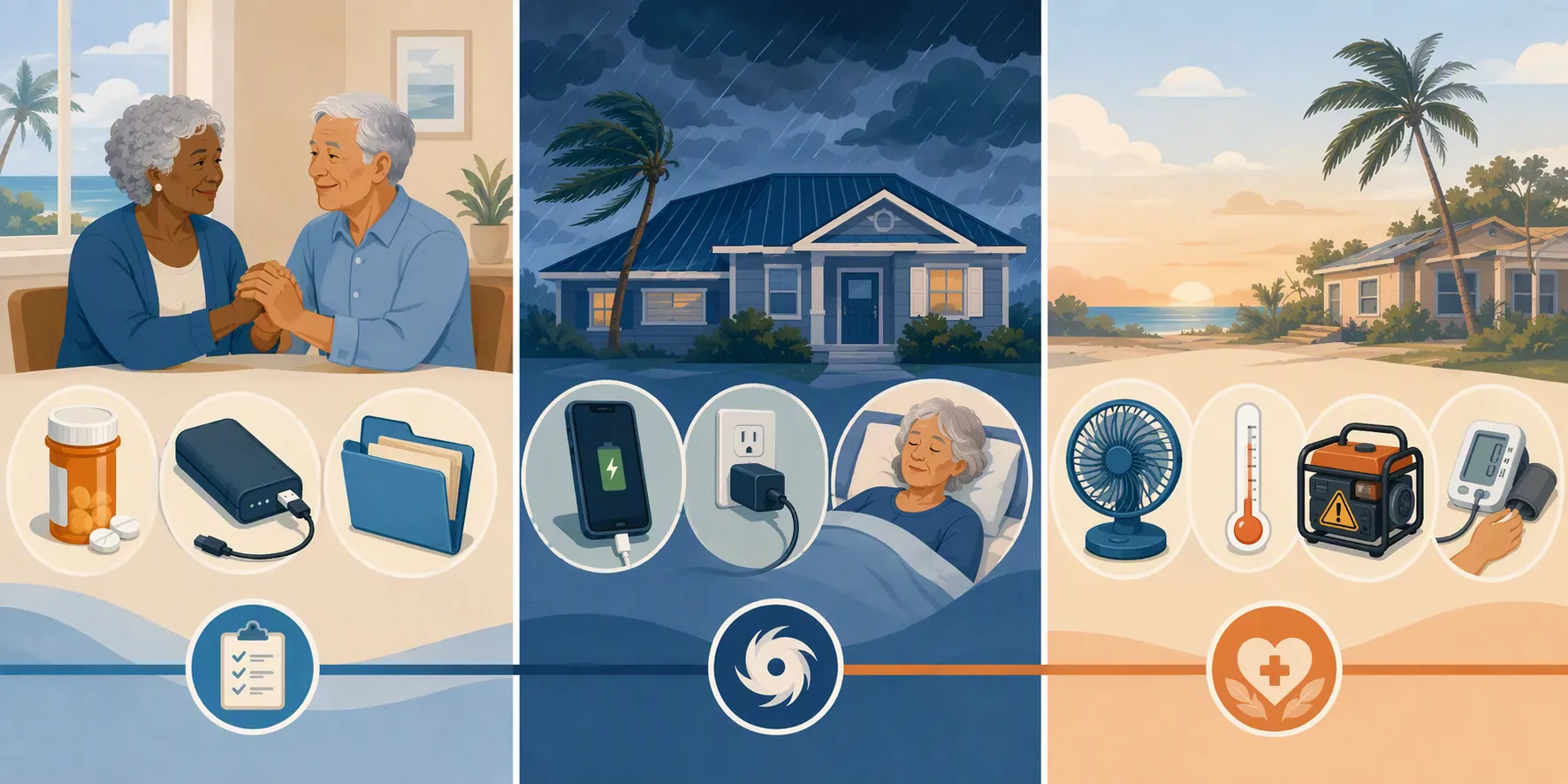
| Before the hurricane | Close the gaps before services fail | Medication supply, medical-device power, evacuation transportation, documents, mobility aids, cash, keys, and named helpers |
| During the hurricane | Stay sheltered and preserve communication and medical resources | Safe room, charged devices, oxygen and medication use according to prior clinical instructions, and check-in schedule |
| After the hurricane | Decide whether the home is still safe | Heat, power outage, generator safety, spoiled food or water, medication interruption, fall hazards, device function, and in-person welfare checks |
Before the hurricane: prepare for the outage, not just the storm
The work before a hurricane is not simply buying bottled water and waiting for a forecast update. For an older adult, the better question is: if the power, pharmacy, elevator, phone service, and usual caregiver routine all fail for several days, what breaks first?
Start there. A senior who uses oxygen, refrigerated medication, a powered bed, a lift chair, dialysis transportation, a walker, or daily caregiving has a different risk profile than a healthy adult who can drive, climb stairs, and sleep anywhere. Staying home may still be the right decision for some people, but it should not be a casual preference when electricity or regular assistance is part of the care plan.
Put medication access in writing
Medication problems after a storm are rarely dramatic at first. A refill is due Monday. The pharmacy has no power. The prescribing office is closed. The caregiver who usually picks it up cannot cross flooded streets. By the time everyone realizes the backup plan was only a hope, the older adult has missed doses.
- Keep an up-to-date medication list with the drug name, dose, schedule, prescribing clinician, pharmacy, and the reason each medication is taken.
- Ask the prescribing clinician or pharmacist ahead of hurricane season how early refills should be handled when a storm is approaching.
- Keep paper copies of prescriptions or medication records in a waterproof folder, along with insurance cards and photo identification.
- For refrigerated medication, decide before the storm what cooler, ice source, backup power, or relocation plan will be used if the refrigerator loses power.
- If a medication should not be skipped or rationed, write down who to call and where to go if the regular pharmacy is closed.
Caregivers should not rely on memory here. A medication list locked inside one person’s phone is not a disaster plan. Print it, put it in the emergency folder, and make sure at least one out-of-home contact has a copy.
Plan power for medical devices before the lights go out
Any device that depends on electricity deserves its own plan. That includes oxygen concentrators, CPAP machines, nebulizers, electric wheelchairs or scooters, hospital beds, lift chairs, stair lifts, refrigeration for medication, and phone-dependent medical alert systems.
- Write down each device, what powers it, how long its battery lasts, and how it will be charged or replaced during an outage.
- Charge all rechargeable devices, spare batteries, phones, power banks, hearing aids, and mobility equipment before the storm arrives.
- Ask the medical-equipment supplier what backup options are appropriate for the device and how to get service after a storm.
- If oxygen is used, ask the clinician or oxygen supplier before hurricane season what to do during an outage and when to evacuate to a powered location.
- Keep extension cords, chargers, and device manuals together, but do not run cords across walking paths where they create a fall hazard.
This is also the time to identify a place with reliable power: a relative’s home outside the outage area, a medical shelter if eligible, or another approved location. The important part is not the label. The important part is knowing where the older adult can go before a device battery reaches its limit.
Decide early whether staying home is realistic
Evacuation is not automatically safer for every senior. A long car ride, unfamiliar shelter, missed care routine, or separation from medical equipment can also create risk. But some situations make staying home unsafe unless there is a strong backup plan.
- Electricity is needed for oxygen, breathing equipment, mobility equipment, medication refrigeration, or climate control.
- The older adult cannot safely transfer, toilet, eat, or take medication without help.
- The home is in an evacuation zone or a location prone to flooding.
- The building depends on an elevator the senior cannot do without.
- The usual caregiver may not be able to reach the home after the storm.
- The senior has cognitive impairment and may not recognize danger, follow alerts, or use backup equipment correctly.
If evacuation is likely, do not wait until roads are crowded and the senior is tired, anxious, or short on oxygen. Decide who drives, what vehicle can accommodate mobility equipment, where the senior will sleep, who brings medications, and who has the keys. If public evacuation help or special medical shelter registration is available locally, handle that before the season or as soon as a storm threatens.
Build the support network like a work schedule
“Someone should check on Mom” is not a plan. The plan needs names, phone numbers, keys, transportation, and a backup if phones fail.
| Task | Named person | Backup |
|---|---|---|
| Calls before landfall | One primary caller | Second caller if the first cannot reach the senior |
| Transportation | Driver with a suitable vehicle | Alternate driver or local evacuation service |
| Medication pickup | Person who can reach the pharmacy | Person with prescription copies and insurance information |
| Home access | Neighbor, relative, or building manager with a key | Second keyholder |
| After-storm in-person check | Local person assigned to knock on the door | Backup visitor if roads or access are blocked |
| Out-of-area contact | One person who tracks everyone’s status | Second contact if the first loses service |
Adult children who live far away should pay special attention to the keyholder and in-person check. After a hurricane, a ringing phone does not prove the person is safe. It may only prove the phone is dead, the tower is down, or the charger is across a dark room the senior cannot safely cross.
Pack for care, mobility, and paperwork
A senior’s emergency kit should be easy to lift, easy to find, and organized so another person can use it. If the older adult has to explain everything while tired or short of breath, the kit is not finished.
- Medications, medication list, prescription copies, pharmacy information, and clinician contacts
- Photo ID, insurance cards, Medicare or Medicaid cards, advance directives, emergency contacts, and copies of key medical documents
- Glasses, hearing aids, hearing-aid batteries, dentures, cane, walker, wheelchair charger, and any transfer or positioning supplies
- Phone charger, power banks, flashlight, extra batteries, and a battery-powered or hand-crank radio
- Water, shelf-stable food that fits the person’s diet, manual can opener, and supplies for swallowing, feeding, or blood sugar needs if relevant
- Incontinence supplies, hygiene items, gloves, wipes, trash bags, and any wound-care supplies normally used
- Cash in small bills, spare keys, written directions, and printed phone numbers
- Pet supplies and veterinary information if the senior will not evacuate without an animal
Do one final home pass before the storm if there is time: clear loose rugs and cords from walking paths, move the walker or cane close to the chair or bed, place a flashlight within reach, and put medications where they can be reached without climbing, bending, or crossing a dark room.
During the hurricane: protect the body, the battery, and the contact line
During the storm itself, the plan becomes simpler. Stay away from windows. Move to the safest interior room available. Keep shoes, glasses, mobility aids, phone, flashlight, medications, and water within arm’s reach. Do not walk through floodwater. Do not go outside to inspect damage while winds are still dangerous.
For an older adult, sheltering also means preventing small problems from becoming emergencies. A cane left in another room, a hearing aid without batteries, or a phone placed across the house can matter when the lights go out.
- Keep the phone in low-power mode if possible and avoid unnecessary use.
- Use flashlights instead of candles, especially where oxygen, confusion, pets, or limited mobility are involved.
- Take medications on schedule unless a clinician has already provided different storm-specific instructions.
- Use oxygen, CPAP, insulin storage, or other medical equipment according to the plan made with the clinician or supplier before the storm.
- Keep mobility equipment parked where it can be reached without stepping over cords, bags, or pets.
- Send check-in messages at the agreed times if service is available.
Caregivers should keep messages short and practical during this phase: Where are you in the house? Do you have your medications? Is the power on? Is your breathing equipment working? Is water coming in? When will you check in again? If the senior misses the agreed check-in and phones are unreliable, the backup person should know when to move from calling to an in-person welfare check once conditions are safe enough.
After the hurricane: treat the home as unproven until checked
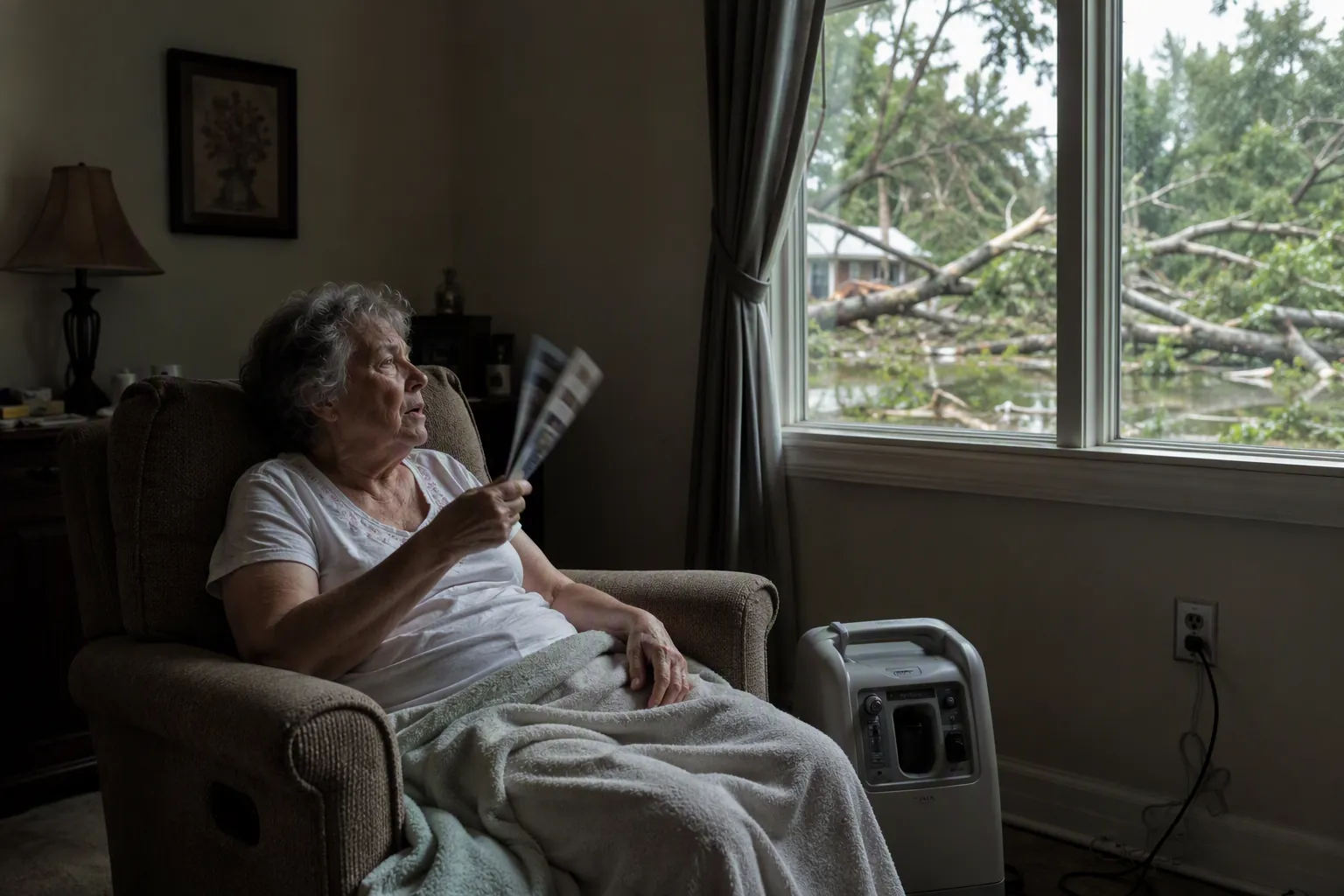
The house may look familiar after the storm, but familiar is not the same as safe. The refrigerator may be warm. The floor may be damp. The porch step may be loose. The air may be too hot for a person with heart, lung, kidney, or medication-related heat sensitivity. The medical device may turn on and still not be working correctly.
This is the phase where older adults are too often left to “manage.” Managing is not enough if the supports that made home safe yesterday are gone today.
First question: is anyone physically laying eyes on the senior?
If the older adult answers the phone, ask concrete questions. If there is no answer and a check-in was expected, move to the backup plan. A neighbor, relative, building staff member, faith-community contact, or local responder may need to knock on the door when it is safe to travel.
- Can the senior stand, walk, breathe, and speak normally for them?
- Is the home too hot, flooded, dark, smoky, or blocked by debris?
- Are medications available and being taken on schedule?
- Is oxygen, CPAP, refrigeration, or other medical equipment working?
- Is there safe drinking water and food the person can eat?
- Can the caregiver still reach the home for normal care tasks?
Take heat seriously when the power is out
Heat after a hurricane is not a comfort issue for many seniors. If air conditioning is out, fans are not moving, windows cannot be opened safely, or the senior has medical conditions that make heat harder to tolerate, the home may stop being a safe place to wait.
- Move to the coolest safe room available, away from direct sun.
- Drink fluids if allowed by the person’s medical plan; some heart, kidney, or fluid-restricted conditions require individualized instructions.
- Use cool cloths, light clothing, and safe ventilation when possible.
- Do not leave a senior alone in a hot home if they are confused, weak, dizzy, short of breath, or unable to get help.
- Relocate to a powered cooling location if the home cannot be kept safe.
Caregivers sometimes hesitate to push relocation because the older adult wants to stay home. Respect matters. So does physiology. If the person depends on cooling, powered equipment, or regular hands-on help, the decision has to include what the body can tolerate, not only what the person prefers.
Use generators only where they cannot poison the household
A generator can keep essential equipment running, but it can also create a carbon monoxide emergency if used in or near living spaces. It should never be operated inside the home, garage, enclosed porch, or near open windows or doors. If the older adult cannot set it up safely, refuel it safely, hear alarms, or understand the warning signs, someone else needs to manage it or the senior needs another power plan.
Battery backups and power stations also need caution. Keep cords out of walking paths, avoid overloading devices, and do not place charging equipment where it blocks a walker, wheelchair, bed transfer, or exit route.
Check medications, food, water, and devices before resuming routine
After the storm, do not assume everything in the refrigerator, pill organizer, or device case is still usable. Power loss, heat, moisture, and contamination can quietly damage the ordinary things a senior relies on.
- If refrigerated medication warmed up, call the pharmacist, prescribing clinician, or manufacturer guidance line before using it when possible.
- If doses were missed, ask the clinician or pharmacist what to do; do not double doses unless the medication instructions already say to.
- Throw away food or water that may be unsafe rather than asking a senior with a fragile immune system or chronic illness to take a chance.
- Inspect oxygen tubing, CPAP parts, wheelchair chargers, hearing aids, and other equipment for water damage, battery failure, or missing pieces.
- Call the equipment supplier if a device was exposed to water, overheated, or is making unusual sounds.
Prevent falls during cleanup and re-entry
Cleanup is when a steady person can become an injured person quickly. Wet floors, broken glass, loose branches, extension cords, unfamiliar sleeping arrangements, and poor lighting all raise the chance of a fall. The older adult may also be tired, dehydrated, overheated, or off their normal medication schedule.
- Do not let the senior inspect the yard, roof, flooded rooms, or electrical damage alone.
- Keep shoes on, even indoors, until glass, nails, and debris are cleared.
- Use flashlights or battery lanterns before walking through halls, bathrooms, garages, or stairways.
- Remove wet rugs, cords, and clutter from the path between bed, bathroom, chair, kitchen, and exit.
- Keep the walker, cane, wheelchair, bedside commode, and other mobility aids in their usual reachable spots as soon as possible.
- Delay nonessential cleanup if the senior is weak, dizzy, short of breath, confused, or unsteady.
If the senior evacuated, re-entry should be treated as a safety inspection, not a homecoming. Before they return, someone should confirm that the power situation, cooling, bathroom access, medication supply, device function, and walking paths are safe enough for the person’s actual abilities.
A practical readiness check
Before hurricane season, and again when a storm is approaching, run the plan through these questions. If any answer is vague, that is the part to fix first.
- Medication: Can the senior get, store, identify, and take every needed medication if the pharmacy is closed or power is out?
- Power: Which medical devices, phones, mobility equipment, and refrigeration needs depend on electricity, and what is the backup?
- Cooling: Where will the senior go if the home becomes too hot to remain in safely?
- Transportation: Who can drive or arrange evacuation, and can the vehicle handle the senior’s mobility and medical equipment?
- Documents: Are prescriptions, medical contacts, insurance cards, identification, emergency contacts, and advance directives printed and reachable?
- Human help: Who calls, who has keys, who checks in person, and who is the backup if phones fail?
- Home safety: After the storm, who decides whether the home is safe enough for the senior to stay or return?
References
Related reading
Noticed something outdated or inaccurate on this page? Flag a correction. We review every report against CDC, NIA, and AARP HomeFit guidance before updating a page.
Part of the Fall Prevention section.