
STEADI: Intervene
What Seniors Should Do in the First 72 Hours After a Tornado
After a tornado warning lifts, older adults face a new set of dangers: unstable structures, live wires, carbon monoxide from generators, and medications that can fail during an outage. Caregivers need a fixed senior safety sequence for the first 72 hours after a tornado — what to do first, in what order, and when to call 911.
When a tornado warning lifts, the danger has changed; it has not politely ended. For seniors after a tornado, preparedness starts with a hard rule: do not inspect the roof, save photographs, or start dragging branches before people are safe. The first job is to keep an older adult from walking into the new hazards: unstable stairs, glass, live wires, gas leaks, standing water, darkness, spoiled refrigerated medication, and medical equipment with no power.
Educational note: this article is general safety information, not medical advice, diagnosis, or emergency medical instruction. If there is a serious injury, possible carbon monoxide exposure, a power-dependent medical-device emergency, a gas leak, downed electrical wires, or any immediate danger, call 911. Clinical safety review: Reviewed before publication by Elena Morales, OTR/L, CAPS, for older-adult home-safety and fall-prevention sequencing.
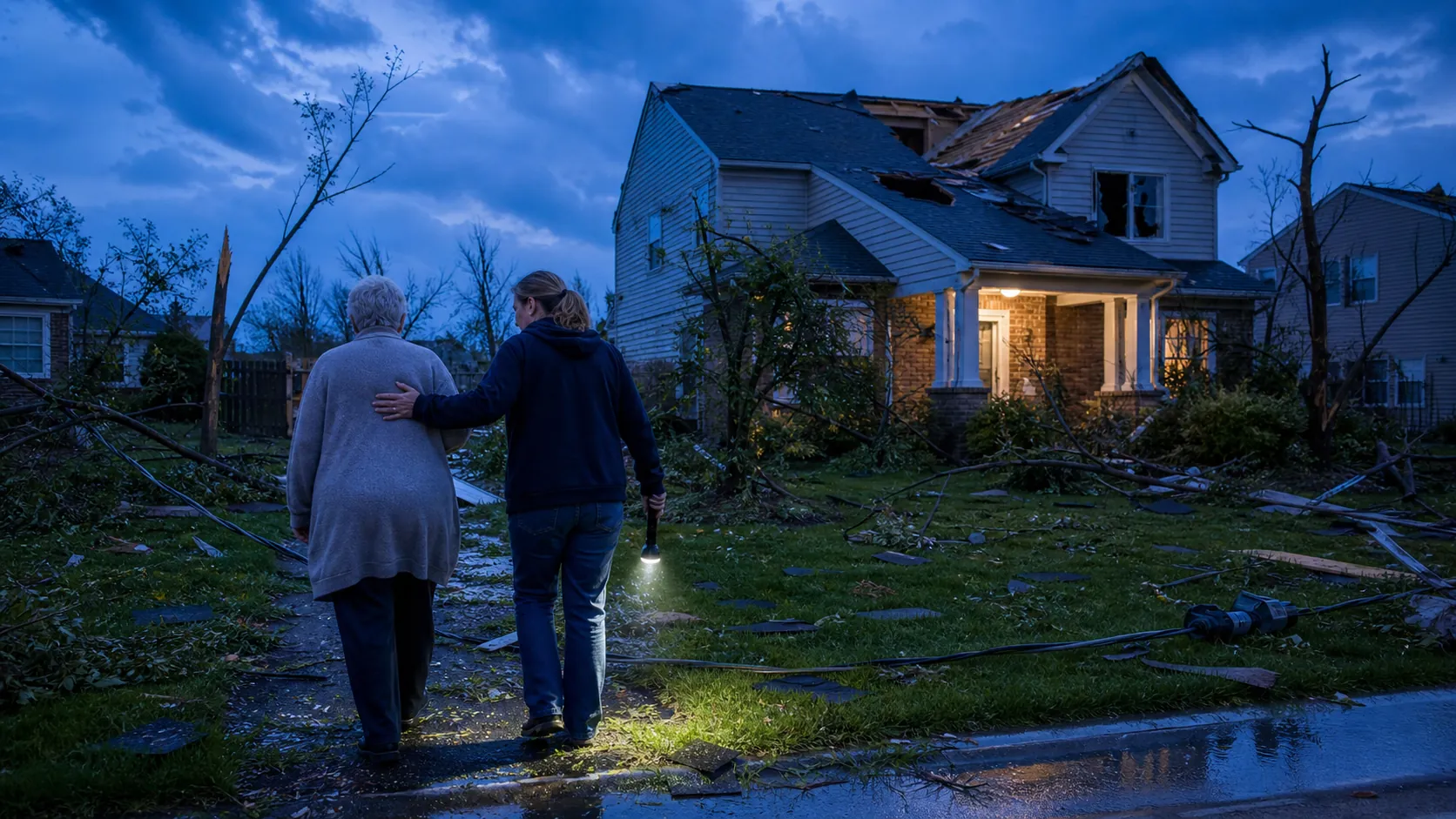
The first 72 hours, in order
CDC after-tornado guidance gives the backbone: stay sheltered until the warning is over, check people for injuries, do not enter damaged buildings until authorities say they are safe, avoid downed power lines and gas hazards, wear protective clothing if you must move through debris, and treat wounds promptly [1]. For an older adult, that sequence needs to be stricter, because one bad trip through a dark hallway can become the disaster after the disaster.
That is not theoretical caution. In one documented CDC MMWR report from the April 25–28, 2011 tornado outbreak across five southeastern states, there were 338 deaths; 32.5% of decedents were age 65 or older. The same report identified 20 indirect deaths, including 7 from smoke or carbon monoxide asphyxiation, 3 from medical-equipment failure during power loss, and 2 from falls during cleanup [2]. Those numbers describe one outbreak, not a national rate. They are still enough reason to stop treating the aftermath as a time for improvising.
| Time | What to do first | Do not move ahead until |
|---|---|---|
| 0–10 minutes after the warning ends | Stay sheltered until the warning has ended. Check people before property. Look for bleeding, pain, confusion, breathing trouble, or anyone trapped [1]. | You know whether anyone needs 911 and whether the immediate shelter area is safer than moving. |
| 10–60 minutes | Decide whether anyone can be moved. Do not move a seriously injured person unless there is immediate danger. Check for gas smell, downed lines, standing water, damaged walls, ceilings, and stairs [1]. | There is a safe route, or emergency responders have been called. |
| Hour 1–6 | Put shoes on before walking. Use thick soles, long pants, and work gloves if debris must be crossed. Keep older adults out of damaged structures until authorities say they are safe [1]. | The walking path is visible, dry, stable, and free of glass, wires, and loose debris. |
| Power-outage window | Triage refrigerated medications, insulin, medical devices, generator placement, carbon monoxide risk, and the dark bed-to-bathroom route [3][4]. | Device power, medication safety, and a fall-safe night route are handled or escalated. |
| First night | Move only as much as needed for safety. Keep a flashlight, shoes, phone, mobility aid, and medications within reach. Block off damaged rooms and stairs. | No one needs to cross debris, stairs, or unlit hallways to reach the bathroom, phone, or exit. |
| Days 2–3 | Recheck wounds, medication exposure, food safety, distress, confusion, and official recovery options. Cleanup remains delegated unless the path and job are safe. | Urgent hazards are controlled and longer recovery has moved to official help channels. |
The first hour: check bodies, not belongings
The first hour has too many branching decisions to run on instinct. An older parent may want to stand up quickly, open a door, look at the car, or check a neighbor. That impulse is understandable. It is also how someone steps onto glass, into standing water, or onto a staircase that no longer has structural support.
Before anyone stands up
Keep everyone in shelter until the warning has ended. Then do the boring, necessary check: voice, breathing, bleeding, pain, ability to move, confusion, trapped limbs, missing medications or oxygen, and whether the person is shaking because they are frightened or because something is medically wrong. If there is a serious injury, call 911. CDC guidance is clear that a seriously injured person should not be moved unless they are in immediate danger [1].
- Call 911 now if there is severe bleeding, trouble breathing, chest pain, loss of consciousness, a head injury, a trapped person, suspected spine or hip injury, or a medical device that cannot run and has no safe backup.
- Move a seriously injured person only if staying put creates immediate danger, such as fire, collapse risk, rising water, or another life-threatening hazard.
- If the older adult can walk, still slow it down: shoes first, light first, cane or walker first. Bare feet after a tornado are an invitation to glass and nails.
Before opening doors or leaving the shelter area
The door is not automatically the way out. A hallway may be blocked by broken glass. A porch may be gone. A stair tread may be cracked. A downed power line may be lying in wet grass just outside. CDC’s post-tornado hazard list specifically includes downed power lines, gas smell, damaged walls, damaged ceilings, damaged stairs, and standing water [1]. Those are stop signs, not inconveniences.
- Look before stepping: use a flashlight or phone light from a stable position.
- Listen and smell: if there is a gas odor or hissing sound, treat it as an emergency and call 911 or the appropriate utility from a safe location.
- Scan low: glass, nails, wet flooring, cords, loose rugs, and shifted furniture are fall hazards before they are cleanup tasks.
- Scan high: sagging ceilings, cracked walls, dangling fixtures, and debris caught overhead can make a room unsafe even if the floor looks clear.
- Stop at stairs unless they are dry, lit, intact, and truly necessary. A basement exit after a tornado is not a place to prove balance.
If the building looks damaged, do not go exploring. CDC advises staying out of damaged buildings until local authorities say they are safe [1]. That includes the quick look upstairs, the quick look in the garage, and the quick look at the attic hatch. Quick is not a safety category.
If you must leave the home
Leaving may be the right decision if the home is unsafe, a medical device cannot run, there is gas smell, wires are down, or emergency officials direct evacuation. It may also be the wrong decision if the outside route is darker, wetter, more cluttered, or closer to power lines than the room where the older adult is currently safe.
If leaving is necessary, assign roles. One person lights the path. One person supports the older adult or carries the mobility aid if it must be lifted over a threshold. No one carries loose bags that block their view of the floor. If the route requires stepping over wires, crossing standing water, climbing unstable debris, or using damaged stairs, stop and call for help.
The power outage is a medical problem before it is a comfort problem
A dark house is annoying for a healthy adult with good balance. For an older adult, it can shut down a medical device, warm refrigerated medication, hide debris on the floor, and turn the bathroom trip into a fall. The 2011 MMWR report’s indirect deaths included medical-equipment failure during power loss and smoke or carbon monoxide asphyxiation [2]. That is why the outage gets handled early, not after everyone is exhausted.
Power-dependent devices: escalate early
If an older adult depends on electrical medical equipment and the backup power is limited or gone, do not wait to see how the night goes. Ready.gov advises older adults to plan for power-dependent devices and to have alternative arrangements for medicine refrigeration and device charging; Ready.gov’s power-outage guidance also points people to local officials for warming or cooling locations when needed [5][6]. In the actual aftermath, that means calling the device provider, utility emergency line, local emergency management, or 911 depending on urgency.
- If the device is life-sustaining and there is no working backup, call 911.
- If the device can wait briefly but not overnight, contact the supplier, utility, local emergency management office, or shelter information line before dark.
- If the older adult uses mobility equipment that needs charging, preserve battery use for essential movement only.
Refrigerated medications and insulin
Do not guess with refrigerated medication. CDC power-outage guidance says refrigerated medicines should be discarded after a day or more without power unless the drug’s label says otherwise [3]. That does not mean you throw away a critical medication and leave a parent untreated; it means you call the pharmacist, prescriber, emergency clinic, or 911 if the medication is essential and replacement or safe storage is urgent.
Insulin needs its own check. CDC diabetes guidance says insulin should be kept cool but never frozen; insulin exposed to temperatures above 86°F may be used only with close blood-sugar monitoring, and medications stored at extreme temperatures should be discarded once the person is back to a routine. CDC also lists 1-800-DIABETES as an emergency resource [4].
- Write down when the power went out, if known.
- Keep refrigerator and cooler doors closed unless you are removing a needed item.
- Separate must-take medications from general food storage so they are not forgotten.
- Call a pharmacist or clinician before using temperature-exposed medication when the label, condition, or exposure time is unclear.
Generators and carbon monoxide
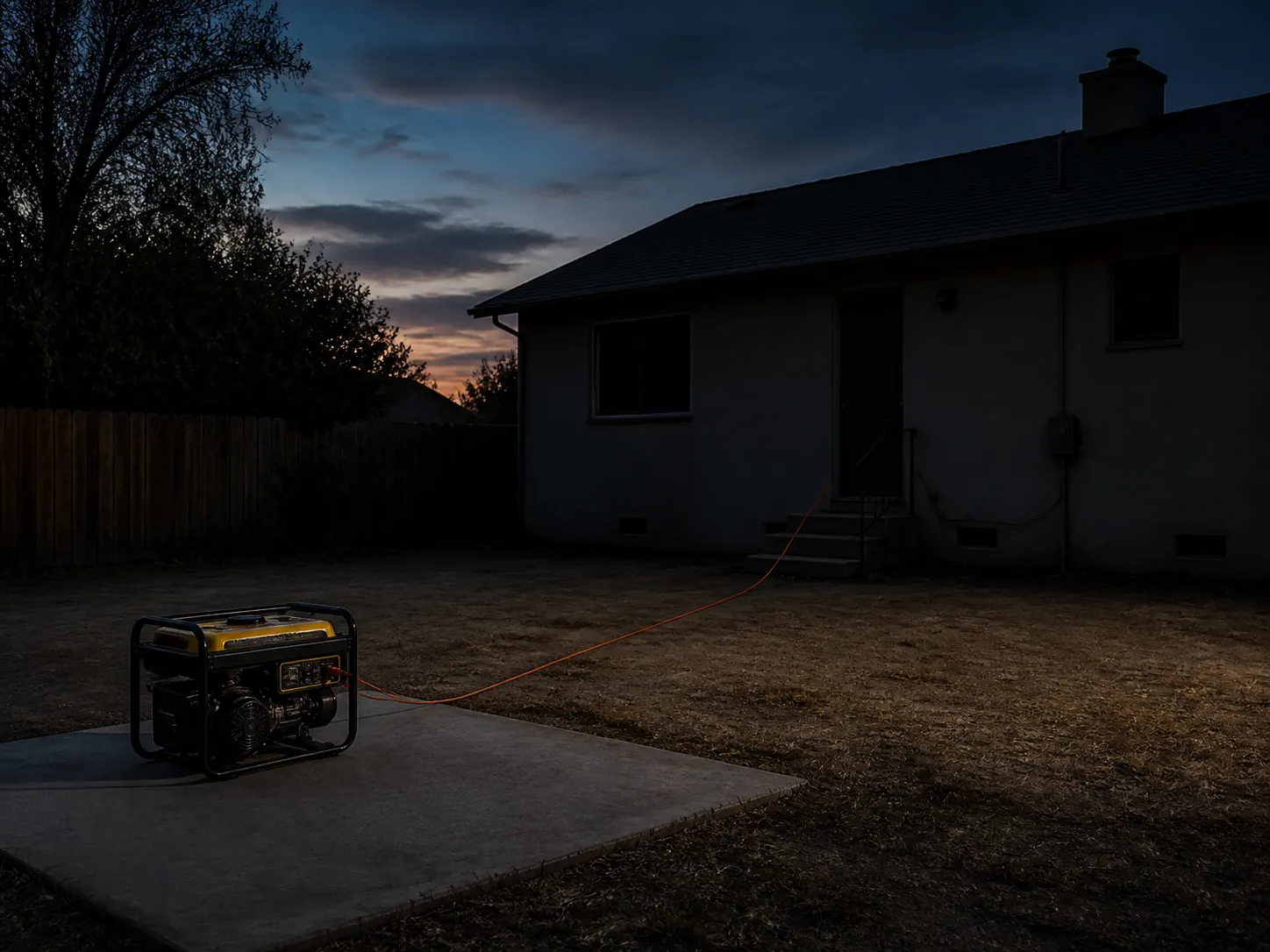
A generator is not allowed in the garage, on the porch, by the open back door, or under a window because it is raining. CDC says generators should be used outdoors at least 20 feet from windows, doors, and vents, and homes should have battery-operated carbon monoxide detectors. Carbon monoxide is odorless [3].
CDC lists carbon monoxide poisoning symptoms that include headache, dizziness, weakness, nausea, vomiting, chest pain, and confusion [3]. Confusion matters here because it may be mistaken for stress, dementia, poor sleep, or stubbornness. If those symptoms appear, get to fresh air and call 911.
Food safety, kept short
Food rules do not need a committee meeting. CDC says an unopened refrigerator keeps food safe for about 4 hours; a full freezer holds temperature for about 48 hours, and a half-full freezer for about 24 hours, if the door stays closed [3]. For an older adult with frailty, diabetes, immune compromise, or limited access to care, this is not the moment to gamble on leftovers.
Build the first-night route before sunset
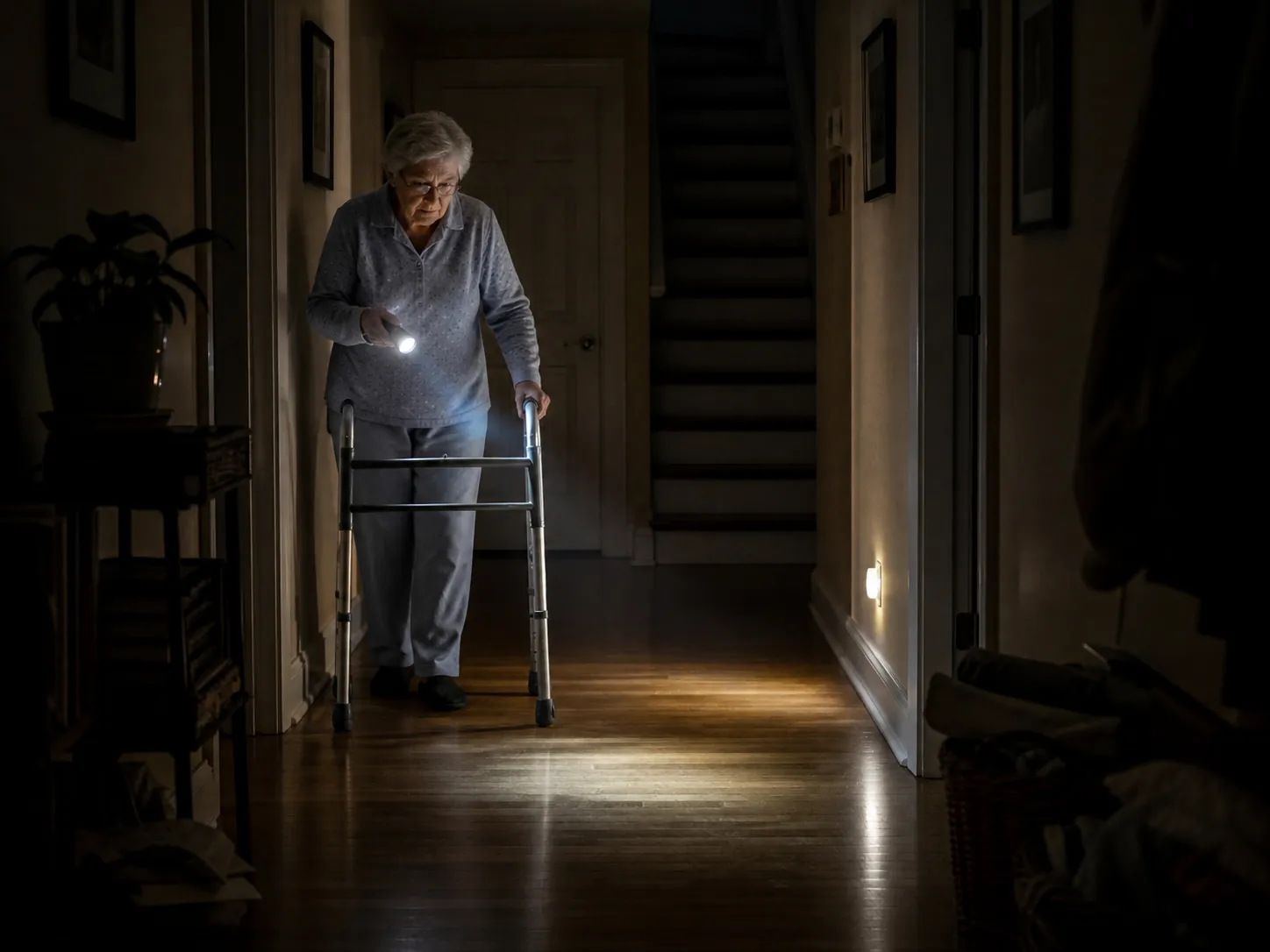
The first night is where families get sloppy because everyone is tired and grateful to be alive. That is exactly when the bed-to-bathroom route needs to be boringly controlled. If the home is safe enough to remain in, choose the safest sleeping spot, not the usual one. A recliner in a clear room near a bathroom may be safer than a bedroom reached by stairs or a hallway full of broken picture frames.
- Put sturdy shoes, not slippers, within arm’s reach.
- Place the walker, cane, glasses, hearing aids, phone, charger or battery pack, water, and essential medications on the same side the person normally gets up from.
- Clear one route only: bed or chair to bathroom, and bed or chair to exit. Close or block off damaged rooms.
- Use flashlights or battery lights low enough to show the floor, cords, thresholds, and debris.
- If the bathroom route is unsafe, use a bedside commode or supervised alternative rather than letting someone make one brave trip in the dark.
If the outage will continue, use a more detailed power-outage fall-prevention checklist for the next layer: bathroom lighting, mobility-aid placement, stair restrictions, and backup phone power. If you are reading this before the next storm season, the planning counterpart is a storm preparedness checklist built for elderly parents. Right now, do the route in front of you.
Cleanup is not the older adult’s job
There is a kind of neighborly praise that gets older adults hurt: “He was out there helping clear branches.” “She insisted on sweeping the glass herself.” After a tornado, cleanup involves uneven ground, hidden nails, wet surfaces, sharp debris, unstable structures, and fatigue. The 2011 CDC report documented falls during cleanup among the indirect deaths from that outbreak [2]. That is enough.
If someone must move through debris to reach medication, a safe exit, or emergency supplies, use CDC’s protective basics: thick-soled shoes, long pants, and work gloves [1]. This is not permission for an older adult to start hauling lumber. It is the minimum for necessary movement through a hazardous path.
- Defer roof checks, attic checks, tree removal, fence repair, and garage sorting until daylight and until the structure is safe.
- Do not let an older adult climb ladders, carry debris across uneven ground, or sweep glass from a dark room.
- Photographs for insurance can wait if taking them requires entering a damaged area.
- If a helper arrives, give them a specific safe task: clear the one walking route, move medications, charge a phone, call the utility, or sit with the older adult while someone else handles hazards.
Wounds also do not get a wait-and-see pass. CDC advises cleaning wounds with soap and water, asking a physician whether a tetanus shot is needed, and seeking medical care if a wound becomes red, swollen, or draining [1]. Small cuts from debris are still debris wounds.
Days 2 and 3: keep watching what the adrenaline covered up
By the second day, the obvious crisis may be over and the quieter risks start showing: a parent who is not drinking enough, a spouse who keeps trying to clean, a wound that looks worse, insulin that sat too warm, a generator that someone moved too close to the house, a walker blocked by donated supplies, or confusion that was brushed off as stress.
- Recheck the body: pain, dizziness, breathing, wounds, swelling, drainage, medication access, blood-sugar concerns if relevant, and whether the person has fallen or nearly fallen.
- Recheck the route: bathroom, exit, sleeping area, generator cord path, thresholds, wet flooring, and any debris that shifted overnight.
- Recheck the outage plan: device battery, phone battery, medication temperature, food time limits, carbon monoxide detector batteries, and whether the home is becoming too hot or too cold.
- Recheck the helper plan: who is staying with the older adult, who is calling utilities or insurers, who is handling cleanup, and who is not being allowed onto stairs or debris.
Distress deserves the same practical treatment. Panic, sleeplessness, confusion, withdrawal, anger, and repeated checking of damage can all interfere with safe decisions. SAMHSA’s Disaster Distress Helpline is available by calling or texting 1-800-985-5990 [7]. Use it when the person is overwhelmed, not only when the situation looks dramatic to everyone else.
Once immediate life safety, medication, device power, fall routes, and shelter decisions are stable, move recovery into official channels. NCOA points older adults after disasters toward programs including FEMA assistance, available through 1-800-621-3362 or DisasterAssistance.gov [8]. That call belongs after the urgent hazards are controlled, not before someone has shoes, light, medication, and a safe way to reach the bathroom.
At the end of the first 72 hours, the handoff should be clear: emergencies called in, unsafe rooms blocked, power-dependent needs escalated, refrigerated medication checked, generator and carbon monoxide risks controlled, wounds watched, cleanup delegated, and the older adult kept off unstable routes.
References
- Safety Guidelines: After a Tornado, CDC.
- Tornado-Related Fatalities — Five States, April 25–28, 2011, CDC MMWR.
- What to Do to Protect Yourself During a Power Outage, CDC.
- Managing Insulin in an Emergency, CDC.
- Older Adults, Ready.gov.
- Power Outages, Ready.gov.
- Disaster Distress Helpline, SAMHSA.
- Disaster Assistance: 6 Helpful Programs for Older Adults, NCOA.
Related reading
Noticed something outdated or inaccurate on this page? Flag a correction. We review every report against CDC, NIA, and AARP HomeFit guidance before updating a page.
Part of the Fall Prevention section.