
STEADI: Intervene
How to Find Hurricane Recovery Resources for Older Adults
An older adult's hurricane recovery usually depends on the order a caregiver acts: replace lost medications and equipment first, file the FEMA application correctly (including the FF-104 authorization), and connect to the local Area Agency on Aging through the Eldercare Locator (1-800-677-1116). Knowing those first steps — and the exact resources behind them, from FEMA IHP and Medicare Part D disaster refills to EPAP and the USAging Disaster Relief Fund — is what separates prompt help from weeks lost to the system's known dead ends.
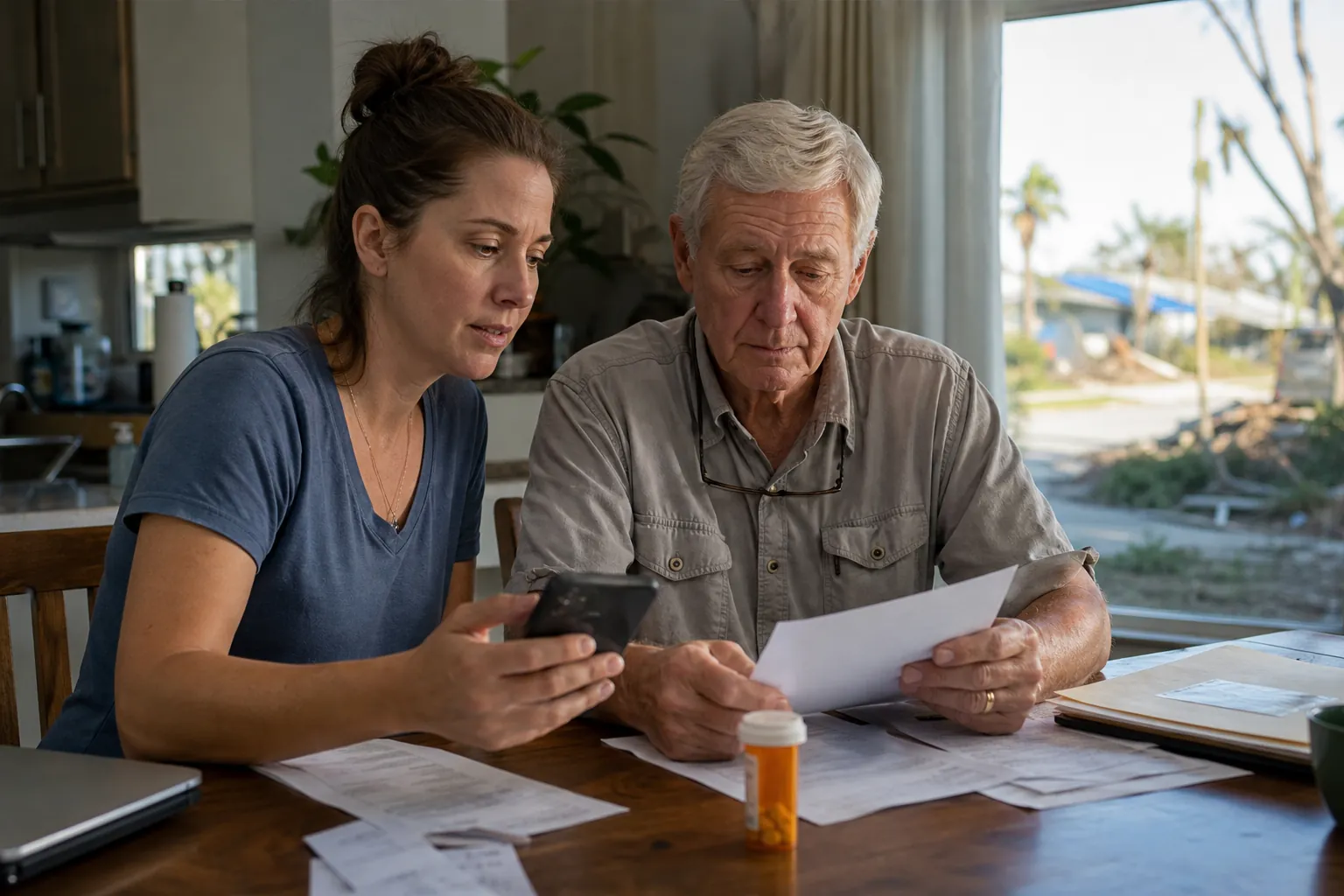
If you are looking for hurricane recovery resources for an older parent, the useful question is not “what programs exist?” It is “what has to happen first so my parent does not lose medication, mobility, housing options, or an appeal window while we wait for someone to call back?” The practical order is: do not return until officials say the area is safe, replace medications and essential equipment, file FEMA Individual Assistance correctly, authorize the family helper if the older adult cannot manage the claim, then call the local aging network through the Eldercare Locator at 1-800-677-1116 for services that FEMA will not coordinate for you [1].
Benefits and program details in this article are last verified in Q3 2026. This is general caregiver navigation information, not medical, legal, financial, or insurance advice. Disaster declarations, state programs, Medicare plan rules, Medicaid rules, and local aging services can change after a storm, so verify the current rule with the plan, agency, or local Area Agency on Aging before making a final decision.
The recovery sequence to follow before the calls start multiplying
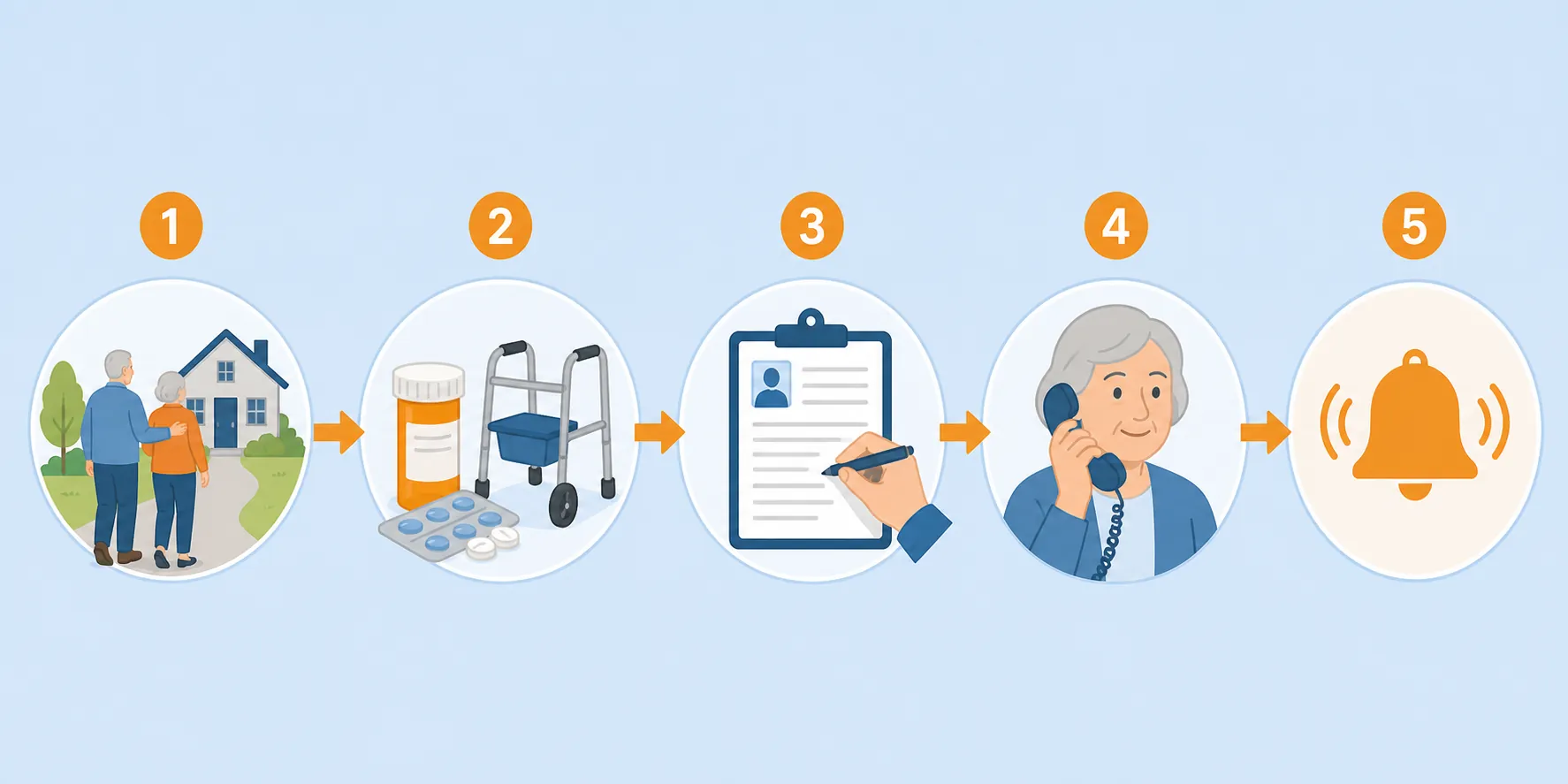
| Stage | What the caregiver is trying to prevent | First action |
|---|---|---|
| 1. Safe return | A second injury in a damaged home, especially a fall, heat exposure, or unsafe power use | Wait for official clearance and inspect the living environment before bringing an older adult back |
| 2. Medication and equipment | Missed doses, spoiled temperature-sensitive drugs, or a parent stranded without a walker, cane, transfer aid, or other essential device | Call the pharmacy, drug plan, prescriber, equipment supplier, or emergency prescription program before starting long paperwork |
| 3. FEMA application | A delayed or incomplete Individual Assistance file | Apply through official FEMA channels and keep every letter, receipt, photo, and claim number |
| 4. Family authorization | FEMA refusing to discuss the case with the adult child | Complete FEMA Form FF-104 or the required written consent if the caregiver needs to act for the survivor |
| 5. Aging services and follow-up | Missing local help, food programs, transportation, benefits counseling, repairs referrals, or appeal steps | Call the Eldercare Locator and keep tracking FEMA letters, local programs, and suspicious contacts |
That order matters because the programs do not behave like one system. A pharmacy problem, a FEMA privacy rule, a local transportation need, and a damaged entryway may all be real on the same morning, but they are handled by different offices. Treating the work as a sequence keeps the urgent health problem from being buried under forms, and it keeps the paperwork from becoming unusable because the wrong person filed it or ignored a required follow-up.
Do not turn “going home” into the next emergency
Return home only after authorities say the area is safe. The Red Cross advises older adults to plan for evacuation and recovery needs, and Ready.gov’s older-adult guidance emphasizes support networks, accessible transportation, medication, and assistive equipment as disaster issues that require planning and follow-through [2][3]. After a hurricane, that caution is not abstract: a damp hallway, a missing grab bar, debris near the entrance, no elevator power, or a dead phone can turn a routine return into a fall or a medical interruption.
Before moving a parent back into a damaged home, make one pass through the living route they actually use: entry, bathroom, bed, kitchen, medication storage, and the path to a phone. If the home has changed, use a fall-prevention crisis checklist and a home-modification checklist as recovery tools, not remodeling projects. The question is whether your parent can safely use the space tonight.
Replace medications and essential equipment before chasing every form
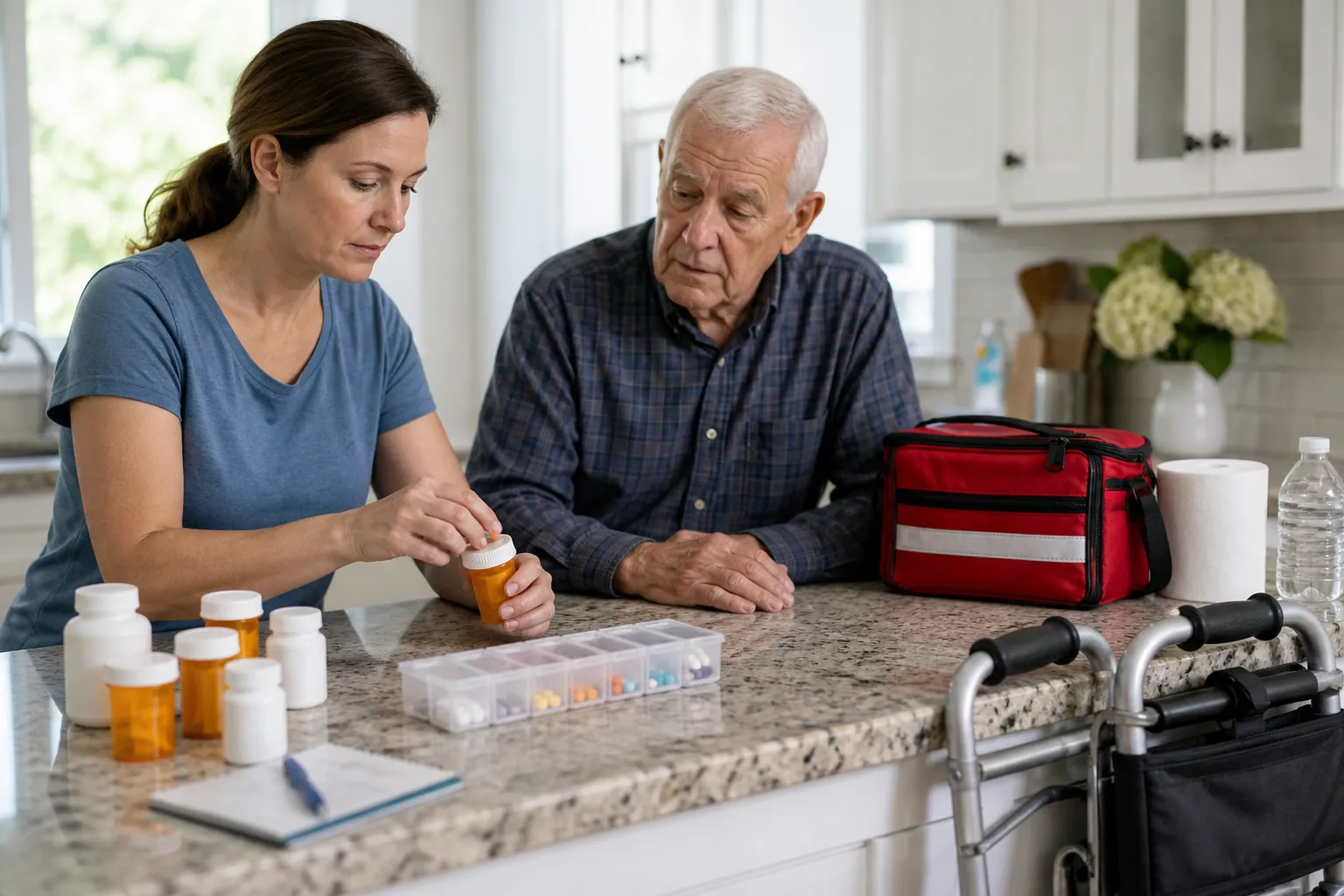
Medication is the first recovery category that cannot wait for a FEMA decision letter. Start with the pharmacy that last filled the prescriptions, then the Medicare Part D plan or Medicare Advantage drug plan if the pharmacy cannot fill them. Medicare explains that in a disaster or emergency, drug plans must let affected enrollees get covered Part D drugs at out-of-network pharmacies when they cannot reasonably use a network pharmacy, and plans may allow replacement fills when medication has been lost, damaged, or is otherwise unavailable because of the emergency [4].
Ask specifically whether the plan will authorize an early refill, an emergency supply, or a 60-to-90-day supply. Medicare’s disaster guidance and AARP’s disaster prescription guidance both point caregivers toward contacting the plan and pharmacy for emergency refills and extended supplies when a declared emergency interrupts normal access [4][6]. If a drug was exposed to heat, floodwater, or a refrigerator outage, do not guess about safety; ask the pharmacist or prescriber what to replace.
For an older adult who is uninsured and affected by a federally declared disaster, the Emergency Prescription Assistance Program may be available when activated. HHS ASPR lists the EPAP hotline as 855-793-7470 [5]. The important word is “activated”: EPAP is not open for every storm in every county, so the call is to confirm whether the program is operating for your parent’s location and what documentation the pharmacy will need.
- Write down the exact medication names, doses, prescribers, pharmacy name, plan name, and member ID if available.
- Separate urgent daily medications from items that can wait a day or two. Do not let a nonurgent refill crowd out a heart, diabetes, seizure, breathing, transplant, or anticoagulant medication call.
- If the parent uses a pill organizer, assume the organizer may no longer be accurate after displacement unless someone reliable filled it after the storm.
- Take photos of damaged medication bottles, equipment, spoiled supplies, and receipts before discarding anything, unless keeping the item creates a safety problem.
- Keep a call log: date, time, person spoken to, what they approved, and what they refused.
Equipment deserves the same urgency. A lost walker, cane, transfer bench, wheelchair cushion, bedside commode, hearing aid charger, or CPAP power cord can decide whether a parent can sleep safely, use the bathroom, or leave a shelter. Call the equipment supplier and the health plan, but also ask the Area Agency on Aging about temporary equipment closets, local nonprofits, and transportation to medical suppliers. If you need to compare replacements quickly, use mobility equipment guides to match the device to the parent’s current strength and home conditions, not just the device they used before the storm.
File FEMA Individual Assistance carefully, and do not assume the first letter is the final answer
FEMA’s Individuals and Households Program can provide financial and direct assistance for eligible disaster-caused needs, including housing needs and other serious needs, but it is limited to uninsured or underinsured necessary expenses and serious needs caused by the disaster [7]. That sentence is doing a lot of work. FEMA is not a substitute for homeowners, renters, flood, auto, or health insurance. It also does not cover every loss that feels devastating to a family.
If your parent can file and manage the case, keep them in control of it. If they cannot — because of memory problems, exhaustion, displacement, hospitalization, language access, hearing loss, or lack of internet access — FEMA needs written permission before it can discuss the survivor’s information with a family member. FEMA identifies Form FF-104, Authorization for the Release of Information Under the Privacy Act, as the written consent used to allow another person to act on or receive information about the survivor’s assistance file [8].
- Use the older adult’s legal name and damaged address consistently across FEMA, insurance, pharmacy, and local assistance records.
- Keep the FEMA registration number where more than one person can find it.
- Do not throw away envelopes. The date and wording of a FEMA letter can matter.
- Upload or save copies of insurance letters, repair estimates, photos, hotel receipts, medical equipment receipts, pharmacy receipts, and correspondence.
- If FEMA says information is missing, answer that request directly before starting a separate complaint or duplicate application.
FEMA decision letters are often read as a flat denial when they may be asking for more documentation or explaining that another source, such as insurance, must be resolved first. GAO has noted that survivors may misunderstand FEMA decision letters and that appeals exist [9]. An appeal is not a guarantee of payment, but it is a normal part of the process when the family has documents that answer FEMA’s stated reason.
Read the reason before reacting to the result. “Not approved” can mean several different things: FEMA could not verify occupancy, ownership, identity, damage, insurance status, or the disaster connection; the inspection may have missed something; or FEMA may be waiting on another required step. The next action depends on the reason in the letter, not on the family’s understandable frustration.
The SBA-related trap is a warning about unfinished steps, not a promise of aid
One of the clearest examples of why order matters comes from GAO’s review of past disasters. GAO reported that after 2016–2018 disasters, about 1.7 million survivors did not complete the Small Business Administration disaster loan application step and may have missed out on FEMA aid for which they otherwise qualified [9]. That finding does not mean every older adult should take a loan, and it does not mean everyone who completes a loan-related step will receive FEMA money. It means a required next step that looks irrelevant can still affect eligibility for other assistance.
- If a FEMA letter or official portal instruction asks for a loan-related step, do not ignore it because your parent does not want a loan.
- Ask what happens if the step is not completed, and write down the answer.
- If the parent cannot understand or manage the step, use the FF-104 authorization route so the helper can communicate with FEMA.
- Keep proof that the step was submitted, declined, withdrawn, or completed, depending on what the agency required.
For caregivers already juggling Medicare, Medicaid, insurance, and FEMA language, the vocabulary alone can become a barrier. When terms start to blur — Part D, Medicaid long-term services, Medicare Advantage, durable medical equipment, underinsured loss — pause and check a Medicare and Medicaid glossary before calling. A cleaner question usually gets a cleaner answer.
Call the Area Agency on Aging while the federal file is still moving
FEMA may handle part of the disaster loss, but it is not built to coordinate every older-adult need after a hurricane. The Area Agency on Aging is often the better local doorway for meals, transportation, benefits counseling, caregiver support, case management, wellness checks, and referrals. USAging describes the aging network’s disaster role and its Disaster Relief Fund, which supports local aging organizations responding to disasters [1].
Call the Eldercare Locator at 1-800-677-1116 and ask for the Area Agency on Aging serving the damaged address or the temporary address, depending on where your parent is now. If your parent evacuated across county or state lines, say that clearly. The agency near the damaged home may know about home-delivered meals, cleanup referrals, inspections, or local repair funds; the agency near the temporary location may know about transportation, respite, meal sites, and immediate caregiver support.
- “My parent is over 60 and was affected by the hurricane. Which Area Agency on Aging serves their current location?”
- “They are missing medication, mobility equipment, or medical supplies. Is there a local emergency equipment loan closet, pharmacy assistance contact, or case manager?”
- “They cannot safely return home yet. Are there transportation, meal, shelter, caregiver respite, or benefits counseling services available?”
- “Are there local disaster funds, nonprofit repair programs, or state programs that are separate from FEMA?”
- “Can someone help us understand whether a FEMA letter, insurance letter, or benefits notice needs a response?”
NCOA’s disaster assistance roundup points older adults and caregivers toward several benefit and recovery programs, including disaster food assistance options that depend on state and disaster-specific activation [10]. That is why the local aging agency call is not optional busywork. A program can be real and still useless to your parent if it is not active in their county, does not serve their temporary location, or requires a document they no longer have.
Keep the file alive after the first week
The first week after a hurricane is usually about medication, shelter, power, transportation, and the first FEMA application. The second and third weeks often become about proof. Who owned or rented the home? What did insurance cover? Which receipts were kept? Was the medical equipment rented or owned? Did the parent move again? Did FEMA send a letter that needs an answer?
Set up one recovery folder, paper or digital, that contains the FEMA number, insurance claim numbers, photos, receipts, pharmacy records, equipment records, medical notes needed for replacement equipment, lease or ownership records, hotel receipts, and every letter. Keep a separate call log. If several siblings are helping, one person should maintain the master list; otherwise three people may call three agencies and still not know what changed.
Watch for suspicious contacts, especially when an older adult is tired, displaced, or embarrassed about needing help. Do not let anyone pressure your parent into sharing Medicare, Social Security, banking, FEMA, or insurance information without verifying the person through the agency, plan, insurer, or Area Agency on Aging. Disaster recovery attracts legitimate inspectors, adjusters, case workers, volunteers, and contractors, which is exactly why verification matters.
The system is fragmented, but it is not random if you keep the order straight: health and equipment first, FEMA filed correctly, FF-104 authorization when a family helper needs access, Area Agency on Aging involved early, letters read carefully, appeals considered when the facts support them, and benefits verified locally. Keep copies, track calls, challenge misunderstandings, and remember the central limit: FEMA supplements insurance and other resources; it does not replace them.
References
- Disaster Relief Fund, USAging
- Older Adults, American Red Cross
- Older Adults, Ready.gov
- Getting prescription drugs in a disaster or emergency, Medicare.gov
- Emergency Prescription Assistance Program, HHS ASPR
- Prescription Drugs During a Disaster or Emergency, AARP
- Individuals and Households Program, FEMA
- Individual Assistance, FEMA
- How Does FEMA Help People Recover from Major Disasters?, U.S. Government Accountability Office
- Disaster Assistance: 6 Helpful Programs for Older Adults, National Council on Aging
Related reading
Noticed something outdated or inaccurate on this page? Flag a correction. We review every report against CDC, NIA, and AARP HomeFit guidance before updating a page.
Part of the Fall Prevention section.