
STEADI: intervene
Seniors: What to Do During a Hurricane Warning to Prevent Falls
When a hurricane warning is issued, seniors face a sharp increase in fall risk from rushed preparation steps. This guide sequences every action by warning phase so you can prepare safely without trading speed for injury risk.
When a hurricane warning arrives, pause before you start moving things. The house is about to change fast: water cases come in, cords appear, phones get charged in odd places, rugs get damp, and the familiar route from bed to bathroom may no longer be clear. For an older adult, that preparation window can be as dangerous as the weather if every task is done in a hurry.
Falls are not a minor side issue. CDC reported in January 2026 that more than 38,000 older adults died from falls in 2021, and about 3 million older adults are treated in emergency departments for falls each year.[1] During disaster preparation, the risk rises in very ordinary ways: carrying more than usual, reaching, bending, stepping around supplies, and trying to beat the clock.
So the first answer to what seniors should do during a hurricane warning is not “get everything ready.” It is: check your fall risk, clear the walking routes, then prepare in an order that keeps you able to move.
Stop Before You Start: A 2-Minute Fall-Risk Check
Before lifting a case of water, dragging a patio chair, or going out to the garage, answer these questions. If you are an adult child helping by phone, ask them slowly and wait for real answers, not a brave “I’m fine.”
- Are you steady on your feet today, or are you dizzy, weak, short of breath, or unusually tired?
- Do you use a cane, walker, wheelchair, rollator, shower chair, oxygen tubing, or another assistive device?
- Have you fallen recently, nearly fallen, or started holding furniture more often when you walk?
- Do you need power for medical equipment, a CPAP, oxygen equipment, a power wheelchair, refrigerated medication, or communication devices?
- Can you leave the home without rushing, climbing difficult steps, carrying heavy bags, or walking through water?
If every answer is reassuring, follow the lower-risk self-prep path below, still using the fall-prevention order. If one or two answers worry you, call someone before moving heavy items, clearing outdoor objects, or loading a car. If you depend on powered medical equipment, cannot evacuate without help, or have fallen recently, move straight to the shelter-or-evacuation coordination section before you spend energy on the house.
This guide uses CDC fall-prevention logic, Ready.gov and Red Cross emergency-preparedness guidance, and senior home-safety practices. There is not one single government checklist devoted specifically to preventing falls during a hurricane warning, so the safer approach is to combine the fall-risk screen with the hurricane warning tasks that actually change the floor, the lighting, and the route out.
The Warning-Phase Order
A hurricane warning period is not the time to do the hardest job first. It is the time to protect the walking path before supplies, weather, and fatigue make that harder.
| Warning phase | Main goal | Fall-prevention rule |
|---|---|---|
| 72–48 hours before expected impact, if available | Set up the home before clutter accumulates | Clear walking lanes first, then bring in supplies |
| 48–24 hours before expected impact | Secure essentials and decide whether to stay or leave | Do not climb, carry heavy loads, or move outdoor items alone if balance is uncertain |
| Final 24 hours | Stop optional chores and protect routes used at night | Keep shoes, lights, phone, medications, and mobility aids within reach |
| Shelter or evacuate decision point | Choose the safest place before conditions deteriorate | Leave early if leaving requires help, equipment, or extra transfer time |
72–48 Hours: Clear the Home Before You Add Supplies
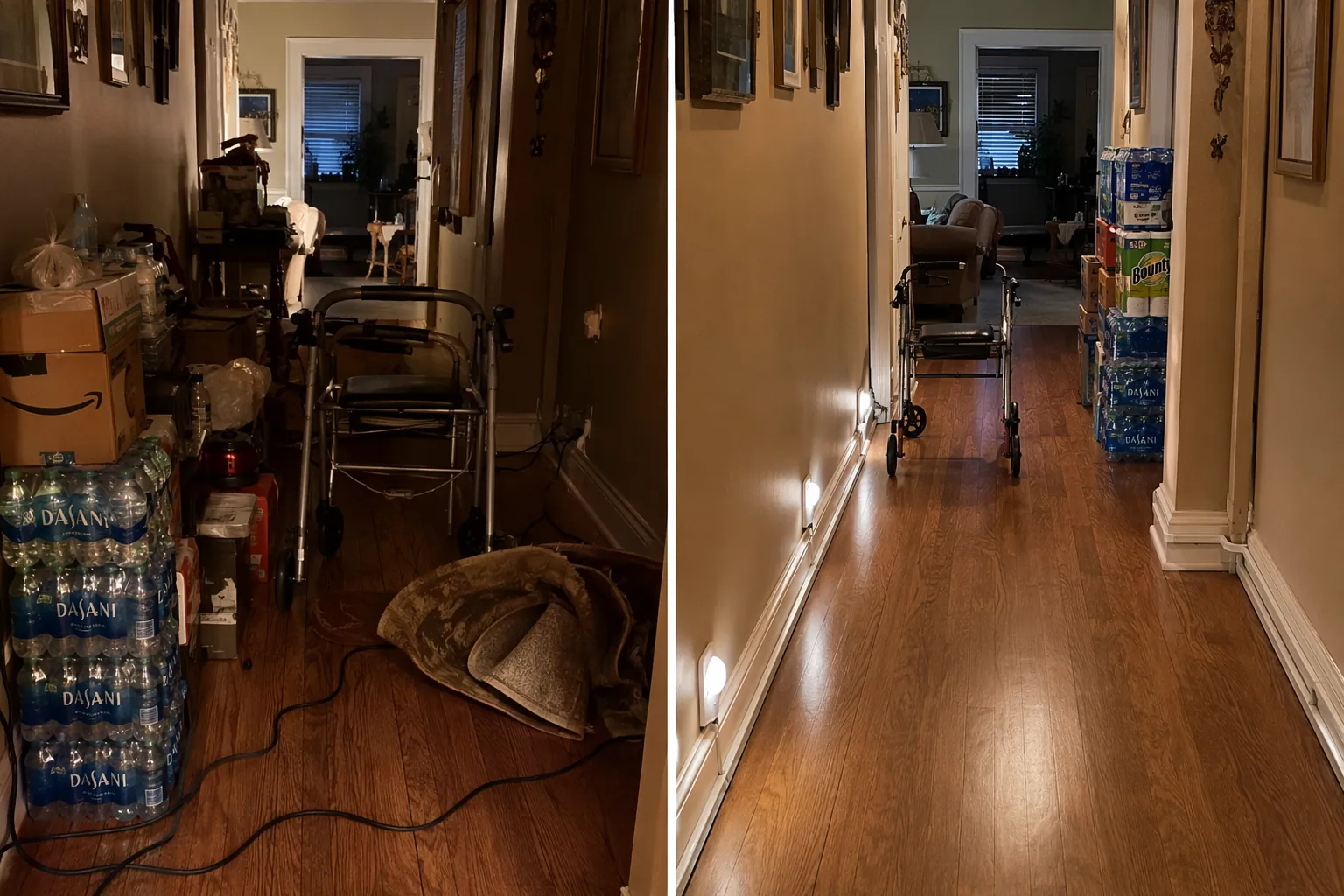
This is the phase that gets underestimated. People bring in bottled water, pet food, coolers, extension cords, batteries, and laundry baskets, then wonder why the walker no longer fits through the hallway. Clear the lanes first.
Start with the routes you will use even if the power goes out: bed to bathroom, bed to kitchen, chair to bathroom, chair to front door, chair to safe room, and the path to the phone. Ready.gov’s fall-prevention guidance tells people to remove boxes, cords, and rugs from walkways; a senior hurricane-safety guide from A Place At Home makes the same point during hurricane preparation by calling out rugs and cords as trip hazards.[2][3]
- Move throw rugs out of walking paths, especially near the bathroom, kitchen, exterior doors, and bed.
- Stack water, food, batteries, and pet supplies against a wall, not in the center of a room or beside the walker.
- Tape or route charging cords along the wall; do not stretch them across a hallway to keep a phone nearby.
- Move laundry baskets, shoes, footstools, and small trash cans out of the bathroom route.
- Check that a cane, walker, rollator, wheelchair, or oxygen tubing can pass through each route without catching.
Do this before you get tired. A living room can look tidy and still be unsafe if the only open space is too narrow for a walker. If someone is helping, ask them to walk the route with the mobility aid, not just glance at the room.
Put Shoes On Before the Work Starts
Closed-toe, non-slip shoes belong on your feet before you carry, reach, or step outside. Not beside the door. Not “in a minute.” Slippers, socks, and flip-flops make poor emergency footwear because they shift, slide, or catch when the floor is wet or the person is hurrying.
Set a second pair near the bed if you have them. Many hurricane falls happen during a simple nighttime bathroom trip after the lights fail or the air feels hot and stuffy.
Stage Supplies Where They Do Not Compete With the Walker
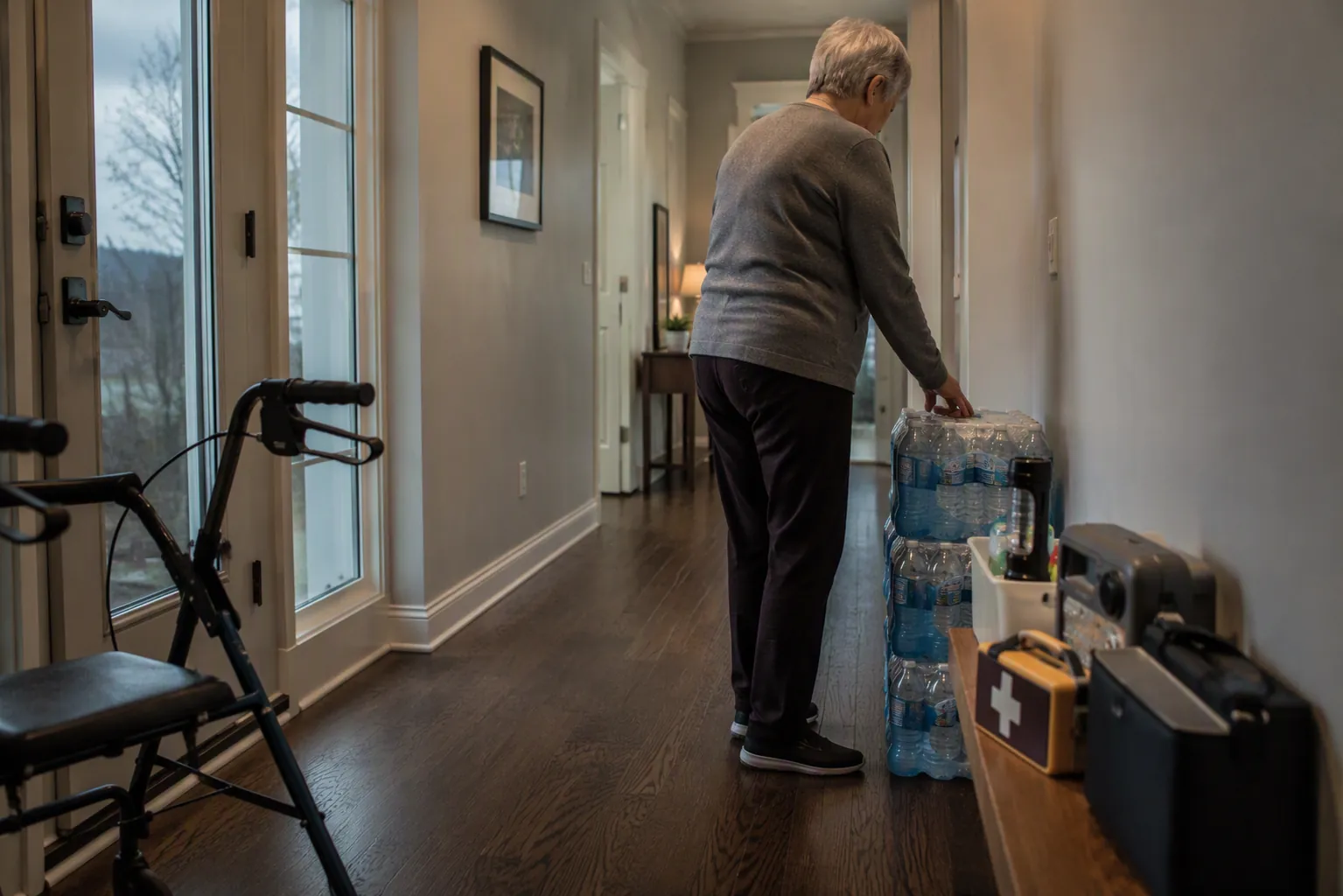
Supplies should be reachable without becoming obstacles. Put water at waist height if possible, or divide it into smaller containers so no one has to lift a heavy case from the floor. Keep medications in one visible place, but do not put the medication bin on the walker seat if that makes the walker unstable or unavailable.
If you use oxygen tubing, a CPAP, a power wheelchair, hearing aids, or other equipment, keep the device route clear as carefully as the walking route. Ready.gov’s older-adult preparedness guidance includes planning for assistive devices and backup batteries, and that planning has to happen while there is still time to locate chargers, label items, and ask for help.[4]
Place Lighting Before the House Gets Dark
Do not wait for the power to fail before deciding where the flashlight lives. The Red Cross tells older adults to prepare for being without power for two weeks during a hurricane, which makes lighting a mobility issue, not just a comfort item.[5]
- Put a flashlight or battery lantern at the bed, bathroom entrance, kitchen, safe room, and main exit.
- Use battery-powered night lights where available, especially along the bed-to-bath route.
- Check batteries while seated at a table, not while standing in a dark closet.
- Keep one light attached to or stored with the mobility aid if you use one at night.
Candles do not solve the fall problem. They add fire risk and still leave shadows on thresholds, cords, and rug edges. Use battery lighting for walking routes.
48–24 Hours: Secure What Matters and Stop Doing Unsafe Chores Alone
By this point, the house may already feel different. The wind is not the only problem. People start moving faster, phones ring more, family members give instructions from three places, and early rain can make thresholds slick. This is when a senior who normally manages well can get hurt doing “one last thing.”
Sue Anne Bell of the University of Michigan described falling or injury while moving more than usual for storm preparation as a considerable challenge for older adults during disasters. The same PBS News article reported survey findings from 2,256 older adults: 24% could not afford to evacuate for a week, and only 25% of those using essential medical equipment had an alternative power source.[6] That matters because “just leave” and “just prepare” are not equally possible for everyone.
Decide What You Will Not Do Alone
Make a short no-alone list. It should include any task that requires climbing, carrying with both hands, bending repeatedly, stepping onto wet ground, or walking while looking up instead of at the floor.
- Do not climb a ladder to adjust shutters, gutters, antennas, decorations, or porch items.
- Do not carry large water cases, gas cans, coolers, or heavy planters if you use a cane, walker, or have recent dizziness.
- Do not drag outdoor furniture across a wet threshold or uneven patio.
- Do not rush to answer the phone from another room; keep the phone on you or within reach.
- Do not block the main exit with bags “temporarily.” Temporary piles become evacuation hazards.
Adult children can help most by reducing decisions, not by giving a long lecture. Try: “Put your shoes on. Sit at the kitchen table. Tell me if the walker path to the bathroom is clear. Now we’ll choose what needs help.” That is more useful than asking a parent to report on the whole house.
Build the Go-Bag Around Safe Movement
A go-bag is not only paperwork and snacks. For a senior, it should contain the items that make transfers, walking, hearing, seeing, sleeping, and taking medication possible in a car, shelter, hotel, or relative’s home.
- Closed-toe, non-slip shoes and dry socks.
- Flashlight, battery lantern, or small battery night lights.
- Current medication list, allergies, diagnoses, pharmacy, doctors, emergency contacts, and equipment needs.
- Backup batteries or chargers for hearing aids, medical devices, phone, CPAP, wheelchair, scooter, or other assistive technology.
- Glasses, hearing aids, dentures, cane tips, walker accessories, incontinence supplies, and anything else needed to move safely and communicate.
Attach a copy of the medication and equipment list to the mobility aid, not only inside the bag. If the bag gets separated from the walker or wheelchair during a transfer, the information should still travel with the person.
Make the Medical-Power Decision Early
If medical equipment needs power, the decision is not just whether the pantry is stocked. It is whether the equipment can run safely through an outage, whether batteries are charged, and whether the person can get to a place with reliable power before roads and lifts become harder to use.
Ready.gov advises older adults to plan for assistive devices, backup batteries, and special-needs sheltering.[4] If those pieces are not already in place, call the local emergency management office, utility medical baseline program if available, health care provider, durable medical equipment supplier, or local non-emergency line. For more detail on backup power planning, see the 72-hour power outage plan for medically dependent seniors.
Final 24 Hours: Stop Optional Prep and Protect the Routes You Will Use
In the last day, the safest task may be quitting. If the walking lanes are clear, lights are placed, devices are charged, medications are gathered, and the stay-or-go decision is made, do not keep inventing chores.
- Put the phone, charger, glasses, hearing aids, medications, water, and flashlight within reach of the main chair or bed.
- Keep the walker, cane, wheelchair, or rollator parked in its usual reachable position.
- Wipe wet thresholds and place towels where water is entering, without creating a bunched-up trip hazard.
- Use the bathroom before conditions worsen, then keep that route lit and open.
- Sit for phone calls about plans instead of walking around while talking.
If heat is building because the power is out or air conditioning is off, balance can worsen. Keep fluids within reach and avoid unnecessary trips across the house. If heat becomes a concern, the extreme heat fall risk guide can help caregivers think through that added risk.
Choosing to Shelter in Place
Sheltering in place is safer only if the senior can move safely inside the shelter space and reach help. A stocked room with a blocked walker route is not ready.
- Choose the safest interior area recommended by local officials, then test whether the mobility aid fits through the door.
- Move a chair with arms into the area if getting up from the floor or a low seat is difficult.
- Keep shoes on or directly beside the chair or bed.
- Keep medications, water, phone, charger, light, glasses, hearing aids, and emergency contacts in reach.
- Keep cords against the wall and oxygen tubing arranged so it does not cross the walking path.
For power-outage room setup, the room-by-room power outage safety guide for seniors covers the same lighting and route problems in more detail.
Choosing to Evacuate
Evacuation has to be timed around mobility, not pride. If leaving requires help with stairs, a wheelchair transfer, oxygen equipment, a walker, a pet, or a medical device, leaving early is part of fall prevention.
Call for coordination before the weather is at the door. Ask local emergency management about accessible transportation or medical needs shelters if appropriate. Ready.gov specifically points older adults toward planning for assistive devices and special-needs sheltering.[4]
- Wear closed-toe, non-slip shoes before loading the car or walking to transportation.
- Use the cane, walker, wheelchair, or rollator during every transfer, even for “just a few steps.”
- Carry less in your hands; use a rolling bag only if it does not interfere with the mobility aid.
- Keep medications, hearing aids, glasses, phone, charger, and equipment list with the person, not buried in the trunk.
- Wait for help at steps, curbs, wet pavement, and vehicle transfers.
Caregivers who are coordinating from a distance should confirm three things, in order: the person is wearing safe shoes, the mobility aid is going with them, and the medication/equipment list is attached to the aid or carried on the body. For a similar evacuation problem in another fast-moving hazard, see how seniors can avoid falls during brush fire evacuations.
If You Are Helping by Phone
A phone helper cannot see the rug edge, the cord, or the water case in front of the bathroom. Give one instruction at a time and make the first instructions physical.
- Ask them to sit down and put on closed-toe shoes.
- Ask where the cane, walker, wheelchair, or rollator is right now.
- Have them describe the path from chair to bathroom and chair to exit.
- Ask what is on the floor: cords, rugs, boxes, water, pet bowls, laundry, shoes.
- Decide together which tasks require in-person help and stop them from doing those tasks alone.
The tone matters. The goal is not to take over. It is to keep the parent from spending balance, strength, and patience on the wrong jobs before the storm even arrives.
When the Plan Is Ready Enough
A senior is prepared for a hurricane warning when the home is still walkable, not when every possible storm chore is finished. The walking lanes are clear. The lights are placed. The shoes are on or within reach. The mobility aid is unblocked. The medication and equipment list can travel with the person. The power-dependent needs have a plan. The evacuation decision has been made early enough that no one has to rush through water, darkness, steps, or clutter.
Post-storm cleanup brings a different set of fall hazards, especially debris, wet flooring, and damaged walkways. If your area also faces tornado cleanup hazards, this tornado cleanup fall-prevention guide may help once the warning phase is over.
References
- About Older Adult Fall Prevention, CDC, January 2026
- Preventing Falls at Home, Ready.gov
- Hurricane Safety Tips for Seniors, A Place At Home
- Older Adults, Ready.gov
- Emergency Preparedness for Older Adults, American Red Cross
- Why it can be more difficult to evacuate older adults in a disaster, PBS News
Related reading
Noticed something outdated or inaccurate on this page? Flag a correction. We review every report against CDC, NIA, and AARP HomeFit guidance before updating a page.
Part of the Fall Prevention section.