
STEADI: Intervene
Longevity Tips That Keep Seniors Independent Longer
Healthy aging for seniors comes down to a few measurable habits — the right movement, strength work, protein, sleep, social connection, and screenings. This guide gives the evidence-backed specifics, explains how falls fit into the picture, and why it's never too late to start.
For older adults, longevity is not only a question of how many years remain. The more useful question is how many of those years can still include getting up from a chair, walking safely to the bathroom, preparing a meal, sleeping through the night, and choosing the activities that make home feel like home. The CDC's healthy-aging message is appropriately direct: it is possible to take steps toward better health at any age. [1]
Genes matter, but they do not settle the outcome. Harvard Health estimates that roughly 25% of the variation in longevity is genetic, leaving the larger share associated with lifestyle and other factors. [2] That does not make a long life predictable, and it certainly does not turn an exercise plan or supplement into a guarantee. It does mean that daily function is worth protecting with habits that have a visible effect on ordinary tasks.
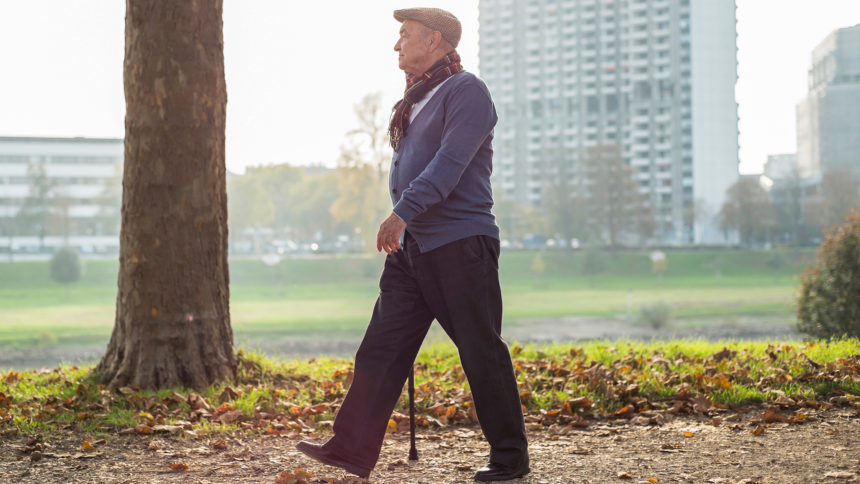
Start With the Habits That Protect Function
A practical healthy-aging plan has a small number of measurable parts. The starting points commonly used in the guidance reviewed here are:
- At least 150 minutes of moderate activity each week, adjusted for current ability.
- Muscle-strengthening activity on two or more days each week.
- Balance practice, including movements such as supported single-leg stands and sit-to-stands.
- About 1.0–1.3 grams of protein per kilogram of body weight each day, with individual needs discussed with a clinician.
- Seven to nine hours of sleep.
- Regular social contact, preventive screening, medication review, and attention to vision, hearing, and home hazards.
These are reference points, not a prescription for every person. Pain, heart or lung disease, neurological conditions, frailty, recent surgery, medication effects, and a history of falls can all change what is appropriate. The useful test is whether a plan is specific enough to begin and flexible enough to sustain.
Make Movement a Weekly Practice
The broad target is 150 minutes of moderate activity per week. Stanford Medicine also identifies 7,000 or more steps as a useful activity reference, along with strength and balance work. [3] Walking is often the simplest place to begin, but the right form of movement is the one that can be repeated safely: a walk around the block, several shorter walks, water exercise, or another activity approved for the person's health and mobility.
The national gap makes this an important opportunity rather than an abstract goal. Only 23.1% of adults age 65 and older met physical-activity guidelines in 2019. [4] Someone moving very little does not need to reach the full target in the first week. A more useful measure is a gradual increase that can be observed: more minutes walked, fewer long periods of sitting, or greater ease completing a routine route.
Strength work deserves equal attention. Leg and hip strength affect standing from a chair, stepping over a threshold, climbing stairs, and recovering from a stumble. A program may use body weight, resistance bands, weights, or machines. It should be matched to ability and reviewed by a physical therapist or other qualified clinician when weakness, pain, dizziness, or a recent fall is present.
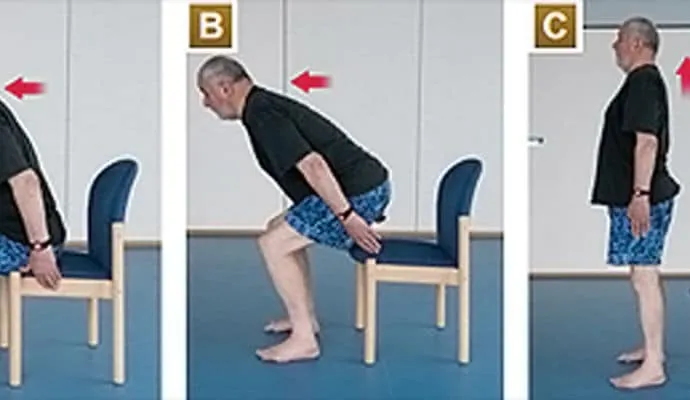
Treat Balance as Fall Prevention
Falls belong inside any discussion of longevity because they can abruptly change the years a person is able to live independently. More than one in four older adults, or more than 14 million people, report a fall each year, and about 37% of falls cause an injury that restricts activity or requires medical care. [5] The age-adjusted death rate from falls among older adults rose 21%, from 64.7 per 100,000 in 2018 to 78.4 per 100,000 in 2024. [5]
Balance practice should therefore be concrete. Sit-to-stands, supported single-leg stands, heel-to-toe walking, and other balance exercises can be incorporated into a structured program. A person who feels unsteady should use a stable support and ask for an assessment rather than practicing beside furniture that can slide.
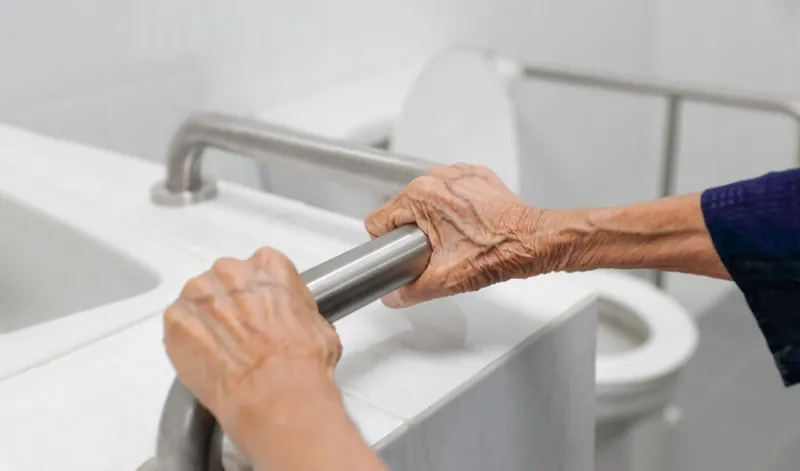
The rest of fall prevention is investigative. Review medicines that may cause dizziness or drowsiness. Check vision and hearing. Look at footwear, lighting, stair rails, loose rugs, bathroom surfaces, and the path to the bedroom at night. A home modification is successful when it removes a real obstacle to safe movement, not when it merely makes the room look more equipped.
Medication review is especially relevant because 83% of adults in their 60s and 70s used at least one prescription medication in the past month, while about 35% used five or more. [6] That is not evidence that medication is harmful or unnecessary. It is a reason to periodically ask a prescriber or pharmacist whether each medicine is still needed, whether doses interact, and whether dizziness or balance problems could be medication-related. Medicines should never be stopped without professional guidance.
Support Recovery With Food and Sleep
Stanford Medicine gives a daily protein range of 1.0–1.3 grams per kilogram of body weight. For a 150-pound adult, that is approximately 68–88 grams per day. [3] Protein can be spread across meals rather than concentrated in one serving. Foods in a Mediterranean-style eating pattern, along with adequate calcium and vitamin D, also appear in the guidance: calcium targets are 1,000–1,200 milligrams and vitamin D targets are 600–800 IU, though medical conditions and medications can change what an individual should take. [3]
A clinician or registered dietitian should help adjust protein, calcium, and vitamin D advice for kidney disease, swallowing difficulty, appetite loss, osteoporosis treatment, or other concerns. Supplements are not a substitute for identifying why someone is losing weight, eating poorly, or becoming weaker.
Sleep is another recovery measure, not a luxury to be traded away in the hope of gaining more productive hours. Older adults generally need seven to nine hours; they do not automatically need less sleep because they are older. [7] Persistent insomnia, loud snoring, repeated nighttime urination, daytime sleepiness, or a sudden change in sleep deserves clinical attention. Sleeping pills and over-the-counter products can also affect alertness and balance, so they belong in medication discussions.
Keep Connection and Prevention on the Calendar
Social contact is part of a functional plan because isolation changes how daily life is organized. The U.S. Surgeon General reports that social isolation is associated with a 29% higher risk of premature mortality, while loneliness and social isolation in older adults are associated with an approximately 50% higher risk of dementia. [8] These figures describe risk, not a prediction for one person. In practice, the relevant action may be a recurring phone call, a meal with someone else, a faith or community activity, or a class that also creates a reason to walk out the door.
Preventive care keeps a small problem from becoming a mobility problem. For adults in their 60s and 70s, the screening plan should include blood pressure, cholesterol, diabetes, vision, and hearing checks, with osteoporosis screening for women age 65 and older as recommended by the U.S. Preventive Services Task Force. [3] The exact timing depends on personal history and prior results, so a primary-care visit is the place to reconcile the schedule rather than relying on a generic online calendar.
Use Function as the Progress Check
A longevity plan should be reviewed against life, not only against a tracker. Can the person stand from a usual chair without using both arms? Walk to the bathroom with less hesitation? Carry a light meal from the kitchen? Attend a regular activity without needing a full day to recover? These observations can reveal useful progress even when weight, step counts, or laboratory values have barely changed.
Begin with one measurable change that fits the current day: a short walk after lunch, two weekly strength sessions, a balance exercise done with appropriate support, a protein-containing breakfast, a medication review, or removal of a hazard on the route to the bathroom. Then watch what happens to strength, confidence, sleep, and participation. Independence is the outcome worth protecting, and it remains possible to work toward it at any age.
This article is for educational purposes and is not medical advice. Exercise, nutrition, supplements, screening, and medication decisions should be individualized with a qualified healthcare professional, particularly after a fall or when new symptoms appear.
References
- Healthy Aging at Any Age — CDC (https://www.cdc.gov/healthy-aging/about/index.html)
- Longevity: Lifestyle strategies for living a healthy, long life — Harvard Health (https://www.health.harvard.edu/healthy-aging-and-longevity/longevity-lifestyle-strategies-for-living-a-healthy-long-life)
- Five healthy habits for successfully aging in our 60s and 70s — and beyond — Stanford Medicine (https://med.stanford.edu/news/insights/2026/01/healthy-habits-for-successful-aging-60s-and-70s.html)
- Get the Facts on Healthy Aging — NCOA (https://www.ncoa.org/article/get-the-facts-on-healthy-aging/)
- Older Adult Falls Data; Facts About Falls — CDC (https://www.cdc.gov/falls/data-research/index.html; https://www.cdc.gov/falls/data-research/facts-stats/index.html)
- 5 Evidence-Based Practices to Help Older Adults Live Independently — AJMC (https://www.ajmc.com/view/5-evidence-based-practices-to-help-older-adults-live-independently)
- Live long, be well: Science-based tips for healthy aging — NIH MedlinePlus Magazine (https://magazine.medlineplus.gov/article/live-long-be-well-science-based-tips-for-healthy-aging)
- Social Connection — U.S. Surgeon General (https://www.hhs.gov/surgeongeneral/reports-and-publications/connection/index.html)
Related reading
Noticed something outdated or inaccurate on this page? Flag a correction. We review every report against CDC, NIA, and AARP HomeFit guidance before updating a page.
Part of the Fall Prevention section.