
STEADI: Intervene
What Goes in a Senior Emergency Kit for Outages and Flooding
Generic emergency kits miss what older adults actually need during a power outage or flood. This dual-kit checklist covers a stay-home bin and a go bag with medications, assistive devices, and flood-ready supplies, plus a twice-a-year review schedule.
A senior emergency kit for power outages and flooding should not be one heroic plastic tote in the garage. It should be two separate, easy-to-find kits: a stay-home bin for sheltering in place during an outage, and an evacuation go bag that can leave with the older adult in minutes. Then both kits need the layer generic lists usually treat as an afterthought: medications, assistive devices, sensory backups, waterproof documents, and the small supplies that let a person keep functioning when the lights are out or water is rising.
The standard baseline still matters. Ready.gov’s basic kit guidance includes water, food, a flashlight, batteries, first aid supplies, a whistle, dust mask, plastic sheeting, moist towelettes, garbage bags, tools, a manual can opener, local maps, and a charged cell phone with backup power; it recommends one gallon of water per person per day for several days, and the Red Cross recommends a two-week home supply when sheltering in place is possible.[1][2] But for an older adult, those items are only the floor. The real test is whether the right pill bottle, hearing-aid battery, cane, dose list, and waterproof pouch are reachable when no one has the patience or light to search.
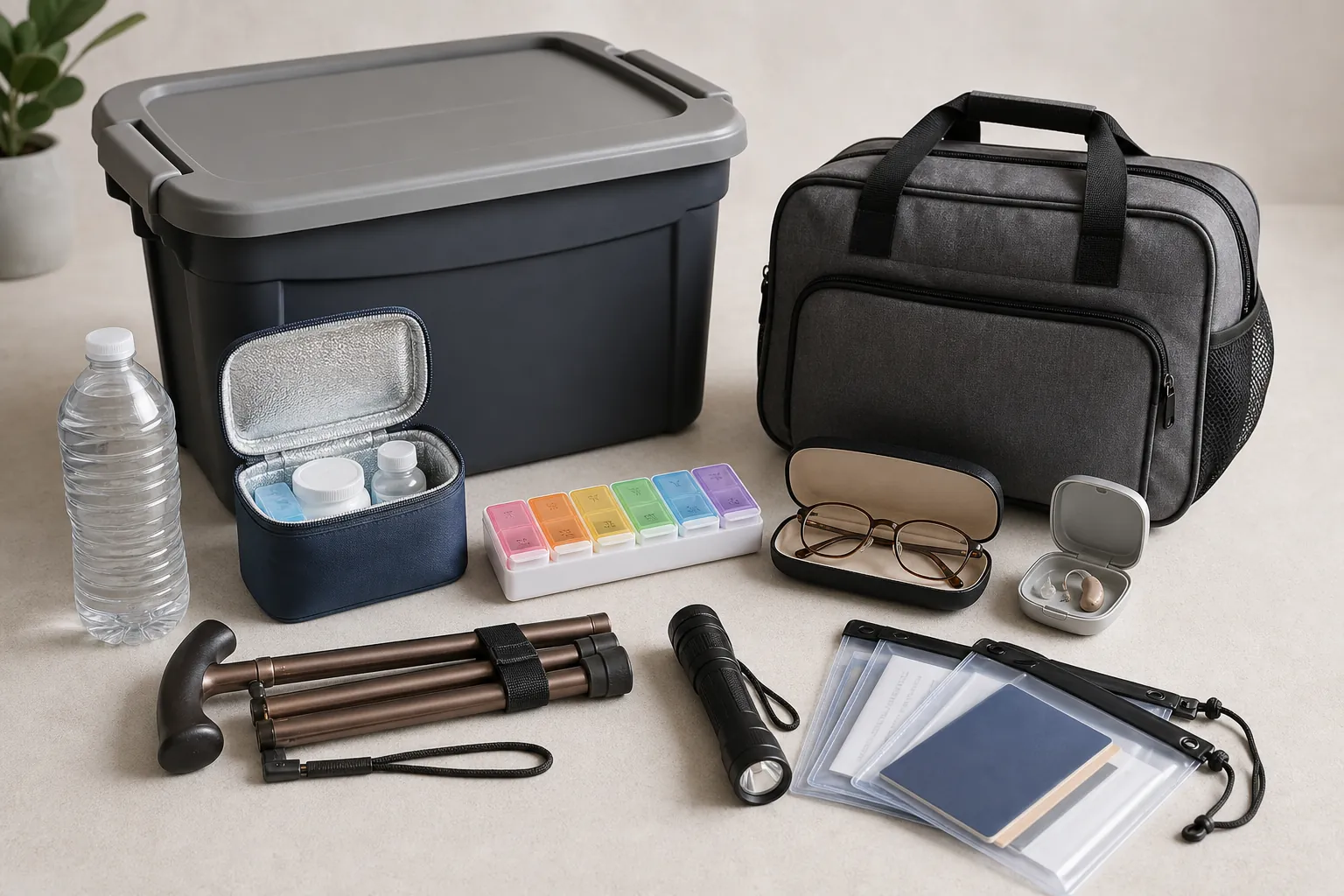
The two-kit setup: one bin for staying, one bag for leaving
The split is not just neat organizing. A stay-home bin can be heavier, larger, and stocked for days without power. A go bag has to be light enough to carry, lift into a car, or keep beside a walker or wheelchair. Mixing those jobs creates the familiar failure: the “emergency kit” exists, but it is too heavy to move, too far from the exit, or missing the one medical item that needed to travel.
UConn Extension’s go-bag and stay-bin project with older adults on Connecticut’s coastline used the same practical division. In a project that included a 500-person survey and focus groups, participants’ major concerns included flooding, power outages, and evacuation logistics.[3] That does not prove every older adult needs the same exact kit, but it does support the basic structure: older adults are often preparing for two different decisions, staying put and leaving quickly.
| Kit | Where it lives | What it is for | What belongs there |
|---|---|---|---|
| Stay-home bin | A reachable interior location, not buried behind holiday boxes | Power outages, boil-water periods, short-term isolation, and waiting safely at home | Water, shelf-stable food, lighting, batteries, radio, sanitation supplies, first aid, medication plan, assistive-device backups, food-safety tools, and refrigerated-medication plan |
| Evacuation go bag | Near the main exit, bedroom, or mobility device—where the older adult can actually get it | Flood warnings, evacuation orders, unsafe heat or cold during an outage, medical displacement, or a caregiver pickup | Current medication list, several days of essential items, waterproof medication and document pouches, glasses, hearing-aid supplies, mobility backups, hygiene supplies, phone power, and copies of key contacts |
If the older adult uses a rollator, wheelchair, cane, oxygen equipment, hearing aids, insulin, refrigerated medication, incontinence supplies, ostomy supplies, or written communication aids, those are not “extras.” They are part of the emergency system.
Pack the stay-home bin for darkness, waiting, and no refrigerator
The stay-home bin should be boring, visible, and labeled. It should not require climbing a step stool, crossing a wet basement, or lifting a container the older adult cannot move. If the person lives alone, put the most urgent items—flashlight, phone power bank, glasses, medication list, and a bottle of water—where they can be reached from the bedroom or favorite chair, not only in the main bin.
- Water: at least one gallon per person per day for several days, with a larger home supply when storage space allows.[1][2]
- Shelf-stable food the person can open and eat: low-sodium or medically appropriate options if needed, a manual can opener, utensils, and disposable plates.
- Lighting: flashlights, lanterns, headlamps, and extra batteries. Do not make candles the lighting plan.
- Communication: battery-powered or hand-crank radio, written emergency contacts, charged power banks, charging cords, and any adapter needed for the older adult’s phone or medical device.
- Sanitation: wipes, toilet paper, garbage bags, gloves, hand sanitizer, absorbent products, incontinence supplies, ostomy supplies, and a way to contain soiled items.
- Medical basics: first aid kit, current medication list, pharmacy and prescriber contacts, allergy list, copies of insurance cards, and instructions for devices or treatments a helper may not know.
- Assistive backups: spare eyeglasses, hearing-aid batteries or charger, a labeled hearing-aid case, a backup cane if used, rubber tips for canes or walkers, and any small tool needed to adjust equipment.
- Temperature and food safety: appliance thermometer, cooler, ice packs, and a written plan for refrigerated medications and perishable food.
For an older adult at higher fall risk, lighting belongs near movement paths, not only in the bin. Put a flashlight or plug-in rechargeable light by the bed, bathroom route, main chair, and exit. Darkness turns familiar rooms into obstacles, especially when the person is hurrying to silence an alarm, answer a phone, or reach a bathroom. If you are also changing the home itself, connect this planning with broader aging-in-place home modification priorities rather than trying to solve lighting, thresholds, grab bars, and floodproofing inside one emergency bin.
Food, candles, and generators need rules taped to the bin
During a power outage, an unopened refrigerator keeps food cold for about four hours. A full freezer holds temperature for about 48 hours, or about 24 hours if it is half full; food that reaches 40°F or warmer should be discarded under Red Cross and Ready.gov guidance.[4][5] That is not the kind of detail most people remember at 2 a.m., so write it on a card and tape it inside the bin.
Use flashlights instead of candles, especially where oxygen equipment, pets, grandchildren, poor balance, or memory changes are part of the household. If a generator is part of the plan, it belongs outdoors, never inside a home, garage, attached garage, basement, or enclosed porch. Ready.gov says generators should be used outside at least 20 feet away from windows, doors, and attached garages, with working carbon monoxide detectors in place.[5]
The Red Cross also warns people to stay at least 35 feet away from downed power lines and anything touching them.[4] That matters for caregivers checking on a parent after a storm: the safest kit in the world does not help if someone steps around a wire to reach the front door.
Build the go bag around the first hour of evacuation
The evacuation go bag is not a camping pack. It is the bag that leaves when the older adult is told to go now, when a caregiver is double-parked outside, or when a neighbor has five minutes to help. It should be light enough for the person or helper who will actually carry it. If the older adult uses a walker or wheelchair, consider a small attached pouch for the most critical items and a second bag a caregiver can grab.
- Medication list: drug name, dose, schedule, reason taken if known, prescriber, pharmacy, allergies, and recent medication changes.
- A current supply of essential medications, packed according to the clinician’s and pharmacist’s guidance.
- Waterproof pouch for pill bottles, written medication list, insurance cards, ID copies, advance directives if used, and emergency contacts.
- Spare eyeglasses, sunglasses if needed, hearing-aid batteries or charger, hearing-aid cleaning tool, and labeled storage case.
- Mobility and transfer supports: folding cane, cane tips, walker label, wheelchair cushion needs, transfer belt if used by trained helpers, and written notes about safe transfers.
- Personal care items: incontinence products, ostomy supplies, wipes, barrier cream, gloves, disposal bags, denture supplies, and skin-protection items.
- Phone power: charging cord, wall plug, car adapter, power bank, and any charger for hearing aids, medical devices, or communication devices.
- Small comfort items that prevent bigger problems: snack that fits the person’s diet, water bottle, warm layer, hat, socks, light blanket, and simple written reassurance or orientation notes for someone with cognitive impairment.
Label the bag with the older adult’s name and emergency contact, but do not put sensitive medical details on the outside where they are visible to everyone. Inside the bag, use large-print labels. Under stress, a helper should not have to guess which pouch holds hearing supplies and which one holds medication documents.
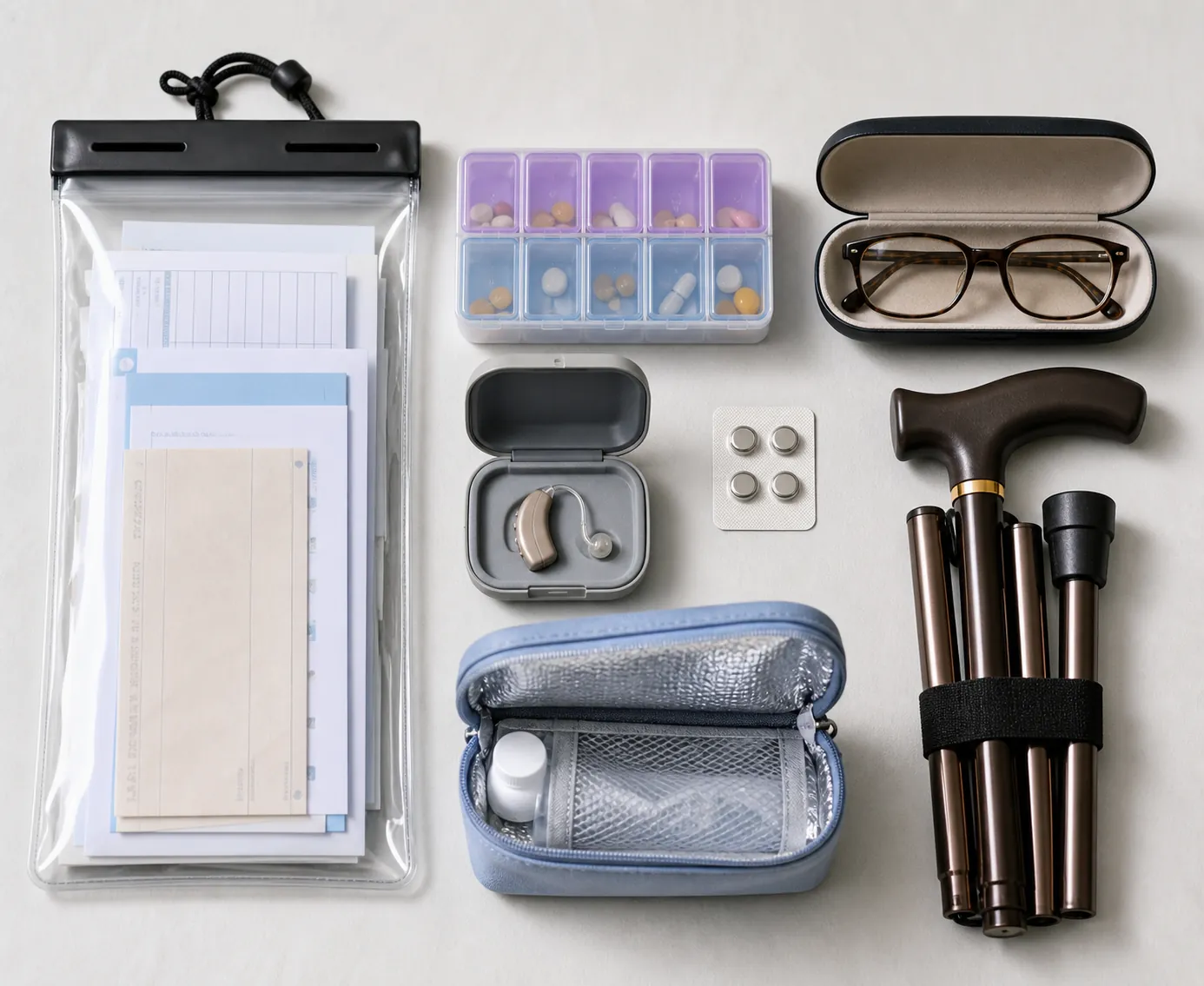
The medical layer: more than a pill organizer
The Red Cross older-adult preparedness guidance says to keep at least 30 days of medications and extra assistive items such as a cane or eyeglasses.[6] That is the right direction for planning, but it is not a permission slip to stockpile or change treatment on your own. Medication refills, early refills during declared disasters, controlled substances, refrigerated drugs, and life-sustaining medications all require prescriber, pharmacist, insurer, and state-rule reality checks. AgingCare’s emergency planning guidance, for example, suggests asking a doctor about an extra week’s prescription supply.[7] Treat the exact quantity as something to confirm, not something one article can universalize.
This article is planning information, not medical advice. If a medication has been exposed to heat, floodwater, freezing, or an unknown storage condition, call the pharmacist, prescriber, poison control, or emergency services as appropriate. Do not stop or discard a life-sustaining medication without professional guidance unless emergency instructions tell you to do so.
| Medical item | Stay-home bin | Go bag |
|---|---|---|
| Medication list | Full printed list in large type, updated after every change | Duplicate waterproof copy near the medications |
| Current medications | Plan for an extended supply when approved by prescriber/pharmacist | Enough to bridge evacuation, packed so it can leave quickly |
| Refrigerated medications | Cooler, ice packs, thermometer, written cold-chain instructions | Insulated pouch and instructions for transport |
| Assistive devices | Backup cane, extra glasses, hearing-aid supplies, device chargers | Portable versions or parts that must travel |
| Special supplies | Incontinence, ostomy, wound-care, diabetes, respiratory, or feeding supplies | A smaller urgent supply, labeled and easy to identify |
| Documents | Copies of insurance, ID, care plan, contacts, device instructions | Waterproof copies of the most essential documents |
A weekly pill organizer is useful for normal routines, but it is not enough for emergency use unless it is backed by the original medication names, doses, prescribing information, and pharmacy contacts. If an older adult arrives at a shelter, hospital, relative’s home, or hotel with only unlabeled pills, everyone loses time.
Refrigerated medication needs its own written plan
Insulin and refrigerated medications are where improvising gets dangerous. CDC guidance says insulin should never freeze and may lose effectiveness if exposed to temperatures above 86°F; it also advises close blood sugar monitoring if insulin affected by emergency conditions must be used.[8] The American Lung Association recommends keeping refrigerated medications in a cooler with ice packs below 46°F during a power outage.[9]
The kit should therefore include more than ice packs. Add a small thermometer, an insulated pouch, medication-specific storage instructions from the pharmacy, and a written “who to call” line for each refrigerated drug. If the medication is essential and the home often loses power, discuss backup power, replacement rules, and evacuation thresholds before storm season. That conversation belongs with the clinician and pharmacist, not in the middle of a blackout.
Flooding changes what must be waterproof and where the kits sit
Flood preparation is not just adding rain ponchos. For an older adult, flooding changes storage height, packaging, evacuation timing, and medication safety. The go bag should not be on a basement floor. The stay-home bin should not require walking through standing water to reach it. Medication bottles, dose lists, insurance cards, IDs, and device instructions should sit inside waterproof pouches or dry bags before there is a warning.
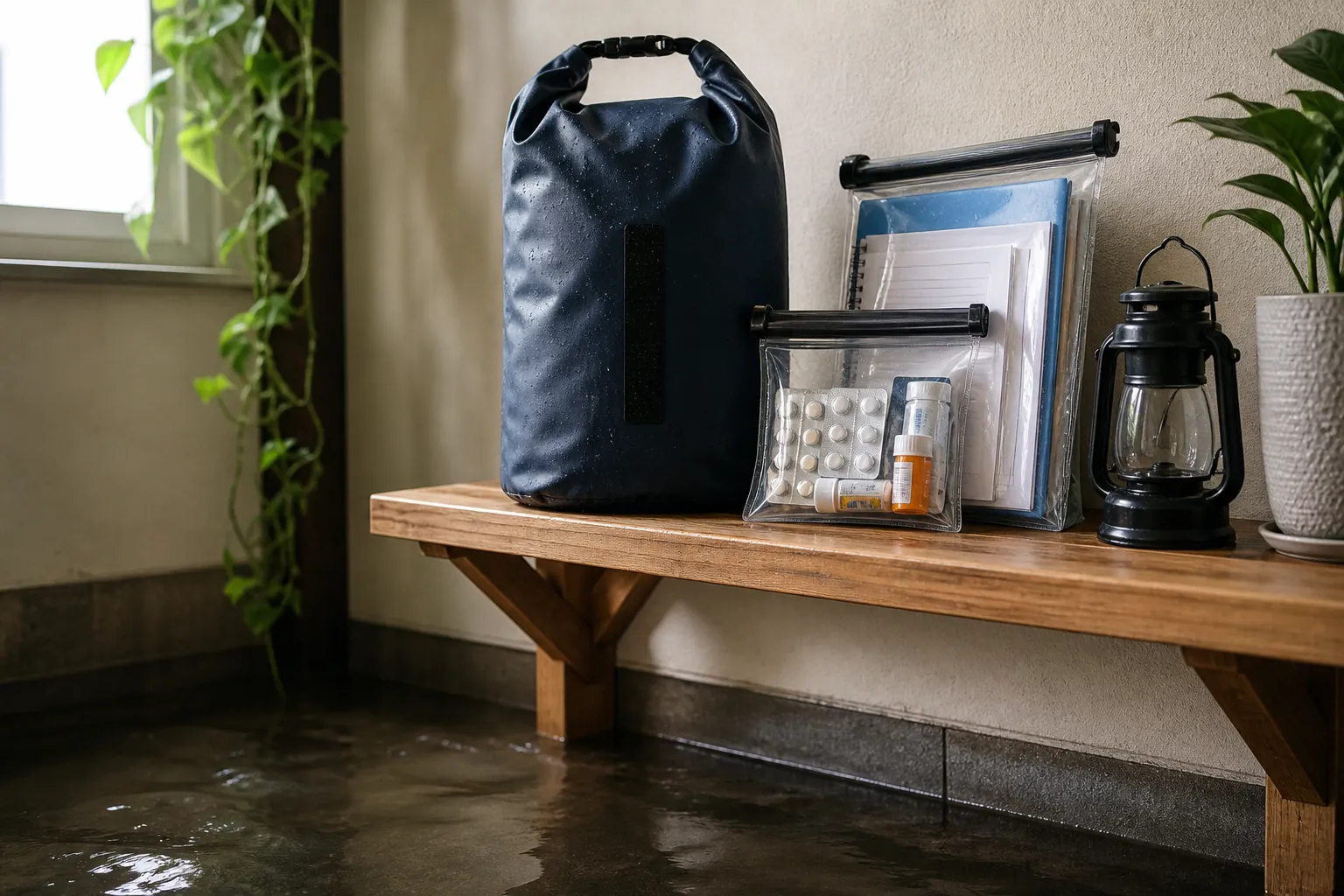
The FDA advises placing medication bottles in water-tight containers if flooding is possible and discarding any drug that has come into contact with flood or contaminated water, even if the drug is still in its original container.[10] That instruction is simple on paper and hard in real life when the medication is expensive or vital, which is why the kit also needs pharmacy phone numbers, prescriber contacts, and insurance information in waterproof form.
Floodwater also creates a mobility problem long before it looks dramatic. The Red Cross says six inches of fast-moving floodwater can knock a person over, and 12 inches can carry away a vehicle.[11] For someone with neuropathy, poor balance, a walker, swollen ankles, low vision, or slow transfers, the safe decision point may come earlier than the neighborhood’s most confident driver thinks it should.
Home-hardening work belongs outside the kit checklist but should not be ignored. CDC flood guidance includes measures such as raising switches, sockets, and wiring at least 12 inches above projected flood elevation, installing backflow valves, and anchoring fuel tanks.[12] If those changes are on the table, compare them with other aging-in-place modification costs and funding options so the emergency plan and the home safety plan are not competing blindly for the same budget.
Make every item findable, openable, readable, and carryable
A checklist can look complete while still failing the person it is meant to protect. Test the kit under ordinary conditions before expecting it to work under emergency conditions. Can the older adult open the water bottles? Read the labels without searching for glasses? Lift the go bag? Tell the difference between the hearing-aid charger and the phone charger? Reach the flashlight from bed?
- Use large-print labels on pouches: Medications, Hearing, Glasses, Documents, Phone Power, Hygiene.
- Choose containers with easy zippers, pull tabs, or buckles instead of stiff latches if hand arthritis is an issue.
- Keep the go bag light enough for the real evacuation method: carried by the older adult, hung on a walker, placed on a wheelchair, or grabbed by a caregiver.
- Put duplicate critical items where the person spends time, not only where supplies are stored.
- Write instructions for helpers who do not know the routine: how hearing aids charge, which cane is safest, where insulin normally lives, what supplies must not be left behind.
This is also where fall prevention and emergency preparation meet. A power outage turns throw rugs, oxygen tubing, wet thresholds, pets, and cluttered hallways into trip hazards. If the home already has fall concerns, use this kit work as a prompt to revisit the broader fall prevention plan, especially lighting, bathroom access, stairs, and clear routes to exits.
The six-month review keeps the kit from becoming a stale box
Ready.gov and the Red Cross both recommend rethinking and updating emergency kits regularly, and the Red Cross specifically advises a six-month review of emergency supplies.[1][2] Tie the review to dates that are hard to miss: daylight saving time changes, a birthday and half-birthday, or the start of storm and winter seasons.
Do the review with the older adult if possible. A caregiver may think the bag is fine; the person who has to lift it may know it is too heavy. A daughter may think the backup cane is useful; the parent may know the rubber tip is worn slick. A printed medication list may look current until a pharmacy label proves the dose changed three months ago.
- Medication list: update drug names, doses, schedules, allergies, prescribers, pharmacy, and recent changes.
- Medication supply: confirm refill timing, early-refill options, and emergency quantities with the prescriber and pharmacist.
- Refrigerated medication plan: check cooler, ice packs, thermometer, storage instructions, and who to call if temperature limits are exceeded.
- Batteries and charging: replace expired batteries, recharge power banks, test flashlights and lanterns, and confirm hearing-aid and phone chargers still match current devices.
- Documents: update insurance cards, ID copies, emergency contacts, care instructions, advance directives if used, and waterproof pouch condition.
- Assistive-device backups: check cane tips, walker labels, eyeglass prescription, hearing-aid supplies, wheelchair cushion notes, and any device-specific tools.
- Water and food: rotate expired items, confirm diet-appropriate foods, and make sure containers can still be opened by the person who may need them.
- Flood readiness: confirm medications and documents are in waterproof containers and stored above likely water exposure, not on a basement or garage floor.
- Access and weight: have the older adult or likely helper lift, carry, roll, or reach each kit exactly as they would during an emergency.
A senior emergency kit is not one bigger bin. It is a maintained two-kit system built around the person’s body, medications, mobility, senses, and likely decisions under stress.
References
- Build A Kit, Ready.gov
- Survival Kit Supplies, American Red Cross
- Go Bags and Stay Bins: Using Research and Outreach to Help Older Adults Prepare for Emergencies on Connecticut’s Coastline, UConn Today
- Power Outage Safety, American Red Cross
- Power Outages, Ready.gov
- Older Adults, American Red Cross
- How to Prepare Elderly Loved Ones for Emergencies, AgingCare
- Managing Insulin in an Emergency, Centers for Disease Control and Prevention
- Power Outage Preparation for People Who Use Medical Devices, American Lung Association
- Safe Drug Use After a Natural Disaster, U.S. Food and Drug Administration
- Flood Safety, American Red Cross
- Floods, Centers for Disease Control and Prevention
Related reading
Noticed something outdated or inaccurate on this page? Flag a correction. We review every report against CDC, NIA, and AARP HomeFit guidance before updating a page.
Part of the Fall Prevention section.