
STEADI: intervene
Stay or Go? Hurricane Safety Tips for Seniors Living Alone
For an older adult living alone, the hurricane evacuation call must be made before a watch becomes a warning — not improvised when an order is issued. This guide provides a stay-or-go decision framework with hard triggers for leaving, the conditions that make sheltering in place defensible, and a pre-chosen safe-room setup, for both the older adult and the family member helping from another state.
The hard hurricane call rarely starts in a calm room. It starts with an older adult living alone saying, “I’m fine here,” while a daughter or son is on speakerphone from another state, watching the forecast and trying not to turn the conversation into an argument. By the time an evacuation order is issued, that conversation is already late.
For seniors living alone, the first hurricane safety tip is not about batteries or canned food. It is this: decide the stay-or-go rule before a watch becomes a warning. The CDC describes a hurricane watch as a signal that hurricane conditions are possible, generally within 48 hours, and a hurricane warning as a signal that conditions are expected, generally within 36 hours; it also says to never ignore an evacuation order and warns that six inches of moving water can sweep a car away [1].
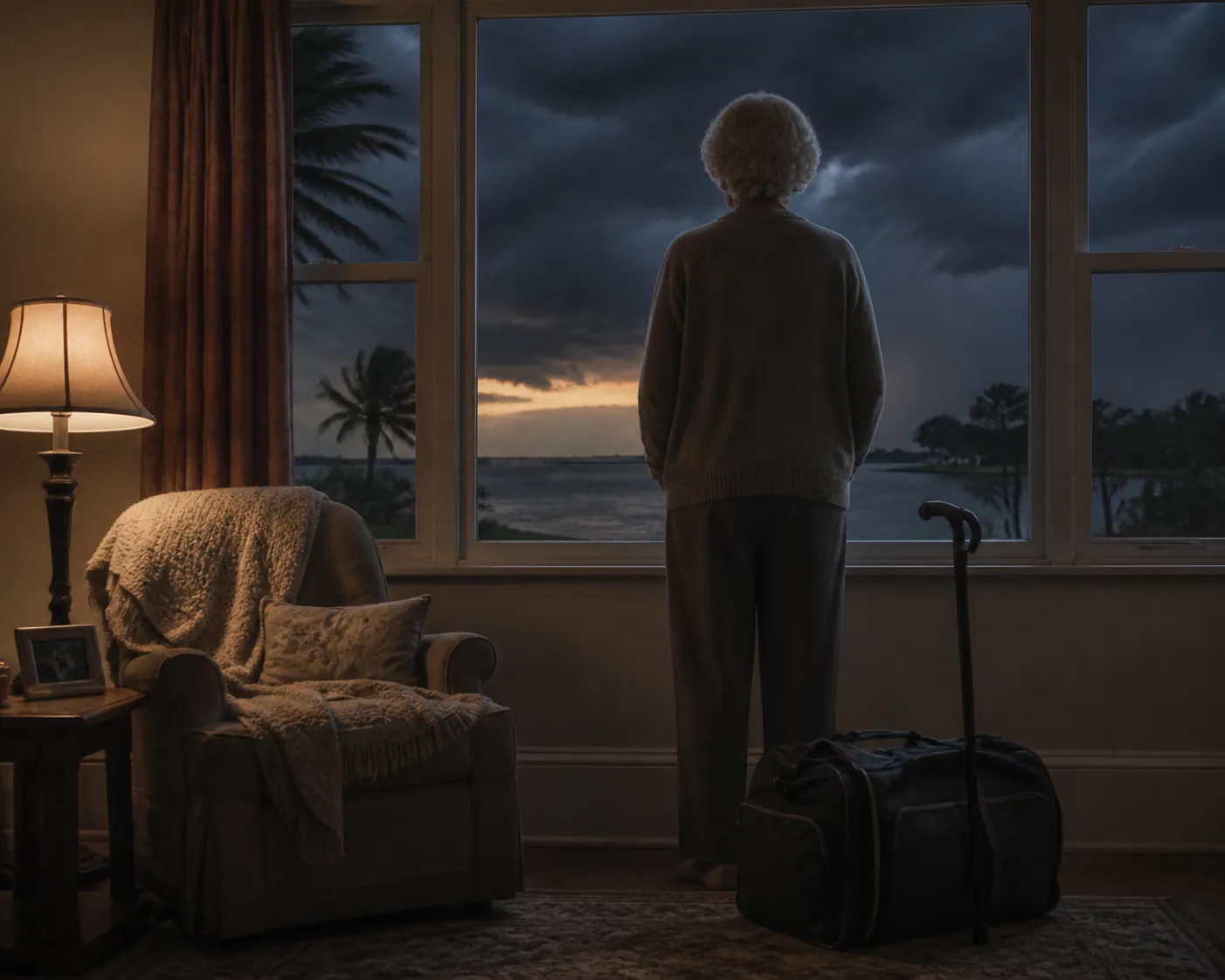
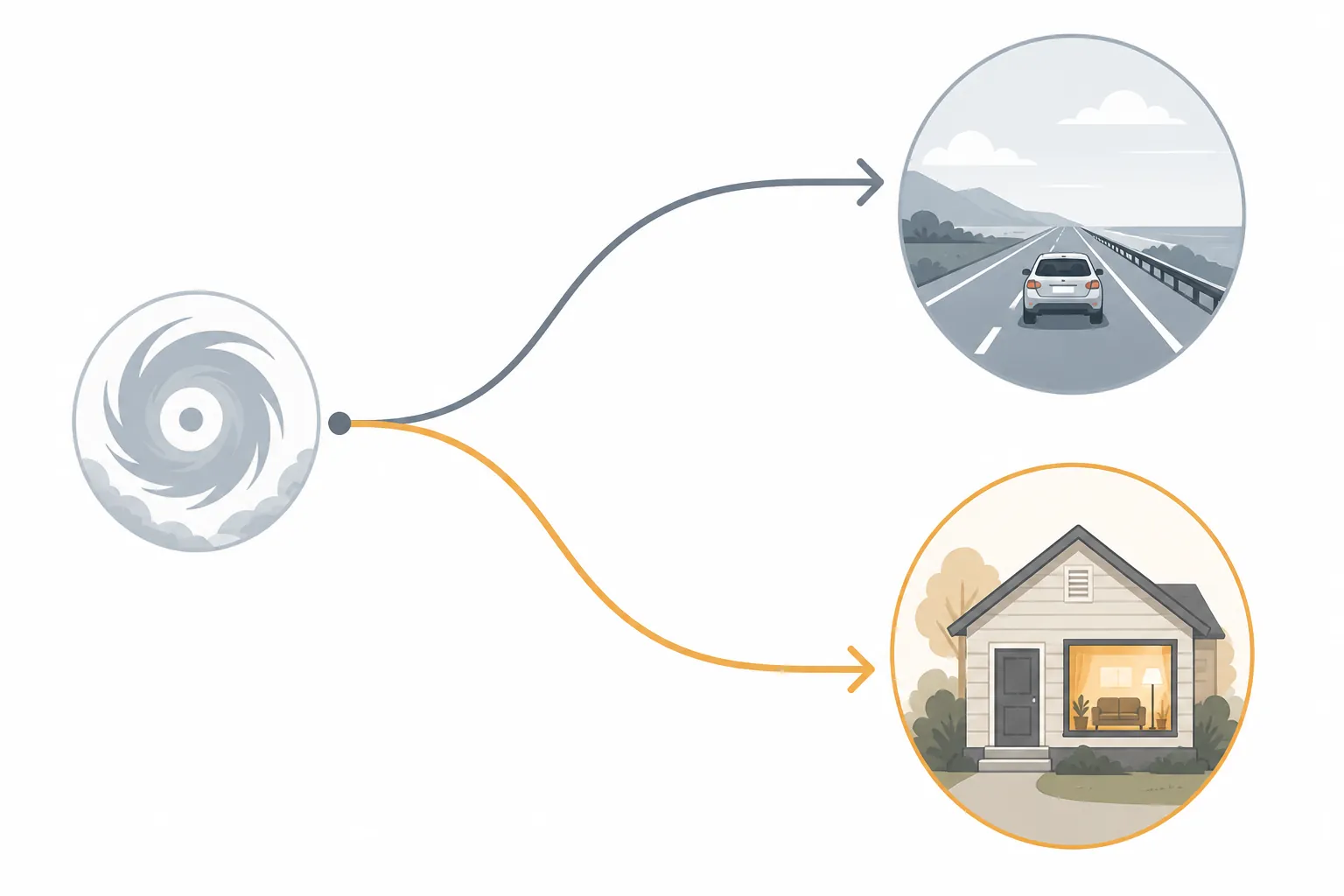
That 36-to-48-hour window is the difference between a plan and a rescue problem. Tornado planning is different because the clock can be measured in minutes; if you need that kind of plan, use a tornado warning checklist for seniors or a tornado safety plan. Hurricanes usually give more warning. Wasting that warning is a different mistake.
The stay-or-go rule: one trigger means leave
A useful hurricane plan for an older adult living alone should work like a decision tree, not a mood check. First Contact / 211 Tampa Bay Cares gives an eight-question stay-or-go framework for older adults and caregivers; translated into plain home planning, the rule is simple: if any one trigger is present, evacuation is the safer path to arrange in advance [2].
| Trigger to check before the storm | What it means for a senior living alone |
|---|---|
| The home is in an evacuation zone, flood zone, storm surge area, or under an evacuation order. | Leave. Do not wait to see whether the water actually reaches the street. |
| The home is a mobile home, manufactured home, RV, or other structure not suited for hurricane-force winds. | Leave for a sturdier location before roads and shelters become harder to use. |
| The older adult lives in a high-rise and depends on elevators. | Leave if power loss would trap them above ground level or block medical access. |
| Medical equipment, oxygen, refrigeration, or communication depends on electricity. | Leave unless there is a verified backup power plan that can last through the outage and aftermath. |
| The person cannot evacuate without help because of walking, balance, vision, stamina, memory, or driving limits. | Leave early with a named helper; do not wait until the helper has to travel through storm conditions. |
| The house itself may not withstand hurricane-force wind, roof damage, broken windows, or water intrusion. | Leave before the home becomes the hazard. |
| There is no reliable nearby person who can check in, unlock the door, drive, lift, or help after the storm. | Leave or relocate to a place where support is physically present. |
| There are fewer than seven days of food, water, medicine, hygiene supplies, batteries, and other essentials. | Leave. A short pantry is not a shelter-in-place plan. |
The adult child’s job is not to win a debate during the warning window. Their job is to help verify these triggers before the season or as soon as a storm is being watched: the evacuation zone, the county alert system, the transportation plan, the nearest realistic destination, the supply level, the medication and equipment needs, the special-needs registration status if applicable, and the name of the person close enough to physically help.
The triggers are not suggestions
Evacuation zones, flood zones, and official orders
If the address is in an evacuation zone, storm surge area, or flood-prone location, the decision should already lean toward leaving. If an evacuation order is issued, the decision is no longer open. The CDC’s instruction is plain: never ignore an evacuation order [1].
This matters especially for someone who says, “I’ll leave if it gets bad.” Flooded roads do not politely announce the last safe minute. Water that looks shallow can disable a route, and the CDC warning about six inches of moving water sweeping a car away is enough reason not to make the first drive after conditions deteriorate [1]. For more on the fall and vehicle hazards around floodwater, use a flash flood fall-prevention checklist before storm season, not during heavy rain.
Mobile homes, RVs, and homes that are not wind-ready
A familiar home is not automatically a safe shelter. Mobile homes, RVs, and fragile structures remove the margin for error that a person living alone needs. The question is not whether the person has stayed there through past storms. The question is whether this structure can protect one person who may have to manage broken glass, roof damage, water intrusion, blocked doors, darkness, and no immediate help.
If the honest answer is no, leaving is the plan. The destination does not have to be far away; a safer relative’s home, a hotel outside the risk area, or an approved shelter may be better than riding out wind in a structure that was never the right place for that storm.
High-rise living and elevator dependence
A high-rise can look secure from the outside and still become the wrong place for an older adult who cannot manage stairs. If the elevators stop, the person may not be able to leave, receive visitors, get to the lobby, reach emergency transport, or bring supplies up from a vehicle. That is not a small inconvenience when the person lives alone.
This trigger should be settled bluntly: if power loss makes the apartment functionally inaccessible, arrange evacuation before the building loses power. Do not count on a neighbor you have not asked, a maintenance worker who may not be there, or emergency responders who will have higher-risk calls once conditions worsen.
Power-dependent medical needs
Electric medical equipment changes the hurricane decision. Oxygen equipment, powered mobility devices, refrigerated medications, CPAP machines, communication devices, and other essential tools cannot be treated like ordinary household electronics. If the backup plan is “I hope the power comes back quickly,” the plan is not adequate for staying alone.
The person helping from another state should verify three things before the storm window: how long the equipment can run without household power, whether the older adult can operate the backup independently, and where they will go if the answer is not long enough. Florida readers should also check county instructions for the Florida Special Needs Registry before hurricane season. Readers elsewhere should look for the equivalent through county emergency management, public health, or the local Area Agency on Aging. Treat any registry as one part of the plan, not as proof that transportation, shelter space, or medical support is automatically solved.
Mobility limits that require help to leave
If an older adult needs help with stairs, transfers, a walker, a wheelchair, poor vision, poor balance, memory problems, fatigue, or driving, evacuation cannot wait until the warning feels urgent. The helper has to be available, sober, reachable, physically able to assist, and close enough to arrive before roads become risky.
Put a name on that job. “Someone will come” is not a plan. A useful plan says who calls, who drives, who carries the go-bag, who brings the walker or wheelchair, who has the key or lockbox code, and what happens if the first helper cannot come. For the full named-helper and rehearsal layer, use an emergency evacuation plan checklist for elderly parents.
No reliable nearby support
Living alone is not the same as being helpless. It does mean no one is in the kitchen to notice that the walker path is blocked, the phone battery is low, the porch is already slick, or the person is underestimating how hard the next move will be.
AARP’s disaster work identifies delayed evacuation and lack of evacuation support among recurring factors in older-adult storm deaths [3]. That does not mean every older adult living alone must leave for every storm. It does mean that “I’ll call someone if I need them” is too thin when the person cannot control whether cell service, roads, elevators, neighbors, or emergency services will still be available.
Fewer than seven days of supplies
The seven-day supply question is not a shopping-list challenge. It is a capacity test. If the older adult does not already have enough water, food, medication, hygiene items, batteries, lighting, phone-charging options, pet supplies if needed, and basic medical supplies to get through a long disruption, staying alone becomes a gamble.
Keep the kit work separate from the stay-or-go argument. Build the stay-home bin and go-bag using a senior emergency kit checklist, then use the seven-day threshold as a trigger. If the supplies are not there when the storm approaches, the plan is to leave.
If the answer is evacuate, make it a route
Evacuation is not just “getting out.” For an older adult living alone, it has to be a route with a first destination, a backup destination, transportation, timing, medications, mobility equipment, documents, chargers, and a person who knows when the older adult has arrived.
- Pick the destination before the storm: family, friend, hotel, shelter, or medical-support location.
- Confirm the ride: who drives, what vehicle is used, where the walker, cane, wheelchair, oxygen, pet carrier, or medication bag goes.
- Set the leaving trigger: hurricane watch, county evacuation notice, loss of helper availability, forecast track change, or another pre-agreed condition.
- Share the route and check-in time with at least two people, including the distant adult child if there is one.
- Keep the go-bag reachable, not buried in a closet behind storm shutters, storage bins, or holiday decorations.
The person living alone should not be asked to solve all of this while local news is showing landfall graphics and shelters are filling. Use the earlier hurricane-prep window for the longer work: shutters, documents, medication refills, fall hazards, food, water, batteries, and communication plans. The broader phase-by-phase work belongs in a hurricane safety checklist for seniors or a hurricane preparedness checklist for elderly adults living alone. This article’s job is narrower: decide which path the person is on.
When staying home is defensible
Sheltering in place is defensible only after every evacuation trigger has been cleared. The address is not under an evacuation order. The home is outside the relevant evacuation or flood risk area. The structure is suitable for the expected conditions. The older adult can function without elevators. Medical and communication needs are covered through the outage period. Mobility limits do not block movement inside the home. Nearby support is real, reachable, and willing. Supplies are already in place.
If any of those sentences is not true, do not relabel staying as independence. It is an unsupported risk.
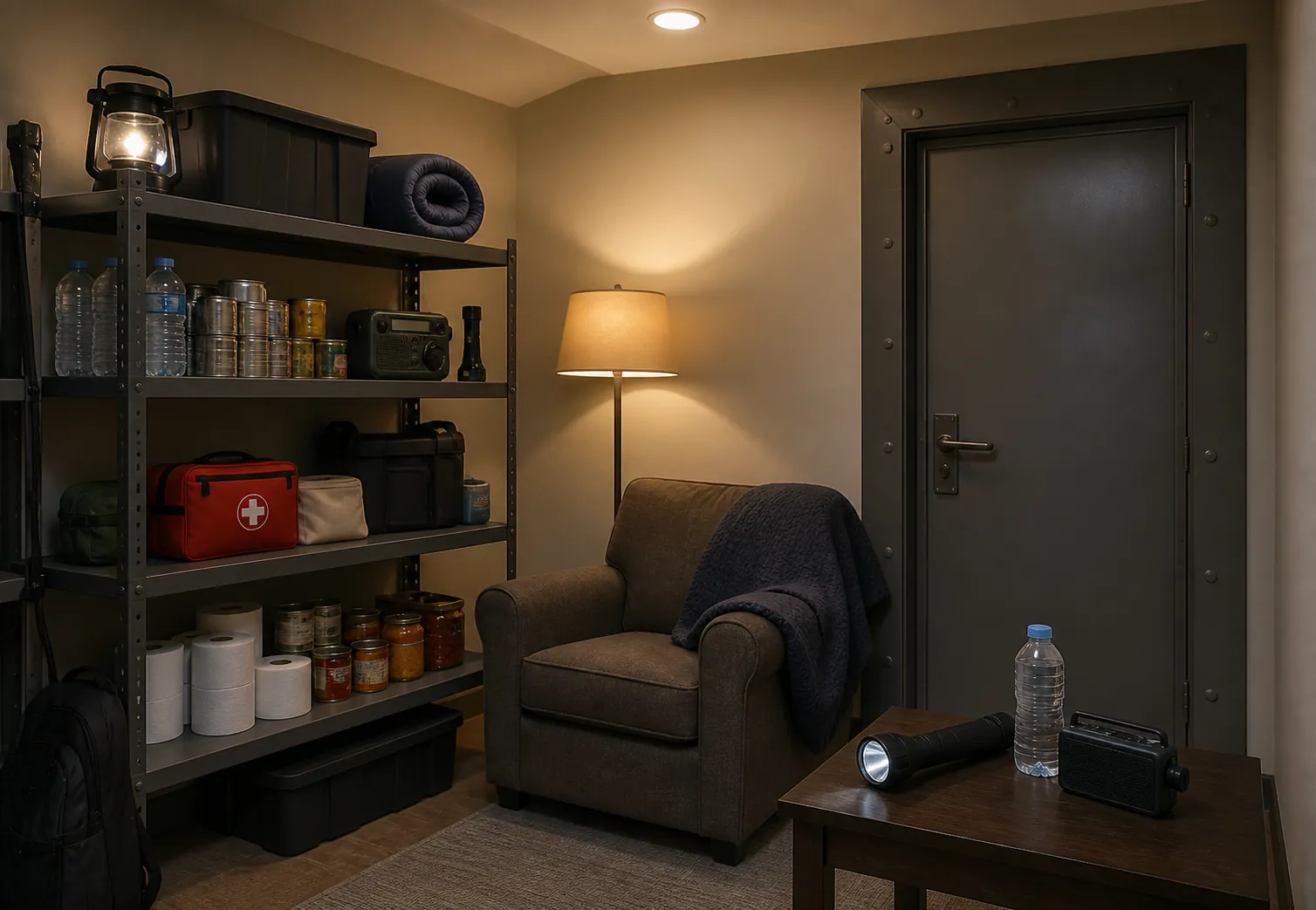
When staying does pass the test, choose the safe room before the storm. It should be an interior room with few or no windows, enough space for the person’s mobility device, a sturdy chair or safe resting place, and supplies within arm’s reach. A bathroom, hallway, closet, or interior bedroom may work depending on the home. A beautiful room with large windows does not become safe because it is comfortable.
- Move the flashlight, radio, phone charger, water, snacks, medication, glasses, hearing-aid supplies, medical instructions, and emergency contacts into or beside the safe room before wind conditions worsen.
- Keep the cane, walker, wheelchair, commode supplies, or transfer aids where they can be reached without crossing a dark or wet room.
- Charge phones and backup batteries early, then conserve them.
- Set check-in times with a nearby person and a distant family member.
- Stay in the chosen safe area until officials give the all-clear, not just until the noise fades.
Do not let the safe-room plan sprawl into ten separate chores during the warning window. The supply details should already be handled through the emergency kit. The fall hazards should already be cleared. The phone numbers should already be written down. Once the storm is close, the safe room’s purpose is simple: keep the older adult away from glass, exterior walls, unnecessary walking, and avoidable decisions.
The after-storm period is part of the stay-or-go decision
A person who can tolerate the storm itself may still be in trouble afterward. Power may be out. Air conditioning may be gone. Floors may be wet. Refrigerated medication may be compromised. Carbon monoxide risks may rise when people use generators or grills incorrectly. A porch step that was easy yesterday may be slick, broken, or covered with debris.
That is why “I can ride it out” is the wrong full question. The better question is: can this person safely get through the storm and the first days after it without improvising help? Use an after-storm home safety checklist for seniors for re-entry, falls, food safety, generator hazards, and when to call for help. If heat is likely after the storm, pair it with an extreme heat safety plan for seniors living alone.
What the distant family member should verify now
An adult child two states away cannot carry a walker down dark stairs or drive through flooded intersections. They can, however, make the stay-or-go rule harder to dodge before the storm is personal.
- Look up the exact address in the county evacuation and flood-risk tools.
- Ask whether the home is a mobile home, RV, high-rise, or otherwise dependent on elevators or fragile access points.
- Write down all power-dependent medical needs and the realistic backup duration.
- Confirm whether the older adult can leave without hands-on help.
- Name the nearby helper and backup helper; get phone numbers, addresses, and key access.
- Check whether special-needs transportation, registry, or shelter steps must be completed through the county before hurricane season.
- Verify seven days of supplies with a video call if needed; do not accept “I probably have enough” as an inventory.
- Agree on the exact trigger that ends the discussion and starts the evacuation plan.
Florida readers can use the First Contact / 211 Tampa Bay Cares framework as a local example, and they should also follow their own county’s emergency management instructions. Outside Florida, the same logic still applies, but the tools will be local: county emergency management, state emergency agencies, public health departments, and the Area Agency on Aging are the places to confirm zones, transportation, registries, and shelter rules.
If any trigger is present, I leave. If no trigger is present, I stay only in this safe room, with these supplies, these check-ins, and this all-clear rule. Living alone narrows the margin for error because no one else is in the home to catch a bad call once the elevator is down, the street is flooding, the lights are out, and the phone battery is fading.
References
Related reading
Noticed something outdated or inaccurate on this page? Flag a correction. We review every report against CDC, NIA, and AARP HomeFit guidance before updating a page.
Part of the Fall Prevention section.