
Lower Your AC Bill on a Fixed Income With These Programs
Learn how seniors on fixed incomes can combine LIHEAP, weatherization assistance, utility discounts, and local crisis funds to reduce summer cooling costs by hundreds of dollars.
A summer electric bill can turn ugly fast when the air conditioner has to run every afternoon. For a senior on Social Security or a small pension, the question is not whether to be careful with electricity. Most people in that situation are already careful. The question is how to lower an AC bill for a senior on a fixed income when trimming a few hours of use still leaves a balance that cannot fit beside groceries, prescriptions, rent, and insurance.
That pressure is expected to be worse in 2026. AARP, citing National Energy Assistance Directors Association data, reported that the average summer cooling bill for June through September 2026 is projected to reach $778, up 8.5% from 2025.[1] A separate 2024 study summarized by the University of Maryland found that U.S. seniors age 60 and older carry a 12.7% energy cost burden, rising to 16.9% among the lowest-income seniors.[2] Those numbers describe the kitchen-table problem plainly: the bill is not high because someone forgot to turn off a lamp. It is high because energy costs are taking a large bite out of income that often cannot stretch any farther.
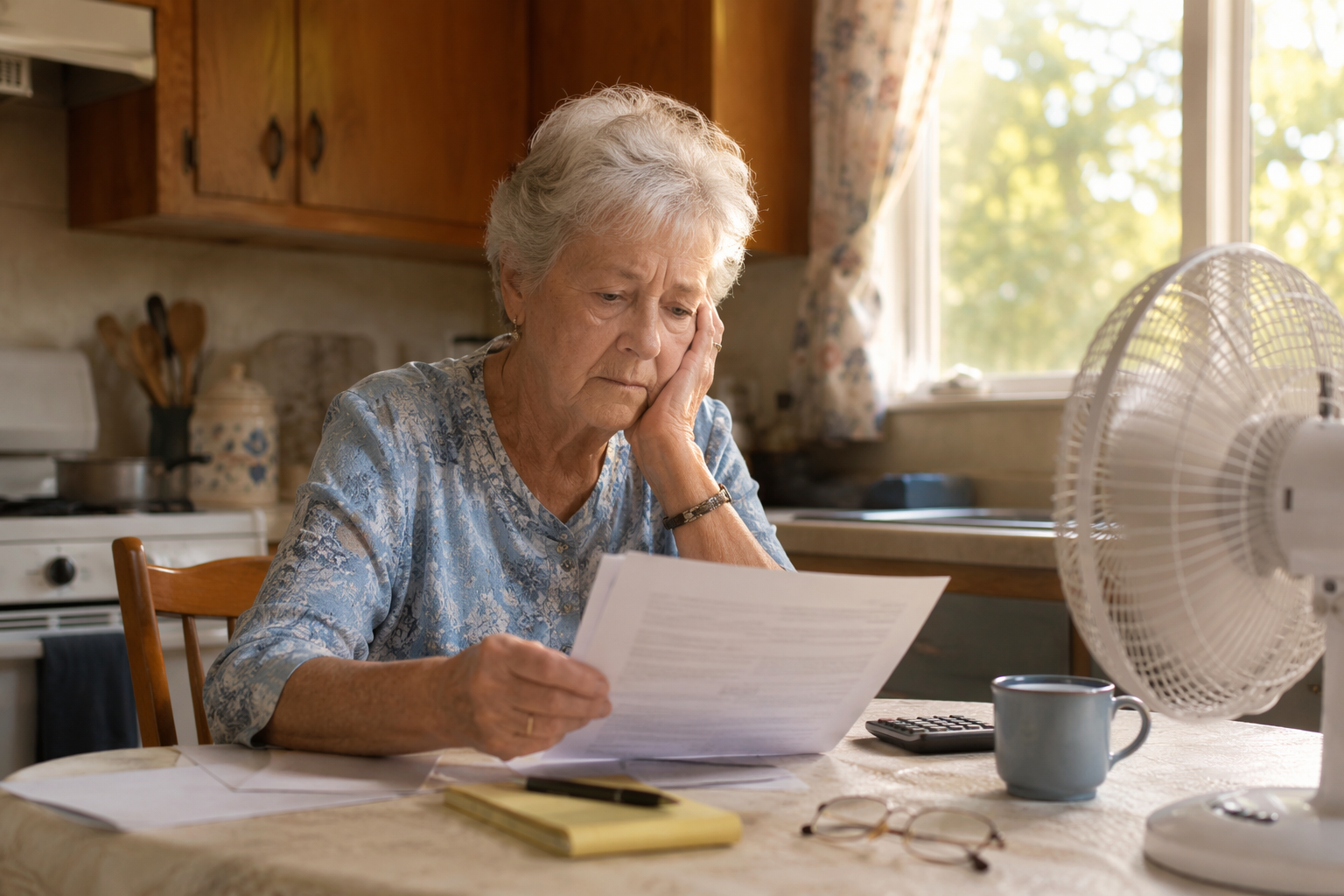
AARP has also reported that 1 in 4 adults age 50 and older found their most recent energy bill unaffordable.[3] That is the point where a household needs more than advice about closing blinds. It needs a stack of help: one program for the bill in front of you, another for the house that keeps leaking cool air, and local or utility programs to catch what the federal help does not cover.
Start With A Stack, Not One Application
Many families stop after hearing about LIHEAP. That is understandable; it is the best-known energy assistance program. But one credit on one bill may not carry a person through a long hot summer. The stronger approach is to check programs in layers, because each one solves a different part of the problem.
| Layer to check | What it may help with | What to ask |
|---|---|---|
| LIHEAP | Immediate help with a cooling or electric bill | Is cooling assistance open, what documents are required, and can the benefit be sent to the utility? |
| Weatherization Assistance Program | Free home upgrades that can lower future energy use | Can the home be assessed for insulation, air sealing, HVAC repair, or related work? |
| Utility programs | Discounts, budget billing, payment plans, medical baseline rules, or shutoff protections | Do you have a senior, low-income, disability, medical, or arrears program, and can it be combined with LIHEAP? |
| State cooling or AC programs | Air conditioner repair, replacement, or added cooling aid in some states | Is there a summer cooling, crisis, or air-conditioner program separate from regular LIHEAP? |
| Local crisis help | Small grants or emergency payments from nonprofits, faith groups, aging offices, or community action agencies | Is funding available before a shutoff notice, and how long does processing take? |
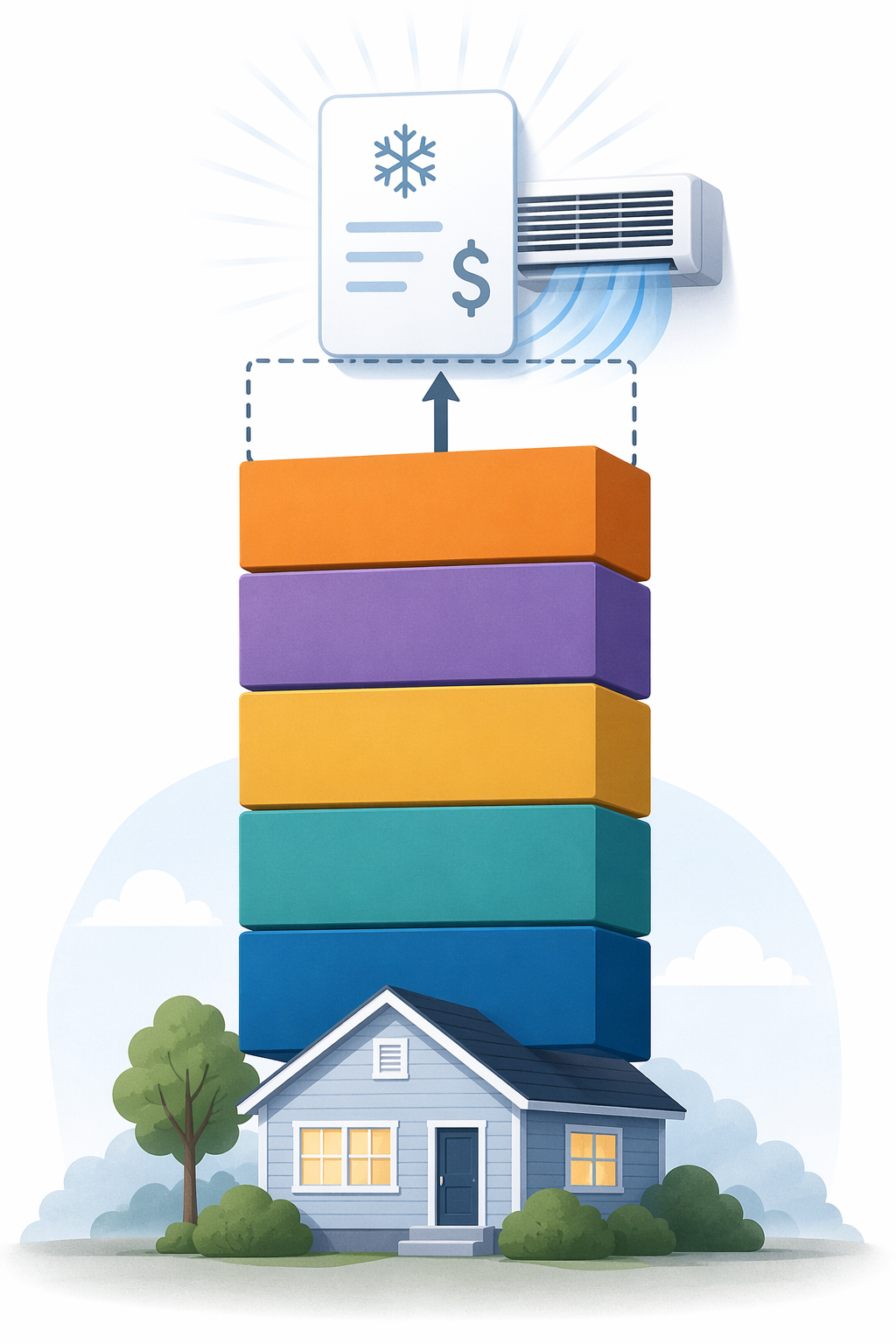
Use LIHEAP For The Bill That Is Due Now
The Low Income Home Energy Assistance Program, usually called LIHEAP, is the first place to check when the electric bill is already too high. LIHEAP can help eligible households with home energy costs, and NCOA reports an average cooling benefit of $656 per household.[4] The federal Administration for Children and Families lists LIHEAP funding for fiscal year 2026 at approximately $4.1 billion.[5]
Those figures are useful, but they are not a promise that every applicant receives $656 or receives help at all. LIHEAP is run through states, territories, and tribes. Income rules, application dates, benefit amounts, cooling-season rules, and crisis assistance rules vary. Funding can also run out before every eligible household is served.
When calling or applying, ask specific questions instead of only asking, “Do I qualify?” A better call sounds like this: “I am a senior on a fixed income, my summer electric bill is unaffordable, and I need to know whether cooling assistance or crisis assistance is open. What documents do you need, and can the payment go directly to my utility account?”
- Ask whether regular LIHEAP, cooling assistance, and crisis assistance are separate applications or the same form.
- Ask whether a shutoff notice is required for emergency help, or whether a past-due bill is enough.
- Ask whether the agency can fax, upload, or send proof directly to the utility to pause collections while the case is reviewed.
- Ask whether the household should also apply for weatherization at the same office.
For adult children helping after work, the practical part matters. Before starting, gather the senior’s utility account number, recent bill, proof of income, Social Security or pension statements, photo ID if available, lease or mortgage information if requested, and any shutoff or past-due notice. If the utility bill is in a deceased spouse’s name or an adult child’s name, ask the agency how it wants that documented before submitting the application.
Add Weatherization So Next Summer Is Not The Same Fight
LIHEAP may help with the bill. The Weatherization Assistance Program, or WAP, looks at why the home keeps needing so much heating or cooling in the first place. The program provides free energy-efficiency upgrades for eligible households, and older adults are among the priority populations described in program guidance. NCOA and USA.gov describe weatherization help as including work such as insulation, air sealing, heating and cooling system improvements, or related energy-saving repairs, depending on the home and local program rules.[6][7]
NCOA reports that weatherization saves participating households an average of more than $372 per year.[6] That is not instant relief like a bill credit, and it may involve a waiting list, an energy audit, landlord permission for renters, and contractor scheduling. Still, it is one of the few programs that can keep helping after the current bill is paid.
This is where many households leave money on the table. A senior may apply for LIHEAP at a community action agency, get one benefit, and never be told that the same local network may also connect them to weatherization. It is worth asking directly: “Can I be referred for Weatherization Assistance too?” If the person taking the LIHEAP application says that office does not handle it, ask for the county or state weatherization contact rather than ending the call.
Weatherization is especially important when the home itself is working against the resident: a poorly sealed attic, an old window unit, a duct problem, or a cooling system that runs constantly without keeping the rooms safe. The program will not remodel a home, and not every repair qualifies. But when it does fit, it can be the difference between paying the same painful cooling bill every summer and gradually lowering the amount of electricity needed to stay comfortable.
Check The Utility Company, But Do Not Stop At “Call Your Utility”
Utility companies may offer discounts, budget billing, arrears management, payment extensions, medical baseline allowances, or shutoff protections. The problem is that these programs are not the same everywhere, and many are not automatic. A person can qualify by income, age, disability, medical need, or participation in another benefit program and still miss the discount if nobody files the right form.
California’s CARE program is a good example of a real, documented utility discount, not a national rule. NCOA states that California Alternate Rates for Energy provides eligible low-income households a 30% to 35% discount on electric bills.[8] That does not mean a senior in Ohio, Georgia, or Arizona has the same program. It means the local utility may have something similar enough to be worth checking carefully.
- “Do you have a low-income discount, senior discount, or discount for customers already approved for SNAP, Medicaid, SSI, or LIHEAP?”
- “Do you offer budget billing, and will it help with summer spikes or only spread costs across the year?”
- “Is there an arrears forgiveness or payment-match program if part of the balance is already past due?”
- “Are there medical baseline, life-support, or temperature-related protections if a doctor says cooling is medically necessary?”
- “If LIHEAP is pending, can you place a hold on shutoff or collections while the agency processes the benefit?”
Budget billing deserves one extra caution. It can make the summer bill easier to predict, but it is not the same as a discount. Ask how often the utility recalculates the monthly amount, whether a catch-up balance can appear later, and whether joining budget billing affects eligibility for hardship plans.
Look For State Cooling Aid And Air-Conditioner Help
Some states and local agencies offer cooling assistance beyond a standard energy bill payment. Depending on the location and the year, help may involve a window air conditioner, repair of an unsafe cooling unit, a crisis payment during extreme heat, or a referral through the same agency that handles LIHEAP. NCOA’s cooling assistance guidance describes LIHEAP, weatherization, utility discounts, and state or local cooling-related programs as separate resources households may need to check in combination.[6]
The important word is “may.” These programs can be narrow. They may require age, disability, income, medical documentation, a specific season, or a broken cooling unit. They may also close when funds are spent. That is why a person calling the local LIHEAP office should ask, “Is there any separate cooling, fan, air-conditioner, or heat emergency program in this county?”
This is also where renters should ask one more question: “If the landlord owns the air conditioner or the home needs repairs, what can I still apply for?” Weatherization and equipment programs often have different rules for renters than homeowners. A landlord may have to sign permission forms before work can be done.
Use Local Crisis Resources Before The Notice Turns Red
Local help is usually smaller and messier than a federal program, but it can matter when the household is short by a specific amount. County aging offices, community action agencies, churches, Salvation Army-type funds, disease-specific charities, veterans groups, and local nonprofits may have emergency utility money or know who does. The hard part is that these funds often open and close without much warning.
Three directories are worth using when nobody knows where to start. USA.gov points people to official help for energy bills, including LIHEAP and weatherization contacts.[7] The Eldercare Locator can connect older adults and caregivers with local aging services by phone at 1-800-677-1116. BenefitsCheckUp.org, run by NCOA, can help screen for benefit programs that may fit an older adult’s situation.[4]
Calling 211 is also worthwhile in many communities. Ask for “utility assistance,” “electric bill crisis help,” “senior cooling assistance,” and “weatherization.” If the first referral is out of funds, ask for the next two places to try. Keep a simple call log with the date, agency name, person spoken to, documents requested, and next deadline. That little paper trail can save a tired family from starting over every time a new office answers the phone.
Small Energy-Saving Moves Still Help, But They Are The Backup Plan
There is nothing wrong with practical conservation. AARP’s summer electric bill guidance includes everyday steps such as using Energy Star guidance on smart thermostats, switching to LED bulbs, and washing laundry in cold water.[1] Energy Star says a smart thermostat that earns its certification saves users about 8% on heating and cooling bills on average.[9]
Those steps are worth doing when they are safe and affordable. They are not a substitute for assistance when the bill is already unpayable. A senior with heart disease, breathing problems, diabetes, mobility limits, or medications affected by heat should not be told to simply endure a hotter apartment. Safe cooling is part of staying steady at home, avoiding exhaustion, and preventing the kind of weakness or dizziness that can lead to a fall.
Use the easy savings moves to reduce waste, then keep pursuing the benefit stack. Close curtains in the hottest rooms, replace bulbs as they burn out, wash in cold water if possible, and set the thermostat as high as the resident can safely tolerate. But if the account is past due, the stronger action is still to apply for bill help, ask for weatherization, check the utility discount, and look for local crisis money.
What To Have Ready Before You Apply Or Call
Applications move faster when the same basic packet is ready. The exact documents vary by state and program, so do not mail originals unless an agency specifically requires it. Make copies or take clear photos when online upload is allowed.
- Recent electric or utility bill with account number and service address
- Proof of income, such as Social Security, SSI, pension, wages, or benefit award letters
- Photo ID or other identity document, if required
- Proof of household members, such as benefit letters, lease information, or other requested records
- Shutoff notice, past-due notice, or payment arrangement letter, if there is one
- Doctor’s note if cooling is medically necessary and the utility has a medical program
If an adult child is helping, ask the agency whether it needs a signed release before discussing the account. Some offices can answer general eligibility questions without one but cannot discuss a pending application. That is frustrating, but it is better to know before spending a lunch break on hold.
The Order To Try This Week
- Call the local LIHEAP office or use the state LIHEAP lookup to ask whether cooling or crisis assistance is open.
- Ask the same office for a Weatherization Assistance Program referral, even if the LIHEAP application is still pending.
- Call the utility and ask for every income-based, senior, medical, budget billing, payment-match, and shutoff-protection option.
- Search for state or county cooling programs, including air-conditioner repair or replacement help if the unit is unsafe or broken.
- Call 211, the Eldercare Locator, and local nonprofits for crisis funds if the bill is past due or the shutoff date is approaching.
Not every senior will qualify for every program, and not every community has the same utility discount or crisis fund. Still, checking the programs in combination gives a household more chances than one application ever could. The goal is practical: turn one unaffordable summer AC bill into several possible sources of relief, then make the home less expensive to cool before the next heat wave arrives.
References
- 10 Ways to Spend Less on Summer Electric Bills, AARP
- Study: Seniors Have Big Energy Bills, Little Ability to Reduce Them, University of Maryland
- Older Adults Make Tradeoffs to Afford Utilities, AARP
- Energy Assistance Programs for Older Adults, National Council on Aging
- Low Income Home Energy Assistance Program (LIHEAP), Administration for Children and Families
- Cooling Assistance Programs That Can Help You Pay for Air Conditioners and More, National Council on Aging
- Get help with energy bills, USA.gov
- How to Get Help Paying for an Air Conditioner Unit, National Council on Aging
- Smart Thermostat FAQ, ENERGY STAR
Related reading
Noticed something outdated or inaccurate on this page? Flag a correction. We review every report against CDC, NIA, and AARP HomeFit guidance before updating a page.
Part of the Fall Prevention section.