
STEADI: intervene
Measles Outbreak Precautions for Elderly and Their Caregivers
Adult-child caregivers can take concrete steps now to protect an elderly parent from measles during the 2026 outbreak — verifying immunity by birth year, consulting a provider about missing records, assembling a home isolation kit, and understanding the critical 72-hour post-exposure window before a crisis hits.
Last verified: July 25, 2026. This article is a planning aid for caregivers, not a substitute for medical advice. Because measles guidance and local outbreak instructions can change quickly, use it to get organized before you call your parent’s healthcare provider or local health department.
If you are caring for an older parent during the 2026 measles outbreak, the useful question is not “Should I worry?” It is “What can I find, write down, and decide this week, before anyone is exposed?”
The reason to do that work now is practical. CDC outbreak data show 4,549 U.S. measles cases since January 2025, including 2,260 cases in 2026 as of July 16, with 34 new outbreaks reported in 2026; 93% of cases were in people who were unvaccinated or whose vaccination status was unknown.[1] Adults are not automatically spared from serious illness: CDC says complications are more common in adults older than 20 than in children, and pneumonia and encephalitis are among the documented risks; about 1 in 5 unvaccinated people who get measles are hospitalized.[2]
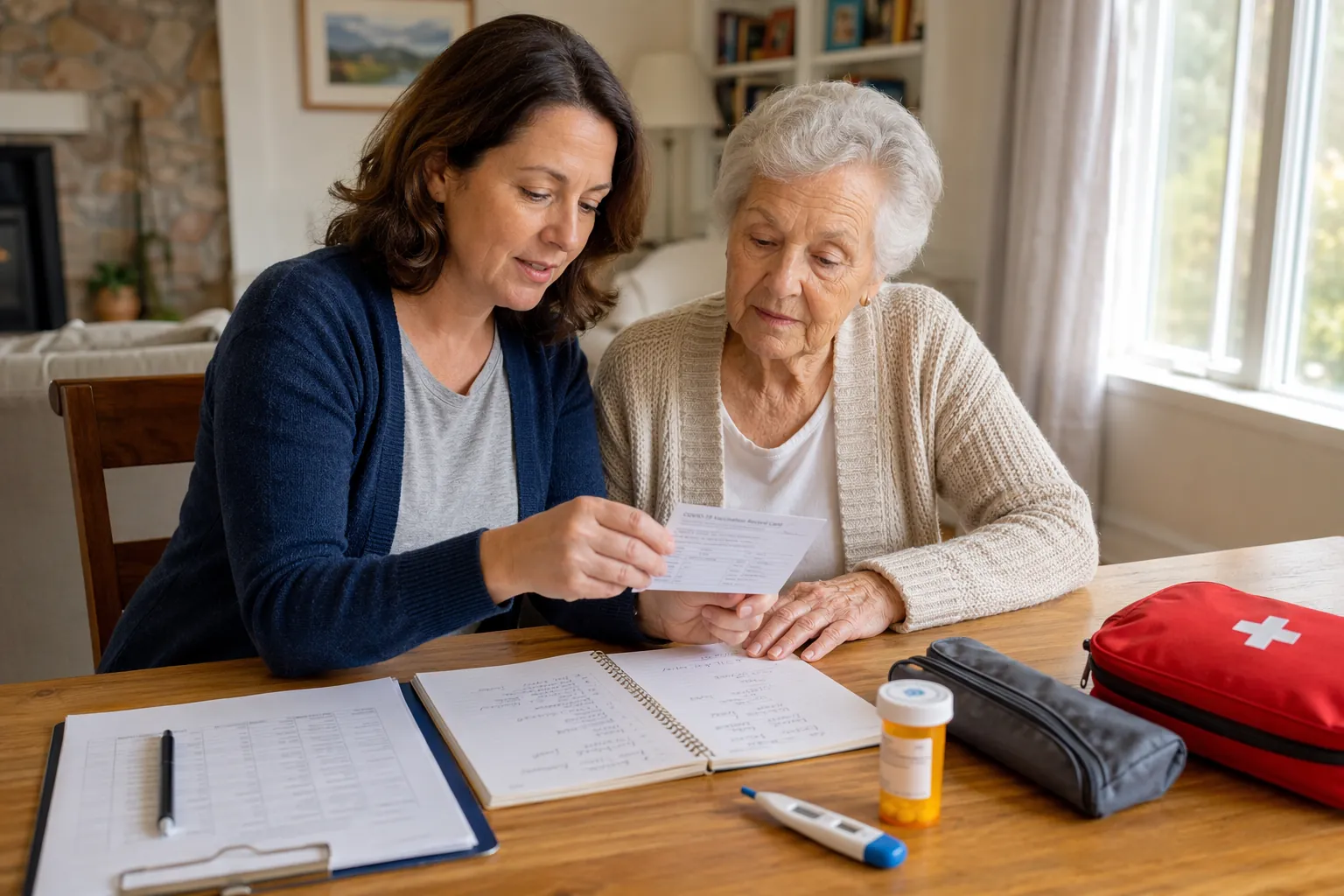
That does not mean turning the house into a clinic. It means having the vaccine record, medication list, phone numbers, and a short call plan ready before the family group text is full of guesses.
The Caregiver Checklist for This Week
- Find your parent’s vaccine record, if it exists, and note their birth year.
- Write down the primary care office number, after-hours number, pharmacy number, and local health department contact.
- Ask the provider what to do if records are missing, especially for parents born from 1957 through 1968.
- Set aside a simple home isolation kit: thermometer, current medication list, masks if advised, laundry and cleaning basics, and a plan for meals and a separate room if illness is suspected.
- Put the post-exposure clock where caregivers can see it: MMR within 72 hours may help; immune globulin within 6 days may matter for some high-risk people.
- Agree now that nobody takes a possibly exposed or symptomatic parent into a waiting room without calling first.
Those steps look ordinary on paper. They are much harder to do calmly after a possible exposure, especially if one sibling has the insurance card, another has the medication list, and nobody knows whether the old shot record in the drawer is complete.
Start With Birth Year and Records
For older adults, measles immunity is not as simple as “vaccinated or not.” Birth year matters because some older adults were likely exposed before the vaccine era, while others may have been vaccinated during a period when the vaccine history was more complicated.
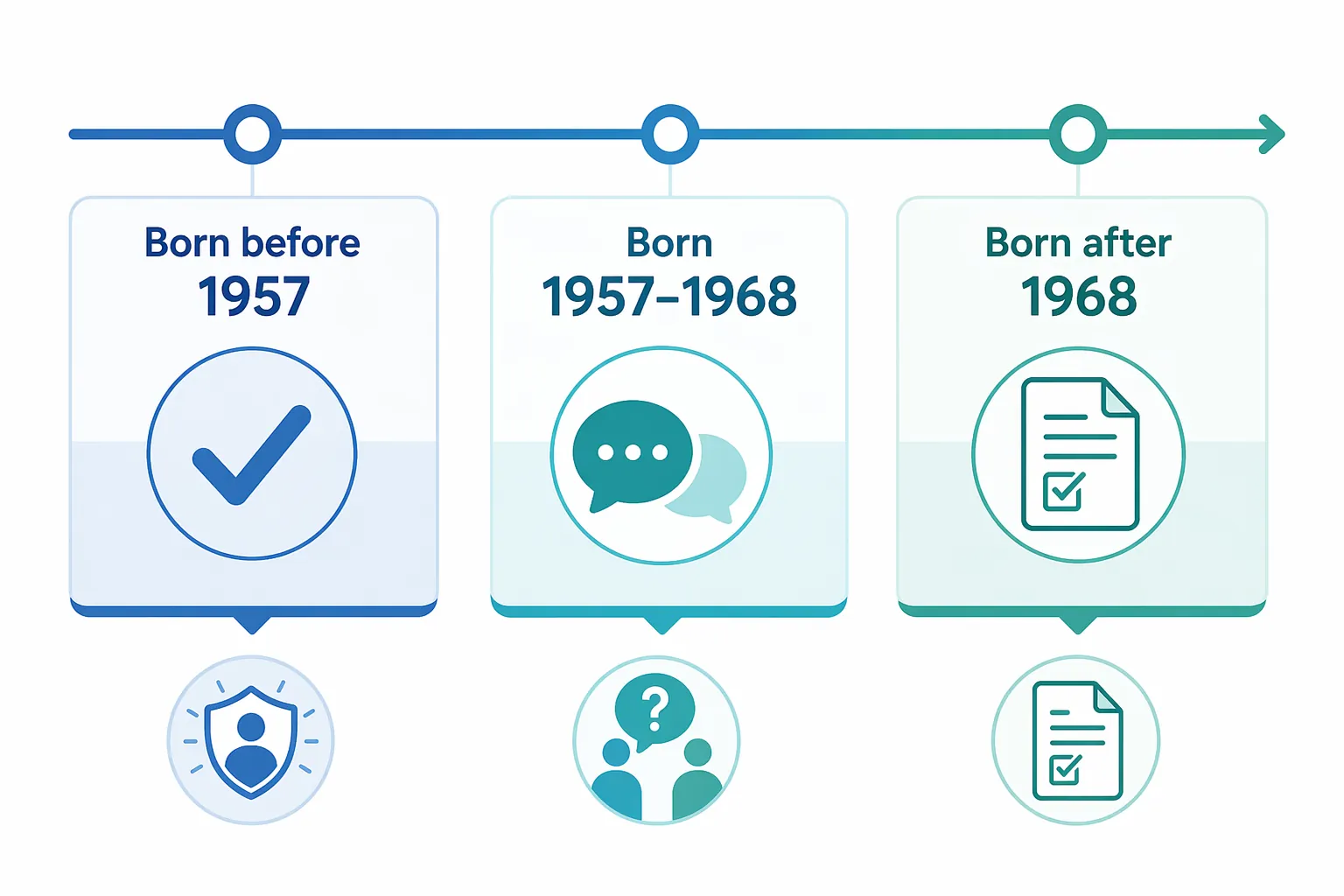
| Parent’s birth year | What it usually means | What to do now |
|---|---|---|
| Before 1957 | CDC guidance generally presumes natural immunity because measles was nearly universal before vaccination.[3] | Write the birth year in your notes. Ask the provider if your parent has special medical circumstances that change the plan. |
| 1957-1968 | Some people in this era may have received the older inactivated, or killed, measles vaccine, which was not effective; fewer than 1 million people received it, but affected individuals are advised to receive at least 1 dose of live attenuated MMR.[3][4] | Do not guess from memory. Ask the provider whether records, lab evidence, or an MMR dose makes sense. |
| After 1968 | CDC says adults born in 1957 or later should have documentation of at least 1 MMR dose or other acceptable evidence of immunity.[3] | Look for a written MMR record. If it is missing, ask the provider what proof or next step is appropriate. |
The record you are looking for may be an immunization card, a state vaccine registry entry, an old school or employment form, a military or immigration medical record, or documentation in the primary care chart. If your parent has moved, changed doctors, or outlived the clinic that gave the vaccine, missing paperwork is common enough that it should be treated as a solvable logistics problem, not a family failure.
One useful reassurance belongs here, but it should not replace a provider conversation: CDC says one MMR dose is 93% effective and two doses are 97% effective against measles.[3] CDC also states that receiving MMR when a person is already immune is not harmful.[3] That can make a missing-record conversation less tense, but it still does not turn a caregiver into the prescriber.
Questions to Ask the Provider
- Based on my parent’s birth year and records, do they have acceptable evidence of measles immunity?
- If records are missing, should we look for lab evidence, receive an MMR dose, or do something else?
- Are there medical reasons my parent should not receive MMR, such as immune system issues or other contraindications?
- If there is a local exposure, should we call your office, the health department, or both?
- If vaccination is recommended, should we use the office, pharmacy, or public health clinic?
If cost or coverage is a concern, ask the pharmacy or the insurance plan before the appointment. MMR is often handled through Medicare Part D rather than regular medical benefits, but coverage can vary by plan and location, so it is safer to verify than to promise an older parent that it will be covered.
Prepare for Isolation Without Overbuilding It
Measles spreads through the air, and CDC infection-control guidance says the virus can remain infectious in the air for up to 2 hours after an infected person leaves an area.[5] That one detail changes the household plan. A quick errand, a shared waiting room, or “just stopping by” is not harmless if someone may have measles symptoms or a known exposure.
A home kit does not need to be fancy. It needs to prevent the first hour of confusion.
- A working thermometer and a place to record temperature, symptoms, and dates.
- A current medication list, including prescriptions, over-the-counter medicines, supplements, allergies, pharmacy, and prescriber names.
- Masks or respirators if advised by a clinician or public health authority, especially for anyone who must enter the room.
- Basic cleaning and laundry supplies, plus a trash bag setup that does not require repeated trips through shared space.
- A meal and hydration plan that lets the parent stay in one room if illness is suspected.
- A phone list taped inside a cabinet or saved in the family group chat: primary care, after-hours nurse line, pharmacy, local health department, nearby urgent care, and emergency contact.
For many families, the hard part is not owning a thermometer. It is deciding ahead of time who brings food to the door, who calls the doctor, who stays away because they are unprotected, and who can sit on hold without losing the thread.
Know the 72-Hour Clock Before You Need It
The post-exposure window is the part I would put on the refrigerator. CDC guidance says MMR vaccine given within 72 hours after measles exposure may provide protection or result in milder illness.[3] CDC infection-control guidance also notes that immune globulin given within 6 days of exposure may be used for high-risk people.[5]
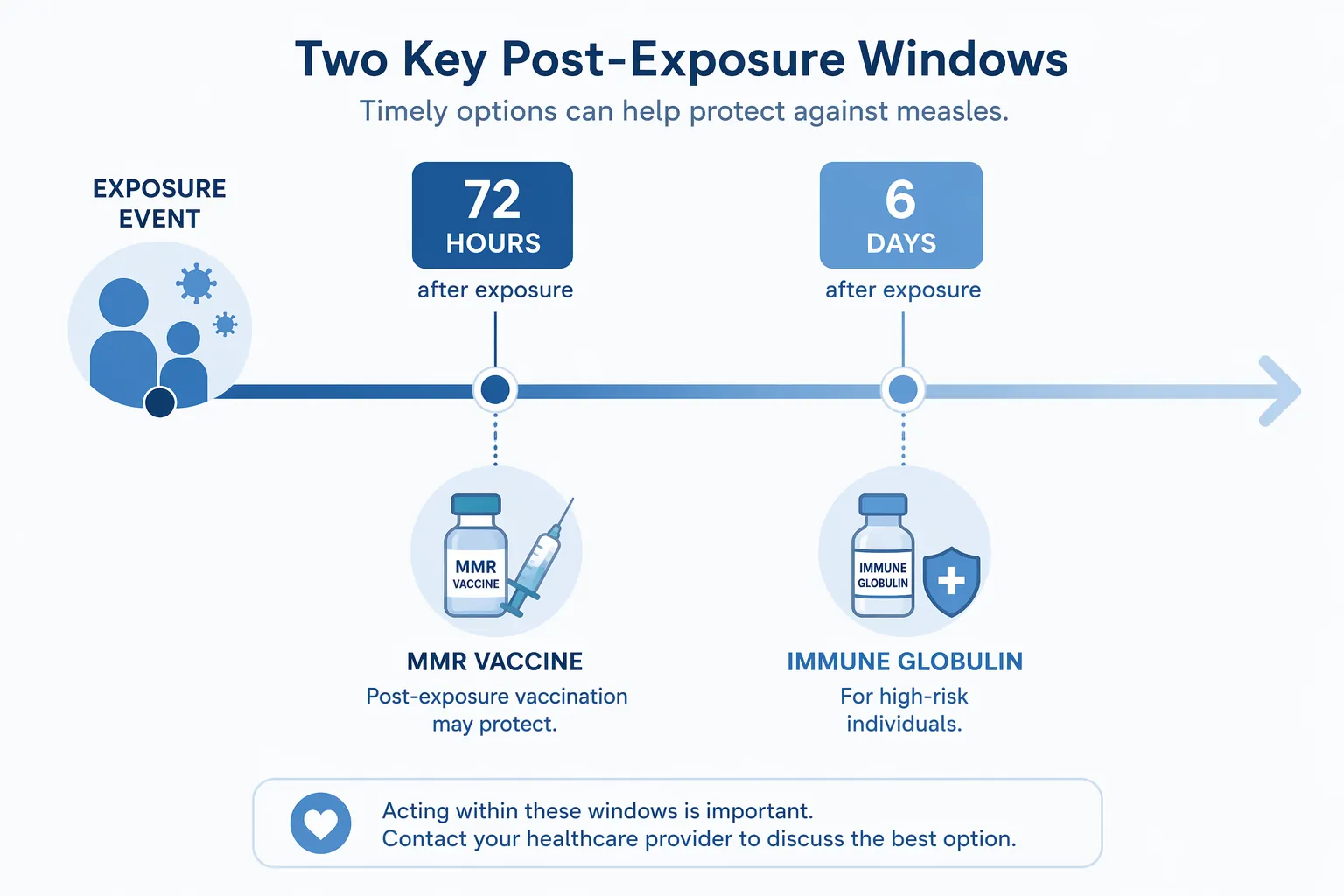
That does not mean every older adult should rush for the same intervention after every possible exposure. It means the call has a clock attached to it. If your parent may have been exposed, the first task is to contact the provider or health department promptly with the facts they need to advise you.
| If this happens | Do this first | Have this information ready |
|---|---|---|
| Your parent was in the same room, clinic, church, event, home, or vehicle as someone later identified as having measles | Call the provider or local health department before going anywhere | Date, time, location, duration, symptoms if any, birth year, MMR record, immune-system conditions, pregnancy in household contacts, and contact information |
| Your parent has fever, cough, runny nose, red eyes, or rash after a possible exposure | Call ahead before entering a clinic, urgent care, emergency department, pharmacy, or lab | Symptom start dates, rash start date if present, exposure details, medications, allergies, and whether anyone at home is unvaccinated or immunocompromised |
| The family cannot find vaccine records | Ask what counts as acceptable evidence of immunity and whether MMR or testing is appropriate | Birth year, past doctor names if known, prior schools or employers if records may exist, and any reasons vaccines might be unsafe |
The reason to call before arriving is not politeness. It gives the clinic time to route your parent safely, protect other patients, and decide whether the health department should be involved. With an airborne virus that can linger, walking into a shared waiting room can create a problem for people who had no idea they were part of the day’s risk.
Make the Family Script Boring and Clear
A calm script matters because measles conversations can get tangled quickly: old records, childhood memories, vaccine opinions, insurance worries, and fear about symptoms all arrive at once. The script should keep the call focused.
Hi, I’m calling about my parent, who is [age] and was born in [year]. We are trying to confirm measles immunity during the current outbreak.

We have: [MMR record / no record / uncertain record].

There has been: [no known exposure / possible exposure on date and location / symptoms starting on date].

My parent’s major medical issues include: [immune system issues, cancer treatment, transplant history, steroid use, pregnancy exposure in household if relevant, or none known].

What should we do next, and should we avoid coming into the office unless instructed?
That script is not medical decision-making. It is the difference between “Mom might need something” and a call that lets a nurse or public health worker triage the situation.
If several relatives help, assign the roles now. One person keeps the records. One person calls the provider. One person handles pharmacy and insurance questions. One person checks on meals, transportation, and whether anyone else in the household may be unprotected. Older adults who manage their own care can use the same division by asking an adult child, neighbor, or trusted friend to be the backup caller if they become ill.
What Not to Guess
Some guesses are harmless; these are not. Do not assume a parent is immune just because they “probably had all their shots.” Do not assume a pre-1957 birth year settles the matter if your parent has unusual medical circumstances. Do not assume a mild cough means measles, and do not assume the absence of rash means there is no issue if public health has identified an exposure.
Also do not wait until symptoms appear to look for documents. Measles can spread before families have fully understood what happened, and the 72-hour MMR window after exposure is short enough that a missing immunization card can become a real obstacle.
The One-Page Note to Leave on the Refrigerator
A useful measles plan for an older parent can fit on one page:
- Parent’s full name, date of birth, and birth-year immunity category.
- MMR record status: documented, missing, uncertain, or provider reviewed.
- Primary care number, after-hours number, pharmacy, and local health department.
- Current medications, allergies, and major medical conditions.
- Exposure plan: call before going to any clinic; ask about the 72-hour MMR window and 6-day immune globulin window if exposure is confirmed.
- Household plan: separate room if illness is suspected, meals at the door, and no visitors until professional guidance says it is safe.
This is the same kind of planning families already do for storms, medication recalls, and fall hazards: reduce the number of decisions that have to be made while someone is frightened, tired, or sick. For measles, the deadline that matters most is already known. If exposure happens, the clock may start before the family feels ready.
References
- CDC Measles Cases and Outbreaks, CDC.
- CDC Symptoms and Complications, CDC, Apr 2026.
- CDC Measles Vaccination, CDC, May 2026.
- Measles cases: What older adults need to know, Coastline Senior Scope, May 2025.
- CDC Infection Control for Measles in Healthcare Settings, CDC, Aug 2025.
Related reading
Noticed something outdated or inaccurate on this page? Flag a correction. We review every report against CDC, NIA, and AARP HomeFit guidance before updating a page.
Part of the Fall Prevention section.