
STEADI: Intervene
How to Treat a Microwave Burn on an Elderly Parent
A step-by-step first-aid response for the minutes after an older adult is burned by microwave-heated food, liquid, or steam, from the first 60 seconds through when a burn means 911, a same-day doctor visit, or safe home care. Includes what not to put on the burn and the warning signs to watch over the next 24–72 hours.
1. In the first 60 seconds, stop the heat
Move your parent away from the microwave, the hot bowl, the spill, or the steam. Set the container down somewhere stable before you try to inspect the skin. If hot soup, tea, oatmeal, or water is still on clothing, the burn is still happening.
- Remove the heat source. Get the cup, bowl, plate, towel, or food away from the skin.
- Take off wet clothing if it comes away easily. A sleeve soaked with hot liquid keeps transferring heat.
- If fabric is stuck to the skin, do not pull it away. Leave it in place and cool the area around it with running water.
- Remove rings, bracelets, watches, and tight sleeves near the burn before swelling starts.
- Have your parent sit down if they are shaky, dizzy, or trying to brush you off while still standing in a messy kitchen.
Medical safety note: this guide is for immediate first-aid education, not a diagnosis or a substitute for 911, an emergency department, or your parent’s clinician. If you are building a written care plan for an older adult at home, have a geriatric RN, occupational therapist, or certified aging-in-place specialist review it against your parent’s health history.
2. Cool the burned skin with running cool water
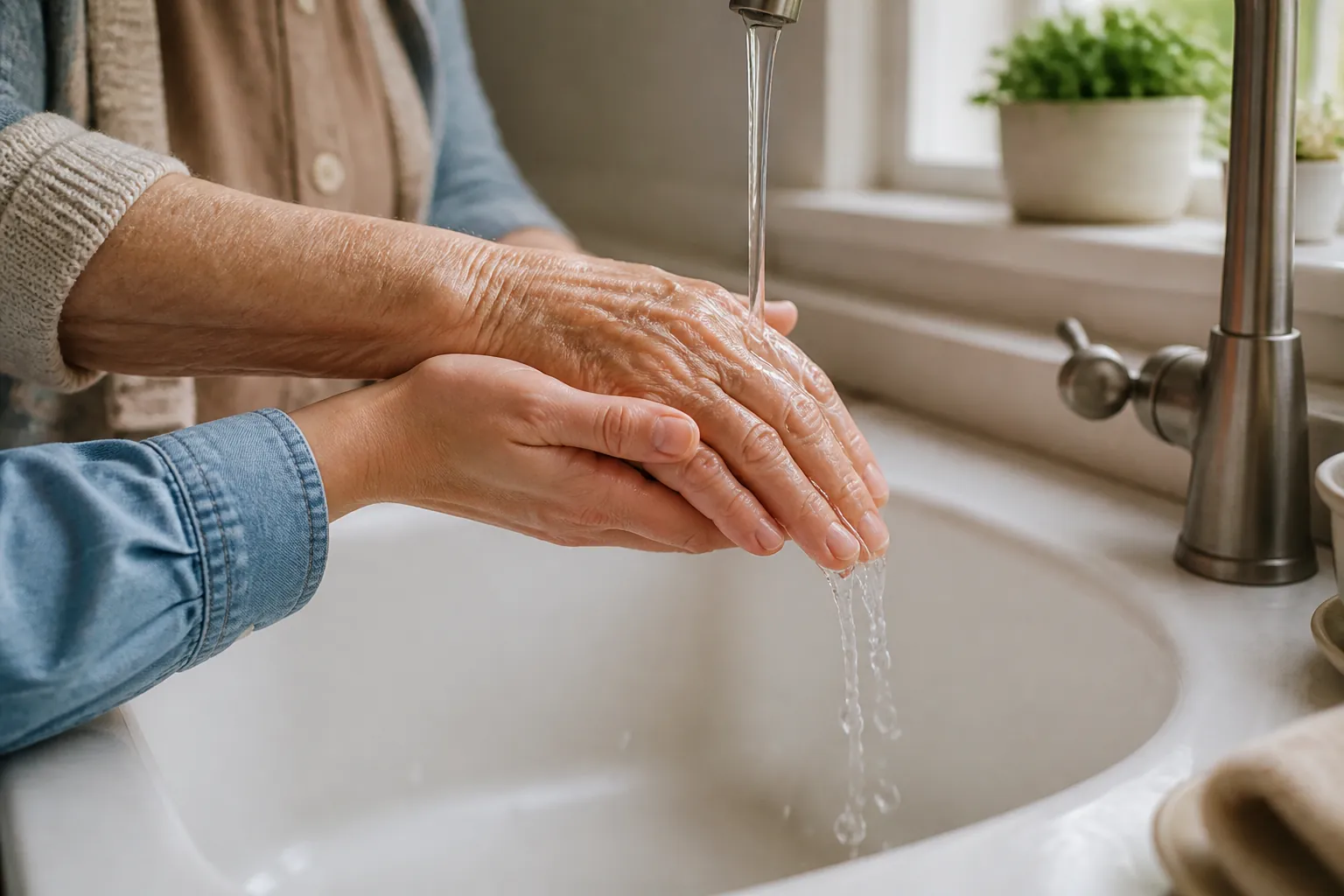
Put the burned area under cool running tap water. Use cool water, not ice water. If the burn is on a hand or forearm, the sink is usually easiest. If it is on the chest, lap, thigh, or foot, use a shower, a clean pitcher, or a gentle stream of water while keeping your parent seated and steady.
Authorities do not all give the same cooling time. The U.S. Fire Administration/FEMA says to cool a burn for 3 to 5 minutes; Mayo Clinic says to cool it for about 10 minutes; the American Red Cross gives a 5- to 20-minute range; NHS inform, healthdirect Australia, and Age UK all use 20 minutes for burns and scalds.[1][2][3][4][5][6]
If you can safely cool for 20 minutes, that is the most widely cited standard among those sources. Do not delay emergency help to finish a timer. If the burn looks serious, involves the face or airway, wraps around a limb, or your parent is faint, confused, or rapidly swelling, call 911 while cooling continues if you can do both safely.
If clothing is stuck
Do not peel stuck fabric off the burn. Cool over and around it. Pulling can tear damaged skin and make the injury larger before a clinician has even seen it.
3. Do not put home remedies on the burn
Do not use ice, butter, cooking oil, toothpaste, ointments, or greasy creams on the burn. Do not pop blisters. Mayo Clinic and the American Red Cross both warn against these kinds of steps because they can worsen tissue damage, increase infection risk, or make later medical evaluation harder.[2][3]
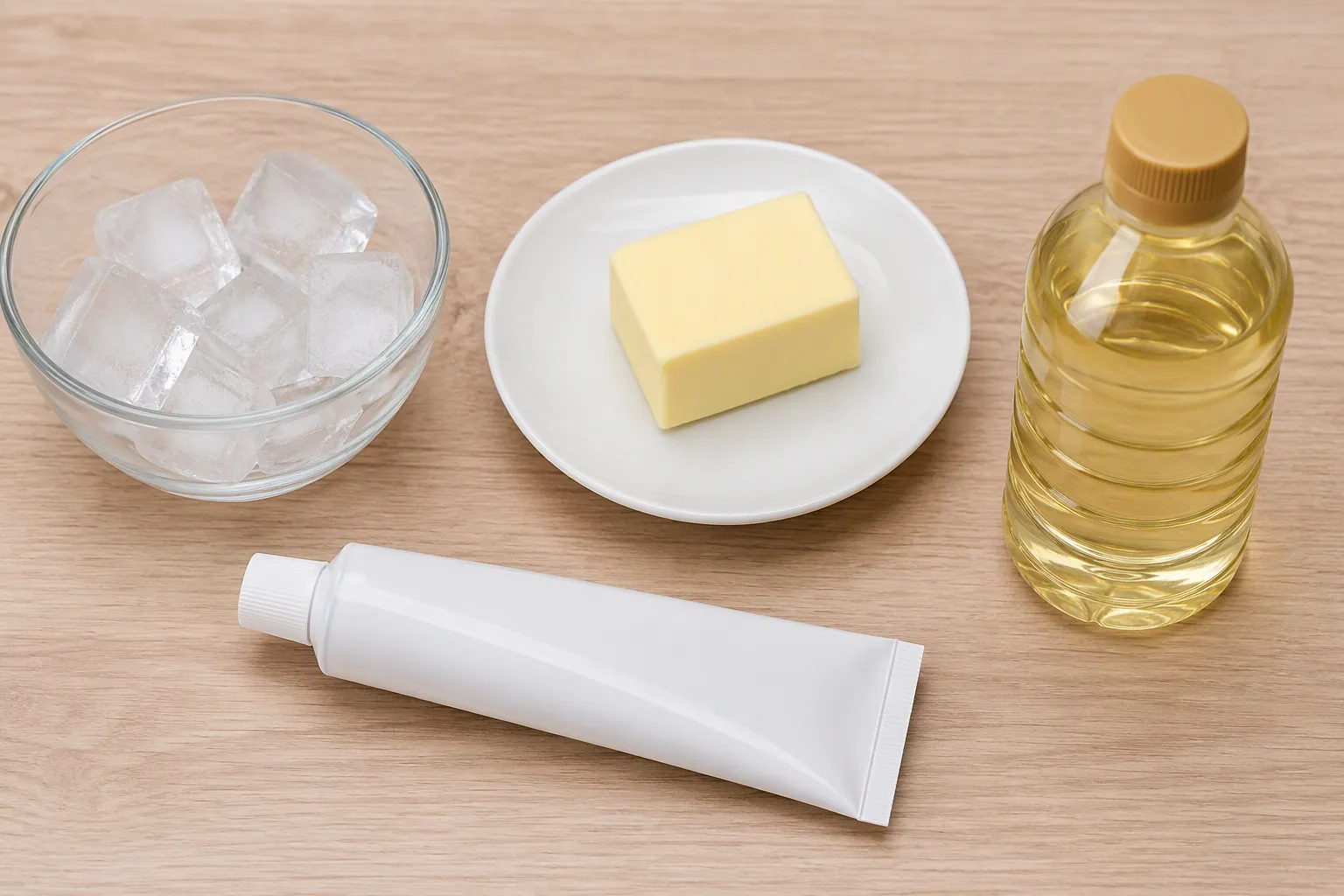
This is where a lot of families lose useful minutes. Someone remembers butter. Someone reaches for an antibiotic ointment. Your parent says it is fine because they do not want a fuss. Stay with the plain sequence: cool water, loose covering, medical decision.
4. Choose the care path: 911, emergency evaluation, doctor today, or home care
For a younger, healthy adult, many burn charts start with size, depth, and location. For an elderly parent, the threshold is lower. The American Red Cross states that burns in elderly people require immediate emergency medical treatment regardless of appearance.[3] That sentence matters because older skin can make a burn look smaller or calmer than it is.
| Care path | Use this path when | What to do |
|---|---|---|
| Call 911 now | Your parent has trouble breathing, faintness, confusion, severe pain, rapidly increasing swelling, a burn that wraps around a limb, or a burn involving the face, mouth, throat, hands, feet, genitals, or a major joint. Also call if you cannot safely transport them. | Keep cooling if it does not delay help. Do not remove stuck fabric. Do not apply ointment. Keep the burned area accessible for responders. |
| Go to emergency care now | The burn is larger than about 3 inches/8 cm across, looks charred, leathery, white, or deep, involves the face, hands, feet, genitals, a major joint, wraps around an arm or leg, or has rapid swelling. Mayo Clinic lists these as major-burn warning criteria.[2] | Use the emergency department or emergency medical services. For an older adult, do not rely on appearance alone; the Red Cross elderly-burn warning makes emergency evaluation the default.[3] |
| Call a doctor or urgent care today | The burn seems small but you are uncertain, there is any blistering, pain is not settling after cooling, the burn is in a hard-to-protect area, your parent has fragile skin, diabetes, poor circulation, immune suppression, or their tetanus shot is older than 5 years. Mayo Clinic advises checking tetanus status after burns.[2] | Ask where they should be seen today. If you cannot get timely advice, move up to emergency evaluation. |
| Home care only | The remaining narrow lane: the burn is truly minor, small, superficial, not blistering, not on a high-risk area, not wrapping a limb, your parent feels well, and you have no uncertainty after cooling. | Cover loosely, manage pain safely, and watch closely for worsening over the next 24 to 72 hours. |
If your parent burned the inside of the mouth or throat from hot food, steam, or liquid, do not try to dress that area or put products in the mouth. Voice change, coughing, wheezing, trouble swallowing, facial burns, or breathing symptoms belong in the emergency path, not home care.
Why the rule is stricter for an older parent
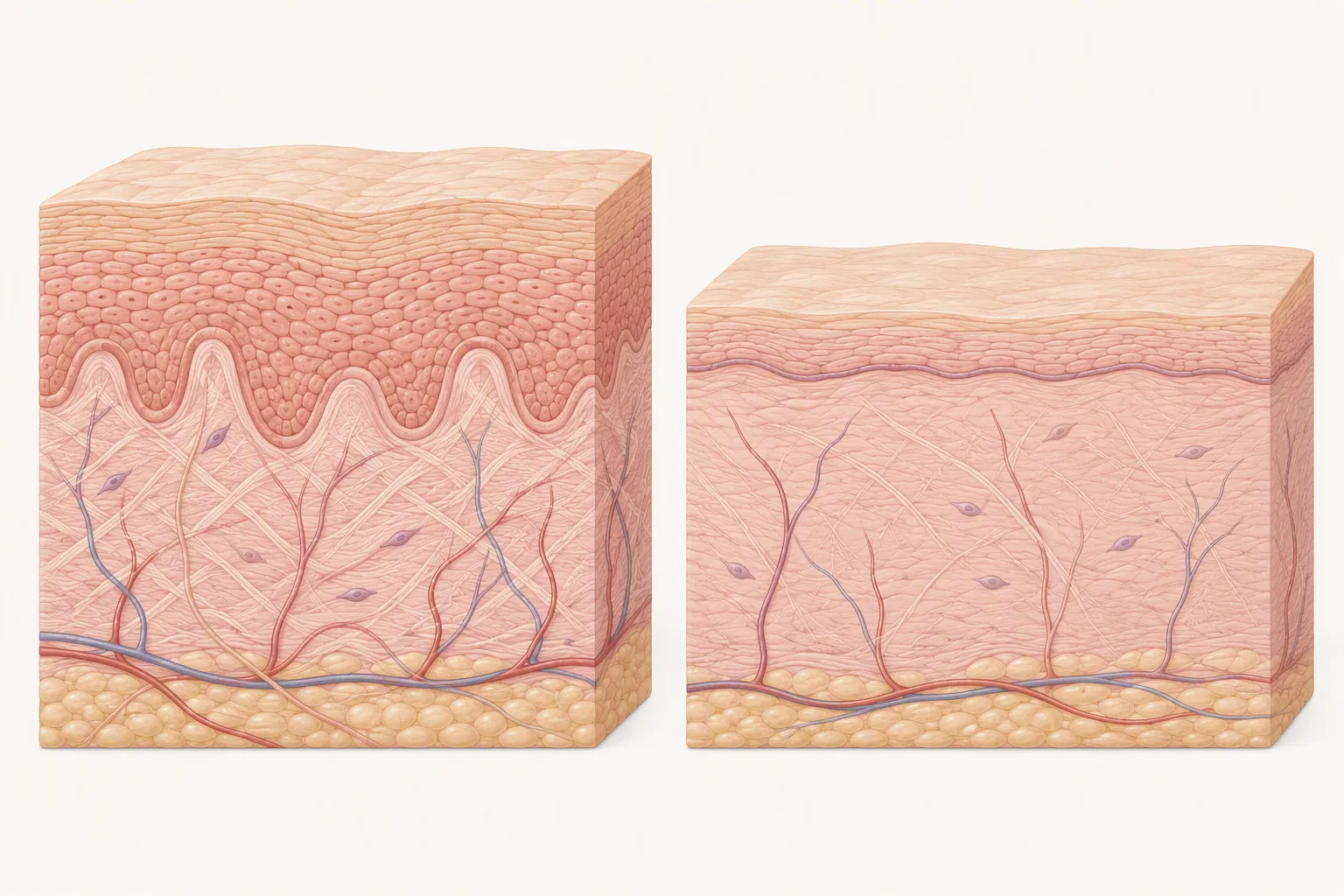
Older skin is not just wrinkled younger skin. A review on aging and burn injury describes the epidermis thinning by about 6.4% per decade and the dermo-epidermal junction flattening by more than one-third after the sixth decade. The same heat exposure can therefore produce a deeper injury, and healing tends to be slower. The same review notes that after major burn injury, geriatric patients have roughly double the mortality of patients under 65.[7]
That is also why “small” is not the same as “safe.” In a 2009 CDC analysis of 2001–2006 emergency department data, about 3% of nonfatal scald-burn ED visits among adults 65 and older were microwave-related. That is dated historical data, not a current rate, but it shows that microwave-heated liquids and foods have been a recognized scald source for older adults.[8]
The emergency department picture is often less dramatic than families imagine. In a 2022 study of 459 burn patients age 60 and older at a major U.S. burn center, hot water scalds were the most common cause at 43.6%, median burn size was 3% total body surface area, and 46.4% of patients were discharged.[9] Many geriatric burns are small. They are still worth evaluating because the cost of underestimating depth, swelling, infection risk, or function loss is carried by the older person’s skin, hands, balance, and independence.
This same older-skin caution applies beyond microwaves. If your parent uses heat for comfort, the hand warmer safety checklist for older adults is worth reviewing later. For everyday skin fragility, the guide to choosing safe anti-aging products for seniors covers why thinner skin needs gentler handling.
5. Cover the burn loosely while you arrange care
After cooling, cover the burn with a clean, dry, non-adhesive dressing or a loose layer of clean plastic cling film. Do not wrap tightly. Swelling can increase after the first few minutes, especially on hands, wrists, feet, and ankles. Mayo Clinic and the Red Cross both advise covering minor burns with a clean bandage or dressing after cooling.[2][3]
- Use a nonstick pad if you have one.
- Use cling film loosely if a clean dressing is not available.
- Do not use cotton balls or fluffy material that can shed into the wound.
- Do not tape over fragile skin if you can secure the dressing another way.
- If you are going to urgent care or the emergency department, keep the covering easy to remove.
For pain, use an over-the-counter pain reliever only if it is normally safe for your parent and does not conflict with their medicines, kidney disease, stomach bleeding history, blood thinners, or clinician instructions. When in doubt, ask the clinician or pharmacist rather than guessing in the middle of a burn incident.
6. Watch closely for 24 to 72 hours if home care was chosen
Home care is not “ignore it.” It means the burn passed the narrow minor-burn screen and you are watching it like something that can change. Check it the same day, the next morning, and again over the next 24 to 72 hours.
- Pain is getting worse instead of gradually easing.
- Redness is spreading.
- Swelling is increasing.
- Drainage, pus, odor, fever, or new warmth appears.
- A blister opens, enlarges, or sits where shoes, clothing, a walker grip, or a bed sheet will keep rubbing it.
- Your parent starts using the hand, foot, or joint differently because of pain or stiffness.
Any worsening pain, redness, swelling, or drainage means a medical re-check. A burn that interferes with walking, gripping a cane, using a walker, dressing, bathing, or sleeping also deserves reassessment, even if the burned patch looks small.
A note on what “microwave burn” means here
This guide is about burns from microwave-heated food, liquid, dishes, and steam: hot soup splashing over a hand, tea spilling in a lap, oatmeal bubbling over, or steam hitting the face when a cover is lifted. It is not about microwave-radiation injury or testing whether an oven is leaking.
One prevention detail matters after the crisis is over: water heated in a very smooth container can become superheated and erupt when disturbed. The UNSW physics explanation describes this as a liquid being heated above its usual boiling point without visible boiling, then suddenly boiling when moved or seeded by a disturbance.[10] There is no elderly-specific injury rate for this mechanism in the provided research, so treat it as a practical prevention point, not as a claim about how often older adults are hurt that way.
Do the same basic burn first aid you would do for anyone: stop the heat, cool the skin, keep remedies off it, cover it loosely, and do not pop blisters. Then change the decision standard. With an elderly parent, “it looks minor” is not enough reassurance to stay home.
References
- Burns: First Aid and Calling 911 — U.S. Fire Administration/FEMA.
- First aid: Burns — Mayo Clinic.
- Burns — American Red Cross.
- Burns and scalds — NHS inform.
- Burns and scalds — healthdirect Australia.
- Burn prevention advice — Age UK.
- Ageing and burn injury: a review — Burns & Trauma, 2016.
- Nonfatal Scald-Related Burns Among Adults Aged ≥65 Years — United States, 2001–2006 — CDC MMWR, September 18, 2009.
- Geriatric Burn Patients: A Single-Center Retrospective Review — 2022.
- Superheating and microwave ovens — UNSW Physics.
Related reading
Noticed something outdated or inaccurate on this page? Flag a correction. We review every report against CDC, NIA, and AARP HomeFit guidance before updating a page.
Part of the Fall Prevention section.