
STEADI: Intervene
Nutrient-Dense Vegetables That Help Older Adults Stay Steady
For an older adult at risk of falling, nutrient-dense means vegetables that feed bone, muscle, and steady blood pressure — not a generic superfood list. This guide names the vegetables to prioritize, how much to serve each day, a one-week plan, and the medication cautions (warfarin and kidney disease) that matter with dark leafy greens.
For an older adult who already worries about balance, “nutrient-dense” has to mean more than a pretty bowl of raw vegetables. The useful question is plainer: which vegetables help feed the bones, muscles, and blood-pressure control that keep someone upright long enough to get to the bathroom, the mailbox, or the kitchen chair safely?
That question matters because the usual advice is not landing. In 2019, only 10.0% of U.S. adults met vegetable intake recommendations, and among adults 51 and older the share was only 12.5%.[1] Older adults also tend to under-eat the very categories this guide leans on: dark green and orange vegetables made up only about 12–15% of their total vegetable intake in one review.[2]
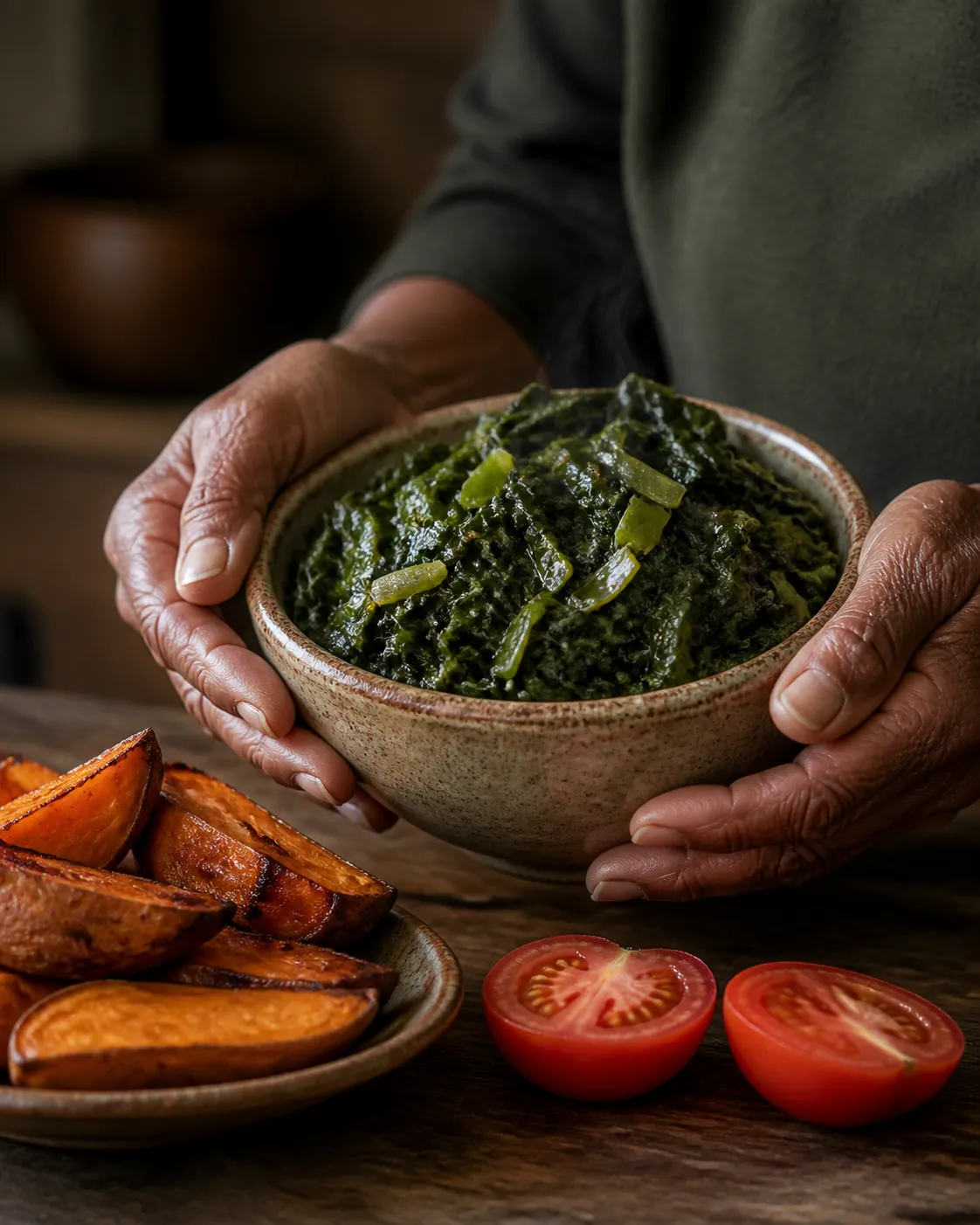
Vegetables are not a replacement for a fall-risk assessment, medication review, physical therapy, vision check, strength training, or individualized medical advice. But they can be part of the “intervene” side of fall prevention when the serving on the plate is chosen for a reason.
The vegetables worth prioritizing are the ones that feed steadiness
For a 75-year-old with fall risk, three systems deserve first claim on the plate:
- Bones: supported by calcium, vitamin K1, and magnesium.
- Muscle strength and power: supported by magnesium, dietary nitrate, and carotenoid-rich vegetables.
- Stable blood pressure: supported by potassium-rich vegetables, nitrate-rich vegetables, and a lower-sodium overall pattern.
That lens changes the shortlist. The best nutrient-dense vegetables for older adults are not exotic superfoods. They are the vegetables that can be cooked, chewed, seasoned, portioned, and repeated: turnip greens, kale, bok choy, broccoli, arugula, spinach, beets, lettuce, Swiss chard, sweet potato, tomato, and okra. Collards and mustard greens belong in the same practical family when an older adult likes them.
What the fall and fracture data add
The strongest reason to take this seriously is not that vegetables are generally “healthy.” In a prospective cohort of women age 70 and older, summarized in Webster et al. 2023, eating at least 3 servings of vegetables per day was associated with a 41% lower risk of injurious falls and a 27% lower risk of fractures. Each additional vegetable type per day was linked with an 8–9% lower risk.[3]
The same body of work gives caregivers something more useful than a vague instruction to “eat greens.” Vitamin K1 intake at roughly 100 mcg per day or more was associated with about a 27% lower fall hazard and about a 49% lower hip-fracture hazard.[3] That does not prove that one bowl of greens prevents a fall tomorrow morning, but it does make a steady daily serving of vitamin-K1-rich vegetables worth planning around.
Nitrate-rich vegetables also matter because the question is not only bone density; it is whether a person can rise, turn, and walk. In the same research summary, vegetable-derived nitrate was associated with better grip strength and faster timed-up-and-go performance, and one cup of raw arugula supplied roughly 362 mg of nitrate.[3]
A serving target that fits real meals
A workable goal is 2–3 cups of vegetables per day, with 1–2 cups coming from dark green leafy or cruciferous vegetables most days. The Dietary Guidelines for Americans use cup-equivalent vegetable targets that commonly land in this range for older adults depending on calorie needs, while Linus Pauling Institute guidance for older adults highlights calcium, magnesium, potassium, and vitamin K as nutrients of concern for healthy aging.[4][5]
| Daily target | What it looks like at the table | Why it matters |
|---|---|---|
| 2–3 cups total vegetables | One cooked green, one potassium-rich vegetable, and one easy add-on such as tomato, lettuce, or broccoli | Matches the practical range caregivers can spread across lunch and dinner |
| 1–2 cups dark green leafy or cruciferous vegetables | Cooked turnip greens, kale, bok choy, broccoli, mustard greens, collards, or a raw arugula/spinach mix | Concentrates vitamin K1, magnesium, calcium from lower-oxalate choices, and nitrate |
| Roughly 100 mcg/day or more vitamin K1 from food, unless anticoagulation instructions require a different plan | A predictable serving of greens rather than random large swings | This is the intake level associated with lower fall and hip-fracture hazards in the cohort findings |
| A potassium-rich vegetable most days, if medically appropriate | Sweet potato, Swiss chard, tomato, okra, beets, or cooked greens | Supports the blood-pressure side of steadiness, unless kidney disease requires potassium limits |
The easiest way to make this happen is to stop treating vegetables as one big dinner assignment. A cooked green at lunch, tomato or lettuce on a sandwich, and sweet potato with dinner is less dramatic than a salad bowl the size of a mixing basin. It is also more likely to happen twice in a week, then four times, then most days.
Bone-supporting vegetables: choose lower-oxalate greens more often
For bones, the top vegetables are dark leafy greens and cruciferous vegetables that bring vitamin K1 plus usable minerals. Turnip greens, kale, mustard greens, bok choy, okra, and broccoli are more credible calcium contributors than spinach because their calcium is not trapped to the same degree by oxalates.
Per cooked cup, turnip greens provide about 197 mg calcium, kale about 172 mg, mustard greens about 165 mg, bok choy about 158 mg, okra about 123 mg, and broccoli about 62 mg.[6] Older-adult daily targets cited by the Linus Pauling Institute are 1,000–1,200 mg calcium, 320–420 mg magnesium, 2,600–3,400 mg potassium, and 90–120 mcg vitamin K, depending on age and sex.[5]
:max_bytes(150000):strip_icc()/8918040-0b1184647f9a4ad2a06d888f4b102965.jpg)
Spinach needs a fair hearing here. It is a valuable vegetable, but it should not be sold to older adults as a calcium hero. Because of oxalates, only about 5% of spinach calcium is absorbed, compared with roughly 20–40% from low-oxalate greens.[7] So spinach can stay in the kitchen for magnesium, nitrate, texture, and convenience; it just should not carry the calcium job.
Best choices for the bone side
- Turnip greens: a strong cooked-green choice when calcium, vitamin K1, and a soft texture matter.
- Kale: useful cooked into soup, scrambled eggs, beans, or casseroles so it does not depend on chewing a large raw salad.
- Bok choy: mild, fast-cooking, and easy to add to broth-based soups.
- Broccoli: not the highest-calcium vegetable, but familiar, versatile, and realistic for many households.
- Collards or mustard greens: good rotation choices when the older adult already likes stronger greens.
Muscle-supporting vegetables: think nitrate, magnesium, and ease of eating
Muscle is not only about protein. For fall prevention, the practical question is whether the meal pattern supports strength, power, and the ability to stand and move. That is where arugula, spinach, beets, and lettuce earn space.
Arugula is especially useful because a small raw portion can bring a meaningful nitrate contribution without asking anyone to chew through a giant salad. A handful can go on eggs, soup, beans, a sandwich, or a plate of warm vegetables after cooking. Spinach works the same way: not as the calcium solution, but as an easy magnesium- and nitrate-containing green that disappears into familiar foods.
Beets are another nitrate-rich option, though they need to be served in a form the person will actually eat: roasted cubes, sliced cooked beets, or a small portion mixed into a salad. Lettuce is not as dense as cooked greens, but it can help with variety and nitrate exposure when raw vegetables are tolerated.
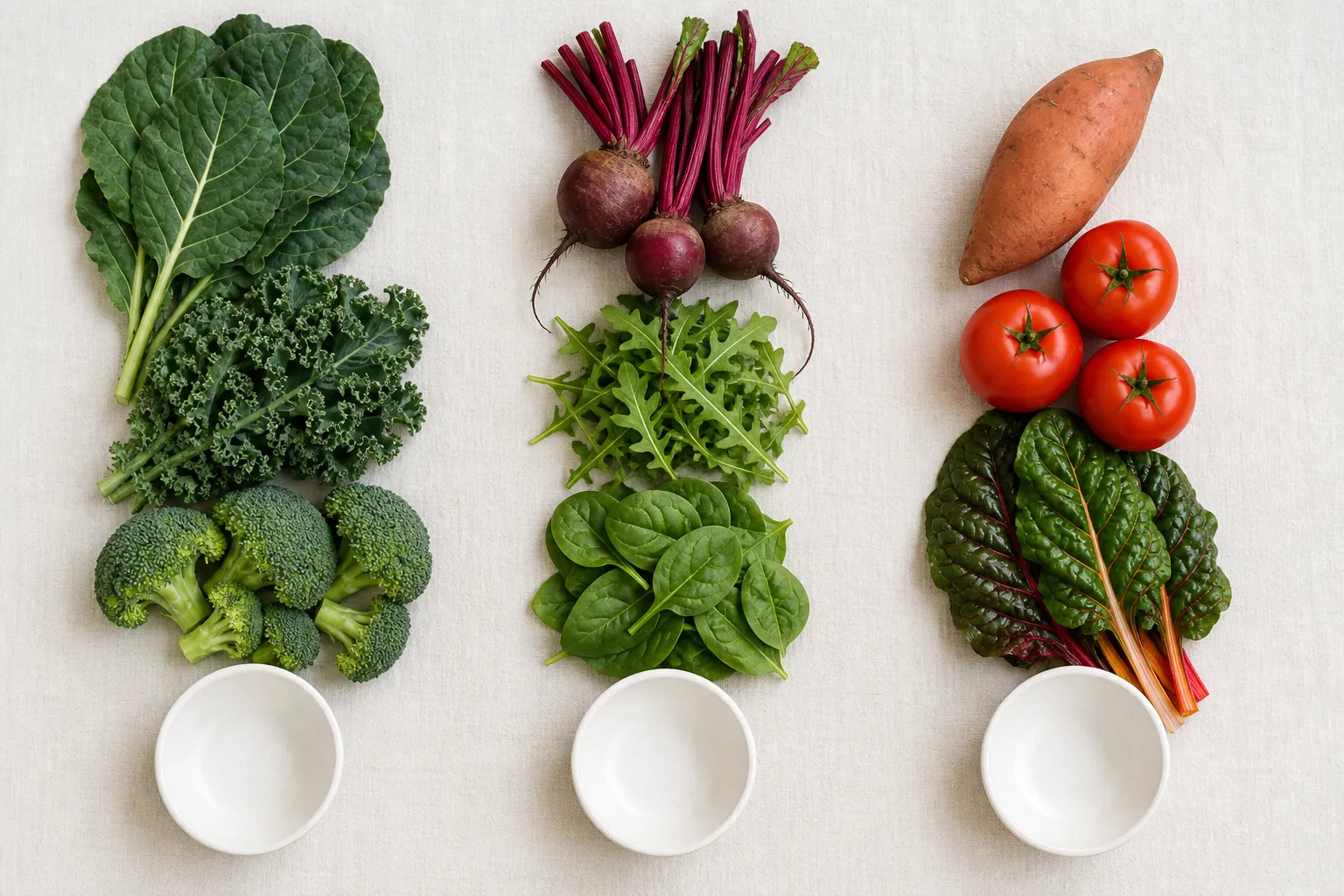
Blood-pressure-supporting vegetables: potassium helps, sodium still matters
Blood pressure belongs in a fall-prevention vegetable guide because dizziness, lightheadedness, and pressure swings can turn an ordinary walk across the room into a dangerous one. Vegetables do not replace medication management, and no one should adjust blood-pressure medicine because dinner improved. But a potassium-rich, lower-sodium eating pattern is one of the few nutrition moves that lines up with both heart health and steadiness.
The DASH pattern described by Mayo Clinic includes 4–5 vegetable servings per day and a sodium ceiling of about 2,300 mg per day.[8] For many older adults, the more realistic first step is not hitting every DASH serving perfectly. It is replacing a salty side with a vegetable that brings potassium and does not arrive swimming in sodium.
Best choices for the blood-pressure side
- Sweet potato: soft, familiar, naturally potassium-rich, and easy to batch-roast.
- Swiss chard: useful for potassium and magnesium, but important to flag for kidney-disease potassium limits.
- Tomato: easy to add fresh, roasted, or in low-sodium canned form.
- Okra: a softer cooked vegetable that also contributes calcium compared with many common vegetables.
- Beets and leafy greens: useful crossover choices because they support the nitrate side as well.
A one-week serving plan a caregiver can actually use
This plan aims for 2–3 cups of vegetables per day, including 1–2 cups of dark green leafy or cruciferous vegetables most days. It uses repetition on purpose. Caregivers do not need seven different shopping lists; they need a rhythm that survives appointments, fatigue, and the nights when dinner is reheated.
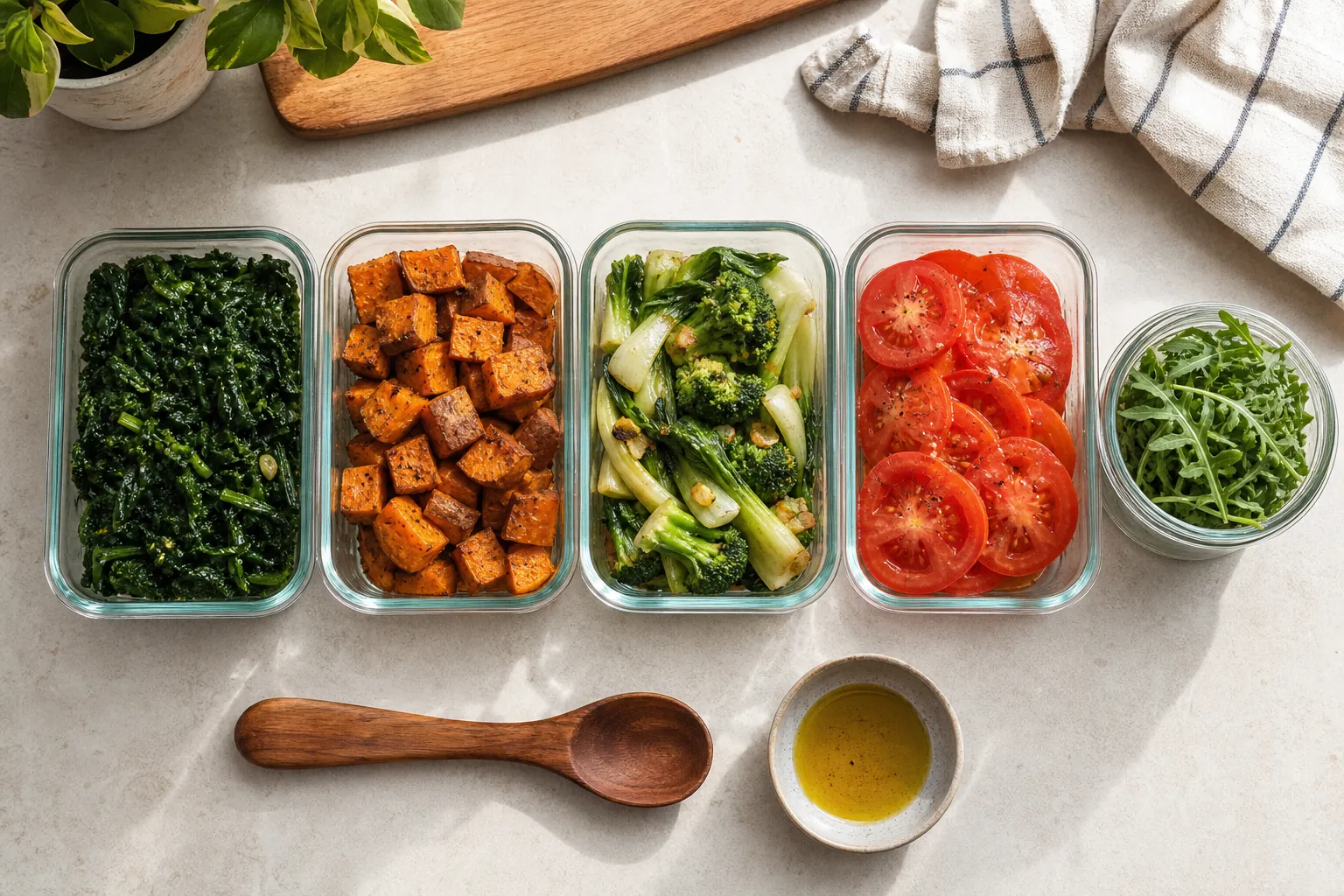
| Day | Dark green or cruciferous serving | Potassium-rich or nitrate-rich add-on | Simple meal idea |
|---|---|---|---|
| Monday | 1 cooked cup turnip greens | Roasted sweet potato | Serve with fish, chicken, beans, or eggs; keep the greens soft and seasoned. |
| Tuesday | Bok choy in soup plus broccoli at dinner | Tomato slices or low-sodium tomato side | Use broth, noodles or rice, and a protein; add bok choy near the end so it stays tender. |
| Wednesday | Kale cooked into beans or lentils | Handful of arugula stirred in after cooking | The arugula wilts into the warm bowl and does not feel like a separate salad assignment. |
| Thursday | Broccoli with lunch or dinner | Beets or lettuce with a sandwich | Keep the raw portion small if chewing or appetite is limited. |
| Friday | Mustard greens, collards, or turnip greens | Okra or tomato | Use whichever cooked green the older adult already accepts; this is not the night to prove a point. |
| Saturday | Spinach in eggs, soup, or pasta | Sweet potato or Swiss chard, if potassium is allowed | Let spinach do the magnesium and nitrate work, not the calcium work. |
| Sunday | Bok choy, kale, or broccoli | Tomato, beets, or arugula | Use leftovers to reset the refrigerator for Monday. |
A cooked cup of greens is often more realistic than a large raw salad. It is softer, warmer, easier to season, and smaller on the plate. If appetite is low, split the serving: half a cup at lunch, half a cup at dinner. If chewing is hard, put greens into soup, eggs, beans, or casseroles instead of asking for forkfuls of dry salad.
Variety still matters, but it does not have to mean a new vegetable every day. The cohort data linked each additional vegetable type per day with lower fall and fracture risk, so a plate with turnip greens plus sweet potato is doing more than a plate with turnip greens alone.[3] Across a week, rotating leafy greens, cruciferous vegetables, and potassium-rich vegetables is enough of a start.
Two safety cautions that should not be skipped
Warfarin: consistency matters more than avoidance
Dark leafy greens are high in vitamin K1, and vitamin K interacts with warfarin management. That does not mean a person on warfarin should automatically avoid greens. The safer household rule is consistency: do not swing from no greens all week to a huge plate of kale, turnip greens, and spinach in one day unless the clinician managing anticoagulation knows the pattern is changing.
If the older adult takes warfarin, choose a regular portion and tell the prescribing clinician or anticoagulation clinic. A predictable half-cup or cup of cooked greens is easier to manage than surprise servings that appear and disappear.
Kidney disease: potassium-rich vegetables need individual limits
Sweet potato, Swiss chard, tomato, beet greens, spinach, and many cooked greens can be potassium-rich. For someone with kidney disease, especially if a clinician has set a potassium restriction, these vegetables are not automatically “free foods.” The right question is not whether potassium is good in general; it is what portion fits that person’s lab results, medications, and kidney plan.
This is where caregivers should resist guessing. Bring the usual vegetable list to the renal clinician or dietitian and ask for serving sizes. A blanket ban can make meals worse than necessary, but ignoring a potassium limit can be unsafe.
The usable shortlist
| If the main concern is... | Prioritize these vegetables | Serving-level note |
|---|---|---|
| Bone support | Turnip greens, kale, bok choy, broccoli, collards, mustard greens, okra | Use cooked lower-oxalate greens more often than spinach when calcium contribution matters. |
| Muscle strength and movement | Arugula, spinach, beets, lettuce, kale | Small raw portions or wilted greens can add nitrate without requiring a giant salad. |
| Blood-pressure support | Sweet potato, Swiss chard, tomato, okra, beets, leafy greens | Choose low-sodium preparation; check potassium limits if kidney disease is present. |
| Caregiver practicality | Frozen broccoli, bagged kale, washed arugula, cooked beets, roasted sweet potato, canned low-sodium tomatoes | Convenience counts if it turns a good idea into a repeated serving. |
The best nutrient-dense vegetables for older adults are the ones that can be eaten consistently, in safe portions, while matching the systems that keep a person upright. Choose a few greens, add one potassium-rich vegetable if it is medically appropriate, vary the types across the week, and check warfarin or kidney-disease constraints with the clinician instead of guessing.
References
- Adults Meeting Fruit and Vegetable Intake Recommendations — United States, 2019. CDC MMWR. 2022-01-07.
- Fruit and vegetable intake among older adults: a scoping review. Maturitas. 2013.
- Vegetable intake and injurious falls risk in older women: a prospective cohort study. British Journal of Nutrition.
- Dietary Guidelines for Americans, 2020-2025. U.S. Department of Agriculture and U.S. Department of Health and Human Services. 2020.
- Micronutrient Needs of Older Adults. Linus Pauling Institute, Oregon State University.
- FoodData Central. U.S. Department of Agriculture.
- Calcium and Vitamin D. Bone Health & Osteoporosis Foundation.
- DASH diet: Healthy eating to lower your blood pressure. Mayo Clinic.
Related reading
Noticed something outdated or inaccurate on this page? Flag a correction. We review every report against CDC, NIA, and AARP HomeFit guidance before updating a page.
Part of the Fall Prevention section.