
STEADI: intervene
Severe Weather Preparedness Checklist for Older Adults
A generic emergency kit stops at food, water, and a flashlight. This checklist builds the severe-weather plan an older adult actually needs — medications, backup mobility aids, power-dependent device backups, key documents, and a support network — plus a six-month refresh schedule.
A severe-weather preparedness checklist for an older adult has to do more than fill a tote with food, water, and a flashlight. It has to keep working if the power is out, the pharmacy is closed, the caregiver is across town, the walker is in the wrong room, or the person who needs help cannot safely improvise.
Start with the familiar emergency kit. Then add the parts that make it usable for an older adult: medications, medical information, glasses, hearing-aid batteries, mobility backups, incontinence and hygiene supplies, power plans for medical devices, key documents, and people who already know what to do.
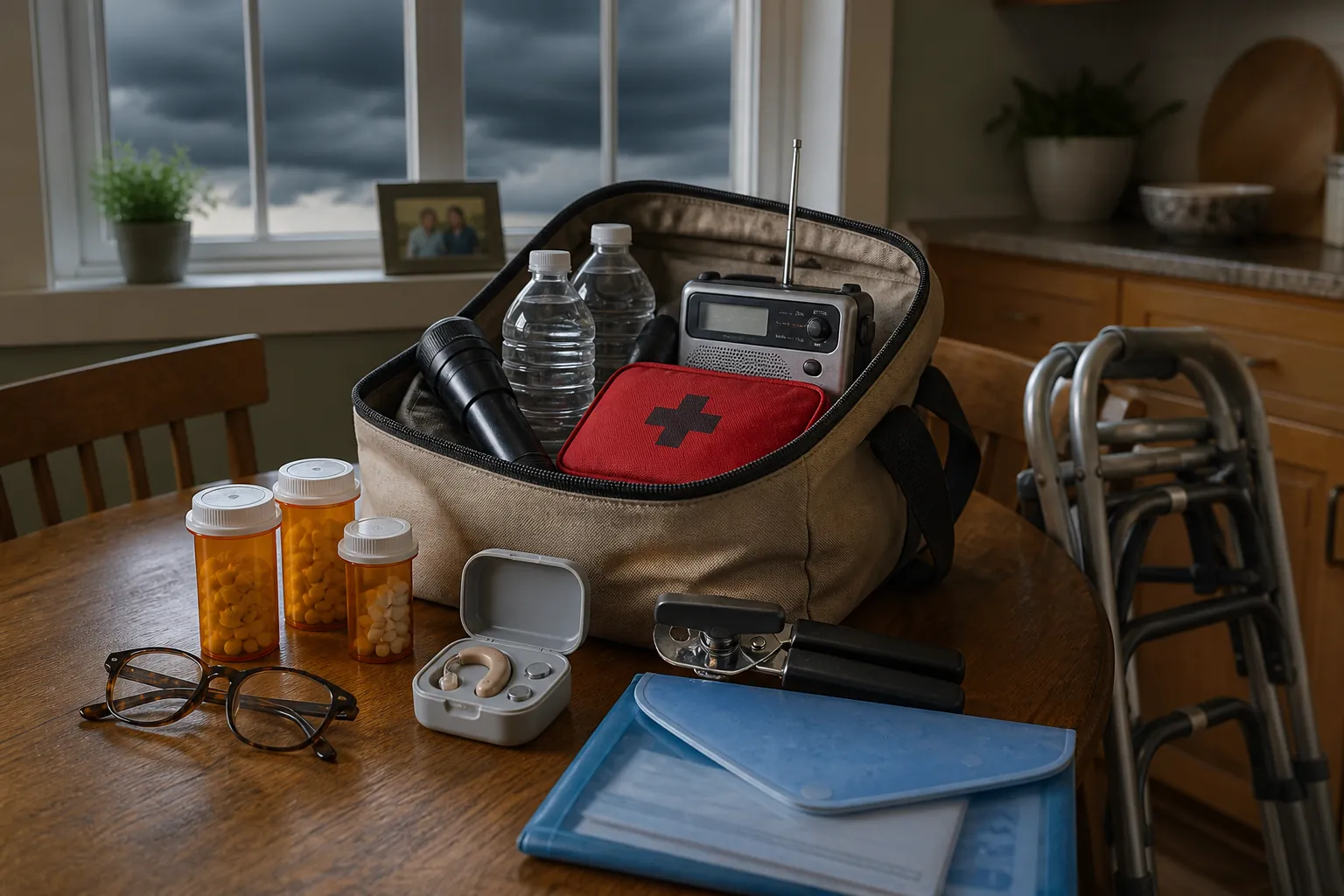
Start with the base severe-weather kit
The base kit is still the anchor. Ready.gov recommends water, nonperishable food, a battery-powered or hand-crank radio, a NOAA Weather Radio with tone alert, a flashlight, first-aid supplies, a whistle, a manual can opener, and cash. Its water guidance is specific: 1 gallon per person per day, with a several-day supply of food and water planned ahead of time. [1]
- Water: 1 gallon per person per day.
- Food: several days of nonperishable food the older adult can actually open, chew, and prepare.
- Weather information: battery-powered or hand-crank radio, plus a NOAA Weather Radio with tone alert.
- Light and signaling: flashlight, extra batteries if needed, and a whistle.
- Basic care: first-aid kit and any everyday supplies needed to clean minor cuts or protect fragile skin.
- Food access: manual can opener, if the kit includes cans.
- Payment backup: small bills in cash, stored where the older adult and support people know to look.
This is where many lists stop. For an older adult, it is only the first layer. A can opener does not help much if arthritis makes it unusable. A flashlight does not solve a dead hearing-aid battery. A radio warning does not help if nobody has agreed who checks in before the storm and who comes after.
Add the older-adult layer
The next pass through the checklist is personal. Walk through one ordinary day and ask what the older adult touches, takes, charges, wears, opens, reads, hears through, walks with, and depends on. That daily routine is the real emergency supply list.
| Need | Add to the kit or plan | What to decide before severe weather |
|---|---|---|
| Medications | Medication supply, dosage list, prescriber and pharmacy information | How many days can be safely kept on hand, and who updates the list |
| Refrigerated medicine | Cooler and chemical ice packs | Where the cooler is stored and how it will be used during an outage |
| Vision | Extra glasses, readers, magnifier, labeled case | Which pair goes in the kit and which stays by the bed |
| Hearing | Hearing-aid batteries, charger, cleaning supplies, written instructions | How alerts will be received if hearing aids are off or batteries fail |
| Mobility | Backup cane or walker access, wheelchair supplies if used | Which exit route works with the device, not just without it |
| Personal care | Incontinence products, wipes, gloves, hygiene supplies, skin-protection items | How many days are needed if home delivery or a caregiver visit is delayed |
| Documents | Waterproof folder with identification, Medicare or insurance cards, medication list, emergency contacts | Who has a copy and where the original is stored |
| Power-dependent devices | Batteries, chargers, backup power arrangements, utility contact information | What happens if the outage lasts longer than expected |
| Support network | At least three people with contact information, key access, and supply-location knowledge | Who checks before the storm, who checks after, and who can physically get there |
Ready.gov’s older-adult guidance calls out practical additions such as medical supplies, assistive items, and contact planning; Red Cross guidance for older adults also names extra assistive items such as a cane or eyeglasses and backup batteries for power-dependent devices. [2][3]
Medication and medical information need more than a plastic bag
Medication planning is the part to slow down on. The kit should include a current medication list with the medication name, diagnosis or reason it is used, dosage, schedule, prescriber, pharmacy, allergies, and any important instructions. Ready.gov’s disability guidance specifically recommends keeping an organized medication list with diagnosis and dosage. [4]
This article is not medical advice. Do not change doses, skip medication, stockpile in unsafe ways, or move refrigerated medicine into a cooler without asking the prescriber or pharmacist what is safe for that specific medication.
Supply guidance varies. The Red Cross recommends at least 30 days of medications for older adults, while other older-adult preparedness guidance uses shorter reserves such as two weeks. [3][5][6] Treat that as a question for the pharmacist or prescriber, not a number to guess at. Some prescriptions cannot be refilled early, some require temperature control, and some become dangerous if stored incorrectly.
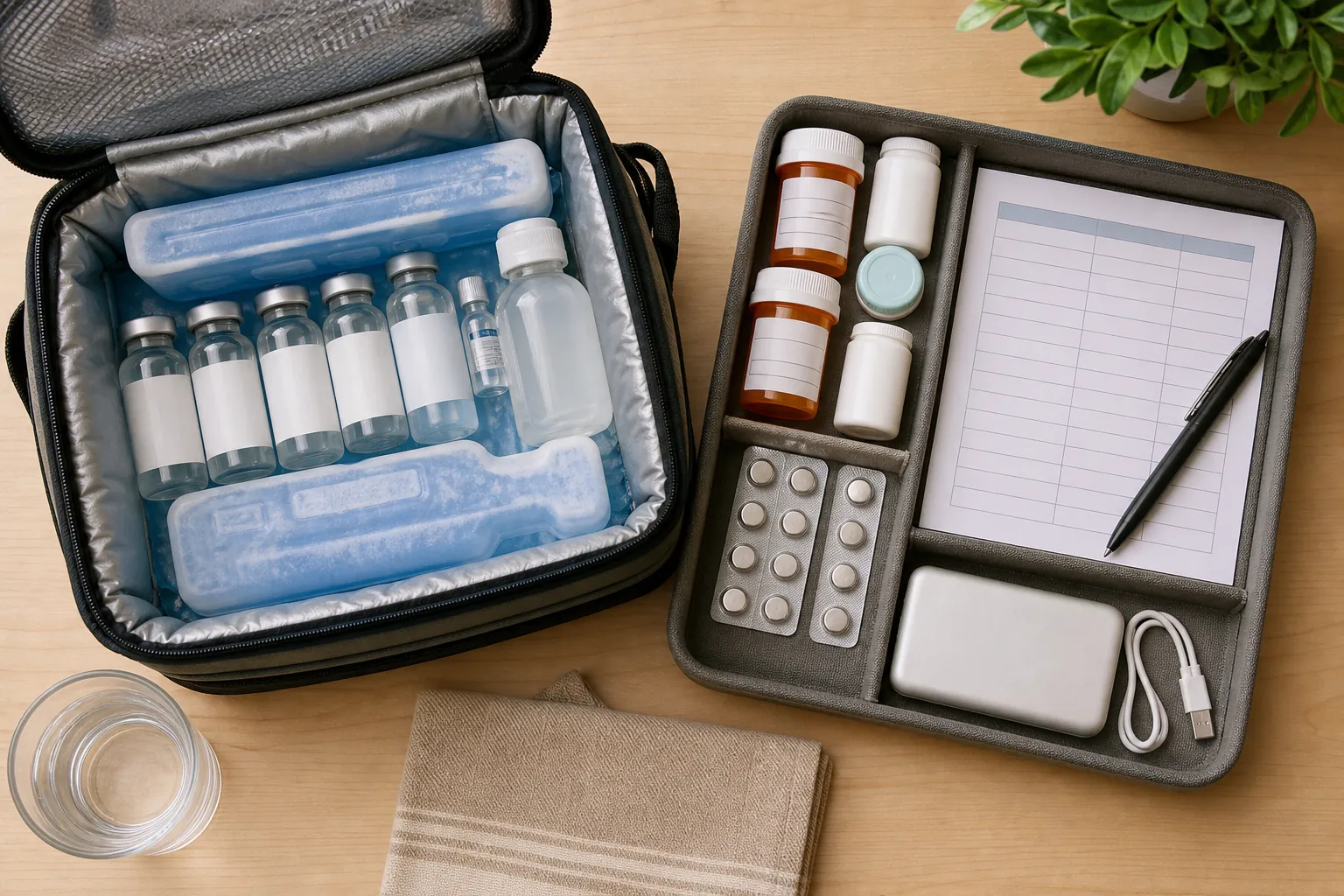
For refrigerated medicines, Ready.gov recommends planning for a cooler with chemical ice packs. [4] Put the cooler, ice packs, and written instructions in the same planning system. A cooler stored in the garage and instructions buried in a patient portal will not help during a fast-moving outage.
- Print the medication list in large enough type to read without a phone.
- Put one copy in the waterproof document folder and give one copy to the primary support person.
- Add pharmacy phone number, prescriber phone number, preferred hospital, allergies, and medical-device details.
- Mark which medications are time-sensitive and which require refrigeration, but confirm all handling instructions with a clinician or pharmacist.
- Review the list whenever a medication changes, not only when storm season starts.
Vision, hearing, mobility, and personal care supplies make the kit usable
The best emergency kit in the closet is not useful if the older adult cannot reach it, read the instructions, hear the warning, or walk to the safe room. Add the small, ordinary items that keep a person functional.
- Glasses: keep an older pair in the kit if a current spare is not available. Add a hard case and label it.
- Hearing aids: add spare batteries, charger, cleaning supplies, and written charging instructions if another person may need to help.
- Mobility aids: keep the cane, walker, wheelchair, or transfer supplies on the evacuation route, not deep in the bedroom.
- Feet and balance: store shoes with backs and nonskid soles near the bed and near the severe-weather safe area.
- Personal care: add incontinence products, wipes, disposable gloves, hand sanitizer, toilet paper, skin-protection products, and plastic bags for soiled items.
- Communication: include a written contact sheet and, if needed, simple instructions for using a phone, alert device, or medical device.
If the older adult uses a walker, test the route with the walker. If the plan is to shelter in an interior bathroom, make sure the walker fits through the doorway and that the person can sit safely once inside. For tornado-specific fall prevention, use the Fall-Safe Tornado Preparedness Checklist for Seniors as the next step after this general kit is built.
Build the power plan before the outage
Power planning is not just a phone charger. It may involve oxygen equipment, a powered recliner the person sleeps in, CPAP equipment, a stair lift, a nebulizer, a motorized wheelchair, a refrigerated medication, or an electric bed. Ready.gov disability guidance recommends extra batteries for assistive devices and also suggests asking the utility company about priority power-restoration placement if a person uses power-dependent medical equipment. [4]
Call the equipment supplier and utility before severe weather season, not during it. Ask what backup power is appropriate, how long the device can safely run on battery backup, whether the device can be used with a portable power source, and what the older adult should do if power is not restored in time. Keep those answers in the document folder.
- List every power-dependent device in the home.
- Write down what each device does, who supplied it, and the after-hours phone number.
- Label chargers and keep them near the device, not scattered in different rooms.
- Check whether backup batteries are charged and whether they still hold charge.
- For refrigerated medications, pair the cooler plan with the medication instructions.
- Ask the utility about medical needs, priority restoration options, or notification programs where available.
For the crisis version of this plan, keep Your Parent’s Power Is Out — What to Check First with the household emergency information. That checklist belongs where someone can find it without searching a phone in the dark.
Store supplies where the older adult and helpers can actually use them
A kit stored neatly in the basement may look prepared and still fail the person it is meant to protect. Choose locations based on reach, mobility, lighting, and likely hazards.
- Keep the main kit on the living level if stairs are difficult.
- Put a smaller bedside kit within reach: flashlight, glasses, hearing-aid supplies, shoes, phone charger, and contact sheet.
- Keep the waterproof document folder in one known location, then tell the support network where it is.
- Store mobility aids along the real route to the safe area or exit.
- If evacuation is possible, keep a go-bag light enough for the older adult or helper to lift.
- Label containers in large print.
Do one practice walk-through without rushing. Start from the chair, bed, bathroom, or kitchen where the older adult spends the most time. Can they reach the flashlight? Can they hear or see the alert? Can they get to the safe area with the mobility aid they normally use? Can a neighbor find the kit if the adult child is delayed?
Put three support people on the plan
“Call someone” is too vague for severe weather. A useful support network names people, gives them access, and assigns expectations before anyone is frightened or busy.
AAGP, citing Red Cross guidance, recommends a personal support network of at least three people who exchange keys and know where emergency supplies are kept. [6] Three matters because one person may be out of town, one may be unreachable, and one may be dealing with damage at their own home.
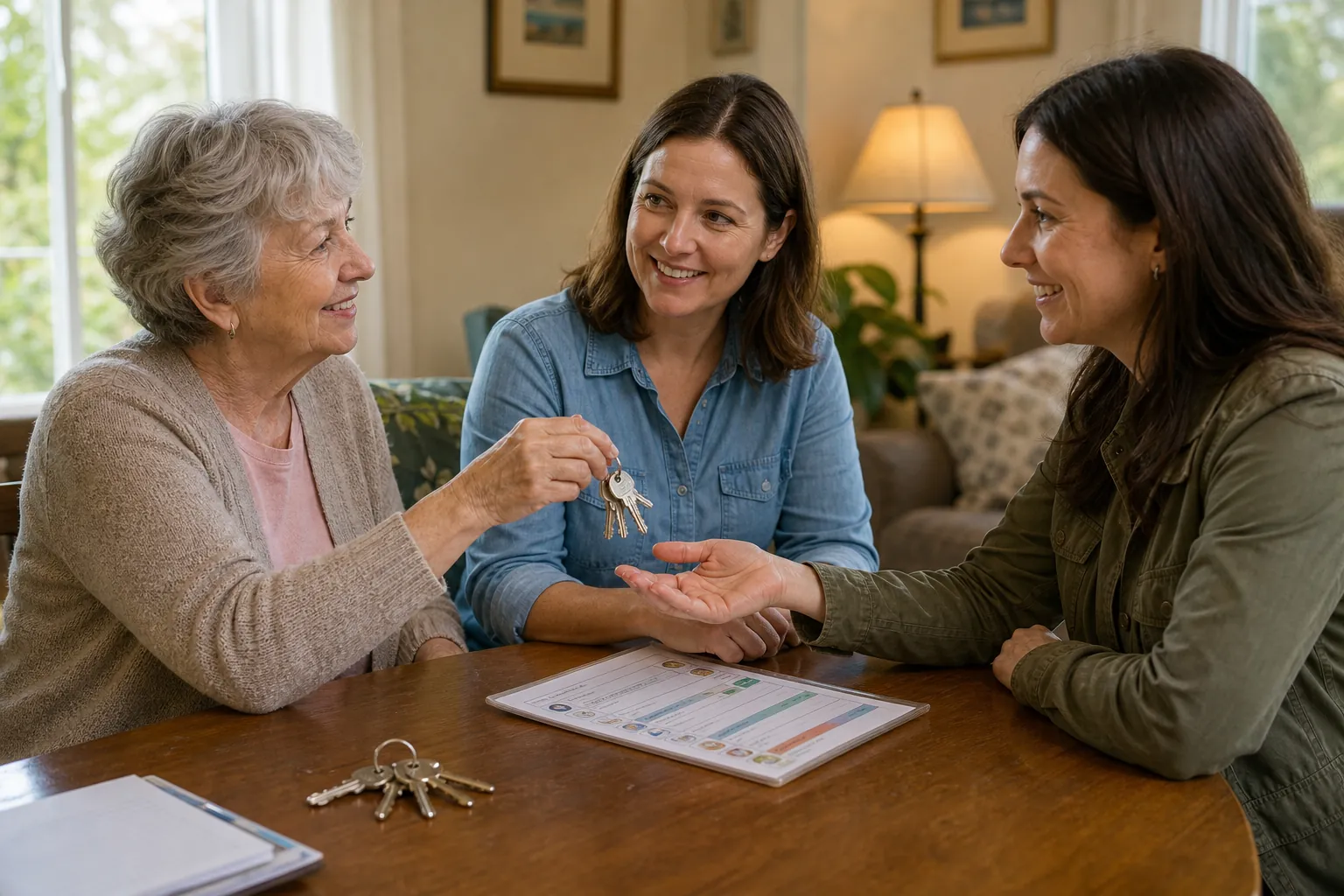
- Choose at least three support people: family, neighbors, friends, faith-community members, building staff, or nearby caregivers.
- Exchange keys, access codes, or lockbox instructions where appropriate and acceptable to the older adult.
- Show each person where the kit, document folder, medications, mobility aids, and device chargers are kept.
- Decide who checks in before severe weather, who checks after, and who can physically come to the home.
- Write down preferred communication methods: phone call, text, door knock, medical alert system, or building intercom.
- Include pet information if the older adult may refuse to leave without an animal.
This part needs consent, not just efficiency. An adult child may want every neighbor to have a key; the parent may not. Work out access in a way that preserves privacy while still making help possible. A lockbox, sealed envelope, trusted building staff member, or one nearby keyholder may be more acceptable than handing out copies widely.
Write two plans: staying home and leaving
NCOA recommends planning for both possibilities: staying home and evacuating. The same article notes that NOAA counted 23 separate billion-dollar weather disasters in the United States between January and August 2023. [5] The point is not to panic. It is to stop treating “shelter in place” and “leave now” as decisions someone will calmly design in the middle of the event.
The stay-home plan
The stay-home plan should name the safest room or area for likely severe weather, the bathroom plan, the sleep plan, the medication plan, the power plan, and the check-in plan.
- Safe area: identify the room and confirm the older adult can reach it with their normal mobility aid.
- Fall prevention: clear cords, rugs, clutter, and low furniture from the route before storm season.
- Bathroom access: decide what happens if the person cannot safely reach the bathroom during the event.
- Medication timing: keep essential medication and the printed medication list reachable.
- Temperature: plan for heat or cold if power fails.
- Check-ins: set a before-and-after contact order with the support network.
For flash-flood risk, do not rely on this general list alone. Add the route and fall-prevention details from the Flash Flood Fall Prevention Checklist for Seniors. Floodwater changes the safety calculation quickly, especially for anyone using a cane, walker, wheelchair, or oxygen equipment.
The evacuation plan
The evacuation plan should be written as a sequence, not a wish. Who calls? Who drives? Which door is used? What if the elevator is out? Which bag goes first? Where are the walker, oxygen supplies, glasses, hearing-aid batteries, medication list, insurance cards, and phone chargers?
- Destination: choose a primary and backup place to go.
- Transportation: confirm who can drive or arrange accessible transportation.
- Go-bag: include medications as directed, medical list, documents, assistive supplies, chargers, hygiene items, and comfort items.
- Mobility route: test the exit with the actual device the older adult uses.
- Communication: tell the support network when the older adult leaves and where they are going.
- Medical needs: know which shelters, relatives, hotels, or backup locations can handle the older adult’s equipment and care needs.
Wildfire evacuation has its own timing and packing demands. If wildfire is a local risk, use the Wildfire Evacuation Checklist for Elderly Parents as the hazard-specific version of this evacuation plan.
Keep documents waterproof, readable, and findable
A document folder is not glamorous, but it prevents a familiar scramble: nobody knows the medication names, the insurance card is in a purse left behind, and the adult child has the doctor’s number but not the after-hours line. Use a waterproof folder or pouch and keep copies readable.
- Photo identification copy.
- Medicare, Medicaid, or insurance card copies.
- Medication list with diagnosis, dosage, schedule, prescriber, and pharmacy.
- Allergy list.
- Emergency contacts and support-network contacts.
- Medical-device information and supplier phone numbers.
- Copies of advance directives, power of attorney, or health care proxy documents if the older adult has them and wants them included.
- Pet information, veterinarian contact, and vaccination records if relevant.
Ask before copying sensitive documents. Preparedness should not become a quiet takeover of someone else’s information. Decide together who holds copies and what belongs in the folder.
Use a six-month refresh schedule
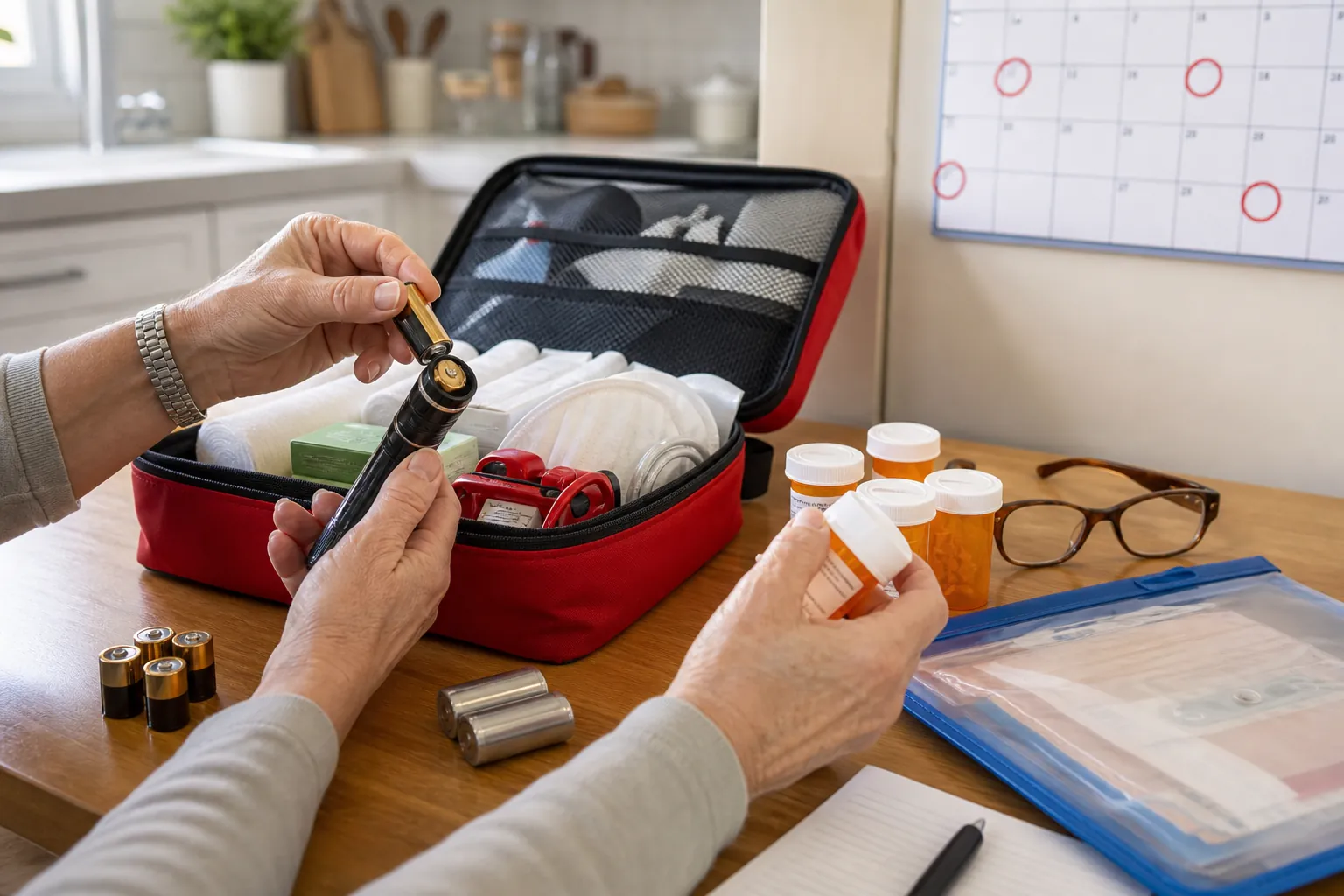
The Red Cross recommends reviewing and refreshing an older adult’s emergency plan and supplies every six months. [3] That timing is practical because the plan can go stale quietly: a medication changes, a neighbor moves, a walker replaces a cane, a hearing aid gets a new charger, or a document folder still has last year’s insurance card.
| Every six months, check | What to update |
|---|---|
| Food and water | Expiration dates, storage condition, and whether the food still matches diet and chewing needs |
| Batteries and chargers | Flashlights, radio, hearing aids, phone chargers, backup batteries, and power banks |
| Medications | Medication list, dosage changes, pharmacy information, refrigerated-medicine instructions, and safe reserve plan |
| Medical devices | Supplier contacts, backup power, charging instructions, and utility-program information |
| Mobility | Current cane, walker, wheelchair, transfer needs, exit route, and safe-room access |
| Documents | Insurance cards, emergency contacts, medical information, and legal documents the older adult wants included |
| Support network | Phone numbers, key access, who is still available, and who checks in before and after severe weather |
| Evacuation plan | Destination, transportation, go-bag weight, pet needs, and accessibility of the route |
Put the review on the calendar, twice a year, and do it at the table with the older adult if they are able to participate. Replace what expired, recharge what died, rewrite what changed, and move supplies when the old storage spot no longer matches the person’s body or routine. That is the difference between a box in a closet and a severe-weather plan that can still serve the person it was built for.
References
- Build A Kit — Ready.gov
- Older Adults — Ready.gov
- Older Adults — American Red Cross
- People with Disabilities — Ready.gov
- Emergency Preparedness 101: What to Do Before, During, and After Disaster — National Council on Aging
- Older Adults and Disaster Preparedness and Response — American Association for Geriatric Psychiatry
Related reading
Noticed something outdated or inaccurate on this page? Flag a correction. We review every report against CDC, NIA, and AARP HomeFit guidance before updating a page.
Part of the Fall Prevention section.