
STEADI: assess
Permanent DST raises fall risk for Mississippi seniors
Permanent daylight saving time would create a compound fall hazard for Mississippi seniors through two additive mechanisms: chronic sleep disruption that increases fall odds by 54%, and extended pre-dawn darkness during morning routines. Mississippi's high baseline fall rate and aging demographics amplify the risk.
At 6:15 on a January morning, the fall risk in an older Mississippi home is not theoretical. It is the walk from bed to bathroom before the coffee is made. It is the pill bottle on the kitchen counter, the throw rug near the sink, the porch step that looked flat yesterday afternoon, and the driveway that has to be crossed before a ride to the clinic pulls up.
Permanent daylight saving time would move more of that routine into the dark. In Jackson, Mississippi, a mid-January sunrise would fall close to 8 a.m. under year-round daylight saving time, with northern parts of the state running a little later and the Coast a little earlier. That means many seniors who already wake early would be toileting, dressing, cooking, stepping outside, or driving before natural light has caught up with the clock.
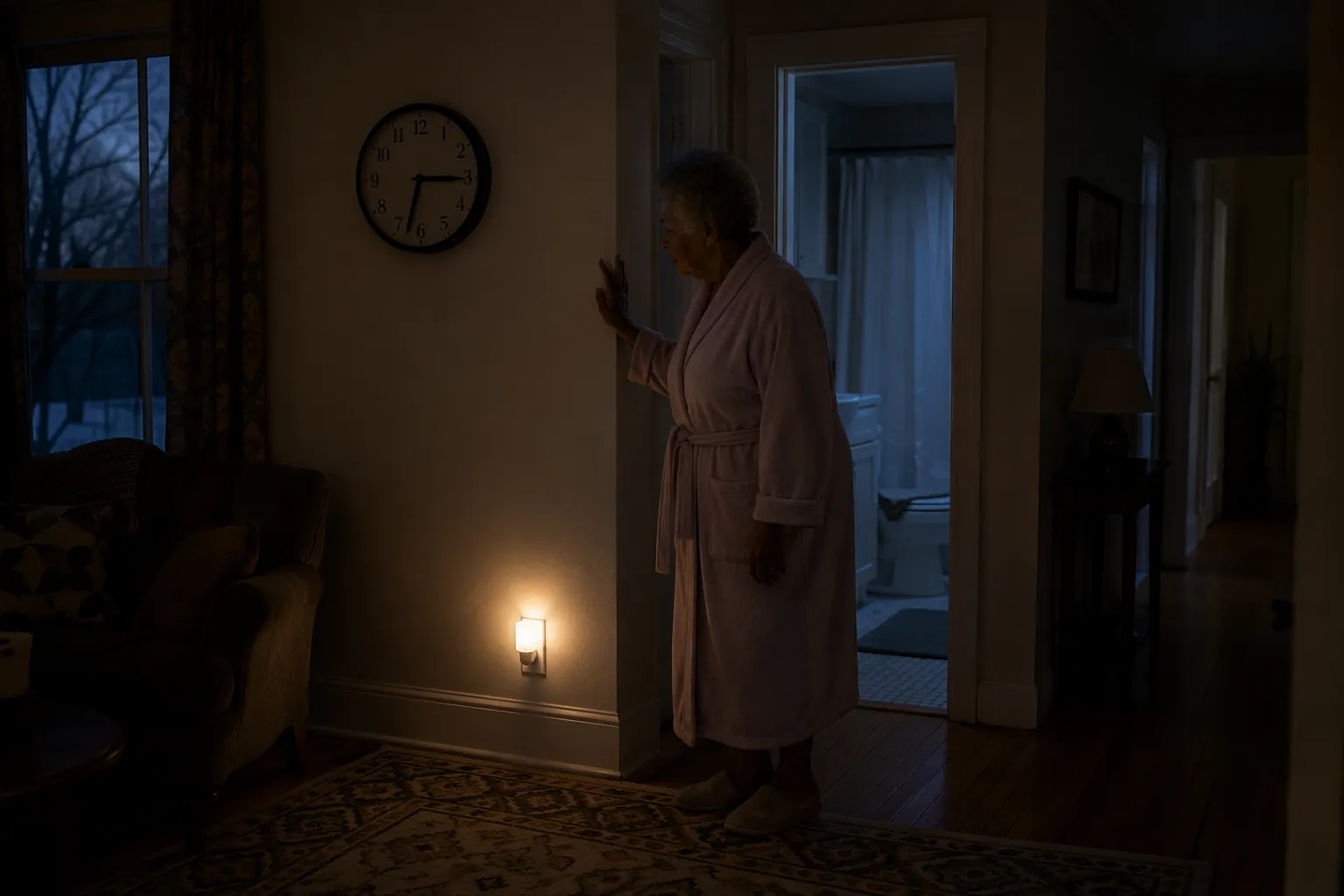
That is the part of the permanent daylight saving time impact on Mississippi seniors that deserves more attention than the pleasant phrase “extra evening light.” Evening light may help some families, workers, and socially active older adults. But for seniors living independently, especially those who start their day before sunrise, the risk window is often in the first hours after waking, when balance, vision, medication timing, and household lighting all meet at once.
The policy question is timely because the U.S. House passed the Sunshine Protection Act in July 2026, while the Senate had not yet voted as of the local reporting available then. Mississippi already has a trigger law that would put permanent daylight saving time into effect if federal approval allows it.[1] That legislative detail matters, but it is not the main health question. The main question is what happens to an older person’s morning when the clock says it is time to move and the sun has not arrived.
The Sleep Pathway Is Already A Fall Pathway
The first mechanism is sleep. A January 2026 BMC Geriatrics study of 10,321 community-dwelling older adults found that seniors sleeping fewer than seven hours had 54.6% higher adjusted odds of falling than those sleeping longer, even after the researchers adjusted for demographics, chronic conditions, medication use, and home hazards.[2] The study was conducted in Turkey, not Mississippi, so it should not be treated as a local outcome study. But it is still a serious warning about the direction of risk: short sleep and falls travel together even after many obvious explanations are accounted for.
That matters for permanent daylight saving time because the concern is not only the familiar twice-a-year clock change. The larger concern is chronic circadian mismatch: more light later in the evening, less light in the morning, and a body clock that is pushed away from the local sun. For some older adults, that can mean delayed sleep onset at night without a matching ability to sleep later in the morning.
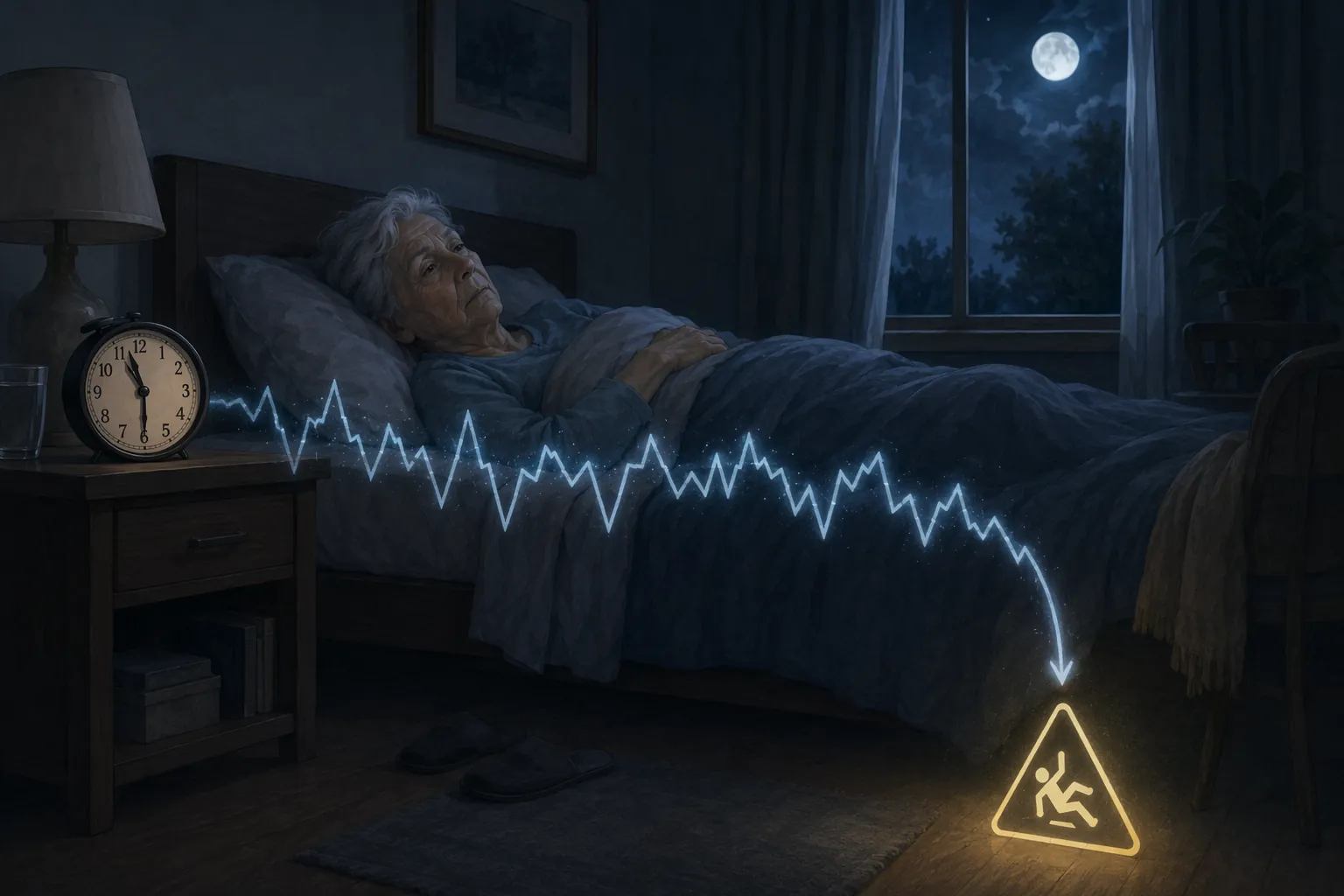
The Penn State insomnia-and-falls research points in the same practical direction. Using Health and Retirement Study data, researchers found that fall probability rose from 28% among older adults with no insomnia symptoms to 40% among those with four insomnia symptoms. The same report also warned that prescription sleep medications increased, rather than reduced, fall risk.[3] That last part is easy to overlook. If a darker-morning, later-evening schedule worsens sleep, the attempted fix may carry its own hazard.
In a home, that hazard does not look like a research variable. It looks like a senior waking groggy, getting up twice in the night, taking a sleep aid, or moving too quickly in the morning because the appointment ride is coming. It can also look like a medication mistake. AgingCare’s expert guidance notes that sleep-deprived seniors are more likely to make medication errors and face increased fall risk.[4] A pill taken at the wrong time can change alertness, blood pressure, bathroom urgency, or steadiness before anyone else in the house realizes the morning has gone off schedule.
Permanent DST Is Not Just Fewer Clock Changes
One reason permanent daylight saving time sounds harmless is that people hear “permanent” and imagine relief from springing forward and falling back. But a Stanford Medicine report on a PNAS study described permanent daylight saving time as creating more circadian burden than permanent standard time, with only morning larks, about 15% of the population, benefiting in the modeling discussed by the researchers.[5]
That distinction is important for older adults. Eliminating clock changes may reduce one disruption, but locking in later sunrises creates a different daily pattern. Morning darkness delays the body’s natural wake cue. Evening brightness can make it harder to settle down. The result is not simply “the same time all year.” It is a winter schedule that asks the body to start before the day has started.
For a senior who wakes at 5:30 or 6:00 no matter what the clock policy says, the extra evening daylight may not translate into extra useful activity. The darker morning, though, lands directly on the first bathroom trip, the first dose of medicine, and the first steps across a room where contrast is poor and furniture has edges.
The Darkness Problem Starts Before The Front Door
Low visibility is the second pathway. It is separate from sleep, and it can add to sleep-related risk rather than replace it. A senior can be well rested and still misjudge a step in the dark. A senior can also be short on sleep and then face the same step with slower reaction time, poorer attention, and less patience for turning on lights.
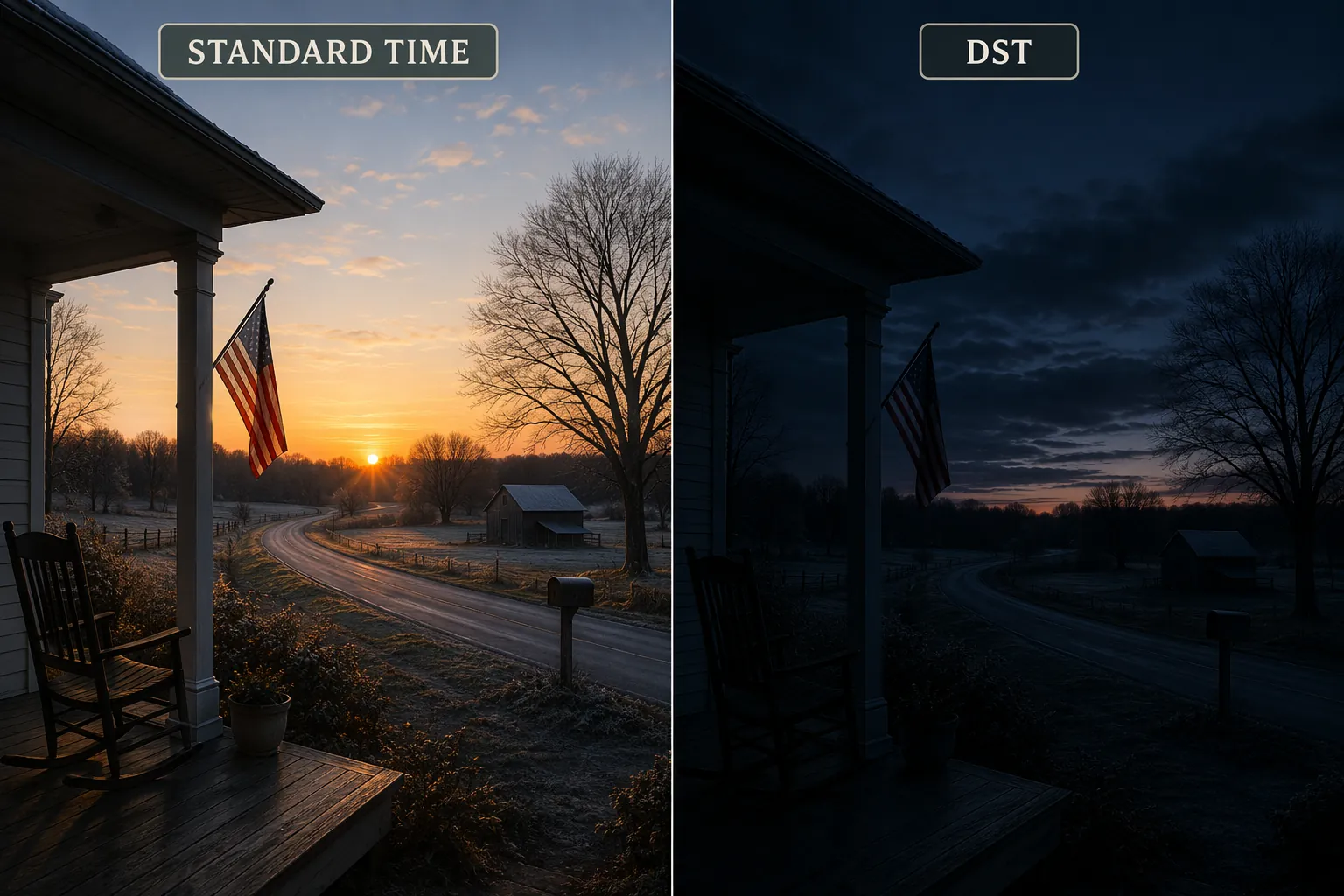
The National Committee to Preserve Social Security and Medicare quoted geriatric psychiatrist Dr. Benjamin Liptzin warning that permanent daylight saving time exposes seniors to “decreased light, cold, icy sidewalks, slipping, falling and breaking a hip.”[6] Mississippi is not usually the first state people think of when they hear “icy sidewalks,” but cold dark mornings here still bring wet steps, slick porches, uneven gravel, dim carports, and rural roads without much lighting.
The porch bulb matters. So does the distance from bed to bathroom. So does whether the kitchen light switch is beside the doorway or across the room. Standard fall-prevention thinking pays attention to these details because falls are rarely caused by one grand event. They happen when several ordinary conditions line up badly.
Permanent daylight saving time would not create every one of those conditions. It would, however, make darkness a more regular part of the winter morning routine. That is a meaningful change for seniors who still handle their own bathing, breakfast, pet care, trash pickup, newspaper retrieval, church rides, dialysis trips, lab appointments, or early primary-care visits.
Why Mississippi Has Less Room For Added Risk
Mississippi does not begin this discussion from a low-risk baseline. America’s Health Rankings reported that 26.8% of Mississippi adults age 65 and older had a fall in the past year in 2023, placing the state 15th nationally for senior fall prevalence.[7] The same broader senior-health profile ranks Mississippi 50th overall in senior health, which means fall risk sits inside a heavier mix of chronic disease, access barriers, and limited support.
The state is also aging. Mississippi State University Extension reported that the state’s 65-and-older population grew 34% from 2010 to 2020, reaching approximately 509,000 seniors, while the old-age dependency ratio rose from 22 to 29.[8] That ratio is not a fall statistic, but it tells a caregiver story: more older adults, fewer working-age people in proportion to help with morning routines, transportation, and recovery after an injury.
Rural life adds another layer. Many Mississippi seniors do not live five minutes from the clinic, the pharmacy, or the adult child who can come by before work. A dark morning may mean a longer drive on a two-lane road, a wait at the end of a driveway, or stepping over uneven ground before sunrise. The available sources do not provide a Mississippi-specific count of falls caused by dark travel, so that point should stay practical rather than statistical. But anyone who has scheduled home health visits or arranged early rides knows that distance changes the margin for error.
| Risk Layer | What Permanent DST Could Change For A Mississippi Senior |
|---|---|
| Sleep duration | Later evening light and darker mornings could make short sleep more likely for some older adults. |
| Morning visibility | Routine movement before sunrise would last longer in winter, especially around bathroom, kitchen, porch, driveway, and travel tasks. |
| Medication timing | Poor sleep and disrupted routines can make medication mistakes more likely. |
| Baseline fall burden | Mississippi already has a high reported senior fall rate, so added hazards land on an existing problem. |
| Caregiver availability | A growing older population and higher dependency ratio can mean fewer hands available during early morning hours. |
What The Evidence Can And Cannot Say
The evidence supports a risk projection, not a completed Mississippi outcome study. Permanent daylight saving time has not yet been enacted nationwide, and the materials available do not show a direct count of additional Mississippi senior falls under such a policy. It would be wrong to say permanent daylight saving time has already caused a measurable increase in falls among Mississippi seniors.
It is also too narrow to judge the policy only by whether people dislike changing clocks. The fall-prevention question is different: would the policy place more older adults into a predictable risk window where sleep loss and darkness overlap? Based on the sleep-and-falls evidence, the circadian-burden research, expert warnings about dark mornings, and Mississippi’s baseline fall burden, the answer is yes, it likely would.
The exact size of that added risk cannot be calculated from the current evidence. The BMC Geriatrics study gives an adjusted association between short sleep and falls, not a Mississippi-specific forecast. The Penn State work links insomnia symptoms and sleep medications with higher fall probability, but its data come from earlier Health and Retirement Study years. The Stanford modeling speaks to circadian burden, not fall counts. Each source supports part of the pathway; the combined Mississippi fall-risk argument comes from putting those pathways together carefully.
If The Policy Advances, Treat Winter Mornings As A Fall-Prevention Window
If permanent daylight saving time moves forward, Mississippi caregivers and seniors should not wait for the first fall to discover the problem. The practical response is to treat winter mornings as a known safety window, the same way families already treat a new walker, a new blood pressure medicine, or a recent hospitalization as a reason to look around the house again.
- Put automatic nightlights or motion lights on the bed-to-bathroom route, in the kitchen, and near exterior doors.
- Check porch bulbs, carport lighting, steps, handrails, and the path to the driveway before winter mornings become darker by the clock.
- Move morning medications into a clear routine that does not depend on rushing, guessing, or taking pills in a dim room.
- Schedule early medical rides with extra time for dressing, toileting, breakfast, and safe walking to the vehicle.
- Ask a clinician or pharmacist to review sleep medications, dizziness, blood pressure changes, and nighttime bathroom trips as part of fall prevention.
The stronger claim has to wait for direct post-policy data. The careful claim is already enough: permanent daylight saving time would likely add fall risk for Mississippi seniors by combining sleep disruption with darker winter morning routines, in a state where senior falls are already common and the older population is growing. That is not a small clock preference. It is a home-safety issue that shows up before breakfast.
References
- Will Congress make daylight saving time permanent? What to know in Mississippi, Clarion Ledger, July 15, 2026.
- Association between sleep duration, daytime napping, and falls in older adults: a population-based cross-sectional study, BMC Geriatrics, January 2026.
- Older adults with insomnia may fall even more when on prescription sleep meds, Penn State.
- Daylight Saving Time Health, AgingCare.
- Daylight saving time may harm our health, Stanford Medicine researchers find, Stanford Medicine, September 2025.
- Is Permanent Daylight Savings Time Healthy for Seniors?, National Committee to Preserve Social Security and Medicare.
- Falls - Adults Ages 65+ in Mississippi, America’s Health Rankings.
- Demographic Dynamics of Mississippi: Transition to an Aging Society, Mississippi State University Extension.
Related reading
Noticed something outdated or inaccurate on this page? Flag a correction. We review every report against CDC, NIA, and AARP HomeFit guidance before updating a page.
Part of the Fall Prevention section.