
STEADI: intervene
Pickleball Benefits for Seniors: Fall Prevention and How to Start
Pickleball offers seniors a fun way to build balance and leg strength that can reduce fall risk, but the sport also carries its own fall risks. This article explains the evidence behind the benefits, what to do before playing, and how to start safely on the court.
On a pickleball court, the useful part and the risky part can happen in the same three seconds. An older player shuffles sideways, plants a foot, reaches the paddle toward a low ball, then has to recover before the next shot comes back. That sequence asks for balance, hip control, quick weight shifting, and leg strength—the same capacities that matter when someone catches a toe on a rug or steps off a curb awkwardly. It also creates exactly the kind of side-reaching, overextended moment that can end in a fall.
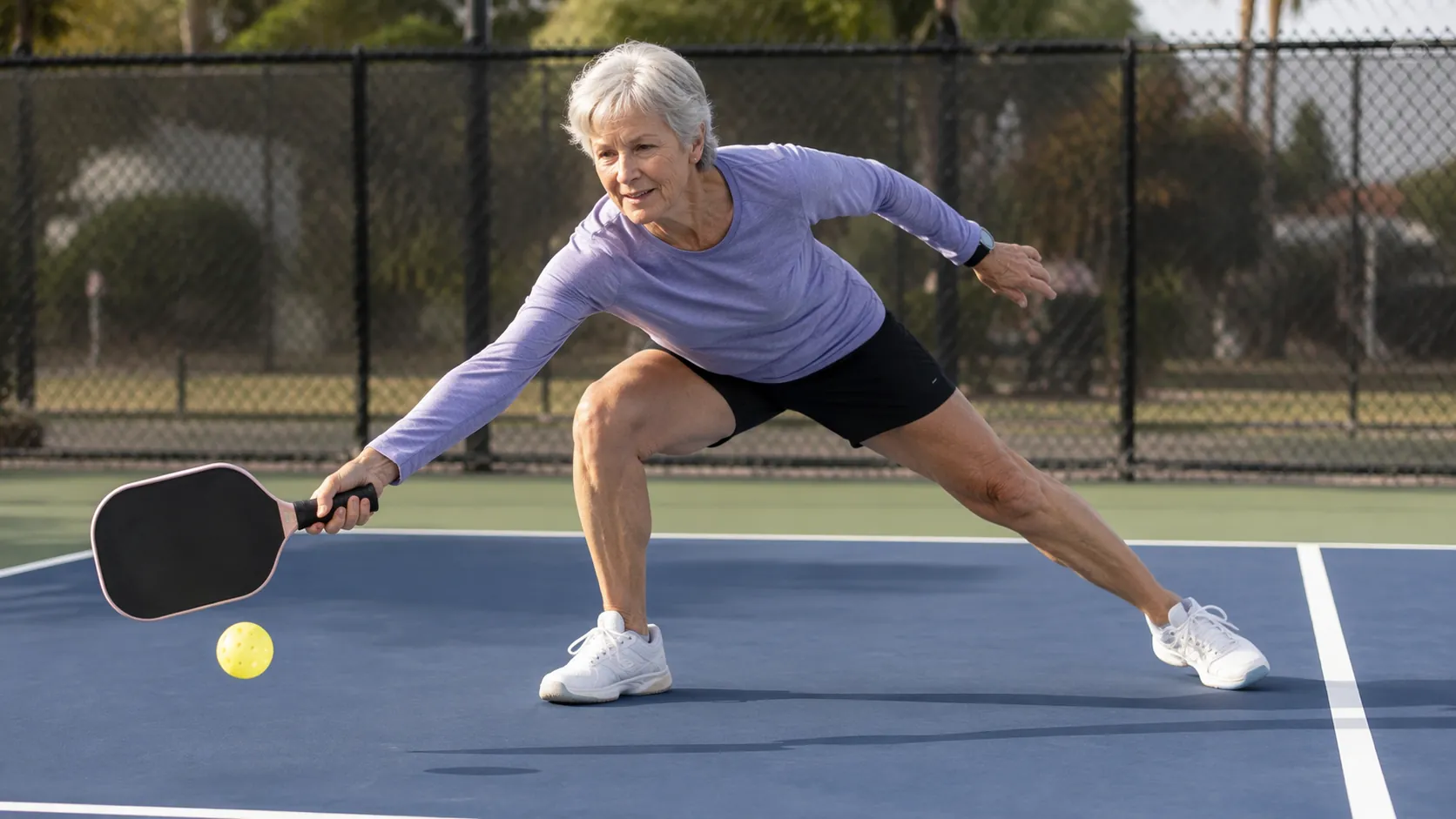
That is the honest starting point for pickleball benefits for seniors and how to start safely: the sport may train movement skills that support fall prevention, but the court is not automatically a fall-prevention program. HAP and Henry Ford Health reported in 2025 that 63% of pickleball injuries are due to slips, trips, falls, and dives, and that 90% of injuries occur in players over 50.[1] Those figures do not mean seniors should avoid the game. They mean the safest version of pickleball begins before the first serve.
Why Pickleball Can Help Balance
Pickleball is not useful for fall prevention because it is trendy or because it is gentler than some other court sports. Its value comes from the movements it repeats. Players step forward, backpedal, shuffle laterally, rotate through the trunk, lunge toward the kitchen line, and recover to a ready position. Baptist Health describes these forward, backward, and lateral patterns as a way to strengthen leg, hip, and core muscles that are important for everyday balance.[2]
Those movements matter because many falls are not slow, planned events. A person loses balance, then has a brief window to regain it. The body needs enough hip and leg strength to stop the drift, enough core control to keep the trunk from tipping, and enough stepping speed to put a foot in the right place. A casual doubles game can practice those systems more naturally than a home exercise sheet that never gets opened.
The social pull is part of the health story, too. Pickleball gives many older adults a reason to come back: a scheduled game, familiar partners, a little competition, and enough fun that it does not feel like another medical assignment. NC State University reported that adults 65 and older averaged more than 68 minutes of moderate-to-vigorous physical activity per pickleball session and took 3,477 more steps on play days; the researchers noted that playing three or more times per week could help older adults meet CDC physical activity guidelines.[3]
That finding is about activity, not proof that pickleball prevents falls in daily life. Still, it helps explain why the sport deserves attention. A balance routine only helps if someone does it often enough. Pickleball has the rare advantage of being repeatable because people enjoy the appointment.
The Best Fall-Prevention Evidence Is Promising, Not Final
The most relevant senior-specific evidence comes from a 2025 study of a 10-week multi-faceted training program for senior pickleball players. The program did not simply tell people to play more. It added strength, balance, change-of-direction, and agility drills around the sport.[4]
At five-month follow-up, 25% of the training group had fallen, compared with 44% of the control group. The trained players also preserved hip strength, while controls declined by 12%, and they improved change-of-direction speed by 0.7 seconds.[4] For an older pickleball player, those outcomes are not abstract. Hip strength helps control the pelvis when weight shifts to one leg. Change-of-direction speed matters when a ball pulls someone wide and the next movement has to be a recovery step rather than a stumble.
The study is also smaller than anyone should pretend. It included 29 total participants and was non-randomized.[4] It does not settle whether pickleball reduces everyday falls outside the sport. What it does support is a narrower, useful conclusion: senior pickleball players may benefit when the game is paired with targeted strength, balance, agility, and direction-change training.
| What improved in the training study | Why it matters for senior players |
|---|---|
| Lower fall rate at follow-up: 25% in the training group versus 44% in controls | Suggests that structured preparation around pickleball may reduce fall events among players, though the evidence is preliminary |
| Hip strength was maintained while controls declined 12% | Supports safer weight shifting, lunging, and single-leg control during play |
| Change-of-direction speed improved by 0.7 seconds | Helps players recover from lateral movement instead of reaching farther from an unstable position |
How To Start Before You Step Onto The Court
For a senior who wants to try pickleball, the first purchase is not the paddle. The first step is deciding whether the body is ready for quick lateral movement, low reaches, and sudden stops. Anyone with osteoporosis, severe balance impairment, a joint replacement, or a history of falls should talk with a doctor or physical therapist before starting. The same is true when an adult child is helping a parent return to activity after a recent fall, even if the parent feels eager.
A simple pre-court sequence can make the first game less of a test. These drills do not need to be dramatic. They need to be consistent, controlled, and easy enough to repeat without turning them into a second sport.
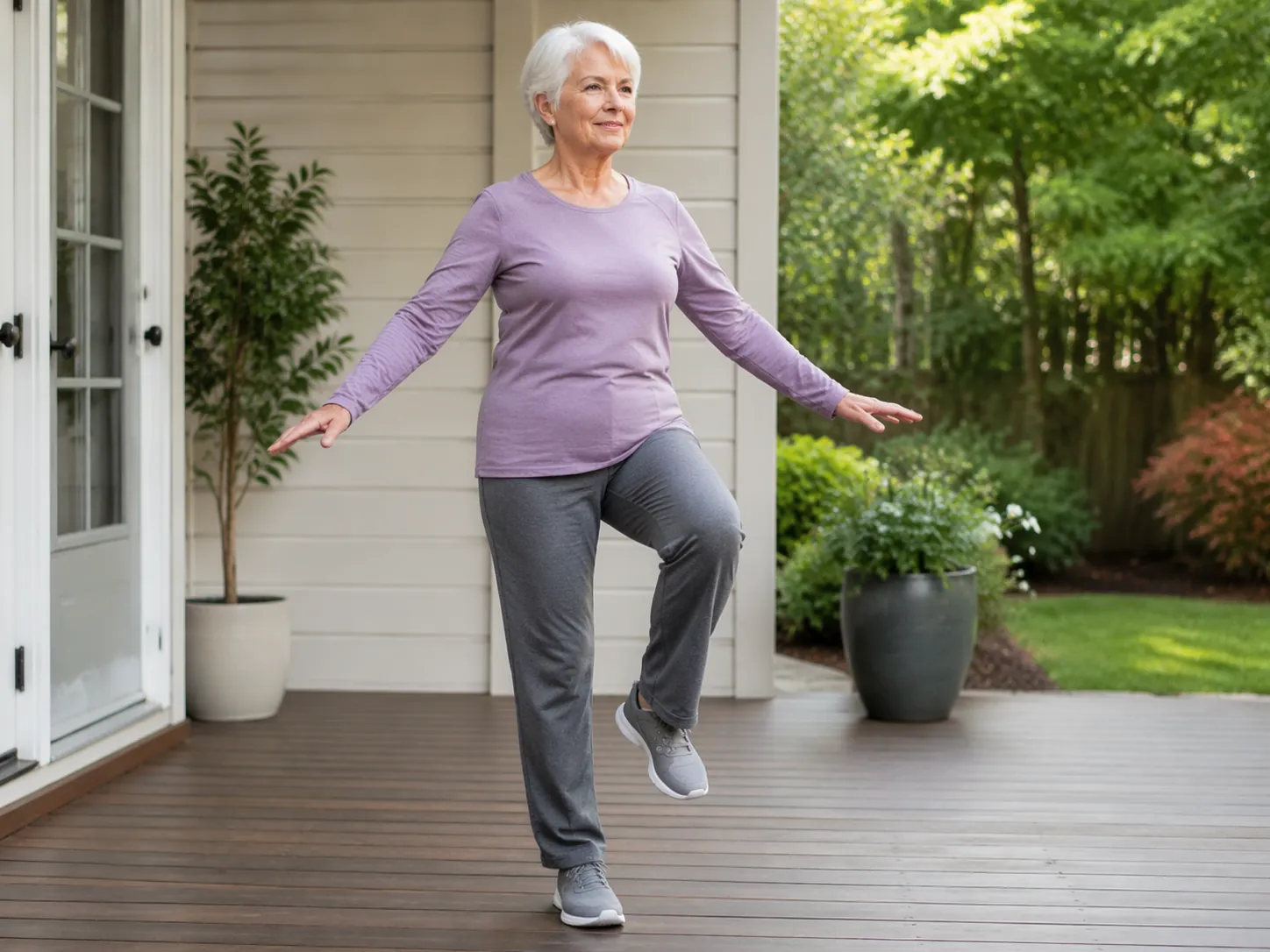
- Single-leg stands: Stand near a counter or sturdy chair, lift one foot slightly, and practice holding balance without gripping unless needed.
- Heel-to-toe walking: Walk in a straight line with the heel of one foot placed directly in front of the toes of the other.
- Tandem stance ball toss: Stand with one foot in front of the other and gently toss a soft ball with a partner or against a wall.
- Crossover steps: Step one foot across the other slowly, then return, using a wall or counter nearby until the pattern feels steady.
These are not glamorous exercises, but they prepare the exact transitions that show up in pickleball: standing on one leg for a beat, narrowing the base of support, turning the head while balancing, and crossing or uncrossing the feet without panic. They are also easier to adjust than a live point, where the ball and the opponent keep moving.
Use Court Shoes, Not Running Shoes
Running shoes are built mostly for forward motion. Pickleball asks for side-to-side movement, quick stops, and small pivots. Court shoes with lateral support are a safer match because they are designed to help the foot stay stable during sideways movement. The National Council on Aging also emphasizes appropriate footwear and conditioning as part of injury prevention for pickleball players.[5]
Starter equipment costs can vary by brand and region, so it is better not to treat any estimate as universal. A beginner does not need premium gear, but shoes deserve priority over a better paddle. A cheaper paddle with stable footwear is a better first setup than an expensive paddle worn with shoes that roll during a lateral stop.
Warm Up For The Movements The Game Actually Uses
A 5- to 10-minute dynamic warm-up should look like a slower version of the game. Walk the court. Add gentle side steps. Practice small forward and backward steps. Do a few controlled mini-lunges without reaching. Rotate the trunk lightly. Then take easy practice hits before playing a real point.
The point is not to stretch every muscle perfectly. It is to remind the ankles, hips, trunk, and eyes that they are about to work together. Cold muscles and surprise direction changes are a poor combination, especially for someone who already worries about balance.
Play In A Way That Protects The Benefit
Once play begins, the safest habits are mostly unglamorous. Let the unreachable ball go. Turn and walk for a lob instead of rushing backward. Avoid diving. Do not keep reaching wider after the feet have stopped moving. Step closer first, then swing. In doubles, call balls clearly so two players do not collide while both try to be helpful.
Beginners should also choose the first games carefully. Open play with faster, younger, or highly competitive players may be too much too soon, especially as the sport’s overall player base gets younger. USA Pickleball data show the average player age dropped to 35 in 2024, which is a useful reminder that “pickleball” no longer automatically means a slow senior game. A beginner-friendly clinic, senior session, or skills class is a better starting point than a crowded court where the pace is set by strangers.
For adult children, encouragement should sound specific rather than cheerfully vague. “Try pickleball” is less useful than “Let’s find a beginner senior clinic, check your shoes, and practice balance at home for a couple of weeks first.” Activities that build balance are especially valuable when other conditions raise fall danger, including seasonal risks such as heat waves or power outages, but the activity itself still has to be matched to the person in front of you.
A Safe First-Court Sequence
For most seniors, a safer start follows this order:
- Check medical concerns first if osteoporosis, severe balance impairment, joint replacements, prior falls, dizziness, or new pain are part of the picture.
- Spend time on basic balance drills before playing: single-leg stands, heel-to-toe walking, tandem stance ball toss, and crossover steps.
- Buy or borrow proper court shoes with lateral support before worrying about a higher-end paddle.
- Warm up dynamically for 5 to 10 minutes with walking, side steps, gentle lunges, trunk rotation, and easy practice hits.
- Start with beginner-friendly play and use rules that protect the body: no diving, no rushing backward, no overreaching, and no chasing balls into unsafe space.
Pickleball can be a valuable fall-prevention ally for seniors because it trains balance, hip control, leg strength, stepping speed, and confidence in motion. It becomes safer when those benefits are built deliberately. The court can reinforce a balance-and-strength routine; it should not be asked to replace one.
References
- From Pickleball to Picklefall: Keeping Seniors Safe on the Court — HAP / Henry Ford Health, 2025
- How Pickleball Helps Improve Balance in Seniors — Baptist Health, 2025
- Pickleball Helps Older Adults Stay Physically Active — NC State University, 2023
- Effect of a Multi-Faceted Training Program on Falls in Senior Pickleball Players
- How to Prevent Injuries When Playing Pickleball — NCOA
Related reading
Noticed something outdated or inaccurate on this page? Flag a correction. We review every report against CDC, NIA, and AARP HomeFit guidance before updating a page.
Part of the Fall Prevention section.