
STEADI: Intervene
How Seniors Can Plant Shade Flowers Safely This Fall
Wet leaves, shorter daylight, and cold soil make autumn planting riskier for older gardeners. A quick pre-planting walkthrough, safe body mechanics, proper footwear, and a keep/modify/hand-off split let seniors plant shade flowers without falling, straining, or overexerting.
Planting shade flowers after the worst summer heat has passed can be one of the pleasant jobs of autumn. The soil is quieter, the light is softer, and a tray of pansies or shade perennials feels manageable compared with a July weeding session. But “fall gardening” has another meaning for older adults: wet leaves on a path, dimmer late-afternoon light, a hose half-buried under foliage, and a bag of potting mix that was not heavy until it had to come out of the car.
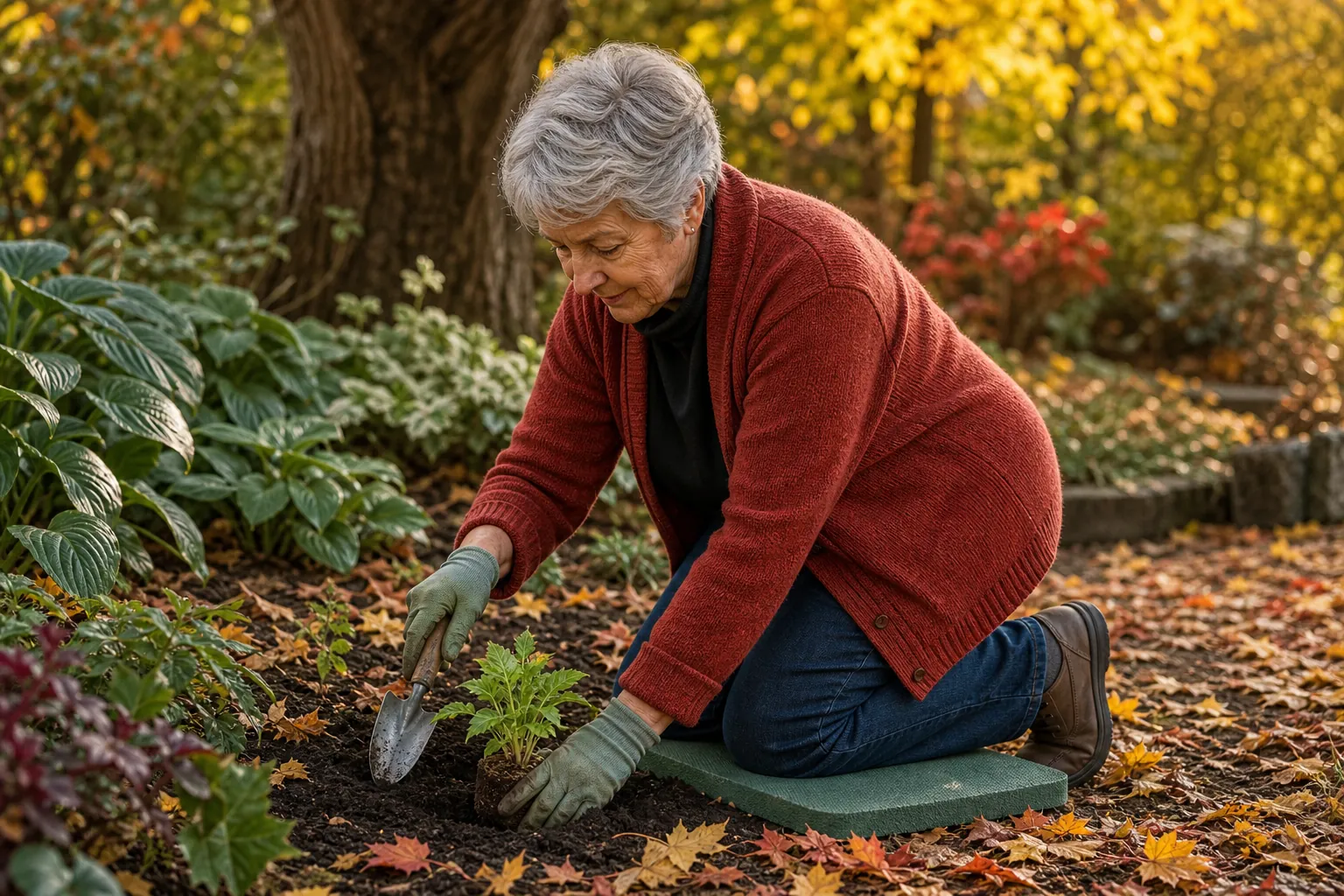
That is where safe fall gardening tips for seniors planting shade flowers need to begin: not with a long flower list, but with the walk from the door to the bed, the footing around the planting spot, the light at the hour you actually plan to work, and the way you will get down to the soil and back up again.
The stakes are real without turning gardening into something to fear. The CDC reports that about 1 in 4 U.S. adults age 65 and older falls each year, and about 37% of those who fall report an injury that required medical treatment or restricted activity for at least one day.[1] That data does not say gardening causes falls. It does say an ordinary outdoor task deserves a little more respect when the ground is uneven and the daylight is fading.
Do the autumn walkthrough before you touch the plants
The safest planting session starts before the trowel comes out. Walk the whole route as if you were carrying something in both hands, because later you may be. Start at the door, cross the path, reach the planting bed, turn around, and come back. Look for what autumn adds: curled wet leaves, loose gravel, dark patches under shrubs, uneven pavers, muddy edges, and hoses that were obvious in August but disappear under fallen leaves.
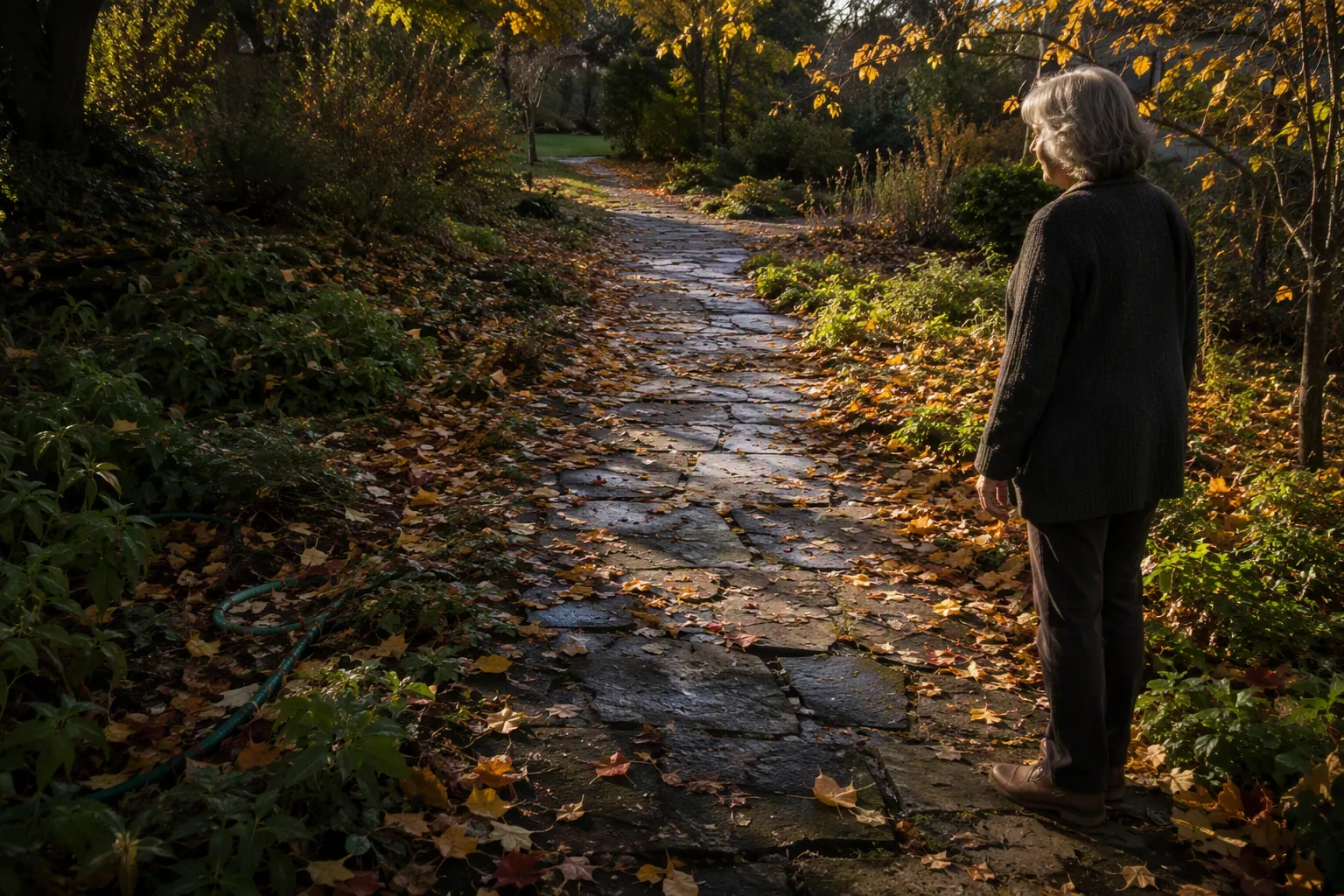
University of Nevada, Reno Extension lists uneven pavement, loose gravel, wet leaves, garden hoses, and poor outdoor lighting among outdoor fall hazards. It also notes that older eyes may need up to three times more light than younger eyes.[2] That one fact changes the planting schedule. A bed that looks safe at 1 p.m. may not be safe at 5 p.m. under trees, especially after rain.
| Check this before planting | What to look for | What to do before work starts |
|---|---|---|
| Route from door to bed | Wet leaves, uneven pavers, loose gravel, hose loops, muddy spots | Clear the path, move the hose completely out of the walkway, and avoid carrying plants across unstable ground.[2] |
| Light | Dim shade, glare, late-afternoon shadows, porch or path lights that do not reach the bed | Plant earlier in the day or improve lighting; do not rely on memory of where steps and edges are.[2] |
| Footwear | Slip-on sandals, clogs without backs, flip-flops, worn soles | Wear sturdy closed-back shoes before stepping onto damp ground.[3] |
| Kneeling setup | No pad, no handhold, both knees going to the ground, bed on a slope | Use a kneeling pad or bench with handles, and choose level ground when possible.[3][4] |
| Phone access | Phone left indoors, buried in a jacket pocket, or unreachable once kneeling | Keep a cellphone or alert system within reach if gardening alone.[3] |
| Task weight | Soil bags, filled pots, mulch, trays carried too far | Stage supplies close to the bed and hand off heavy or awkward moving before planting begins. |
The hose is worth special attention because it behaves like a trap. It is useful, it belongs in the garden, and it is easy to excuse. But if it crosses the path, hides under leaves, or has to be stepped over while carrying a flat of flowers, it has stopped being harmless. Move it first, even if you plan to water only after planting.
The same is true of fallen leaves. Dry leaves may be merely messy; wet leaves can act like a slick surface over stone, wood, or compacted soil. Clear the walking line, not the entire yard. The goal is not to make the garden showroom-perfect. It is to create one dependable path in and one dependable path out.
Then stage the work. Put the plants, trowel, gloves, kneeling pad, watering can, and any amendments where they can be reached without twisting. If supplies came home in the trunk, unload them onto a cart, bench, or porch step rather than carrying everything at once. A task that is safe when supplies are already at the bed can become risky when the first job is hauling them across wet grass.
Body mechanics matter more than finishing the bed in one stretch
Planting shade flowers usually means repeated small movements: bend, dig, reach, press soil, shift sideways, repeat. None of those motions looks dramatic. Together, they can wear out legs, backs, wrists, and balance before the gardener notices.
Oregon State University Extension recommends warming up before gardening, changing tasks every 10 to 20 minutes, and using knee pads or kneeling benches with handles.[4] A warm-up does not need to look like an exercise class. Walk the route once or twice, roll the shoulders, open and close the hands, and do a few gentle ankle and knee movements before kneeling. Cold air and shaded soil make it easier to start stiff; do not let the first hole be the warm-up.
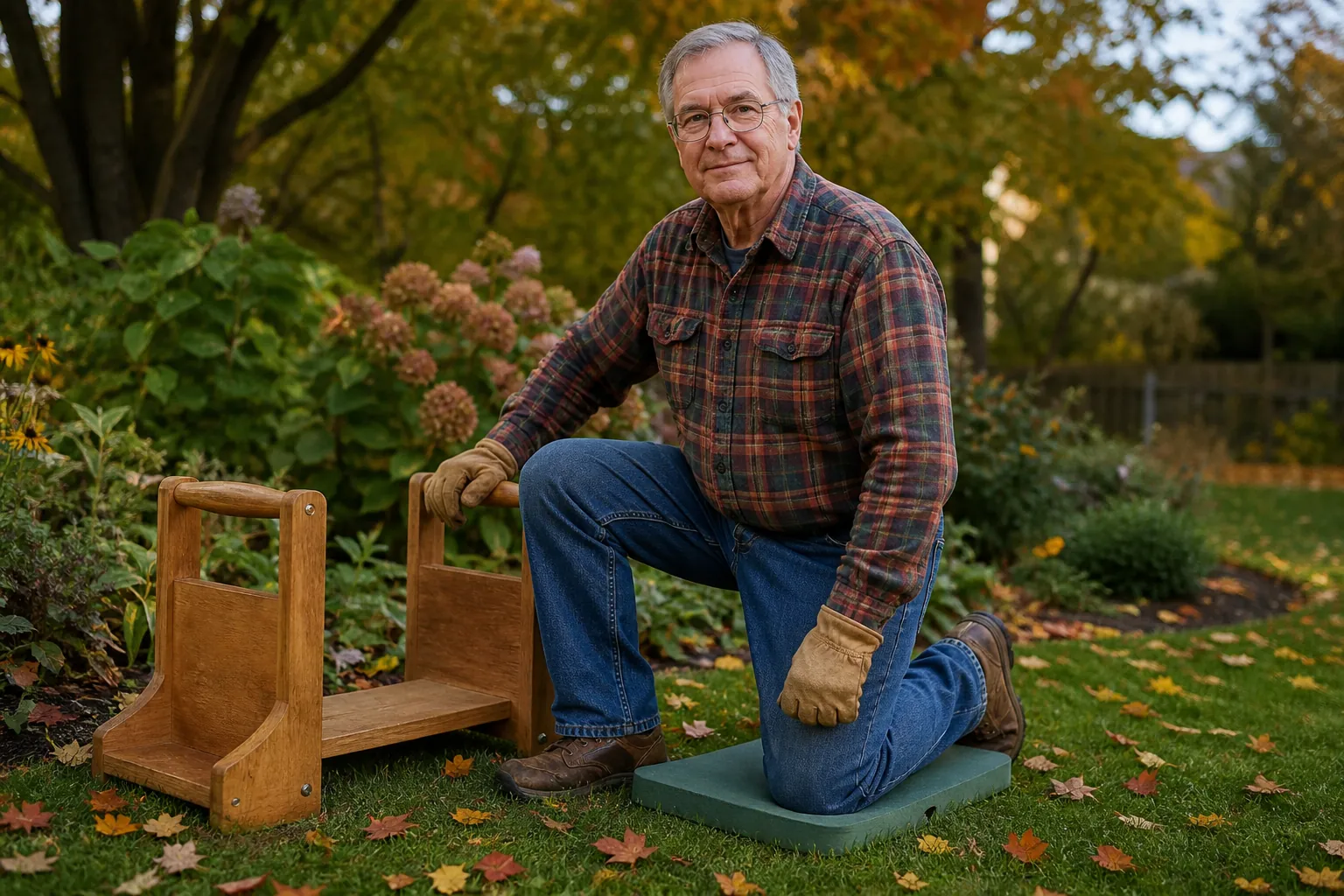
For kneeling, the safer pattern is one knee down on a pad with the other knee bent, rather than both knees on the ground. Fox Rehabilitation’s occupational therapy guidance specifically recommends that one-knee position and says not to kneel on both knees; it also advises avoiding hills and slopes while gardening.[3] The bent knee gives you a way to shift weight, stabilize yourself, and prepare to rise. Both knees down may feel comfortable for a minute, but it leaves fewer options when you need to get up.
A kneeling bench with handles can help when it is used on level, stable ground. The handles are not decoration; they are there so hands can push evenly when lowering or rising. If the bench rocks, sinks, or sits on a slope, move the task or do it another way. A tool that is helpful on flat ground can become one more unstable object on a hillside.
Footwear is part of body mechanics, not a fashion detail. Closed-back shoes with sturdy soles help the foot stay with the shoe when stepping on damp leaves, mulch, or uneven stones. Flip-flops and backless shoes may be easy at the door, but they are poor companions for a path with autumn debris.[3]
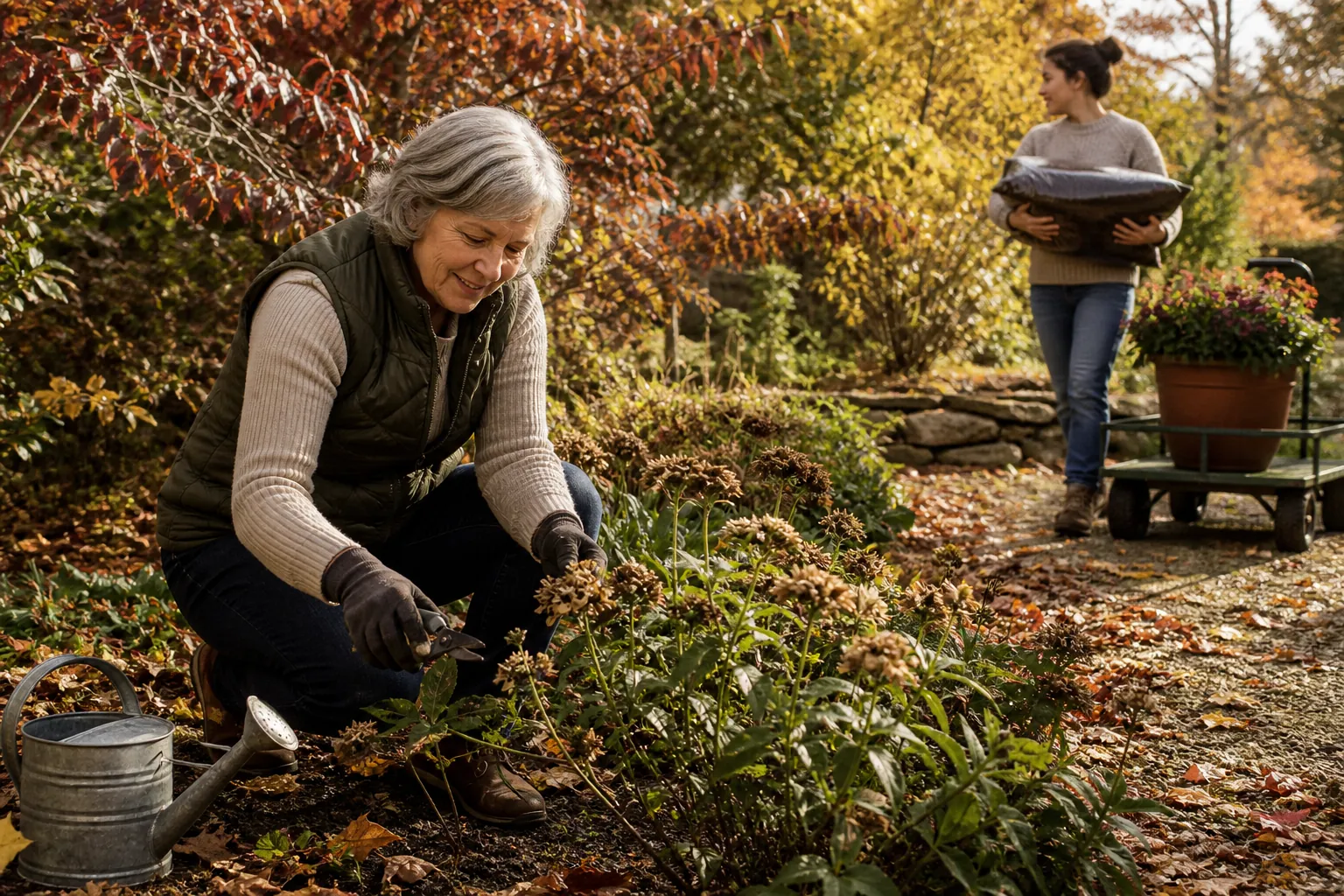
The 10-to-20-minute task change is a useful guardrail because it prevents the familiar bargain: “I’ll just finish this row.” Instead, plant three or four flowers, stand up, water lightly, label the plants, collect empty pots, or sit for a few minutes. Changing tasks is not quitting. It keeps one joint, one posture, or one tired leg from carrying the whole afternoon.
Use a keep, modify, or hand-off rule
The hardest part is often not knowing what is unsafe. It is admitting that one part of a beloved task has changed. A person may still enjoy choosing the plants, setting them in place, tucking soil around roots, and watering them in. That does not mean the same person needs to wrestle a heavy soil bag from the trunk or drag a filled ceramic pot across flagstone.
Preferred Care at Home’s gardening safety guidance draws a practical line: small-section weeding, deadheading, and light watering may be kept, while lifting soil bags, moving filled pots, and mulching are better modified or handed off.[5] That split preserves the satisfying part of the work instead of treating the whole garden as off-limits.
| Keep | Modify | Hand off |
|---|---|---|
| Placing small shade plants in prepared holes | Use smaller trays, stage plants at waist height first, and plant only a few at a time | Digging large new beds if the ground is hard, sloped, root-filled, or muddy |
| Deadheading spent blooms | Use lightweight pruners and work from a stable path or seat | Pruning that requires reaching far, leaning, or stepping onto unstable ground |
| Light watering | Use a small watering can, a short hose already positioned safely, or a wand that avoids reaching | Dragging a long hose across the path after leaves have fallen |
| Small weeding sections | Set a timer and change position often | Large mulching jobs, heavy bags, and repeated wheelbarrow loads |
| Choosing flowers and arranging them before planting | Ask someone else to unload and place heavier supplies first | Moving filled pots, large containers, or awkward planters |
This is also where containers can help, as long as they are planned safely. A raised or movable setup may reduce bending and shorten the route, but containers bring their own weight and stability questions once soil and water are added. For that related strategy, see Can Container Gardening Prevent Falls in Seniors? This article’s job is narrower: making the autumn planting session safer when shade flowers are going into beds, borders, or existing containers.
Keep the shade-flower plan simple
Plant selection matters, but it should not crowd out the safety plan. Choose shade flowers suited to your local climate, soil, and light, and ask a local nursery or extension office about hardiness if you are planting perennials. Autumn plant lists can be tempting, but a beautiful variety is not the right choice if the only available spot requires kneeling on a slope, stepping over roots, or working in deep shade near dusk.
Before digging, set the plants on the ground where they will go. Stand back from a safe spot and adjust the arrangement while everything is still in nursery pots. That reduces the number of times you kneel, rise, shuffle sideways, and twist with a trowel in hand. If a plant needs to move more than an arm’s reach, stand up and move your feet rather than reaching across the bed.
If you need a planting window, use the local first-frost date as a guide: Illinois Extension and New York Botanical Garden both frame fall planting in a range of roughly a month to six weeks before first frost. Even then, do not rush into failing light, on wet stone, or during a cold rain. Wait for a dry, bright window or ask for help preparing the bed so the planting itself stays short.
Do not garden alone without a way to call for help
A phone left on the kitchen counter is not a safety plan. If you garden alone, keep a cellphone or alert system where you can reach it from the ground, not just from a standing position. Fox Rehabilitation includes a cellphone or alert system among its safety recommendations for older adults gardening alone.[3]
A small crossbody pouch, zipped vest pocket, or garden apron pocket may work better than a back pants pocket once you are kneeling. If you use an iPhone, it is worth setting up emergency contacts and safety features before the gardening season becomes a problem; see Configure iPhone Safety Features for Seniors in iOS 27 for that separate setup.
Make the go/no-go decision for this afternoon
The decision does not need to be dramatic. Before planting, look at the actual afternoon in front of you. Is the route cleared? Is the light good enough now and likely to stay good until you are finished? Are the shoes on your feet the shoes you would trust on damp leaves? Is the phone reachable? Are the plants, tools, pad, water, and gloves staged close to the bed? Has someone else moved the soil, mulch, or heavy pots?
If the answer is yes, keep the session small. Plant in short intervals, change position often, and stop while there is still enough light to put tools away safely. If the answer is no, the safest gardening decision may be to clear the path today and plant tomorrow, or to let someone else prepare the bed while you do the arranging and planting.
Strength, balance, and endurance also affect how much outdoor work is reasonable. For broader habits that support independence, see How to Stay Healthy and Independent After 70. For another yard-work safety angle, including outdoor hazards beyond planting, see How to Prevent Tick Bites and Falls in Older Adults.
This article is for general education and is not medical advice. Check with a healthcare provider before starting a new or more demanding gardening routine, especially after a recent fall, dizziness, balance changes, new pain, shortness of breath, or other new symptoms.
When the route is cleared, the light is adequate, the shoes are sturdy, the phone is reachable, and the heavy work is already handled, the remaining job is small enough to finish in short intervals without turning a pleasant autumn task into a fall risk.
References
- Older Adult Falls Data, CDC
- Preventing Falls in Your Home, Extension, University of Nevada, Reno
- 20 Ways to Make Gardening Safer for Older Adults, Fox Rehabilitation
- Gardens are for everyone, Oregon State University Extension Service
- Gardening Support for Seniors, Preferred Care at Home
Related reading
Noticed something outdated or inaccurate on this page? Flag a correction. We review every report against CDC, NIA, and AARP HomeFit guidance before updating a page.
Part of the Fall Prevention section.