
STEADI: Intervene
Why Severe Weather Is Deadlier for Seniors — How to Prepare
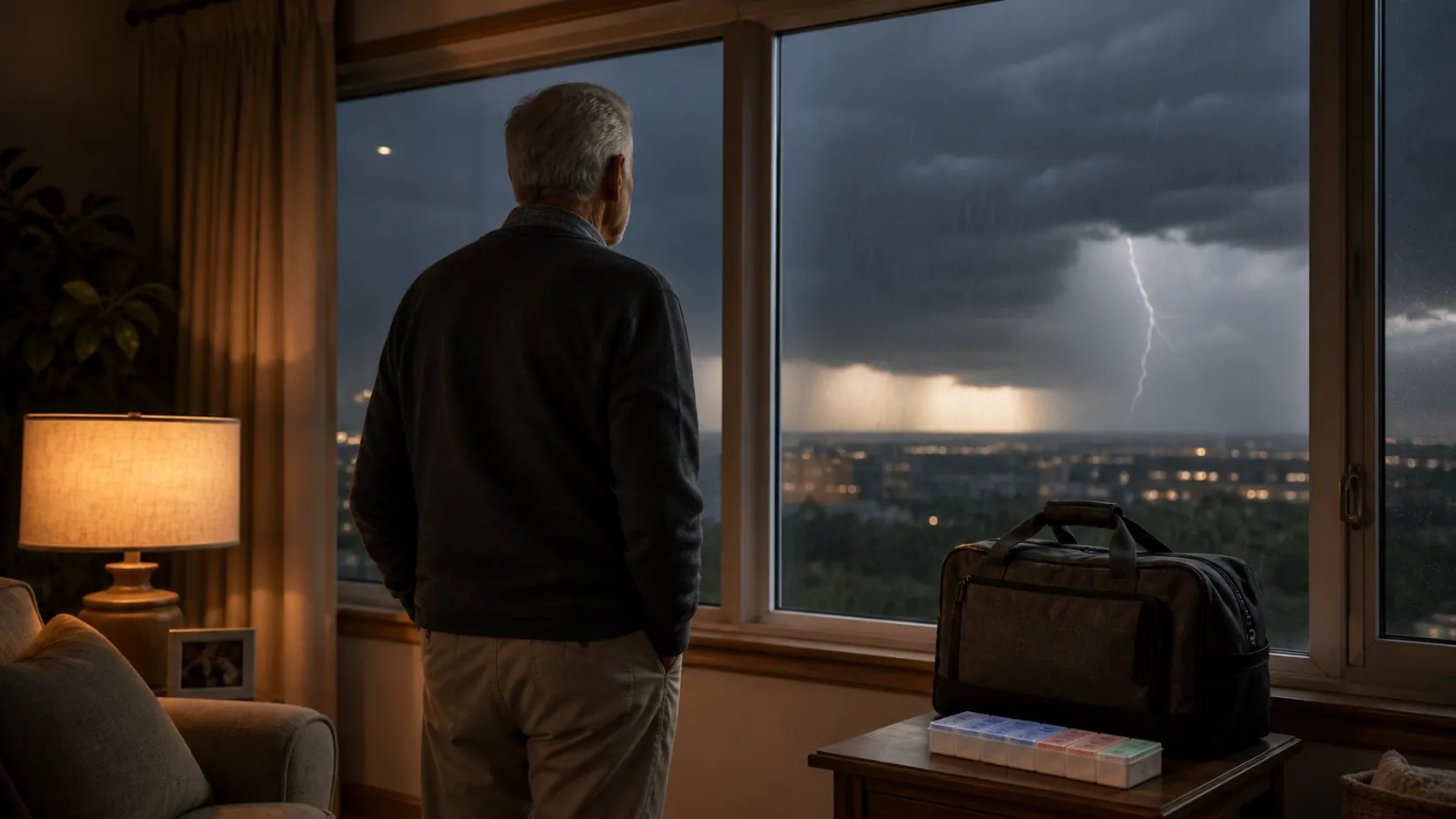
Severe weather kills older adults at disproportionate rates for specific, addressable reasons — heat sensitivity and medication effects, medical-device dependence, limited mobility, and isolation. This checklist maps each documented risk factor to one concrete preparation action, so caregivers and older adults can prepare for the real causes of excess deaths instead of a generic supply list.
The reason severe weather preparation has to look different for older adults is written plainly in disaster death records. In New Orleans in 2005, people age 75 and older were about 6% of the city’s population, yet they accounted for about half of Hurricane Katrina deaths, according to AARP’s disaster resilience toolkit.[1] During the February 2021 Texas winter storm, people age 60 and older made up 60% of the 246 deaths, most of them from hypothermia.[1] Heat shows the same pattern: in a CDC analysis of 10,527 U.S. heat-related deaths from 2004 through 2018, adults 65 and older accounted for 39%, and their death rate was the highest of any age group at 0.7 per 100,000.[2]
Those numbers are not a reason to panic-buy another flashlight. They are a reason to ask why the older person is at higher risk in the first place. Is the danger heat sensitivity? A medication that cannot sit in a hot room? An oxygen concentrator that stops when the power fails? A walker that turns a dark hallway into a fall hazard? A phone alert that no one hears?
A severe weather preparation checklist for seniors is safest when it is built around those risks. The bottled water, batteries, documents, and go-bag still matter. But they should not be the first or only measure of readiness for someone aging in place.
Start with the risk, then choose the preparation
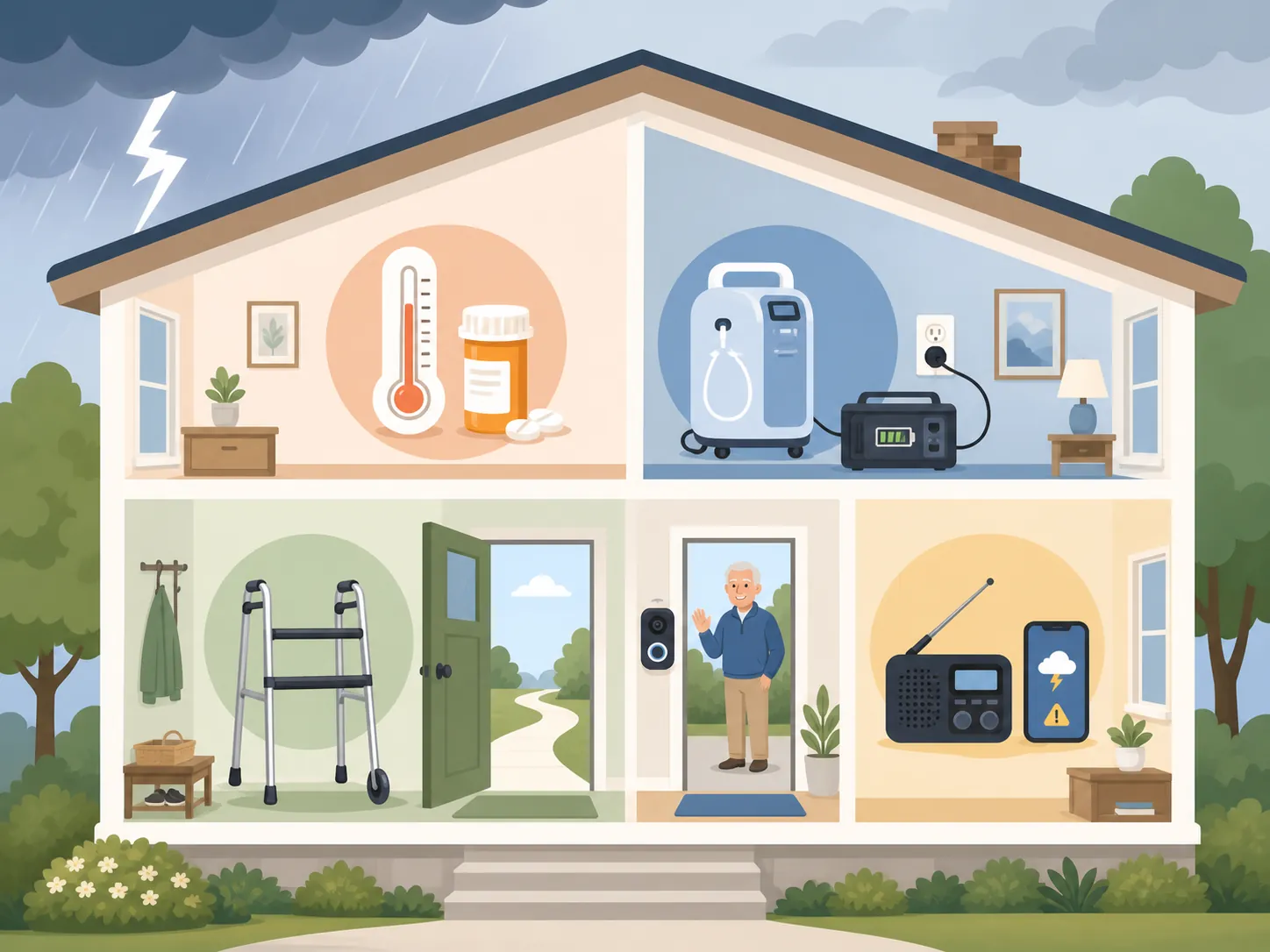
The pattern across hurricanes, heat waves, winter storms, and outages is not that every older adult has the same emergency need. It is that severe weather exposes the needs that were already fragile: cooling, medication continuity, powered medical equipment, mobility, transportation, communication, and daily check-ins.
| Risk factor | Why it becomes more dangerous | Preparation that directly matches the risk |
|---|---|---|
| Heat sensitivity and medication concerns | Older adults are more vulnerable to heat illness, and some medications or medical supplies require temperature planning. | Write a cooling destination, transportation plan, and medication-temperature plan before a heat emergency. |
| Power-dependent medical needs | Oxygen equipment, some respiratory devices, refrigeration needs, and charging needs can fail when the grid fails. | Document backup power, battery duration, utility contacts, and the clinical contact to call if equipment cannot be powered. |
| Limited mobility and fall risk | Evacuation, bathroom trips, stairs, cords, rugs, and dark rooms become more hazardous under time pressure or during outages. | Walk the evacuation and nighttime bathroom routes in advance; remove obstacles and identify transportation help. |
| Isolation | A plan that depends on the older adult making every call can fail when phones, hearing, cognition, fatigue, or fear get in the way. | Name the people who will check in, when they will do it, and who has permission to enter or request a wellness check. |
| Alert gaps | Internet, cell service, hearing, vision, and battery life can all break the chain between warning and action. | Use layered alerts: phone alerts, a battery-powered weather radio, local emergency contacts, and a human check-in. |
Heat risk: write down the cooling plan, not just “drink water”
Heat is where generic checklists often become too casual. CDC guidance for adults 65 and older notes that aging changes the body’s ability to respond to heat, and it specifically advises staying in air-conditioned buildings and not relying on a fan as the main cooling source during extreme heat.[4] That matters for an older adult who normally manages at home with a ceiling fan, keeps the blinds closed, and says the room is “not that bad.” During dangerous heat, “not that bad” can still be unsafe.
The March 2026 Harvard Chan School report on a Lancet Planetary Health study adds scale without changing the household task. Across 73.7 million Medicare beneficiaries from 2000 through 2018, researchers estimated about 9 extra deaths per heat wave per 10,000 older adults, or about 17,600 extra deaths total, with a burden nearly three times higher for Black older adults.[3] That figure is not the same measure as an annual heat-death count; it is an estimate of excess deaths associated with heat waves in that Medicare study population over that time period.[3]
The practical preparation is a written cooling destination. It should name the place, not just the idea: a specific relative’s home with air conditioning, a community cooling center, a library, a place of worship, or another local site confirmed before the emergency. The plan also needs the ride. If the older adult no longer drives, avoids driving after dark, uses a walker, or cannot manage stairs in a hurry, the cooling destination is not real until transportation is assigned.
Medication planning belongs in the same heat section. Ready.gov tells older adults to build an emergency plan around their medical needs, while the Red Cross older-adults guidance recommends keeping at least a 30-day supply of medications and medical supplies, where possible.[5][6] That does not mean every medication can simply sit in a hot go-bag for a month. For insulin, CDC emergency guidance says to keep insulin cool but never frozen, and to monitor blood sugar carefully if insulin has been stored above 86°F.[7] Other medications and supplies may have different storage rules, so the safe action is to ask the pharmacist or clinician what applies to that person’s actual list.
- Write the primary cooling location and a backup cooling location.
- Assign the person who will drive or arrange transportation.
- Keep a labeled medication list with doses, prescribers, pharmacy phone number, allergies, and storage notes.
- Ask about temperature-sensitive items individually; do not assume one temperature rule applies to every medication.
- Place the medication pouch where it can be reached without bending, climbing, or searching in the dark.
Power-dependent medical needs: know how long the equipment can run
An emergency supply shelf does not solve a dead oxygen concentrator. For someone who depends on powered medical equipment, the checklist starts with the wall outlet and works backward: what stops when the power fails, how long the backup lasts, who knows the device is in the home, and where the person goes if power is not restored.
The American Lung Association’s power-outage guidance tells people who use oxygen or other respiratory equipment to plan ahead with their medical provider and equipment company, understand backup power options, and contact the power company about medical needs or priority restoration programs where available.[8] That is more useful than a vague instruction to “charge devices.” Charging is a task; continuity is the goal.
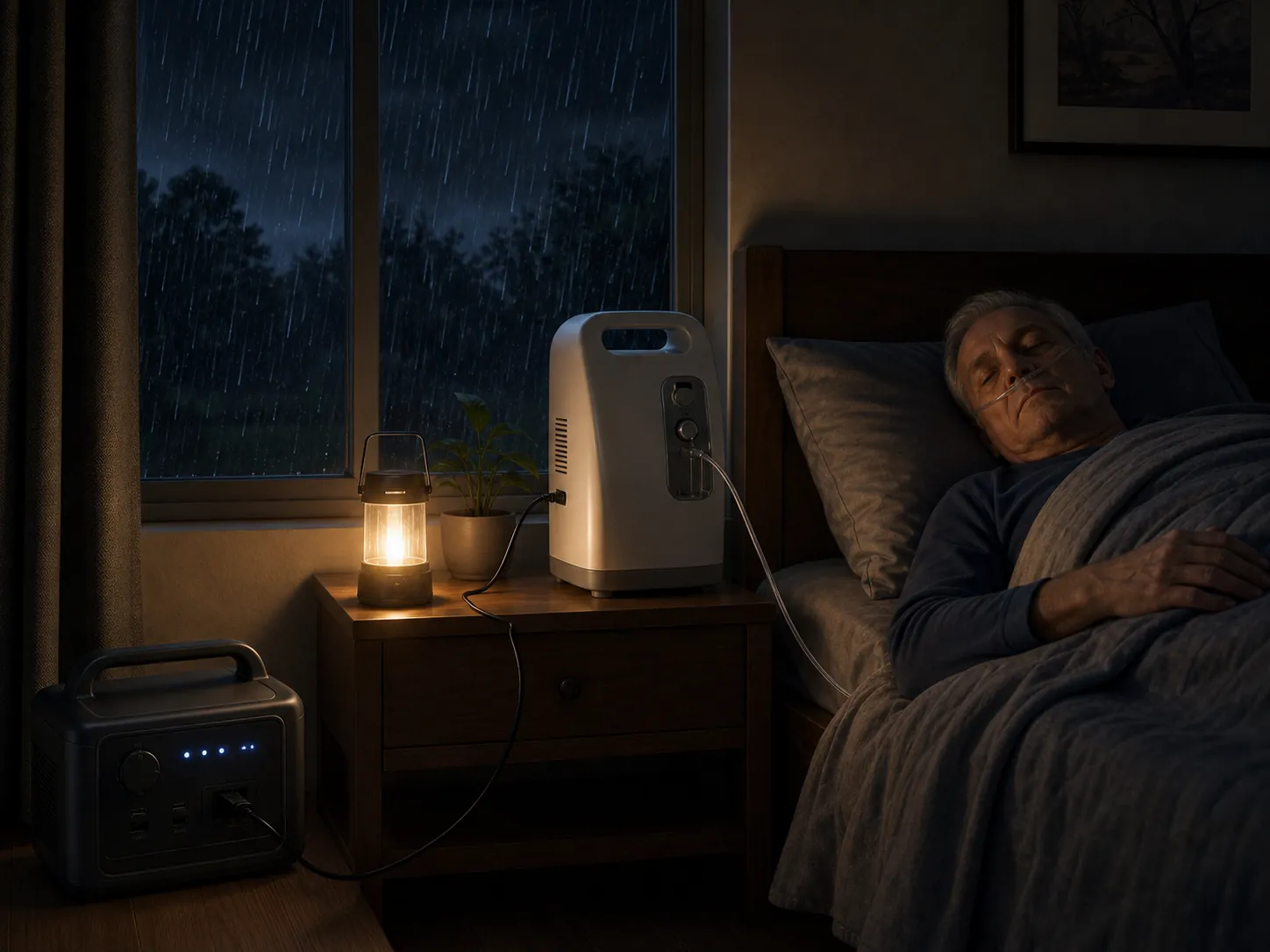
The backup-power note should be boringly specific. Write the device name, power requirement if known, battery runtime under real use, whether a spare battery exists, who can lift or move the equipment, and what happens after the backup is used up. If the plan is a generator, include where it will be used safely and who is responsible for starting it. If the plan is relocation, include the destination and transport.
This is also where utility medical registries and local emergency contacts belong. A registry does not guarantee uninterrupted service, and it does not replace a backup power plan. But for a person whose medical equipment depends on electricity, it is worth making sure the utility, equipment supplier, clinician’s office, and at least one nearby support person know the dependency before the outage.
- Call the equipment supplier and ask what backup power is approved for the device.
- Ask the clinician what symptoms or device problems should trigger relocation or emergency care.
- Register medical-electric needs with the utility if the local program exists.
- Test the backup battery or power station before storm season, not during the outage.
- Keep cords out of walking paths; an emergency power setup that creates a trip hazard has only moved the risk.
Mobility and falls: rehearse the path the person will actually use
Severe weather turns ordinary home movement into emergency movement. A person who is safe walking to the bathroom at noon may not be safe doing it at 2 a.m. with the power out, a wet porch, a loose rug, and an extension cord running to a battery pack. For fall prevention, the checklist has to include the small route decisions that rarely show up on supply lists.
Ready.gov’s older-adults framework starts with assessing needs, making a plan, and building a support network.[5] In the home, that assessment should include the route from bed to bathroom, bed to exit, favorite chair to phone, and entry door to transportation. If a walker, cane, wheelchair, stair lift, hearing aid, eyeglasses, or grab bar is part of normal function, it should be treated as emergency equipment too.
Evacuation needs the same plain treatment. A 2025 hurricane-planning article in The Conversation warns that shelters are often ill-equipped for older adults’ medical and mobility needs.[10] That does not mean sheltering is always wrong. It means the family should identify which shelter, what transportation, what medical supplies, what mobility device, and what caregiver support would be needed before a storm makes the decision urgent.
This is a good place to connect emergency planning with ordinary home-safety work. If the home already needs better stair lighting, a safer entry, a lower-threshold shower, or a clear walker path, those improvements matter even more during outages and evacuations. A broader aging-in-place review can help prioritize which modifications reduce daily risk and emergency risk at the same time; see this guide to prioritizing aging-in-place modifications.
- Place a charged lantern within reach of the bed and another near the bathroom route.
- Keep shoes, glasses, hearing aids, mobility aids, and a phone or alert device in the same reachable location every night.
- Remove cords, boxes, loose rugs, and low furniture from evacuation and bathroom paths.
- Decide who will help with stairs, ramps, wheelchair loading, pets, and medical equipment if evacuation is needed.
- Practice opening the door, reaching the exit, and getting into the vehicle with the actual mobility device used day to day.
Isolation: name the person who will knock
Living alone is not automatically unsafe. Living alone with no named check-in plan during a heat wave, outage, flood watch, or winter storm is different. The failure point is often not supplies; it is the gap between “someone should call her” and an actual person doing it at an actual time.
Ready.gov tells older adults to create a support network of family, friends, caregivers, neighbors, or others who can help in an emergency.[5] For an older adult who lives alone, that network should not stay in the phone contacts. It should be written down, shared, and rehearsed enough that everyone knows their lane.
The check-in plan should answer four questions: who calls first, who tries again if there is no answer, who has a key or access code, and when someone escalates to a neighbor, building manager, local nonemergency number, 2-1-1, or a wellness check. If the older adult has hearing loss, cognitive impairment, limited English proficiency, low vision, or a history of minimizing symptoms, the plan should not depend on a single phone call being answered and accurately interpreted.
Internet access is another reason not to make the plan app-only. AARP’s toolkit reports that 15% of people age 50 and older have no internet.[1] Even when the person does have internet, storms can take down power, routers, and cell service. A neighbor with a key, a printed medication list, and permission to check the house can be more valuable than a beautifully organized app no one can open.
Alert gaps: build warnings that still work when the phone does not
Emergency alerts are only useful if the older adult receives them, understands them, and can act on them. Wireless Emergency Alerts, local emergency texts, the FEMA app, television, radio, and weather apps can all help, but none should be the only layer. Phones die. Internet service fails. Hearing aids are taken out at night. Some older adults silence unknown numbers or ignore alerts that look like spam.
A battery-powered NOAA Weather Radio is one of the least glamorous items on the list, which is exactly why it belongs there. It does not depend on home internet, and it can sit in the same place all season. For someone with hearing or vision limitations, choose alert methods the person can actually perceive: louder tones, vibration, flashing lights, a bed shaker, caregiver forwarding, or a neighbor check-in may be needed.
The alert section of the checklist should also say who interprets the alert. “Tornado warning,” “flash flood warning,” “evacuation order,” and “heat emergency” do not require the same action. If the older adult hesitates, calls an adult child in another state, waits for confirmation on television, or has trouble reading maps, assign a local decision helper before the warning arrives.
The regular emergency kit still matters, but it is not the whole plan
Water, shelf-stable food, batteries, chargers, copies of documents, cash, hygiene supplies, pet supplies, and a go-bag still belong in severe weather planning. The Red Cross separates a Go-Kit from a Stay-at-Home Kit and advises preparing for both evacuation and sheltering in place, including supplies that can support a household during winter-storm conditions.[9] That guidance is useful; it just should not crowd out the risks that make older adults more likely to die or be injured.
If you need the flat supply version, use the companion severe-weather preparedness checklist for older adults as the kit-building resource. Then come back to this risk-factor list and ask whether the kit actually works for this person’s medications, equipment, mobility, support network, and alert needs.
How to use this checklist without pretending every home is the same
Sit with the older adult if possible. Open the medication drawer, look at the equipment cords, walk the route to the bathroom, check the door threshold, test the radio, and identify who lives close enough to help. The plan will be better if it respects the person’s routines instead of replacing them with a generic emergency script.
For adult children, the uncomfortable part is usually not buying supplies. It is assigning responsibility. Write down who calls before the storm, who checks after the power goes out, who can enter the home, who knows the medication list, who can transport a wheelchair or oxygen equipment, and who contacts local resources if the first plan fails.
For older adults with complex medical needs, review the plan with the appropriate clinician, pharmacist, home-health agency, equipment supplier, or local emergency-management office. This article is educational and is not medical, legal, or emergency-response advice; individual decisions should be made with qualified professionals and local authorities.
A senior severe-weather checklist is safest when it starts with the person’s risks, not with a generic supply shelf. The right question is not only “Do we have a kit?” It is “What would make this person unsafe first, and who is responsible for preventing that?”
References
- Disaster Resilience Tool Kit. AARP. 2022.
- Heat-Related Deaths — United States, 2004–2018. CDC MMWR. 2020.
- Heat waves and annual death rates in older adults in the United States. Harvard T.H. Chan School of Public Health. March 2026.
- Heat and Older Adults (Aged 65+). CDC.
- Older Adults. Ready.gov.
- Older Adults Emergency Preparedness. American Red Cross.
- Managing Insulin in an Emergency. CDC.
- Power Outage Preparation. American Lung Association.
- Winter Storm Safety Tips. American Red Cross.
- 5 tips for hurricane disaster planning with aging parents, starting now before the storms. The Conversation. 2025.
Related reading
Noticed something outdated or inaccurate on this page? Flag a correction. We review every report against CDC, NIA, and AARP HomeFit guidance before updating a page.
Part of the Fall Prevention section.