
STEADI: intervene
Room-by-Room Guide to Prevent Falls in Heavy Rain
A systematic, room-by-room checklist covering every zone of the home and exterior where heavy rain creates predictable fall hazards. Learn low-cost fixes for entryways, outdoor paths, bathrooms, stairs, and mobility aids to keep seniors safe during wet weather.
Heavy rain usually enters the house before anyone notices it. It comes in on shoe soles, walker wheels, cane tips, umbrella drips, and the hem of a coat. The practical answer to keeping an older adult safe during heavy rain starts at that plain, annoying point: keep water, poor traction, and dim light from spreading from the porch into the rooms where an older adult is still trying to move normally.
About 1 in 4 older adults falls each year, according to the National Council on Aging’s falls-prevention summary.[1] That is not a rain-specific statistic, and it should not be treated as proof that storms cause most falls. It does give the damp threshold, the dark stair landing, and the smooth cane tip the seriousness they deserve.
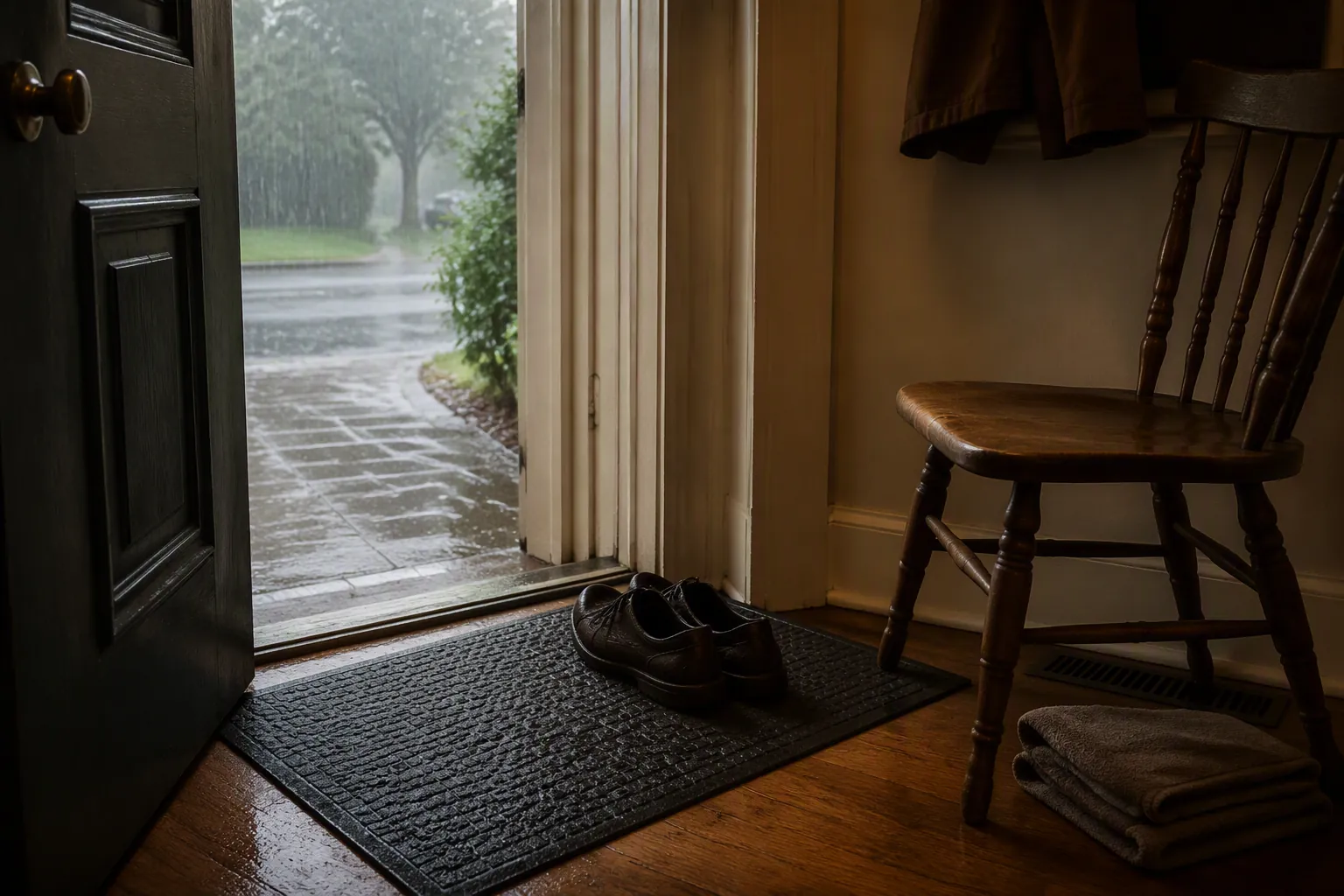
A useful rainy-season check is not a lecture about being careful. It is a short walk through the house with one question in each place: what gets wet, what gets dark, what slides, and who is expected to notice?
| Zone | What heavy rain changes | Fix before the next storm |
|---|---|---|
| Front door and entryway | Water is tracked indoors; shoes and socks stay wet; mats curl or slide. | Use a rubber-backed mat, add a chair for shoe removal, keep a towel at the door, and remove loose rugs. |
| Porch, steps, walkways, driveway | Leaves, moss, algae, and wet concrete reduce traction. | Sweep debris, scrub slick growth, check step edges, improve exterior lighting, and consider non-slip treatment where appropriate. |
| Bathroom | Wet floors become normal, so new rainwater is easier to miss. | Use non-slip mats, keep floors dry, and confirm grab bars are present and sturdy. |
| Kitchen and laundry areas | Drips from shoes, bags, pets, and umbrellas spread onto hard flooring. | Wipe puddles immediately, keep towels reachable, and keep walkways clear. |
| Stairs | Wet soles turn indoor stairs into an outdoor hazard. | Keep treads clear, use handrails, check lighting at top and bottom, and stop wet shoes at the door. |
| Footwear and mobility aids | Worn soles, cane tips, and walker tips lose grip fastest on wet surfaces. | Inspect tread and rubber tips before the rainy season, then recheck monthly during wet weather. |
Start at the entryway, where outdoor rain becomes indoor risk
The entryway has to do more than look tidy. During heavy rain, it needs to catch water, slow people down, and give an older adult a safe place to change from outdoor to indoor footing. Wet-weather guidance for aging parents commonly points to the same simple cluster: a rubber-backed mat, a place to sit while removing wet shoes, and a towel kept by the door.[2][3]
The mat matters only if it stays flat. A thin throw rug that buckles at the corner can create a second hazard while pretending to solve the first one. Look for the curled edge, the mat that creeps forward every time someone wipes their feet, and the slick floor just beyond the mat where the second wet step lands.
- Place a rubber-backed mat directly inside the door, wide enough for both feet and any cane or walker tips.
- Remove loose decorative rugs from the landing area during rainy months.
- Put a sturdy chair or bench near the door so wet shoes can come off without balancing on one foot.
- Keep a towel at the door, not in a closet across the room. If the towel keeps migrating to the laundry pile, keep two there.
- Add a simple umbrella spot, tray, or bucket so water does not drip across the walking path.
- Check the first six feet of flooring past the entry. That is where people assume they are already safely inside.
This is also where independence and fall prevention can work together. A chair by the door is not a surrender; it is a way to remove wet shoes without turning the doorway into a balance test.
Walk the outside route before the rain exposes it
The outdoor check should follow the exact path the older adult uses: car to door, mailbox to door, trash bin to door, garage to kitchen. Heavy rain does not make every surface equally dangerous. It reveals the bad spots: the mossy strip along the shaded walk, the algae on the step that never gets sun, the leaves that collect at the bottom of the ramp, and the porch light that technically works but leaves the last step in shadow.
Seasonal falls-prevention guidance from the Ohio Department of Aging warns that wet leaves and outdoor buildup can create slipping hazards, and AARP’s HomeFit guidance treats safe entries, lighting, and exterior access as basic home-safety concerns rather than cosmetic upgrades.[4][5]
- Sweep leaves from porches, steps, ramps, and walkways before they pack down into a slick layer.
- Scrub or treat moss and algae on shaded concrete, brick, pavers, and wooden steps.
- Check whether painted or sealed concrete steps become slick when wet; if they do, consider a product-neutral non-slip treatment or textured tread appropriate for the surface.
- Look at the step edges in rain-level light, not just on a sunny afternoon. If the edge disappears visually, add contrast or improve lighting.
- Confirm that railings at exterior steps are sturdy enough to lean on, not merely present.
- Aim exterior lights at the walking surface, the lock, and the step edge. A bright fixture that shines into someone’s eyes can still leave the tread hard to read.
If a caregiver can visit only briefly, the best outdoor use of time is not a general inspection of the yard. It is clearing the route most likely to be used in bad weather and checking the places where a foot, cane, or walker must land.
Make rainy-day lighting part of the fall check, not an afterthought
Rain changes visibility inside the home. Rooms are dimmer during the day, entryways become shadowy earlier, and an older adult may avoid turning on a light for a trip that feels too short to bother with. AARP’s HomeFit materials and wet-weather safety guidance both emphasize lighting at entries, pathways, and other walking areas as a practical fall-prevention measure.[5][2]
- Replace weak entryway bulbs with brighter LEDs suitable for the fixture.
- Check lighting at both sides of the front door: outside for the approach, inside for shoe removal and floor visibility.
- Put nightlights or motion lights along the path from bedroom to bathroom, especially during storm seasons when power flickers or routines change.
- Test stair lighting from both directions. A switch at only one end leaves someone choosing between darkness and inconvenience.
- Keep a flashlight where the older adult actually sits or sleeps, not in a drawer that requires crossing a dark room.
Power-outage planning belongs in severe-weather preparation, and emergency kits and check-in plans matter. For this fall-prevention walkthrough, the key lighting question is narrower: if the power blinks, or the afternoon turns dark, can the older adult still see the threshold, the floor, the stairs, and the mobility aid?
Bathroom: keep the wet zone controlled
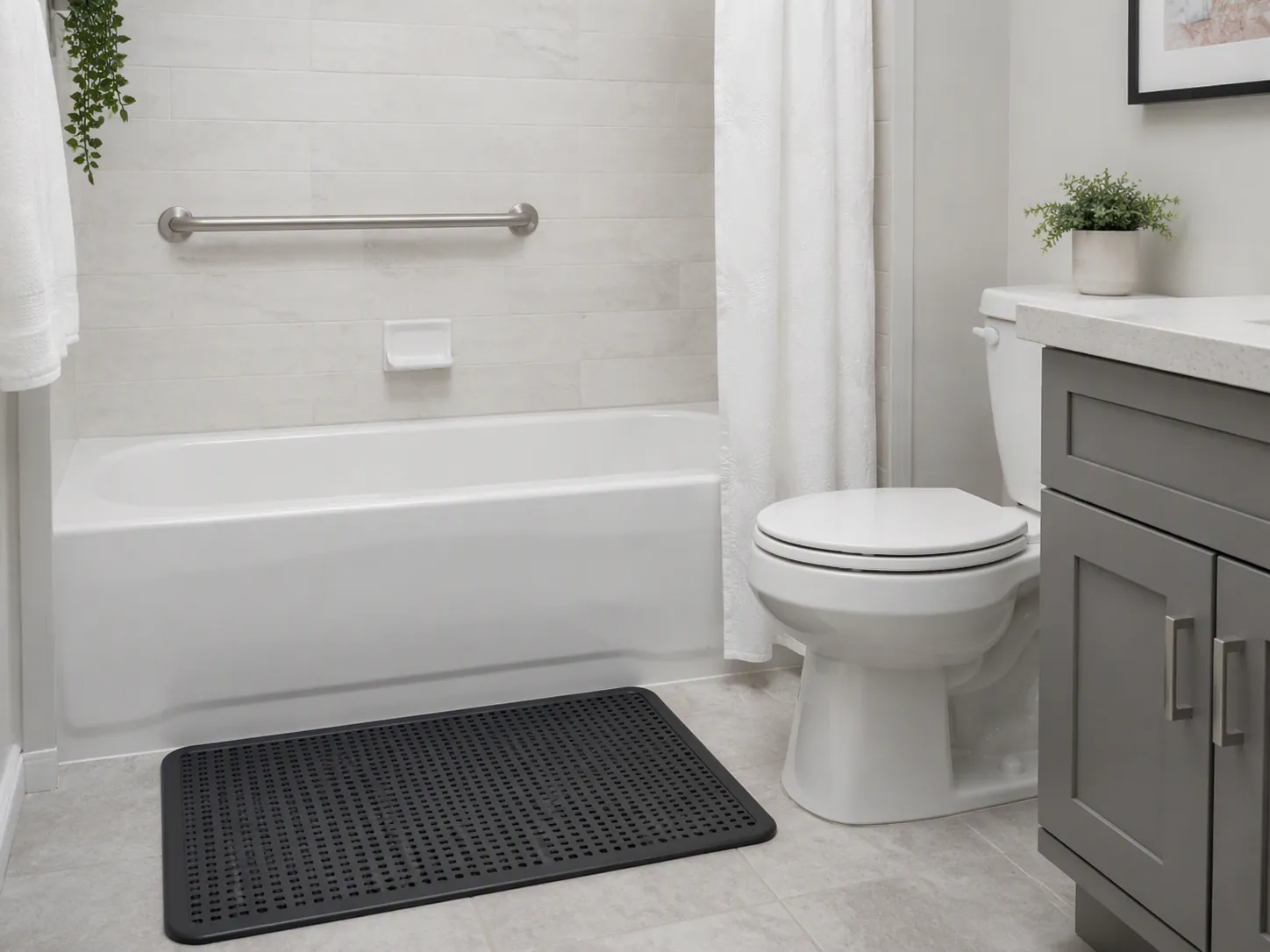
The bathroom already has water in it, which is why rain-related drips can go unnoticed. A wet footprint from the hallway blends into the usual bathroom risk. Ohio’s seasonal falls guidance and AARP’s HomeFit recommendations both point to the same basics: dry floors, non-slip mats, and secure grab bars where support is needed.[4][5]
- Use non-slip mats on the floor near the tub, shower, and sink; avoid loose rugs that slide or bunch.
- Check that bathmats still grip when the floor is damp. A mat that skates across tile should be removed or replaced.
- Make sure grab bars are anchored and do not twist, wiggle, or rely on towel-bar strength.
- Keep a dry towel within reach for floor drips, but do not leave towels lying in the walking path.
- Check bathroom lighting on a dark rainy morning, not only at night.
Kitchen and laundry: hard floors, small puddles, and busy hands
Kitchens and laundry areas collect the small rain problems people discount: a grocery bag set on the floor, a dog coming in wet, a washer area already crowded, a towel dropped where someone will pivot. Hard flooring can make a small puddle travel farther than expected.
- Keep the main kitchen walkway clear of bags, shoes, pet bowls, and laundry baskets during storms.
- Wipe drips immediately near the sink, refrigerator, back door, and pet entry area.
- Do not use a loose towel as a floor mat. If a mat is needed, it should have a backing that grips the floor and edges that lie flat.
- Make sure the path from kitchen to bathroom or bedroom is not narrowed by rainy-day clutter.
- Check whether under-cabinet or overhead lighting leaves a glossy wet spot invisible from standing height.
Stairs need dry feet, clear treads, and light at both ends
Indoor stairs should never become the place where rainwater finishes its trip. Wet shoes should stop at the entry. If an older adult must use stairs during heavy rain, the treads, railings, and lighting need to be boringly reliable.
AARP’s HomeFit guidance highlights stairway safety basics such as sturdy handrails, adequate lighting, and clear walking surfaces.[5] In rainy weather, those basics deserve another pass because the margin is smaller: a damp sole, a dim landing, and a basket left on the step can combine quickly.
- Clear every tread. Shoes, mail, laundry, and packages should not wait on the stairs during storm weather.
- Check that handrails are secure and easy to grip. If there are rails on both sides, confirm both are usable, not blocked.
- Turn on the lights and stand at the top and bottom. Each step edge should be visible from both positions.
- Do not allow wet outdoor shoes on stairs. Keep indoor footwear near the entry if the older adult changes shoes.
- If a stair runner or tread covering is present, check for loose edges, ripples, or corners that lift when brushed by a foot.
Footwear and mobility aids deserve the same inspection as the floor
A clean floor will not solve much if the cane tip is polished smooth. Mobility aids are part of the walking surface. In heavy rain, the contact point between rubber and ground is carrying the whole plan.
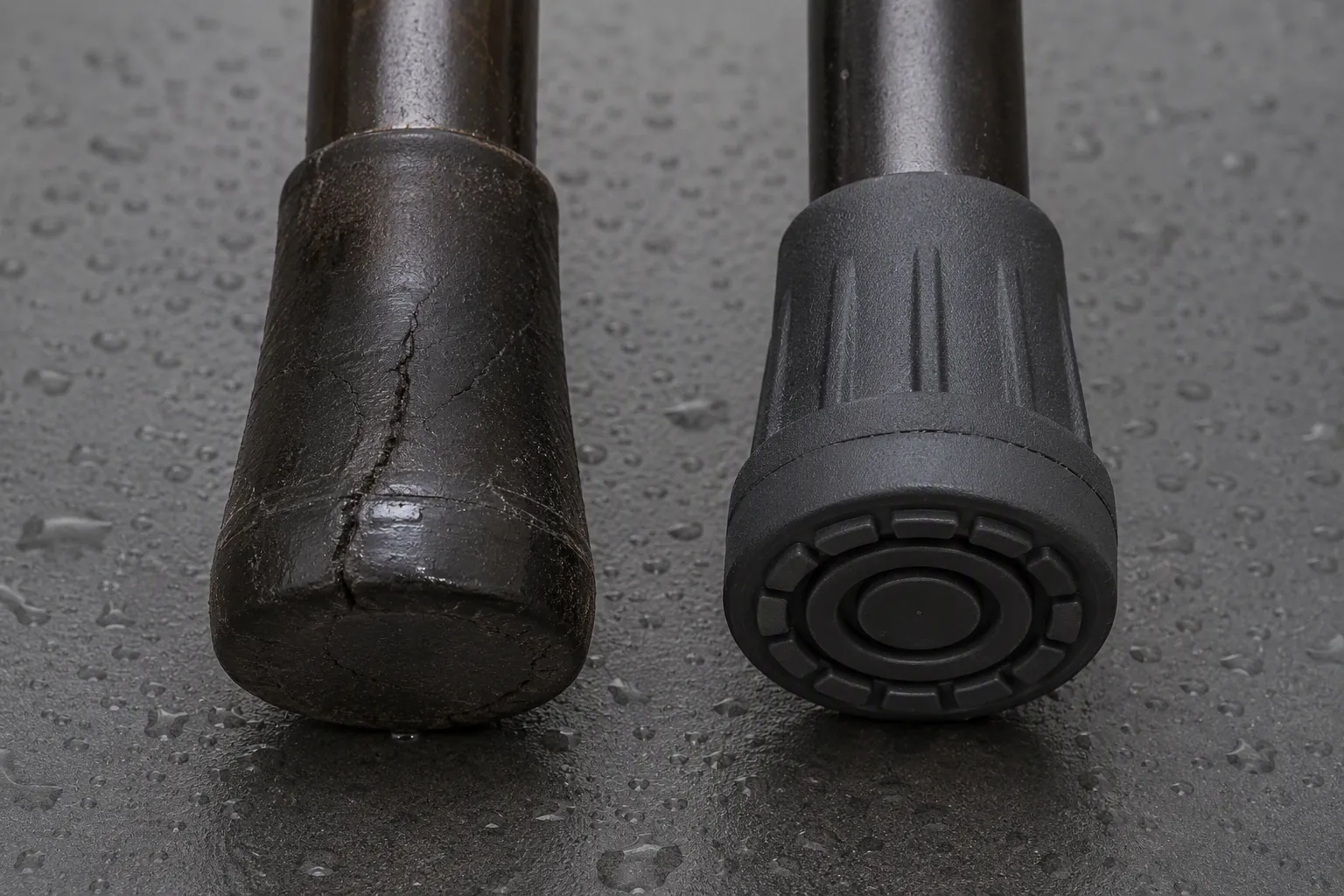
Wet-weather injury-prevention guidance and fall-prevention footwear materials warn that worn rubber tips on canes and walkers can lose up to 80% of their grip on wet surfaces.[3][6] That figure should be read as a warning about possible grip loss, not as a measurement of every cane or every surface. The practical response is simple: inspect the rubber before it matters.
- Look at cane and walker tips from underneath. If the tread is smooth, cracked, uneven, or hardened, replace the tip.
- Check tips monthly during wet months, and replace them seasonally if wear is visible or traction feels uncertain.
- Dry walker wheels and cane tips at the door when they come in from rain, just as shoes are dried.
- Make sure the mobility aid is parked within reach, not across a wet patch of floor.
- Check indoor shoes and slippers for tread. Soft, smooth soles can be comfortable and still unsafe on damp tile or wood.
- Avoid backless slippers for rainy-day movement if they slide, twist, or require the wearer to shuffle.
This is one of the cheapest checks in the whole house, and one of the easiest to miss. The tip wears down gradually, so no one announces the day it stopped gripping well.
Do the communication pieces, but do not let them replace the floor check
Severe-weather planning also includes supplies, power-outage preparation, and a way to check on older adults during storms. PEADD’s storm-safety guidance includes emergency and power-outage concerns, while JFCS Pittsburgh’s severe-weather safety guidance emphasizes communication and check-ins for seniors.[7][8]
Those plans are useful, but they do not dry the threshold. A check-in call can ask concrete questions: Is the porch light on? Is the towel still by the door? Are wet shoes off? Is the cane tip dry? Are the stairs clear? That kind of question is more likely to catch a real fall hazard than a general reminder to be careful.
A rainy-season routine that is small enough to repeat
Do the full walk once before the rainy season: outside route, entryway, lighting, bathroom, kitchen, stairs, footwear, and mobility aids. Then do a shorter reset during heavy rain: mat flat, towel present, lights on, wet shoes off, floors dry, stairs clear, cane or walker tips checked.
After the first major storm, walk it again. The first storm is when the hidden problems show up: the gutter splash that wets the step, the mat that creeps, the porch bulb that is too dim, the towel that did not stay by the door.
This is fall-prevention guidance, not medical advice. If an older adult’s balance, vision, medications, strength, or mobility are changing, the home check should be paired with a professional assessment. The house can still do its part: keep the wet outside from becoming a slick path inside.
References
- Get the Facts on Falls Prevention — National Council on Aging.
- Rainy Weather Safety for Aging Parents — Vital Link.
- Injury Prevention Tips During Wet Weather — Carebuddy.
- Falls Prevention in Every Season — Ohio Department of Aging.
- AARP HomeFit Guide — AARP.
- Non-Slip Footwear Guide — Fall Prevention Foundation.
- Storm Safety Tips — PEADD.
- Senior Safety Severe Weather — JFCS Pittsburgh.
Related reading
Noticed something outdated or inaccurate on this page? Flag a correction. We review every report against CDC, NIA, and AARP HomeFit guidance before updating a page.
Part of the Fall Prevention section.