
STEADI: Intervene
How to Protect Older Adults From Saharan Dust at Home
Protecting an older adult from Saharan dust starts at home before the plume arrives: check the daily AQI, close windows and doors, run the AC on recirculation, place a HEPA air cleaner in the room they use most, and confirm rescue medications. This before-during-after checklist turns CDC, AirNow, and American Lung Association guidance into a caregiver-executable plan for dust season.
If Saharan dust is expected this week, the useful question is not where the plume started. It is what can be done in the house before an older adult starts coughing, wheezing, feeling unusually tired, or deciding to “just sit outside for a few minutes.”
For caregivers, the home plan is simple enough to put on the refrigerator: check the daily air quality by ZIP code, close the house, switch air systems to recirculate where possible, set up the cleanest room, reduce exertion, and confirm that rescue medications are available. Saharan dust is treated by CDC as particle pollution, and CDC notes that it most often affects Puerto Rico, the U.S. Virgin Islands, Florida, Texas, and other southern states from late June through mid-August; older adults are among the groups most affected by particle pollution exposure.[1]
| When | Caregiver action | What “done” looks like |
|---|---|---|
| Before dust arrives | Check AirNow by ZIP code; close windows and doors; set AC or vehicle air to recirculate when available; place the HEPA air cleaner in the most-used room; confirm medications. | The house is closed, the clean-room setup is running, and the older adult’s usual respiratory or heart-condition plan is easy to find. |
| During a high-dust day | Keep the older adult indoors where appropriate; keep pets inside; avoid strenuous activity; use recirculation in the car if travel cannot wait; use a new, well-fitted N95 or KN95 if outdoor exposure is unavoidable. | Exposure is kept short, indoor air is protected, and no one is guessing where the inhaler or emergency instructions are. |
| After the advisory improves | Keep watching AQI and symptoms; reset filters and supplies as needed; seek urgent care for severe shortness of breath, severe worsening of a known condition, or persistent fever beyond two to three days. | The home returns to normal gradually, but symptoms are not dismissed just because the sky looks better. |
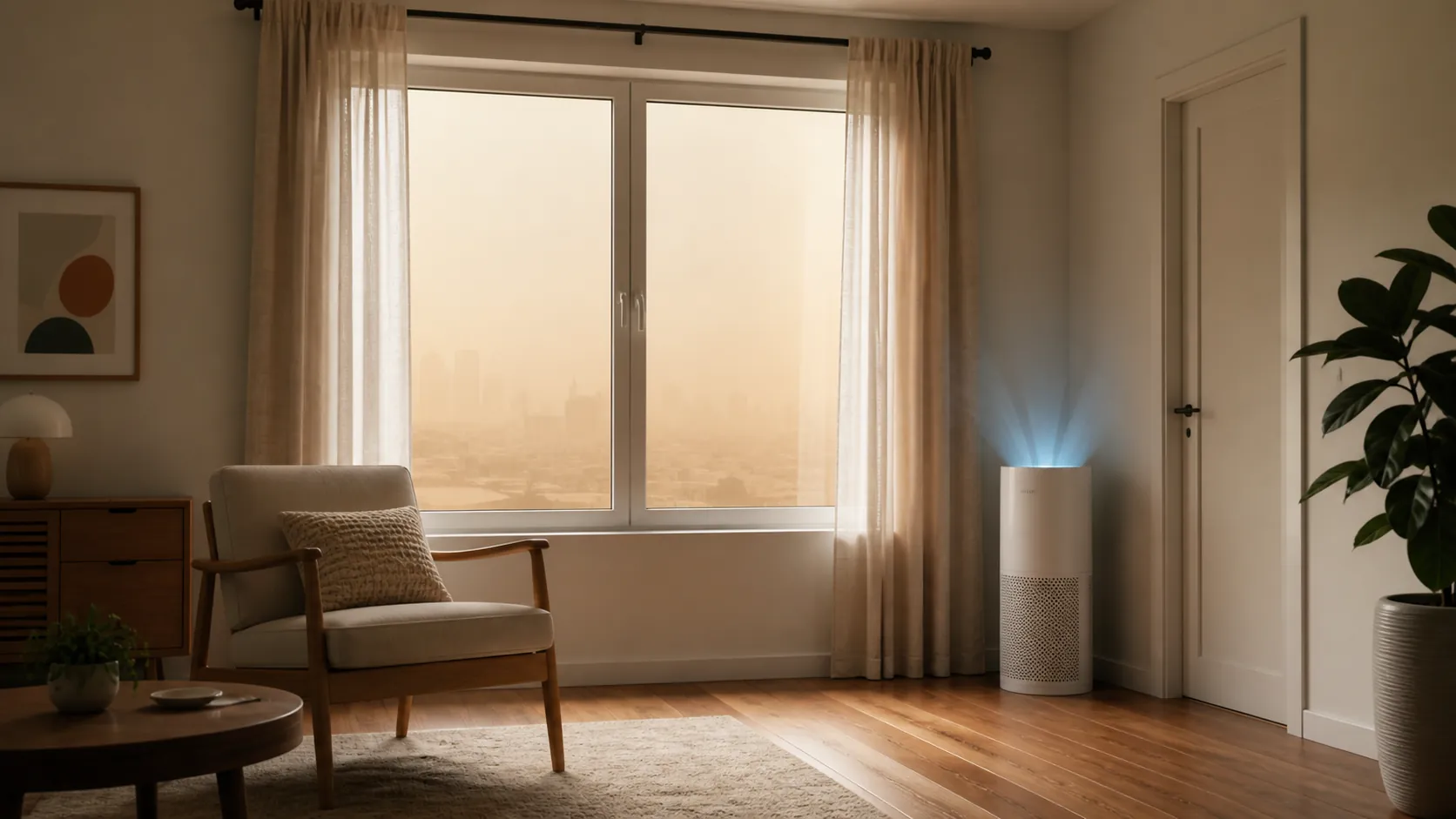
Start with the daily AQI check, not the symptoms
A caregiver needs a trigger that can be checked from work, from another state, or before a morning grocery trip. Use AirNow.gov or the AirNow app by ZIP code, then act earlier for an older adult with asthma, COPD, heart disease, frailty, or a history of reacting to dusty air. AARP also points readers to AirNow as a practical way to follow local air quality during Saharan dust events.[2]
Do not treat AQI as a perfect “Saharan dust meter.” AirNow’s health guidance for older adults is built around the Air Quality Index and particle pollution risk, including fine and coarse particles, not a separate household reading for desert dust itself.[3] That matters because a vulnerable person may feel symptoms on a day that looks only “moderate,” especially if they spend time outdoors, ride in traffic, or already have irritated airways.
The caregiver-friendly rule is this: if Saharan dust is in the local forecast, the AQI is rising, or local health officials have issued an advisory, start the home routine before the older adult feels bad. Waiting for symptoms is how a manageable dust day turns into phone calls, missed medications, and a late scramble for masks.
Before the plume arrives: close the house and choose the cleanest room
The “before” work is the part caregivers control best. It is also the easiest part to forget because the sky may still look normal.
- Close windows and exterior doors before the dustiest part of the day. Check the bedroom, bathroom, kitchen, porch door, and any room the older adult opens out of habit.
- Switch air conditioning to recirculate when that setting is available. The American Lung Association recommends keeping doors and windows closed and using air conditioning on recirculation during high-dust conditions.[4]
- If someone must drive, close the car windows and vents and use the vehicle’s recirculate setting. This is especially important for a quick errand that can quietly become an hour of exposure.[4]
- Pick one “cleanest room” where the older adult already spends the day. Usually that is the living room, bedroom, or den—not a formal room they rarely use.
- Place a portable HEPA air cleaner in that room if one is available, and run it according to the manufacturer’s directions. Mount Sinai and the American Lung Association describe HEPA air cleaners and high-efficiency filtration as ways to reduce indoor particle exposure, without implying that filtration makes outdoor air quality irrelevant.[4][5]
- If the home uses a central HVAC filter, use the highest-efficiency filter the system can safely handle. Do not force a filter that strains the unit; an overheated or poorly working AC is its own safety problem.
The cleanest room does not have to be perfect. It has to be practical. Put the chair, water, phone charger, glasses, walker, remote, and medication list where the older adult will actually sit. If the air cleaner is in the guest room while the older adult spends six hours in the recliner, the setup is tidy but not useful.
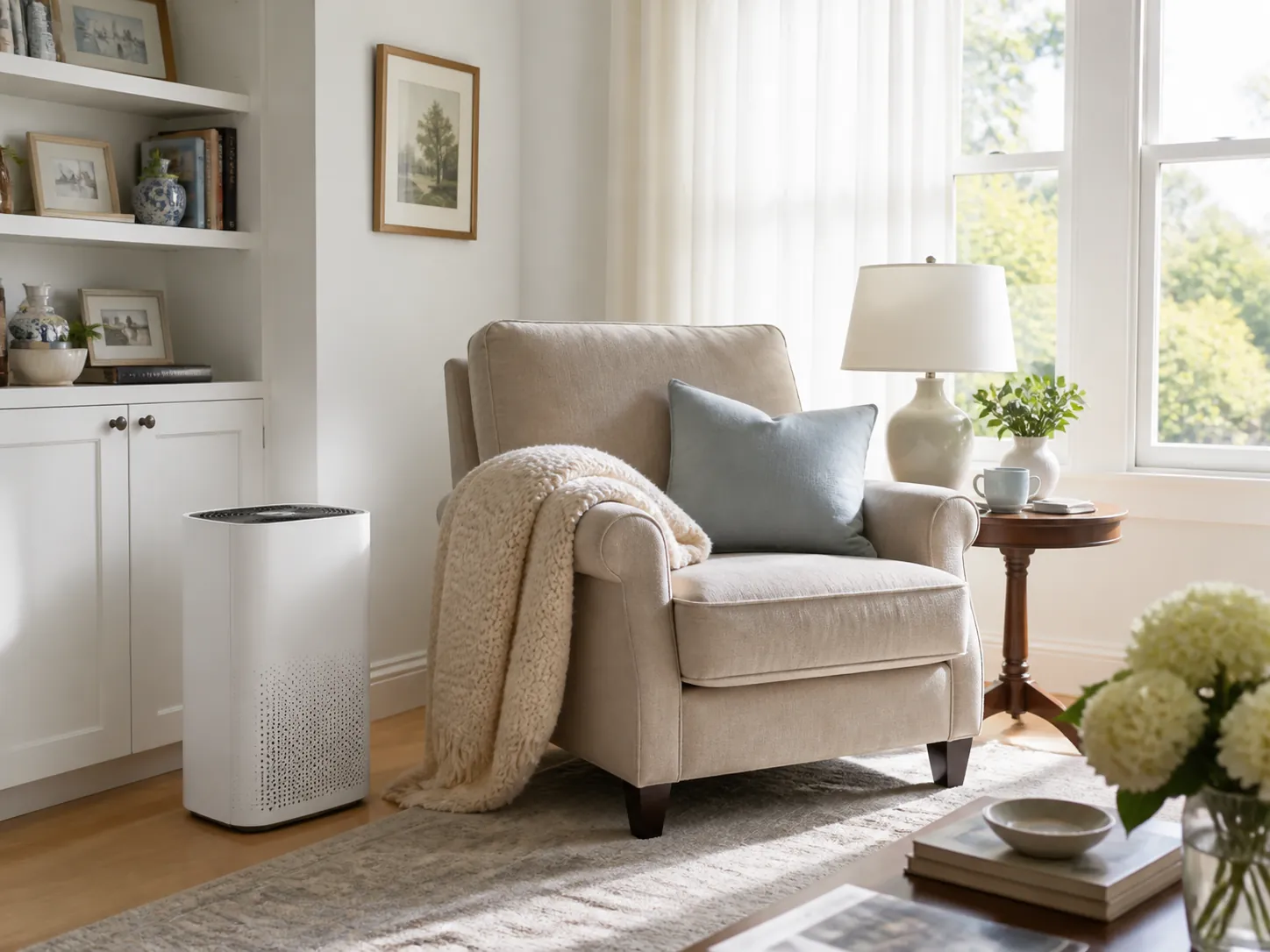
Confirm medications without changing the medical plan
For an older adult with asthma, COPD, heart disease, or another chronic condition, “confirm medications” means checking availability and instructions—not inventing a new treatment plan. Look for the rescue inhaler if one has been prescribed. Check whether it is expired, empty, or buried in a purse the person no longer carries. Make sure the spacer, nebulizer supplies, oxygen instructions, or written action plan are where the older adult and backup helper can find them, if those items are part of the clinician’s plan.
If the older adult has a condition-specific respiratory plan, follow that plan. If they have repeated symptoms during dust events but no clear instructions, the planning task is to ask their clinician what to do next time—not to wait for the next plume and guess.
During the dust day: keep exposure boring and short
On a high-dust day, the best routine is uneventful: stay inside where appropriate, keep the house closed, keep the cleaner running in the most-used room, and move chores that can wait. The American Lung Association recommends staying indoors, keeping doors and windows closed, keeping pets inside, and avoiding outdoor exertion when Saharan dust affects air quality.[4]
| Common dust-day decision | Safer default for an older adult |
|---|---|
| They want to sweep the porch or water plants. | Postpone it, or ask someone else to do it later when air quality improves. |
| They need a prescription pickup. | Use delivery, curbside pickup, or a caregiver errand if available. If travel cannot wait, keep car windows closed and use recirculation. |
| They feel restless indoors. | Choose a low-exertion indoor activity in the cleanest room instead of a walk, yard work, or stair-heavy chore. |
| A pet wants to go in and out repeatedly. | Keep pets inside as much as practical, because every door opening brings outdoor air in. |
| Someone must go outside briefly. | Use a new, well-fitted N95 or KN95 if tolerated and appropriate; do not rely on a surgical mask to block fine particles. |
Mask choice deserves plain language. The American Lung Association advises a new, well-fitted N95 or KN95 if someone must be outdoors during high-dust conditions, and Mount Sinai notes that surgical masks do not block fine particles well.[4][5] A mask is not a permission slip for yard work. It is a backup for unavoidable exposure, such as reaching the car, attending an essential appointment, or helping someone into the house.
If the older adult already has shortness of breath, chest discomfort, unusual fatigue, wheezing, confusion, or a fast decline from their usual baseline, treat that as a health change—not as a weather inconvenience. Follow their clinician’s action plan or seek medical help when symptoms are severe or worsening.
What not to over-trust: sky color, AQI, and single studies
Saharan dust can make the sky look dramatic, but appearance is a poor home-safety tool. A hazy orange sunset may get attention; a moderate-looking morning can still be the day an older adult with COPD or heart disease needs a lower-exertion plan. Use the forecast and AQI as triggers, then adjust for the person in front of you.
The same restraint applies to health statistics. Research reviews may include study-specific findings about hospitalizations or respiratory outcomes, but those findings should not be turned into a household prediction for every plume, region, or older adult.[6] For a caregiver, the practical conclusion is narrower and more useful: particle pollution can affect vulnerable people, so reduce exposure before symptoms start.
This is also why an air cleaner should be treated as one layer, not the whole plan. A HEPA unit in the right room helps reduce particles indoors, but it does not replace closed windows, recirculation, lower exertion, medication readiness, or medical judgment.
After the advisory: reset slowly and keep watching the person
When the AQI improves or the local advisory ends, do not throw every window open at once just because the sky looks clearer. Check the current AQI again, look at the older adult’s symptoms, and then reset the house gradually. Put masks back in the same drawer, note any medication that needs a refill, and check whether the clean-room air cleaner or HVAC filter needs routine maintenance.
The Trinidad & Tobago Ministry of Health’s Saharan dust advisory gives a useful urgent-care boundary for vulnerable people: seek urgent care for severe shortness of breath, persistent fever beyond two to three days, or severe worsening of a pre-existing condition.[7] In a U.S. home, that translates into a simple caregiver rule: if breathing trouble is severe, the person is worsening, or symptoms do not match their usual pattern, do not wait for the dust advisory to expire.
Where this fits with other home-safety plans
This plan is for seasonal Saharan dust preparation in the South, Gulf Coast, Puerto Rico, and the U.S. Virgin Islands. If a dust event is already underway and you need an immediate response checklist, use A Dust Storm Is Here — What an Older Adult Should Do Now. If the older adult has COPD, asthma, or another lung condition and needs a more condition-focused plan, keep Dust Storm Safety Checklist for Seniors with Lung Disease with their medical papers.
Saharan dust planning belongs with the same seasonal home-safety habits as heat and smoke planning: decide early, prepare the room, and reduce the number of decisions someone has to make while conditions are bad. For nearby planning, see Prepare Your Parent's Home for Extreme Heat During El Niño and the wildfire evacuation plan for elderly parents if your family also prepares for smoke or evacuation risk.
A caregiver-ready endpoint
Saharan dust is not fully controllable, and AQI is an imperfect signal. The parts a caregiver can control mostly happen inside the home before exposure starts: daily AQI check, windows and doors closed, AC and car air set to recirculate when available, HEPA cleaner running in the room the older adult actually uses, rescue medications confirmed, and urgent-care signs known.
This article is educational and is not medical advice. For asthma, COPD, heart disease, oxygen use, or any other chronic condition, follow the older adult’s clinician’s plan and ask that clinician how to adjust the plan during poor-air-quality days.
References
- Air Pollutants | Air Quality — CDC
- Saharan Dust Cloud Health Risks — AARP
- Older Adults — AirNow
- Saharan Dust Dangers — American Lung Association
- How to Stay Safe When Air Quality Is Poor — Mount Sinai
- Health effects of desert dust and sand storms: a systematic review — PubMed Central
- Ministry of Health Advises Public to Take Necessary Precautions Against Saharan Dust — Trinidad & Tobago Ministry of Health
Related reading
Noticed something outdated or inaccurate on this page? Flag a correction. We review every report against CDC, NIA, and AARP HomeFit guidance before updating a page.
Part of the Fall Prevention section.