
STEADI: screen
How to Protect Seniors From the Salmonella Egg Outbreak
Recalled shell eggs from the July 2026 Salmonella outbreak may still be in refrigerators, and adults 65+ are hospitalized at high rates from foodborne illness. Here is how to check a carton against the recall codes, clean up safely, and use CDC symptom thresholds to decide when a senior should see a doctor.
As of Aug. 5, 2026, this Salmonella outbreak is still a refrigerator problem. The recalled shell eggs have sell-by dates that run through Aug. 17, 2026, so a carton bought weeks ago can still be sitting on a door shelf, half-used and easy to overlook.[1]
For an adult 65 or older, the danger is not limited to stomach cramps. Diarrhea can lead to dehydration; dehydration can bring dizziness when standing. That is the moment when walking to the bathroom, getting up at night, or leaning into the refrigerator becomes less safe. The job today is plain: check the carton by its exact codes, get recalled eggs out of the kitchen, clean what they touched, and use CDC symptom thresholds instead of guessing whether to wait.
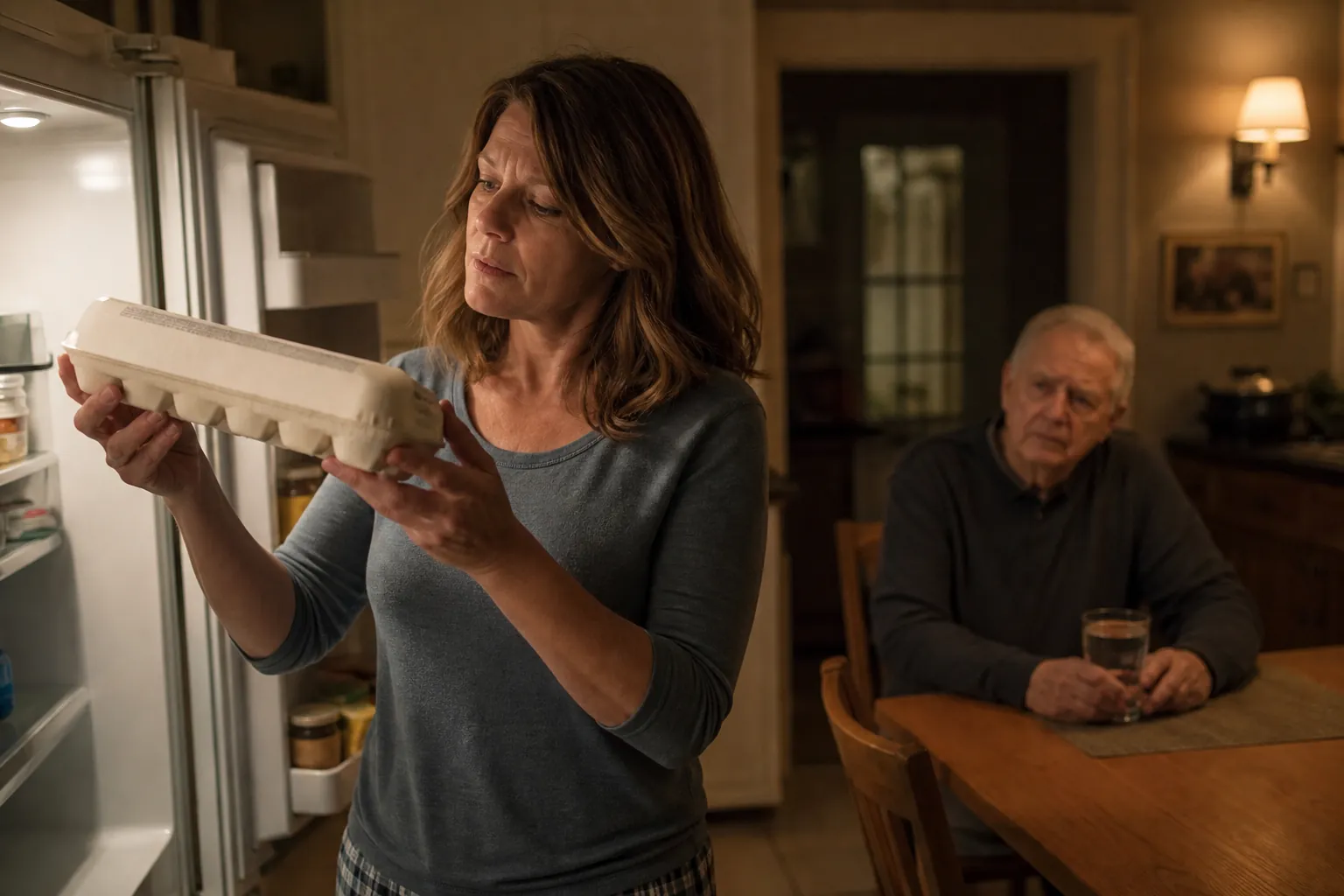
Check the carton before anyone cooks another egg
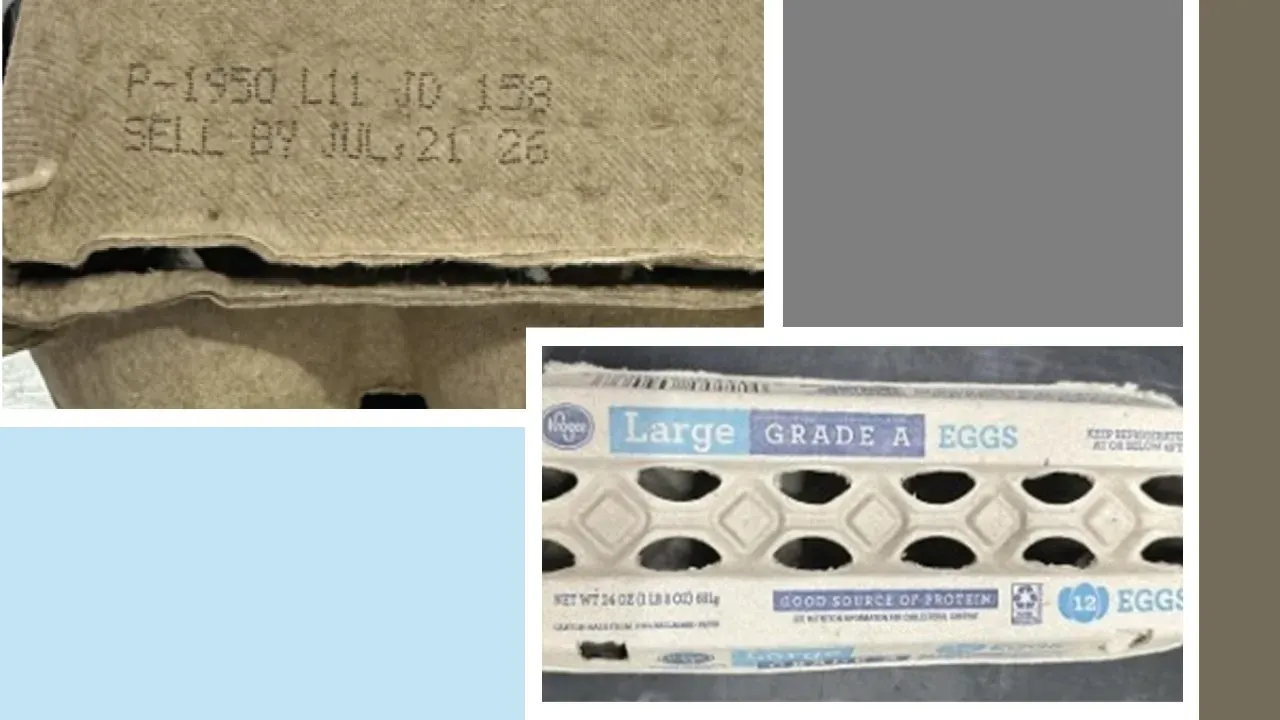
The July 2026 recall from Midwest Poultry Services, L.P. covers 1,589,577 dozen shell eggs produced in Texas and distributed from June 6 through July 3, 2026.[1] The decision is not based on whether the eggs look or smell normal. It is based on the brand, plant code, Julian date, and sell-by date printed on the carton.
| What to look for on the carton | Recalled identifiers |
|---|---|
| Brand names | Kroger, Simple Truth, Brookshire’s, Cal-Maine, Country Morning |
| Plant or P-code | P-1950 or plant number 0840962 |
| Julian dates | 157 through 184 |
| Sell-by dates | July 20 through Aug. 17, 2026 |
Look for the code on the carton itself, not on an individual egg. If the print is faint, move the carton under stronger light or take a phone photo and zoom in. This is not busywork; one misread digit is the difference between removing the exposure and putting it back beside tomorrow’s breakfast.
If it matches, do not try to cook your way out of the recall
If a carton matches the recalled identifiers, do not use the eggs, even for baking or a hard scramble. Throw them away or return them to the place of purchase, then wash items and surfaces that may have touched the eggs with hot soapy water or run dishwasher-safe items through a dishwasher.[1]
After washing, sanitize surfaces with a bleach solution of 1 tablespoon bleach per gallon of hot water.[1] Give special attention to the refrigerator shelf or door bin, the spot where the carton sat, the counter where it was opened, and any bowl, utensil, or reusable grocery bag that may have touched raw egg or carton residue.
- Bag the recalled carton before placing it in the trash so it is not handled again by mistake.
- Wash hands after handling the carton and again after cleaning the refrigerator area.
- If the older adult lives alone, do not assume someone else has checked the codes. A short phone call with the carton in hand is safer than a vague “I think mine are fine.”
What the outbreak numbers say — and what they do not say
The CDC outbreak page was updated July 24, 2026. News coverage of that update reported 98 illnesses across 17 states, 26 hospitalizations, no deaths, and patient ages ranging from under 1 to 81.[2] Because outbreak counts change, recheck the CDC outbreak page before using those numbers for a public notice or group setting.
The hospitalization risk for older adults is real, but it needs to be stated carefully. CDC says nearly half of adults 65 and older with a lab-confirmed foodborne illness from Salmonella, Campylobacter, Listeria, or E. coli are hospitalized; that statistic is for those pathogens combined, not Salmonella alone.[3]
That is enough to justify a lower threshold for action in a senior household. It is not enough to predict that any one person will become severely ill, and it does not mean every case leads to a fall. The practical concern is narrower: diarrhea-related dehydration and dizziness can make normal movements less safe.
If symptoms have started, use CDC’s thresholds instead of waiting it out
Salmonella symptoms usually begin 6 hours to 6 days after exposure and often last 4 to 7 days.[4] In a younger, otherwise healthy adult, a few days of diarrhea may be watched at home. In a 65+ adult, the same illness deserves closer attention because fluid loss can show up as weakness, confusion, or dizziness before anyone says, “I’m dehydrated.”
| Call a doctor or seek medical care if there is… | Why it matters for a senior at home |
|---|---|
| Diarrhea plus a fever higher than 102°F | Fever with diarrhea can signal a more serious illness and can worsen fluid loss.[1] |
| Diarrhea lasting more than 2 days without improvement | CDC’s Salmonella guidance uses “more than 2 days” as the threshold; do not stretch that into a casual wait-and-see period for an older adult.[1][4] |
| Bloody diarrhea | This is an urgent warning sign, not a normal part of a stomach bug.[1][4] |
| Vomiting that prevents keeping liquids down | If fluids cannot stay down, dehydration can accelerate quickly.[1][4] |
| Signs of dehydration: not peeing much, dry mouth and throat, or dizziness when standing | These signs matter both medically and for fall prevention, especially when the person is getting to the bathroom or standing from bed.[1][4] |
One source distinction is worth keeping straight. CDC’s outbreak and Salmonella symptom guidance uses diarrhea lasting more than 2 days without improvement as a care threshold. Foodsafety.gov’s general consumer guidance uses more than 3 days. During this active CDC-tracked shell-egg outbreak, the tighter CDC threshold is the more useful rule for a recalled-carton decision.
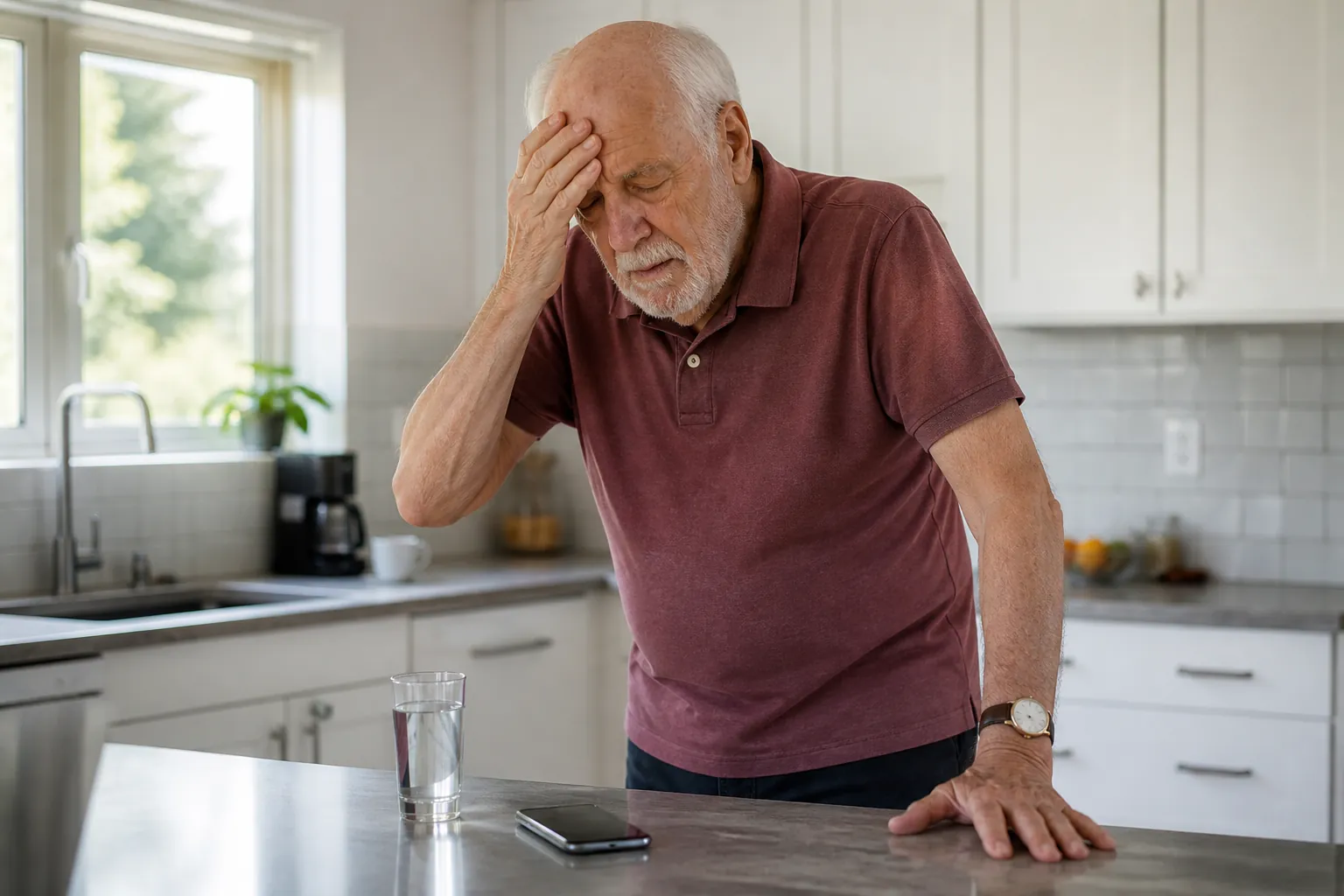
Treat dizziness as a fall-warning sign, not a side note
If an older adult has diarrhea and feels dizzy when standing, the next bathroom trip is part of the safety plan. Have them sit before standing, rise slowly, keep a phone within reach, and use the clearest, best-lit path to the bathroom. If they use a cane, walker, grab bar, or bedside commode, this is the time to use it without apology.
Do not make hydration advice so vague that it becomes useless. If the person is not peeing much, has a dry mouth and throat, cannot keep liquids down, or gets dizzy when standing, those are CDC-listed dehydration signs in Salmonella illness and should be treated as medical decision points, not simply reminders to “drink more water.”[1][4]
If you need a broader plan for the first days after any food recall, use the site’s food recall safety framework for seniors. For everyday prevention and a more complete hydration plan after a Salmonella concern, see Salmonella prevention tips for seniors. Those are next steps after the outbreak-specific work here: identify the carton, remove it, clean the kitchen, and watch symptoms against the CDC thresholds.
A safer home by the end of the check
The best outcome is not dramatic. The recalled eggs are out of the refrigerator. The shelf, counter, and utensils have been washed and sanitized. The older adult knows which symptoms cross the line from uncomfortable to urgent. Dizziness, dry mouth, low urination, or trouble keeping liquids down is treated as a fall-prevention warning as well as a health warning.
This article is for general information and is not medical advice. If a senior has severe symptoms, dehydration signs, bloody diarrhea, high fever, confusion, fainting, or any symptom that worries you, contact a healthcare professional or seek urgent care.
This article should be reviewed by a registered dietitian or other qualified food-safety professional.
References
- Salmonella Outbreak Linked to Shell Eggs — CDC, updated July 24, 2026.
- Dozens sickened across 17 states in salmonella outbreak linked to recalled eggs: What to know — The Hill, July 27, 2026.
- People at Increased Risk for Food Poisoning — CDC.
- Symptoms of Salmonella Infection — CDC.
Related reading
Noticed something outdated or inaccurate on this page? Flag a correction. We review every report against CDC, NIA, and AARP HomeFit guidance before updating a page.
Part of the Fall Prevention section.