
STEADI: intervene
How Seniors Get Road Closure Alerts Without a Smartphone
Seniors without smartphones can still receive wildfire road closure alerts through phone-based 511 systems, NOAA weather radios, county alert registries, and a personal support network—but these must be set up before fire season to ensure safe evacuation and reduce fall risk during a crisis.
A senior without a smartphone can still get road closure alerts during wildfires. The safer answer is not one perfect device; it is a small system set up before fire season: 511 by phone, the county emergency alert registry, a NOAA Weather Radio with SAME coding, and one person who has agreed to relay information if the official channels are slow or confusing.
That matters most in the hour when roads start closing. If an older adult waits until smoke is visible, then learns the familiar route is blocked, the problem is no longer just information. It becomes walking faster than usual, turning around in the dark, managing a cane or walker on uneven ground, or using stairs when power or fire conditions make elevators unavailable. A scoping review on fire evacuation for seniors and people with disabilities notes that people with impaired mobility may be at risk of falling during evacuation, especially on stairs when lifts are unavailable during a fire.[1]
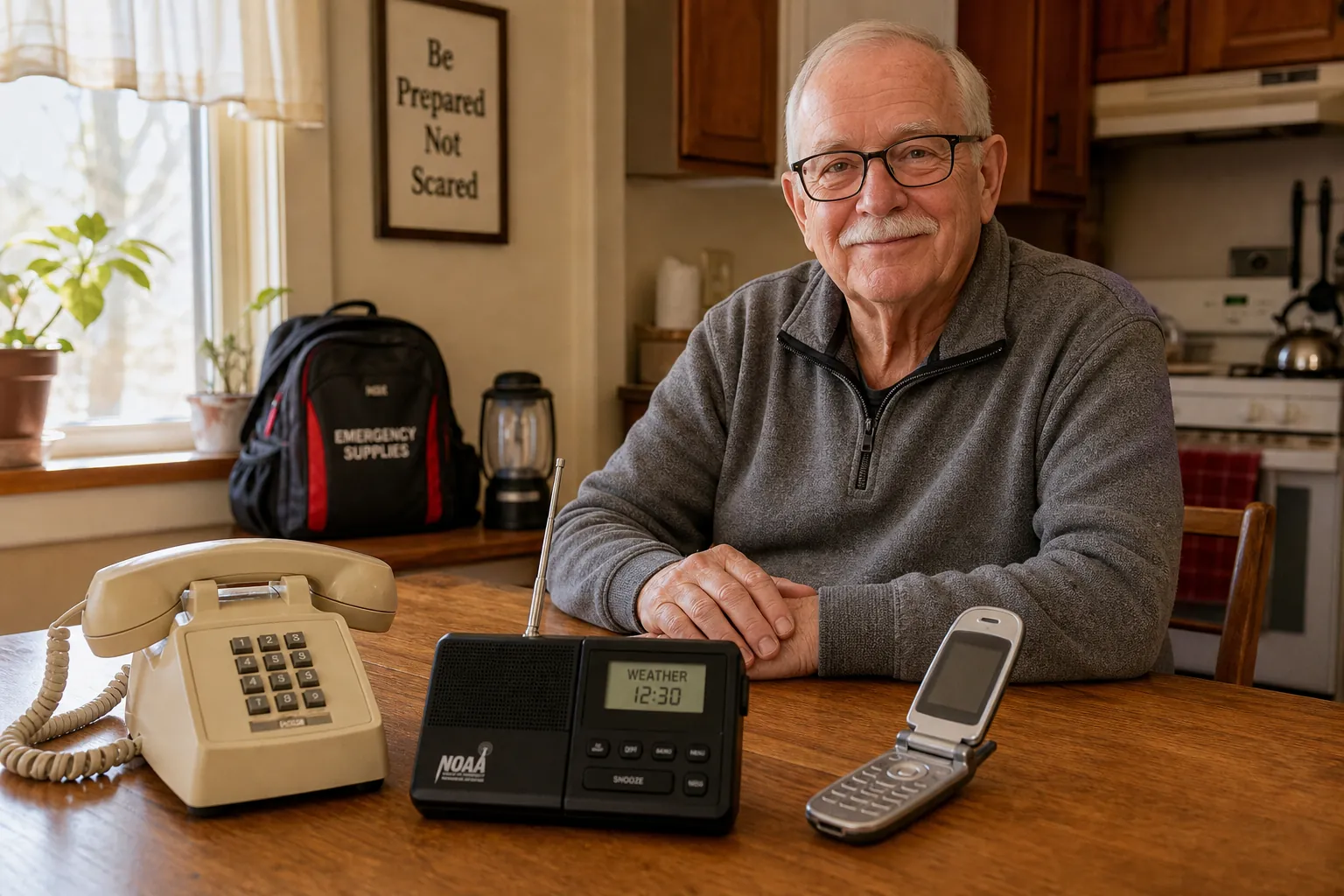
The practical question is this: what can reach the person at the kitchen table, on an ordinary phone or radio, before evacuation becomes rushed?
Start With 511, but Check the Local Version
The first number to write down is 511. In regions that support it, 511 can provide transportation emergency information without a smartphone. The Metropolitan Transportation Commission describes 511 as working from any phone, including a landline, cell phone, or payphone, and notes that registered users can receive transportation emergency alerts by SMS without needing a smartphone.[2]
That makes 511 especially useful for an older adult who will not open a map app but can still dial a number or read a basic text. During a wildfire, 511 may be the channel that answers the narrow transportation question: which highways, bridges, transit routes, or local corridors are affected right now?
The caveat belongs in the same breath. 511 is not identical everywhere. Coverage, menu design, road detail, and SMS options vary by state or region, so families should check the state or regional 511 website before they rely on it. A number saved on the refrigerator is useful only if the person has tried it once and knows what the menu sounds like.
| Before Fire Season | Why It Helps During a Wildfire |
|---|---|
| Find the correct state or regional 511 service. | The senior does not have to search for a website while stressed. |
| Call 511 from the senior's landline or basic cell phone. | You learn whether the menu is usable and whether local roads are covered. |
| If SMS alerts are offered, register the basic cell phone number. | Road or transportation alerts can arrive without an app. |
| Write a one-line instruction near the phone: 'Call 511 before leaving if roads may be closed.' | The alert system turns into an action, not just a number. |
For some seniors, the instruction needs to be even simpler: call 511, listen for closures near the usual route, then call the support person before driving. That extra call may feel slow on an ordinary day. During a wildfire, it can prevent a wrong turn into smoke, congestion, or an unfamiliar detour.
Register the Landline With the County Alert System
County emergency alert registries are often the most direct official path for evacuation notices. Cal OES describes local alert systems that can send voice calls to landlines and SMS messages to basic cell phones, naming examples such as Alert LA County, SoCoAlert, and SMC Alert.[3]
This is the layer that deserves careful setup, because many older adults assume that having a landline is enough. In some places, landlines may already be connected to certain public warning systems; in others, residents need to register numbers, addresses, accessibility needs, or preferred contact methods. The only safe assumption is to check the county emergency management or sheriff's emergency alert page and complete the registration for the exact address where the senior lives.
A good registration uses more than one contact point when allowed: the home phone, the basic cell phone, and a caregiver number. If the form allows notes about mobility, hearing, transportation, or medical equipment needs, those fields are worth completing. They do not guarantee individualized rescue, but they give the local system better information before the emergency.
During an actual fire, a county alert may tell the senior to evacuate, prepare to evacuate, avoid an area, or follow official instructions. It may not give every road closure detail. That is why county alerts and 511 belong together: one can carry the evacuation order, while the other may help with the transportation route.
Add NOAA Weather Radio for Warnings That Do Not Depend on Internet or Cell Service
A NOAA Weather Radio is not a road map. It is the broad hazard layer: fire weather, emergency messages, and evacuation-related alerts that can reach a home even when internet service is down or cellular service is unreliable. Ready.gov recommends that older adults have emergency alerts and a NOAA Weather Radio, and its wildfire guidance includes NOAA Weather Radio with Specific Area Message Encoding, or SAME, as a way to receive alerts for the local area.[4][5]
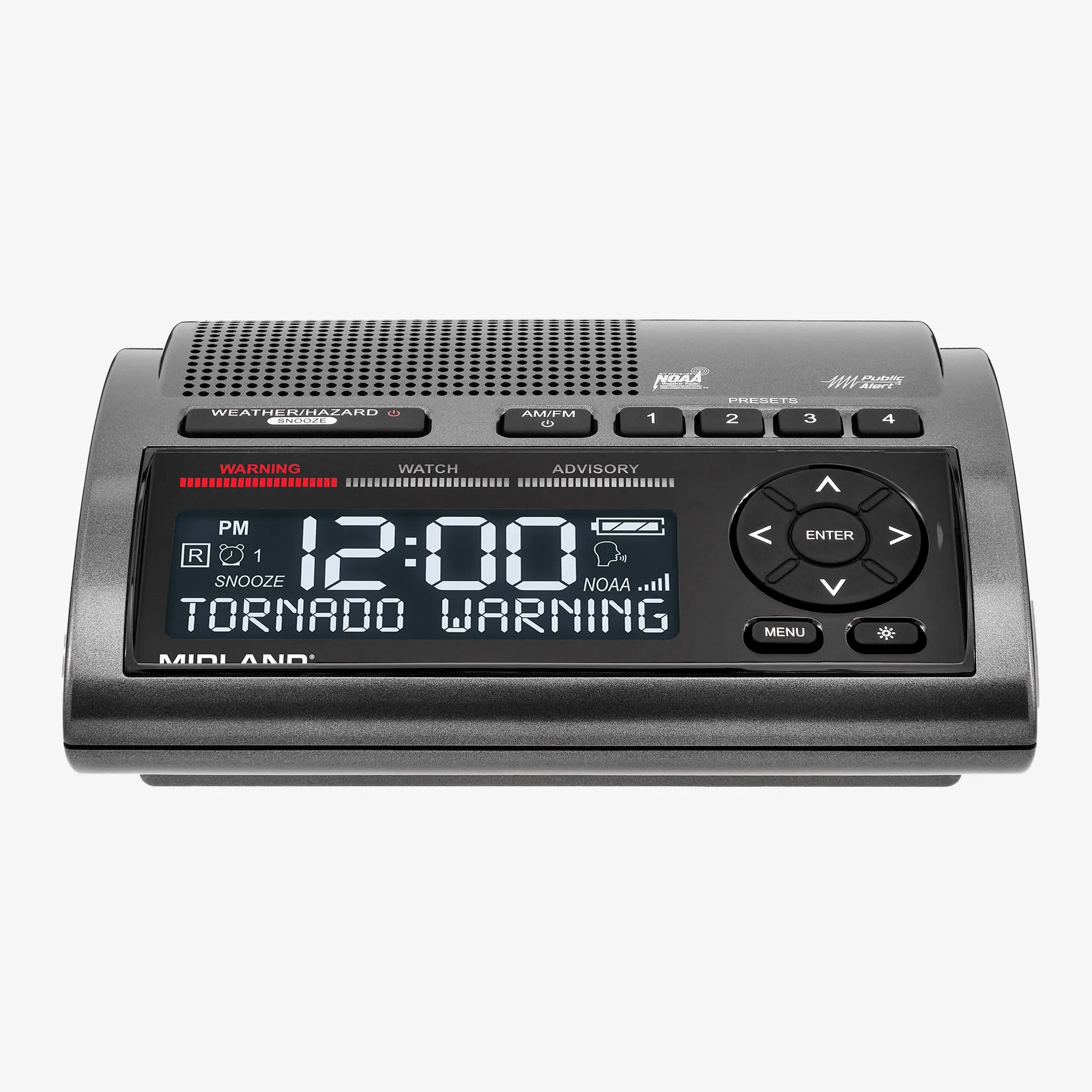
SAME coding is the part to set up before the season starts. It lets the radio monitor selected counties or areas rather than sounding for every distant alert the receiver can pick up. Without that step, the radio may be too noisy, too broad, or simply ignored after a few false alarms.
The setup is usually a one-time job: choose a radio with alert function and battery backup, enter the correct SAME code for the county, test the volume from the rooms where the senior sleeps and spends evenings, and write down what to do when the alarm sounds. If hearing is limited, the household may need an accessory alert device, a louder placement, or a support caller who also monitors alerts.
The expectation should stay realistic. NOAA radio can wake someone to a dangerous condition or official warning, but it should not be treated as the source for every street-by-street closure. Once it sounds, the next actions are to check the county message, call 511 if roads may be affected, and contact the assigned support person if the route is uncertain.
Understand Wireless Emergency Alerts Without Making Them the Whole Plan
Wireless Emergency Alerts, or WEA, are the automatic bonus layer on most cell phones. Ready.gov says WEA can deliver emergency messages, including wildfire evacuation notices, without an app or registration.[4][5]
That can include many basic cell phones, not just smartphones, depending on the device and carrier. Still, WEA should not be the only plan for a senior who keeps a flip phone in a drawer, turns it off at night, cannot read small text quickly, or lives where cellular service fades. Check whether the phone receives WEA, whether emergency alerts are enabled, and whether the senior recognizes the tone.
The best use of WEA is as a backstop. If it sounds, the senior should already know the next move: turn on the radio, answer the landline, call 511 if leaving by road, and call the support person if the message is unclear.
Use a Support Network as a Relay, Not a Substitute
A neighbor, adult child, friend, or building manager can fill the gap between app-based information and a senior who does not use apps. That person can monitor county updates, transportation pages, Watch Duty, QuickMap where available, or local emergency posts, then place an ordinary phone call: 'Do not take the usual road. Use the north route, or wait for me to call back.'
This workaround became visible during the January 2025 Los Angeles wildfires. PBS reported on alert-system lag when residents needed information, and the report noted that Watch Duty became a critical real-time information source during the fires, adding 600,000 users overnight according to the Los Angeles Times.[6]
That Los Angeles reporting should not be stretched into a claim that every county alert system fails. Jurisdictions differ. The lesson is narrower and more useful: when a fire is moving, official alerts, road systems, apps, and human relays may not all update at the same speed, so a senior without a smartphone should not depend on a single channel.
The support role should be assigned before fire season, not improvised after an evacuation warning. One person needs to be primary. One person needs to be backup. Both need the senior's address, usual evacuation routes, mobility limits, whether the senior drives, where the walker or cane is kept, and whether stairs are part of the exit.
Tie Every Alert to a Safer Exit
An alert system is only useful if it leads to an action the senior can actually take. Older adults face higher stakes in fire emergencies: AARP reports that adults 65 and older have a fire death rate two to three times higher than the general population, and that only 6 of the 85 people killed in the 2018 Camp Fire were under age 50.[7]
Mobility changes the timing. Cal OES advises people with mobility or physical disabilities to evacuate as soon as possible to give themselves extra time.[3] That advice fits wildfire road closures because the safest route may become longer, slower, or less familiar as conditions change.
This is where fall prevention belongs in the road-closure conversation. If the alert arrives late or is hard to understand, the senior may rush to find glasses, shoes, medications, keys, a cane, a walker, a pet carrier, or a charger. They may step outside into smoke or darkness without turning on lights. They may try to carry too much at once. The alert did its job only if it gave enough time to leave without creating a fall hazard.
A go-bag helps because it reduces the number of last-minute trips through the house. CAL FIRE's Ready for Wildfire Go Evacuation Guide emphasizes preparing for evacuation before fire conditions force immediate departure.[8] For a fuller evacuation decision plan, CareWise also has a related guide on wildfire safety plans for seniors and caregivers.
A No-Smartphone Workflow to Set Up Before Fire Season
The cleanest setup is short enough to fit on one page near the phone. It should not ask the senior to remember which website matters, which app belongs to which agency, or which relative once mentioned a map link.
- Identify the correct 511 service for the state or region, call it from the senior's phone, and register for SMS transportation alerts if the local program offers them.
- Register the senior's landline and basic cell phone with the county emergency alert system, and add a caregiver number when allowed.
- Buy or check a NOAA Weather Radio with battery backup, program the correct SAME code, and test whether the alarm can be heard at night.
- Check the basic cell phone for Wireless Emergency Alerts, confirm the senior recognizes the alert tone, and decide where the phone charges overnight.
- Assign a primary and backup support caller who will monitor app-based or web-based road information and relay it by voice call.
- Review the usual evacuation route and one alternate route, including where the senior would avoid stairs, steep driveways, dark walkways, or uneven ground.
The support caller's script should be plain. A useful call does not begin with five sources and three uncertainties. It begins with the decision the senior has to make: stay ready, leave now by the planned route, avoid a closed road, or wait for pickup if driving is unsafe.
For a hypothetical example, the one-page note might say: 'If the weather radio alarms or the county calls, turn on the porch light, put on shoes, take the go-bag, call 511 before driving, then call Anna.' The details will differ by household, but the sequence should be that concrete.
What to Test Before the First Red Flag Warning
Testing is where the plan becomes real. Call 511 from the landline. Make sure the county registration confirmation arrived. Set off the NOAA radio test if the device supports it. Look at the flip phone and confirm alerts are enabled. Ask the support caller to place one practice call and say what they would say if the usual road were closed.
Then walk the exit path with the same shoes, cane, walker, glasses, keys, and bag the senior would use during an evacuation. If the route to the car is dark, cluttered, steep, or broken, the alert system is warning a person toward a fall hazard. Fixing that path is part of making the alert useful.
Readiness is not complicated, but it does have to be finished before smoke, power outages, road closures, and stress narrow the options: 511 identified, county registry completed, NOAA radio programmed, WEA understood, support caller assigned, evacuation route reviewed.
References
- Current learning strategies in fire evacuation for seniors and people with disabilities: a scoping review, PMC.
- 511: Simple Alerts for Transportation Emergencies, Metropolitan Transportation Commission.
- Evacuations & Accessibility: Meeting the Needs of All Californians During Disasters, Cal OES News.
- Older Adults, Ready.gov.
- Wildfires, Ready.gov.
- Emergency alert systems lagged when residents needed them most during LA wildfires, PBS News.
- FEMA Says Older Adults Need a Disaster Plan, AARP.
- Go Evacuation Guide, CAL FIRE Ready for Wildfire.
Related reading
Noticed something outdated or inaccurate on this page? Flag a correction. We review every report against CDC, NIA, and AARP HomeFit guidance before updating a page.
Part of the Fall Prevention section.