
STEADI: Intervene
Salmonella Prevention Tips for Seniors Help Prevent Falls
A bout of salmonella can trigger diarrhea, dehydration, and dizziness in an older adult — a chain of events that raises fall risk. Get senior-focused food-safety steps plus a simple daily hydration plan that protect against both threats at once.
Why salmonella prevention belongs in a fall-prevention plan
The fall risk does not start with the trip to the bathroom. It may start earlier, with chicken handled on the counter, a cutting board reused too soon, or leftovers left out long enough to become risky. For an older adult, salmonella prevention tips for seniors matter because a foodborne infection can set off a practical chain: diarrhea drains fluid, low intake makes it harder to catch up, dehydration can bring dizziness or lightheadedness, and an ordinary walk to the kitchen or bathroom becomes less steady.
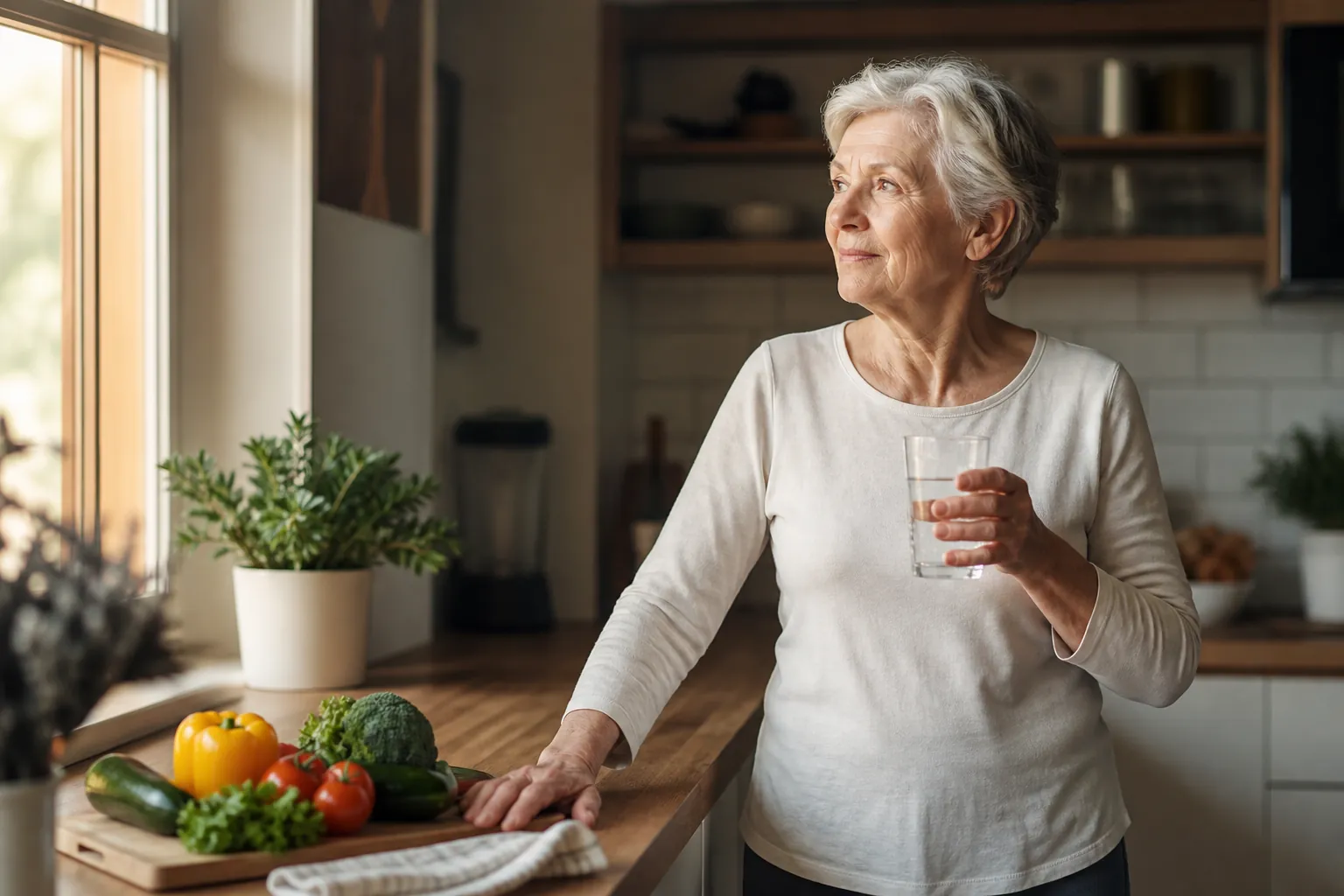
That bridge between fluid loss and falling is not just household instinct. In a retrospective cohort of 30,634 adults age 65 and older, dehydration was positively associated with falls: 13.3% of dehydrated older adults fell compared with 10.2% of non-dehydrated older adults, with an odds ratio of 1.13.[1]
That number does not mean salmonella directly causes falls. It means dehydration is already a documented fall-risk factor in older adults, and salmonella can be one reason dehydration shows up quickly. A prevention plan that stops at “cook safely” is incomplete. A prevention plan that adds steady hydration is more useful at home, where the person who feels weak still has to stand, turn, reach, and get to the bathroom.
The risky moment is often ordinary
Foodborne illness can make an older adult feel unwell in the obvious ways, but the fall concern is often quieter. Diarrhea reduces fluid reserves. Nausea or poor appetite may reduce drinking. A person who usually manages the day independently may spend several hours taking in less fluid than usual while losing more than usual.
Then comes the movement that looks too small to count as a safety event: standing up from the recliner, stepping into the bathroom, reaching for a robe, walking back to bed in dim light. Dizziness, lightheadedness, or a drop in blood pressure after standing can make that movement less predictable. The floor has not changed. The hallway has not changed. The body’s fluid balance has.
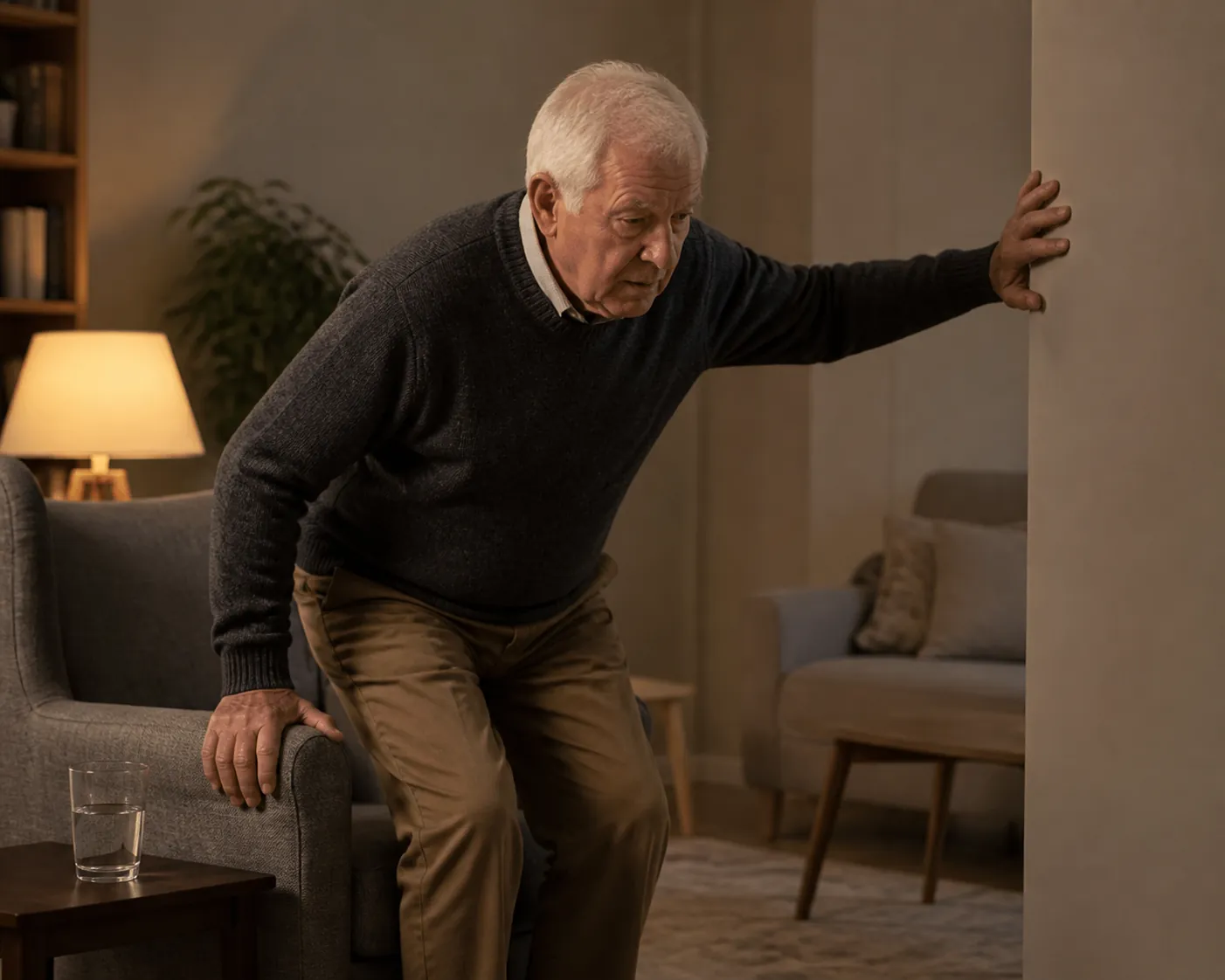
This is why the response should not be panic around food. Older adults should be able to shop, cook, eat, host, and enjoy meals without being treated as delicate. The useful approach is narrower and more practical: make the kitchen routine less likely to cause illness, and make the daily fluid routine strong enough that one low-intake day is easier to notice and correct.
The kitchen routine: clean, separate, cook, chill
The familiar food-safety pattern still works, but it needs to be placed where meals actually happen: the refrigerator shelf, the counter beside the sink, the cutting board, the pan, and the container that is supposed to go back into the fridge. For seniors and caregivers, the goal is not a perfect kitchen. It is a kitchen where the common weak points are harder to miss.
| Part of the routine | What it means at home | Why it matters for fall prevention |
|---|---|---|
| Clean | Wash hands, clean surfaces, and replace or wash towels and sponges that spread raw-food residue. | Fewer chances for a stomach illness that could lead to fluid loss. |
| Separate | Keep raw meat, poultry, seafood, and eggs away from foods that are ready to eat. | Avoids moving bacteria from raw foods onto foods that will not be cooked again. |
| Cook | Cook higher-risk foods thoroughly and use a food thermometer when doneness is uncertain. | Reduces the chance that a meal becomes the start of diarrhea, weakness, and unsteady walking. |
| Chill | Refrigerate perishable foods promptly and make leftovers easy to identify and use safely. | Prevents the refrigerator from becoming a hidden weak link in the safety routine. |
Clean means hands, counters, and the things that touch both
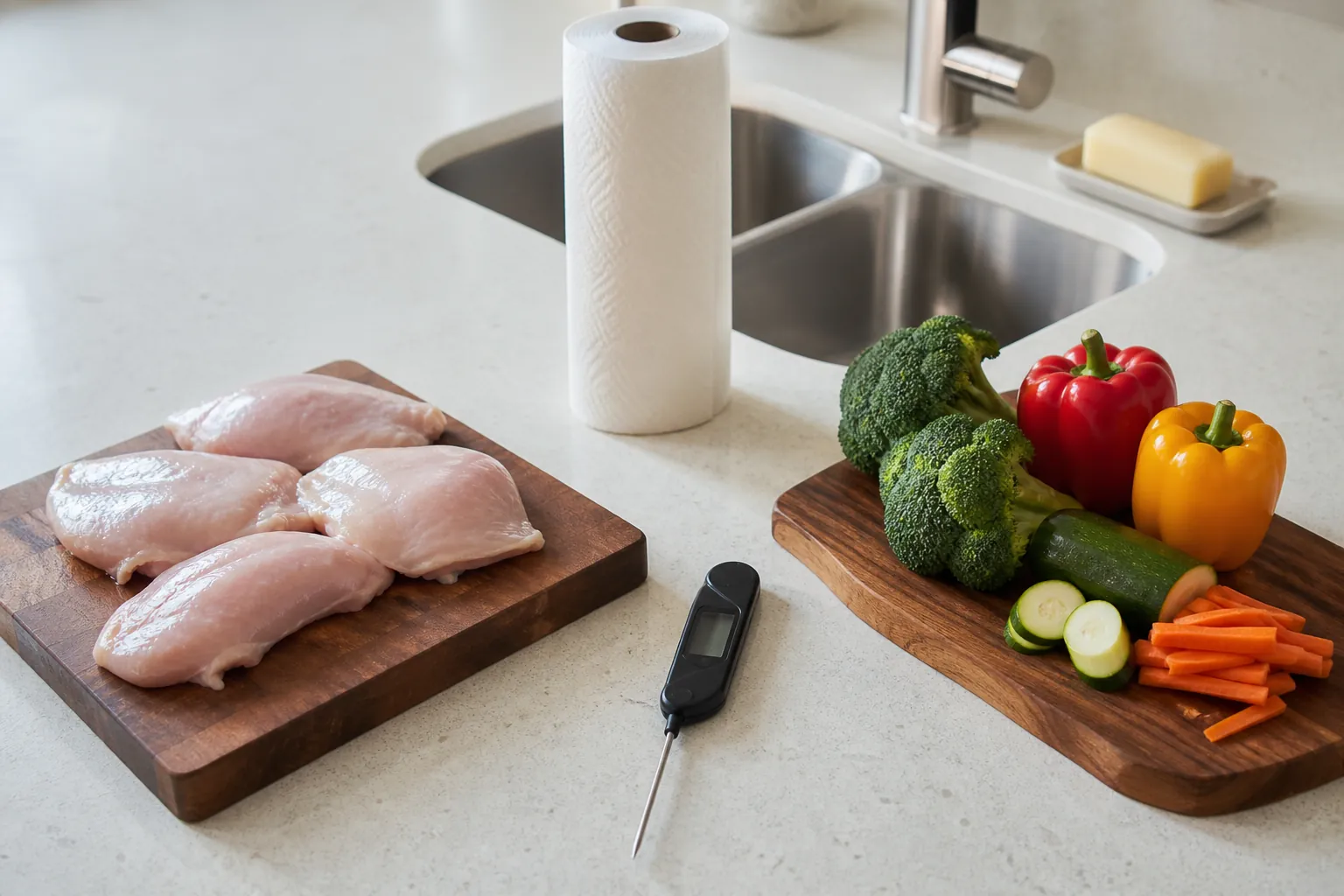
Handwashing is the visible part. The quieter problem is the object that moves from one job to the next: a damp towel used after handling raw poultry, a sponge that wipes the counter and then the table, a faucet handle touched with contaminated hands. A senior-friendly setup keeps soap easy to reach, paper towels or clean towels available, and counter space clear enough that raw-food cleanup does not require juggling.
For an adult child helping without taking over, this is a good place to be useful. Replace worn cutting boards. Put disinfecting supplies where they are easy to use. Make sure the sink area is not cluttered. These changes support the person doing the cooking instead of turning every meal into supervision.
Separate raw foods from ready-to-eat foods before the meal starts
Separation is easiest when it happens early. Raw chicken should not wait beside salad greens. A plate that held raw food should not become the serving plate. If the kitchen is small, the safer habit may be as simple as preparing ready-to-eat foods first, moving them away, and then opening raw meat or poultry.
Color-coded boards can help, but they are not magic. The real rule is whether raw juices can reach food that will be eaten without another cooking step. If the answer is yes, the setup needs to change.
Cook with less guessing
A food thermometer is not a gadget for fussy cooks. It is a way to remove guesswork when color, texture, or habit is unreliable. This matters especially when someone has cooked the same recipe for years and can usually tell by sight. Usually is not the same as safely, particularly with foods that can carry salmonella.
The practical setup is simple: keep the thermometer in the drawer where cooking utensils already live, not in a box on a high shelf. If using it requires a step stool, it will not be used on the day it is needed.
Chill foods before the counter becomes the storage plan
The kitchen often gets risky after the meal, when everyone is tired and the food looks harmless. Leftovers stay on the counter while dishes are washed, phone calls are answered, or the evening routine starts. A safer pattern is to make refrigeration part of clearing the table, not the final chore after cleanup.
For someone living alone, smaller containers help because they cool more easily and are easier to lift. Labels help because they reduce the guessing game later. A refrigerator that is so full that leftovers are wedged wherever they fit is harder to manage safely, especially for someone who already has balance or vision concerns.
Hydration is the second half of the fall-prevention plan
Hydration is often treated like a pleasant wellness reminder. In this context, it is more concrete than that. If diarrhea or poor intake pulls fluid out of the body’s reserve, the replacement plan has to be ready before anyone is dizzy at 2 a.m.
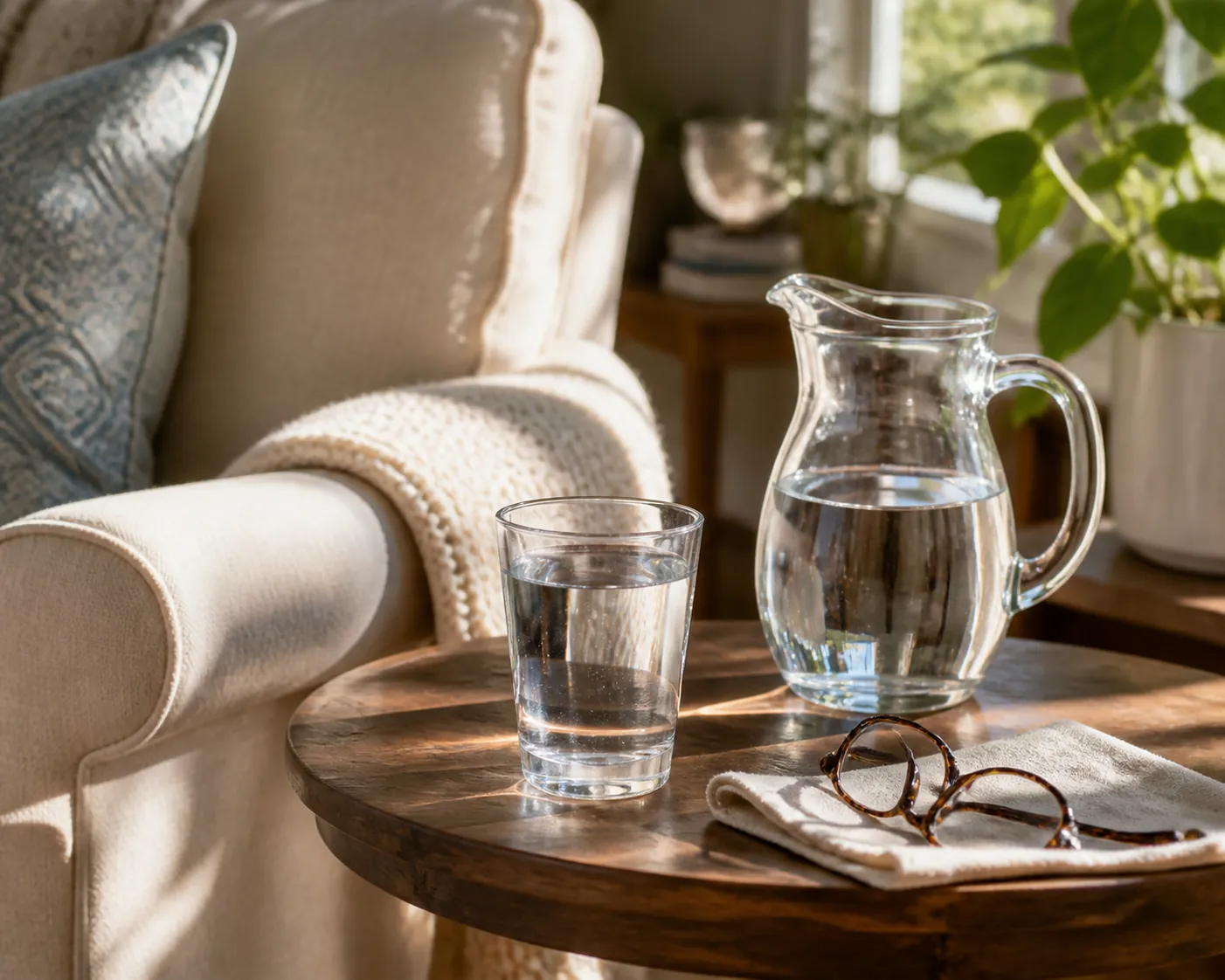
A good daily plan does not require hovering. It puts fluid where the day already happens: beside the morning medications if those are part of the routine, near the favorite chair, with meals, and within reach before bedtime. The point is steady intake, not a large glass forced all at once after someone already feels weak.
- Keep a filled glass, bottle, or pitcher in the rooms where the older adult spends the most time.
- Pair drinks with existing habits, such as breakfast, medication times, afternoon reading, or a favorite television program.
- Use cups that are easy to grip and lift; a heavy glass can become a reason not to drink.
- Notice changes in the usual pattern, such as a full glass left untouched all afternoon or fewer bathroom trips than normal.
- If a clinician has recommended fluid limits because of heart, kidney, or other medical conditions, follow that plan and ask what to do on diarrhea or low-intake days.
On a low-intake day, lower the fall demand too
Some days announce themselves. The person eats little, naps more, has loose stools, or says food does not sound good. That is the day to make fluids easier and walking safer at the same time. Put drinks within reach. Clear the route to the bathroom. Turn on night lights before evening. Encourage sitting at the edge of the bed or chair before standing fully.
This is not overmanagement. It is matching the house to the day’s risk. A person who is usually steady may still need a slower stand and a clearer path when fluid balance is off.
After diarrhea, replace what was lost
After diarrhea, the question is not only whether the stomach has settled. The question is whether enough fluid has gone back in for the next trip to the bathroom, kitchen, or bedroom to be safe. Small, repeated drinks may be more realistic than asking someone to finish a large glass at once, especially if the stomach still feels unsettled.
Caregivers can help without making food or drinking feel like a test. Offer options. Refill the glass quietly. Notice whether the person becomes lightheaded when standing. If the older adult lives alone, a brief check-in after a reported stomach illness can be more useful than a long lecture about what went wrong in the kitchen.
When to involve a clinician
This article is about prevention, not diagnosing or treating salmonella. Still, severe illness in an older adult deserves prompt medical guidance. Call a clinician or seek urgent advice if diarrhea is severe, fluid intake is not keeping up, the person seems confused, faints, cannot stand safely, or shows signs that dehydration may be affecting alertness or balance.
The safety question is immediate: can this person get to the bathroom, drink, and rest without falling? If the answer is uncertain, the situation has moved beyond kitchen cleanup and into fall prevention.
Make the safer choice the easier choice
The best salmonella prevention tips for seniors are not dramatic. Keep raw foods away from ready-to-eat foods. Wash the hands, the board, the counter, and the towel that quietly spreads residue. Cook with less guessing. Refrigerate before leftovers become an afterthought. Keep water close enough that drinking does not depend on a trip across the room.
For older adults, salmonella prevention is not only about avoiding a miserable stomach illness. Paired with a steady hydration routine, it reduces the conditions that can lead to dizziness, unsteady walking, and the kind of preventable fall that changes the whole week.
References
- Association Between Dehydration and Falls, Mayo Clinic Proceedings: Innovation, Quality & Outcomes, 2020.
Related reading
Noticed something outdated or inaccurate on this page? Flag a correction. We review every report against CDC, NIA, and AARP HomeFit guidance before updating a page.
Part of the Fall Prevention section.