
STEADI: Intervene
Why Food Recall Safety Is Fall Prevention for Seniors
Foodborne illness from a recalled food is a fall risk for adults 65+: dehydration and dizziness can last for days. Here's how to respond in the first 72 hours.
Food recall safety for seniors usually becomes real at the refrigerator door: the warning has been announced, the container is in the house, and someone may already have eaten from it. For an adult 65 or older, that is not just a food-safety errand. It is a short-term fall-risk event until you know more.
The practical goal is not to panic or turn the kitchen into a clinic. It is to stop the exposure, confirm the recall through official sources, write down what was eaten and when, and watch closely for the symptoms that can make a normally safe walk to the bathroom suddenly unsafe: vomiting, diarrhea, dizziness, weakness, new confusion, or trouble with balance.
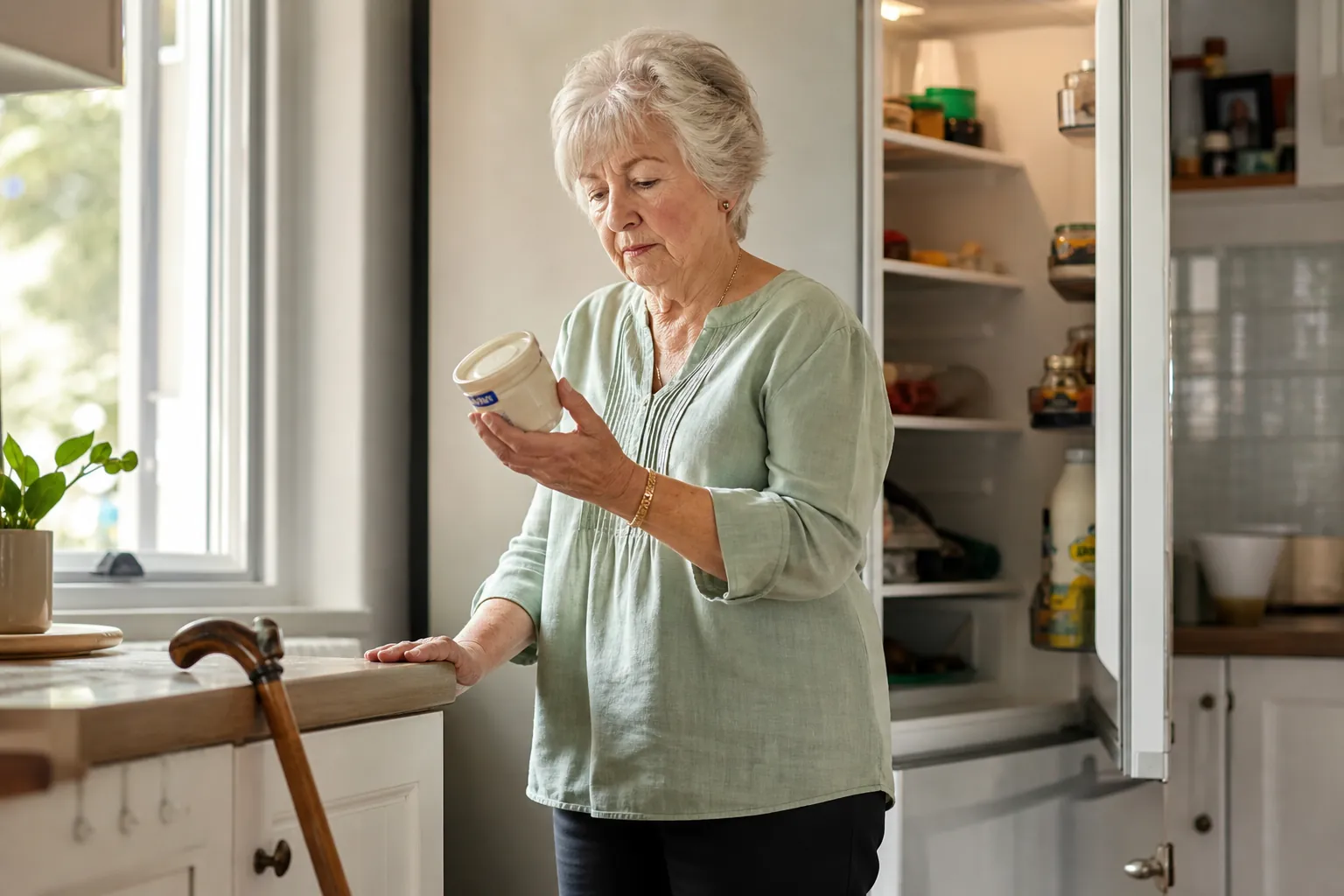
If the recalled food may already have been eaten
The first response is simple, but it needs to be done in order. Do not keep serving the food while you “wait and see.” Do not rely on a social media screenshot or an old roundup article. Recalls change, outbreak pages update, and product details matter.
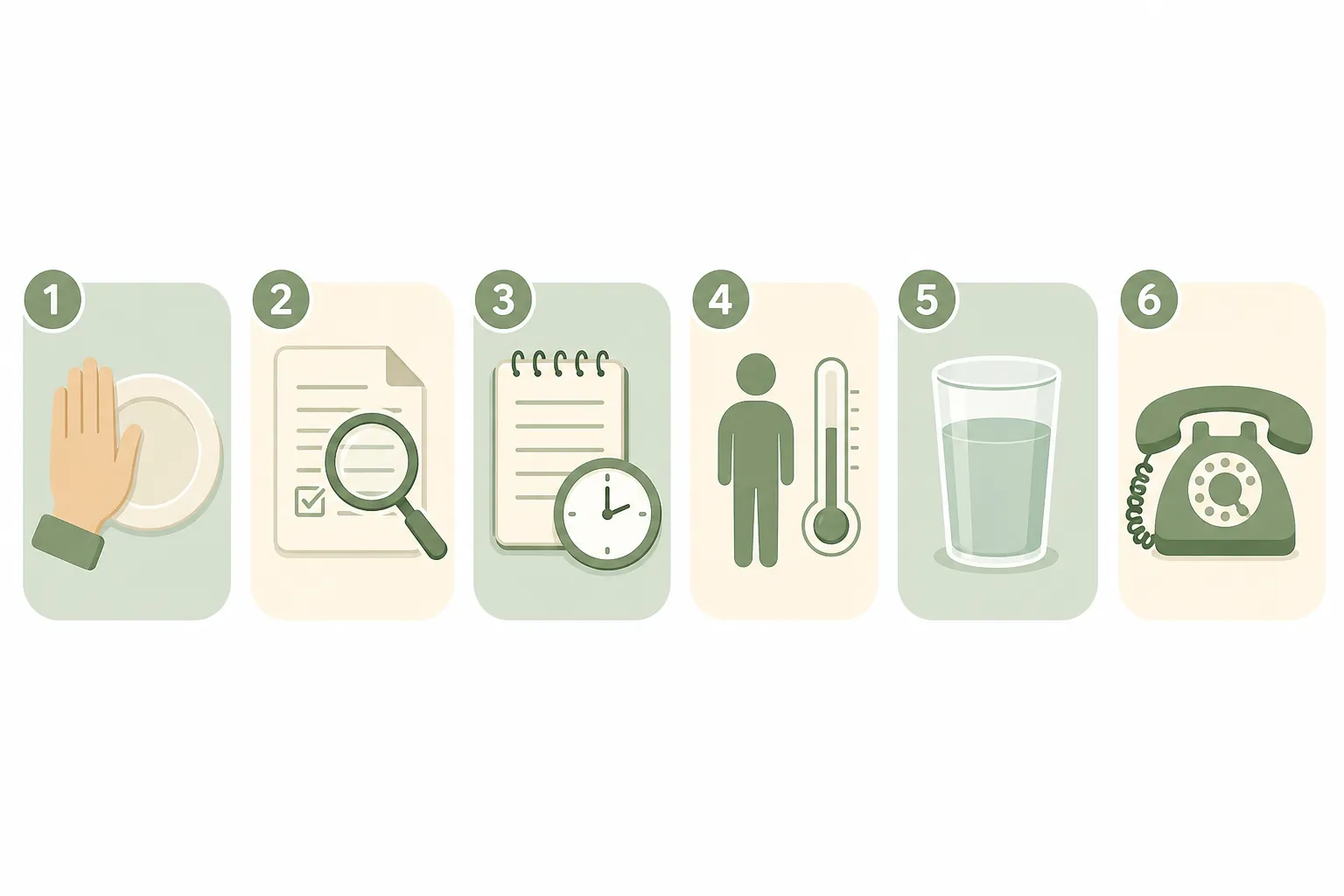
| What to do now | Why it matters for fall prevention |
|---|---|
| Stop serving the food. Put it in a bag or marked container so no one eats more while you check the notice. | This prevents a second exposure while the household is still figuring out the risk. |
| Verify the recall through the current FDA, FSIS, FoodSafety.gov, or company recall notice, matching brand, product name, size, lot code, sell-by date, and package photos when available. | A similar-looking product may not be part of the recall; the exact product details decide whether the household needs symptom monitoring. |
| Write down what was eaten, who ate it, how much, and roughly when. | If symptoms begin later, the clinician does not have to reconstruct the exposure from memory. |
| Watch for vomiting, diarrhea, dizziness, weakness, fever, new confusion, or balance changes. | These are the symptoms most likely to turn a foodborne illness into an unsafe walk, transfer, or bathroom trip. |
| Support fluids if the person can drink safely and has no medical fluid restriction. | Fluid loss from vomiting or diarrhea can contribute to dehydration, lightheadedness, and unsteadiness. |
| Call a healthcare provider promptly for severe or worsening symptoms, new confusion, fainting, trouble standing, or loss of balance. | For an older adult, these are not “just stomach” symptoms; they can signal a medical problem and immediate fall danger. |
Do the product check before the household negotiates with itself
The hard part is often not finding the recall. It is persuading someone that the half-empty container should not be finished. Match the recall notice against the actual package, not against memory. Look for the brand, product description, lot code, sell-by or use-by date, establishment number if listed, and package size. If the notice says to discard or return the product, do that rather than tasting it, smelling it, or saving it “just in case.”
For a caregiver, it helps to take one photo of the package and one photo of the recall notice. If symptoms start later, those photos are easier to share than a long explanation across the phone.
Treat the next 72 hours as a fall-risk watch
A recalled food that has already been eaten does not mean illness is certain. It does mean the next few days deserve more attention than a normal week. Keep the walking path to the bathroom clear. Encourage the person to sit before standing if they feel lightheaded. Consider whether they should use their cane, walker, or handrail even for short trips they usually take without it.
If vomiting or diarrhea starts, the fall risk can rise before anyone says the word “dehydration.” The person may move faster than usual to reach the bathroom, get up overnight, skip meals, drink less because their stomach feels unsettled, or feel weak after a few hours of fluid loss. Those ordinary details are where falls happen.
Hydration advice should be specific enough to be useful. Offer small, frequent sips if the person can drink safely. Watch whether they are urinating less than usual, becoming unusually sleepy, or getting dizzy when standing. If they have heart failure, kidney disease, a fluid restriction, swallowing problems, or a history of needing carefully managed fluids, ask their clinician how to handle rehydration rather than pushing large amounts at home.
This is the same fall-risk mechanism discussed in CareWise’s coverage of cyclospora symptoms and fall risk in older adults and why dehydration makes cyclospora more dangerous for seniors. A recall may involve a different food or pathogen, but the home problem can look familiar: fluid loss, dizziness, weakness, and an older person trying to keep moving.
Why a recall is different after 65
The CDC estimates that foodborne germs cause 48 million illnesses, 128,000 hospitalizations, and 3,000 deaths in the United States each year.[1] That national number can make food poisoning sound common and ordinary. The age-specific detail is more useful at home: the CDC says nearly half of people 65 and older who have a laboratory-confirmed illness from Salmonella, Campylobacter, Listeria, or E. coli are hospitalized.[2]
That hospitalization point is why “probably just a stomach bug” is too casual for an older adult who ate a recalled product. Aging can reduce the body’s margin for error. FDA materials describe immune-system changes beginning around ages 50 to 60, along with reduced stomach acid, slower movement of food through the gastrointestinal tract, and reduced liver and kidney clearance.[3] FoodSafety.gov likewise notes that older adults are at higher risk for foodborne illness because organs and body systems change with age, including the immune system and gastrointestinal tract.[4]
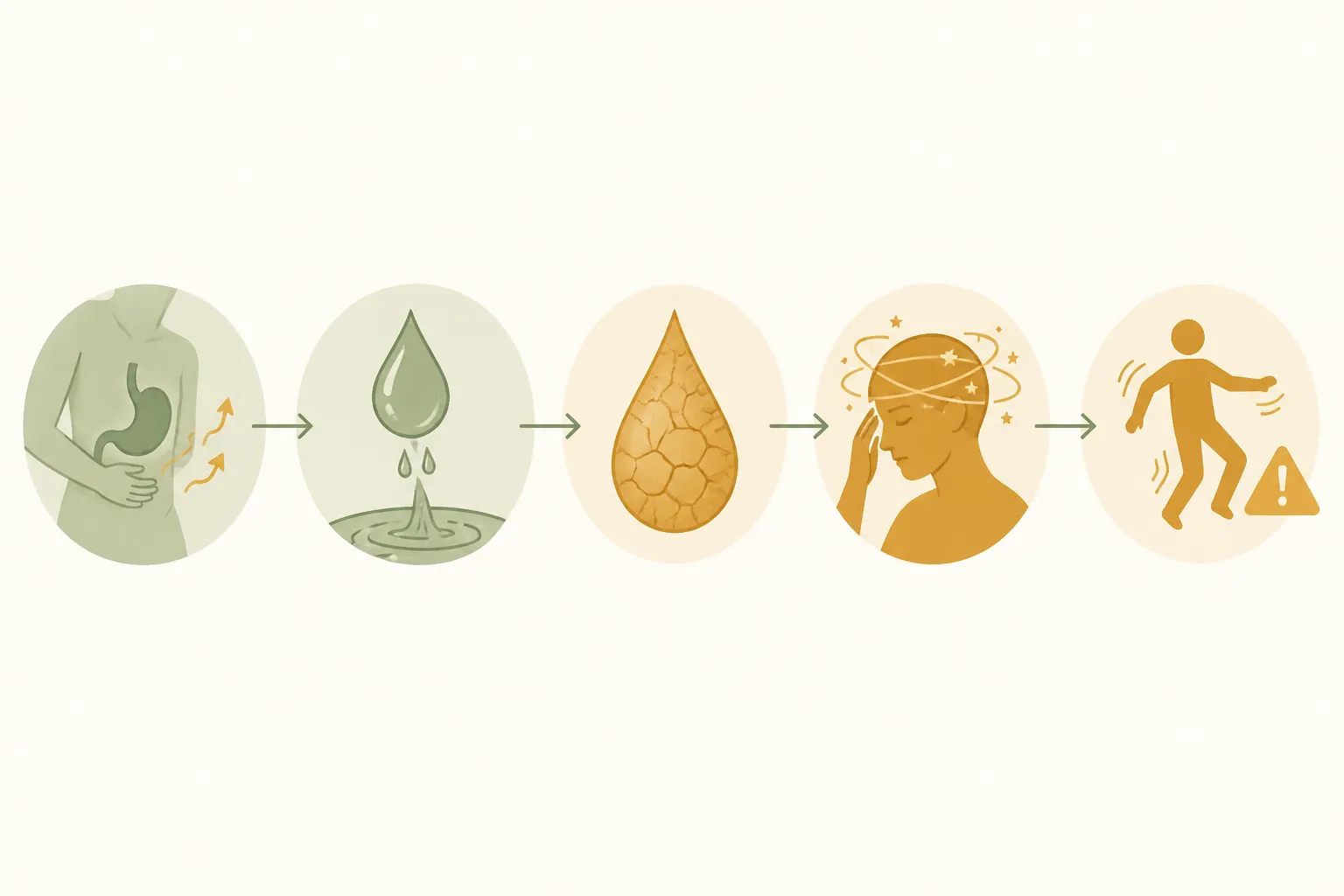
For fall prevention, the important chain is physical and immediate: vomiting or diarrhea can mean fluid loss; fluid loss can contribute to dehydration and orthostatic hypotension; dehydration can show up as dizziness, weakness, slower reactions, and unsteady walking. None of that requires the person to be visibly “very sick” before the home becomes less safe.
There is also research support for treating dehydration as a fall-risk signal, with the right caution. In a retrospective cohort of 30,634 adults 65 and older in the UW Health system from 2011 to 2015, 37.9% were classified as dehydrated at baseline. Falls occurred in 13.3% of those who were dehydrated compared with 10.2% of those who were not, and dehydration was associated with higher fall odds after adjustment, with an adjusted odds ratio of 1.13.[5]
That study does not prove that dehydration automatically causes a fall, and it should not be stretched beyond one health system’s cohort. It does justify a practical household standard: if an older adult develops fluid loss after a suspected recalled-food exposure, treat it as a real fall-risk signal rather than a minor inconvenience.
The same symptom-monitoring logic applies outside recalls, too. CareWise’s article on GLP-1 side effects that raise fall risk in seniors looks at a different trigger, but the home observation is similar: nausea, low intake, dehydration, dizziness, and weakness can change how safely someone stands and walks.
A dated example: the June 2026 soft-cheese Listeria outbreak
Recall examples age quickly, so they should be treated as anchors, not as a current shopping list. As of Q3 2026, the FDA’s June 2026 investigation of Listeria monocytogenes linked to Clover Hill Dairy soft cheese reported 12 illnesses, 10 hospitalizations, and 1 death across 4 states.[6]
The lesson is not that every soft cheese in every refrigerator is dangerous. The lesson is that a recall notice can describe a real exposure that has already reached older adults’ kitchens. A caregiver who finds the product after breakfast is not dealing with an abstract federal alert. They are deciding what gets discarded, what gets written down, who gets watched, and when a provider needs to be called.
For current recalls, use live official sources rather than a saved article or a weekly grocery panic list. FDA outbreak and recall pages, FSIS recall notices, FoodSafety.gov recall listings, and the company notice can all help confirm the exact product details. If the product is not an exact match, keep checking the official notice rather than guessing from the food category alone.
The Listeria exception to the 72-hour frame
The first 72 hours are a useful home-safety window for many recall exposures because vomiting, diarrhea, dizziness, and weakness can create immediate fall risk. Listeria complicates that tidy frame. CDC materials state that Listeria symptoms can begin the same day after exposure or as late as 10 weeks afterward.[7]
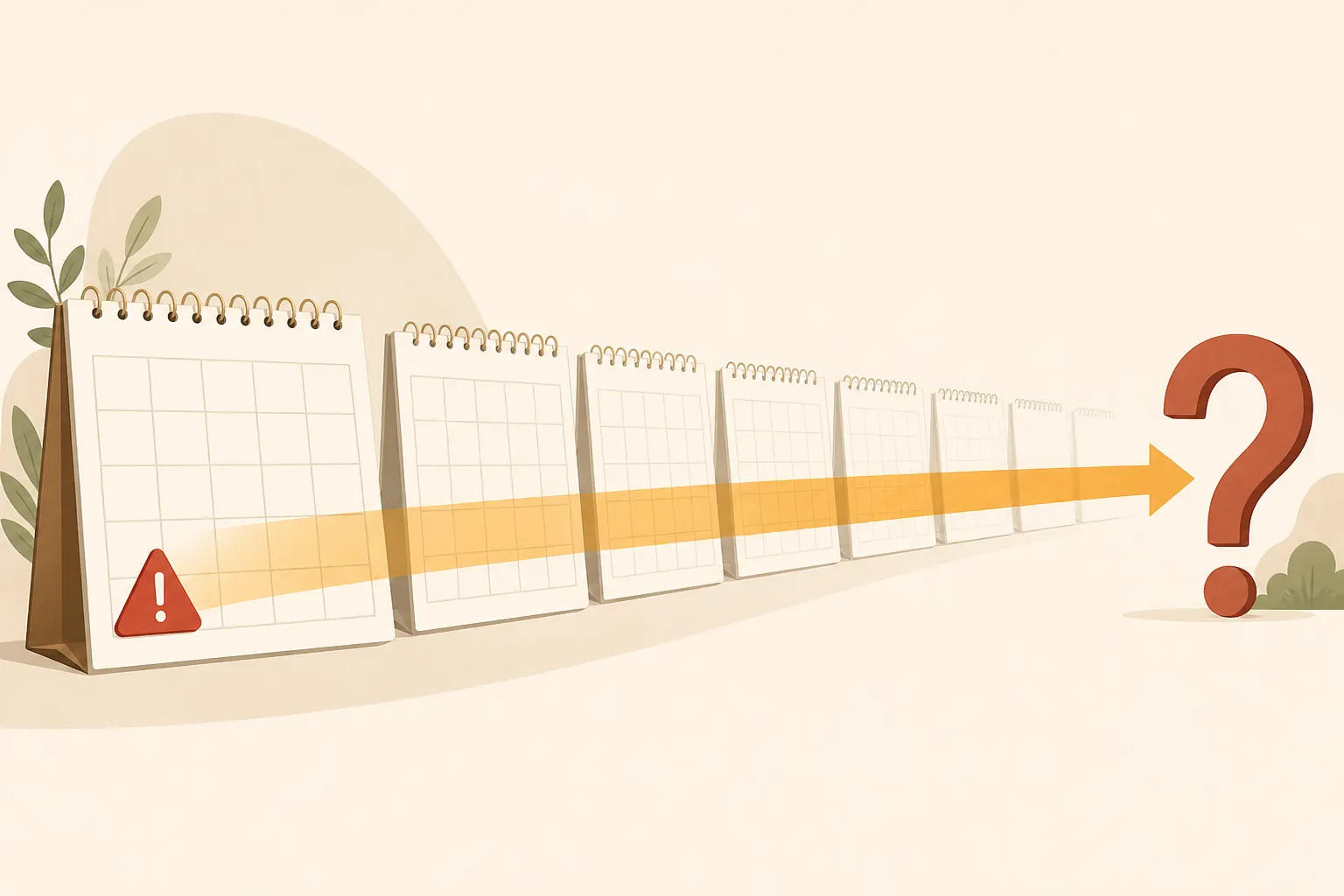
That means a symptom-free day does not clear a suspected Listeria exposure, especially for an older adult. Keep the product notes and recall information where they can be found later. If fever, muscle aches, headache, stiff neck, confusion, or loss of balance develops after a possible exposure, the issue belongs with a healthcare provider, not only with home observation. CDC lists severe Listeria symptoms that can include headache, stiff neck, confusion, loss of balance, and convulsions.[7][8]
New confusion deserves special respect. It may be blamed on age, fatigue, or “not sleeping well,” but sudden confusion during illness or dehydration is a same-day escalation issue. CareWise’s guide on what to do first when a parent shows cognitive decline explains why new or abrupt confusion should be handled differently from slow, long-term memory change.
Where recall checking fits in a fall-prevention home
Most fall-prevention work is visible: better lighting, safer shoes, grab bars, cleared walkways, a cane within reach. Recall checking feels less connected because it starts with a package label instead of a loose rug. For adults 65 and older, the connection is the days after exposure, when illness can make a familiar kitchen, hallway, or bathroom route less predictable.
A simple habit helps: when a recall involves a food an older adult commonly eats, check the refrigerator and pantry before the next meal; if there is a match, remove the food, write down the exposure, and watch the person rather than only watching the news. The prevention target is not just food poisoning. It is the dizzy, weak, dehydrated walk across the kitchen that may follow.
Category slug: fall-prevention.
Medical disclaimer: This article is for general education and home-safety planning. It is not a diagnosis or a substitute for medical care. If an older adult has severe symptoms, new confusion, fainting, trouble standing, signs of dehydration, or loss of balance after a suspected recalled-food exposure, contact a healthcare professional or seek urgent care.
Geriatric reviewer: Elena Ramirez, MD, Geriatric Medicine.
References
- Facts About Food Poisoning — CDC
- Safer Food Choices for Adults 65 and Older — CDC
- Food Safety for Older Adults and People with Cancer, Diabetes, HIV/AIDS, Organ Transplants, and Autoimmune Diseases — FDA
- People at Risk: Older Adults — FoodSafety.gov
- Association Between Dehydration and Falls — PMC
- Outbreak Investigation of Listeria monocytogenes: Soft Cheese (June 2026) — FDA
- About Listeria Infection — CDC
- Risk Factors for Listeria Infection — CDC
Related reading
Noticed something outdated or inaccurate on this page? Flag a correction. We review every report against CDC, NIA, and AARP HomeFit guidance before updating a page.
Part of the Fall Prevention section.