
STEADI: Intervene
Prevent Heat-Related Falls in Seniors at Outdoor Events
A practical event-day plan for keeping an older adult safe at a summer outdoor event — start hydration and a medication review ahead of time, pace shade, rest, and fluids on site, and recognize the dizziness and unsteadiness signs that mean sit down before heat turns into a fall.
The risky moment at a summer outdoor event rarely announces itself as a medical problem. It looks ordinary: an older parent standing in line for a shuttle, walking across a parking field that turned out to be much farther from the ceremony lawn than anyone expected, or saying “I’m fine” while shifting weight from one foot to the other because the folding chairs are still several rows away.
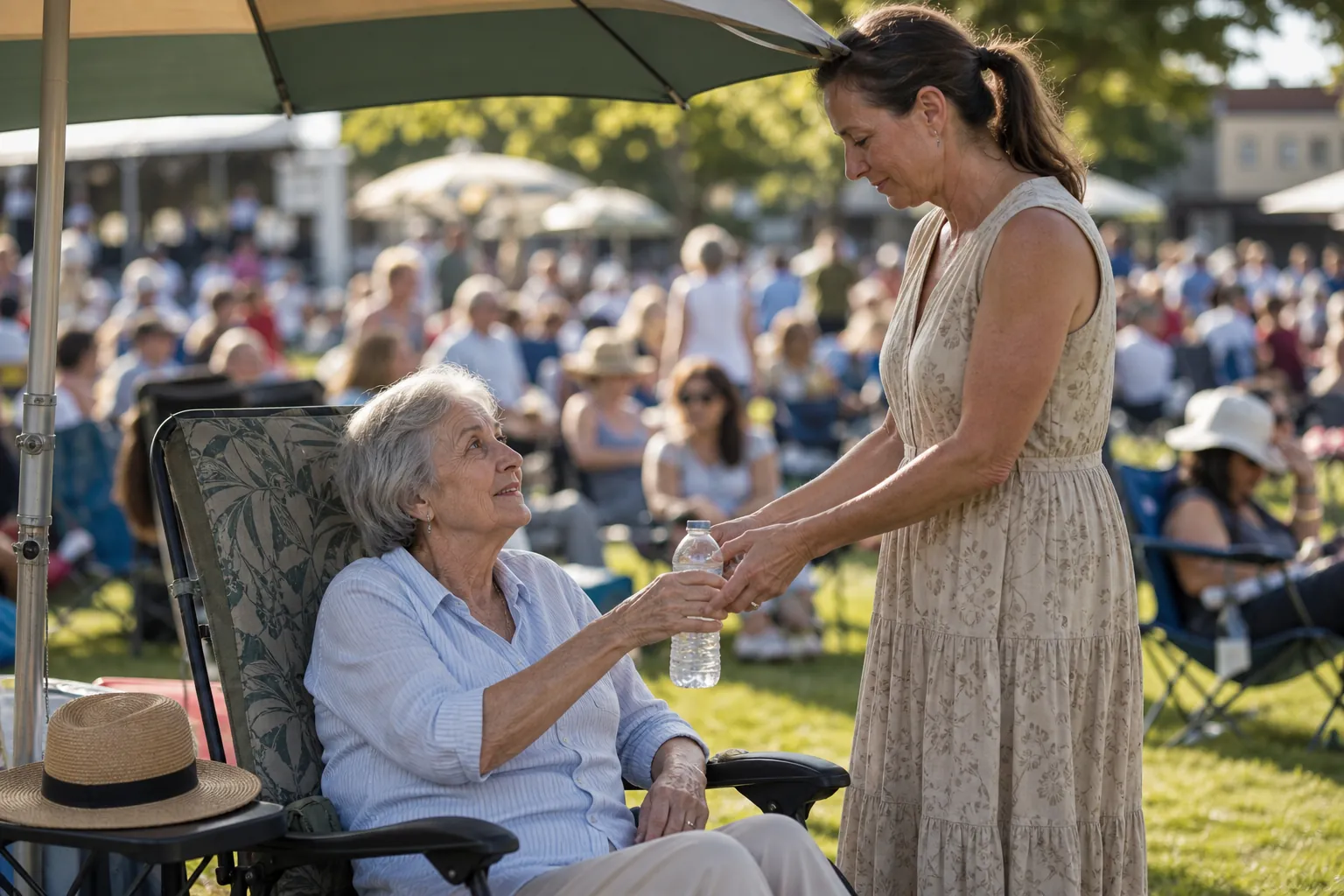
At summer outdoor events, heat safety for seniors has to include fall prevention. Heat can contribute to dehydration, delayed thirst, medication-related fluid or blood-pressure changes, dizziness, and unsteadiness. The fall connection is not theoretical: a 2024 systematic review and meta-analysis of older adults found that dizziness independently predicted future falls, with a pooled odds ratio of 1.63 for any fall and 1.98 for recurrent falls in a combined sample of 103,306 participants [1].
That does not mean every hot day causes a fall, or that every dizzy spell has the same cause. It means the first wobble deserves attention before pride, crowd noise, and “we came all this way” turn it into a harder problem. Older adults may adjust more slowly to sudden temperature changes, feel thirsty later, and have less body water reserve than younger adults [2]. The National Council on Aging also notes that dehydration-related tiredness and lack of coordination can contribute to falls and injury, and cites research suggesting that up to 40% of older adults may be chronically underhydrated [3].
The fuller home-based heat-and-balance mechanism is covered in CareWise Guide’s heat-fall cascade article. At an outdoor graduation, parade, festival, or wedding, the practical question is narrower: how do you keep the chain from reaching dizziness and unsteadiness while everyone is still out in public?
Start 1–2 days before the event, not at the gate
The first useful decision is not which hat to wear. It is whether the day, as planned, still makes sense for the older adult who is going. A shaded seat near the entrance is a different event from a long walk across blacktop, a standing-room ceremony, and a return trip during the hottest part of the afternoon.
In the day or two before the event, start with steady hydration rather than trying to “catch up” once the heat is already doing its work. This is especially important because thirst is a weak alarm in older adults. But this is not permission to push fluids aggressively. The CDC specifically cautions that older adults with fluid restrictions or those taking water pills should ask their doctor how much they should drink during hot weather [2].
The medication check belongs before the event, too. The CDC’s clinician guidance on heat and medications lists diuretics, anticholinergics, and some psychotropic medications among drugs that can affect heat risk. It also warns that ACE inhibitor or ARB combinations with diuretics may significantly increase risk, with mechanisms that include volume depletion, hypotension, and increased risk of fainting and falls [4]. For families, the practical move is simple: if the older adult takes medications that affect fluid balance, blood pressure, sweating, alertness, or dizziness, ask a pharmacist or clinician what hot-weather precautions apply. Do not change prescribed medications on your own.
Then look at the forecast in the way an event planner would, not just in the way someone dressing for the day would. Check the heat index, the hour-by-hour forecast, and the time the older adult will be walking in and out. NYC Health’s outdoor-event heat guidance is not national law, but it is a useful example of how public-health planners think about escalating heat: at 85°F and above, it recommends protective steps; at 95–99°F, warning attendees and increasing free water; at 100–104°F, considering rescheduling and advising high-risk attendees; and at 105°F and above, rescheduling or moving to an air-conditioned space [5].
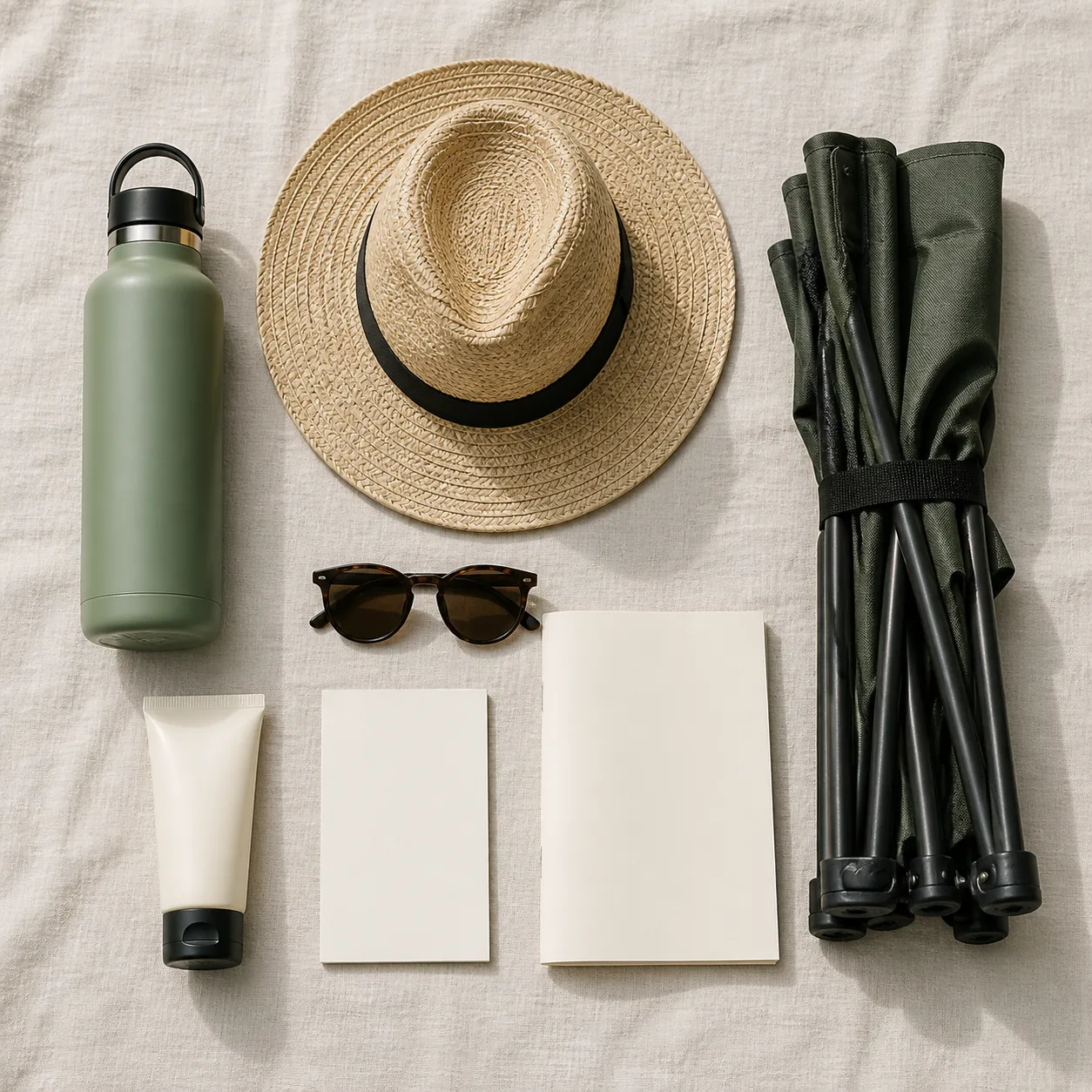
Before leaving, answer the unglamorous questions. They are the ones that usually decide whether the day stays easy.
| Question before leaving | Why it matters for heat-related falls |
|---|---|
| Where is the closest drop-off, accessible parking, or shuttle stop? | The walk from the car can be the most heat-exposed part of the event. |
| Where can the older adult sit within a few minutes of arrival? | Standing while hot, tired, or dehydrated increases the chance that dizziness becomes a fall. |
| Where will shade still exist later in the day? | A shade patch that works at noon may disappear by midafternoon. |
| Who is the named buddy? | Someone has to notice changes, carry supplies if needed, and end the debate if warning signs appear. |
| What is the exit plan? | Leaving early is easier when the route, ride, and decision rule are already agreed on. |
If the forecast has shifted, the mobility burden is higher than expected, or the only available seating is far from shade, the safest plan may be to shorten the visit, watch from a cooler location, or skip the most exposed portion. For longer forecast-driven planning, including medication and check-in preparation before a serious heat event, see the 72-hour heat dome checklist for parents.
On site, protect the route as much as the seat
A lot of event advice begins once people are seated. That misses the part that wears older adults down: the approach, the line, the security check, the sloped grass, the curb cut that is not where the map said it would be, the trip back to the restroom, and the walk out with the sun lower but the pavement still radiating heat.
Treat arrival like a paced transfer. Drop the older adult close to the entrance if possible. Use the mobility aid they normally rely on instead of leaving it in the car because “it’s just a short walk.” If the event allows portable chairs, bring one that the older adult can get in and out of safely. If not, identify benches, low walls, indoor lobbies, tented areas, first-aid stations, or vendor shade before anyone is tired.
The named buddy should not hover like a guard. The job is more ordinary: walk at the older adult’s pace, notice if speech or gait changes, hold the extra water so hands are free for a cane or rail, and make it socially easy to pause. “Let’s sit for a minute before we go in” often works better than “You look unsteady,” especially in public.
Build a shade, rest, and fluids rhythm
The rhythm matters because heat problems often accumulate quietly. UC Davis Health advises people working or exercising outdoors in heat to drink about 8 ounces of water every 20 minutes and take a 10-minute shade break every hour [6]. That advice is not a personalized prescription for every older adult at a wedding or festival, especially if fluid restriction, kidney disease, heart failure, or diuretic use is part of the picture. It does give families a useful planning frame: fluids and shade breaks should be scheduled before symptoms appear, not saved for the moment someone feels shaky.
Other organizations give different hydration amounts for different contexts, which is why one rigid number is less useful than a safe plan. For an older adult with medical limits on fluids, the clinician’s instruction wins. For everyone else, bring more water than seems necessary, make it easy to drink small amounts regularly, and pair drinking with planned pauses so the person is not trying to swallow quickly while walking over uneven ground.
Timing also changes the risk. NYC Health notes that the sun is strongest from 10 a.m. to 4 p.m., while temperatures tend to peak from 3 p.m. to 6 p.m. [5]. A noon ceremony with a 2:30 p.m. walk back to the car can be harder than it looked on the invitation. If the event stretches into those hours, plan a mid-event cooling break instead of waiting until the older adult asks for one.
- At arrival: pause in shade before entering the crowd, even if everyone feels fine.
- Before walking to seats: confirm the shortest safe route and avoid rushing over grass, gravel, curbs, or cables.
- During the event: use planned shade or cooling breaks, not just symptom-driven breaks.
- Before standing to leave: let the older adult sit a moment, drink if appropriate, and stand slowly.
- On the way out: expect slower walking than on arrival; fatigue and heat exposure have already accumulated.
For older adults living alone or attending events without family, the same buddy logic can be adapted into a check-in plan. The CDC advises caretakers to check on older adults at least twice daily during hot weather and ask about water intake, cooling access, and signs of heat stress [2]. At an event, that can mean agreeing in advance who will text, call, or meet the person before the hottest part of the day.
The signs that mean “sit down now”
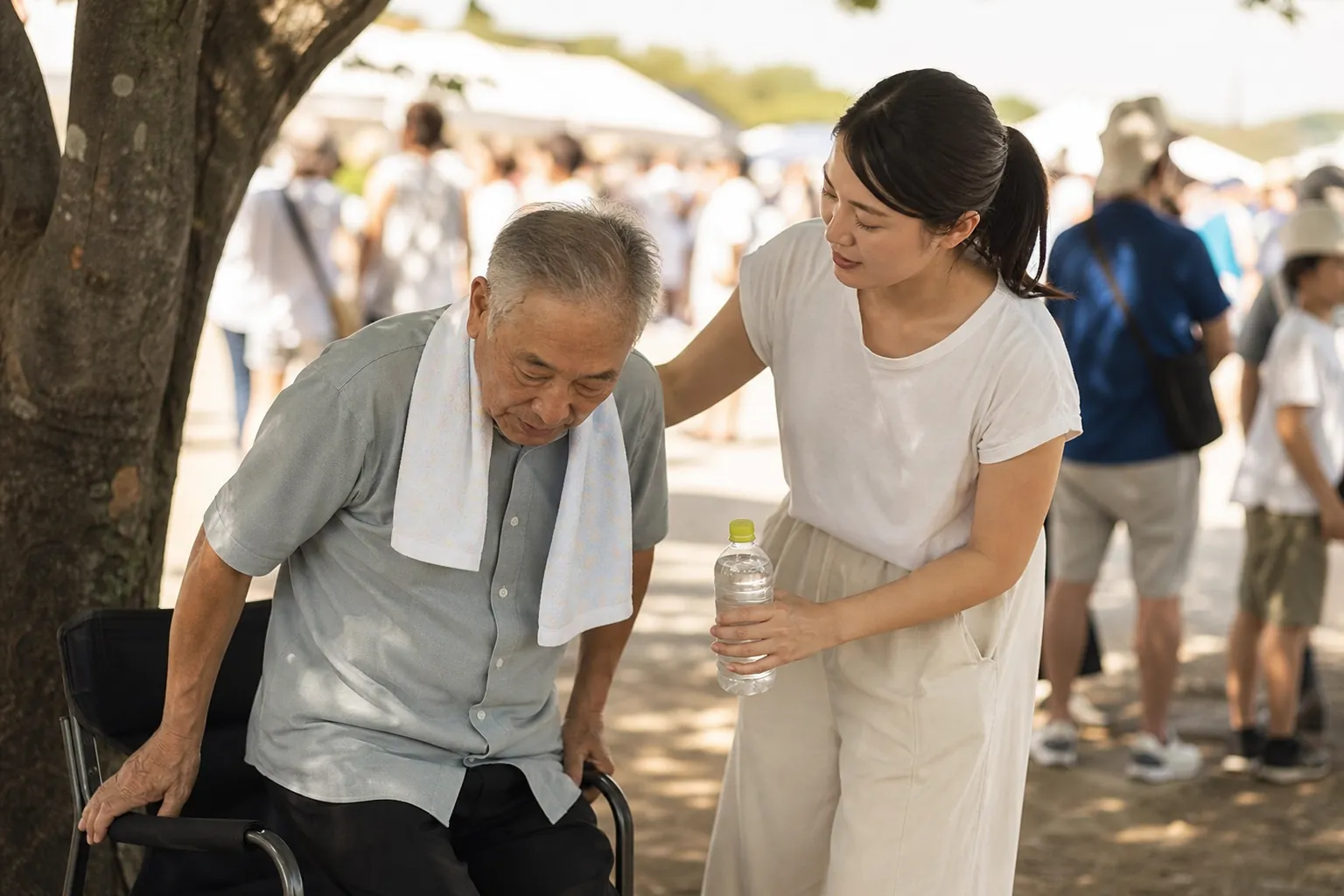
This is the decision point families need before the band starts, the bride walks out, or the graduate’s name is almost called. Dizziness, unsteadiness, nausea, weakness, faintness, confusion, or symptoms that are getting worse are not “let’s see how you feel after the next speech” signs. They are stop-walking signs.
Brown Health notes that heat exhaustion can develop in older adults even with mild-to-moderate activity, and lists symptoms such as heavy sweating, cold or clammy skin, dizziness, headache, nausea or vomiting, weakness, and muscle cramps [7]. At an outdoor event, any of those symptoms should be taken more seriously if the person is also walking less steadily, gripping a chair, slowing suddenly, or saying they need to “just stand here a second.”
- Stop walking or standing. Do not try to get “just a little farther” to a better viewing spot.
- Sit down or lie down in shade, air-conditioning, or the coolest nearby place.
- Loosen extra layers and start cooling with shade, fans, cool cloths, or other available cooling items.
- If the person is alert and heat stroke is not suspected, offer small sips of water if fluids are allowed for them.
- Reassess before standing. If dizziness, weakness, nausea, confusion, or unsteadiness persists or worsens, end the event plan.
UC Davis Health says people with heat exhaustion symptoms should move to a cooler place, loosen clothing, sip water, and use cool cloths, and that symptoms should improve in about 30 minutes; if they do not, medical care is needed [6]. That “about 30 minutes” rule is not a reason to wait when symptoms are severe. It is a reminder that cooling should produce improvement, not a long negotiation.
Heat stroke is the line where event-day first aid becomes emergency response. The American Red Cross describes heat stroke as a medical emergency: call 911, cool the person rapidly, and do not give drinks when heat stroke is suspected [8]. Red Cross materials associate heat stroke with signs such as a very high body temperature, confusion, loss of consciousness, seizures, and hot, red skin that may be dry or moist [8].
Sources do not all use the same body-temperature cutoff for heat stroke, so families should not wait for a thermometer reading at a crowded outdoor event. Confusion, collapse, fainting, severe weakness, seizure, loss of consciousness, or symptoms that are rapidly worsening should trigger emergency help.
Pack for decisions, not just comfort
Light clothing, a wide-brimmed hat, sunscreen, sunglasses, and cooling towels all help. They are the easy part of the list. The more useful packing question is whether the bag supports the plan when the day stops going smoothly.
- Water or other clinician-approved fluids, plus a plan for refills.
- A written medication list and emergency contacts.
- A phone with enough battery to call for pickup, contact family, or reach emergency services.
- Mobility aids the older adult actually uses: cane, walker, rollator, or supportive footwear.
- A small cooling kit: towel, fan, misting bottle if practical, and a bag for damp items.
- A seat plan: portable chair if allowed, or a map note showing nearby benches, shade, restrooms, and first aid.
- A simple exit plan: where the car or rideshare can meet you if leaving early becomes the safest choice.
The supplies do not need to make anyone feel managed. They should make pausing ordinary. A water bottle in the tote, a chair already unfolded, and a buddy who knows where the shade is can turn “I’m fine” into “Let’s sit here for a minute” before a stumble decides the matter.
The practical boundary
This is educational guidance, not individualized medical advice. An older adult’s clinician or pharmacist is the right source for medication, fluid-restriction, and disease-specific instructions. For families planning a summer outdoor event, the usable boundary is still clear: start hydration and medication questions before the event, check the heat and the walking burden before leaving, pace shade and rest on site, and sit down at the first dizziness, unsteadiness, nausea, weakness, faintness, confusion, or worsening symptoms.
A safe outdoor event is usually not saved by one dramatic intervention. It is protected by the small decisions that keep heat from becoming dizziness, dizziness from becoming a fall, and a family celebration from turning into a call for help. If heat-stroke signs or severe symptoms appear, call 911.
References
- Dizziness as a predictor of future falls and fall-related injuries in older adults: a systematic review and meta-analysis, Age and Ageing, 2024.
- Heat and Older Adults (Aged 65+), CDC.
- How to Stay Hydrated for Better Health, National Council on Aging.
- Heat and Medications – Guidance for Clinicians, CDC, September 2025.
- Outdoor Events and Extreme Heat, NYC Health.
- Is it heat exhaustion or heat stroke? Here are the symptoms to watch for, UC Davis Health, July 2024.
- How Seniors Can Stay Safe in the Summer, Brown Health.
- Extreme Heat Safety, American Red Cross.
Related reading
Noticed something outdated or inaccurate on this page? Flag a correction. We review every report against CDC, NIA, and AARP HomeFit guidance before updating a page.
Part of the Fall Prevention section.