
What Salmonella Symptoms in Seniors Mean for Fall Risk
Recognize salmonella symptoms in older adults and understand how the infection triggers dehydration, dizziness, and weakness that directly raise fall risk — including when to seek medical help.
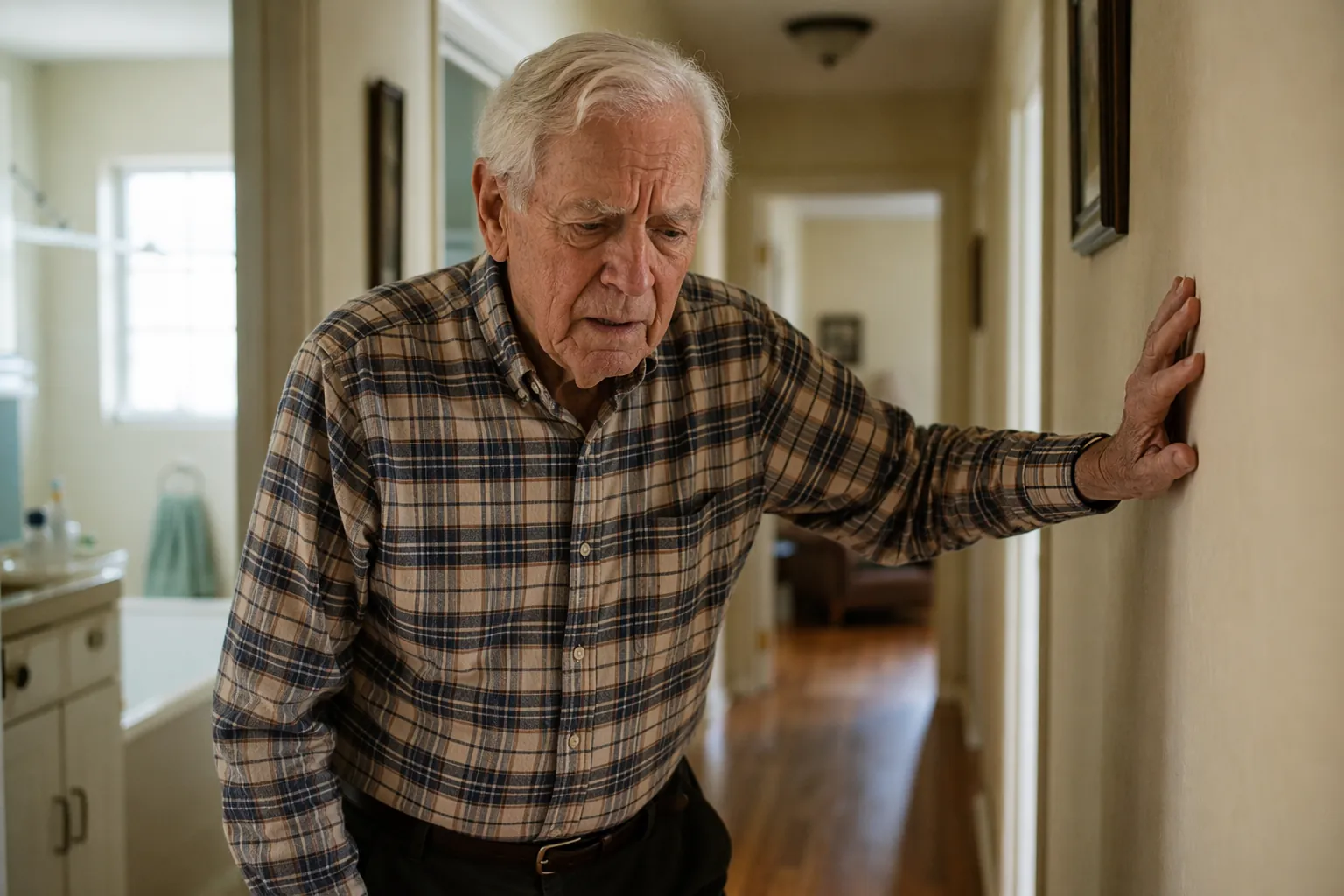
The moment that changes a suspected stomach bug in an older adult is often not the first bout of diarrhea. It is the walk to the bathroom afterward: one hand on the wall, a pause in the hallway, a quiet “I’m fine” that does not match the way the body is moving.
Salmonella symptoms in elderly adults are still the familiar gastrointestinal ones: diarrhea, fever, stomach cramps, nausea, vomiting, and sometimes signs of dehydration. CDC says symptoms usually begin 6 hours to 6 days after infection and most people recover within 4 to 7 days, but that ordinary timeline can hide a more immediate home-safety problem for a senior who is losing fluid and standing up repeatedly overnight.[1]
For adults 65 and older, Salmonella is not just uncomfortable. CDC’s clinical overview notes that nearly half of adults 65 and older with lab-confirmed Salmonella infection are hospitalized.[2] A Canadian study of salmonellosis hospitalizations found that seniors accounted for 50% of adult Salmonella hospitalizations and 82% of adult deaths, with a median hospital stay of 7 days for seniors and 9 days for those 80 and older.[3] Those numbers do not mean every older adult with diarrhea needs a hospital. They do mean the first day of symptoms deserves closer watching than it often gets.
The Hidden Fall Pathway Starts With Fluid Loss
The fall connection is a cascade, not a single proven endpoint called “Salmonella causes falls.” The supported chain is more practical: diarrhea, vomiting, and fever drain fluid; an older body may not replace that fluid quickly enough; blood pressure can drop when the person stands; dizziness and weakness follow; then a short bathroom trip becomes a fall-risk event.
Older adults have less margin for that cascade. The dehydration-falls literature describes several age-related reasons: thirst signals can be blunted, total body water is lower in later old age, and aging kidneys do not conserve water as well.[4] A parent may not feel thirsty enough to drink until the body is already behind. If vomiting is present, even careful sipping may not keep up.
That matters because dehydration itself has been linked with falls. In a Mayo Clinic Proceedings cohort study, 37.9% of older adults were dehydrated, and dehydration was associated with 13% higher odds of falls.[4] The study was based on a predominantly white non-Hispanic Midwestern U.S. cohort, so it should not be treated as a perfect measure for every community. Still, it gives shape to what families often see at home: the person who was steady yesterday becomes wobbly after a day of fluid loss.
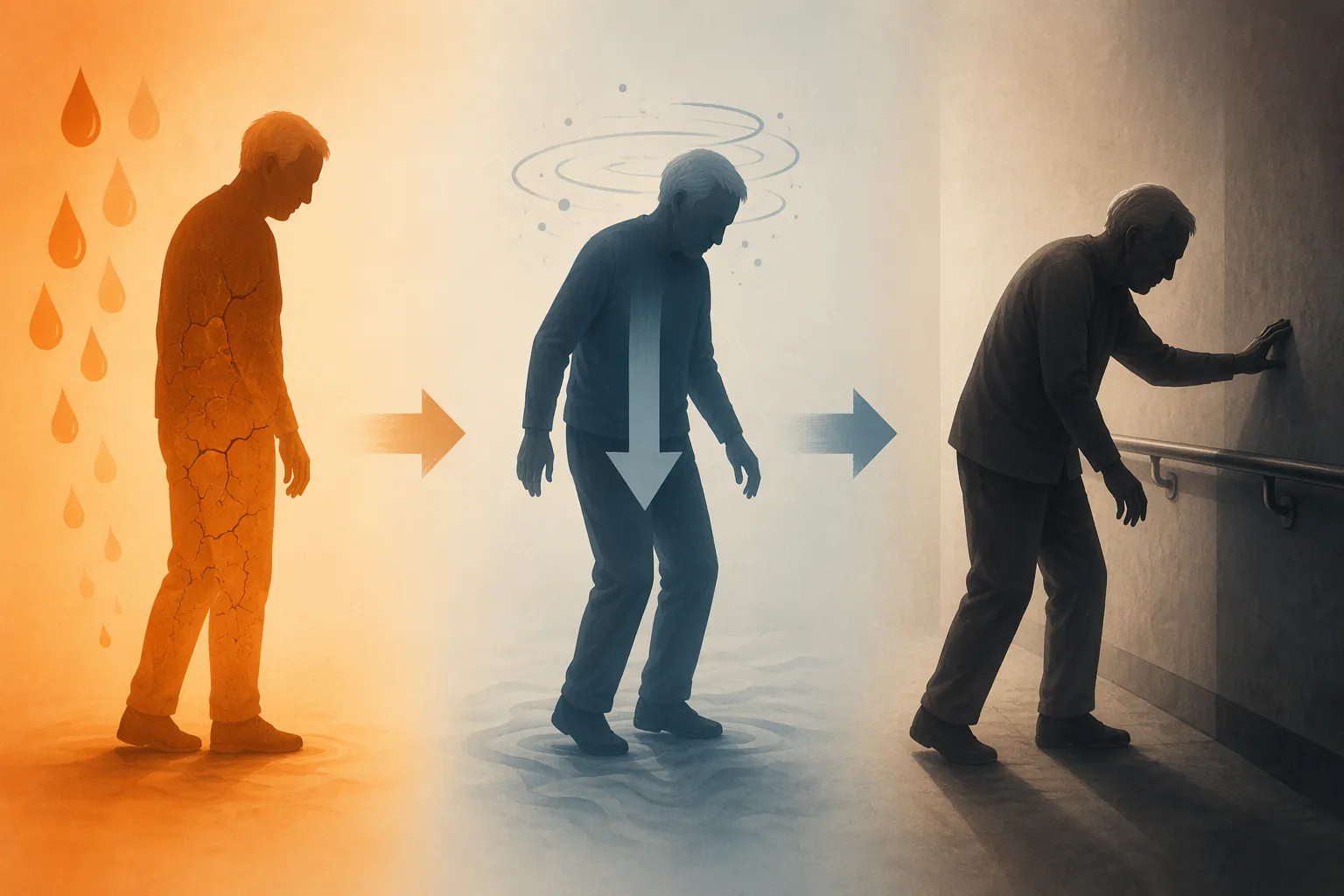
The danger point is standing. A dehydrated person has less circulating fluid available to support blood pressure. When they rise from bed or the toilet, blood pressure may not adjust quickly enough. That standing drop, often discussed as orthostatic hypotension, is one reason a person can look mostly fine while seated and then become unsteady in motion. If that piece is already familiar in your home, the same standing precautions used for orthostatic hypotension fall prevention become especially relevant during vomiting, diarrhea, fever, or poor intake.
What to Watch For in the House
A symptom list is useful only if it changes what someone watches. With a senior, the question is not only “How many times did they have diarrhea?” It is also “What happened when they stood up afterward?”
- Worsening diarrhea: repeated trips increase fluid loss and create more chances for rushed, poorly lit bathroom walks.
- Vomiting or inability to keep fluids down: this can turn mild dehydration into a faster problem because replacement is not keeping pace.
- Fever: fever adds fluid demand and may make an older adult weaker or less steady even before they complain.
- Reduced drinking or eating: do not rely on thirst alone; a senior may deny thirst while taking in very little.
- Dizziness when sitting up or standing: this is one of the most important fall warnings, especially after lying down.
- New weakness, sleepiness, or confusion: CDC lists severe symptoms such as inability to keep liquids down and signs of dehydration as reasons to contact a healthcare provider, and mental status changes should be taken seriously in an older adult.[1]
- Dry mouth or less urination: these are practical clues that fluid loss may be outpacing intake.
- Unsteady bathroom trips: the hallway, toilet transfer, and return to bed are part of the illness picture, not a separate household detail.
Bathroom logistics deserve the same attention as the thermometer. Turn on the path light before it is needed. Keep a cane or walker within reach if the person normally uses one. Ask them to sit at the edge of the bed before standing. If they are dizzy, weak, or rushing because diarrhea is urgent, do not let pride decide whether they walk alone.
Chronic conditions can compound the risk without needing a disease-by-disease lecture. In the Canadian hospitalization study, 60% of hospitalized seniors had at least one chronic condition, including cardiovascular disease, diabetes, arthritis, or cancer.[3] Those conditions may affect reserve, mobility, medications, hydration decisions, or recovery. The practical takeaway is narrow: if a parent already has limited balance, kidney concerns, heart disease, diabetes, or complicated medications, do not treat a day of Salmonella-like symptoms as if it is happening in a younger body.
When Symptoms Need Medical Help
Not every suspected Salmonella episode in a senior requires hospitalization. Many people recover without specific treatment. The safer line is to contact a healthcare professional when the illness is no longer just an unpleasant stomach illness, but is limiting hydration, balance, alertness, or safe movement.
- Call a healthcare provider if diarrhea or vomiting is worsening, persistent, or preventing the person from keeping fluids down.
- Call promptly if there are signs of dehydration, including very low urination, dry mouth, marked weakness, or dizziness when standing.
- Seek urgent guidance if the person seems confused, unusually sleepy, faint, or too weak to get safely to the bathroom.
- Treat any fall, near-fall, or collapse during the illness as part of the medical picture, not as a separate accident.
- Use emergency services if symptoms appear severe, the person cannot stay upright safely, or you are worried they may deteriorate before a clinician can call back.
CDC specifically advises contacting a healthcare provider for severe Salmonella symptoms, including diarrhea with a fever higher than 102°F, diarrhea for more than 3 days that is not improving, bloody diarrhea, so much vomiting that liquids cannot be kept down, or signs of dehydration such as not urinating much, dry mouth and throat, or dizziness when standing.[1]
Exposure Questions Can Wait
Once someone is sick, the immediate job is hydration, observation, bathroom safety, and medical guidance when warning signs appear. Food-source detective work can wait unless a clinician or public health department needs details. If the concern is preventing the next exposure through safer storage, recalls, and higher-risk foods, see how to keep your aging parent safe from food recalls.
In the middle of an illness, a few home details matter more than a perfect investigation: clear the path to the bathroom, keep the floor dry, make standing slow, keep fluids within reach if the person can drink, and stay alert for the moment a seated parent becomes an unsteady standing one. The fall risk is not separate from the Salmonella symptoms. It is one of the ways those symptoms can become dangerous in an older body.
References
- Symptoms of Salmonella Infection. CDC.
- Clinical Overview of Salmonellosis. CDC.
- Hospitalizations associated with salmonellosis among seniors in Canada, 2000–2010. BMC Public Health. 2017.
- Association Between Dehydration and Falls. Mayo Clinic Proceedings. 2020.
Continue from here
Suggest a correction
We keep this content strictly product-neutral and reviewed against CDC STEADI, NIA, and AARP HomeFit guidance. If something here looks outdated, unclear, or inaccurate, tell us — this page does not carry open public comments, because it touches medical urgency, cost, or capacity-adjacent decisions where a discussion thread is a trust liability rather than a trust asset.
See the correction process on our editorial standards page →