
Senior Health Care After a Fall: A Family Caregiver's Guide to Recovery, Screenings, and Preventing the Next One
A fall is a sentinel health event, not an isolated accident. This guide helps adult children navigate the critical post-fall window — from medical follow-up and preventive screenings to home safety modifications and emotional recovery — to break the fall-injury-decline cycle.
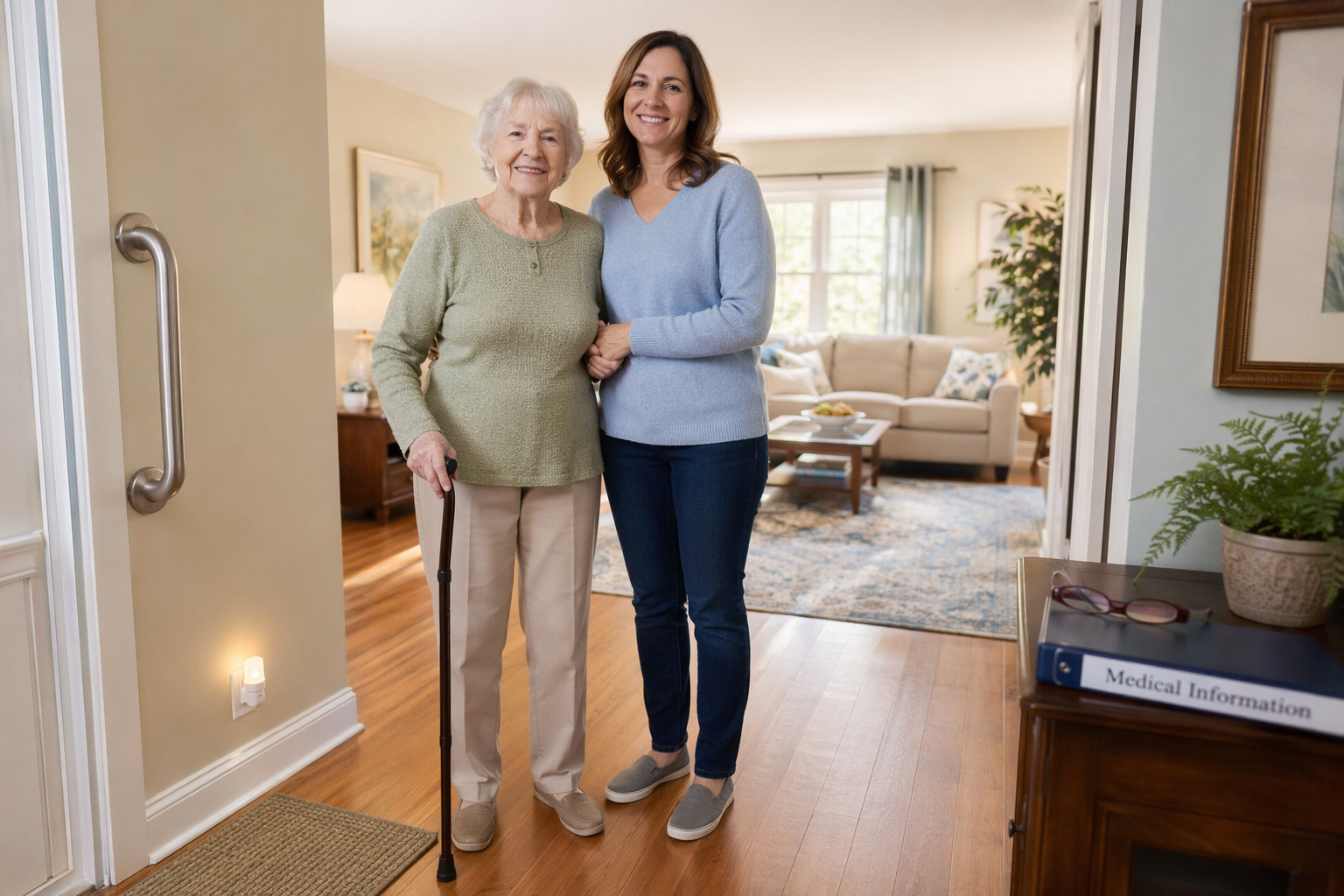
The Post-Fall Reality: Why This Fall Is Different
If your parent has recently fallen and needed emergency care, it is natural to feel shaken. But the most important thing to understand is this: a fall requiring medical treatment is not a random accident or a simple moment of clumsiness. It is a sentinel health event — a loud, unmistakable signal that something in your parent's health or environment needs to change.
The numbers are stark. According to the CDC, over 14 million older adults — one in four — report falling every year. Of those, about 37% sustain an injury serious enough to require medical treatment or restrict their activity for at least a day, resulting in an estimated 9 million fall injuries annually. In 2021 alone, emergency departments recorded nearly 3 million visits for older adult falls. And the trend is worsening: the age-adjusted fall death rate rose 21% from 64.7 per 100,000 older adults in 2018 to 78.4 per 100,000 in 2024.
Beyond the immediate injury, a fall often marks the beginning of a downward spiral. The fear of falling again can cause an older adult to limit their activity, which leads to muscle weakness and balance problems, which in turn makes another fall more likely. This fall-injury-decline cycle is well documented, and it is precisely what the post-fall window is designed to interrupt.
Immediate Medical Follow-Up: What to Do in the First Weeks
Once the acute injury from the fall has been treated — whether that meant a few stitches, a cast for a wrist fracture, or a hospital stay for a hip replacement — the real work of prevention begins. The first few weeks after a fall are the most critical time to address the underlying causes. Here is a checklist of medical follow-up steps to prioritize.
Schedule a Comprehensive Follow-Up with the Primary Care Provider
Do not wait for the next routine appointment. Call the primary care provider within a week of the fall and explain that your parent had a fall requiring medical treatment. Ask specifically for a post-fall assessment. This visit should go beyond checking the healing injury — it should investigate why the fall happened in the first place.
Conduct a Medication Review
Medications are one of the most common and most modifiable fall risk factors. Bring a complete list of every prescription, over-the-counter drug, and supplement your parent takes to the appointment. Ask the provider to review each one for side effects that could cause dizziness, drowsiness, blurred vision, or orthostatic hypotension (a sudden drop in blood pressure when standing up). The CDC notes that certain medicines can increase fall risk, and a medication review is a core part of the STEADI fall prevention framework.
Arrange a Vision and Hearing Check
Poor vision makes it harder to see obstacles, judge distances, and navigate uneven surfaces. Hearing loss is also linked to falls, possibly because it reduces spatial awareness and balance cues. The National Institute on Aging recommends regular vision and hearing checks as part of a comprehensive fall prevention plan. If your parent wears glasses, confirm the prescription is current. If they have not had a hearing test in the past year, schedule one.
Request a Gait and Balance Assessment
A simple observation of how your parent walks — their gait speed, stride length, and steadiness — can reveal a great deal about their fall risk. Ask the provider to perform a gait and balance assessment. This can be as straightforward as the Timed Up and Go (TUG) test, which measures how long it takes to stand up from a chair, walk ten feet, turn around, walk back, and sit down. If the assessment reveals problems, a referral to physical therapy for gait training may be appropriate.
Preventive Screenings a Fall Should Trigger
A fall is a powerful reason to ensure your parent is up to date on key preventive screenings. Many of these are covered by Medicare at no cost when delivered by a provider who accepts assignment. The table below outlines the screenings that become especially urgent after a fall.
| Screening | What It Detects | Why It Matters After a Fall | Medicare Coverage |
|---|---|---|---|
| Bone Density (DEXA Scan) | Osteoporosis and bone thinning | A fall that caused a fracture may indicate underlying bone weakness. Identifying osteoporosis guides treatment to prevent future fractures. | Covered every 2 years for women 65+ and men at risk. Part of the Welcome to Medicare and Annual Wellness Visit. |
| Cognitive Screening (Mini-Cog or MoCA) | Early signs of memory loss or dementia | Cognitive decline can impair judgment, spatial awareness, and reaction time, all of which increase fall risk. | Covered as part of the Medicare Annual Wellness Visit. |
| Blood Pressure Check for Postural Hypotension | A drop in blood pressure upon standing | This condition causes dizziness and lightheadedness when changing positions, a direct fall trigger. | Covered as part of routine preventive visits. |
| Vitamin D Level | Vitamin D deficiency | Low vitamin D is linked to muscle weakness, poor balance, and increased fall risk. Supplementation may reduce fall rates. | Covered if ordered by a provider as medically necessary. |
| Depression Screening | Depression and anxiety | Depression can reduce motivation to stay active and increase social isolation, both of which contribute to fall risk. | Covered annually as part of Medicare preventive services. |
The Medicare Annual Wellness Visit is an excellent opportunity to address many of these screenings in a single appointment. If your parent has not had one in the past year, schedule it now. The visit includes a review of medical history, a list of current providers and prescriptions, a health risk assessment, and a personalized prevention plan. You can attend the visit with your parent to help ask questions and take notes.
Using the CDC STEADI Framework to Advocate for Your Parent
The CDC's STEADI initiative — Stopping Elderly Accidents, Deaths & Injuries — provides a structured framework that healthcare providers use to reduce fall risk among older patients. As a family caregiver, understanding this framework can help you advocate effectively during medical visits. STEADI is built on three core steps: Screen, Assess, and Intervene.
Step 1: Screen for Fall Risk
The first step is to identify whether your parent is at increased risk of falling. You can ask the provider directly: "Has my parent been screened for fall risk?" The CDC recommends that all adults 65 and older be asked at least once a year about falls. Key screening questions include: Have you fallen in the past year? Do you feel unsteady when standing or walking? Do you worry about falling?
Step 2: Assess Risk Factors
If the screen indicates increased risk, the provider should conduct a more detailed assessment. This includes reviewing medications, checking for postural hypotension, assessing gait and balance, evaluating vision and foot problems, and identifying home hazards. You can ask: "Can we review the specific factors that may have contributed to this fall?"
Step 3: Intervene with Targeted Strategies
Based on the assessment, the provider should recommend specific interventions. These might include adjusting medications, prescribing vitamin D and calcium, referring to physical therapy for balance and strength training, recommending an assistive device like a cane or walker, or suggesting home modifications. You can ask: "What specific interventions do you recommend based on my parent's risk factors?"
- Sample question for the provider: "Based on the STEADI framework, what is my parent's fall risk level, and what are the next steps?"
- Sample question for the provider: "Are there any medications on my parent's list that could increase fall risk and could be adjusted or stopped?"
- Sample question for the provider: "Would a referral to physical therapy or occupational therapy be appropriate at this point?"
Home Safety Modifications by Fall Risk Severity
The home environment is where most falls happen. According to the National Institute on Aging, more than half of falls among older adults occur at home. Modifying the home to reduce fall hazards is one of the most effective ways to prevent a second fall. The right modifications depend on your parent's current fall risk level. Below is a tiered guide organized by severity.
| Risk Level | Modifications | Estimated Cost Range | Notes |
|---|---|---|---|
| Low Risk (no recent fall, good balance) | Remove throw rugs and loose carpets. Improve lighting with brighter bulbs and nightlights. Secure cords along walls. Add grab bars in the shower and near the toilet. Install non-slip mats in the tub and shower. | $50 – $500 | These are low-cost, high-impact changes that benefit everyone, regardless of fall risk. |
| Moderate Risk (recent fall, some balance issues) | Install handrails on both sides of all stairs. Add a raised toilet seat. Install a shower chair or transfer bench. Replace slippery flooring with non-slip options. Add motion-activated lights in hallways and bathrooms. | $500 – $3,000 | Focus on areas where your parent spends the most time: the bathroom, bedroom, and stairs. |
| High Risk (multiple falls, uses mobility aid) | Install a walk-in shower or tub. Add a stair lift if the bedroom is upstairs. Consider converting a first-floor room into a bedroom. Widen doorways for wheelchair or walker access. Install ramps at entryways. | $3,000 – $15,000+ | These are major renovations. Consult a CAPS-certified contractor for structural modifications. Explore funding options like VA grants or Medicaid waivers. |
It is important to note that Medicare does not cover the cost of home modifications. However, other funding sources may be available. The Department of Veterans Affairs offers grants for eligible veterans, and some state Medicaid programs provide home modification assistance through waivers. The USDA Rural Development program also offers grants for low-income seniors in rural areas. Check with your local Area Agency on Aging for additional resources.
Building a Fall Prevention Plan: Exercise, Footwear, and Assistive Devices
Medical follow-up and home modifications address external risk factors, but the most powerful protection against future falls comes from strengthening your parent's own physical capabilities. A sustainable fall prevention plan has three core components: exercise, proper footwear, and the correct use of assistive devices.
Balance-Strengthening Exercise
The National Institute on Aging recommends that older adults aim for at least 150 minutes of physical activity per week, including balance and strength training. Unfortunately, only 23.1% of adults 65 and older met physical activity guidelines in 2019. Activities that are particularly effective for fall prevention include:
- Tai chi: Improves balance, flexibility, and muscle strength. Many community centers and senior centers offer classes specifically designed for older adults.
- Yoga: Enhances balance and body awareness. Chair yoga is an excellent option for those with limited mobility.
- Resistance band exercises: Strengthen the legs, hips, and core — the muscle groups most important for maintaining balance.
- Walking: A simple, low-impact activity that maintains cardiovascular health and leg strength. Start with short distances and gradually increase.
If your parent is hesitant to exercise due to fear of falling, a referral to physical therapy can help. A physical therapist can design a personalized program that builds confidence and strength in a safe, supervised environment.
Proper Footwear
Footwear is an often-overlooked but critical factor in fall prevention. Shoes should have non-slip soles, a low and stable heel, and a supportive fit. Avoid slippers, flip-flops, and shoes with smooth leather soles, as these increase the risk of slipping. If your parent has foot problems such as bunions, hammertoes, or neuropathy, consult a podiatrist for recommendations on appropriate footwear.
Assistive Device Evaluation
If your parent uses a cane, walker, or rollator, it is essential that the device is properly fitted and used correctly. A device that is too short, too tall, or in poor condition can actually increase fall risk. An occupational therapist or physical therapist can evaluate your parent's needs, recommend the right device, and provide training on how to use it safely. Do not assume that a device purchased online or borrowed from a friend is the right fit.
Emotional Recovery: Addressing the Fear of Falling
The psychological aftermath of a fall can be as debilitating as the physical injury. Fear of falling affects up to 50% of older adults who have fallen, and it can lead to a cascade of negative outcomes: activity restriction, muscle weakness, social isolation, depression, and — paradoxically — an increased risk of falling again.
A Cochrane Review cited by the National Council on Aging found that fear-driven activity limitation is a well-documented phenomenon. When an older adult stops doing things they used to do — walking to the mailbox, gardening, visiting friends — their muscles weaken, their balance deteriorates, and their world shrinks. This makes them more vulnerable to falls, not less.
As a caregiver, you can help your parent navigate this emotional recovery by:
- Validating their fear without reinforcing avoidance. Acknowledge that it is normal to feel scared after a fall, but gently encourage a gradual return to activity.
- Focusing on what they can do, not what they cannot. Celebrate small achievements and progress, no matter how modest.
- Considering physical therapy for confidence-building. A structured program under professional supervision can rebuild both strength and self-assurance.
- Watching for signs of depression. One in four older adults experiences a behavioral health problem, and 66% are not receiving the care they need. If your parent shows persistent sadness, loss of interest in activities, changes in sleep or appetite, or withdrawal from social connections, talk to their provider about a depression screening.
When to Seek Professional Help: Physical Therapy, Occupational Therapy, and Home Assessment
While many fall prevention steps can be taken by families on their own, some situations require professional expertise. Knowing when to seek help — and what kind of help to seek — is an important part of the post-fall recovery process.
Physical Therapy
A physical therapist specializes in gait and balance training, strength building, and fall prevention exercises. If your parent has difficulty walking, feels unsteady, or has been told they have poor balance, a referral to physical therapy is appropriate. The therapist will conduct a thorough assessment and design a personalized exercise program to address specific weaknesses.
Occupational Therapy
An occupational therapist focuses on helping people perform daily activities safely and independently. After a fall, an OT can conduct a home safety assessment, recommend adaptive equipment (such as grab bars, raised toilet seats, and shower chairs), and teach your parent new ways to perform tasks that reduce fall risk. This is especially valuable if your parent is struggling with bathing, dressing, or cooking.
CAPS-Certified Contractor
For structural home modifications — such as installing a stair lift, building a ramp, or converting a bathroom to a walk-in shower — a Certified Aging-in-Place Specialist (CAPS) is the right professional. CAPS-certified contractors are trained in universal design principles and understand the specific needs of older adults. They can help you plan and execute modifications that are safe, functional, and aesthetically pleasing.
Related reading
Noticed something outdated or inaccurate on this page? Flag a correction. We review every report against CDC, NIA, and AARP HomeFit guidance before updating a page.
Part of the Fall Prevention section.