
STEADI: assess
Can Herbal Cleanses Raise Fall Risk in Older Adults?
A parent's herbal cleanse or detox tea can bring on dehydration and electrolyte loss — and with them, dizziness, orthostatic blood pressure drops, and a real increase in fall risk. This guide covers the risky ingredients, the warning signs that call for a clinician visit, and the 911-level symptoms to watch for.
If the cleanse has already started, watch the walk to the bathroom
The most practical question in herbal cleanse safety for older adults is not whether the word “detox” is scientifically polished. It is whether your parent is now having diarrhea, urinating more, eating less, drinking large amounts of tea or water, or feeling lightheaded when standing up.
Those are fall-prevention problems. In a retrospective cohort of 30,634 adults age 65 and older, 37.9% met laboratory criteria for dehydration, and dehydration was positively associated with falls; the authors also note that dehydration can reduce brain perfusion and contribute to dizziness and orthostasis, the blood-pressure drop that can happen when a person stands up [1]. That study does not prove that an herbal cleanse caused a fall. It does give caregivers a very plain reason to take cleanse-related dehydration seriously.
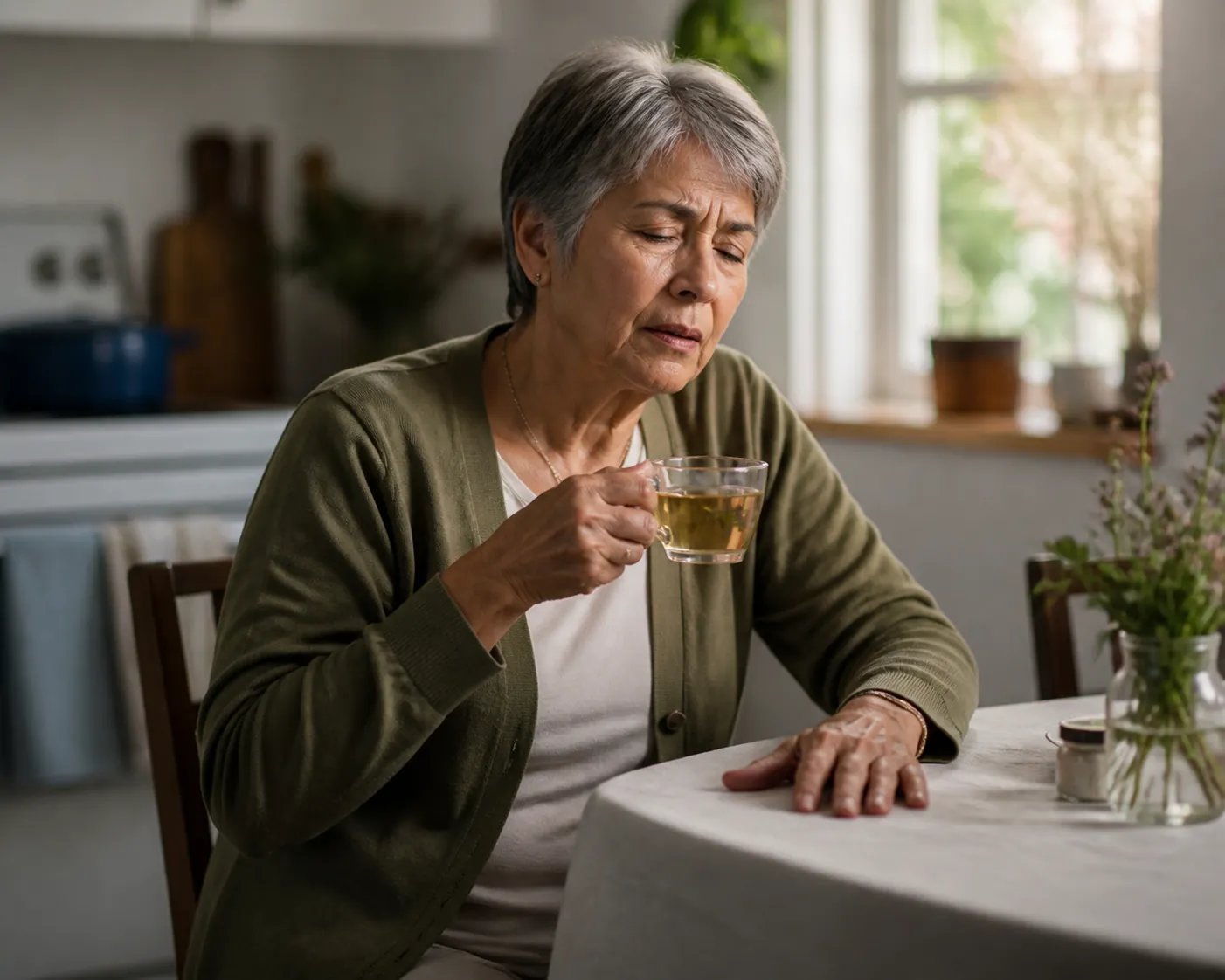
Older adults also have less room for error. The same dehydration-and-falls paper describes age-related changes that make dehydration easier to miss and harder to correct quickly: blunted thirst, lower total body water, and reduced kidney concentrating ability [1]. So a cleanse that might merely be unpleasant for a younger adult can become a same-day safety issue for someone who already uses a cane, takes blood-pressure medication, or gets up at night to use the bathroom.
The National Center for Complementary and Integrative Health is direct about the mechanism: detox or cleanse programs may include laxatives that cause diarrhea and dehydration, and drinking large quantities of water and herbal tea without eating for days can lead to dangerous electrolyte imbalances [2]. That is the part to keep in view. A “natural” product can still change fluid, sodium, potassium, alertness, and balance.
The cleanse patterns that deserve extra caution
Most families do not get handed a clean ingredient list with a risk rating. They see a tea bag, a powder, a “flat belly” blend, a colon-cleanse kit, or a schedule that says to replace meals with tea, juice, water, or broth. The packaging may look gentle. The effects are what matter.
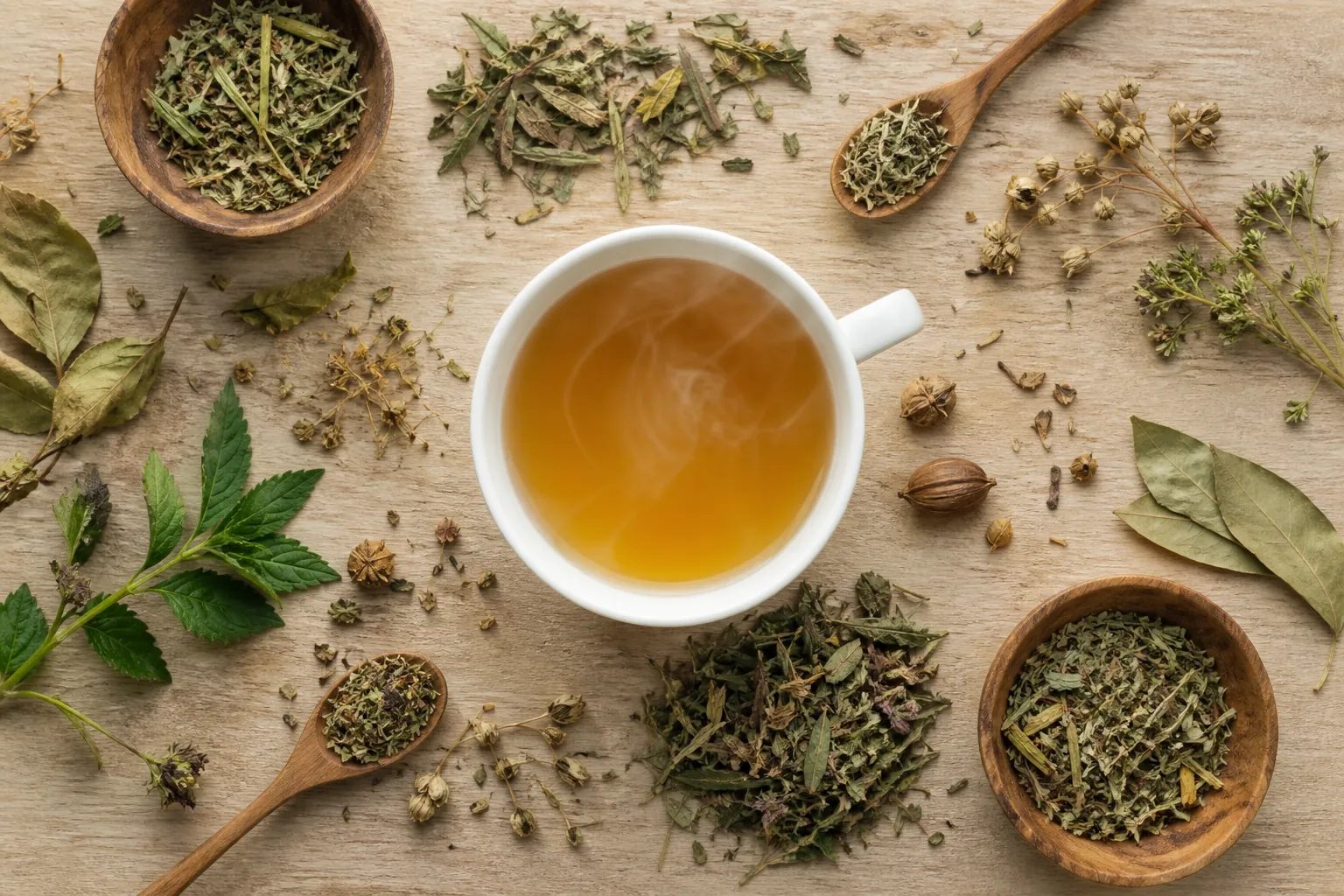
Be especially alert when a cleanse includes any of these patterns:
- Laxative herbs or “regularity” blends. Senna and cascara are common examples. If the product causes loose stools, urgency, or repeated trips to the bathroom, it can drain fluid quickly.
- Diuretic herbs or “water weight” claims. Dandelion, uva ursi, and juniper are often discussed for diuretic effects. More urination can matter if the person is already on a prescribed diuretic or has limited fluid intake.
- Caffeine-heavy teas. Caffeine can worsen shakiness, sleep disruption, palpitations, urgency, or nighttime bathroom trips in some people.
- Multi-day tea, water, or juice fasting. Skipping meals lowers energy and can complicate diabetes management; large amounts of water or herbal tea without food can also disturb electrolytes [2].
- Colon-cleansing products or colonics. AARP reports that colonics can involve up to 60 liters of infused liquid and may be particularly risky for older adults, who may handle electrolyte disturbances less well and may be more susceptible to perforation and ischemic colitis [4].
There are published harm signals around detox teas, but they should be read correctly. A 2026 mini-review described case reports linking detox teas with severe hyponatremia, including sodium levels of 111 and 115 mmol/L, with symptoms such as unsteadiness and seizures, and another case report involving hypokalemia with cardiac arrest in otherwise healthy people [3]. These are not population-level fall statistics for seniors. They are warning cases showing that “tea” is not automatically metabolically harmless.
Why this can undo a fall-prevention plan by tomorrow morning
Fall prevention is often built out of small margins: enough fluid, enough food, steady blood pressure, clear thinking, safe footwear, good lighting, and a slow rise from the chair. A cleanse can pull on several of those margins at once.
| What the cleanse does | What may happen in an older body | Why it matters for falls |
|---|---|---|
| Causes diarrhea | Fluid and electrolytes can drop, sometimes quickly | Weakness, urgency, and rushing to the bathroom increase risk |
| Increases urination | Blood volume may fall, especially if intake is low or a prescribed diuretic is already in use | Standing up can trigger dizziness or an orthostatic blood-pressure drop |
| Replaces meals with tea, water, juice, or broth | Calories, protein, sodium, and medication timing may be disrupted | Low energy, shakiness, and poor concentration can make walking less stable |
| Encourages large amounts of water or herbal tea without food | Electrolyte imbalance can become dangerous [2] | Confusion, unsteadiness, severe weakness, or seizure-like symptoms are emergency-level concerns |
| Adds caffeine or stimulant-like ingredients | Sleep, heart rhythm sensations, urgency, or tremor may worsen | Nighttime bathroom trips and unsteady transfers become more likely |
The bathroom is the danger zone people underestimate. A parent who is mildly dizzy on the sofa may become unsafe when standing, turning, hurrying, managing clothing, stepping over a threshold, or walking back in dim light. If the cleanse has created urgency, the person may also skip the walker, move too fast, or ignore the usual “stand, pause, then walk” routine.

This is the same dehydration-to-dizziness chain families are warned about during hot weather. If you are already using a fall-prevention routine, treat cleanse symptoms with the same seriousness you would use during a heat wave: fluids, food, medication awareness, and a lower threshold for help. For a related checklist, see Heat Wave Safety Checklist for Seniors During El Niño.
Check the person, not the promise on the box
Do not argue first about toxins, willpower, or whether the product was a waste of money. Start with a safety check. The older adult may not connect a “healthy tea” with the fact that they are wobblier than usual.
Ask what has changed since the cleanse began
- How many times have you had diarrhea or loose stools today?
- Are you urinating more than usual, or getting up more at night?
- Have you skipped meals, eaten much less, or replaced meals with tea, juice, broth, or water?
- Do you feel dizzy, faint, weak, shaky, confused, unusually sleepy, or unsteady?
- Did you almost fall, need to grab furniture, or feel unsafe walking to the bathroom?
- Have you had vomiting, severe cramps, chest discomfort, palpitations, or shortness of breath?
- What exactly did you take, how much, and when? Keep the package or take photos of the front label, Supplement Facts panel, directions, and ingredient list.
Watch one stand-up, if it is safe to do so
If the person is already faint, confused, having chest symptoms, or too weak to stand safely, skip this and get urgent help. Otherwise, stay close enough to guard without pulling. Ask them to sit for a minute, stand slowly, and pause before walking. Look for swaying, grabbing the table, new shortness of breath, a blank or startled look, or the need to sit back down.
A home blood-pressure cuff can be useful if the clinician has already taught you how to use it, but do not turn this into a home diagnosis project. The practical question is simpler: did standing make them dizzy or unsafe? If yes, the cleanse has moved into fall-risk territory.
When to stop the cleanse and call the clinician
For a person 65 or older, it is reasonable to stop the cleanse and contact their clinician or pharmacist promptly if any of the following show up after starting a detox tea, herbal cleanse, colon-cleanse product, or fasting plan:
- New dizziness when standing, even if it passes after a few seconds
- New weakness, shakiness, unusual fatigue, or “heavy legs”
- Diarrhea, repeated loose stools, or urgent bowel movements
- Vomiting or poor fluid intake
- More urination than usual, especially with thirst, dry mouth, or nighttime bathroom trips
- Skipped meals, very low food intake, or replacing meals with tea, water, juice, or broth
- New unsteadiness, furniture-walking, near-falls, or a fall
- New confusion, unusual sleepiness, or behavior that is not normal for that person
- Use of blood-pressure medicines, diuretics, diabetes medicines, heart medicines, kidney-related medicines, or any medication where dehydration could matter
The medication branch is not optional. Dehydration and electrolyte shifts can change the practical safety of medicines the person was tolerating well yesterday. Do not stop prescribed medications on your own unless a clinician has given that instruction. Call the prescribing office or pharmacist, describe the cleanse, list the symptoms, and ask what they want done next.
Have the product in front of you when you call. Read the ingredient list, serving size, directions, and how many servings were taken. If the product was bought online, save the listing too; labels and marketing pages do not always emphasize the same ingredients.
When this is urgent, including 911-level symptoms
Call 911 or local emergency services if the person has fainted, cannot stay upright, has chest pain or pressure, shortness of breath, severe weakness, seizure-like symptoms, severe confusion, or symptoms that suggest a stroke. Do the same if they fall and may be injured, hit their head, cannot get up, or seems different afterward.
Also treat palpitations, extreme lethargy, repeated vomiting, severe dehydration signs, or sudden major unsteadiness as urgent. Case reports in the detox-tea literature include severe sodium and potassium disturbances with neurologic or cardiac consequences [3]. You are not expected to identify sodium or potassium problems at home. The point is to recognize that a cleanse plus neurologic, heart, or severe weakness symptoms is not a “wait and see” situation.
If you are unsure whether symptoms are urgent, err on the side of calling for medical guidance. A fall in an older adult can change independence in one bad second; there is no dignity in letting someone wobble to prove a wellness plan is harmless.
How to talk about stopping without turning it into a fight
Many older adults try cleanses for ordinary reasons: constipation, bloating, weight worries, sluggishness, or the wish to feel more in control. Treat that as real. Then move the conversation from the product’s identity to its effects.
A useful sentence is: “I’m not calling you foolish for trying it. I’m worried because since you started it, you’re dizzy and going to the bathroom more, and that raises your fall risk.” That keeps the focus where it belongs: the body in front of you, today.
Offer a replacement goal, not just a veto. If the concern is constipation, ask the clinician about safer bowel routines. If the concern is “sluggishness,” check sleep, hydration, meals, medication effects, pain, depression, anemia, infection, and activity level with the care team. If the concern is strength or appetite, nutrition matters more than a cleanse; see How Much Protein Seniors Need to Prevent Falls for a more fall-prevention-aligned starting point.
Before trying any cleanse: the safer review
If the cleanse has not started yet, the safest next step is boring and useful: ask a pharmacist or clinician to review it first. Bring the product label and the person’s medication list, including prescriptions, over-the-counter medicines, vitamins, minerals, and other supplements. NCCIH notes that dietary supplements cause an estimated 23,000 emergency room visits per year in the United States, based on a 2015 study [5]. That figure is not cleanse-specific, but it is enough reason not to treat supplements as outside the safety system.
The review should be especially cautious if the older adult has kidney disease, heart disease, diabetes, blood-pressure problems, a history of fainting or falls, cognitive impairment, frailty, poor appetite, recent illness, or recent medication changes. The same caution applies after hospitalization, during hot weather, or during any period when the person is already eating or drinking less than usual.
Families already working on home safety can fold this into the medication-review habit. For a broader fall-risk review, see the Fall Prevention FAQ for Seniors and Caregivers and the Fall Prevention Handout for Seniors: A Caregiver's Action Guide.
The practical bottom line
This article is for education and caregiver decision support, not a diagnosis or a substitute for medical advice. Herbal products, laxatives, fasting plans, and colon-cleansing routines should be reviewed by a qualified clinician or pharmacist for the specific older adult, especially when medications or chronic conditions are involved.
For an older adult, any cleanse that causes diarrhea, extra urination, fasting, heavy tea or water intake, dizziness, weakness, confusion, or new unsteadiness should be treated as a fall-risk problem. The safer goals are not glamorous: hydration, regular meals, medication review, constipation care that a clinician agrees with, and established fall-prevention steps. Those are the habits that still matter when someone stands up in the middle of the night.
References
- Association Between Dehydration and Falls. Mayo Clinic Proceedings: Innovations, Quality & Outcomes. 2020.
- “Detoxes” and “Cleanses”: What You Need To Know. National Center for Complementary and Integrative Health. March 2025.
- Safety and effectiveness of diet and detox teas for weight loss: a mini-review. Frontiers in Nutrition. April 2026.
- Helpful or Harmful? Flushing Out the Truth About Colonics. AARP. April 2026.
- Using Dietary Supplements Wisely. National Center for Complementary and Integrative Health.
Related reading
Noticed something outdated or inaccurate on this page? Flag a correction. We review every report against CDC, NIA, and AARP HomeFit guidance before updating a page.
Part of the Fall Prevention section.