
STEADI: Intervene
Dust Storm Home Prep Checklist for Seniors
Dust storms can arrive with little warning, and older adults face higher respiratory, cardiovascular, and fall risk when they do. This pre-season checklist shows caregivers how to harden a senior's home — sealing gaps, upgrading filters, designating a clean room, and assembling a 7-day medication and backup-power kit — while also reducing fall hazards from power loss and post-storm cleanup.
Do the dust storm checklist before the season starts, not when the sky is already turning brown. The National Weather Service warns that dust storms and haboobs can arrive with little to no warning, and the storm itself may last only minutes.[1] The American Lung Association adds the part that matters inside a house: dust particles can linger from a few hours up to 10 days after the storm passes.[2]
For an older adult living alone, that makes a dust storm more than an outdoor air-quality problem. It can become a breathing event, a cardiac-stress event, a medication-access event, a power-loss event, and a fall-risk event in the same afternoon. A sealed window helps, but it does not help enough if the flashlight is buried in a drawer, the oxygen concentrator is on an overloaded outlet, or the safest room has a throw rug in the walking path.
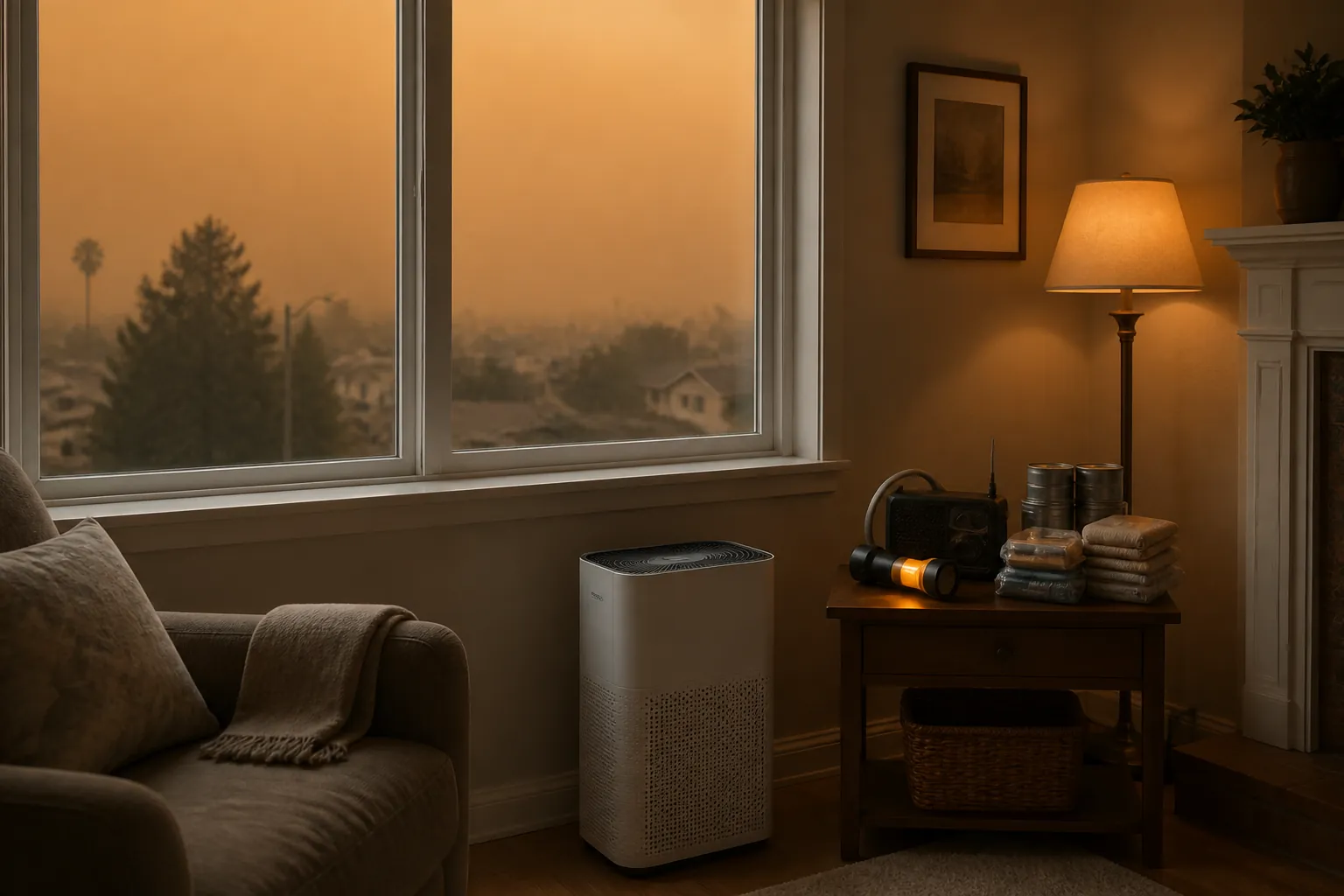
In much of the U.S. Southwest, dust storm risk is tied to the monsoon season, roughly June through September.[1] That is only a planning anchor, not a promise that the first bad air day will wait until the calendar is convenient. If your parent lives in Arizona, New Mexico, Texas, California, Washington, Utah, or another dust-prone area, finish the house walk-through before the season is active. For broader air-quality and fall-risk context, CareWise Guide’s guide to the worst U.S. cities for air quality and senior fall risk can help you decide how aggressively to prepare.
Start at the outside edge of the home
Walk the home in daylight with the older adult if possible. The goal is not to make the house airtight. The goal is to reduce obvious dust entry, remove fall hazards before visibility drops, and make the safe room easy to reach without improvising.
- Check exterior doors for daylight at the bottom or sides. Add or repair weatherstripping and door sweeps where gaps are visible.
- Confirm windows close fully and latch. If a window is hard to lock, fix it before the season rather than expecting an older adult to force it shut during an alert.
- Look at sliding doors, pet doors, mail slots, attic hatches, and evaporative-cooler openings. These are easy places to forget until the floor feels gritty.
- Move outdoor mats, loose planters, lightweight patio furniture, and yard clutter that could blow against doors or block an exit.
- Clear the indoor entry path. If dust comes in around a doorway, the first steps inside should not also include shoes, bags, cords, or a curled mat.
This is where fall prevention belongs in the dust storm plan. A caregiver may notice the window seal; the older adult may be the one walking past that window in dim light at 2 a.m. Remove the trip hazards while you are already inspecting the gaps.
Set the air system before anyone needs it
The American Lung Association’s basic indoor advice is simple: stay indoors, close doors and windows, and use air conditioning on recirculate during a dust storm.[2] Washington State Department of Ecology gives similar advice: get inside, close windows and doors, and set the vehicle or home air system to recirculate when possible.[3] The part to handle now is whether the older adult knows which switch, button, filter, or remote control makes that happen.
- Label the thermostat or remote control if the recirculation setting is not obvious.
- Replace dirty HVAC filters before the season starts, using the filter type the system can safely handle.
- If using a portable air cleaner, place it in the clean room before the season rather than storing it in a closet.
- Keep the clean-room door easy to close. A door that is propped open by a box, laundry basket, or walker defeats the room plan.
- Make sure cords from fans, purifiers, lamps, and medical devices do not cross the walking path.
Older adults are considered a sensitive group for air pollution, which is the practical reason to take filtration and indoor air seriously before a dusty day arrives.[4] That does not mean every family needs to chase unverified purifier claims or buy the highest-rated filter on the shelf. It means the chosen setup should be installed, compatible with the home’s equipment, and usable by the person who will be there.
Choose the clean room as a real room, not an idea
A clean room is the place the older adult can stay while outdoor dust is high and while indoor dust settles. In many homes, the best option is a bedroom or den with a door that closes, few windows, access to a bathroom nearby, enough outlets, and enough space for a chair, walker, oxygen tubing, or other equipment without squeezing the walking path.

Do not pick the room only because it has the best air purifier outlet. Pick the room where the older adult can safely spend time without repeatedly crossing the house. If the nearest bathroom is down a long, dark hall, fix that pathway now or choose a different room.
| Clean-room item | What to check before dust season |
|---|---|
| Door and windows | Door closes fully; windows latch; visible gaps are sealed or reduced. |
| Air handling | HVAC recirculation is understood; portable air cleaner, if used, is already placed and plugged into a safe outlet. |
| Walking path | No throw rugs, cords, footstools, laundry, or stored boxes between the chair, bed, door, and bathroom route. |
| Lighting | Lamp, flashlight, and nightlight are reachable without standing in the dark. |
| Supplies | Water, medication list, 7-day medication supply, phone charger, battery radio, masks, tissues, and trash bag are in or next to the room. |
| Medical equipment | Oxygen, CPAP, nebulizer, mobility aids, and chargers have clear placement and do not create a cord trap. |
Mask supplies can stay in this room, but they should not become the whole plan. The American Lung Association advises N95 or KN95 masks rather than cloth or surgical masks for dust storm protection when a mask is needed.[2] For many older adults, especially anyone with breathing limitations, the safer default is still to be indoors with doors and windows closed and cleaner air circulating.
Build the 7-day kit where it will actually be used
Ready.gov recommends that older adults prepare emergency supplies that include a 7-day supply of medication, water, a battery-powered radio, and flashlights.[5] For dust storms, those items belong close to the clean room, not scattered across the garage, kitchen, nightstand, and coat closet.
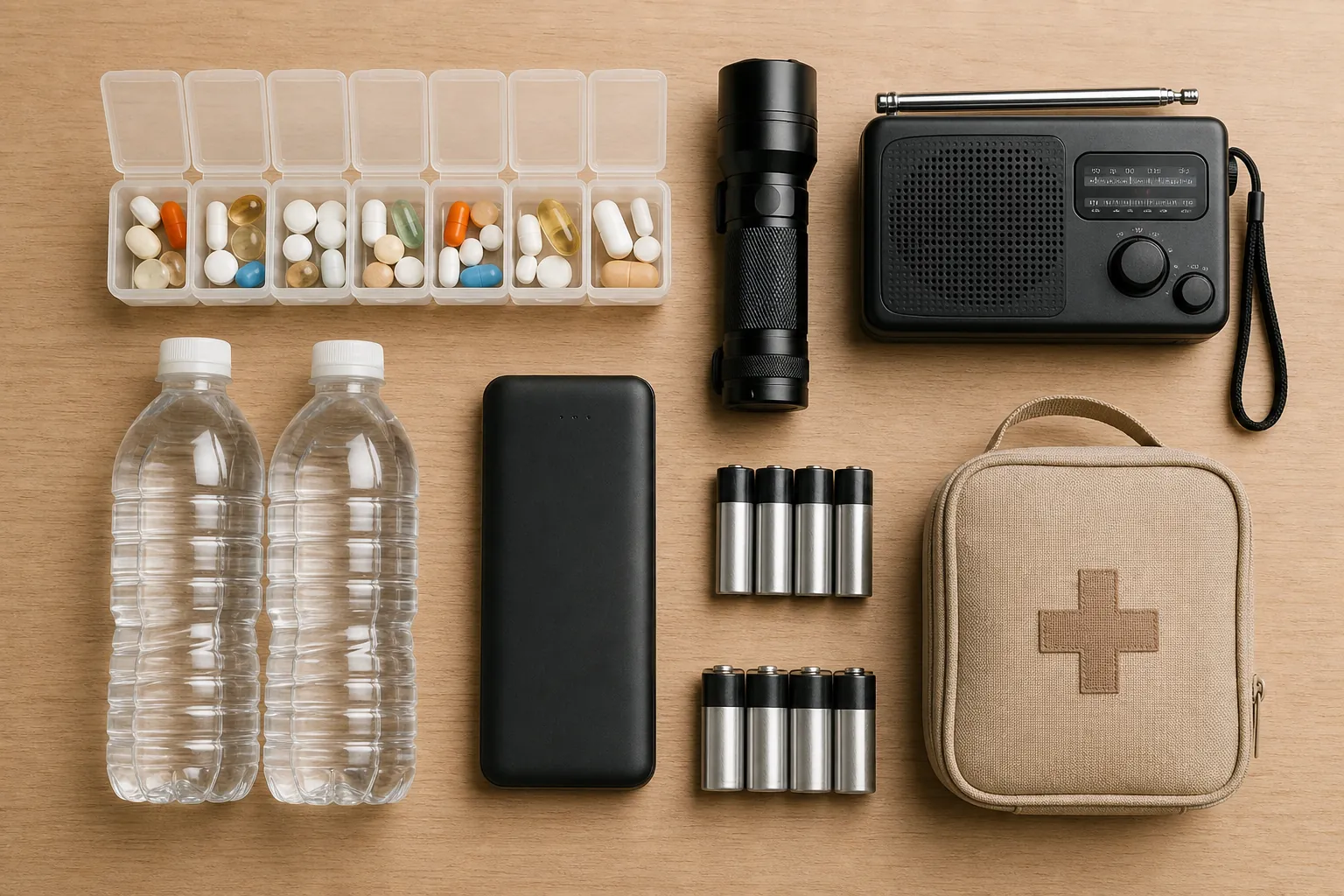
- Medication: 7-day supply, current medication list, pharmacy phone number, prescriber phone number, and dosing instructions in large print.
- Water: plan around Ready.gov’s emergency guidance of about 1 gallon per person per day.[5]
- Communication: charged phone, charging cable, power bank, written family contact list, and battery-powered radio.
- Lighting: flashlight at the clean-room chair or bedside, flashlight near the bathroom path, spare batteries, and plug-in or battery nightlights.
- Breathing and comfort supplies: N95 or KN95 masks, tissues, trash bags, spare glasses, hearing-aid batteries if used, and any clinician-approved respiratory supplies.
- Mobility supplies: cane, walker, reacher, nonskid footwear, and a clear place to park each item without blocking the doorway.
Use a tray, bin, drawer, or small table that can stay in place. A beautiful emergency kit in a hallway closet is less useful than a plain basket beside the chair where the older adult will sit out the event.
Plan for power loss without creating new hazards
Power planning matters in any home, but it becomes more serious when the older adult uses an oxygen concentrator, CPAP machine, nebulizer, refrigerated medication, powered recliner, stair lift, or electric bed. The American Lung Association advises medical-device users to plan for backup power, speak with their medical equipment provider, and ask the utility about medical-needs registration where available.[6]
If a generator is part of the plan, placement is not negotiable. The American Lung Association says generators should be used outdoors and at least 20 feet from doors, windows, and vents.[6] That instruction should be written on the generator tag or storage bin, because the person setting it up during an outage may not be the person who bought it.
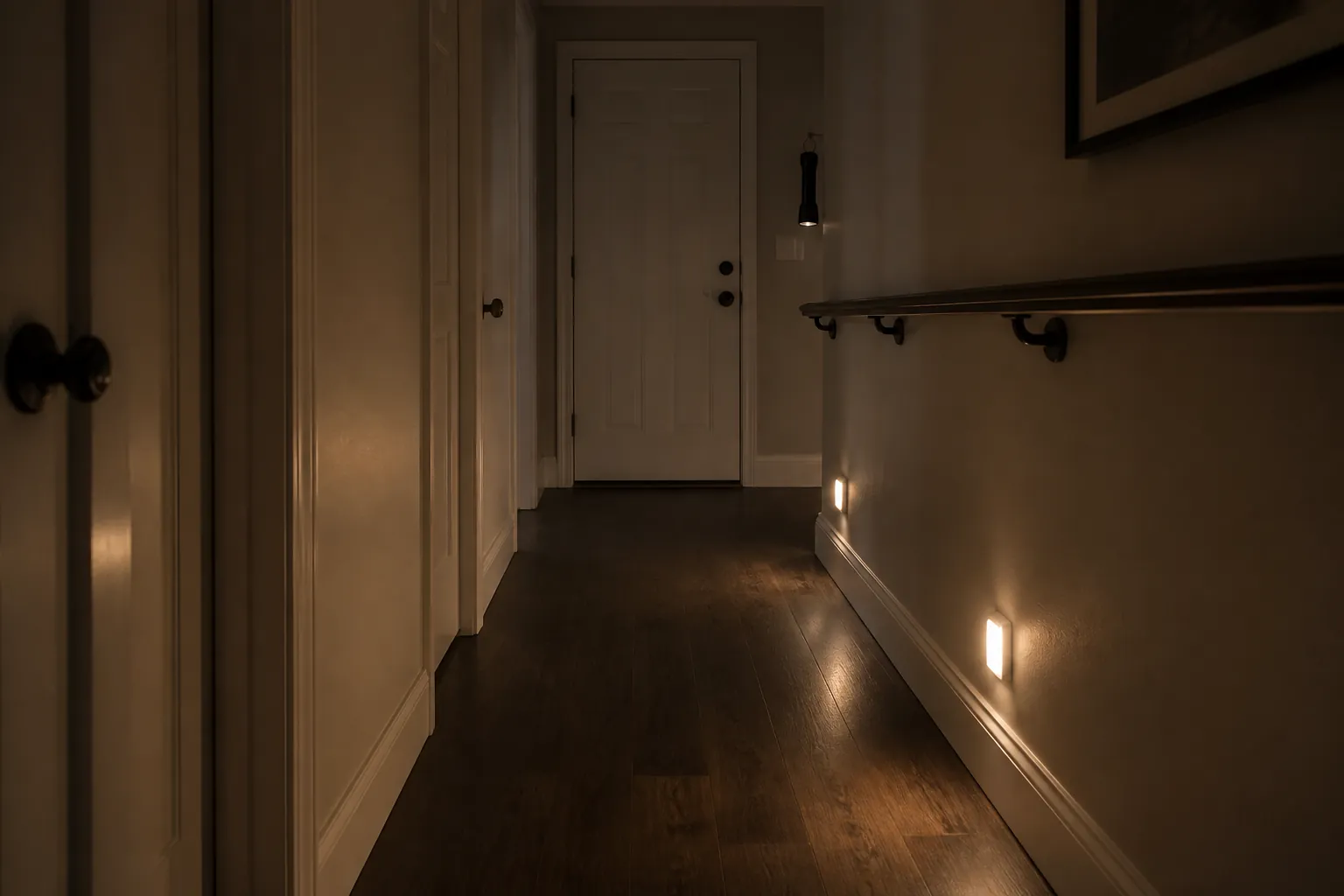
Now walk the power-loss path. Start where the older adult sleeps or sits in the evening. Move to the bathroom, kitchen, front door, medication storage, and phone-charging spot. Anything that would be hard to see in a blackout should be moved, lit, taped down, or removed.
- Place flashlights on hooks or open shelves, not inside crowded drawers.
- Use nightlights along the bed-to-bathroom route and the clean-room-to-bathroom route.
- Keep cords along walls and away from walker wheels, oxygen tubing, and chair legs.
- Remove throw rugs from the nighttime route before the season starts.
- Put the battery radio in the clean room and test it with the older adult.
- Write down who checks on the older adult if power is out and phone service is unreliable.
For a more detailed weather-monitoring setup, including where to keep radios and flashlights during a power outage, see CareWise Guide’s guide to monitoring hurricane updates safely. The storm type is different; the home-safety problem of dark rooms, urgent alerts, and rushed movement is familiar.
Decide what the older adult should do when an alert comes in
Because a dust storm can arrive with little to no warning, the action list must be short.[1] Tape it near the clean-room entrance or place it on the emergency-kit lid in large print.
- Go inside or stay inside.
- Close doors and windows.
- Turn air conditioning or ventilation to recirculate if that setting is available and already labeled.
- Go to the clean room.
- Turn on the air cleaner if one is used.
- Keep the phone, radio, water, medications, flashlight, and mobility aid within reach.
- Avoid unnecessary walking until visibility, air quality, and indoor dust have improved.
If the older adult is likely to resist “emergency” language, call it the dust-room card or the bad-air routine. The name matters less than the muscle memory. During a fast-moving alert, the home should already be arranged so the safest action is also the easiest action.
When to bring in help before the season
Some homes need more than a family checklist. If the older adult has fallen recently, uses oxygen or other powered medical equipment, has low vision, needs a walker in narrow halls, or lives in a home with steps between the bedroom and bathroom, a professional home-safety review can be the better pre-season move.
An occupational therapist, aging-in-place specialist, or other qualified home-safety professional can help decide whether the clean room, bathroom route, lighting plan, and device placement actually work in daily life. CareWise Guide’s aging-in-place services roadmap explains when a professional assessment is worth arranging.
After the visible storm passes, do not rush the reset
The end of the blowing dust is not always the end of the indoor problem. Since dust can linger from a few hours up to 10 days, keep the clean-room habits in place as long as conditions require: doors and windows closed, recirculation when appropriate, and supplies close enough that the older adult does not have to keep crossing the house.[2]
Cleanup is part of fall prevention. Dust on hard floors can make them slick, and hurried cleanup can put a tired older adult on a step stool, behind furniture, or in a poorly lit entryway. Use damp mopping or damp wiping instead of dry sweeping dust back into the air. Keep the walking path open as you clean; do not stack supplies in the hallway or park the vacuum where a walker needs to turn.
- Let a caregiver or helper handle heavy cleanup when possible, especially entryways, patios, and rooms far from the clean room.
- Damp mop hard floors before anyone walks through in socks or loose slippers.
- Wipe frequently touched surfaces near the clean room, medication area, bathroom, and kitchen.
- Replace or check filters according to the equipment instructions.
- Restock water, batteries, masks, and medication supplies.
- Put flashlights, radio, chargers, mobility aids, and the clean-room chair back in their ready positions.
If coughing, breathing trouble, chest discomfort, dizziness, confusion, or unusual weakness appears after dust exposure, treat that as a health concern rather than a housekeeping issue and contact a qualified medical professional or emergency services as appropriate. This checklist is home-safety guidance, not medical advice.
References
- Dust Storms and Haboobs, National Weather Service, https://www.weather.gov/safety/wind-dust-storm
- Dust Storms, American Lung Association, https://www.lung.org/clean-air/emergencies-and-natural-disasters/dust-storms
- Dust storms: how to protect yourself, Washington State Department of Ecology, July 2024, https://ecology.wa.gov/blog/july-2024/dust-storms-how-to-protect-yourself
- Older Adults and Air Quality, AirNow.gov US EPA, https://www.airnow.gov/air-quality-and-health/older-adults
- Older Adults, Ready.gov, https://www.ready.gov/older-adults
- Preparing for a Power Outage as a Medical Device User, American Lung Association, https://www.lung.org/blog/power-outage-preparation
Related reading
Noticed something outdated or inaccurate on this page? Flag a correction. We review every report against CDC, NIA, and AARP HomeFit guidance before updating a page.
Part of the Fall Prevention section.