
STEADI: assess
10 Signs of Vision Loss in the Elderly
Most age-related vision loss develops gradually and without pain, so caregivers often notice it first through everyday behavior changes instead of eye complaints. These 10 checks help you spot the warning signs at home, understand the fall risk each one creates, and decide between urgent care and a scheduled comprehensive eye exam.
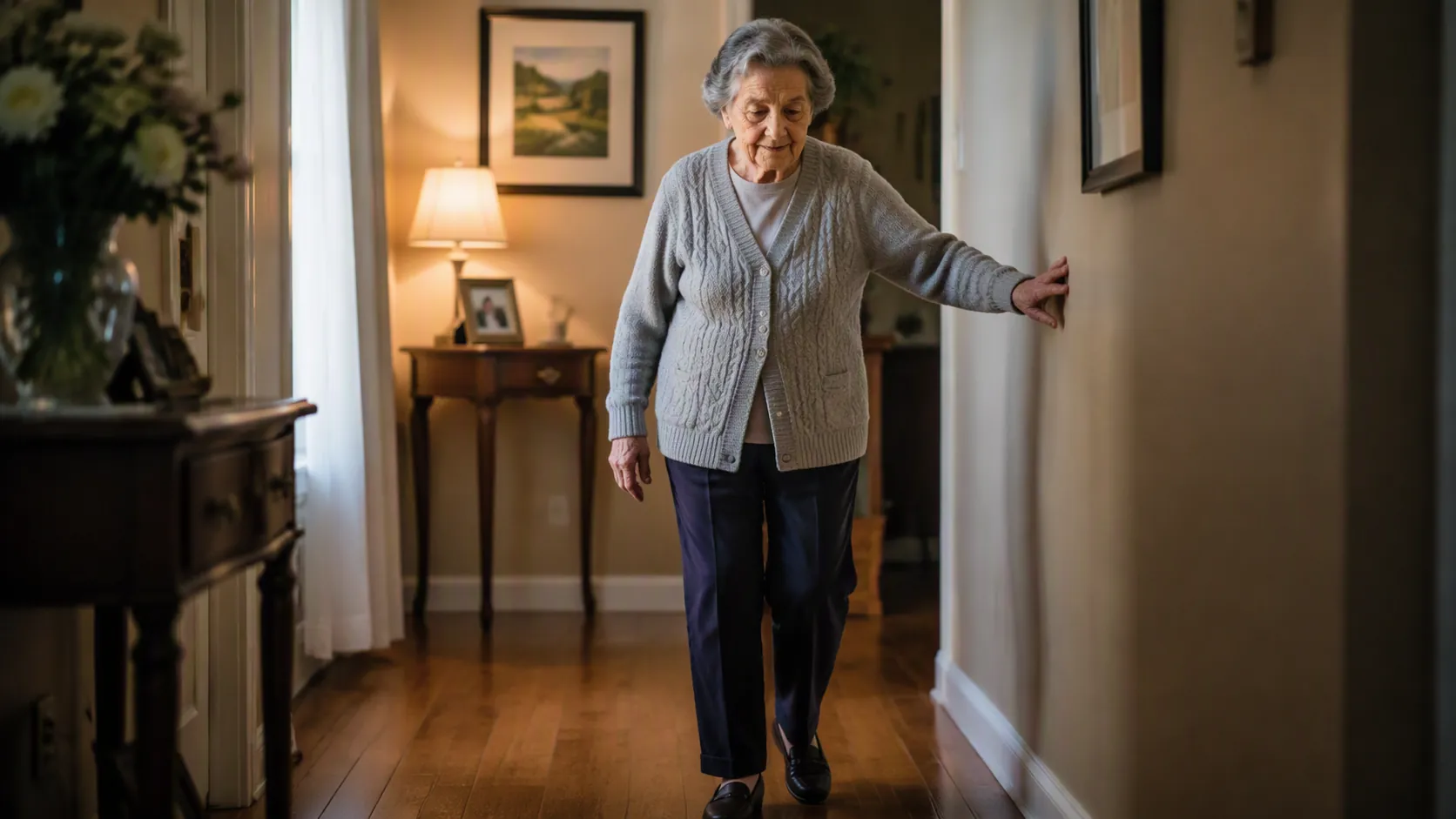
The first clue may not be an eye complaint. It may be your mother sliding one hand along the hallway wall after dinner, your father pausing longer at the top step, or a once-confident walker suddenly blaming “bad lighting” in a room he has crossed for years.
That is why the signs of vision loss in older adults often show up as household behavior before they show up as words. Glaucoma and early age-related macular degeneration can develop without pain or early symptoms, so an older adult may not realize vision is changing until daily tasks become harder or walking feels less certain.[1][2]
This is also a fall-prevention issue. In a CDC analysis of self-reported 2014 BRFSS data, 46.7% of adults age 65 and older with severe vision impairment reported a fall in the past year, compared with 27.7% of those without severe vision impairment; the same report estimated that about 1.3 million older adults with severe vision impairment fell that year.[3] That finding is cross-sectional and self-reported, so it does not prove vision impairment caused each fall. It does, however, show why a change in seeing should not be treated as a small inconvenience.
Use the checks below as observations, not accusations. One mismatched shirt or one cautious step is not a diagnosis. A pattern — especially one that changes how safely someone moves through the home — deserves attention.
First, separate emergency eye symptoms from gradual warning signs
Some vision changes should not wait for a routine appointment. Sudden loss of vision in one eye, sudden hazy or blurred vision, flashes of light, black spots, halos or rainbows around lights, a curtain-like area blocking vision, or a sudden loss of peripheral vision warrant immediate medical attention.[4]
The signs in the checklist are different. They are often gradual, and they may come and go depending on light, fatigue, medication timing, or clutter. Gradual does not mean harmless. If you notice a pattern, schedule a comprehensive eye exam and make the home easier to see in while you wait. The American Optometric Association recommends annual comprehensive eye exams for adults over 60.[2]
10 signs of vision loss to watch for at home
1. Shuffling steps in familiar rooms
A parent who used to stride through the kitchen may begin taking shorter, flatter steps. You may notice more toe-dragging, more pauses before thresholds, or a habit of looking down at the floor instead of ahead.
Shuffling can happen for many reasons, including pain, weakness, medication effects, or neurologic disease. But when it appears alongside squinting, missed objects, or complaints about lighting, vision belongs on the list. Poor contrast makes rug edges, cords, floor transitions, and dark thresholds harder to judge. A person may shorten each step because the floor no longer looks dependable.
Watch where the shuffling happens. If it is worse in dim hallways, on patterned rugs, near steps, or when moving from bright light into a darker room, call for a comprehensive eye exam and reduce the visual guesswork immediately: clear the walking path, remove loose rugs, add night lights, and increase even lighting.
2. Reaching for walls, counters, or furniture while walking
Many families describe this before they describe an eye symptom: “Dad says he’s fine, but he keeps touching the counter.” The hand may slide along the wall in the hallway, rest on the back of a chair, or reach for the refrigerator door before a turn.
That reach is a safety clue. The person may be using touch to confirm distance, direction, or balance because visual information feels unreliable. If the surface is stable, the habit may look harmless. If the hand lands on a rolling chair, a towel bar, a lightweight table, or the edge of an open door, it can create a fall instead of preventing one.
Do not scold the reaching. Replace unsafe “grab points” with real support where needed, especially near stairs, bathrooms, and long hallways. A close look at lighting, contrast, and handrail placement belongs in the same week as the eye appointment.
3. Bumping into furniture, doorframes, or objects left in the walking path
A new bruise on the hip, a scraped knuckle, or a lamp that has been knocked crooked can be easy to explain away. The pattern matters: bumping the same doorframe, clipping the coffee table, missing the edge of the bed, or failing to notice an object placed slightly off to the side.
Peripheral vision problems can make side obstacles harder to detect. Glaucoma, for example, may affect peripheral vision over time and can progress without early warning symptoms.[1] Central vision problems can also make it harder to identify clutter clearly enough to avoid it, especially when floors and furniture are similar in color.
Start with a quiet walk-through rather than a lecture. Look for furniture corners, low tables, pet bowls, magazine baskets, cords, and dark items on dark flooring. If bumping is new, increasing, or paired with loss of side vision, it should be discussed promptly with an eye-care professional. Sudden peripheral vision loss belongs in the urgent category described above.[4]
4. Trouble with stairs, steps, curbs, or uneven ground
Stairs reveal vision changes quickly because they demand depth judgment, contrast, balance, and confidence at the same time. You may see a parent stop at the top step, test the edge with a foot, descend sideways, miss the last step, or hesitate at curbs in parking lots.
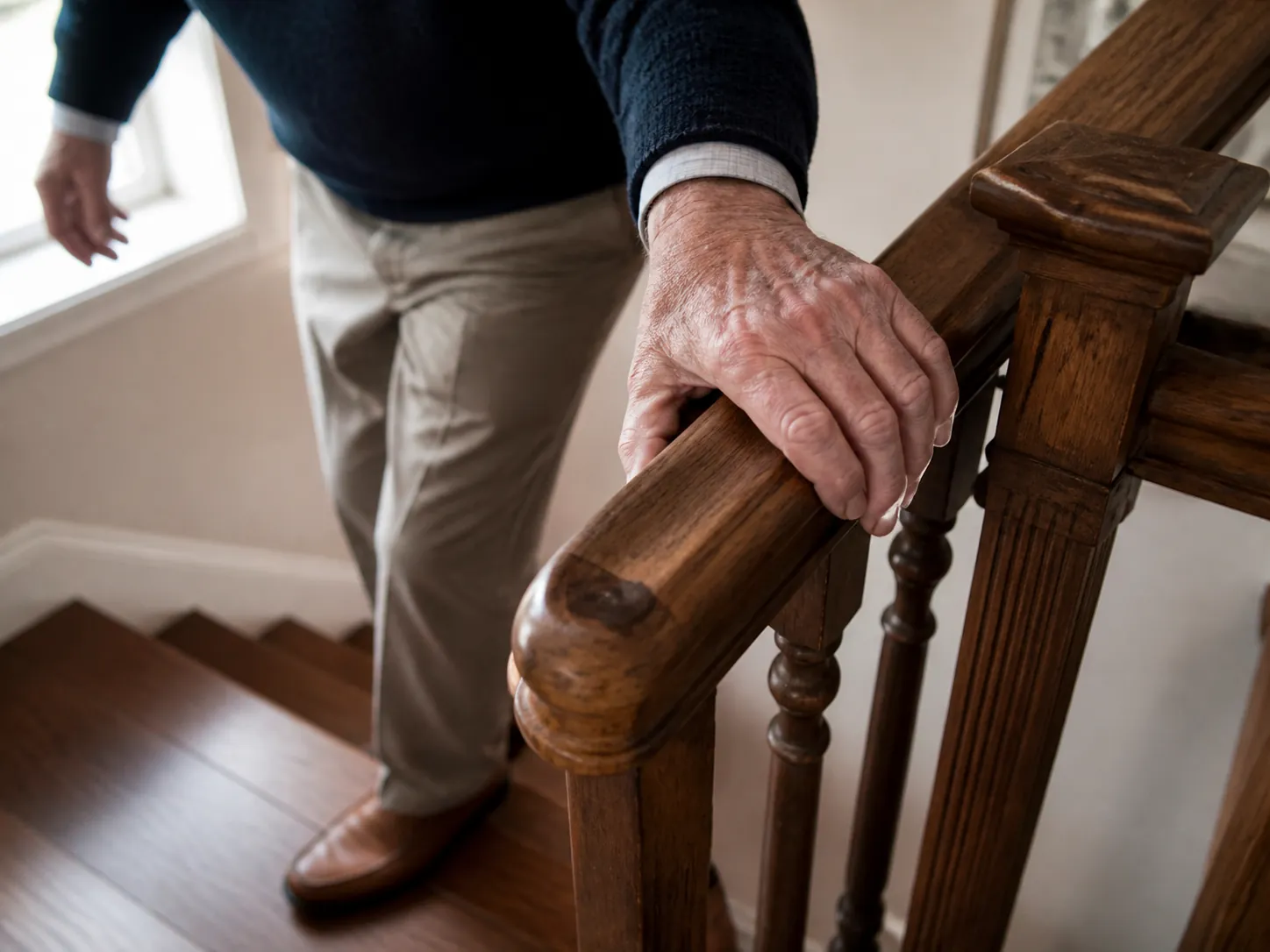
This is one of the highest-priority signs because the consequence is immediate. If the edge of a step blends into the tread below it, the brain has less reliable information about where to place the foot. A missed step can become a hard fall before anyone has time to help.
Improve visibility before waiting for a diagnosis. Add strong, even lighting on stairways; keep both hands free; remove visual clutter from landings; and consider high-contrast tape on step edges if it can be applied securely. If a fall has already happened, use a post-fall plan such as what to do after an elderly parent falls at home rather than simply watching more closely next time.
5. Avoiding dim rooms, hallways, or evening activities
A parent may stop using the hallway after dinner, avoid the basement, leave laundry for daytime, or say the restaurant is “too dark.” This can sound like preference. Sometimes it is. But when a person’s route through the home shrinks around lighting, vision may be part of the reason.
Older eyes may need more help in low light, and several caregiver guides list trouble adjusting to dark rooms as a gradual vision warning sign.[5] Low light also hides the ordinary things that cause falls: slippers at the bedside, a curled rug corner, the dog in the hallway, the last stair, a bathroom threshold.
Ask about the room, not the eyesight: “Would it help if this hallway were brighter?” Then test the route yourself at the same time of evening. Add motion-sensor night lights, reduce shadows, and make sure light switches can be reached before entering dark areas. For storms or outages, prepare a lighting plan ahead of time; low-light risk rises fast when someone is already relying on walls and furniture. See power-outage fall prevention for older adults if this is a recurring concern.
6. More glare sensitivity or trouble moving between bright and dark spaces
Glare problems may show up as closed blinds on a sunny day, reluctance to drive at dusk, complaints that headlights are “too much,” or discomfort walking from a bright porch into a darker entryway. Increased glare sensitivity is one of the gradual signs caregivers are advised to watch for, and cataracts can make glare, blurred vision, and dulled colors more noticeable.[5]
The fall risk comes from the transition. A person leaving bright outdoor light may step into a dim foyer before the eyes have adjusted. For a few seconds, the rug, threshold, shoes by the door, or first stair may not be clear enough.
Balance the light rather than simply making one area brighter. Reduce harsh glare, add diffuse lighting where bright and dark areas meet, and keep entryways uncluttered. Sunglasses, brimmed hats, and updated lenses may help some people outdoors, but new or worsening glare deserves an eye exam instead of guesswork.
7. Squinting, closing one eye, or holding objects unusually close
You may notice squinting at pill bottles, food labels, thermostat numbers, the microwave panel, or caller ID. A parent may hold mail close to the face, tilt the head, close one eye, or ask others to read small print more often.
This is not only about reading comfort. Misreading a medication label, missing an expiration date, selecting the wrong stove setting, or misjudging a small step because the eyes are working too hard can affect safety throughout the day. NCOA notes that serious difficulty seeing remains common among older adults: about 7.3% of Americans 65 and older report being blind or having serious difficulty seeing even with glasses, rising to 9.8% among those 80 and older.[6]
Check whether glasses are current, clean, and actually being used for the intended task. Then look at the tasks that carry consequences: medications, cooking controls, stairs, bills, and phone use. Larger print, better task lighting, and simplified labels can help immediately, but repeated squinting or new reading difficulty is still a reason to schedule an eye exam.
8. Blurry vision, hazy vision, or frequent rubbing from dry eyes
Blurred vision may be reported directly: “The TV looks fuzzy,” “My glasses aren’t right,” or “The room looks cloudy.” It may also show up as more eye rubbing, blinking, watery eyes, or stopping a task because the eyes feel irritated. Caregiver resources list blurry vision and dry eyes among gradual signs that should be evaluated.[5]
Blurry or dry eyes can make a person less steady because the scene keeps changing. One moment the floor edge is clear; the next it is smeared by tearing, glare, or haze. That inconsistency can slow reaction time when stepping over a threshold or turning toward a chair.
If blurred vision is sudden, treat it as urgent, especially when it comes with flashes, black spots, halos, a curtain-like shadow, or sudden loss of side vision.[4] If it is gradual, arrange a comprehensive eye exam and review the home for places where a moment of blur would be dangerous: stairs, bathroom entrances, kitchen mats, and outdoor steps.
9. Dulled colors, poor contrast, or mismatched clothing
Families sometimes hesitate to mention this one because it feels personal. A parent may wear mismatched socks, confuse navy with black, miss a stain, or choose clothing combinations that are unusual for them. Baptist Health includes mismatched clothes among behavioral clues that may suggest vision loss in aging parents.[7]
The dignity piece matters. Clothing choices can change for many reasons, and not every unusual outfit means poor vision. The safety concern is contrast. If someone has trouble distinguishing similar colors in the closet, they may also have trouble seeing a beige rug on a beige floor, a white curb in bright sun, or a clear glass table edge.
Use contrast where it protects movement: dark grab bars against light walls, a contrasting toilet seat if appropriate, clearly visible stair edges, and non-slip mats that do not blend into the floor. For a broader order of priorities, a room-by-room home modification guide can help you decide where lighting and contrast changes matter most.
10. Missing items in plain sight or losing confidence with familiar tasks
A parent may say they cannot find the salt shaker sitting on the counter, miss food on one side of the plate, overlook a chair in the hallway, or give up hobbies that require close work. They may stop sewing, reading, doing puzzles, sorting pills, or paying bills without calling it a vision problem.
Central vision changes can make detailed tasks harder. Age-related macular degeneration affects central vision, and early disease may not cause obvious symptoms.[1] The fall connection is indirect but real: when someone loses confidence in seeing details, they may rush, guess, avoid helpful routines, or move through the home with less accurate information.
Notice what has quietly disappeared from the week. A stopped hobby, unopened mail, or repeated “I’ll do it later” may be easier to discuss than eyesight. Bring specific examples to the eye appointment: the task, the lighting, the time of day, and whether glasses helped.
What to do this week if you notice a pattern
If the change is sudden or dramatic — sudden vision loss, flashes, black spots, halos, curtain-like shadow, sudden hazy vision, or sudden loss of peripheral vision — seek immediate medical attention.[4]
If the signs are gradual, schedule a comprehensive eye exam and describe the home behaviors you have seen. “She grips the wall after dinner” is useful information. So is “He misses the last stair,” “She stopped reading labels,” or “He avoids the hallway unless all the lights are on.”
While waiting for the appointment, make the home easier to interpret visually. Improve even lighting, remove throw rugs that can slide or curl, clear walking paths, increase contrast at steps and bathroom fixtures, and make nighttime routes predictable. The CDC’s discussion of the VIP randomized trial notes that a home-safety intervention for severely visually impaired adults age 75 and older — including steps such as increasing illumination and removing throw rugs — significantly reduced falls, while a strength-and-balance program alone did not.[3] That was a single New Zealand trial, so it should not be treated as a guarantee for every home, but the practical lesson is sensible: do not wait for a diagnosis before reducing obvious visual hazards.
The goal is not to catch an older adult making mistakes. It is to notice the places where the home has become harder to see, harder to judge, and easier to fall in — and to act before a near-miss becomes an injury.
References
- Common Age-Related Eye Problems — Cleveland Clinic.
- Senior Vision: Over 60 Years of Age — American Optometric Association.
- Falls Among Persons Aged ≥65 Years With and Without Severe Vision Impairment — United States, 2014 — CDC MMWR, 2016.
- Signs of Eye Disease and Vision Problems in Adults — Prevent Blindness.
- Caregiver Guide: Vision Problems — HealthInAging/AGS Foundation.
- Identifying Undiagnosed Vision Loss in Older Adults — National Council on Aging.
- Signs of Vision Loss in Aging Parents — Baptist Health.
Related reading
Noticed something outdated or inaccurate on this page? Flag a correction. We review every report against CDC, NIA, and AARP HomeFit guidance before updating a page.
Part of the Fall Prevention section.