
STEADI: Intervene
Review these meds to keep elderly safe in extreme heat
Many common heart, antidepressant, and allergy medications raise heat-illness and fall risk in older adults. Learn which drugs to review with a prescriber or pharmacist before a heat wave, how to store heat-sensitive medicines safely, and which red-flag symptoms call for help — without ever stopping a prescription on your own.
If you are trying to figure out how to keep elderly safe in extreme heat and your parent takes several everyday medications, start with the medication list — not with guesswork. A hot apartment, a missed lunch, a water pill, a blood pressure drop, and a sedating medication can all look like the same thing from across the room: dizziness, weakness, confusion, or an unsteady walk to the bathroom.
The safety rule comes first: do not stop, skip, reduce, double up, or reschedule prescription medication on your own because of heat. The safer move is a structured review with the prescriber or pharmacist before the heat wave, and a clear plan for what to watch during it.
CDC clinician guidance explains why this deserves more than a generic “drink more water” answer. Some medications can contribute to volume depletion or hypotension, with an increased risk of fainting and falls. Others can cause sedation or cognitive impairment, raising fall risk and reducing thirst sensation. CDC also flags impaired sweating and reduced skin vasodilation — both of which can make it harder for the body to cool itself in heat. [1]
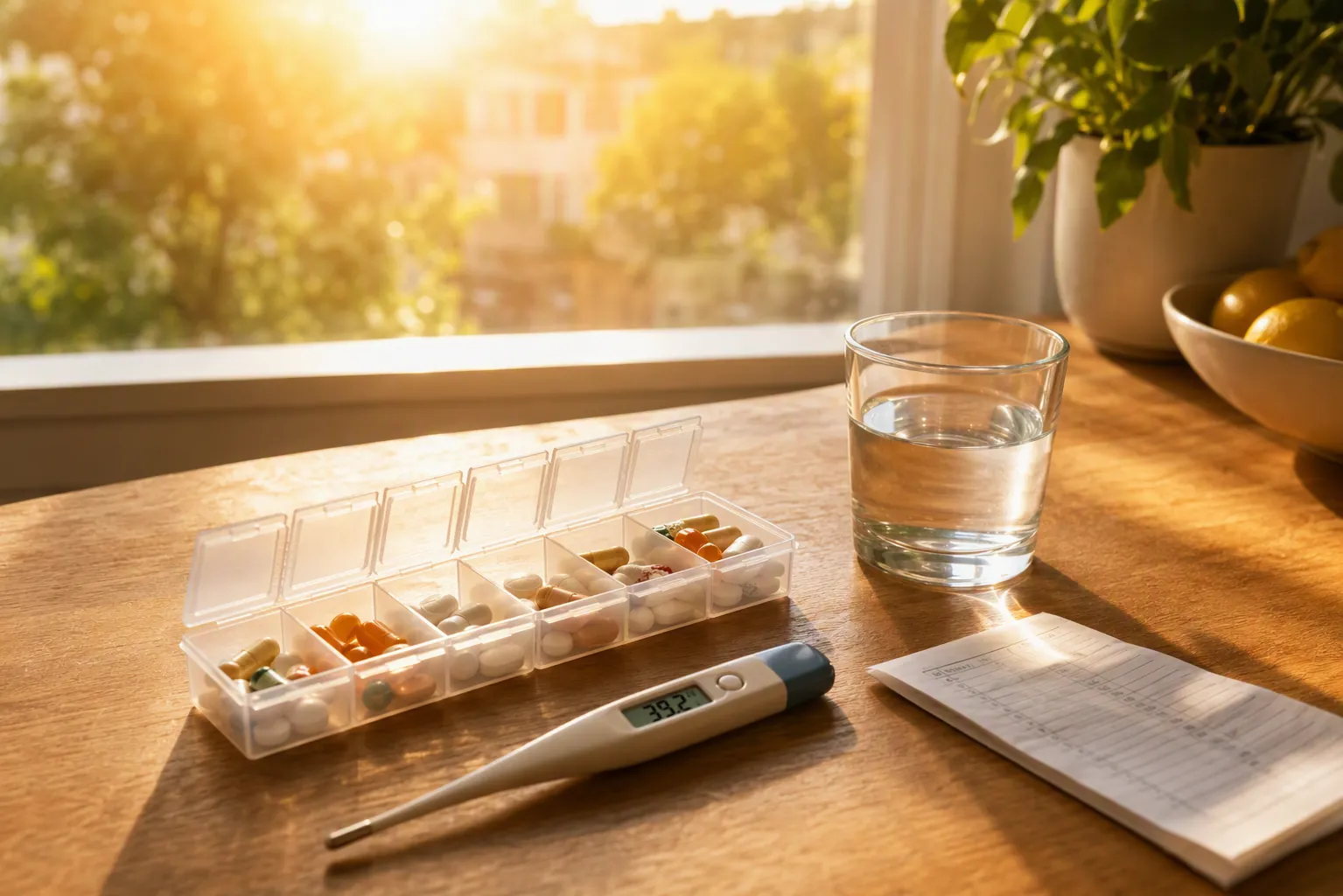
The medication review should happen before the heat alert
The useful question is not “Which medications are bad in summer?” It is “Which effects on this person’s medication list could become dangerous when the apartment is hot, sleep is poor, appetite drops, or the person stands up too quickly?”
AARP’s consumer guidance names eight medication categories that can make heat harder to handle: heart medications, antidepressants, antipsychotics, central nervous system stimulants, anticholinergics, antihistamines, decongestants, and dopaminergics. Those categories are a practical flagging list to bring to a pharmacist or prescriber; CDC’s clinician guidance supplies the mechanism lens for why the review matters. [2][1]
Do the review early enough that nobody is trying to solve medication questions during the hottest afternoon of the week. CDC’s older-adult heat guidance uses HeatRisk levels orange, red, and magenta as planning points for people at higher risk, including adults aged 65 and older. [3]
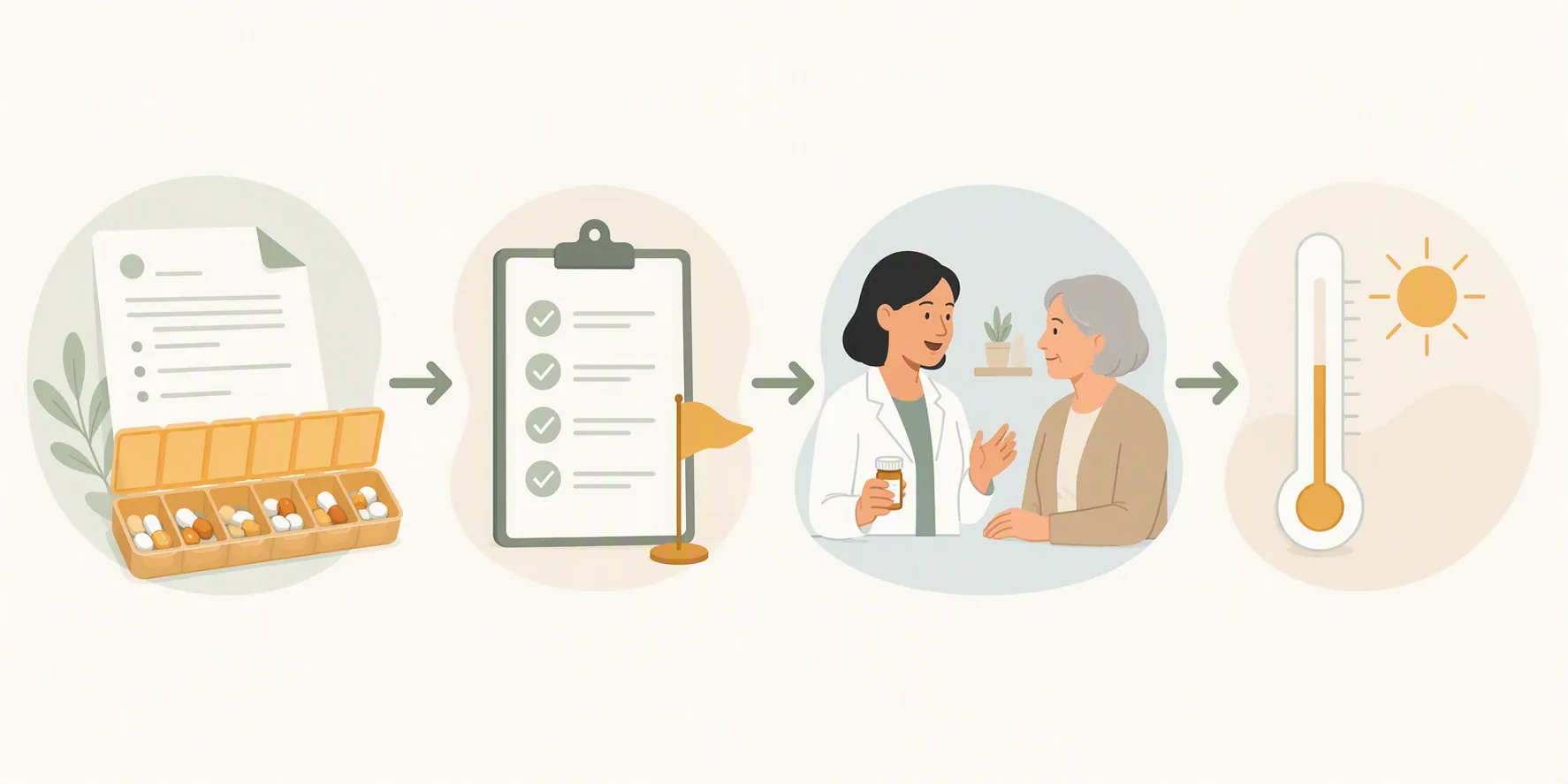
What to gather before you call
Before calling the pharmacy or clinician’s office, collect the information that makes the review concrete. A vague “Dad takes a lot of pills” is hard to act on. A complete list gives the pharmacist or prescriber something to check.
- Every prescription medication, including dose and time of day taken.
- Over-the-counter medications, especially allergy pills, sleep aids, cold medicines, bladder medicines, pain relievers, and supplements.
- Recent medication changes, refills with a different-looking pill, or instructions that changed after a hospital or urgent-care visit.
- Recent symptoms: dizziness, fainting, near-fainting, new confusion, unusual sleepiness, reduced thirst, reduced urination, constipation, poor appetite, or new unsteadiness.
- The heat situation: no air conditioning, an upstairs bedroom, a recent power outage, a car trip, or a home that stays hot overnight.
- Who is actually watching during heat events: the older adult, spouse, neighbor, aide, adult child, or rotating family group.
This is also where family coordination matters. If siblings share care, make one current medication list and put it where people will actually use it: phone, kitchen drawer, pharmacy bag, and emergency folder. For the broader heat-and-fall plan around the medication review, use the site’s heat-wave fall-risk guide and extreme heat safety checklist for older adults.
What to ask the pharmacist or prescriber
The wording can stay simple. The goal is not to challenge the prescription. The goal is to ask how to use it safely when heat adds stress.
- “Which medicines on this list can increase dizziness, fainting, dehydration, low blood pressure, sleepiness, confusion, or reduced sweating during extreme heat?”
- “Are any of these medicines more concerning because of age, kidney disease, heart disease, diabetes, Parkinson’s disease, dementia, or a recent fall?”
- “If appetite or fluid intake drops during a heat wave, which symptoms should make us call the office or pharmacy before the next dose?”
- “Are there any timing instructions we should follow during hot weather, especially for medicines that increase bathroom trips or cause drowsiness?”
- “Which medications must be stored within a certain temperature range, and what is the backup plan during a power outage?”
- “Who should we contact after hours if fainting, confusion, or severe weakness happens during a heat event?”
If the answer is “call the prescriber before changing anything,” write that down. If the pharmacist identifies a concern that requires a prescribing decision, ask the pharmacy to document the issue and route it to the clinician. Until a prescriber or pharmacist gives specific instructions, keep the medication schedule as written.
During the heat event, monitor the effects you reviewed
Once the heat arrives, the medication review turns into observation. Watch for the exact problems the review identified: lightheadedness when standing, new daytime sleepiness, confusion, less drinking than usual, missed meals, worsening balance, or more trips to the bathroom at night.
For an older adult who lives alone, monitoring cannot depend on “call me if you feel bad.” Heat, sedation, and confusion are exactly the conditions that make self-reporting unreliable. A scheduled check-in routine is the better companion to the medication plan; the site’s heat-wave check-in guide for older adults living alone covers that handoff.
Medication categories to flag for a heat-and-fall review
The table below is a review list, not a stop list. A medicine can be necessary and still deserve a heat plan. Bring the list to the pharmacist or prescriber and ask which effects apply to the specific older adult in front of you.
| Category to review | Examples named in consumer guidance | Heat-and-fall issue to ask about |
|---|---|---|
| Heart medications | Diuretics, beta blockers, ACE inhibitors/ARBs, antiplatelets | Ask whether the medication could contribute to dehydration, volume depletion, hypotension, dizziness, fainting, or reduced cooling through skin blood flow. CDC links volume depletion or hypotension with increased risk of fainting and falls. [2][1] |
| Antidepressants | SSRIs, SNRIs, tricyclic antidepressants | Ask about sweating changes, sedation, cognitive effects, dizziness, and whether heat could make side effects harder to distinguish from dehydration or illness. [2][1] |
| Antipsychotics | Antipsychotic medications | Ask about sedation, cognitive impairment, impaired sweating, dizziness, and fall risk. CDC links sedation and cognitive impairment with increased risk of falls and reduced thirst sensation. [2][1] |
| Central nervous system stimulants | CNS stimulants | Ask whether the stimulant changes heat tolerance, appetite, sleep, hydration behavior, or recognition of heat symptoms. [2] |
| Anticholinergics | Anticholinergic medications | Ask about reduced sweating, dry mouth that does not reliably mean safe hydration, constipation, urinary issues, blurred vision, confusion, and balance effects. CDC flags impaired sweating as a medication mechanism that can worsen heat risk. [2][1] |
| Antihistamines | Antihistamine medications | Ask whether the allergy medicine is sedating or anticholinergic, especially if it is taken at night or combined with sleep aids, pain medicines, or alcohol. [2][1] |
| Decongestants | Decongestant medications | Ask about blood pressure, heart rate, sleep disruption, and whether the medication could complicate heat tolerance in someone with heart disease or hypertension. [2] |
| Dopaminergics | Dopaminergic medications | Ask about dizziness on standing, confusion, sleepiness, hallucinations, and walking stability, especially in someone with Parkinson’s disease or prior falls. [2][1] |
The reason to take dehydration and medication effects seriously is practical, not dramatic. In a retrospective cohort of 30,634 adults aged 65 and older, 37.9% were dehydrated at baseline. Dehydration was associated with falls, and loop diuretics and antipsychotics were associated with falls-or-death; the study was observational, so it shows association rather than proving that these medications caused the outcomes. [4]
For caregivers, the takeaway is narrower and more useful: if a medication category is known to affect thirst, sweating, blood pressure, alertness, or balance, do not wait until the person faints to ask how it should be managed during heat.
The bathroom problem: heat, diuretics, and nighttime falls
Some medication risks show up in a very ordinary place: the nighttime path to the bathroom. A diuretic may be necessary. A hot evening may also leave the person weaker, thirstier, or more lightheaded when standing. If the person rushes to the bathroom in the dark, the fall risk is no longer just a medication issue or just a heat issue.
Do not move a diuretic dose earlier, later, or to another day unless the prescriber or pharmacist has told you to. Instead, ask directly whether timing is appropriate for hot weather and nighttime safety. Then fix the walking route: lighting, clear floor space, stable footwear, grab bars, and a plan for slow standing. For the home setup side, use the site’s guide to nighttime bathroom falls during heat waves.
Safe storage is part of the medication plan
Heat can affect the medicine itself, not just the person taking it. CDC clinician guidance is specific: insulin should be refrigerated; inhalers can burst in hot environments such as car trunks; EpiPens may malfunction if exposed to heat; and power outages can affect refrigerated medications and electric medical devices. [1]
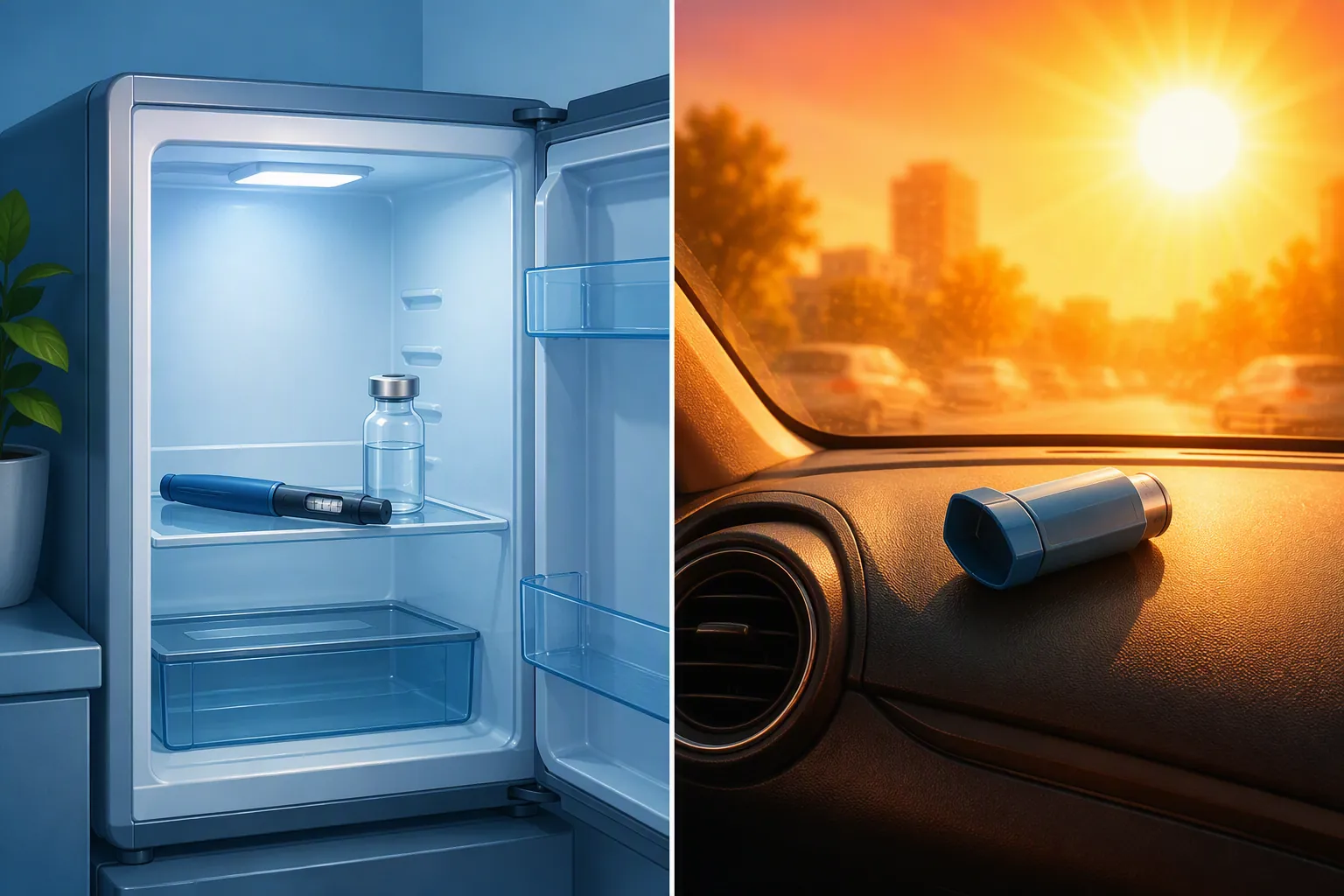
That turns storage into a caregiver task, not a side note. Ask the pharmacist which medicines must stay within a temperature range, what to do during travel, and what counts as unsafe exposure. If a medication has been left in a hot car, on a sunny windowsill, in a mailbox, or in a room without power, call the pharmacy before assuming it is fine.
- Do not store medications in a parked car, glove compartment, trunk, or direct sun.
- Keep the pharmacy phone number with the medication list so someone can ask about heat exposure quickly.
- For refrigerated medications, write down the backup plan before storm season or heat outages.
- If an electric medical device is part of care, include it in the outage plan, not just the medication list.
For the cooling setup around the person and the medicines, use the site’s heat-wave home cooling plan. For backup power, refrigerated medications, lighting, and device charging, use the power-outage fall-prevention guide for seniors.
Red flags during heat: when to get help instead of adjusting pills
Older adults are more vulnerable in heat partly because aging can blunt thirst and reduce sweating, and medications can alter temperature control. [3] That means a caregiver may be the first person to notice that the situation has moved beyond ordinary discomfort.

NIOSH identifies heat syncope as fainting or dizziness that can occur in heat, especially after standing for a long time or suddenly rising from sitting or lying down. That maps directly onto fall risk: the person does not have to “feel sick” for a fainting episode to become a head injury or hip fracture. [5]
- Fainting, near-fainting, or a sudden collapse: get medical help. Do not respond by skipping the next medication dose unless a clinician tells you to.
- New confusion, unusual agitation, or a major change in alertness: treat it as a heat-illness warning sign and seek help rather than waiting to see if water fixes it.
- Worsening unsteadiness, repeated stumbling, or trouble getting to the bathroom safely: move the person to a safer, cooler place if possible and call the clinician, pharmacist, nurse line, or emergency services depending on severity.
- Dizziness when standing, especially with heart medications, diuretics, sedating medicines, or poor intake: call for medication-specific advice before changing the schedule.
- A medication exposed to high heat, a failed refrigerator, or a power outage: call the pharmacy before using it if safety is uncertain.
If you need a broader symptom-and-action framework for heat days, keep the site’s general heat-wave safety checklist for seniors with the medication list. If medication side effects are already part of the fall-risk picture, the related medication fall-risk explainer may help you frame the pharmacist conversation.
A short plan to keep with the medication list
Before the next extreme heat stretch, put four things in writing: the current medication list, the drug categories that need heat review, the storage plan for heat-sensitive medicines, and the red flags that mean “call for help.”
The safest summer medication strategy is not to improvise. Review early, store correctly, watch for defined danger signs during heat events, and never make medication changes alone.
References
- Heat and Medications – Guidance for Clinicians — CDC
- 8 Types of Prescription Medications That Can Make It Harder to Handle the Heat — AARP, updated July 7, 2026
- Heat and Older Adults (Aged 65+) — CDC
- Association Between Dehydration and Falls and Mortality in Older Adults: A Retrospective Cohort Study — Mayo Clinic Proceedings: Innovations, Quality & Outcomes, 2020
- Heat-related Illnesses — CDC NIOSH
Related reading
Noticed something outdated or inaccurate on this page? Flag a correction. We review every report against CDC, NIA, and AARP HomeFit guidance before updating a page.
Part of the Fall Prevention section.