
STEADI: Screen
Tularemia Symptoms Older Adults Often Miss
Tularemia is easy to miss in an older adult because it can look like the flu or show up as confusion, new weakness, or a fall rather than a clear fever. Learn which warning signs call for a doctor, which symptoms mean the ER, and how to reduce exposure during yard work and tick season.
The missed sign is often not the fever
A daughter may find her father sitting on the front steps after mowing, weaker than usual, saying he is “just tired.” A spouse may report that he did not really have a fever, he just fell, skipped dinner, and seemed off. Those details are easy to rationalize away. They are also the details worth saying out loud to a clinician when they follow tick exposure, deer-fly bites, yard work, brush clearing, gardening, handling wild animals, or contact with a sick or dead animal.

Tularemia deserves attention in older adults precisely because the disease is uncommon. In the United States, CDC surveillance describes tularemia as rare, with about 200–300 reported cases a year and an overall incidence of 0.064 per 100,000 people; cases are also unevenly distributed, with about half reported from Arkansas, Kansas, Missouri, and Oklahoma, and most illness onset occurring from May through September. [1]
This article is for education and decision support, not for self-diagnosis or self-treatment. Tularemia needs medical evaluation and prescription treatment. The caregiver’s job is not to decide, “This is tularemia.” The caregiver’s job is to notice the exposure-plus-symptom pattern early enough that a doctor can consider it.
Why “flu-like” can be too vague in an older adult
CDC symptom guidance says all forms of tularemia can include fever, and that fever can reach 104°F. [2] But in an older adult, the first useful observation may be less dramatic: new confusion, unusual fatigue, appetite change, new weakness, dizziness, or a fall. AARP’s general infection guidance for older adults notes that infection may show up this way, and that a fever may be only about 2°F above that person’s usual baseline rather than meeting the familiar 100.4°F cutoff often used in younger adults. [3]
That matters because a caregiver is usually not watching a thermometer all day. She is watching whether Dad left his coffee untouched, whether Mom is suddenly too weak to stand from the toilet, whether a normally steady walker is gripping furniture, or whether a person who was fine after breakfast is now drowsy, chilled, and uninterested in food.
Tularemia can begin after a short delay. The incubation period is typically 3–6 days, but the reported range is 1–21 days. [4] So the question is not only “How does he look today?” It is also “What happened in the last three weeks?”
Warning signs caregivers often miss
The signs below do not prove tularemia. They are prompts to connect symptoms with exposure history, especially during tick and yard-work season or in higher-incidence regions.
1. A “minor” fever with a big change in function
A modest temperature rise can still be meaningful if it comes with a clear drop from the person’s baseline. The older adult who is suddenly too weak to shower, confused about the day, unsteady walking across the room, or unwilling to eat should not be judged only by whether the thermometer crosses a certain line. General older-adult infection guidance supports watching for these functional changes, including confusion, falls, appetite change, fatigue, new weakness, and mild fever relative to the person’s normal. [3]
For fall prevention, this is not a side issue. Infection-related weakness and fatigue can make a familiar hallway, bathroom, or porch step more dangerous. CareWise Guide uses the same infection-to-fall-risk lens in other illness-prevention topics, including senior salmonella prevention, because the immediate hazard is often weakness before anyone has a firm diagnosis.
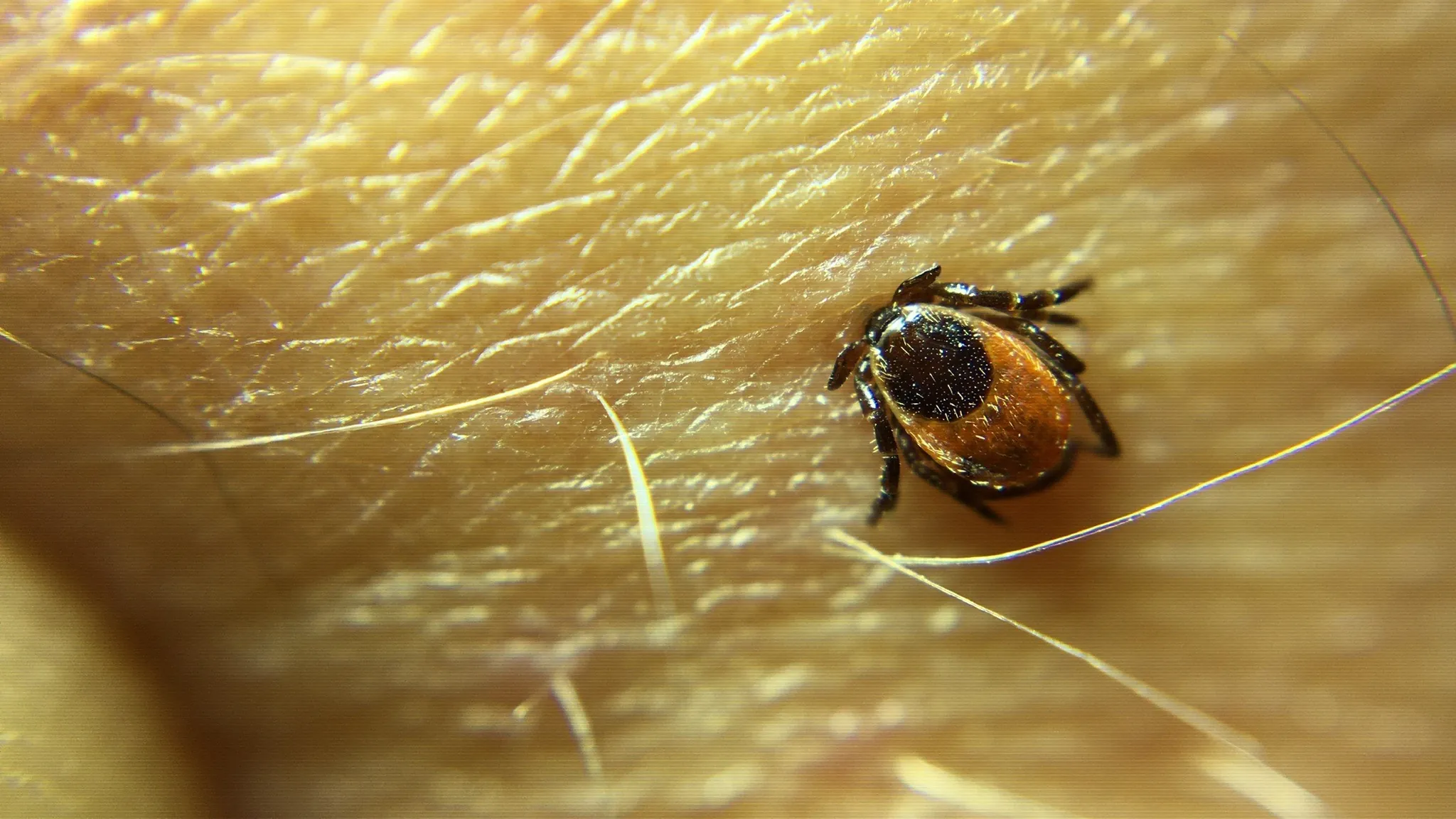
2. A tick or deer-fly bite followed by a sore and swollen glands
The most common tularemia form is ulceroglandular tularemia, which can follow a tick or deer-fly bite or handling an infected animal. CDC describes the pattern as a skin ulcer at the infection site plus swollen and painful lymph glands, often in the armpit or groin. [2]
A bite mark that becomes a sore, a scab that does not behave like an ordinary scratch, or a tender lump near the armpit or groin after outdoor exposure should be mentioned clearly when calling the doctor. The useful sentence is specific: “He had a tick bite last week, now there is a sore at the spot and his groin glands are swollen.”
3. Swollen painful glands after animal contact, even without an obvious sore
Some people develop swollen painful lymph glands without a visible ulcer. CDC calls this glandular tularemia and notes that it can occur after a tick or deer-fly bite or after handling an infected animal. [2] For caregivers, the practical issue is whether the swollen glands arrived after a plausible exposure: removing a dead rabbit, cleaning up after outdoor animals, handling game, or doing yard work where animal carcasses may have been present.
4. Eye irritation after exposure
Oculoglandular tularemia can happen when the bacteria enter through the eye. CDC lists eye irritation and inflammation, eye pain, swelling around the eye, discharge, and a tender lymph gland in front of the ear as possible features. [2] The exposure history may be as simple as rubbing the eye with a dirty glove after yard work or handling an animal and then developing a red, painful, draining eye.
5. Sore throat, mouth sores, or stomach symptoms after possible contaminated food or water
Oropharyngeal tularemia can occur after eating or drinking contaminated food or water. CDC lists sore throat, mouth ulcers, tonsillitis, swollen lymph glands in the neck, vomiting, diarrhea, and abdominal pain among possible symptoms. [2] This is not the most common pattern a caregiver will be watching for, but it belongs on the list when illness follows untreated water exposure or questionable food exposure in an outdoor setting.
6. Cough, chest pain, or trouble breathing after mowing, brush clearing, or dust exposure
Pneumonic tularemia is the most serious form. CDC lists cough, chest pain, and difficulty breathing, and notes that it can result from breathing dusts or aerosols containing the bacteria or from other forms of tularemia spreading to the lungs. [2]
This is where an older adult’s “I’m fine, I’m just winded” deserves a firmer response. Shortness of breath, chest discomfort, or a new cough after mowing over contaminated material, brush clearing, or working around animal carcasses is not something to watch casually overnight.
7. Vague systemic illness in a higher-risk older adult
Typhoidal tularemia can be harder to recognize because it may not give the caregiver a neat local clue like a bite ulcer or eye inflammation. CDC symptom guidance describes it as including combinations such as fever, chills, headache, muscle aches, sore throat, vomiting, diarrhea, abdominal pain, cough, and weakness. [2]
CDC’s 2025 treatment recommendations state that geriatric patients, defined as age 65 and older, are more likely to develop pneumonic and typhoidal forms and have a higher fatality rate than younger patients regardless of clinical form. The same report notes that typhoidal tularemia tends to affect older adults and people with chronic illness. [5] The report’s geriatric fatality comparisons come from limited-quality evidence, so they should not be read as settled individual predictions. They are still enough to justify taking vague illness seriously when exposure fits.
How real is the risk?
The honest answer is two-sided: tularemia is rare, and older adults are still a meaningful higher-risk group when the exposure and symptoms line up.
| What the data show | How to use it |
|---|---|
| About 200–300 U.S. cases are reported each year; overall incidence was 0.064 per 100,000 people. [1] | Do not treat every summer fever as tularemia. |
| About half of reported cases came from Arkansas, Kansas, Missouri, and Oklahoma, and Hawaii reported no cases in the CDC surveillance summary. [1] | Geography changes the level of suspicion, but prevention habits still matter anywhere ticks, biting flies, wildlife, or animal carcasses are present. |
| Seventy-eight percent of cases had illness onset from May through September. [1] | The exposure history matters most during tick, mowing, gardening, and brush-clearing months. |
| Incidence was highest among adult males ages 65–84, at 0.133–0.161 per 100,000, second only to children ages 5–9 overall. [1] | An older man who does yard work, hunts, handles animals, or has frequent tick exposure deserves careful symptom review. |
CDC treatment guidance also makes an important calibration point: post-exposure preventive antibiotics are not routine after ordinary tick bites or lawn mowing. [5] That is not a reason to ignore symptoms. It means the decision turns on exposure plus illness, not exposure alone.
Call a doctor promptly when exposure and symptoms fit
A prompt call is appropriate when a likely exposure in the past 1–21 days is followed by fever, flu-like illness, swollen painful glands, a sore or ulcer, eye irritation, sore throat after possible contaminated food or water, or unexplained weakness or confusion after outdoor exposure. [2][4]
Use plain, chronological language. A clinician needs the timeline more than the caregiver’s theory.
- “He mowed two days after we found a dead rabbit near the shed. Now he has chills, no appetite, and he fell this morning.”
- “She pulled a tick off her leg last week. Now there is a sore at the spot and the glands in her groin are painful.”
- “He was brush clearing over the weekend. Since then he has had cough, chest discomfort, weakness, and a temperature higher than his usual.”
- “She handled an animal carcass and now has swollen glands and feels like she has the flu.”
If the office offers a same-day visit, take it. If the clinician recommends urgent care or the emergency department, do not downgrade that advice because the fever is not impressive. In older adults, the change in function may be the warning sign.
Testing can also be tricky early. Serologic antibodies may take 10–20 days to appear, so an early negative test does not necessarily rule out tularemia. [4] That is another reason the exposure history matters. It helps the clinician decide whether to keep tularemia on the list while evaluating other, more common causes.
Go to the ER for these red flags
Some symptoms should not wait for a routine callback. Cleveland Clinic advises emergency care for tularemia when there is fever over 103°F, confusion, trouble breathing, lightheadedness or fainting, stiff neck, blood in vomit or stool, or coughing blood. [6]
- Fever over 103°F
- New or worsening confusion
- Trouble breathing
- Lightheadedness or fainting
- Stiff neck
- Blood in vomit or stool
- Coughing blood
If the older adult has fallen and may be injured, cannot safely stand or walk, is hard to wake, is breathing poorly, or seems acutely different from baseline, treat that as urgent even before tularemia is part of the conversation. The same practical split used in fall triage after a parent falls applies here: the immediate danger comes first.
Prompt treatment changes the stakes. Cleveland Clinic describes overall mortality around 4%, about 1% with prompt antibiotic treatment, and untreated fatality in 10–50% of cases. [6] Those numbers are not a reason to panic over every tick bite. They are a reason not to let a plausible exposure plus worsening illness drift for days.
What to write down before you call
Before calling, take two minutes to gather the details that are easiest to forget once someone answers the phone.
- Date symptoms started, even if the first sign was “not himself” rather than fever.
- Highest temperature measured, and what the person’s usual temperature tends to be if you know it.
- Any tick or deer-fly bite, including where on the body and when it happened.
- Yard work, mowing, brush clearing, gardening, or dust exposure in the past 1–21 days.
- Contact with wild animals, game animals, pets that may have contacted wildlife, or sick or dead animals.
- New sore, ulcer, swollen glands, eye symptoms, sore throat, cough, chest pain, vomiting, diarrhea, weakness, dizziness, confusion, or fall.
- Existing chronic conditions, immune problems, and current medications.
This list is not meant to make the caregiver responsible for diagnosis. It keeps the important exposure history from being lost under a vague phrase like “flu symptoms.”
Prevention during yard work, tick season, and animal exposure
Prevention should be practical and repeatable. CDC recommends using EPA-registered insect repellents, wearing long pants, long sleeves, and long socks to reduce tick and deer-fly bites, checking for ticks, and removing attached ticks promptly with fine-tipped tweezers. [7]
For mowing and yard work, CDC’s advice is blunt: do not mow over sick or dead animals, and check lawns or grassy areas for carcasses before mowing. [7] That is especially worth building into the routine for an older adult who mows after storms, maintains rural property, works near brush piles, or lives where rabbits, rodents, and ticks are common.
| Situation | Safer habit |
|---|---|
| Mowing or trimming tall grass | Walk the area first. Look for sick or dead animals before starting equipment. [7] |
| Gardening or brush clearing | Wear long sleeves, long pants, socks, and gloves; use EPA-registered repellent as directed. [7] |
| Coming indoors after yard work | Do a tick check, including hidden areas such as behind knees, under waistbands, and along the hairline. |
| Finding an attached tick | Remove it promptly with fine-tipped tweezers. [7] |
| Finding a dead animal | Do not run a mower over it. Avoid direct handling and follow local guidance for disposal. |
There is no tularemia vaccine currently licensed or generally available in the United States. [5] Antibiotics and preventive antibiotic decisions belong with clinicians. At home, the reliable work is exposure reduction, tick removal, early symptom recognition, and fast communication when illness follows a plausible exposure.
After the illness: watch fall risk during recovery
Even after medical treatment begins, recovery can leave an older adult less steady than usual. StatPearls notes that prolonged fatigue, pain, and weakness after tularemia may warrant physical or occupational therapy. [4] That does not mean every person needs formal therapy. It does mean caregivers should treat post-illness weakness as a home-safety issue, not just a nuisance.
- Keep a clear path from bed to bathroom.
- Use night lights during the first week or two of weakness.
- Do not rush showers, stairs, or outdoor chores while fatigue is still obvious.
- Ask the clinician whether PT or OT is appropriate if weakness, pain, or unsteadiness persists.
- Recheck medications and hydration if dizziness continues.
A fall during recovery can erase progress quickly. If illness has already caused a fall, or if the person remains dizzy, unusually weak, or confused, the home needs a temporary safety plan while the medical team addresses the infection.
The caregiver’s real job
Tularemia is not a backyard epidemic. Most tick bites, mowing days, and summer fevers will have another explanation. But an older adult who becomes weak, confused, feverish, unsteady, short of breath, or swollen-gland sick after a plausible exposure should not be brushed off as “probably just a virus” without a call.
Notice the pattern. Reduce exposure during yard and tick season. And when you call, say exactly what happened outdoors or with animals, when it happened, and what changed in the older adult afterward.
References
- Tularemia — United States, 2011–2022, CDC MMWR, Jan 2025
- Signs and Symptoms of Tularemia, CDC
- Signs and Symptoms of Infection in Older Adults, AARP, Oct 2025
- Tularemia, StatPearls
- Antimicrobial Treatment and Prophylaxis of Tularemia: Recommendations from the Centers for Disease Control and Prevention, 2025, CDC MMWR, Oct 2025
- Tularemia, Cleveland Clinic
- Preventing Tularemia, CDC
Related reading
Noticed something outdated or inaccurate on this page? Flag a correction. We review every report against CDC, NIA, and AARP HomeFit guidance before updating a page.
Part of the Fall Prevention section.