
STEADI: Intervene
A Storm Preparedness Checklist Built for Elderly Parents
Generic storm checklists miss what matters most for an aging parent: medication supply and temperature rules, powered medical devices and mobility aids, and the rise in fall risk when the lights go out. Use this senior-specific checklist to screen your parent for those risks, assemble a waterproof vital-documents packet, build a support network with an out-of-area contact, and follow a before/during/after plan you review together twice a year.
A storm emergency preparedness checklist for elderly parents has to start before the supply bin. The weak point is usually not whether someone owns a flashlight. It is whether the parent can take the right medication, keep a powered device running, reach the bathroom safely in the dark, and get help when the phone battery is dead.
That gap is not just family anxiety. In a 2023 AARP survey of adults 50 and older, 60% said they felt prepared for a natural disaster, but 36% did not have extra prescription medications, 57% did not have a portable charger for devices, 56% had not saved vital documents digitally, and only 29% had a comprehensive emergency plan. “Prepared,” in other words, often means “we have some supplies,” not “the daily care routine still works when the power and roads do not.” [1]
Cold-season storms make that false confidence especially expensive. During the February 2021 Texas winter storm, people age 60 and older accounted for 60% of the 246 deaths recorded by the Texas Department of State Health Services, with hypothermia involved in nearly all of those deaths. [2] National Weather Service winter-storm material also reports that 50% of cold-exposure deaths are people over 60, and about 20% occur inside the home. [3] Those are not general odds for every storm. They are reminders that “shelter in place” can still be dangerous when heat, light, medication routines, and safe walking routes are not protected.
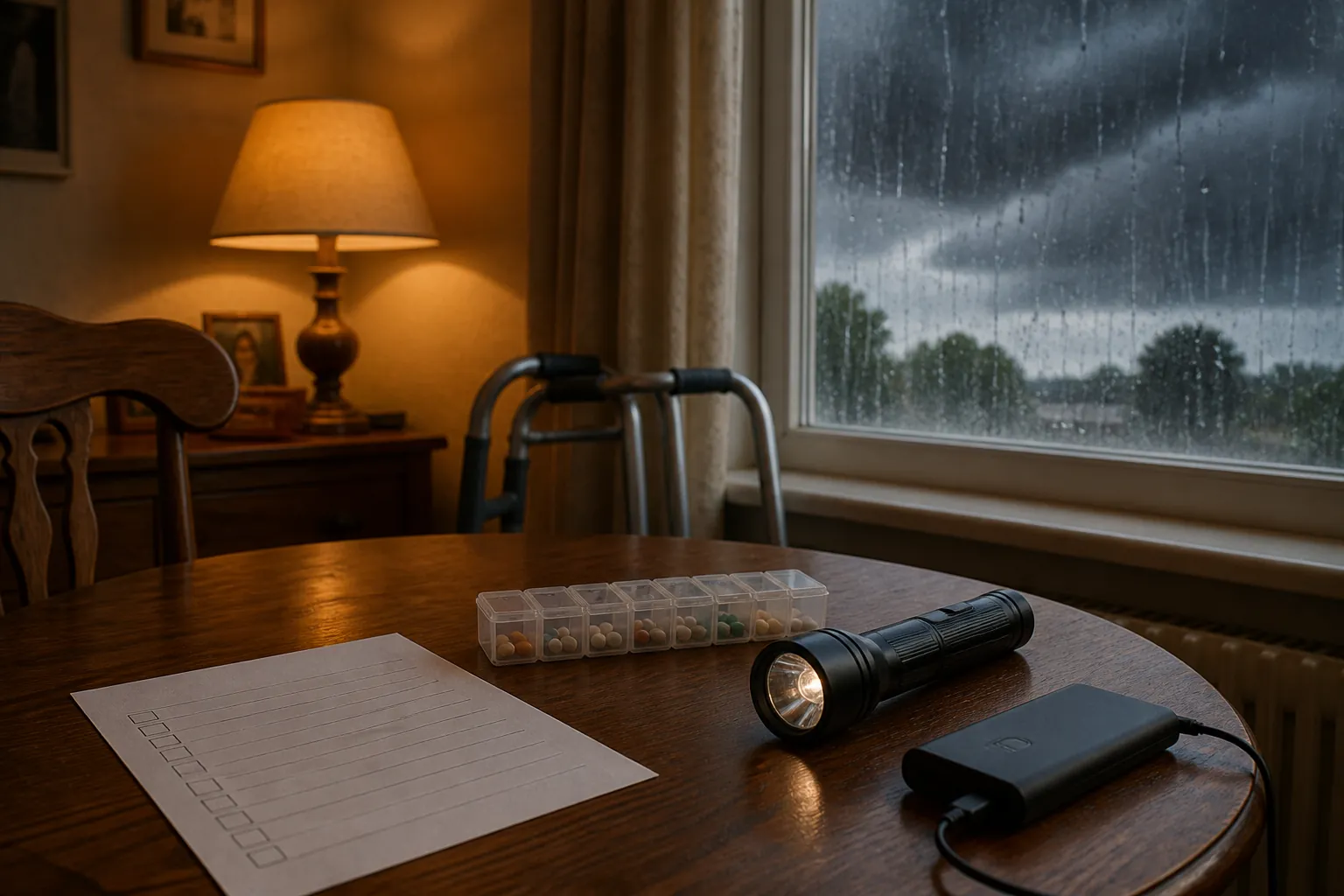
Start with the three questions that change the whole plan
Before water, batteries, and canned soup, answer three questions about the person and the home. The Red Cross frames older-adult emergency planning around being ready either to stay home for at least two weeks or to evacuate, and that is the right level of seriousness for a parent whose normal day already depends on routines, devices, and safe movement. [4]
| Screening question | What it really decides | If the answer is yes |
|---|---|---|
| Is the home in an evacuation zone, flood-prone area, or mobile home? | Whether the checklist must prioritize leaving early instead of waiting to see how bad it gets. | Pick the destination, route, transportation, pet plan, and grab-and-go packet now. |
| Does your parent rely on powered medical equipment, rechargeable mobility equipment, or refrigerated medication? | Whether a power outage is a care interruption, not just an inconvenience. | Document every device, battery, supplier, medication temperature rule, and backup option. |
| Do mobility limits, balance problems, low vision, stairs, or nighttime bathroom trips change what sheltering at home means? | Whether the house becomes a fall hazard when lights go out, floors get wet, or heat fails. | Clear the walking route, stage lighting, protect bathroom and bedroom access, and set a leave-now threshold. |
The point is not to make every storm an evacuation. The point is to stop pretending that one plan fits every older adult. A parent who is steady on stairs, takes no refrigerated medication, and lives outside a flood area has a different checklist from a parent who uses a rollator, sleeps with a powered device, and keeps medication in the refrigerator.
Question 1: Is this a home your parent can safely remain in?
If your parent is in an evacuation zone, a flood-prone location, a mobile home, or a building that cannot be safely heated or cooled during an outage, the checklist has to branch toward leaving early. That does not mean leaving for every watch or warning. It means the family has already chosen the line that will not be crossed.
Write the leave-now threshold in plain language. Examples: an official evacuation order; expected flooding that can block the only road out; loss of heat when indoor temperatures are already unsafe; a predicted outage longer than the backup battery life for an essential device; or any condition that makes the parent unable to reach the bathroom, bedroom, medication, or exit without unsafe walking.
For this branch, “destination” cannot mean “we’ll figure it out.” Put the exact address on paper: a relative’s home, hotel outside the risk area, accessible shelter, or other agreed location. Add who drives, where the car keys are, where the walker or wheelchair fits, what happens if the usual driver is unavailable, and whether pets are coming. A good evacuation plan is boring to read because it already made the decisions that become fights under pressure.
Question 2: What stops working when the power stops?
Make a device list, not a mental note. Include oxygen equipment, CPAP or BiPAP machines, powered beds, lift chairs, stair lifts, nebulizers, home dialysis-related equipment if applicable, electric wheelchairs, scooters, rechargeable hearing aids, phones, tablets used for telehealth, and any monitoring device the parent or clinician relies on.
- Device name and purpose
- Model number, supplier, and phone number
- How long the device works on battery
- How it is charged and where the charger is kept
- Whether it can run from a power station or vehicle adapter
- What the backup plan is if it cannot be powered
Then make the uncomfortable decision. If an essential device cannot be powered for the likely outage window, the plan is not “hope the battery lasts.” The plan is to leave before roads are poor, or to arrange a powered destination that can receive your parent and the equipment.
Question 3: What changes when the house is dark?
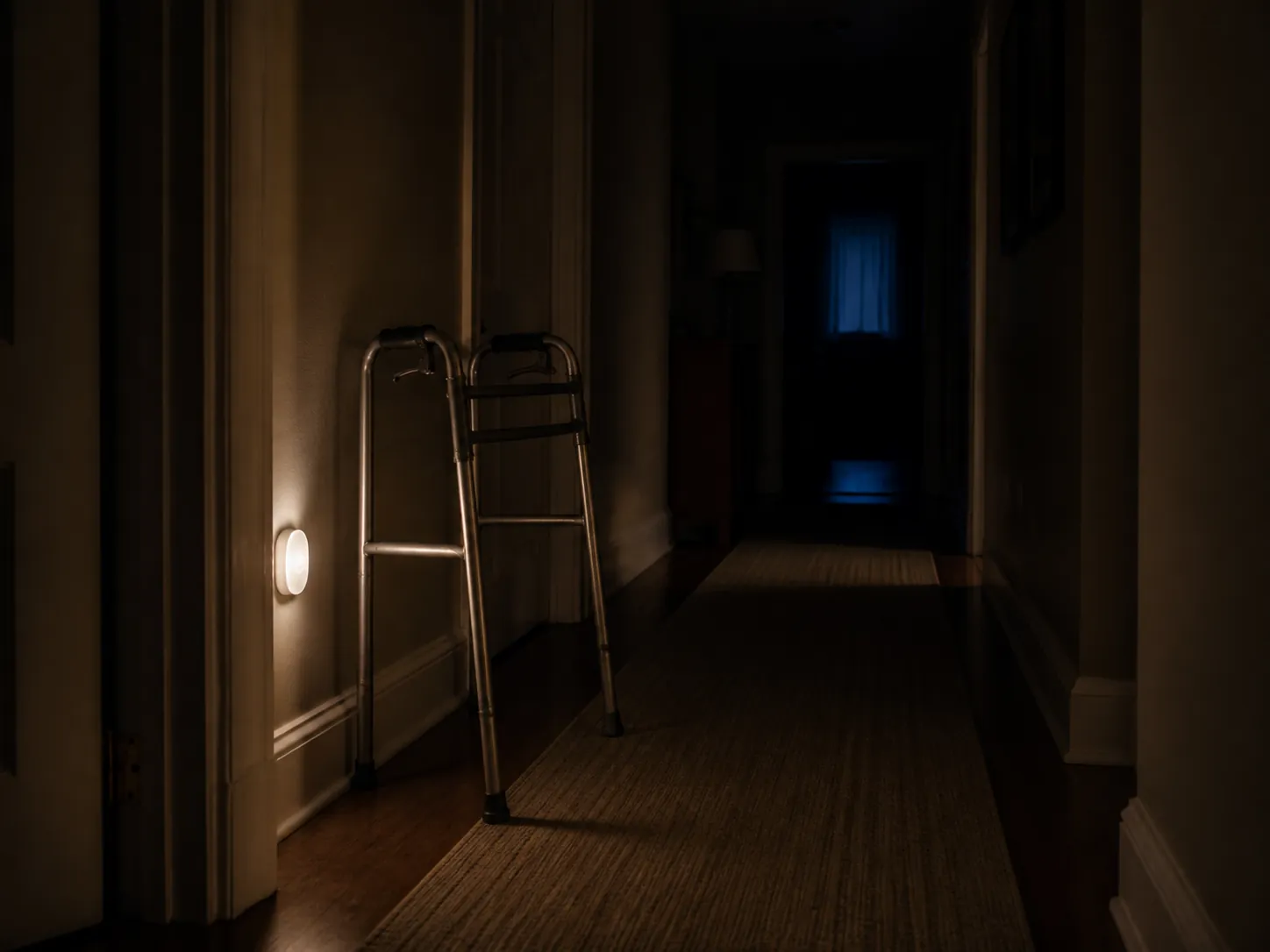
Storm prep for an older parent is fall prep with worse lighting. The route from bed to bathroom matters. So does the turn into the kitchen, the threshold at the back door, the rug that curls near the hallway, the walker parked where someone will trip over it, and the phone charger across the room.
Walk the house at night before storm season. Do it with the usual mobility aid, not with everyone pretending the hallway is wider than it is. If your parent uses a walker, the path has to fit the walker. If they use a cane, the cane has to be reachable from the bed and chair. If they steady themselves on furniture, that is information, not a habit to ignore.
Build the basic kit, then add what an older parent actually needs
The standard emergency kit still matters. Ready.gov recommends basics such as one gallon of water per person per day, a several-day supply of non-perishable food, a battery-powered or hand-crank radio, flashlight, first-aid kit, extra batteries, sanitation items, cell phone with chargers and backup battery, and medications. [5] That is the floor. For an older parent, the floor is not enough.
- Medication list with dose, schedule, prescribing clinician, pharmacy, allergies, and reason each medication is taken
- At least a 30-day medication supply when the prescriber, pharmacist, insurance rules, and safety considerations allow
- Written temperature rules for any refrigerated medication, confirmed by the pharmacist
- Portable power banks already charged, plus charging cables that fit the actual phone and devices
- Backup batteries or power plan for essential medical equipment
- Extra eyeglasses, hearing-aid batteries or charger, denture supplies, continence supplies, and skin-care items
- Sturdy shoes, warm layers, gloves, and easy-to-fasten clothing
- Battery lanterns or motion lights for the bed, bathroom, hallway, kitchen, and exit path
- A manual can opener, easy-open foods, and foods that match swallowing, diabetes, kidney, dental, or other diet needs already being followed
- Mobility backup items: cane tips, walker glides, wheelchair charger, transfer belt if already used, and a plan for stairs
Do not hide the kit in a garage cabinet your parent cannot reach. Put the daily-use pieces where they will actually be used: flashlight by the bed, shoes beside the bed, phone and power bank on the nightstand, medication list in the waterproof packet, lantern along the bathroom route, and the go-bag near the exit that does not flood or freeze first.
Medication planning needs more than a pill organizer
A weekly pill organizer helps only if there are pills to put in it, the schedule is current, and the medicine has stayed safe to use. The Red Cross recommends that older adults keep at least a 30-day supply of medications. [4] That may require asking the prescriber and pharmacist how early refills work, whether an emergency override is possible, and which medications should not be stockpiled casually because of safety, expiration, or controlled-substance rules.
For refrigerated medications, do not guess. This checklist is not medical advice, and internet temperature tips are not a substitute for the label and pharmacist. Ask the pharmacist three direct questions before storm season: what temperature range the medication requires, how long it can be outside that range, and what to do after a power outage. Write the answers on the medication list.
CDC power-outage guidance says a refrigerator keeps food safe for about 4 hours and a full freezer for about 48 hours if doors stay closed. It also says to discard any medication that should be refrigerated if the power is out for a day or more, unless the drug’s label says otherwise. [6] That last clause is why the pharmacist conversation matters. A cooler and ice packs may be useful tools, but they are not a medication policy.
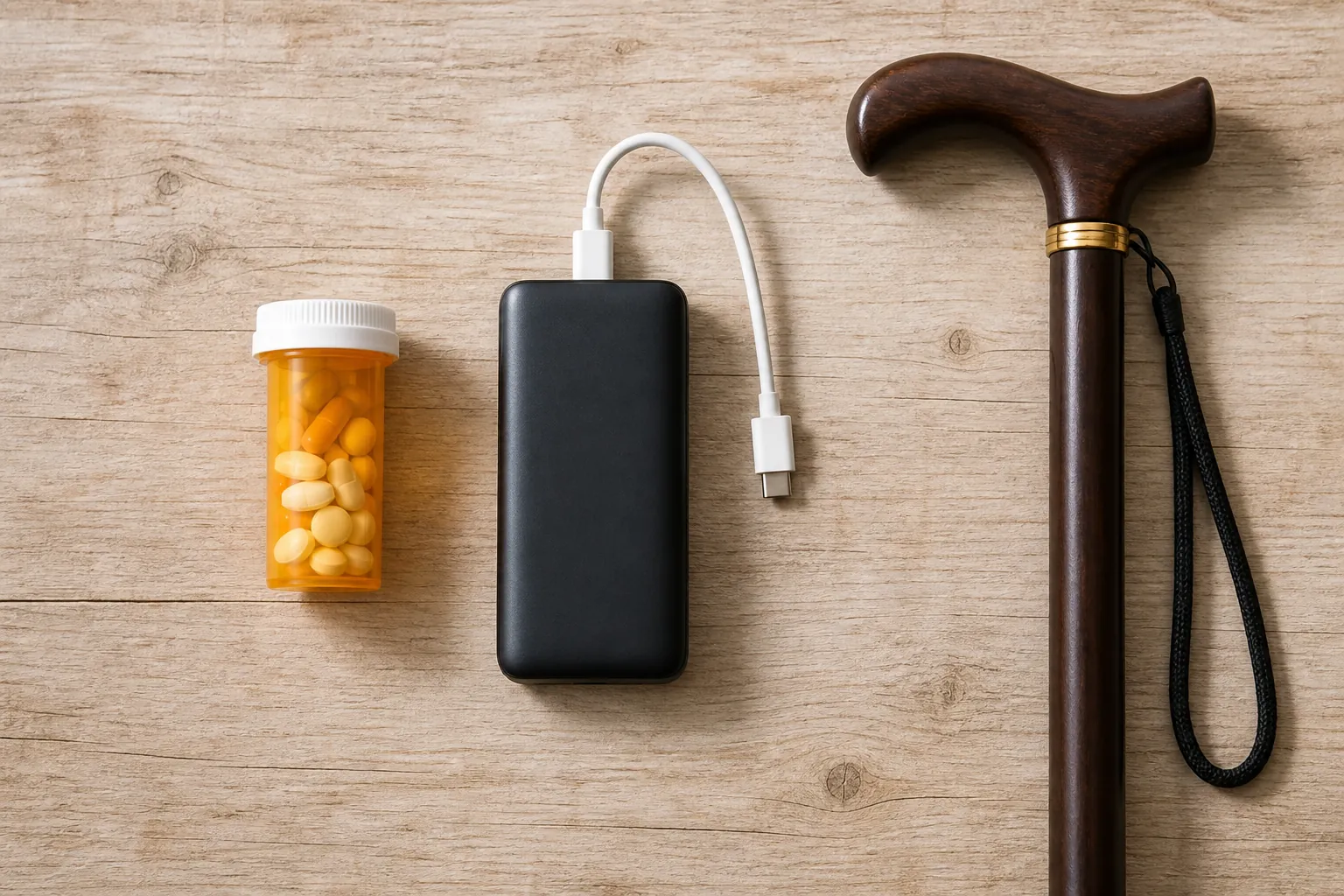
The written medication page should be simple enough for a neighbor, paramedic, shelter worker, or adult child to read quickly. Use large print. Put the newest date at the top. Remove old versions. If your parent takes medication at specific times, include the time, not just “daily.” If missed doses require a special instruction, ask the pharmacist or clinician what should be written there.
Protect the walking path before the weather turns
The house does not have to be flooded to become unsafe. A small power outage can turn a familiar hallway into a guessing exercise. Rain at the entry can make the first few steps slick. Cold weather can leave a parent stiff, rushed, and less steady on the way to the bathroom.
Storm-proof the most used route first: bed to bathroom, bed to chair, chair to kitchen, chair to exit. Clear shoes, cords, throw rugs, baskets, pet dishes, oxygen tubing, and furniture that narrows the path. If a rug is needed for traction, it needs to stay flat and non-slip. If it bunches up under a walker, it is not helping.
- Place a battery lantern within reach of the bed before the storm, not in a closet.
- Put another light in the bathroom or just outside it.
- Keep sturdy shoes at the bedside so your parent is not walking in socks on a cold or wet floor.
- Park the walker, cane, or rollator in the same reachable spot every night.
- Keep a towel near the entry to dry wet flooring immediately.
- Move the phone charger and power bank to the place your parent can reach from bed or their main chair.
- Do not use candles as the main lighting plan, especially near oxygen, loose sleeves, pets, or clutter.
Bathroom access deserves its own look. If your parent usually hurries at night, a storm will not make that safer. Put lighting on the route, clear the floor, keep toilet paper and hygiene supplies reachable, and make sure any grab bars or raised toilet equipment already used are secure before bad weather arrives. A commode near the bed may be part of an existing care plan for some families; if it is new, treat it as equipment that needs explanation and practice, not something to spring on a parent during an outage.
Make one waterproof packet that can leave the house
Digital copies are useful until the phone is dead, the password is forgotten, or cell service is unreliable. AARP’s Operation Emergency Prepare materials include grab-and-go and vital-document checklists, which is the right idea for a caregiver-built storm plan: keep the important paper in one place, protected, current, and portable. [7]
- Parent’s full name, date of birth, address, and primary language
- Emergency contacts, including at least one out-of-area contact
- Clinician, pharmacy, equipment supplier, home health agency, and insurance contacts
- Current medication list, allergies, diagnoses, and major medical history
- Copies of identification, insurance cards, Medicare or Medicaid cards if applicable, and advance directives or health care proxy documents
- Device list with model numbers, power needs, supplier numbers, and backup instructions
- Evacuation destination, route, transportation plan, and pet information
- Recent photo of your parent and, if relevant, a photo of the pet
- House key location or lockbox instructions, shared only with trusted helpers
Use a waterproof pouch or folder. Keep one copy at your parent’s home and one with the person most likely to help. If your parent resists sharing documents, separate privacy from access. Not every helper needs every document, but the person driving to the emergency room at 2 a.m. needs more than “Mom knows where everything is.”
Build the support network before anyone is scared
Ready.gov’s older-adult guidance emphasizes creating a support network of people who can help during an emergency. [8] For a parent living alone, one person is not a network. One adult child can be sick, stuck at work, out of town, or unable to cross flooded roads. Aim for at least three people who have agreed to specific jobs.
| Person | Job | What they need in advance |
|---|---|---|
| Nearby neighbor or friend | Knock on the door if calls do not go through | Phone number, permission to check in, key or lockbox plan if appropriate |
| Primary family contact | Coordinate decisions, transportation, and updates | Medication list, device list, clinician and pharmacy contacts |
| Backup family contact or friend | Take over if the primary contact cannot respond | Same plan, same documents, and clear authority to act |
| Out-of-area contact | Receive updates when local calls are overloaded or family members are separated | Everyone’s numbers and the agreed check-in schedule |
AARP caregiving emergency-planning guidance also points families toward an out-of-state contact and emergency drills. [9] The out-of-area contact is not decorative. During regional outages, local family members may all be dealing with the same roads, towers, and power failures. Someone outside the area can collect updates, relay messages, and notice who has gone silent.
Put the check-in rules on paper: who calls first, what time they call, what happens if there is no answer, who physically checks the house, and when to call emergency services. If your parent dislikes being “managed,” keep the language respectful but specific. Independence is not improved by a vague promise that someone will check eventually.
Use a 72-hour, 24-hour, during, and after rhythm
The checklist works best when it is tied to time. A parent does not need ten people texting different advice. They need the right actions taken early enough that no one is carrying a walker through rain because the medication cooler, charger, and documents were still in three different rooms.
| When | What to do |
|---|---|
| About 72 hours out | Run the three-question screen. Refill prescriptions if possible. Charge power banks and device batteries. Confirm the destination if evacuation may be needed. Check food, water, lighting, mobility aids, and the waterproof packet. |
| About 24 hours out | Move supplies to reachable locations. Clear walking paths. Put shoes, flashlight, phone, charger, and mobility aid by the bed. Turn refrigerator and freezer doors into do-not-open zones unless needed. Start scheduled check-ins. |
| During the storm | Keep the parent on the safest level of the home if possible. Use lanterns instead of candles. Preserve phone battery. Keep devices charged when power is available. Do not have the parent walk outside to inspect damage. |
| After the storm | Check medication temperature concerns, power status, food safety, indoor temperature, wet floors, loose rugs, fallen branches, and blocked exits. Do not restart the normal routine until the walking route is safe again. |
The after-storm check is where families get sloppy. Everyone is relieved, so someone says, “The worst is over.” That may be true for the wind or snow. It may not be true for the parent stepping onto a wet porch, opening a refrigerator after a long outage, or walking through a hallway full of extension cords and moved furniture.
Review it twice a year, and actually rehearse the awkward parts
The Red Cross recommends reviewing emergency plans and supplies every six months. [4] That cadence is practical for older parents because medications, mobility, vision, hearing, phone habits, and living arrangements change. A checklist that was accurate last winter may be wrong by hurricane season.
Twice a year, sit at the table and update the packet. Then rehearse the parts most likely to fail: finding the flashlight from bed, reaching the bathroom with the usual mobility aid, calling the backup contact, connecting the power bank, opening the medication list, and locating the go-bag. If your parent will not do a full drill, do the smallest honest version. Watch what happens instead of accepting “I know where it is.”
A finished checklist is not a shopping list with every box checked. It is a set of failures prevented in advance: the medication routine protected, the powered supports accounted for, the walking path made usable in darkness, the documents reachable, and the people assigned before memory, phones, roads, and power are under stress.
References
- AARP Survey Reveals Opportunities for Older Adults to Increase Disaster Preparedness and Stay Actively Informed During an Emergency, AARP, August 30, 2023
- Disaster Risks to Older Adults, AARP
- Winter Storms, National Weather Service
- Older Adults Emergency Preparedness, American Red Cross
- Build A Kit, Ready.gov
- What to Do to Protect Yourself During a Power Outage, Centers for Disease Control and Prevention
- Operation Emergency Prepare, AARP Create the Good
- Older Adults, Ready.gov
- Preparing for Emergency, AARP
Related reading
Noticed something outdated or inaccurate on this page? Flag a correction. We review every report against CDC, NIA, and AARP HomeFit guidance before updating a page.
Part of the Fall Prevention section.