
STEADI: Intervene
A Tornado Safety Plan for Seniors with Mobility Issues
Generic tornado advice assumes fast movement, basement access, and an alert you can hear. This plan helps caregivers and older adults build a shelter room, alert setup, and supply kit that fit a senior's specific mobility limitation — rehearsed before storm season.
A tornado safety plan for seniors with mobility issues starts with a blunt question: can this person get the warning, reach the safest available place, and protect their head and body before the storm arrives? If the answer depends on rushing down basement stairs, hearing a phone alert from another room, or moving a walker through a crowded hallway, the plan is not finished.
That matters because older adults have shown up heavily in tornado fatality data. In the CDC’s review of the April 25–28, 2011 tornado outbreak in the southeastern United States, 32.5% of 338 decedents were age 65 or older. The same review identified older age, nighttime tornadoes, and lack of access to a safe room as risk factors, and reported a mean warning lead time of about 22 minutes for the fatality events it studied. Those numbers describe one outbreak, not every tornado. But they are enough to make one point useful at home: a warning may give enough time to expose a weak plan, not enough time to invent a usable one. [1]
This article is home-safety planning, not medical advice. If a person’s transfer ability, oxygen use, cognition, seizure risk, or cardiac symptoms affect where and how they can shelter, build the plan with their clinician, home-health team, or durable medical equipment provider before storm season.
Start with the barrier, not the storm
The usual tornado instruction — go to a basement or an interior room on the lowest floor — is still the right direction. The problem is that it often skips the part that decides whether an older person can use it.
| If this is the barrier | The plan has to answer |
|---|---|
| Cannot use stairs safely | What is the safest room on the current level, and is it better than attempting a dangerous descent? |
| Uses a walker or rollator | Is the route wide, dry, lit, and free of rugs, cords, clutter, pet bowls, and tight turns? |
| Uses a wheelchair | Can the chair enter the shelter room and turn enough to position away from windows and exterior walls? |
| Needs help with transfers | Who comes, how are they alerted, and how long do they actually take to arrive? |
| Has hearing loss | What alert is visual, vibrating, loud enough, battery-backed, and located where the person sleeps or sits? |
| May be in bed, the bathroom, or a recliner when warned | What is the route and protection plan from each starting point, not just from the front room? |
| Depends on powered equipment | What batteries, chargers, and backup alerts are already in the shelter area? |
| Lives alone | Who receives the alert for this address and checks in without waiting to be asked? |
Do this on a quiet day, not during a warning. Walk the house from the recliner, bed, bathroom, kitchen, laundry area, and porch door. The safest theoretical room is useful only if the person can reach it without creating another emergency on the way.
Choose the safest room the person can actually reach
If the basement is reachable without a rushed stair transfer, use it. “Reachable” means the person can get there in the way they would during a warning: with the walker they actually use, with the stair rail they actually grasp, with the lighting available at night, and with the helper who would realistically be present. If the basement requires a risky carry, a panicked descent, or waiting for someone who may not arrive in time, it cannot be treated as the only plan.
When there is no usable basement, CDC tornado guidance points people to an interior room without windows on the lowest floor, such as an interior bathroom, closet, or hallway. The same CDC guidance gives specific alternatives for mobility limits: wheelchair users should move to an interior room and get under a sturdy table if possible, while people who cannot leave a bed or chair should use blankets and pillows to protect against falling objects. [2]
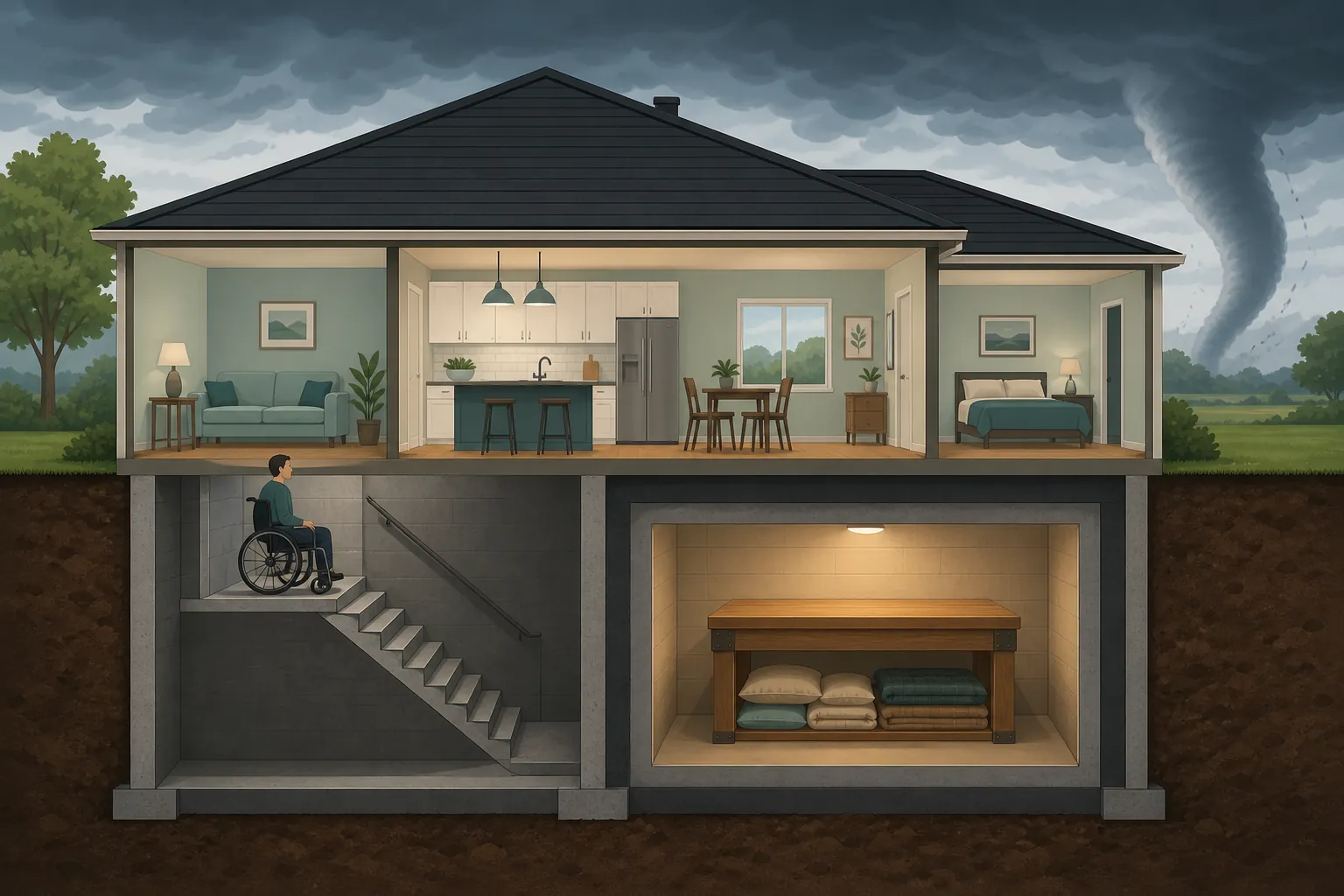
That guidance changes the family conversation. The question is not “What is the strongest place in the house?” in isolation. It is “What is the strongest place this person can reach and use before the tornado arrives?” For one household, that may still be the basement. For another, it may be a first-floor interior bathroom with a clear wheelchair path and a heavy blanket stored on a low shelf. For someone who is bedbound, the plan may center on keeping pillows, blankets, shoes, a helmet if tolerated, and a communication device within reach because relocation is not realistic.
How to compare imperfect rooms
- Prefer the lowest floor the person can reach without an unsafe transfer.
- Prefer interior space over rooms with exterior walls.
- Avoid windows, glass doors, skylights, and rooms with large mirrors or unsecured tall furniture.
- Check whether a walker, wheelchair, oxygen tubing, or caregiver can fit through the doorway and turn inside.
- Look up: shelves, framed pictures, heavy décor, and stored items above the shelter spot can become falling-object hazards.
- Keep the door easy to open. A shelter room blocked by laundry baskets, a litter box, or stacked supplies is not ready.
Mobile and manufactured homes need special handling. The Red Cross states that mobile homes are not safe during tornadoes and advises moving to a nearby sturdy building or preidentified shelter when possible. For a senior with mobility limits, that means the accessible destination, transportation, and helper must be arranged before severe weather is close, not after a warning is issued. [3]
Clear and measure the route like it is part of the shelter
The hallway is part of the tornado plan. So is the bathroom threshold, the rug at the bedroom door, the lamp cord beside the recliner, and the walker parked behind the kitchen chair. If any one of those slows the person during a drill, it will slow them more when the alert is loud, the lights flicker, the dog is underfoot, and everyone is tense.
Start from the places where the person actually spends time. Time the trip from the bed, favorite chair, toilet, shower area, kitchen table, and any room used after dark. If a caregiver usually helps with shoes, a transfer belt, portable oxygen, or a wheelchair footrest, include that step. If the person uses a walker in the morning but furniture-walks at night, rehearse the safer version and leave the needed device where it can be reached.
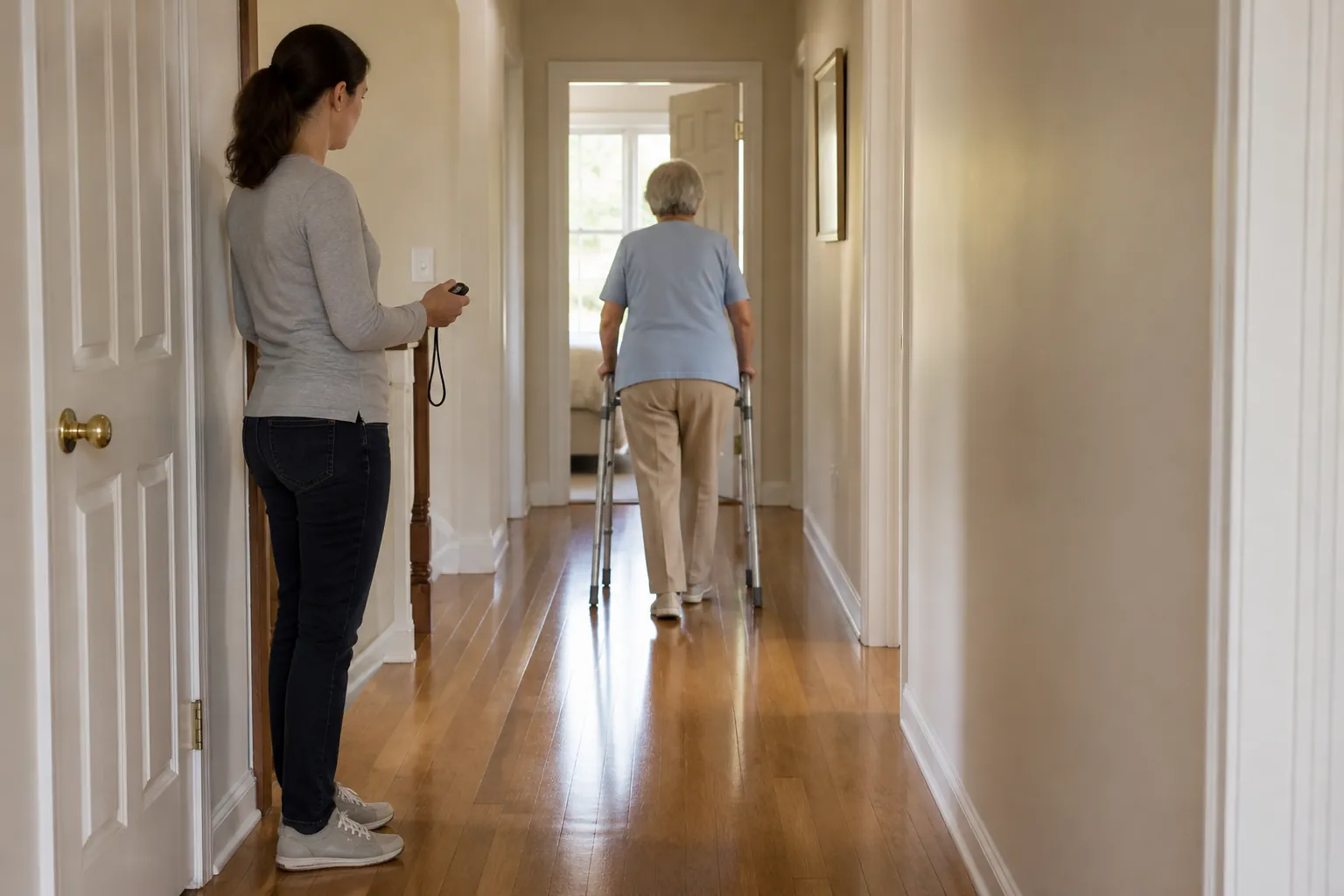
During the timed route, write down what actually happens:
- How long it takes from each starting point to the shelter room.
- Where the walker, wheelchair, cane, oxygen line, or caregiver gets stuck.
- Whether the person needs to sit and rest before reaching the room.
- Whether a door swing, raised threshold, rug edge, tight corner, or bathroom scale blocks the route.
- Whether the person can close the door, reach the supplies, and protect their head once inside.
- Whether the drill still works in low light.
This is where a plan becomes visible. A family may discover that the safest closet is too narrow for the wheelchair. Or that the bathroom is reachable, but only if a bath mat is removed and the walker is stored on the correct side of the bed. Or that a parent can reach the hallway from the recliner, but not from the toilet without help. These are not small details. They decide whether the plan survives the warning.
Ready.gov’s older-adult preparedness guidance starts with assessing needs, creating a plan, and engaging a support network. That order is useful inside the house: first identify the functional limit, then adapt the route and shelter space, then decide who has to help. [4]
Build alerts that do not depend on one phone or one good ear
A warning that is missed is the same as no warning. For an older adult who removes hearing aids at night, sleeps deeply, keeps the phone in another room, or has trouble reading small screens quickly, alerting needs redundancy.
CDC tornado guidance recommends staying tuned to local radio or television and using a NOAA Weather Radio with battery backup and a tone-alert feature. For a senior’s bedroom or main sitting area, the radio belongs where the person can hear it, see it, or where a caregiver can confirm it works — not in a kitchen drawer with dead batteries. [2]
For hearing loss, add alerts that use other senses. Ready.gov’s disability preparedness guidance notes weather radios with text display and flashing alert features, extra hearing-aid batteries, an extra charged wheelchair battery, and the FEMA app, which can deliver National Weather Service alerts for up to five locations. [5] The National Weather Service also describes weather radios as a fast 24/7 warning channel and points to bed-shaker, strobe-light, and text-display attachments for people who are deaf or hard of hearing. [6]
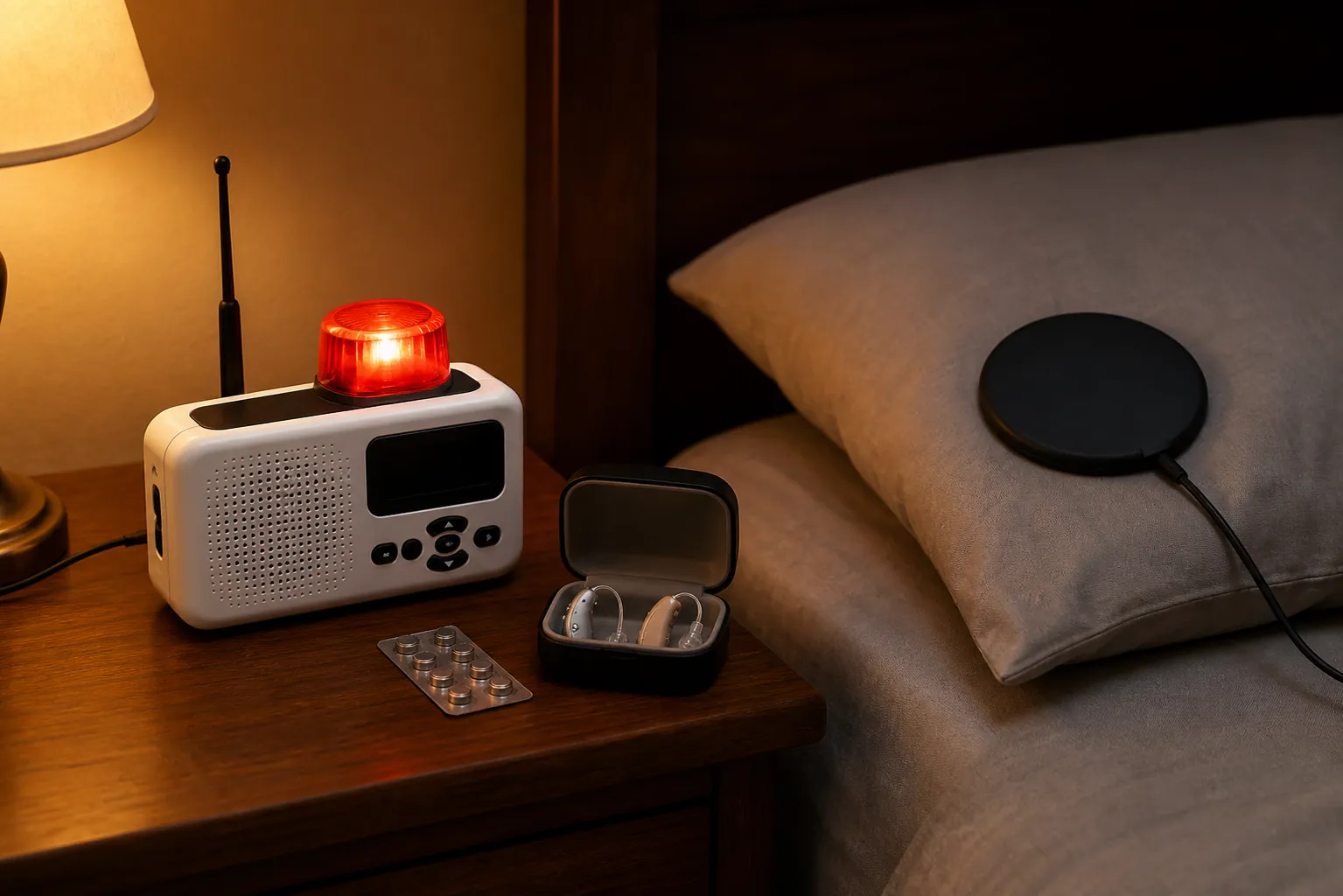
A workable alert setup might include:
- A NOAA Weather Radio with fresh batteries or battery backup, tested before storm season.
- A phone alert enabled for the senior’s address and not silenced overnight.
- The FEMA app or another trusted alert app on a caregiver’s phone for the senior’s location, especially if the caregiver lives elsewhere.
- A visual or vibrating alert for hearing loss, such as a strobe, text display, or bed shaker.
- Spare hearing-aid batteries stored at the bedside and in the shelter kit.
- A neighbor or helper who agrees to call or knock when a warning is issued, without being the only alert method.
Test the alert from the rooms where it has to work. Can it wake the person in bed? Can it be noticed over the television? Can the caregiver receive the alert if they are across town? Can the person understand what the alert means quickly enough to start moving?
Fit the shelter kit to the person, not to a generic checklist
Supplies matter, but they should not swallow the plan. In a tornado warning, the first job is to get to the safest available space and protect the body. The kit supports that job.
The Red Cross advises older adults to prepare a Go-Kit with at least 3 days of supplies and a Stay-at-Home Kit with at least 2 weeks of supplies, and to keep a 1-month supply of medications if possible. Its older-adult guidance also includes chargers for a cell phone, CPAP, wheelchair, and other medical equipment. [7]
| Keep in or next to the shelter space | Why it belongs there |
|---|---|
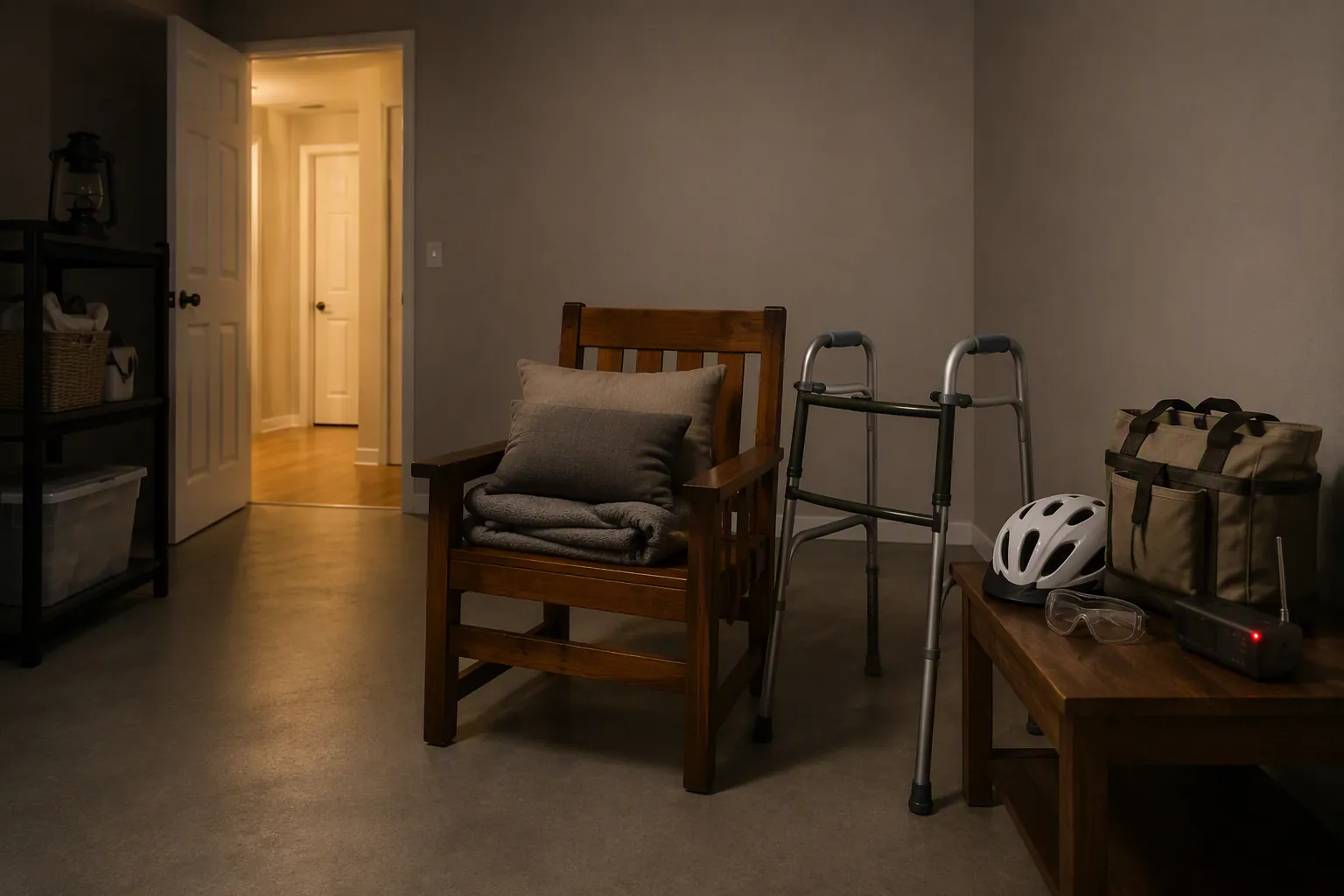
| Helmet, bicycle helmet, or hard hat if the person can tolerate wearing it | Head protection is especially valuable when the person cannot crouch low or move under sturdy furniture. |
| Goggles or safety glasses | They help protect eyes from dust and debris. |
| Sturdy closed-toed shoes and socks | The person should not have to cross debris barefoot after sheltering. |
| Blankets and firm pillows | They can cover the head, neck, and body, especially for someone in a chair or bed. |
| Flashlight or lantern with batteries | The route and the room may be dark before or after the storm. |
| Charged phone and charging cable | Communication should not depend on finding a cord after the warning. |
| CPAP, wheelchair, or medical-device charger if used | Power-dependent equipment needs its own place in the plan. |
| Extra charged wheelchair battery if used | The battery should be ready before severe weather, not searched for after. |
| Hearing-aid batteries or charging case | The alert and the helper call are harder to use if hearing support is missing. |
| Medication list, allergy list, emergency contacts, and copies of key documents | These help if the person must communicate needs quickly. |
| Water and simple shelf-stable food if medically appropriate | Use the person’s actual swallowing, diabetes, kidney, or diet needs when choosing items. |
| Small first-aid supplies and gloves | Minor injuries can happen while sheltering or moving afterward. |
Oklahoma State University Extension also recommends planning both shelter-at-home supplies and a lighter go-bag, and it specifically tells older adults to consider how long it would take a mobility helper to arrive. [8] United Spinal Association’s disability-focused tornado guidance adds practical protective items — a helmet or hard hat, safety goggles, and sturdy closed-toed shoes — and recommends telling local fire departments or emergency management that the household includes a wheelchair user. [9]
Do not store the kit where only the caregiver can reach it. If the older adult shelters alone for even a few minutes, the blanket, helmet, radio, phone, shoes, and flashlight should be reachable from the shelter position. A supply bin across the room may look organized and still fail the person who cannot stand without help.
This pre-storm plan deliberately stops before long recovery topics. For generator safety, power-outage decisions, medication access after damage, and the immediate aftermath, use the separate guide to what seniors should do in the first 72 hours after a tornado. If you are building broader seasonal weather supplies, the same planning habit carries into the hurricane and flood safety checklist for seniors and the 72-hour senior typhoon safety checklist.
Name helpers before the watch is issued
One helper is a hope, not a support network. The person may be at work, asleep, driving, caring for children, or in the same storm path. Ready.gov tells older adults to engage a support network, and for tornado planning that network needs names, roles, and timing. [4]
| Role | What to confirm before storm season |
|---|---|
| Primary check-in person | Receives alerts for the senior’s address and calls as soon as a tornado warning or urgent severe-weather alert is issued. |
| Nearby backup | Can knock, call, or assist if the primary person is unavailable. |
| Mobility helper | Knows whether the person needs help with a wheelchair, walker, stair lift, transfer belt, oxygen tubing, shoes, or door locks. |
| Out-of-area contact | Can coordinate calls if local phone lines are busy or nearby helpers are affected. |
| Equipment contact | Knows where chargers, wheelchair batteries, CPAP supplies, hearing-aid batteries, and medication lists are kept. |
Ask the uncomfortable timing question directly: “If a warning is issued at night, how many minutes would it take you to get here?” Oklahoma State’s older-adult severe-weather guidance raises that exact kind of planning issue — not just who can help, but how long the helper takes to arrive. [8] If the answer is longer than the older adult’s safe route requires, the home plan must work without waiting.
For a wheelchair user or a person who may need rescue assistance, United Spinal recommends informing the local fire department or emergency management that the household includes a wheelchair user. [9] For a person who relies on electricity for medical or mobility equipment, Ready.gov’s disability guidance also suggests asking the power provider about priority restoration programs. [5] Neither step replaces sheltering. They simply remove one more assumption from the plan.
Rehearse the whole plan, then change the house
A practice drill is not theater. It is the moment when the plan tells the truth. Run it when the weather is clear and nobody is rushing. Use the real alert sound if possible. Start from the chair, bed, bathroom, or kitchen. Move at the person’s normal safe speed. Use the walker, cane, wheelchair, hearing aids, glasses, shoes, and caregiver help that would actually be used.
- Trigger the alert: confirm the person notices it and understands what action to take.
- Start the timer: move from one real starting point to the shelter room.
- Watch the route: do not coach past obstacles without writing them down.
- Settle into the shelter position: chair, wheelchair spot, under-table position, or bed/chair protection plan.
- Reach the supplies: helmet, blanket, phone, radio, flashlight, hearing support, shoes, medication list.
- Contact the helper: confirm whether the call, text, app alert, or door-knock plan works.
- Record the result: time, blocked points, missing items, and what must change.
Then fix the physical problem, not just the paper plan. Move the rug. Relocate the walker. Store shoes beside the bed. Put the radio where it can be heard or seen. Add a strobe or bed shaker. Remove the shelf above the shelter chair. Change the shelter room if the wheelchair cannot turn. Add a second helper if the first one cannot arrive quickly. Charge the wheelchair battery before storm days.
If darkness, outages, or clutter are recurring hazards in the home, they also raise everyday fall risk. The same cleared route that helps during a tornado warning helps on an ordinary night walk to the bathroom. For more on weather-related home hazards and falls, see how climate change raises fall risk for older adults.
A tornado plan for a mobility-limited senior is not complete when a family has picked a room or bought a supply bin. It is complete when the specific person’s barrier has been planned around, the route has been cleared and timed, the alert has been noticed, the helper plan has been confirmed, and the shelter position works before a warning is issued.
References
- Tornado-Related Fatalities — Five States, Southeastern United States, April 25–28, 2011, CDC MMWR, July 20, 2012.
- Stay Safe During a Tornado, Centers for Disease Control and Prevention.
- Tornado Safety, American Red Cross.
- Older Adults, Ready.gov.
- People with Disabilities, Ready.gov.
- Deaf & Hard of Hearing Safety, National Weather Service.
- Older Adults, American Red Cross.
- Older Adults and Planning Ahead for Severe Weather, Oklahoma State University Extension.
- Tornado Preparedness for the Disability Community, United Spinal Association.
Related reading
Noticed something outdated or inaccurate on this page? Flag a correction. We review every report against CDC, NIA, and AARP HomeFit guidance before updating a page.
Part of the Fall Prevention section.