
STEADI: Intervene
Is That Mattress Deal Safe for a Senior with Back Pain?
Choosing a mattress for an older adult with back pain is a fall-safety decision, not just a comfort decision. Before any purchase, run the total bed-height sit test, edge-support check, and responsiveness test — a discounted bed that fails them is a fall hazard rather than a deal.
Before comparing the best mattress deals for seniors with back pain, put the older adult on the finished bed setup: mattress, base, frame, topper if one will be used, and the usual shoes or slippers. Then look at the legs. Feet should rest flat on the floor, with knees close to a right angle. If the person has to slide forward, hop down, push off a nightstand, or sit with feet dangling, the mattress has already failed the first safety test.
That sounds plain because it is. The useful number is not “12-inch mattress” or “luxury 15-inch profile.” The useful number is total bed height from floor to sleep surface after everything is assembled. ADA-referenced lodging guidance, cited by Sleep Advisor, places an accessible total bed height for most adults around 20 to 23 inches, including both base and mattress; treat that as a starting benchmark, not a commandment, because leg length and mobility vary too much for one inch range to fit every body [1].

For an older adult with back pain, a mattress is not only where pain is relieved. It is also the thing they push against at 2 a.m., the surface they twist on to get to the bathroom, and the edge they trust when standing up half-awake. Price matters, especially when mattresses and adjustable bases get expensive. It just does not get to go first.
| Check before price | What to watch | Passes when |
|---|---|---|
| Total bed-height sit test | Feet, knees, and whether the person has to scoot or hop | Feet are flat, knees are near 90 degrees, and standing starts from a stable seated position |
| Edge-support check | Whether the mattress edge sinks, slopes, or rolls away under body weight | The edge stays firm enough for sitting, pivoting, and standing |
| Responsiveness test | Whether the sleeper can turn and reposition without getting trapped | The surface rebounds quickly enough to help position changes |
| Back-pain comfort check | Firmness, pressure relief, and whether pain improves or worsens | The mattress supports comfort without compromising transfers |
| Deal check | Price, delivery, setup, return window, and removal of the old bed | Only after the safety checks pass |
The bed-height mistake hides inside “premium” mattresses
A thick mattress can look like a better mattress on a product page. More inches, more layers, more discount banners. At the bedside, those extra inches can turn into a transfer problem.
AARP’s mattress testing called out a simple but important situation: a 14-inch mattress placed on a taller frame can make getting into bed harder without a step stool, and lower-profile options or frame-height adjustments may be needed [2]. That is not a small preference issue. A step stool beside a bed is one more object to miss in the dark, kick sideways, or use while sleepy and in pain.
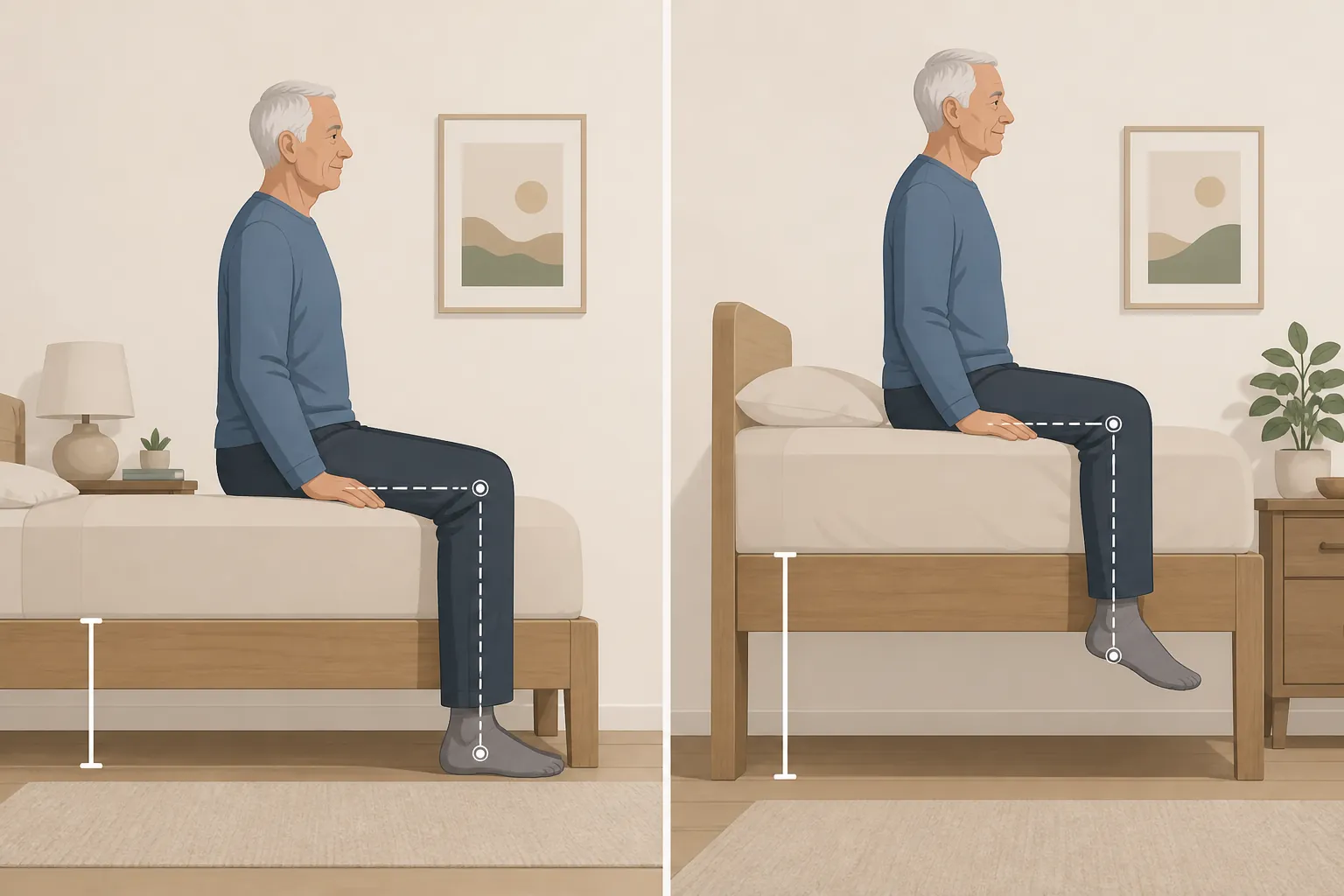
Run the sit test with the bed exactly as it will be used. Do not test the mattress on the showroom platform and assume the same result at home. Do not test the new mattress without the topper the family already plans to add. Do not forget that some older adults wear slippers, braces, or shoes indoors. Those small changes affect whether the feet meet the floor cleanly.
Here is the practical version:
- Have the older adult sit on the side of the bed, not at the corner.
- Check whether both feet rest flat without reaching or dangling.
- Look for knees near 90 degrees, not sharply raised and not sloping downward.
- Ask the person to stand once using the usual method, without grabbing a rolling nightstand, dresser drawer, or lamp table.
- Watch the first half-second: if they rock several times, slide forward, or search for an unsafe handhold, the bed setup needs changing.
If the mattress is too high, the solution may be boring and effective: a lower-profile mattress, a lower base, removal of an unnecessary box spring, or a frame with adjustable height. If it is too low, standing can demand more leg strength and more forward trunk lean, which is no kindness to a painful back. The point is not to hit a stylish height. The point is to make sitting and standing repeatable on a bad morning.
Edge support is a transfer feature, not mattress jargon
When mattress reviews talk about edge support, families often hear it as a comfort extra. For an older adult, the edge is part of the transfer route. It is where the person sits while swinging legs over the side. It is where one hand presses down before standing. It is where a painful back gets a moment to settle before the first step.
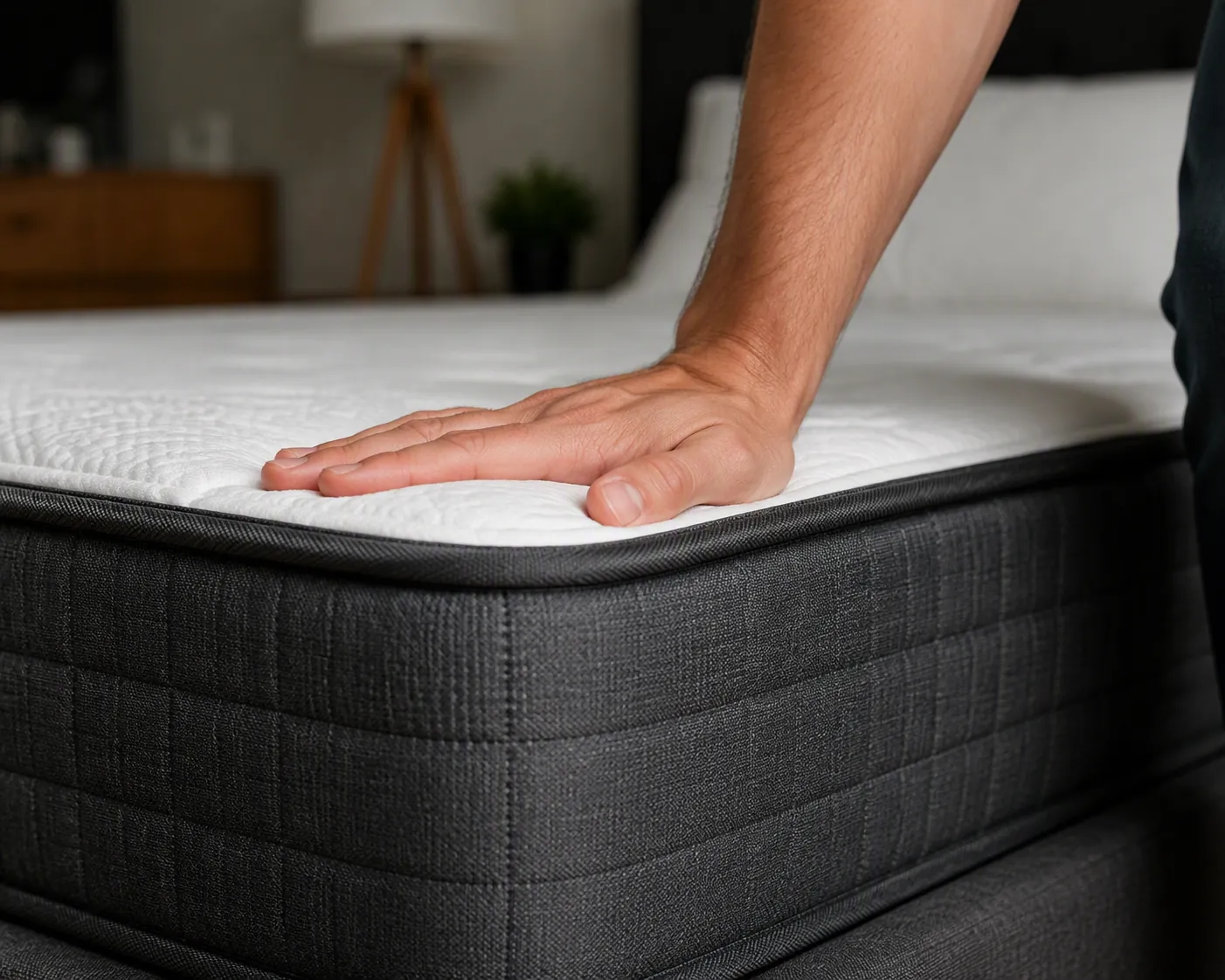
A weak edge changes the transfer. The sitter lowers onto the mattress, the perimeter compresses, and the body tilts slightly outward or downward. Then the person has to correct balance before standing. That is exactly the kind of extra adjustment families forget to count when they buy from a sale page instead of from the bedroom.
Mattress Clarity describes edge support as important for older adults because it can reduce the chance of rolling off and make sitting and standing from bed easier; NCOA also treats edge support as relevant for people with back pain and mobility needs [3][4]. Those are review and product-resource sources, not a substitute for testing the actual bed. Still, the safety logic is sound: a perimeter that holds shape gives the body a more predictable platform.
The in-room check is simple. Have the older adult sit where they normally get in and out of bed. The mattress should not collapse so deeply that the hips slide toward the floor or toward the edge. Then have them place a hand on the mattress beside the thigh and press as if preparing to stand. If the edge caves, slopes, or feels like it is pushing them off, do not let a discount talk you into it.
This is also where the old nightstand problem shows up. A nightstand is for a lamp, glasses, and tissues. It is not a grab bar. If the only way to stand from the bed is to pull on furniture that can tip, slide, or break, the mattress setup has not passed the transfer check. The fix may involve bed height, edge firmness, a properly installed bed rail, a floor-to-ceiling pole, or therapy guidance after a fall. If this shopping trip started after a recent fall, it belongs inside a broader safety plan, not as a one-item rescue; CareWise Guide’s step-by-step guide to activating senior health services after a fall is the better next stop.
A responsive surface helps with turning, sitting up, and standing
Back pain makes people cautious with movement. A mattress that swallows movement can make that worse. The sleeper starts to turn, the foam absorbs the effort, the hips lag, and now the person has to twist harder or push with an elbow. That may feel luxurious to someone who never struggles to get up. It can feel like work to someone who already hurts.
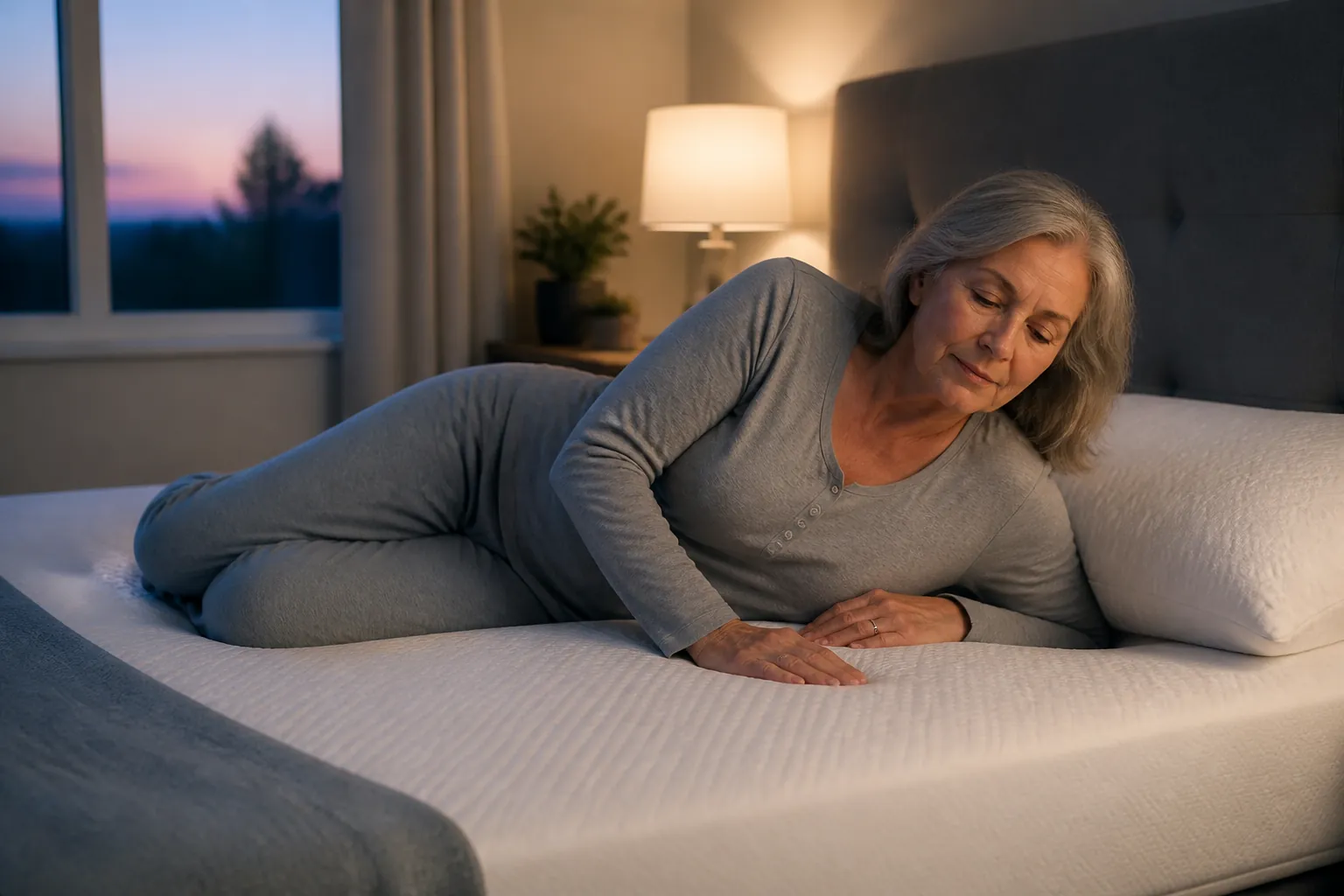
AARP’s lab testing gives a useful physical picture of responsiveness. In its bounce testing, the Saatva Classic showed about a 28-inch rebound, while the Brooklyn Bedding CopperFlex showed about a 14-inch rebound; AARP connected springier beds with easier position changes and getting out of bed [2]. That does not mean every older adult needs the bounciest mattress. It means “responsiveness” should be judged by whether the person can turn, scoot, and rise without fighting the bed.
Test this before committing if the seller allows a showroom visit, home trial, or at least a clear return path. Have the older adult lie in their usual sleep position, then turn to the other side, sit up, and move to the edge. Watch whether the mattress gives back enough energy to help the movement. If every position change requires a big push, a helper, or a painful twist, the surface may be too slow for that person even if it feels soft and “pressure relieving” for the first minute.
This is one reason a mattress can be comfortable in a review and still be wrong in a senior’s bedroom. Review language tends to separate comfort, support, edge support, and motion. The body does not separate them during a transfer. The edge, height, and rebound all show up at once when someone tries to stand.
Back-pain comfort still matters, but it does not outrank fall safety
A senior with back pain still needs a mattress that supports the spine and relieves pressure. A surface that is painfully hard, hammocks under the hips, or aggravates the shoulders is not a good buy just because it is easy to stand from. But comfort cannot be judged only while lying still for five minutes.
Use comfort as the second screen. First, can the person get on, turn, sit, and stand safely? Then ask whether the mattress keeps the back comfortable in the sleeping positions the person actually uses. If the two goals conflict, keep shopping. Do not solve a transfer problem by buying a mattress that worsens pain, and do not solve a pain problem by buying a mattress that makes night transfers less safe.
Also, a mattress is not a diagnosis. Persistent back pain lasting more than 4 to 6 weeks, worsening pain, or unusual back pain deserves medical attention, especially if there is new weakness, numbness, fever, bladder or bowel change, unexplained weight loss, pain after a fall, or pain that does not behave like the person’s normal pattern. This article is home-safety guidance, not medical advice.
When an adjustable base is the upgrade that actually fits the problem
Sometimes the mattress is not the main issue. The problem is getting from lying flat to sitting, breathing comfortably, or finding a position that reduces pain. In that case, an adjustable base may matter more than another layer of foam.
NCOA reports that adjustable bed frames average about $899 to $1,599, can aid transfers, and may help with back pain, acid reflux, and sleep apnea; it also notes that Medicare covers hospital-grade beds only when they are medically necessary [5]. That price range is not pocket change. It is exactly why families should identify the problem before spending: if the person cannot sit up from flat without pain or help, a base that raises the head of the bed may be a better use of money than a thicker mattress.
An adjustable base still has to pass the same bedside checks. Raising the head may help sitting up, but the final bed height still has to work. The edge still has to hold. The controls must be easy to find and use in the dark. If sleep apnea is part of the conversation, especially in an older woman whose symptoms have been missed or mislabeled, start with medical evaluation and then read CareWise Guide’s piece on sleep apnea misdiagnosis in older women.
Where the deal belongs in the decision
Discounts are not the enemy. A good sale on the right mattress is welcome. The problem is letting the sale decide before the room has spoken.
As of August 2026, mattress pricing and holiday-sale language remain time-sensitive enough that any specific deal should be re-checked before purchase. Do not assume a banner price includes the needed foundation, white-glove delivery, old-mattress removal, adjustable-base compatibility, or a return process a caregiver can realistically manage.
Once a mattress passes the height, edge, responsiveness, and comfort checks, then compare the ordinary buying details:
- Total cost after base, frame, delivery, setup, and removal fees
- Whether the mattress profile changes the final bed height
- Return window and whether pickup is included
- Whether the older adult must keep the mattress for a break-in period before returning it
- Who will lower, raise, or replace the frame if the assembled bed height is wrong
- Whether an adjustable base is compatible and actually needed
That last setup detail is where many “deals” become second purchases. A mattress that is cheap only because it leaves the family with a too-tall bed, no edge confidence, and a return headache is not cheap in the way that matters.
The purchase rule
Buy the discounted mattress only after the complete bed setup passes the fall-prevention checks: feet flat and knees near 90 degrees in the sit test, a stable edge for transfers, and enough responsiveness for turning and standing. If the discounted mattress fails the sit test, collapses at the edge, or traps the sleeper during position changes, it is not a senior-safe deal. It is a fall hazard with a sale tag.
References
Related reading
Noticed something outdated or inaccurate on this page? Flag a correction. We review every report against CDC, NIA, and AARP HomeFit guidance before updating a page.
Part of the Fall Prevention section.