
STEADI: Intervene
Heat Safety Checklist for Seniors in Homes Without AC
A heat safety checklist for seniors in homes without air conditioning: when a fan actually cools or adds heat, the layered no-AC cooling steps that work (skin wetting, cool cloths, a cool-corner sleeping setup), and the indoor-temperature thresholds that signal it's time to head to a cooling center.
Can your parent safely use a fan tonight?
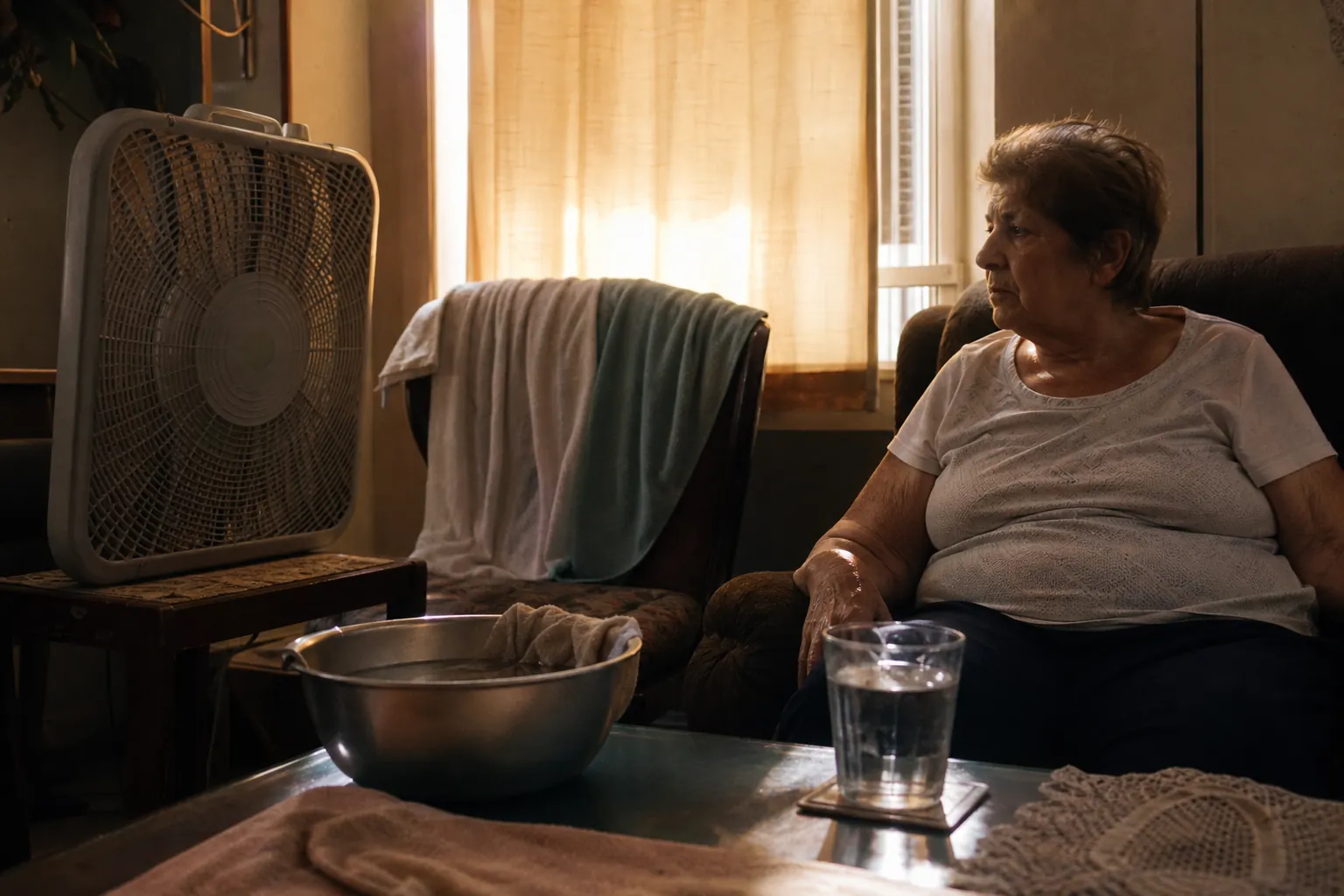
The honest answer is conditional: a fan may be part of a heat safety checklist for seniors, but it should not be the whole plan. CDC cautions against relying on a fan as the main cooling source and says fans help only when indoor temperature is below 90°F; the National Weather Service warns that above a heat index in the high 90s, a fan can add heat to the body. Newer fan research complicates that rule rather than erasing it: a 2025 JAMA Network Open study reported by McKnight’s found that fans lowered core temperature for older adults in humid heat at 100°F with 60% humidity, but worsened overheating in dry extreme heat at 113°F with 15% humidity.[1][2][3][4]
So the midnight question is not “fan or no fan?” It is: What is the room temperature, how humid is the air, is the person’s skin damp enough for evaporation, did the home cool down overnight, and is there already a plan for getting to air conditioning if the room stays unsafe?
Why the fan rule cannot be a simple yes or no
Older adults are not just “uncomfortable” in a hot room. CDC notes that people aged 65 and older may be less able to adjust to sudden temperature changes and are more likely to have chronic medical conditions or take medications that affect the body’s heat response.[5] That is why a fan that feels reassuring can still be a problem if it keeps someone sitting in a room that is too hot for too long.
CDC’s plain household rule is conservative: use fans only when indoor temperature is below 90°F, and do not rely on them as the main cooling source during extreme heat.[1] The National Weather Service frames the danger through heat index rather than room temperature alone: once the heat index is in the high 90s, a fan can increase heat stress, and the published heat-index values assume shade and light wind. Full sun can add up to 15°F to the apparent heat burden.[3]
The 2025 fan study is useful because it shows why the blanket sentence “fans are dangerous for seniors” is too crude. In the study reported by McKnight’s, 58 participants with an average age of 68 were exposed to two different heat conditions. In humid heat at 100°F with 60% humidity, fans lowered core temperature. In dry extreme heat at 113°F with 15% humidity, fans worsened overheating. Dampening the skin helped in both conditions.[4]
That last finding matters in a home without AC. Damp skin works like artificial sweat. Airflow over dry skin in very hot air can simply move heat around; airflow over damp skin can help carry heat away through evaporation. But a controlled study is not the same as a promise for every bedroom, especially when the room has sun pouring in, poor ventilation, dehydration, medications, or no cooler overnight period.
| What you know tonight | How to treat the fan | What to do next |
|---|---|---|
| Indoor temperature is below 90°F | The fan may help comfort and airflow, but it is still not AC. | Use it with fluids, shade, damp skin, and frequent checks. |
| Indoor temperature is above 90°F or the heat index is in the high 90s | Do not treat the fan as the main cooling plan. | Add skin wetting and cool cloths, reduce heat gain, and prepare an air-conditioned backup. |
| Heat is around 100°F and humid | Evidence suggests a fan may help some older adults when conditions resemble the study, especially with damp skin. | Use caution; monitor the person, not just the room. |
| Heat is extremely hot and dry | A fan can worsen overheating. | Stop depending on the home setup and move toward air-conditioned refuge. |
The no-AC cooling sequence that is worth doing
A no-AC plan should work in layers. One box fan, one bowl of water, or one open window is not enough to carry the whole job. The sequence below is meant for a caregiver or older adult trying to make the safest possible home plan while also knowing when the home plan has failed.
- Block daytime sun before the room heats up. Close curtains, blinds, or shades on sunny windows early, especially on the side of the home that bakes in the afternoon.
- Reduce indoor heat gain. Skip the oven, limit stove use, turn off unnecessary lights and electronics, and move the person away from sun-warmed walls or windows.
- Use fans only as conditional airflow. If the room is under 90°F, use the fan for comfort. If the room is hotter, pair airflow with damp skin and watch closely for whether the person is actually cooling.
- Wet the skin, not just the towel. Lightly dampen arms, legs, neck, or face with cool water so moving air has moisture to evaporate.
- Put cool cloths where blood vessels run close to the surface: neck, wrists, armpits, and groin. Refresh them before they become warm, heavy blankets.
- Create one coolest sleeping corner instead of trying to cool the whole home.
- Cross-ventilate at night only when outdoor air is cooler than indoor air. Open windows on opposite sides if safe, and use a fan to pull cooler air through rather than blowing trapped hot air around.
- Check whether the body gets overnight recovery. If the person starts the next morning still hot, weak, confused, or exhausted, the plan is not working.
For room-by-room setup details, use the fuller CareWise guides to extreme heat home safety tips and a heat-wave home cooling plan. This checklist stays focused on the no-AC decisions that tend to get made under pressure.
Make the fan do evaporation work
The bowl of water beside the fan is not magic. What helps is getting water onto the skin or onto a thin cloth touching the skin, then letting airflow move across it. A spray bottle, a damp washcloth, or gently re-wetted forearms can matter more than a fan blowing across a dry room.
Keep the cloths cool and small. A damp towel draped over the shoulders can feel good for a moment, then become a warm wet layer. Better targets are the neck, wrists, armpits, and groin, with cloths changed often enough that they are still cooling rather than insulating.
Build one cool corner for sleep
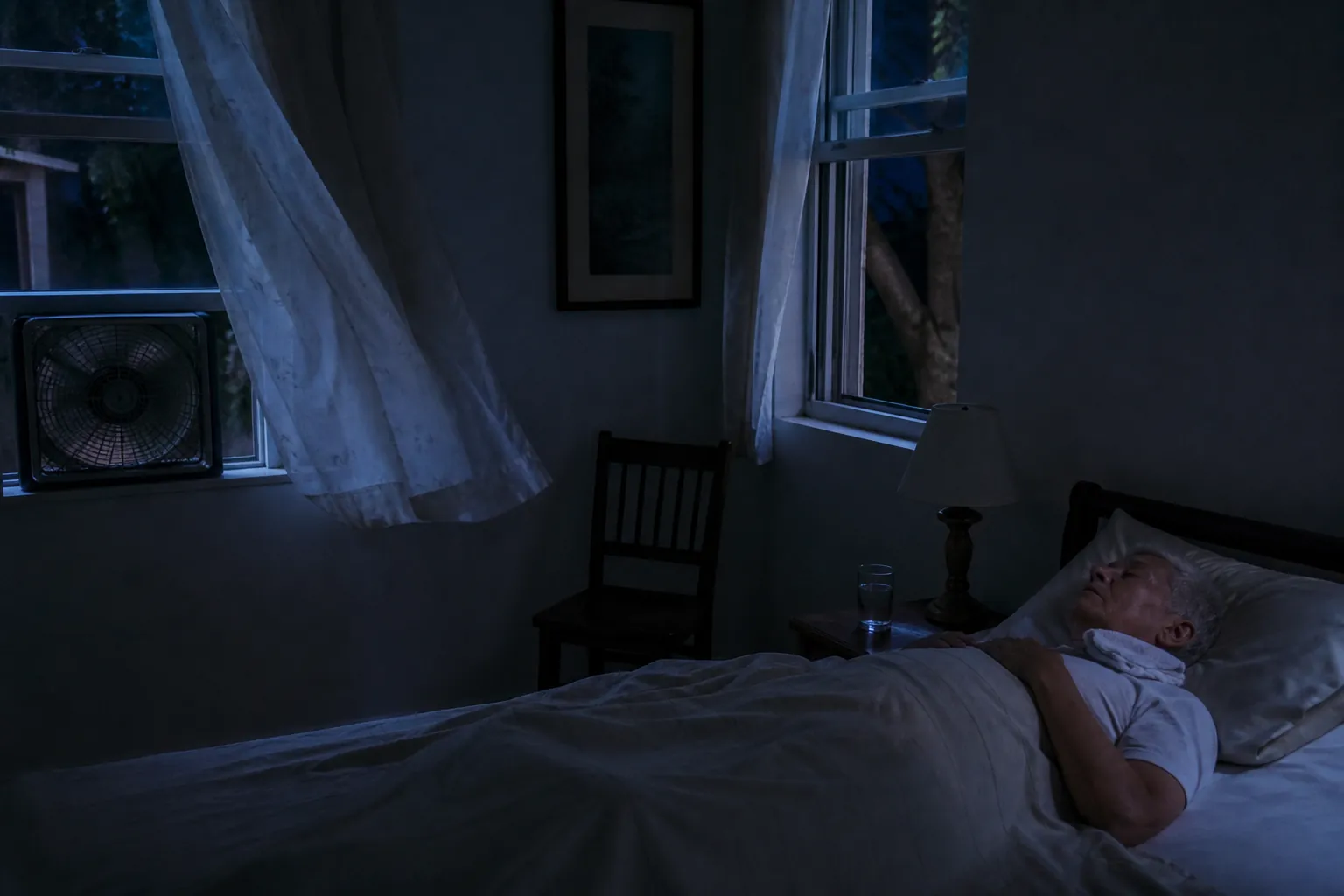
PBS NewsHour, citing Duke University’s Heat Policy Innovation Hub, describes a practical “cool corner” strategy: choose the coolest part of the home for sleeping rather than trying to fix every room. The same reporting warns that when overnight lows stay above 75°F, the body gets no real reprieve and heat outcomes worsen.[6]
That changes the goal. The point is not to make the bedroom feel less miserable for a few minutes. The point is to give the older adult’s body several hours of lower heat strain. If the first-floor hallway is cooler than the bedroom, or the shaded side of the apartment is cooler than the usual recliner spot, move the sleeping setup there. Keep the path clear, put water within reach, and avoid loose cords where a tired person may walk in the dark.
Heat also raises fall risk in quiet ways: dehydration, weakness, dizziness, urgent trips to the bathroom, and fan cords across walking paths. If falls are already a concern, pair this checklist with CareWise’s guide to how extreme heat creates a hidden fall risk for older adults.
Use indoor-temperature thresholds as planning triggers, not trivia
If there is a working indoor thermometer, use it. A phone weather app tells you what is happening outside; it does not tell you what the bedroom is doing after a day of sun on brick, asphalt, or an upstairs roof. Heat trapped indoors is why an older adult can still be in danger after sunset.
A useful practical line is around 80°F indoors. The American Geriatrics Society’s HealthInAging hot-weather safety tips tell older adults to go somewhere cooler if their home is 80°F or higher and they cannot cool it safely; the same tip sheet points to cooling centers, libraries, shopping malls, and other air-conditioned places as refuges.[7] Health Canada’s attributed recommendation of 26°C, about 79°F, is not a U.S. standard, but it points in the same practical direction: do not wait for the room to feel unbearable before making the leave-home plan.
| Threshold | What it should trigger |
|---|---|
| Home reaches about 80°F and cannot be cooled safely | Start the cooling-center, library, mall, neighbor, or family backup plan. |
| Indoor temperature is above 90°F | Do not rely on a fan as the main cooling source. |
| Heat index is in the high 90s or higher | Treat fan-only cooling as unsafe, especially in sun-exposed rooms. |
| Overnight low stays above 75°F | Assume the body may not be getting recovery; plan air-conditioned time. |
If medications are part of the picture, do not guess which ones matter from memory. Diuretics, some heart medicines, psychiatric medicines, and other common drug classes can change hydration, sweating, alertness, or heat tolerance. Use the CareWise guide to medication classes that raise heat risk in older adults as a prompt for a pharmacist or clinician review.
Why this deserves urgency without panic
Heat-death counts vary because agencies count and define heat-related deaths differently. CDC public guidance describes more than 700 heat-related deaths per year in the United States, while AGS HealthInAging uses a similar warning of more than 600 deaths each summer.[2][7] The exact count is less useful at the kitchen table than the pattern behind it: older adults, people without reliable cooling, and people who do not get overnight recovery are the ones a checklist has to protect.
Do not spend the hottest hour trying to perfect the home setup if the person is getting worse. For heat illness warning signs and emergency decisions, use the warning-sign decision guidance in CareWise’s heat-wave home cooling plan. This article is for prevention planning, not for deciding whether a crisis is already underway.
When the home plan stops being the plan
A fan may be a tool. Damp skin may make that tool more useful. A cool corner may buy time. None of those should become a reason to keep an older adult in a room that stays unsafe.
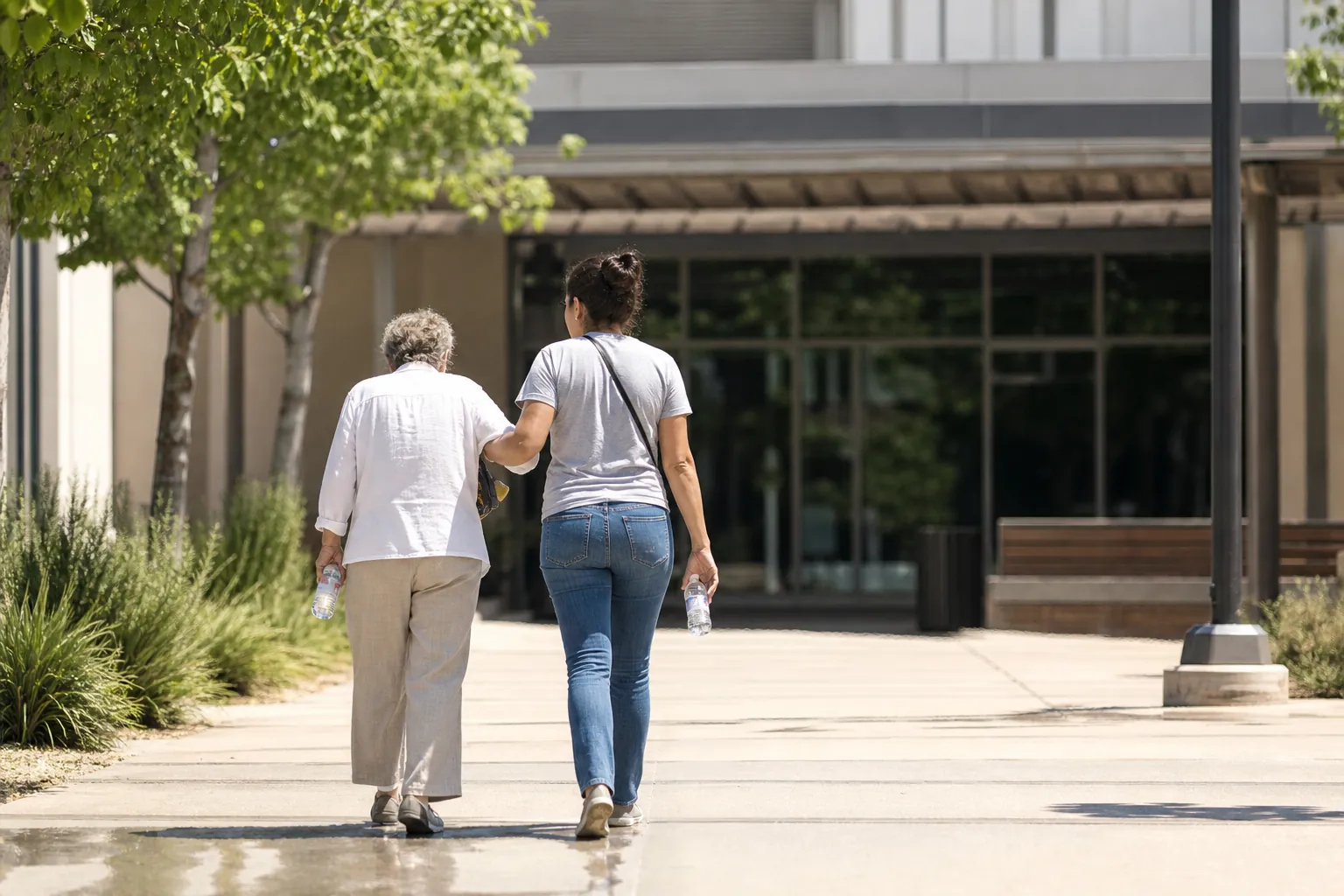
Leave for an air-conditioned refuge, or get help arranging one, when any of these are true:
- The indoor temperature stays around 80°F or higher and you cannot bring it down safely.
- The room is above 90°F and the fan is the main cooling method.
- The home does not cool overnight, especially when outdoor lows stay above 75°F.
- The older adult cannot keep fluids down, cannot safely get to water, or cannot tolerate skin wetting.
- The setup depends on someone remembering to re-wet cloths, check temperatures, and move cords, but no one is able to keep doing that.
- The person is becoming weak, confused, faint, unusually sleepy, or otherwise concerning.
Air-conditioned refuge can mean a cooling center, public library, shopping mall, community building, neighbor’s home, or family member’s home. AGS HealthInAging also points older adults to LIHEAP for help paying for air conditioning or utility costs; the LIHEAP phone number listed in that tip sheet is 1-866-674-6327.[7]
Educational note: This article is for general heat-safety planning and is not medical advice. If symptoms are severe, sudden, or worsening, seek urgent medical help. Clinical and home-safety review: Elena Ramirez, RN, BSN, CAPS. Last verified: August 25, 2026.
References
- About Heat and Your Health, CDC
- Protect Yourself From the Dangers of Extreme Heat, CDC
- Heat Index, National Weather Service
- New study challenges CDC fan guidelines for seniors during heat waves, McKnight’s Long-Term Care News
- Heat and Older Adults (Aged 65+), CDC
- How to stay cool and safe in a heat wave, even without air conditioning, PBS NewsHour
- Tip Sheet: Hot Weather Safety Tips for Older Adults, HealthInAging.org
Related reading
Noticed something outdated or inaccurate on this page? Flag a correction. We review every report against CDC, NIA, and AARP HomeFit guidance before updating a page.
Part of the Fall Prevention section.