
STEADI: intervene
Tornado Watch vs Warning: A Senior Safety Guide
Learn the critical difference between a tornado watch and a warning, and discover the senior-specific actions to take during each phase — including how to use the watch window to prepare mobility aids, medications, and communication devices before a warning forces you to shelter.
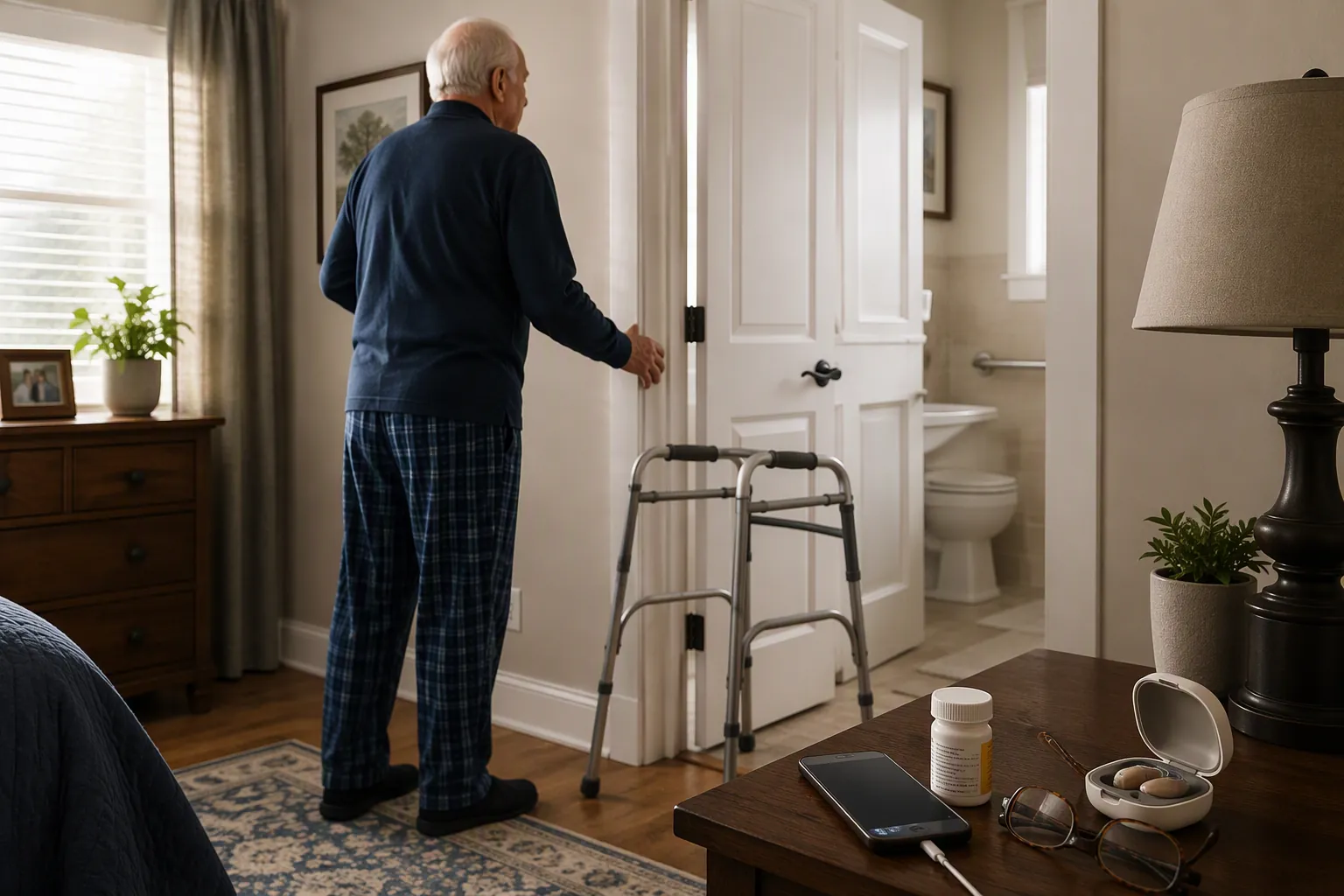
The phone says tornado watch, and the day still looks ordinary. The dishes are in the sink, the recliner is comfortable, the walker is across the room, and the television may or may not be on. That is exactly the moment when a senior safety plan either starts working or quietly fails.
The National Weather Service keeps the distinction simple: a tornado watch means “be prepared,” because tornadoes are possible in and near the watch area; a tornado warning means “take action,” because a tornado has been sighted or indicated by weather radar and there is imminent danger to life and property.[1] For an older adult, that difference is not just wording. A watch is the preparation window. A warning is not the time to search for shoes, gather medications, move a walker, charge a phone, or find out whether the alert was loud enough to hear.
The Difference That Matters at Home
| Alert | Official meaning | Senior-specific meaning |
|---|---|---|
| Tornado watch | Be prepared; tornadoes are possible in and near the watch area. | Use the time now: clear the shelter path, move mobility aids and sturdy shoes, check medications, charge devices, confirm alerts, and verify help. |
| Tornado warning | Take action; a tornado has been sighted or indicated by radar. | Go to the preselected shelter immediately. Use what is already there. Do not delay to collect items or make a plan. |
Generic tornado advice usually tells people to go to a basement, storm shelter, or small interior room on the lowest level, away from windows.[2] That advice is still the baseline. The senior-specific part is what has to happen before movement becomes urgent: the route must be safe, the needed equipment must already be near the shelter, and the person who may need help must know whether that help can arrive in time.
This is adapted safety planning, not overprotection. People with disabilities are reported to be 2 to 4 times more likely to die or be injured in a disaster than people without disabilities, according to the Partnership for Inclusive Disaster Strategies as cited by United Spinal Association.[3] That statistic should not be stretched into a claim about every older adult. It does explain why a plan for someone with limited mobility, hearing loss, low vision, oxygen use, medication dependence, or balance problems cannot be a younger person’s plan with a larger-print checklist.
Start With Alerts the Senior Can Actually Receive
A tornado plan that depends on hearing an outdoor siren from inside the house has a weak first link. NOAA explains that outdoor warning sirens are designed to alert people outdoors, not to wake or warn everyone inside a building.[4] That matters for anyone who naps, sleeps with hearing aids out, keeps the television off, or lives in a house where the safest room is far from windows and outside sound.
NOAA Weather Radio is the stronger anchor, especially for seniors with hearing or vision barriers. NOAA notes that receivers with SAME technology can be programmed for specific areas, and some models or attachments can provide visual alerts, strobe lights, vibrating pillow shakers, or other alerting devices for people who are deaf or hard of hearing.[4] A smartphone alert helps, but it should not be the only tool if the phone is often in another room, set to silent, low on battery, or hard to read quickly.
- Keep the NOAA Weather Radio plugged in where it can be heard or connected to an accessible alert device.
- Replace or recharge backup batteries before storm season and after long outages.
- Test whether the senior notices the alert from the bedroom, recliner, kitchen, and bathroom.
- Make sure phone emergency alerts are enabled, the volume is high enough, and charging cords are reachable.
- For hearing loss, pair sound with light, vibration, or a trusted contact system rather than assuming one loud alarm is enough.
During a Tornado Watch: Build the Warning Before It Arrives
A watch is not a request to panic. It is the stretch of time when slower, safer movement is still possible. Oklahoma State University Extension’s older-adult severe weather guidance is especially useful here because it treats the watch phase as working time: preposition supplies and mobility aids, clear the route to shelter, and think through how long assistance actually takes to arrive.[5]
Choose the Shelter Location Before Choosing the Bag
The best shelter location is usually a basement, storm shelter, safe room, or small interior room on the lowest level, away from windows.[2] For many seniors at home, that may mean an interior bathroom, hallway, closet, or laundry room. The right choice is not only the room that sounds safest on paper; it is the room the person can reach quickly with the body, equipment, and help they actually have.
Mobile homes need a separate decision. United Spinal Association, citing National Weather Service data, reports that 43% of tornado deaths over a 21-year period involved mobile home occupants.[3] If a senior lives in a mobile home, the watch phase is the time to move to a sturdier nearby shelter if one is available and reachable. Waiting for the warning may leave too little time, especially for someone who needs a walker, wheelchair transfer, oxygen equipment, or another person’s help.
Vehicles are not a safe substitute for a shelter plan. United Spinal Association also notes that people in motor vehicles face 10 times greater risk of severe injury during a tornado than people at home.[3] That does not mean every senior should drive away during a watch. It means any move to a community shelter, neighbor’s reinforced home, or public safe room has to be planned early enough that the person is not caught on the road when the warning is issued.

Clear the Route Like a Fall-Prevention Task
The shelter path deserves as much attention as the shelter itself. During a watch, turn on lights, remove throw rugs, move laundry baskets, pick up pet bowls, coil cords, and open the door to the shelter room. If a walker or wheelchair has to make the turn, test the turn. If the bathroom rug bunches under a cane, move it now. A fall in the hallway during a warning can become the emergency before the storm reaches the house.
This is where a written plan beats a verbal promise. The person helping by phone may say, “Go to the bathroom,” but the senior is the one facing the dark hallway, the oxygen tubing, the stiff knees, and the cat underfoot. The route needs to be made simple while there is still time to bend, lift, switch on lights, and move slowly.
Move Mobility Aids and Sturdy Shoes First
During a watch, put the walker, cane, wheelchair, transfer board, braces, or other mobility aid at the shelter location or along the route where it will be used. OSU Extension specifically recommends prepositioning mobility aids during a watch.[5] That advice is practical because the item most needed during urgent movement is often the item left beside the bed, near the recliner, or in the kitchen.
Sturdy shoes belong near the shelter too. Broken glass, wet flooring, splintered trim, and scattered objects can make barefoot movement dangerous after the storm. Slippers that slide off do not solve that problem. A pair of closed-toe shoes with good grip is a small preparation that can prevent a second injury during cleanup or evacuation.
Put Medications and Written Information Within Reach
The CDC recommends that people with functional needs keep a written list of needs, limitations, medications, and dosages with them at all times.[6] For a senior at home, that list should be easy to grab or already placed in the shelter kit during a watch. It should include medication names, doses, allergies, medical conditions, emergency contacts, pharmacy, doctor, assistive devices, and communication needs.
Do not wait for a warning to sort pills into a bag. If daily medications, inhalers, glucose supplies, hearing-aid batteries, eyeglasses, dentures, oxygen-related supplies, or incontinence items are essential, identify what can safely be kept in a small shelter kit and what must be moved during the watch. The point is not to duplicate the whole medicine cabinet. It is to avoid a warning where the senior has to choose between sheltering and getting the item that makes the next few hours manageable.
Charge Communication Devices, Then Keep Them With the Person
A charged phone is not useful if it is charging in the kitchen while the senior shelters in the bathroom. During a watch, charge the phone, hearing aids, medical alert pendant, power bank, and any communication device the person uses. Then move what must stay with the senior to the shelter area. Keep charging cords where they can be found in dim light.
If the senior uses a medical alert device, check whether it works in the chosen shelter location. Thick walls, interior rooms, basements, and power outages can change what works. A test during calm weather is better than discovering the dead spot during a warning.
Confirm Help, Then Time It Honestly
The CDC advises people with functional needs to identify a nearby person who agrees to help in an emergency.[6] OSU Extension goes a step further for older adults by recommending that they identify multiple helpers and time how long it takes those helpers to arrive.[5] That timing matters. A neighbor who can come in 3 minutes is a different plan from an adult child who needs 25 minutes, even if both care deeply.
A good phone tree is short, written, and realistic. Put the primary helper, backup helper, and out-of-area contact on paper. Include who has a key, who can lift or transfer safely, who can drive if relocation is needed during a watch, and who only provides phone check-ins. If a helper cannot arrive before the warning is likely to expire, that person may still be important after the storm, but they are not the sheltering plan.
What Belongs in a Senior Tornado Kit
Most emergency-kit lists include familiar items: water, food, flashlight, batteries, first-aid supplies, radio, phone charger, and copies of important documents. The Red Cross includes core supplies such as water, nonperishable food, flashlight, battery-powered or hand-crank radio, first-aid kit, medications, sanitation items, phone chargers, and emergency contact information in its tornado safety guidance.[7] For seniors, the difference is less about adding a large bag and more about putting the right items where urgent movement ends.
- Mobility: cane, walker, wheelchair accessories, braces, transfer supplies, and sturdy closed-toe shoes.
- Medical: medication list, essential medications that can be safely stored, inhalers, glucose supplies, hearing-aid batteries, eyeglasses, dentures, and oxygen-related instructions.
- Communication: charged phone, backup power bank, NOAA Weather Radio, written contacts, medical alert device, and accessible alert tools.
- Protection: blanket, pillow, bike helmet, hard hat, or other head protection; United Spinal Association recommends helmets or hard hats as part of disability-community tornado preparedness.[3]
- Comfort and function: flashlight, water, snack suitable for the person’s diet, sanitation supplies, incontinence items, gloves, and a small trash bag.
Some homes need two kits: one shelter kit and one go-bag. OSU Extension recommends a dual-kit strategy for older adults, separating supplies that stay in the safe place from supplies that may be needed if evacuation or relocation becomes necessary.[5] That keeps the shelter area from becoming cluttered while still recognizing that a tornado can damage power, plumbing, roads, and access to care.
During a Tornado Warning: Stop Preparing and Shelter
A warning is the action phase. The National Weather Service says to go to a safe room, basement, storm cellar, or small interior room on the lowest level, away from windows.[2] The CDC similarly advises getting to a safe location right away, protecting the head and neck, and staying away from windows.[8] For a senior, the instruction needs to be strict because every added errand steals time from sheltering.
- Go immediately to the preselected shelter location.
- Use the cleared route; do not stop to move furniture, gather laundry, or look outside.
- Take the mobility aid, phone, and medical items only if they are already on the route or within reach.
- Sit or crouch as low as safely possible, away from windows and exterior walls.
- Protect the head and neck with a helmet, pillow, blanket, folded coat, or arms.
- Call or text only if it does not delay sheltering.
If the senior is in a mobile home when a warning is issued, the safest answer depends on what was arranged during the watch. A sturdy shelter nearby may be better, but a last-minute drive can be dangerous if the storm is already close. This is why mobile-home residents need the relocation decision during the watch, not after the warning tone sounds.
If the senior is already in bed, bathing, using the toilet, or attached to equipment when the warning arrives, the plan should favor the fastest safe movement to the shelter position that was chosen ahead of time. Caregivers should talk through these private, ordinary moments before storm season. A plan that only works when someone is fully dressed, standing, and beside the front door is not much of a plan.
Caregiver Planning Before Storm Season
Adult children and caregivers often want to help without making an older parent feel managed. The better approach is to frame tornado planning as a way to preserve independence: fewer rushed calls, fewer last-minute decisions, and fewer reasons for someone else to take over during a warning.
Start at the kitchen table with the actual house, not a generic printable. Walk the route from the recliner, bed, bathroom, kitchen, and porch to the chosen shelter. Watch for thresholds, rugs, narrow turns, low lighting, pets, oxygen tubing, clutter, and doors that stick. Then ask the uncomfortable but necessary timing questions: How long does it take to stand up? How long to get the walker? How long to reach the bathroom? How long for the neighbor to unlock the door and arrive?
- Write the shelter location in plain language: “interior hall bathroom,” not “safe room.”
- Post the helper list near the phone and keep a copy in the shelter kit.
- Label the go-bag and shelter kit so a neighbor can find them.
- Give trusted helpers access instructions if the senior agrees.
- Practice once in calm weather, including the alert method and the route.
Do not build the plan around “we’ll just call when it happens.” Phone calls are useful, but they are not shelter. Lines may be busy, the phone may be across the room, the senior may not hear it, or the warning may leave no time for coaching. The family call should support a plan already in motion.
The Practical Rule
For a senior at home, a tornado watch is the time to make the warning survivable. Clear the path. Move the walker. Put on real shoes. Charge the phone. Check the NOAA Weather Radio. Place medications and the written needs list within reach. Confirm who can help and whether they can arrive in time. When the warning comes, the job changes: go now, protect the body, and use what is already there.
References
- Understand Tornado Alerts, National Weather Service
- What to Do During a Tornado, National Weather Service
- Tornado Preparedness for the Disability Community, United Spinal Association
- NOAA Weather Radio — Special Needs, National Weather Service
- Older Adults and Planning Ahead for Severe Weather, Oklahoma State University Extension
- Preparing for a Tornado, Centers for Disease Control and Prevention
- Tornado Safety, American Red Cross
- Stay Safe During a Tornado, Centers for Disease Control and Prevention
Related reading
Noticed something outdated or inaccurate on this page? Flag a correction. We review every report against CDC, NIA, and AARP HomeFit guidance before updating a page.
Part of the Fall Prevention section.