
How Wildfire Smoke Creates a Hidden Fall Hazard for Seniors
Wildfire smoke can cause dizziness, fatigue, and cognitive clouding in older adults—each a documented fall risk. Learn how to protect your parent from both smoke inhalation and the unexpected fall hazards that come with it.
When an older parent is already indoors during wildfire smoke, the danger does not always look like a breathing problem. It can look like a slower walk to the kitchen, a pause at the bathroom door, or a hand reaching for the wall in a dim hallway. Wildfire smoke can bring dizziness, unusual fatigue, cognitive effects, and cardiac strain in older adults, and each of those changes can make a hallway, a bathroom trip, or a stairway more dangerous [1][2].
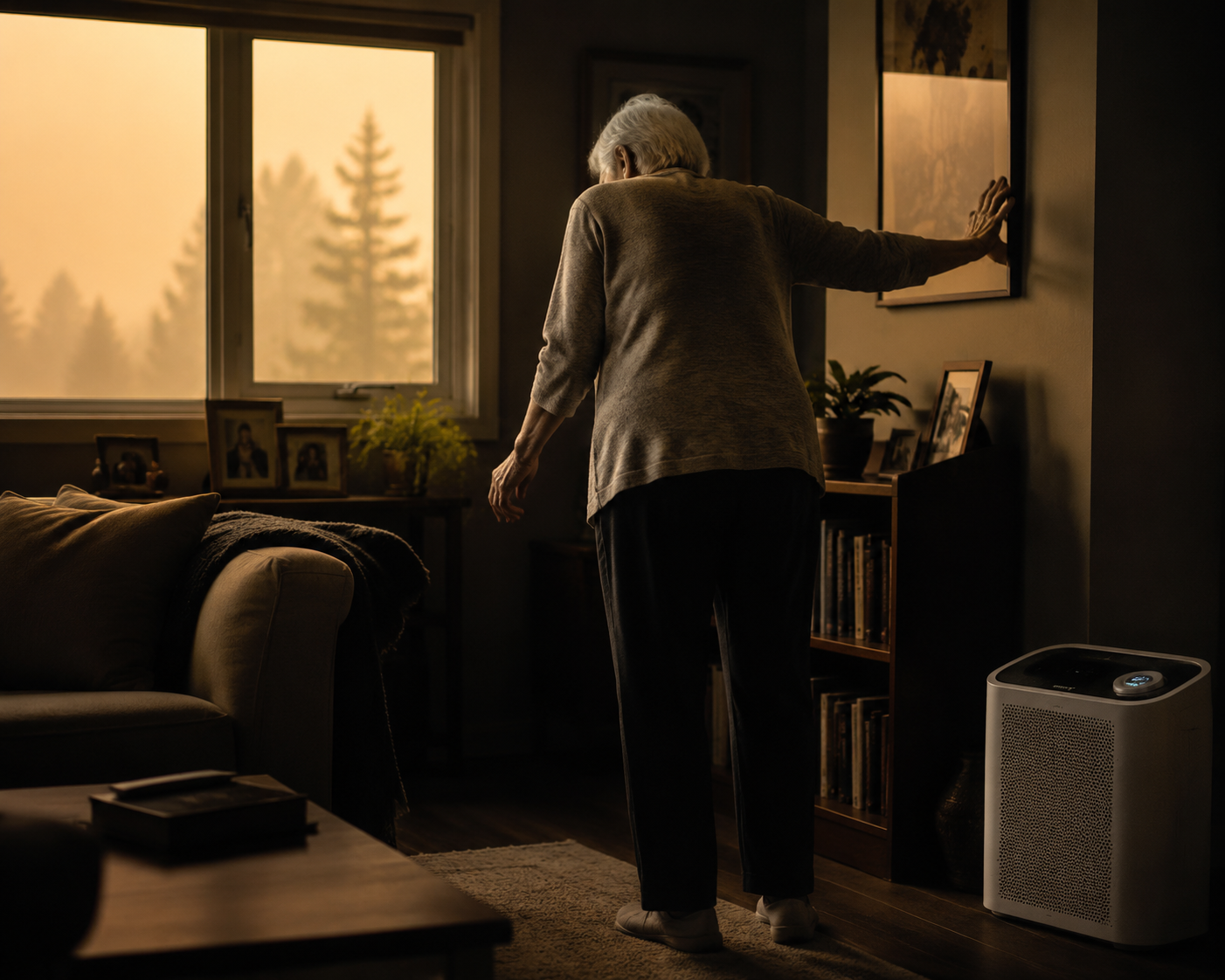
The fall hazard hiding inside smoke
For caregivers, the important shift is this: wildfire smoke is not only an air-quality problem. It can change how the body feels, how quickly the brain reacts, and how safely a home can be moved through. Older adults are already more vulnerable because of age-related physiology and common chronic conditions, so a smoke day can narrow the margin for error fast [2].
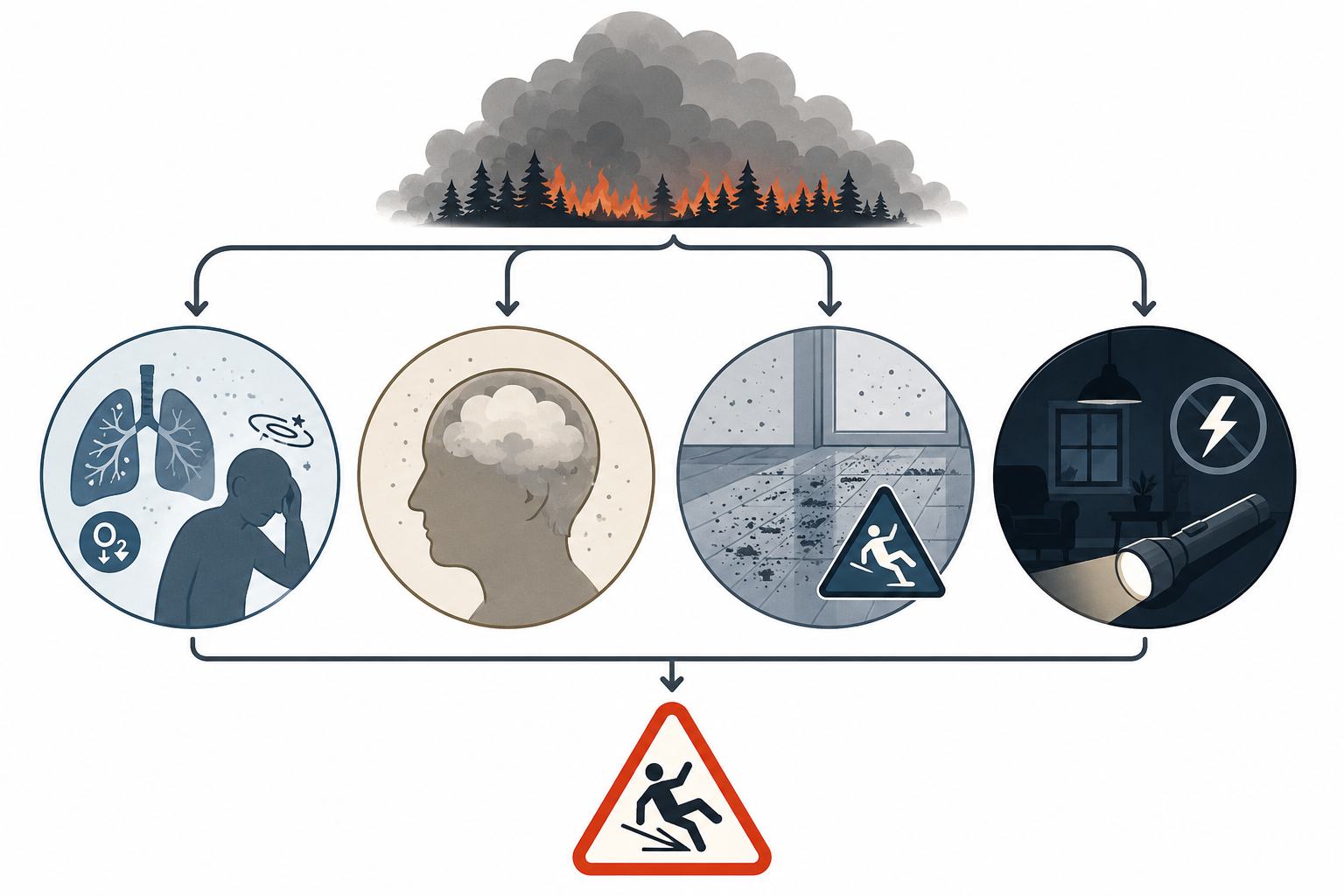
- Dizziness and low stamina can make standing and turning less steady. If a parent gets lightheaded while moving from bed to chair, the problem is no longer just smoke exposure; it is a higher chance of grabbing furniture, missing a step, or sitting down hard [1][2].
- Cognitive clouding matters too. AARP reports cognitive effects from wildfire smoke, and slowed attention is exactly what makes a missed walker, a forgotten step, or a delayed reaction more dangerous in the home [1].
- Smoke also changes the environment. Dimmer rooms, haze, and grit on floors can turn ordinary surfaces into trip or slip hazards, especially when vision is already weaker or mobility is already limited.
- Power outages and evacuations create a fourth layer of risk. Flashlights, unfamiliar rooms, crowded shelters, and rushed movement all make balance harder, especially for someone who uses a cane, walker, oxygen equipment, or a medication schedule.
That is why the fall-risk frame is useful. The evidence does not come from one study that measures smoke as a single cause of falls. It comes from separate findings about older-adult vulnerability, smoke-related symptoms, and the way smoke can make indoor and emergency settings harder to navigate [1][2].
What caregivers can change the same day
The practical approach is to pair cleaner indoor air with safer movement inside the home.
- Start with medications. CDC guidance says to stock 7 to 10 days of medications before wildfire season, which helps avoid a refill scramble if smoke turns into a multi-day event or an evacuation [3].
- Create one safer room if you can. Keep windows closed, use the best filtration available, and place the parent where they can sit, rest, and reach water and medications without extra walking.
- Clear the walking path before smoke gets bad. Remove loose rugs, cords, and clutter, and make sure the route from bed to bathroom has enough light for nighttime movement.
- Stage the tools that reduce hesitation: a flashlight, backup batteries, glasses, hearing aids, walker or cane, shoes with traction, and any charger or oxygen supply the parent uses.
- Slow the routine down on smoke days. Standing up in stages, taking extra time at the toilet, and avoiding unnecessary stairs can matter more when dizziness or fatigue is part of the picture.
The practical test is whether the parent can still move through the house safely if the air is smoky, the lights are poor, and their body is not quite steady.
References
Related reading
Noticed something outdated or inaccurate on this page? Flag a correction. We review every report against CDC, NIA, and AARP HomeFit guidance before updating a page.
Part of the Fall Prevention section.